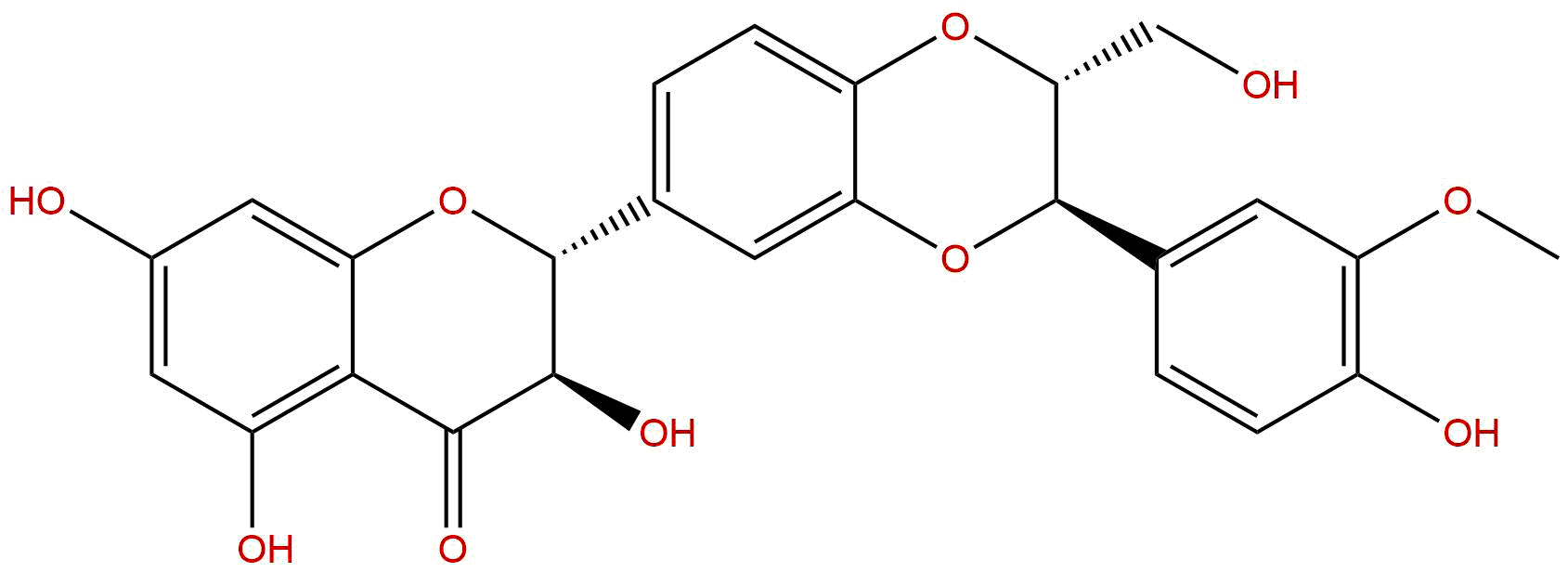


Product name: Silybin A
Synonym name: Silymarine I;Silybine; Silybum substance E6; Silymarin I; Silymarin MZ 80
Catalogue No.: BP5185
Cas No.: 22888-70-6
Formula: C25H22O10
Mol Weight: 482.441
Botanical Source:
Type of Compound: Flavonoids
Purity: 95%~99%
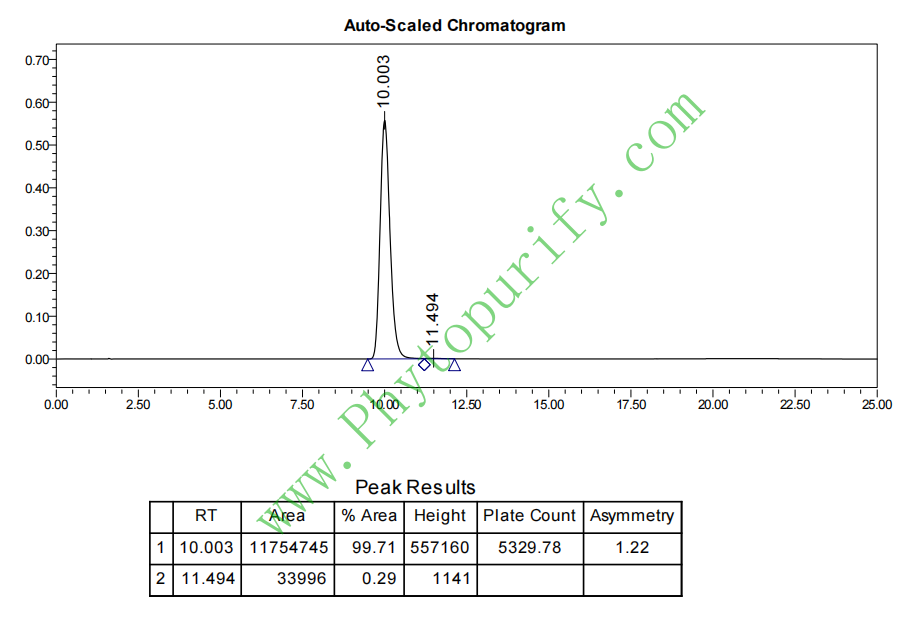
Analysis Method: HPLC-DAD or/and HPLC-ELSD
Identification Method: Mass, NMR
Packing: Brown vial or HDPE plastic bottle
Storage: Store in a well closed container, protected from air and light. Put into refrigerate or freeze for long term storage.
Whenever possible, you should prepare and use solutions on the same day. However, if you need to make up stock solutions in advance, we recommend that you store the solution as aliquots in tightly sealed vials at -20℃. Generally, these will be useable for up to two weeks.
The product could be supplied from milligrams to grams
Inquire for bulk scale.
For Reference Standard and R&D, Not for Human Use Directly.
HPLC of Silybin A
Storage conditions:Short-term storage at 2~8℃, long-term storage at -20 ~ -80℃
Silybin A (CAS number: 22888-70-6), as one of the main active ingredients in Silybum marianum, has attracted widespread attention in the field of natural product pharmacology in recent years due to its significant biological activity. Silymarin A belongs to the flavonoid lignan class compounds and has multiple pharmacological effects, including antioxidant, anti-tumor, hepatoprotective, and chemotherapy adjuvant functions. Its unique chemical structure endows it with excellent biological activity and good safety, making it a research hotspot in the fields of natural medicine development and liver disease treatment.
This article aims to systematically review the chemical structure and physicochemical properties, plant sources and extraction methods, pharmacological activity and mechanism of action, pharmacological evaluation, pharmacokinetic characteristics, and clinical application prospects of silibinin A, comprehensively presenting the research progress and future development directions of this compound in natural product pharmacology.
Silymarin A is a flavonoid lignan with a molecular formula of C25H22O10 and a molecular weight of 482.4410. Its structural features include secondary alpha hydroxy ketones, polyphenolic hydroxyl groups, aromatic ethers, and benzodioxins, forming its complex three-dimensional configuration. The chemical skeleton of Silymarin A endows it with strong free radical scavenging ability and the potential to bind to various biological targets.
In terms of physical and chemical properties, the LogP value of Silymarin A is 1.8482, indicating that it has moderate lipid solubility and helps with membrane permeation. The polar surface area (TPSA) is 155.14 Å ², indicating its high molecular polarity, which affects its water solubility and bioavailability. The water solubility is 0.2082 (unit not specified, usually in mg/mL or g/L), indicating low water solubility and limiting its oral absorption efficiency. The low permeability of the blood-brain barrier suggests a lower risk of central nervous system side effects. The negative result of hERG channel inhibition experiment indicates a low risk of cardiac toxicity. The Ames mutagenicity test showed 0, indicating an extremely low risk of genetic toxicity.
Silymarin A is mainly isolated from the fruit of Silybum marianum. Milk thistle is a traditional herb widely distributed in Europe, the Mediterranean region, and some parts of Asia. Its fruit contains a rich mixture of flavonoids and lignans, with silibinin A being one of the highest isomers.
The extraction method usually uses organic solvent extraction combined with column chromatography separation technology. Common solvents include methanol, ethanol, ethyl acetate, etc. The extract is purified by silica gel column or reverse phase high performance liquid chromatography (RP-HPLC) to obtain high-purity silibinin A. In recent years, green extraction techniques such as ultrasound assisted extraction, microwave-assisted extraction, and supercritical CO2 extraction have also been applied to the extraction of silibinin A, improving extraction efficiency and purity and reducing environmental pollution.
Silymarin A has significant antioxidant activity, which can scavenge free radicals and alleviate oxidative stress damage. Its polyphenolic hydroxyl structure enables it to effectively capture reactive oxygen species (ROS) and reactive nitrogen species (RNS), protecting cells from oxidative damage. In vitro studies have shown that silibinin A can enhance the activity of intracellular antioxidant enzymes such as superoxide dismutase (SOD), catalase (CAT), and glutathione peroxidase 1 (GPX1), and alleviate lipid peroxidation and DNA oxidative damage.
Silymarin A exhibits inhibitory effects on cell proliferation, induces apoptosis, and suppresses migration in various tumor models. Its anticancer activity involves multiple signaling pathways, including NF - κ B, PI3K/Akt, MAPK, and Wnt/β - catenin. Silymarin A induces tumor cell apoptosis and inhibits tumor cell invasion and metastasis by regulating the expression of cell cycle proteins, pro apoptotic proteins, and anti apoptotic proteins.
Silymarin A, as a classic hepatoprotective agent, has liver protective mechanisms involving antioxidant, anti-inflammatory, anti fibrotic, and promotion of liver cell regeneration. By activating the nuclear factor erythroid 2-related factor 2 (NRF2) signaling pathway, silibinin A upregulates the expression of antioxidant enzymes such as NQO1 and HMOX1, alleviating liver oxidative damage. Meanwhile, silibinin A inhibits matrix metalloproteinase 9 (MMP9) and transforming growth factor beta 1 (TGFB1), slowing down the progression of liver fibrosis. In addition, silibinin A can reduce liver inflammation and protect liver cell structure and function.
Silymarin A also exhibits multiple pharmacological activities such as anti-inflammatory, antiviral, immunomodulatory, and neuroprotective effects, providing a theoretical basis for its clinical application expansion.
The mechanism of action of silibinin A is complex, involving synergistic regulation of multiple targets and pathways. Its main molecular targets include:
In addition, silibinin A achieves multi-level regulation of tumor cells and liver pathological status by regulating cell cycle related proteins, apoptosis related proteins, and inflammatory factors.
The pharmacological parameters of Silymarin A indicate that it has good potential for drug development. Moderate molecular weight and LogP value are beneficial for cell membrane penetration and in vivo distribution. The higher TPSA and lower water solubility indicate limited oral bioavailability, and absorption needs to be improved through drug formulation optimization or nanocarrier technology.
Low blood-brain barrier permeability reduces the risk of central nervous system side effects. No hERG channel inhibition and no mutagenicity, with high safety.
Pharmacokinetic studies have shown that Silymarin A is slowly absorbed and has low bioavailability after oral administration, mainly metabolized and excreted through the liver. Its metabolic pathways include glucuronidation and sulfation, and the metabolites are mostly water-soluble complexes. Moderate half-life in the body, suitable for multiple administrations to maintain effective concentration.
To overcome the problems of poor water solubility and low bioavailability, researchers have attempted to use new drug carrier systems such as liposomes, nanoparticles, and solid dispersions in recent years to improve their in vivo stability and targeting.
Silymarin A, as a multifunctional natural product, has broad clinical application prospects. Its hepatoprotective effect has been validated in various liver disease models, especially with great potential for application in hepatitis, liver fibrosis, and drug-induced liver injury. Its anti-tumor activity makes it a powerful candidate drug for adjuvant cancer treatment, especially in solid tumors such as liver cancer, breast cancer and lung cancer.
In the future, the clinical translation of silibinin A needs to focus on addressing its bioavailability and targeted delivery issues. Combining modern pharmaceutical formulation technology with precision medicine concepts, developing efficient and safe drug delivery systems will greatly enhance their clinical application value.
In addition, the multi-target mechanism of action of Silymarin A provides a theoretical basis for the combination therapy strategy, which is expected to be synergistically applied with existing anti-tumor and anti-inflammatory drugs to enhance efficacy and reduce toxic side effects.
Silymarin A, as the main active ingredient in Silymarin, has shown significant value in the field of natural product pharmacology due to its unique chemical structure and diverse pharmacological activities. Its antioxidant, anti-tumor, and hepatoprotective mechanisms are clear, molecular targets are clear, safety is good, and it has high potential for drug development.
Future research should focus on optimizing its pharmacokinetic properties, deepening the analysis of its mechanism of action, expanding clinical indications, and combining modern formulation technology to promote its clinical translation. Silymarin A is expected to become a model in the development of natural product drugs, providing new treatment strategies and drug options for liver disease and tumor treatment.
