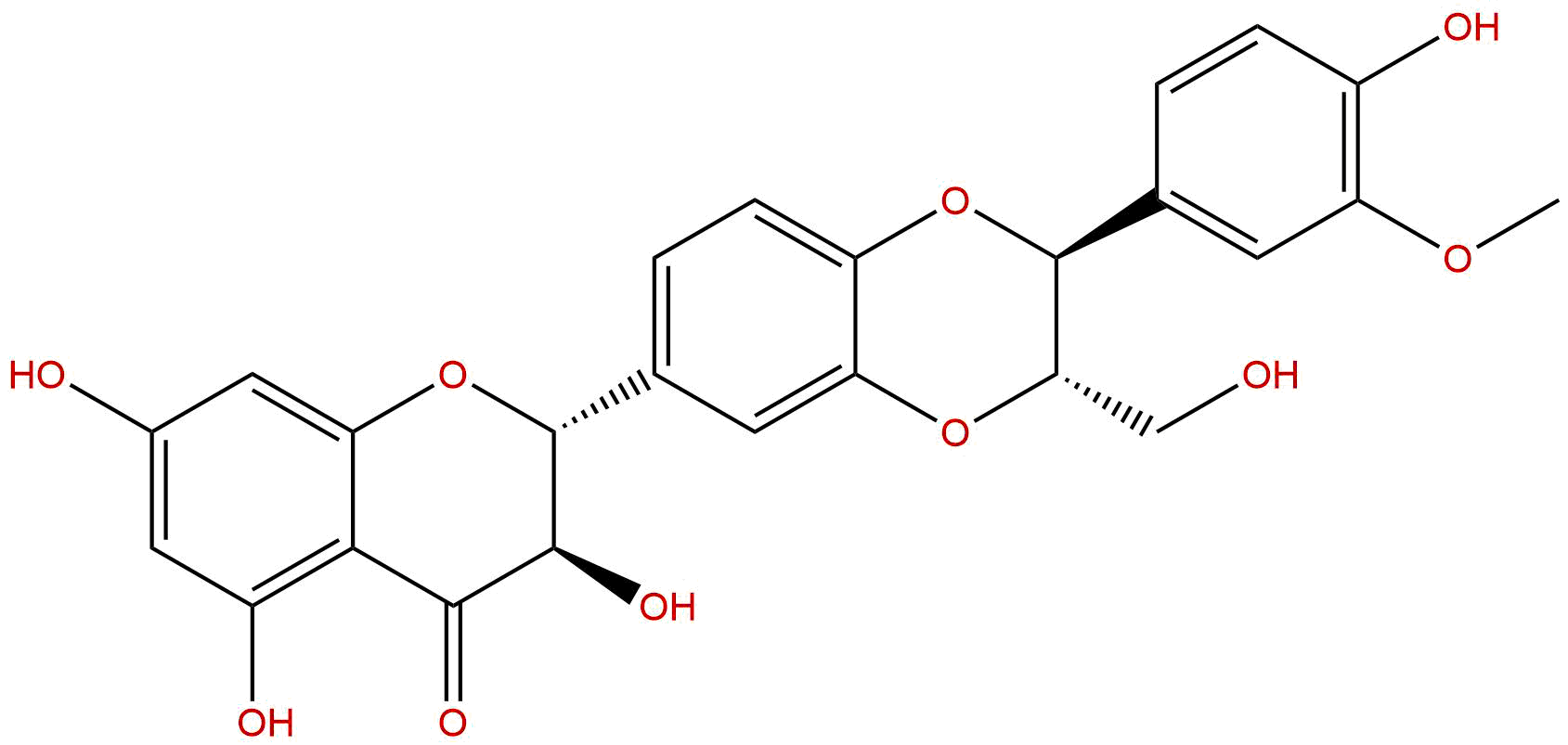


Product name: Isosilybin B
Synonym name: Isosilibinin B;Silybin a2
Catalogue No.: BP4855
Cas No.: 142796-22-3
Formula: C25H22O10
Mol Weight: 482.441
Botanical Source:
Type of Compound: Flavonoids
Purity: 95%~99%
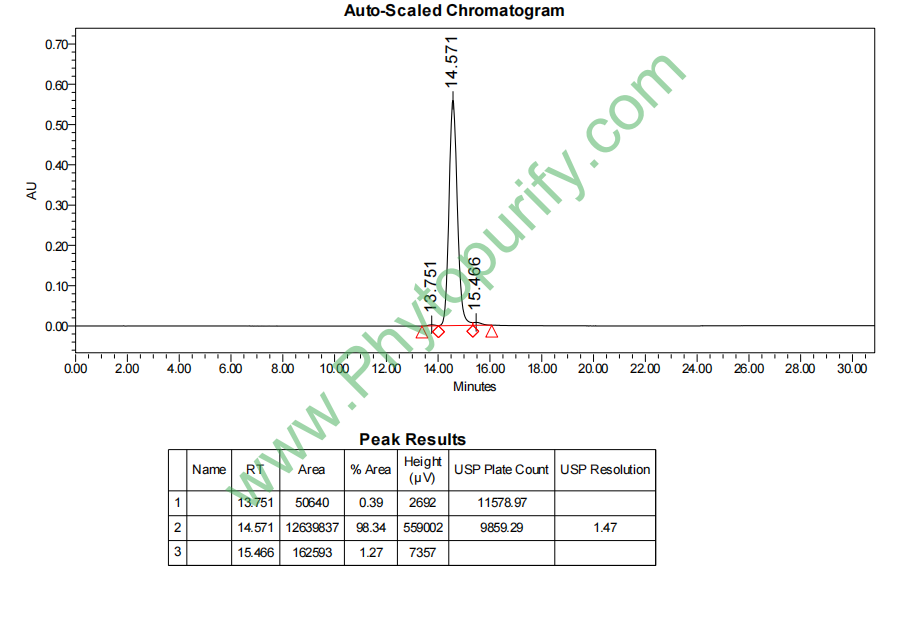
Analysis Method: HPLC-DAD or/and HPLC-ELSD
Identification Method: Mass, NMR
Packing: Brown vial or HDPE plastic bottle
Storage: Store in a well closed container, protected from air and light. Put into refrigerate or freeze for long term storage.
Whenever possible, you should prepare and use solutions on the same day. However, if you need to make up stock solutions in advance, we recommend that you store the solution as aliquots in tightly sealed vials at -20℃. Generally, these will be useable for up to two weeks.
The product could be supplied from milligrams to grams
Inquire for bulk scale.
For Reference Standard and R&D, Not for Human Use Directly.
HPLC of Isosilybin B
Storage conditions:Short-term storage at 2~8℃, long-term storage at -20 ~ -80℃
155.1400
1.8536
1.7167
.2099
1.8028
.7023
Low
89.0918
3.9920
No
No
No
No
Yes
No
0.0
Yes
No
Yes
No
Natural products have always been an important source of drug discovery and development, and their structural diversity and unique biological activity provide valuable lead compounds for overcoming major human diseases. Among the many natural products with medicinal value, it comes from the Asteraceae plant Silymar(Silybum marianum The Silymarin complex of (L.) Gaertn. has attracted much attention due to its significant hepatoprotective, antioxidant, and anti-inflammatory activities. Silymarin is not a single compound, but a mixture of structurally similar flavonolignans, with Silibinin being the most abundant and extensively studied major active ingredient. However, with the advancement of separation and analysis techniques, researchers have gradually realized that other trace components in silymarin also have unique pharmacological activities, and even exhibit characteristics superior to silibinin some aspects. Isosilybin B is one of the shining pearls.
Isosilybin B, CAS number 142796-22-3, is an important flavonoid lignan isomer in the silymarin family. Compared with the more well-known silibinin, isosilibinin B exhibits subtle structural differences, which result in its unique personality in terms of biological activity spectrum and mechanism of action. Early research mainly focused on silibinin, but in recent years, with the deepening of the refinement of silibinin components, the unique pharmacological value of isosilbinin B, especially its potential in anti-tumor, anti fibrotic and other aspects, has gradually been revealed and valued. Especially its significant activity in regulating the cell cycle, inducing apoptosis, and intervening in the androgen receptor signaling pathway makes it a potential candidate molecule for the treatment of hormone related tumors such as prostate cancer. In addition, its activity in the field of anti fibrosis has also attracted widespread attention, providing new ideas for the treatment of diseases such as liver fibrosis and pulmonary fibrosis.
This article aims to provide a systematic professional review of isosilybin B, starting from its chemical structure and physicochemical properties, sorting out its plant sources and extraction methods, focusing on the research progress of its pharmacological activity, exploring its mechanism of action and molecular targets in depth, and evaluating it based on its pharmacological parameters and pharmacokinetic characteristics. Finally, the clinical application prospects are discussed, in order to provide comprehensive reference for the in-depth research and development of this natural product.
Isosilybin B belongs to the flavonoid lignan class compounds, and its core structure consists of two parts: a flavonoid parent nucleus (Taxifolin) and a phenylpropanoid unit (Coniferyl alcohol) connected by C-C bonds. This unique "flavonoid lignan" hybrid structure endows this class of compounds with abundant biological activity. Isosilybin B is one of the stereoisomers of silybin, and together with silybin A and isosilybin A, it constitutes the main flavonoid lignan component in silybin. Specifically, the chemical structural differences of isosilybin B mainly lie in the different stereoisomers of C-2, C-3 positions and C-C bonds connecting flavonoid units and lignin units. This subtle stereochemical difference determines the specificity of its binding to target molecules (such as proteins and enzymes) in the body, resulting in pharmacological effects that are different from other isomers.
From the perspective of physical and chemical properties, the molecular formula of isosilybin B is C ₂₅ H ₂₂ O ₁₀, with a molecular weight of 482.4410 Da. Its molecular structure is rich in phenolic hydroxyl groups, endowing the compound with strong polarity and antioxidant capacity. The calculated lipid water partition coefficient (LogP) is 1.8536, indicating that it has a certain degree of lipophilicity, but overall it exhibits moderate polarity. The topological polar surface area (TPSA) is 155.1400 Å ², and a higher TPSA value typically indicates its association with membrane permeability, but may also limit its transmembrane ability, particularly in crossing the blood-brain barrier. In fact, the pharmacological parameters clearly indicate that its blood-brain barrier penetration ability is "low", which suggests that it may face challenges in treating central nervous system diseases, but also reduces the potential risk of neurotoxicity. In terms of water solubility, the water solubility value of isosilybin B is 0.2099 mg/mL, which is a compound with poor water solubility. This may be one of the main reasons for its low oral bioavailability. In terms of safety prediction, hERG inhibition was evaluated as' no ', indicating a low risk of inducing QT interval prolongation and arrhythmia in the heart; The Ames test result is 0.0, indicating no significant mutagenicity. These preliminary pharmacological parameters provide positive signals for isosilybin B as a drug candidate molecule, but its poor water solubility needs to be improved through pharmaceutical methods.
The main plant source of Silymarin B is the Asteraceae plant Silymarin(Silybum marianum). Silymarin is native to Southern Europe and North Africa, and is now widely cultivated in multiple regions around the world. Its fruit (achene) is a traditional medicinal part for extracting silymarin. The content of silymarin complex in fruit is about 1.5% to 3%, of which silymarin (including two diastereomers A and B) accounts for about 50% -70%. The content of silymarin (including A and B) is relatively low, usually accounting for about 5% -10% of the total amount of silymarin. Therefore, efficient extraction and purification techniques are required to obtain isosilybin B from plant raw materials.
The traditional extraction method usually uses organic solvent extraction. Dried and crushed milk thistle fruits are first degreased using low polarity solvents such as petroleum ether or n-hexane to remove impurities such as oil and pigments. The defatted drug residue is then subjected to reflux extraction or percolation extraction using solvents with higher polarity, such as methanol, ethanol, or their aqueous solutions. The crude extract, namely silymarin, is obtained by concentrating and drying the extract. However, the crude extract is a complex mixture of multiple flavonoids and lignans, and the separation of high-purity isosilybin B from it requires the use of modern chromatographic separation techniques.
High performance liquid chromatography (HPLC) is the most commonly used method for separating silybin B. By using a reverse phase C18 chromatography column with methanol water or acetonitrile water system as the mobile phase and gradient elution, effective separation of various components (such as silibinin A, silibinin B, isosilbinin A, isosilbinin B, etc.) in silymarin can be achieved. Preparative HPLC can be used for the purification of samples ranging from milligrams to grams, obtaining high-purity (usually>98%) silybin B monomer. In addition, high-speed countercurrent chromatography (HSCCC), as a liquid-liquid distribution chromatography technique, has also been applied in the separation of various components in silymarin in recent years due to its advantages of irreversible adsorption and high sample recovery rate, showing good application prospects. With the development of biotechnology, the use of genetic engineering or cell engineering methods, such as precursor feeding or inducer treatment in silymarin cell culture systems, to selectively increase the production of isosilybin B is also a direction worth exploring in the future.
In recent years, significant progress has been made in the pharmacological activity research of isosilebinin B. Its activity spectrum covers multiple aspects such as anti-tumor, anti fibrotic, antioxidant, anti-inflammatory, etc. Among them, anti-tumor activity, especially for prostate cancer, is the most in-depth and prominent research.
1. Antitumor activity
Numerous in vitro and in vivo studies have confirmed that isosilybin B has significant inhibitory effects on proliferation and induces apoptosis in various tumor cell lines. In the field of prostate cancer, its activity is particularly noteworthy. Research has shown that isosilybin B can effectively inhibit the growth of androgen dependent (such as LNCaP) and non androgen dependent (such as PC-3, DU145) prostate cancer cells. Its mechanism of action involves multiple levels:
- Regulating the cell cycle Isosilybin B can block prostate cancer cells in the G1 phase. The mechanism is achieved by downregulating various cyclins, including Cyclin D3, Cyclin D1, Cyclin A, and Cyclin E, as well as cyclin dependent kinases (CDKs) such as Cdk4 and Cdk2. At the same time, it can also reduce the expression of cell division cycle 25A phosphatase (Cdc25A), which is a key enzyme in activating CDK cyclin complexes. Through this series of effects, isosilybin B effectively blocks the progression of the cell cycle from G1 phase to S phase, thereby inhibiting tumor cell proliferation.
- Inducing cell apoptosis Isosilybin B is a powerful inducer of apoptosis. It can activate the endogenous apoptotic pathway mediated by mitochondria, specifically by activating Caspase-9 (initiating Caspase) and Caspase-3 (effector Caspase), leading to the cleavage of cytoskeletal proteins and DNA repair enzymes, ultimately triggering cell apoptosis. In addition, studies have found that isosilbinin B can regulate the expression of Bcl-2 family proteins, such as downregulating anti apoptotic proteins Bcl-2 and Bcl xL, upregulating pro apoptotic proteins Bax and Bak, thereby promoting mitochondrial release of cytochrome c and further amplifying apoptotic signals.
- Intervention in the androgen receptor (AR) signaling pathway For androgen dependent prostate cancer, isosibin B exhibits unique anti androgen activity. It can significantly reduce the protein levels of androgen receptor (AR) and its target gene prostate-specific antigen (PSA). This effect is not achieved through direct competitive binding to androgens, but by accelerating the degradation of AR proteins or inhibiting their transcriptional activity. This effective intervention in the AR signaling pathway has potential value in the treatment of castration resistant prostate cancer.
In addition to prostate cancer, Isosilybin B also shows certain anti-cancer activity in other tumor models such as breast cancer, colon cancer, lung cancer, but its specific mechanism remains to be further clarified.
2. Anti fibrotic activity
Fibrosis is a common pathological feature of various chronic diseases, such as cirrhosis, pulmonary fibrosis, and renal fibrosis, with excessive deposition of extracellular matrix (ECM) at its core. Isosilybin B has also shown potential in anti fibrosis. Research suggests that its anti fibrotic effect may be related to regulating the following targets:
- MMP2 (Matrix Metalloproteinase 2)MMP2 is a key enzyme that degrades type IV collagen in ECM, and its activity is abnormally elevated during fibrosis. Isosilybin B may slow down the fibrosis process by inhibiting the expression or activity of MMP2, reducing the degradation and remodeling of ECM.
- TGFB1 (Transforming Growth Factor β 1)TGFB1 is widely recognized as the strongest fibrogenic factor. It activates the Smad signaling pathway, promotes the transformation of fibroblasts into myofibroblasts, and upregulates the synthesis of ECM components such as collagen. Isosilybin B may exert anti fibrotic effects by inhibiting the expression of TGFB1 or its downstream signal transduction.
- ACTA2 (alpha smooth muscle actin)ACTA2 is a hallmark protein of myofibroblasts. Myofibroblasts are the main source of ECM during the fibrosis process. Isosilybin B may reduce the activation and accumulation of myofibroblasts by inhibiting the expression of ACTA2.
- COL1A1 (type I collagen alpha 1 chain)Type I collagen is the most abundant type of collagen in ECM. Isosilybin B can directly downregulate the gene expression of COL1A1, thereby reducing collagen synthesis and inhibiting ECM deposition.
- TIMP1 (tissue inhibitor of matrix metalloproteinase 1)TIMP1 is an endogenous inhibitor of MMPs. In fibrosis, the expression of TIMP1 increases, inhibiting the degradation of ECM by MMPs and leading to net accumulation of ECM. Isosilybin B may regulate the expression of TIMP1, restore the balance of MMPs/TIMPs, and promote the normal metabolism of ECM.
These targets together form the molecular network of the anti fibrotic effect of isosilybin B, suggesting that it may intervene in the fibrotic process through multiple targets and pathways.
Based on existing research, the pharmacological mechanism of action of Silymarin B can be summarized into the following core aspects, involving a complex and intricate network of molecular targets.
1. Cell cycle regulation mechanism
Isosilybin B blocks the cell cycle in the G1 phase by downregulating key regulatory factors at multiple G1/S checkpoints. The molecular targets it directly acts on include:
- Cyclin D1/D3 As an early G1 phase cyclin, it binds to Cdk4/6 to drive cells from G0/G1 phase to S phase. Isosilybin B significantly reduces its protein levels.
- Cdk4/Cdk2 The kinase that binds to the corresponding Cyclin is essential for cell cycle progression in terms of its activity. Isosilybin B inhibits its expression.
- Cdc25A A phosphatase that activates Cdk Cyclin complexes by removing inhibitory phosphate groups from Cdk. Isosilybin B downregulates Cdc25A, leading to the inactivation of Cdk.
- Cyclin A/E Cyclins involved in G1/S transition and S phase progression. Isosilybin B also inhibits its expression.
This multi-target synergistic inhibition ensures effective cell cycle arrest in the G1 phase.
2. Apoptosis induction mechanism
Isosilybin B mainly induces cell apoptosis through the mitochondrial pathway (endogenous pathway). Key molecular events include:
- Regulation of Bcl-2 family proteins Downregulation of anti apoptotic proteins (Bcl-2, Bcl xL) and upregulation of pro apoptotic proteins (Bax, Bak) lead to increased mitochondrial outer membrane permeability.
- Mitochondrial dysfunction The mitochondrial membrane potential (Δ PSI m) decreases, releasing pro apoptotic factors such as cytochrome c (Cyt c) and apoptosis inducing factor (AIF).
- Caspase cascade activation Cyt c binds to Apaf-1 and procaspase-9 to form apoptotic bodies, activating Caspase-9. Activated Caspase-9 subsequently cleaves and activates effector Caspase-3 and Caspase-7, ultimately leading to the disintegration of the cytoskeleton and DNA fragmentation, completing the execution of apoptosis.
3. Intervention of androgen receptor (AR) signaling pathway
This is the key mechanism by which isosilybin B plays a unique role in prostate cancer. The main target of its action is the AR protein itself, rather than the androgen ligand. The specific mechanism may include:
- Promote AR protein degradation Accelerate the turnover of AR proteins and reduce their intracellular levels through the ubiquitin proteasome pathway.
- Inhibit AR transcriptional activity Even in the presence of AR protein, isosilibinin B may inhibit the transcription of downstream target genes (such as PSA) by interfering with its binding to co activators or affecting its binding to DNA response elements.
- Cross dialogue The regulation of cell cycle and apoptosis by Silymarin B may also have a cross dialogue with the AR signaling pathway, jointly inhibiting tumor growth.
4. Anti fibrotic mechanism
The anti fibrotic effect of isosilicin B involves regulating the balance between ECM synthesis and degradation. Its core targets include:
- TGFB1/Smad pathway Inhibiting the expression of TGFB1 or blocking its binding to receptors, thereby inhibiting the phosphorylation and nuclear translocation of Smad2/3, and reducing the transcription of downstream pro fibrotic genes (such as COL1A1, ACTA2).
- ECM synthase Directly inhibit the expression of collagen genes such as COL1A1.
- ECM degrading enzymes and their inhibitors Regulating the expression of MMP2 and TIMP1 to restore the dynamic balance between ECM degradation and deposition.
Based on the provided pharmacological parameters and existing literature, a preliminary evaluation of the pharmacological properties of isosilybin B is conducted.
1. Analysis of pharmacological parameters
- Molecular weight (482.44 Da)Slightly higher than the limit of molecular weight<500 in Lipinski's Rule of Five, but still within an acceptable range, many successful natural medicines have molecular weights exceeding 500.
- LogP (1.85)Being within the ideal range (0-3) indicates that it has both hydrophilicity and lipophilicity, which is beneficial for dissolution and transmembrane transport.
- TPSA (155.14 Ų)Exceeding the threshold of 140 Å ² suggests that its oral absorption may be poor and it may not easily penetrate the blood-brain barrier. This is consistent with the prediction of 'blood-brain barrier: low'. High TPSA also means that it may not be a good substrate for P-glycoprotein (P-gp), but experimental verification is needed.
- Water solubility (0.21 mg/mL)Belonging to low water solubility compounds, this is a common challenge in oral drug development and may lead to low oral bioavailability.
- HERG inhibition (No)This is a very positive signal that greatly reduces the risk of cardiac toxicity.
- Ames test (0.0)A negative result indicates no genetic toxicity.
2. Pharmacokinetic characteristics
At present, there is relatively little research on the pharmacokinetics of silymarin B alone, and most of the data comes from studies on silymarin or silymarin. However, it can be inferred that as a component of silymarin, the pharmacokinetic characteristics of isosilybin B are similar to those of silymarin, but there are also differences.
- absorb Poor oral absorption and low absolute bioavailability. The main reasons include: poor water solubility leading to slow dissolution rate; Intestinal first pass effects (such as glucuronidation and sulfation); It may be a substrate for efflux transporters such as P-gp. Its high TPSA value also suggests limited transmembrane ability.
- distribution High plasma protein binding rate (mainly bound to albumin). The tissue is widely distributed, but the liver and kidneys may be the main distribution organs. Due to low blood-brain barrier penetration, the distribution of the central nervous system is limited.
- Metabolism The main metabolic pathway is phase II metabolism in the liver and intestines, which combines with glucuronic acid or sulfuric acid to form more water-soluble complexes, making them easier to excrete. I-phase metabolism (such as CYP450 enzyme mediated oxidation) may also be involved, but to a relatively low extent.
- excretion Mainly excreted in the form of metabolites through bile and urine. There is obvious enterohepatic circulation, which may be one of the reasons for its relatively long plasma half-life (about 6-8 hours for silibinin).
3. Strategies for enhancing drug properties
Given the poor water solubility and low oral bioavailability of Silymarin B, advanced formulation techniques are needed in future drug development to improve its pharmacological properties. Possible strategies include:
- Solid dispersion Disperse the drug in a hydrophilic polymer carrier to increase the dissolution rate.
- Phospholipid complex Forming complexes with phospholipids, improving lipid solubility, and promoting transmembrane absorption (such as the phospholipid complex of silibinin that has been marketed).
- nano-formulation Preparation of nanoparticles, liposomes, nanoemulsions, etc. to improve solubility, stability, and targeting.
- Prodrug design Introducing phosphate groups or amino acids onto phenolic hydroxyl groups to improve water solubility, and releasing the active ingredient through enzymatic interpretation in vivo.
Isosilybin B, as a natural flavonoid lignan with multi-target activity, has shown broad clinical application prospects in multiple disease fields.
1. Tumor treatment, especially prostate cancer
Given its unique anti androgenic activity, cell cycle arrest, and apoptosis inducing ability, isosilybin B is expected to be developed as a novel drug or adjuvant therapy for the treatment of prostate cancer. Especially for castration resistant prostate cancer (CRPC), as the AR signaling pathway remains active, isosilbinin B inhibits AR in a non competitive manner, which may provide a new treatment option for patients who are resistant to existing anti androgen drugs such as enzalutamide. In the future, the combination of it with chemotherapy drugs (such as docetaxel), radiotherapy, or new endocrine therapy drugs can be explored to enhance efficacy and reduce toxic side effects.
2. Treatment of fibrotic diseases
The regulatory effect of isosilybin B on multiple key fibrosis targets such as TGFB1, COL1A1, ACTA2, makes it potentially effective in treating diseases such as liver fibrosis, pulmonary fibrosis, renal fibrosis, and myocardial fibrosis. Silymarin itself has been widely used for liver protection, and Silymarin B, as its more active component, may show better efficacy in anti liver fibrosis. In addition, its application in refractory fibrotic diseases such as idiopathic pulmonary fibrosis (IPF) also deserves further research.
3. Other potential applications
Based on its antioxidant and anti-inflammatory activities, isosilybin B may also be applied in neurodegenerative diseases (although its blood-brain barrier penetration is low, it can be improved through nanomaterials), metabolic diseases (such as non-alcoholic fatty liver disease), and skin photoaging.
Outlook and Challenges
Despite the promising prospects, the clinical translation of isosilybin B still faces many challenges:
- The issue of bioavailability Low water solubility and poor oral absorption are the primary obstacles. It is necessary to rely on advanced formulation technology to achieve effective systemic exposure.
- Deep analysis of the mechanism of action Although it is known to act on multiple targets, the specific direct binding to target proteins is not yet fully understood. It is crucial to use chemical biology techniques, such as drug affinity reaction target stability technology (DARTS), to identify its direct targets for understanding its mechanism of action and optimizing drug design.
- In vivo efficacy and safety evaluation More and more systematic in vivo pharmacological studies are needed, especially to validate its anti-tumor and anti fibrotic activities in appropriate animal models. Long term toxicity studies are also necessary.
- Large scale preparation process The efficient and low-cost separation and purification of high-purity isosilybin B from Silymarin, or the development of its fully synthetic/semi synthetic route, is the basis for meeting future preclinical and clinical research needs.
Isosilybin B is a rediscovered gem in the silymarin family. Based on its unique stereochemical structure, it exhibits more focused and potent biological activity that distinguishes it from other components of silymarin, especially in regulating the cell cycle, inducing apoptosis, and intervening in the androgen receptor signaling pathway, making it a highly promising candidate molecule for the treatment of prostate cancer. Meanwhile, its multi-target regulatory role in the field of anti fibrosis has also opened up new application directions for its treatment of chronic fibrosis diseases. Although there are challenges in drug formulation, especially in terms of oral bioavailability, these obstacles are expected to be overcome through modern medicinal chemistry and formulation methods. The in-depth study of Silymarin B not only enriches our understanding of the pharmacological effects of Silymarin, but also provides a successful example for discovering and developing innovative drugs from traditional natural products. In the future, with further elucidation of its mechanism of action, breakthroughs in formulation technology, and in-depth preclinical research, isosilybin B is expected to move from the laboratory to clinical practice and contribute to human health.
