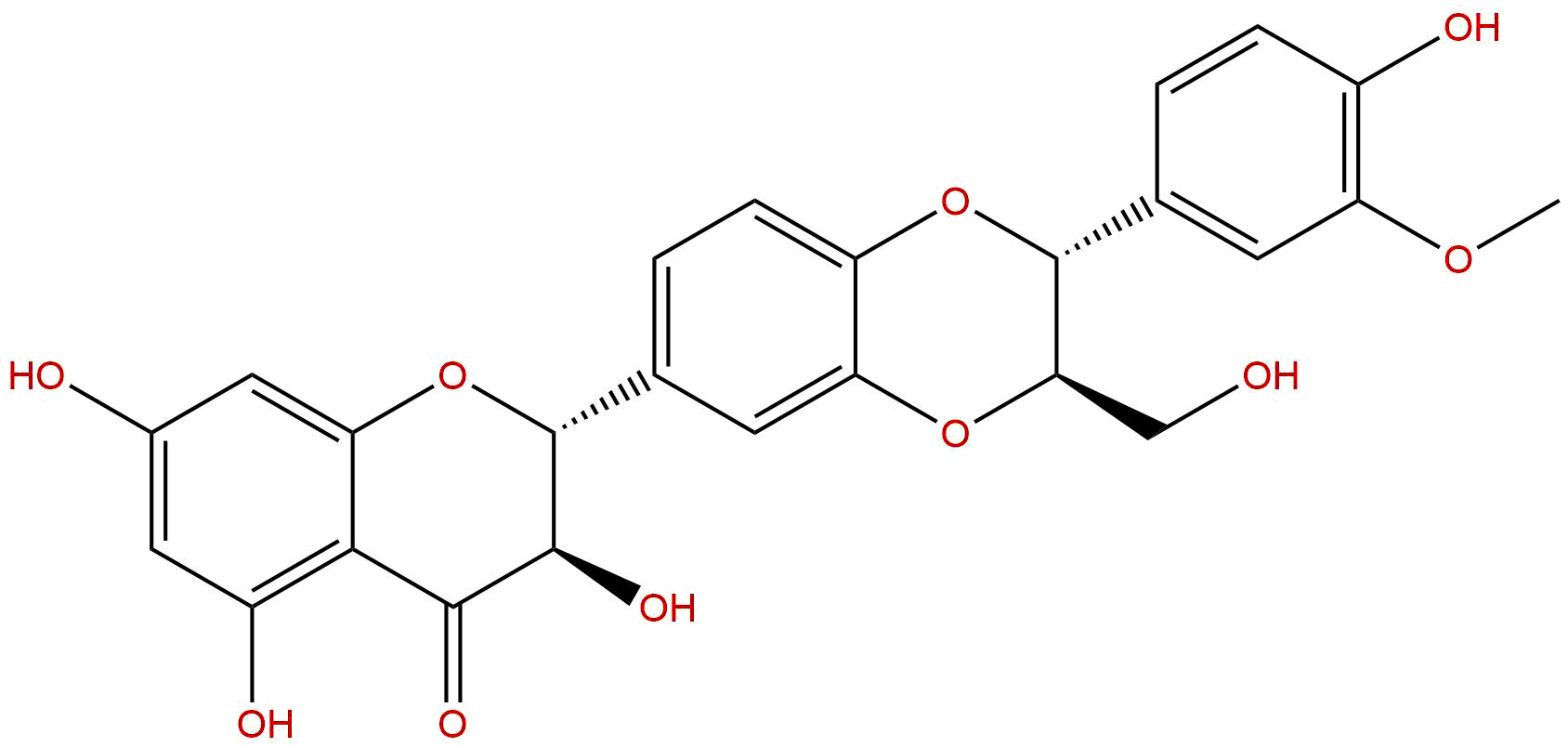


Product name: Isosilybin A
Synonym name: Isosilibinin A; Silybin b2
Catalogue No.: BP4854
Cas No.: 142796-21-2
Formula: C25H22O10
Mol Weight: 482.441
Botanical Source:
Type of Compound: Flavonoids
Purity: 95%~99%
Analysis Method: HPLC-DAD or/and HPLC-ELSD
Identification Method: Mass, NMR
Packing: Brown vial or HDPE plastic bottle
Storage: Store in a well closed container, protected from air and light. Put into refrigerate or freeze for long term storage.
Whenever possible, you should prepare and use solutions on the same day. However, if you need to make up stock solutions in advance, we recommend that you store the solution as aliquots in tightly sealed vials at -20℃. Generally, these will be useable for up to two weeks.
The product could be supplied from milligrams to grams
Inquire for bulk scale.
For Reference Standard and R&D, Not for Human Use Directly.
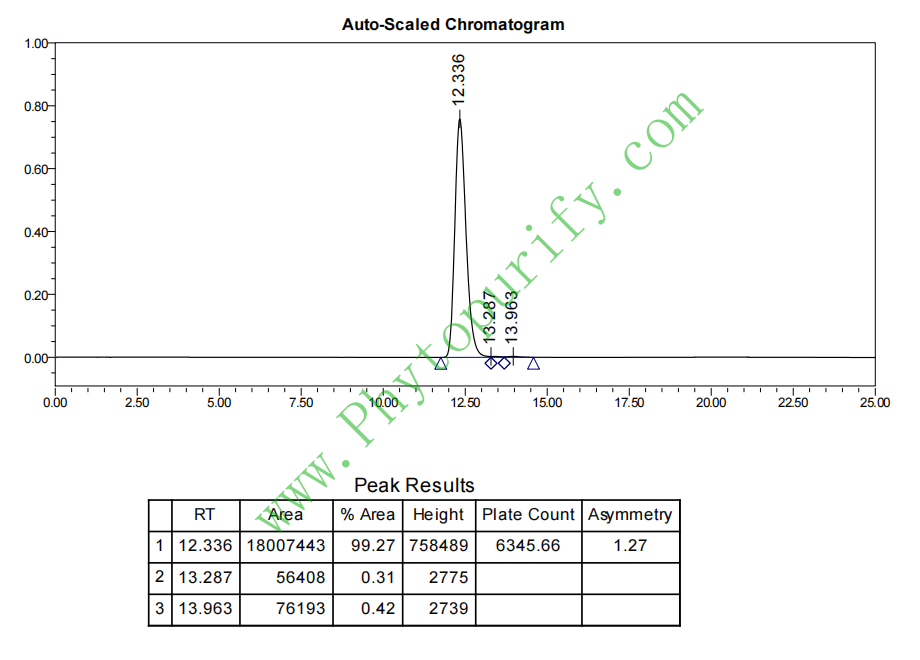
HPLC of Isosilybin A
Storage conditions:Short-term storage at 2~8℃, long-term storage at -20 ~ -80℃
155.1400
1.8531
1.7161
.2092
1.8252
.7023
Low
89.1451
3.9920
No
No
No
No
Yes
No
0.0
Yes
No
Yes
No
Natural products, as an important source of drug discovery, have long played an indispensable role in the human fight against diseases. Among the numerous natural compounds with biological activity, the source comes from the Asteraceae plant Silymar(Silybum marianum Silymarin in fruits and seeds is renowned for its excellent liver protective effects. Silymarin is not a single compound, but a complex mixture of structurally similar flavonolignans, among which Silibinin (also known as Silybin) is the most abundant and extensively studied active ingredient. However, with the deepening of separation technology and pharmacological research, other trace or minor components in silymarin have gradually shown unique biological value, and Isosilybin A is one of them.
Isosilybin A, CAS number 142796-21-2, is an important flavonoid lignan isomer in silymarin. Early research often regarded it as an analog of silibinin, but recent studies have revealed that isosilbinin A has a unique pharmacological lineage and molecular targets distinct from silibinin. It has been identified as an agonist of peroxisome proliferator activated receptor gamma (PPAR gamma), providing a theoretical basis for its application in metabolic regulation and anti-inflammatory fields. More notably, isosilybin A exhibits significant potential in anti-tumor activity, particularly in prostate cancer (PCA). Its mechanism of action involves precise regulation of the Akt NF - κ B-AR signaling axis and simultaneous activation of exogenous and endogenous pathways for cell apoptosis. In addition, in inflammatory disease models such as rosacea, isosilibinin A exhibits strong anti-inflammatory effects by inhibiting the Erk and p38 mitogen activated protein kinase (MAPK) signaling pathways and M1 macrophage polarization. Its targets are closely related to RELA (NF - κ B p65 subunit) and vascular endothelial growth factor A (VEGFA).
This article aims to provide a comprehensive and in-depth review of isosilybin A, a natural product with significant research value. We will systematically review its chemical structure and physicochemical properties, plant sources and extraction methods, focusing on its pharmacological activities in liver protection, anti-inflammatory, anti-tumor and other aspects, and deeply explore its underlying molecular mechanisms of action. At the same time, based on its pharmacological parameters and pharmacokinetic characteristics, evaluate its potential as a lead compound or candidate drug, and look forward to its application prospects in future clinical translation.
Isosilybin A belongs to the flavonoid lignan class compounds, and its chemical structure consists of two parts: a flavonoid parent nucleus (Taxifolin) and a phenylpropanoid unit (Coniferyl alcohol), which are connected by C-C bonds to form a unique dimer structure. Silibinin A and Silibinin are a pair of diastereomers, with the difference being the relative configuration of the C-2 'and C-3' positions in the lignin moiety. Specifically, silibinin is a combination product of (2R, 3R) - dihydroquercetin and (2R, 3R) - coniferol, while the coniferol portion of silibinin A is in the (2S, 3S) configuration. This subtle stereochemical difference leads to significant differences in their biological activity, molecular target affinity, and pharmacokinetic behavior.
From the perspective of physical and chemical properties, the molecular formula of Silymarin A is C ₂₅ H ₂₂ O ₁₀, with a molecular weight of 482.4410 g/mol. Its structure contains multiple phenolic hydroxyl groups, endowing the molecule with a certain polarity and hydrogen bond donor/acceptor ability. The calculated lipid water partition coefficient LogP is 1.8531, indicating that it has moderate lipophilicity, which is conducive to transmembrane transport, but not excessively lipophilic and difficult to dissolve in the aqueous environment. Its topological polar surface area (TPSA) is as high as 155.1400 Å ², mainly attributed to its abundant hydroxyl and ether oxygen atoms. A higher TPSA value usually indicates poorer passive diffusion ability of the cell membrane, but also suggests that it may enter the cell through active transport or endocytosis. The water solubility of Silymarin A is 0.2092 mg/mL, which belongs to the category of slight solubility. This to some extent limits its oral bioavailability and is also a common challenge for natural products. It is worth noting that its blood-brain barrier (BBB) penetration ability was evaluated as "low", indicating limited potential in the treatment of central nervous system diseases, but also implying a lower risk of potential side effects on the central nervous system after peripheral administration. In addition, the prediction of hERG inhibition is "no", and the Ames test result is 0.0, indicating a low risk of cardiac and genetic toxicity, which is an important advantage of it as a candidate drug.
The main plant source of Silymarin A is the Asteraceae plant Silymarin(Silybum marianum). Silymarin is native to Southern Europe and North Africa, and has been introduced and cultivated in multiple regions around the world. Its dry and mature fruit (or seed) is the main medicinal part for extracting silymarin. The content of silymarin in fruits is about 1.5% to 3%, and the content of silymarin A in total flavones of silymarin is relatively low, usually lower than that of silymarin. Its specific proportion is affected by factors such as plant variety, origin, growth conditions, and harvest time.
The traditional extraction method is mainly based on organic solvent extraction. Usually, after crushing the seeds of milk thistle, polar solvents such as methanol, ethanol, or acetone are used for extraction or percolation. After concentration and defatting (such as using petroleum ether) of the extract, crude extract is obtained. Further separation and purification can be achieved through column chromatography (such as silica gel column, polyamide column, or macroporous adsorption resin) to obtain a mixture rich in flavonoids and lignans - silymarin. However, to efficiently separate high-purity isosilybin A from silymarin, more advanced chromatographic techniques are required. High performance liquid chromatography (HPLC), especially preparative HPLC, is a key method for separating isosilbinin A and its isomers (such as isosilbinin B, silibinin A/B). By using a reverse phase C18 chromatography column with methanol water or acetonitrile water system as the mobile phase and optimizing the gradient elution program, effective separation of various components in silymarin can be achieved. In recent years, new separation methods such as high-speed countercurrent chromatography (HSCCC) and molecular imprinting technology have also been explored for the directional separation of isosilbinin A, aiming to improve yield, reduce costs, and minimize the use of organic solvents. In addition, supercritical fluid extraction (SFE), as a green extraction technique, has also shown the potential to extract flavonoid lignans from Silymarin. However, its selective extraction efficiency for isosilybin A still needs further research.
Given the classic liver protective effect of its parent compound silymarin, the liver protective activity of isosilybin A naturally becomes a research focus. Existing studies have shown that isosilybin A can protect liver cells from damage through multiple pathways. In chemical liver injury models (such as those induced by carbon tetrachloride and acetaminophen), pre-treatment with isosilbinin A can significantly reduce serum transaminase (ALT, AST) levels, alleviate liver cell necrosis and steatosis. The mechanism is closely related to the activation of the nuclear factor E2 related factor 2 (NRF2) signaling pathway. NRF2 is a key transcription factor in the cellular antioxidant defense system. Silymarin A can promote the dissociation and translocation of NRF2 from Keap1 protein into the nucleus, thereby initiating the expression of a series of downstream antioxidant enzyme genes, including NQO1(NAD (P) H: quinone oxidoreductase 1)HMOX1(Heme oxygenase 1)SOD1(Copper zinc superoxide dismutase)SOD2(Manganese Superoxide Dismutase)CAT(Catalase) and GPX1(Glutathione peroxidase 1). These enzymes work together to effectively eliminate reactive oxygen species (ROS) and alleviate oxidative stress damage to liver cells. In addition, isosilybin A can also inhibit the activation of hepatic stellate cells (HSCs), manifested by downregulation ACTA2(α - smooth muscle actin) and TGFB1 The expression of transforming growth factor β 1 (TGF - β 1) has the potential to exert anti liver fibrosis effects. Meanwhile, matrix metalloproteinases MMP9 The regulation of liver extracellular matrix remodeling is also involved in its regulatory effect.
Isosilybin A exhibits significant anti-inflammatory activity, particularly in skin inflammation models such as rosacea. Rosacea is a chronic and recurrent inflammatory disease of the facial skin, with a complex pathogenesis involving immune dysfunction, vascular dysfunction, and neuroinflammation. Research has found that isosilybin A can effectively alleviate the inflammatory response in the rosacea model. Its mechanism of action mainly involves the regulation of macrophage polarization. Macrophages can be divided into pro-inflammatory (M1 type) and anti-inflammatory reparative (M2 type) types. Silymarin A can inhibit the polarization of M1 macrophages and reduce their release of pro-inflammatory factors such as tumor necrosis factor - α (TNF - α), interleukin-6 (IL-6), and inducible nitric oxide synthase (iNOS). At the same time, it can also inhibit the phosphorylation of the Erk and p38 MAPK signaling pathways, which are key nodes in mediating inflammatory signaling. Further target analysis reveals the anti-inflammatory effect of isosilybin A and its impact on RELA(i.e. NF - κ B p65 subunit) and VEGFA The regulation is closely related. NF - κ B is the core transcription factor of inflammatory response, and inhibiting the activation of RELA can block the expression of multiple downstream inflammatory factors. VEGFA is a key factor in promoting angiogenesis and vascular permeability, playing an important role in symptoms such as flushing and telangiectasia in rosacea. Therefore, isosilybin A exerts anti-inflammatory effects from both immune and vascular dimensions by simultaneously inhibiting NF - κ B activity and VEGFA expression.
One of the most notable pharmacological activities of isosilybin A is its anti prostate cancer (PCA) effect. Prostate cancer is one of the most common malignant tumors in the male genitourinary system, and the androgen receptor (AR) signaling pathway plays a central role in its occurrence and development. Isosilybin A has been proven to be an effective PPAR γ agonist. The activation of PPAR γ can antagonize AR signaling, thereby inhibiting the proliferation of prostate cancer cells. More importantly, isosilibinin A can target the Akt NF - κ B-AR signaling axis. Akt (protein kinase B) is a key regulatory factor for cell survival and proliferation, and its overactivation is closely related to tumor progression and drug resistance. Isosilybin A inhibits downstream NF - κ B activity by suppressing Akt phosphorylation. The inhibition of NF - κ B not only reduces the expression of pro-inflammatory and pro survival factors, but also directly downregulates the expression and transcriptional activity of AR, thereby cutting off the androgen signal that is crucial for the growth of prostate cancer cells. In addition, isosilibinin A can simultaneously activate both exogenous (death receptor) and endogenous (mitochondrial) pathways of cell apoptosis. It may upregulate the expression of death receptors such as Fas and TRAIL-R, activate caspase-8, and initiate exogenous apoptosis; Meanwhile, it can also induce mitochondrial membrane potential loss, promote cytochrome c release, activate caspase-9, and initiate endogenous apoptosis. This dual pathway activation of apoptosis strategy enables isosilybin A to exhibit high efficiency in inducing prostate cancer cell death and may overcome certain drug resistance caused by defects in a single apoptotic pathway.
Based on the above pharmacological activities, the mechanism of action of isosilybin A exhibits multi-target and multi pathway characteristics, and its core molecular mechanism can be summarized as follows:
PPAR γ agonistic effect Isosilybin A, as an agonist of PPAR γ, is the basis for its various biological activities. The activation of PPAR γ not only participates in the regulation of glucose and lipid metabolism, but also has anti-inflammatory and anti proliferative effects. In prostate cancer, PPAR γ activation can interfere with AR signaling and inhibit tumor growth. In inflammatory models, PPAR γ activation can inhibit the activity of pro-inflammatory transcription factors such as NF - κ B.
Regulation of Akt NF - κ B-AR signaling axis This is the core mechanism of the anti prostate cancer effect of Silymarin A. By inhibiting the phosphorylation of Akt and blocking its downstream signaling, the transcriptional activity of NF - κ B (RELA) is reduced. The inhibition of NF - κ B reduces the expression of pro-inflammatory and anti apoptotic proteins (such as Bcl xL, XIAP) on one hand, and directly or indirectly downregulates the expression and function of AR, thereby achieving a dual impact on the growth and survival of prostate cancer cells.
Inhibition of MAPK signaling pathway In the inflammatory response, isosilbinin A inhibits the phosphorylation of Erk and p38 MAPK, blocking the cascade of inflammatory signaling mediated by these kinases. This directly leads to polarization obstruction of M1 macrophages and reduced release of pro-inflammatory cytokines.
Activation of NRF2-ARE antioxidant pathway In terms of liver protection, isosilbinin A activates NRF2, initiates the expression of a series of downstream antioxidant enzymes (NQO1, HMOX1, SOD1, SOD2, CAT, GPX1), enhances the antioxidant defense ability of cells, and resists oxidative stress-induced liver cell damage.
Dual activation of apoptotic pathway Isosilybin A can activate both exogenous (death receptor) and endogenous (mitochondrial) apoptotic pathways simultaneously, making it more effective in inducing tumor cell death. This mechanism may involve the regulation of Bcl-2 family proteins (such as Bax/Bcl-2 ratio) and the initiation of caspase cascade reactions.
Based on the provided pharmacological parameters, isosilybin A exhibits certain potential for drug development, but also faces challenges. Its molecular weight (482.44 Da) is slightly higher than the traditional Lipinski's Rule of Five limit of molecular weight<500, but still within an acceptable range. The LogP value (1.85) and TPSA (155.14 Å ²) indicate moderate lipophilicity but high polarity, which may lead to poor oral absorption. The low water solubility (0.2092 mg/mL) is one of the main factors limiting its bioavailability. However, its low BBB penetration, no risk of hERG inhibition, and negative Ames test results are important safety advantages.
Regarding pharmacokinetics, the current specialized research on Silymarin A is not as in-depth as Silymarin A, but the overall pharmacokinetic characteristics of Silymarin can be referenced. The oral bioavailability of flavonoids and lignans in silymarin is generally low, mainly due to poor water solubility, low intestinal permeability, and extensive phase II metabolism (glucuronidation and sulfation) in the intestine and liver. Isosilybin A is likely to face the same challenge. In order to improve its bioavailability, various formulation strategies have been explored, such as preparing phospholipid complexes, liposomes, nanoparticles, or cyclodextrin inclusion complexes. These technologies aim to enhance their solubility and/or protect them from metabolic degradation. In addition, detailed pharmacokinetic parameters such as metabolic pathways, plasma protein binding rates, tissue distribution, and excretion pathways still need to be elucidated through more systematic preclinical and clinical studies.
The unique pharmacological activity and relatively good safety of isosilybin A have opened up prospects for its application in multiple therapeutic fields.
liver disease As one of the active ingredients of silymarin, isosilybin A can be used to develop novel liver protective drugs, especially for non-alcoholic fatty liver disease (NAFLD), alcoholic liver disease, and liver fibrosis. It has synergistic advantages in antioxidant and anti fibrotic effects through a dual mechanism of activating NRF2 and inhibiting TGFB1.
Inflammatory skin disease Given its significant therapeutic effect in the rosacea model, isosilybin A is expected to become a novel candidate drug for the treatment of rosacea and other chronic inflammatory skin diseases such as atopic dermatitis and psoriasis. Its topical preparations may have better application prospects, avoiding the problem of low oral bioavailability and directly acting on lesions.
prostate cancer Isosilybin A has shown great potential as an anti prostate cancer drug by targeting the Akt NF - κ B-AR axis and dual activation of the apoptotic pathway. It may be developed as a novel therapeutic drug, particularly for the treatment of castration resistant prostate cancer (CRPC), or as a sensitizer for existing therapies such as androgen deprivation therapy to overcome drug resistance.
Metabolic diseases As a PPAR γ agonist, Isosilybin A has the potential to improve insulin resistance and regulate glucose and lipid metabolism in theory, and may have therapeutic effect on type 2 diabetes and its complications. However, whether its PPAR gamma agonistic activity will cause side effects similar to thiazolidinedione drugs (such as Rosiglitazone), such as weight gain, edema, and cardiovascular risk, requires long-term safety evaluation.
Future research directions should focus on the following aspects: firstly, to deeply elucidate the precise binding mode of isosilybin A with key target proteins such as PPAR γ, NRF2, NF - κ B, etc., providing a basis for structure based drug design. The second is to develop efficient and safe drug delivery systems to overcome the bottleneck of low oral bioavailability. The third is to conduct more extensive in vivo pharmacological research, especially to validate its efficacy in various disease models and systematically evaluate its long-term toxicity. The fourth is to explore the combination therapy strategy of isosilybin A with other drugs (such as chemotherapy drugs and targeted drugs) in order to achieve synergistic effects and reduce toxicity.
Isosilybin A, as a rising star in the silymarin family, is no longer just a simple "shadow" of silymarin. It exhibits a more diverse and specific pharmacological activity spectrum distinct from the parent compound due to its unique chemical structure. From its classic hepatoprotective effects to its newly discovered anti-inflammatory (especially rosacea) and anti prostate cancer activities, the mechanism of action of isosilybin A involves PPAR γ activation, Akt NF - κ B-AR axis regulation, MAPK pathway inhibition, NRF2 pathway activation, and dual activation of the apoptotic pathway. These findings not only deepen our understanding of the complex pharmacological effects of silymarin, but also provide valuable lead compounds for the development of novel therapeutic drugs for liver disease, inflammatory diseases, and prostate cancer. Although there are challenges in its oral bioavailability, its good preliminary safety characteristics and unique pharmacological mechanisms make it have great potential for development. In the future, with in-depth research on its pharmacokinetics, toxicology, and clinical efficacy, isosilybin A is expected to be transformed from an active molecule in a laboratory into an innovative drug that can truly benefit patients.
