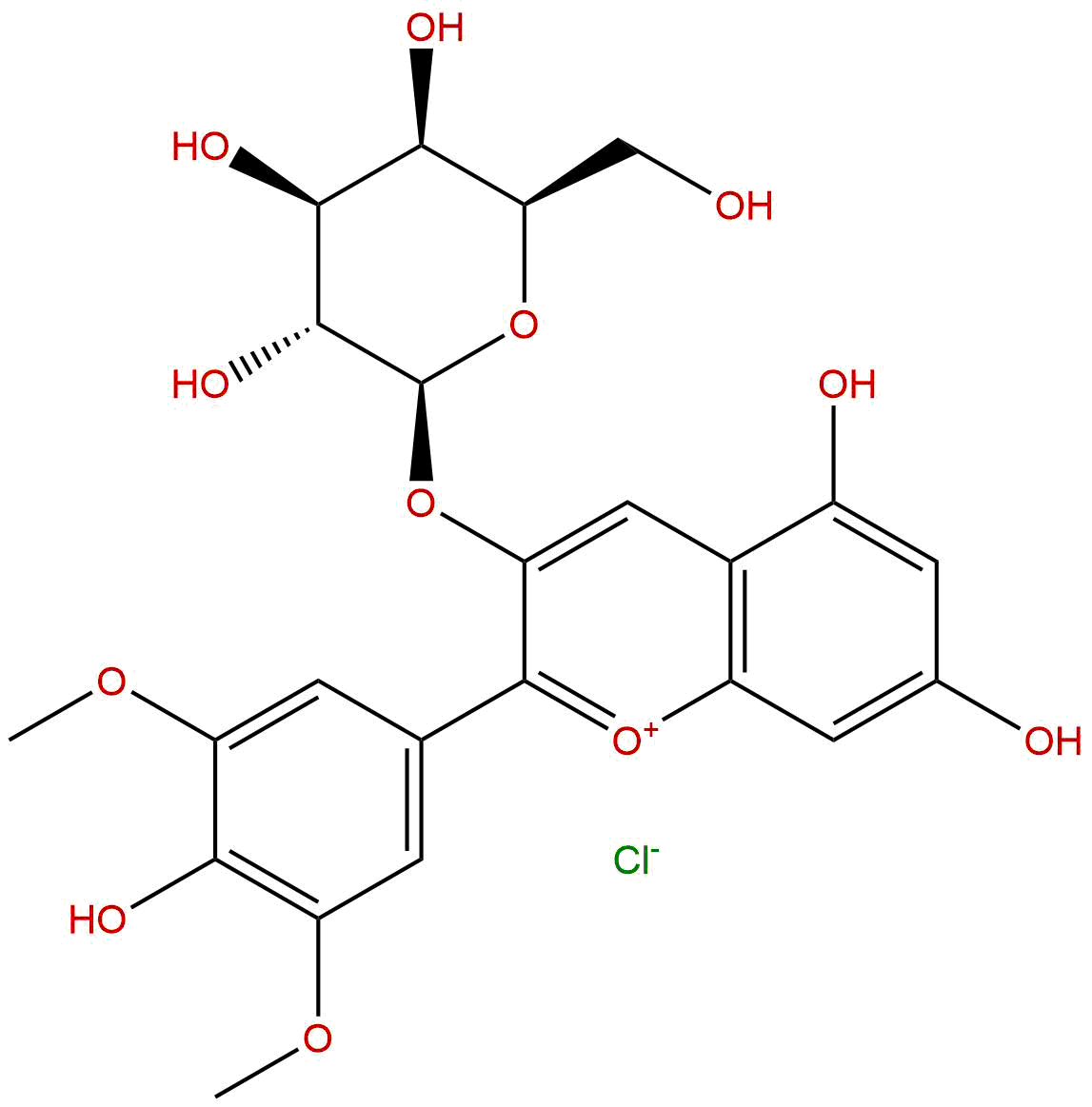


Product name: Malvidin-3-O-galactoside chloride
Synonym name: Arthanitin; Malvidin 3-galactoside
Catalogue No.: BP5303
Cas No.: 30113-37-2
Formula: C23H25ClO12
Mol Weight: 528.891
Botanical Source:
Type of Compound: "Flavonoids,Anthocyanins"
Purity: 95%~99%
Analysis Method: HPLC-DAD or/and HPLC-ELSD
Identification Method: Mass, NMR
Packing: Brown vial or HDPE plastic bottle
Storage: Store in a well closed container, protected from air and light. Put into refrigerate or freeze for long term storage.
Whenever possible, you should prepare and use solutions on the same day. However, if you need to make up stock solutions in advance, we recommend that you store the solution as aliquots in tightly sealed vials at -20℃. Generally, these will be useable for up to two weeks.
The product could be supplied from milligrams to grams
Inquire for bulk scale.
For Reference Standard and R&D, Not for Human Use Directly.
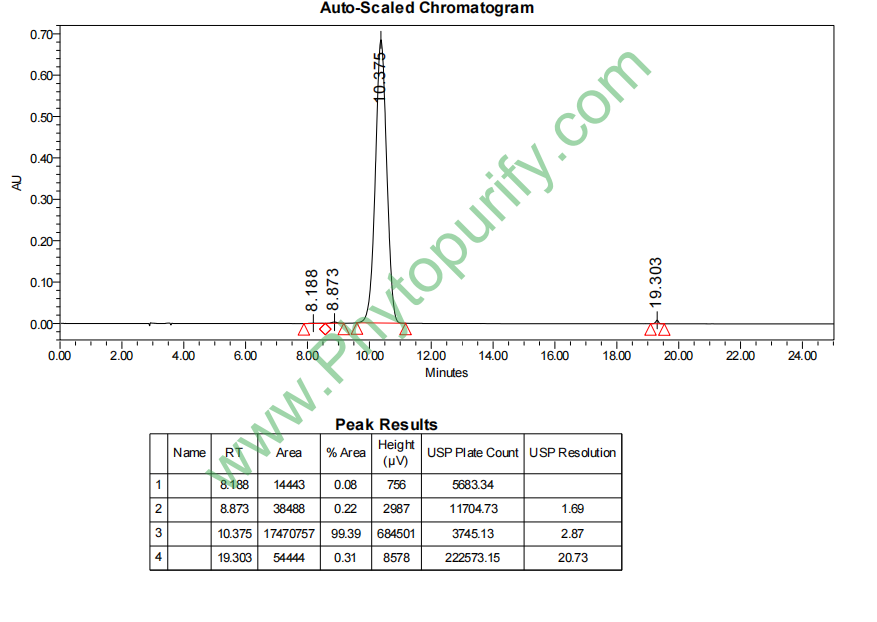
HPLC of Malvidin-3-O-galactoside chloride
Storage conditions:Short-term storage at 2~8℃, long-term storage at -20 ~ -80℃
189.8300
-1.3446
-2.0127
1.2476
.5542
.1521
Low
59.5817
4.3445
Yes
No
Yes
No
Yes
No
0.9
Yes
No
Yes
No
Natural products, as an important source of drug discovery, play an irreplaceable role in human health maintenance and disease treatment. Among numerous natural products, anthocyanins, as a water-soluble pigment widely present in the plant kingdom, not only endow fruits, vegetables, and flowers with rich colors, but also receive continuous attention from researchers due to their diverse biological activities. Anthocyanins belong to flavonoid compounds, and their basic structure is 2-phenylbenzopyran cation, which forms various derivatives through glycosylation, methylation and other modifications. Malvidin-3-O-galactoside chloride is an important anthocyanin glycoside, and its unique chemical structure and significant biological activity make it a research hotspot in the field of natural product pharmacology.
Chlorinated mallow pigment-3-O-galactoside, also known as mallow pigment-3-galactoside chloride, has a CAS number of 30113-37-2, a molecular formula of C ₂ ∝ H ₂₅ ClO ₁ ₂, and a molecular weight of 493.44. This compound is composed of Malvidin and galactose linked by glycosidic bonds, and is mainly found in dark berries and vegetables such as blueberries, kumquats, and purple cabbage in nature. In recent years, with the in-depth study of the health effects of dietary polyphenolic compounds, the potential application value of chlorinated mallow pigmental-3-O-galactoside in anti-tumor, antioxidant, anti-inflammatory, cardiovascular protection and other aspects has gradually been revealed, especially its multi-target anti-tumor activity has attracted widespread attention.
This article will provide a systematic review of the research progress of chlorinated mallow pigmental-3-O-galactoside from the aspects of chemical structure and physicochemical properties, plant sources and extraction methods, pharmacological activity research, mechanism of action and molecular targets, drug evaluation and pharmacokinetics, clinical application prospects and prospects, in order to provide reference for the in-depth research and development of this compound.
Chlorinated Malvidin-3-O-Galactoside belongs to the anthocyanin class compounds, and its core structure is Malvidin, which is 3,5,7-trihydroxy-4 '- methoxy-3', 5 '- dimethoxyhuangnium salt. The structural characteristics of mallow pigments are the presence of two methoxy (- OCH ∝) substituents on the B ring, located at the 3 'and 5' positions respectively, and one hydroxyl group at the 4 'position. This substitution pattern endows mallow pigments with unique chemical stability and biological activity. On the 3rd hydroxyl group of the mallow pigment, a D-galactose molecule is connected through an O-glycosidic bond to form a 3-O-galactoside derivative. The introduction of lactose not only increases the water solubility of the molecule, but also affects the bioavailability and targeting of the compound.
From the perspective of stereochemistry, the glycosidic bond of chlorinated mallow pigment 3-O-galactoside is in the β - configuration, and the galactose molecule exists in the form of a pyran ring. This compound exists in the form of chloride salts, which is due to the stable existence of anthocyanins in the form of yellow cyanide cations under acidic conditions, with chloride ions serving as equilibrium ions. This salt form gives the compound good solubility and stability in aqueous solutions.
According to computational chemistry and experimental measurement data, the key physicochemical parameters of chlorinated mallow pigment 3-O-galactoside are as follows: molecular weight 493.4410, lipid water partition coefficient (LogP) of -1.3446, indicating that the compound has strong hydrophilicity, which is consistent with the generally good water solubility of anthocyanin compounds. The topological polar surface area (TPSA) is 189.8300 Å ², and a higher TPSA value suggests that the compound may have difficulty penetrating biological membranes, especially the blood-brain barrier. The water solubility parameter is 1.2476 mg/mL, further confirming its good water solubility.
In terms of stability, the chlorinated mallow pigment 3-O-galactoside is sensitive to pH and exists in the form of a red yellow guanine cation under acidic conditions (pH 1-3), which is relatively stable; Under neutral or weakly alkaline conditions, it transforms into colorless pseudo base or chalcone form, with reduced stability. In addition, factors such as light, temperature, oxygen, and metal ions can also affect its stability, which needs to be considered in practical applications.
Chlorinated mallow pigment 3-O-galactoside is widely distributed in nature, mainly found in dark berries and vegetables rich in anthocyanins. Blueberries (Vaccinium corymbosum) and cranberries (Vaccinium myrtillus) are one of the most abundant sources of this compound, and in these berries, mallow pigmental-3-galactoside is one of the main anthocyanin components. Research has shown that the total content of anthocyanins in blueberries can reach 100-400 mg/100g fresh weight, with a significant proportion being anthocyanin-3-galactoside from mallow.
In addition, this compound is also found in plants such as Brassica oleracea var. capitata f. rubra, Rubus fruticosus, Morus alba, and Ipomoea batatas. The content of chlorinated mallow pigment 3-O-galactoside varies greatly among different plant sources, and is influenced by factors such as variety, growth environment, harvesting time, and processing methods. For example, blueberries grown in high-altitude areas typically contain higher concentrations of anthocyanins, including mallow pigment 3-galactoside.
The extraction of chlorinated mallow pigment 3-O-galactoside is usually carried out using solvent extraction method, taking advantage of its water solubility and alcohol solubility characteristics. Common extraction solvents include acidic methanol, ethanol, or water alcohol mixed systems, in which a small amount of hydrochloric acid or formic acid (usually 0.1-1%) is added to maintain the acidic environment and protect the stability of anthocyanins. Extraction conditions such as temperature (usually 20-50 ° C), time (30 minutes to several hours), and solid-liquid ratio need to be optimized to achieve maximum extraction efficiency.
In recent years, green extraction techniques such as ultrasound assisted extraction, microwave-assisted extraction, and pressurized liquid extraction have been applied to the extraction of anthocyanins. These methods can shorten extraction time, improve yield, and reduce the use of organic solvents. For example, ultrasound assisted extraction can achieve the extraction efficiency of traditional soaking for 2 hours within 30 minutes.
The crude extract after extraction needs to be purified to obtain high-purity chlorinated mallow pigmental-3-O-galactoside. Common purification methods include: macroporous resin adsorption chromatography (such as XAD-7HP, HP-20, etc.), gel filtration chromatography (such as Sephadex LH-20), preparative high-performance liquid chromatography (prep HPLC) and high-speed countercurrent chromatography (HSCCC). Among them, macroporous resin adsorption combined with preparative HPLC is a common strategy for obtaining high-purity compounds. The purified compound was structurally identified using techniques such as mass spectrometry (MS), nuclear magnetic resonance (NMR), and ultraviolet visible spectroscopy (UV Vis).
The anti-tumor activity of chlorinated mallow pigment 3-O-galactoside is one of its most concerned pharmacological effects. In vitro cell experiments showed that the compound had a proliferation inhibitory effect on a variety of tumor cell lines, including breast cancer (MCF-7, MDA-MB-231), colon cancer (HT-29, HCT-116), liver cancer (HepG2), lung cancer (A549) and prostate cancer (PC-3). The half maximal inhibitory concentration (IC ₅₀) is usually in the range of 10-100 μ M, and the specific value varies depending on the cell type and treatment time.
In the study of breast cancer, mallow pigment 3-O-galactoside chloride can significantly inhibit the proliferation of estrogen receptor positive (ER+) and negative (ER -) breast cancer cells, suggesting that its mechanism of action may not depend on the estrogen receptor signal pathway. For colon cancer cells, this compound can induce cell cycle arrest in G0/G1 or G2/M phase and promote apoptosis. It is worth noting that normal cells are usually less sensitive to this compound than tumor cells, indicating that it has a certain degree of selective cytotoxicity.
As an anthocyanin compound, chlorinated mallow pigment 3-O-galactoside has significant antioxidant activity. Its antioxidant mechanism includes direct clearance of free radicals (such as DPPH ·, ABTS ⁺ ·, · OH, and O ₂⁻ ·), chelation of transition metal ions (such as Fe ² ⁺, Cu ² ⁺), and enhancement of endogenous antioxidant enzyme activity (such as superoxide dismutase SOD, glutathione peroxidase GPx). Research has shown that the antioxidant capacity of this compound is closely related to the number and position of phenolic hydroxyl groups in its molecule, with the methoxy and hydroxyl groups on the B ring contributing to its free radical scavenging ability.
In terms of anti-inflammatory effects, chlorinated mallow pigmental-3-O-galactoside can inhibit the production of pro-inflammatory factors (such as TNF - α, IL-6, IL-1 β) and nitric oxide (NO) in macrophages stimulated by lipopolysaccharide (LPS). Its anti-inflammatory mechanism involves inhibiting the activation of nuclear factor kappa B (NF - κ B) and mitogen activated protein kinase (MAPK) signaling pathways. These anti-inflammatory activities may be closely related to their anti-tumor and cardiovascular protective effects.
Epidemiological studies have shown that the intake of dietary anthocyanins is associated with a reduced risk of cardiovascular disease. Chlorinated mallow pigment 3-O-galactoside exhibits various activities in cardiovascular protection, including improving endothelial function, inhibiting vascular smooth muscle cell proliferation, reducing low-density lipoprotein (LDL) oxidation, inhibiting platelet aggregation, and regulating blood pressure. In animal models, this compound can alleviate myocardial ischemia-reperfusion injury, reduce myocardial infarction area, and improve cardiac function.
In addition to the above activities, chloromallow pigment -3-O-galactoside also showed neuroprotective, anti diabetes, anti obesity and antibacterial effects. In terms of neuroprotection, this compound can alleviate the neurotoxicity induced by β - amyloid protein and inhibit acetylcholinesterase activity, indicating its potential value in the prevention and treatment of Alzheimer's disease. In anti diabetes research, this compound can improve insulin sensitivity, promote glucose uptake, and inhibit α - glucosidase activity.
The anti-tumor effect of chlorinated mallow pigment 3-O-galactoside involves multiple molecular targets and signaling pathways, reflecting the multi-target nature of anthocyanin compounds. According to existing research, its anti-tumor mechanism mainly includes the following aspects:
Apoptosis regulation related targets This compound can regulate the expression of apoptosis related proteins, including downregulating the expression of anti apoptotic proteins MCL1 (myeloid leukemia 1) and BCL2 (B-cell lymphoma 2), while upregulating the levels of pro apoptotic proteins BAX and BAD. MCL1 and BCL2 belong to the BCL-2 family and are overexpressed in various tumors, closely related to tumor cell survival and chemotherapy resistance. Chlorinated mallow pigmental-3-O-galactoside inhibits these anti apoptotic proteins, activates the mitochondrial apoptosis pathway, promotes cytochrome c release and caspase cascade reaction, and ultimately induces tumor cell apoptosis.
STAT3 signaling pathway Signal transducer and activator of transcription factor 3 (STAT3) is continuously activated in various tumors, promoting cell proliferation, survival, and angiogenesis. Research has shown that chlorinated mallow pigmental-3-O-galactoside can inhibit the phosphorylation activation of STAT3, reduce its nuclear translocation and transcriptional activity, thereby downregulating the expression of STAT3 target genes (such as Cyclin D1, Survivor, VEGF). This mechanism has been reported in breast cancer, colon cancer and prostate cancer.
Matrix metalloproteinases and transfer inhibition Matrix metalloproteinase-2 (MMP2) plays a crucial role in tumor invasion and metastasis. Chlorinated mallow pigmental-3-O-galactoside can reduce the migration and invasion ability of tumor cells by inhibiting the expression and activity of MMP2. In addition, the compound can also inhibit the epithelial mesenchymal transition (EMT) process, maintain the expression of E-cadherin, and thus inhibit tumor metastasis.
Topoisomerase inhibition Topoisomerase I (TOP1) and Topoisomerase II alpha (TOP2A) are essential enzymes for DNA replication and transcription, as well as targets for various anticancer drugs. Research has found that chlorinated mallow pigment 3-O-galactoside can inhibit the activity of TOP1 and TOP2A, interfere with DNA topology, and lead to DNA damage and cell death. This mechanism is similar to clinical anticancer drugs such as camptothecin and etoposide, but the toxicity may be lower.
Hypoxia inducible factors and angiogenesis Hypoxia inducible factor 1 alpha (HIF1A) is a key regulatory factor for tumor adaptation to hypoxic environments, promoting angiogenesis and glycolysis. Chlorinated mallow pigmental-3-O-galactoside can inhibit the protein accumulation and transcriptional activity of HIF1A, reduce the expression of its target gene VEGF, and thus inhibit tumor angiogenesis. This effect is particularly significant under hypoxic conditions.
MAPK signaling pathway Mitogen activated protein kinase 1 (MAPK1, also known as ERK2) is a core member of the MAPK signaling pathway, involved in regulating cell proliferation and differentiation. This compound can regulate the activity of the MAPK pathway, typically by inhibiting the phosphorylation of ERK1/2, while possibly activating p38 and JNK signaling, thereby synergistically inducing apoptosis.
Hormone related targets For hormone dependent tumors (such as breast cancer), mallow pigment chloro-3-O-galactoside can interact with estrogen receptor α (ESR1), showing selective estrogen receptor modulator (SERM) like activity. In addition, the compound can also inhibit the activity of aromatase (CYP19A1), reduce estrogen synthesis, and thus inhibit the growth of estrogen dependent tumors.
The anti-tumor effect of chlorinated mallow pigmental-3-O-galactoside is not linearly regulated by a single target, but achieved through a network regulation of multiple targets and pathways. The phenolic hydroxyl and methoxy groups in its molecular structure enable it to form hydrogen bonds and hydrophobic interactions with multiple protein targets, thereby simultaneously affecting multiple signaling pathways. This multi-target mode of action conforms to the concept of "multi pharmacology" and may help overcome tumor drug resistance and reduce the common toxic side effects of single target drugs.
The pharmacological properties of chlorinated mallow pigment 3-O-galactoside were evaluated based on computational medicinal chemistry methods. According to Lipinski's Five Rules, the molecular weight of the compound (493.44) is close to the threshold of 500, the LogP value (-1.3446) is below 5, and the number of hydrogen bond donors (about 8 phenolic and sugar hydroxyl groups) and hydrogen bond acceptors (about 12 oxygen atoms) exceeds the limits of the Five Rules, indicating that it may not meet the standards of traditional oral drugs. However, anthocyanin compounds, as dietary components, have unique absorption and metabolism characteristics.
The blood-brain barrier penetration assessment showed that the compound had low penetration ability, which is consistent with higher TPSA values and polar surface area. The hERG inhibition risk assessment is negative, indicating a low risk of cardiac toxicity. The Ames test result is 0.9, indicating that the compound may have a slight genetic toxicity risk, but this result requires further experimental verification.
The pharmacokinetic study of chlorinated mallow pigment 3-O-galactoside is mainly based on animal experiments and human intervention studies. After oral administration, the absorption rate of the compound in the gastrointestinal tract is low, and its bioavailability is usually less than 2%, which is related to its high polarity and high molecular weight. However, anthocyanins can be metabolized by gut microbiota in the intestine, producing metabolites such as phenolic acids and aldehydes, which may have biological activity and enter the systemic circulation.
The absorbed chlorinated mallow pigment 3-O-galactoside and its metabolites mainly bind to plasma proteins and are distributed to tissues such as the liver, kidneys, and intestines. Its metabolic pathways include deglycosylation, methylation, glucuronidation, and sulfation. Galactoside bonds can be hydrolyzed by intestinal β - galactosidase, releasing anthocyanins from mallow, which are further metabolized. The main excretion pathways are bile and urine.
It is worth noting that although the systemic bioavailability of chlorinated mallow pigment 3-O-galactoside is low, its local concentration in the gastrointestinal tract is high, which may be the basis for its preventive effect on colon cancer. In addition, repeated intake can lead to the accumulation of metabolites, which may enhance their biological effects.
To improve the bioavailability and stability of chlorinated mallow pigment 3-O-galactoside, researchers have explored various formulation strategies, including liposomes, nanoparticles, cyclodextrin inclusion complexes, and phospholipid complexes. For example, liposome encapsulation can enhance the oral absorption and targeting of the compound; Chitosan nanoparticles can protect anthocyanins from gastrointestinal degradation, achieving sustained release and targeted delivery. In addition, structural modifications such as prodrug design, glycosylation modification, and methylation modification have also been used to improve its pharmacokinetic properties.
The multi-target anti-tumor activity based on chlorinated mallow pigment 3-O-galactoside has potential application value in tumor prevention and treatment. As an important component of dietary anthocyanins, this compound may play a role in cancer chemoprevention through daily dietary intake, especially in hormone related tumors such as colorectal cancer, breast cancer and prostate cancer. Epidemiological studies have shown that a diet rich in anthocyanins is associated with a reduced risk of certain cancers, and chlorinated mallow pigmental-3-O-galactoside may be one of its active ingredients.
In terms of treatment, this compound can be used as an adjuvant therapy drug in combination with chemotherapy drugs to enhance efficacy and reduce toxic side effects. For example, combination therapy with cisplatin, doxorubicin, or paclitaxel may produce synergistic effects while reducing the dosage and toxicity of chemotherapy drugs. In addition, its topoisomerase inhibitory activity suggests that it may serve as a lead compound for novel topoisomerase inhibitors.
In addition to anti-tumor effects, chlorinated mallow pigment 3-O-galactoside also has application prospects in cardiovascular diseases, neurodegenerative diseases, metabolic diseases, and inflammatory diseases. Its antioxidant and anti-inflammatory activities make it a potential candidate molecule to prevent atherosclerosis, diabetes complications and Alzheimer's disease. In the field of functional foods and dietary supplements, this compound can be used as a natural pigment and functional ingredient for the development of food and health products with health claims.
Although chlorinated mallow pigmental-3-O-galactoside has various biological activities, its clinical application still faces many challenges. Firstly, low bioavailability is the main obstacle limiting its in vivo efficacy, requiring the development of effective delivery systems and structural modification strategies. Secondly, the stability issue of the compound (sensitivity to pH, light, and heat) needs to be addressed during formulation and storage. Thirdly, although its multi-target mechanism of action is beneficial for exerting comprehensive effects, it also increases the complexity of pharmacological research and requires more in-depth mechanism research and target validation.
Future research directions should include: 1) using medicinal chemistry methods for structural optimization, improving metabolic stability and targeting; 2) Develop new nano delivery systems to improve oral bioavailability; 3) Conduct systematic in vivo pharmacological and toxicological studies to clarify their therapeutic window and safety; 4) Through omics techniques and network pharmacology methods, comprehensively analyze its mechanism of action and molecular target network; 5) Conduct preclinical and clinical studies to validate its efficacy and safety in different diseases.
Chlorinated mallow pigment 3-O-galactoside, as a natural anthocyanin glycoside, exhibits diverse pharmacological activities in anti-tumor, antioxidant, anti-inflammatory, and cardiovascular protection. Its anti-tumor effect involves multiple molecular targets such as MCL1, BCL2, STAT3, MMP2, TOP1, HIF1A, TOP2A, MAPK1, ESR1, and CYP19A1, reflecting the characteristics of multi-target and multi pathway regulation. Although the compound has limitations in oral bioavailability and stability, it is expected to overcome these limitations through formulation strategies and structural modifications. With the deepening of pharmacological research on natural products and the advancement of drug development technology, the application prospects of chlorinated mallow pigment 3-O-galactoside and its derivatives in tumor prevention and treatment, cardiovascular protection, and neuroprotection are worth looking forward to. Future research should focus on elucidating its in vivo mechanism of action, optimizing pharmacokinetic properties, and conducting clinical translational studies to fully exploit the health benefits of this natural compound.
