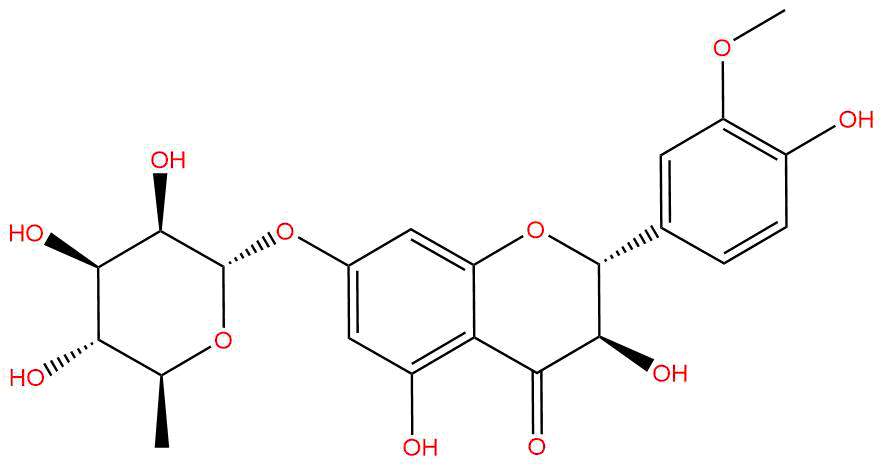


Product name: 3'-O-Methyltaxifolin 7-rhamnoside
Synonym name: 3'-O-甲基-花旗松素-7-O-鼠李糖苷; 3'-O-甲基-二氢槲皮素-7-O-鼠李糖苷
Catalogue No.: BP2401
Cas No.:
Formula: C22H24O11
Mol Weight: 464.423
Botanical Source:
Type of Compound: Flavonoids
Purity: 95%~99%
Analysis Method: HPLC-DAD or/and HPLC-ELSD
Identification Method: Mass, NMR
Packing: Brown vial or HDPE plastic bottle
Storage: Store in a well closed container, protected from air and light. Put into refrigerate or freeze for long term storage.
Whenever possible, you should prepare and use solutions on the same day. However, if you need to make up stock solutions in advance, we recommend that you store the solution as aliquots in tightly sealed vials at -20℃. Generally, these will be useable for up to two weeks.
The product could be supplied from milligrams to grams
Inquire for bulk scale.
For Reference Standard and R&D, Not for Human Use Directly.
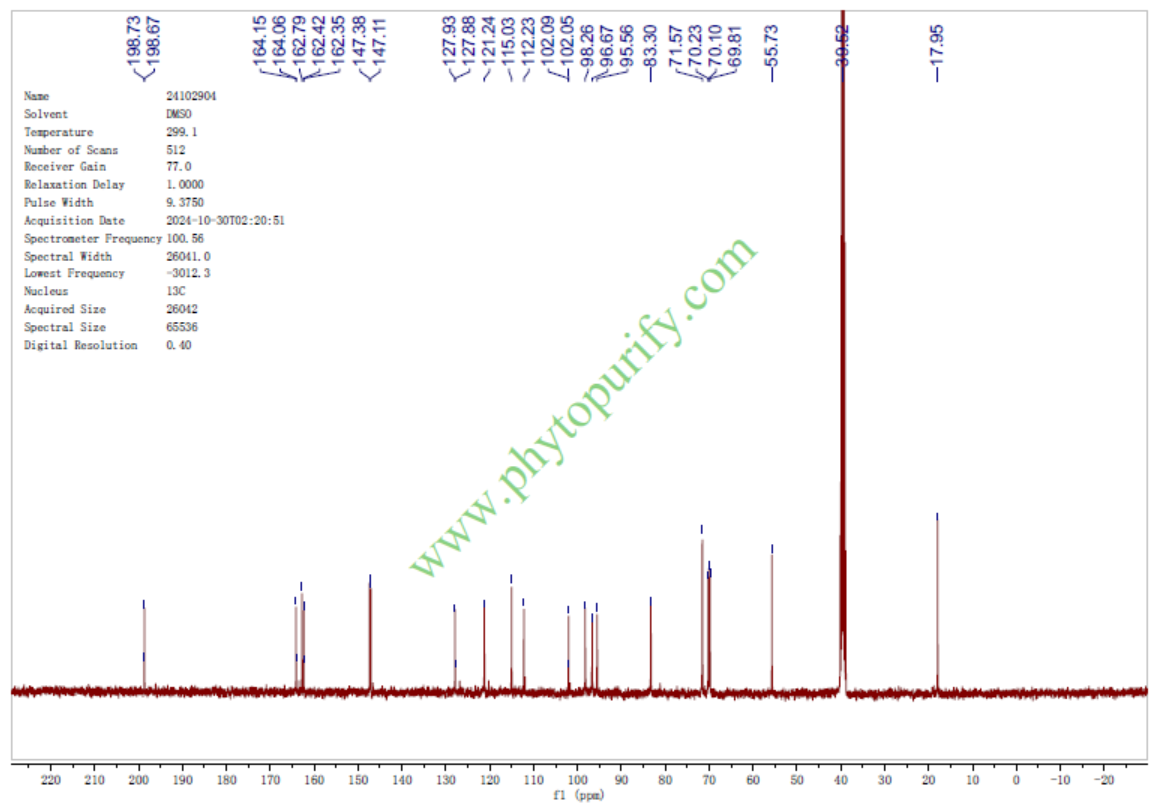
NMR of 3'-O-Methyltaxifolin 7-rhamnoside
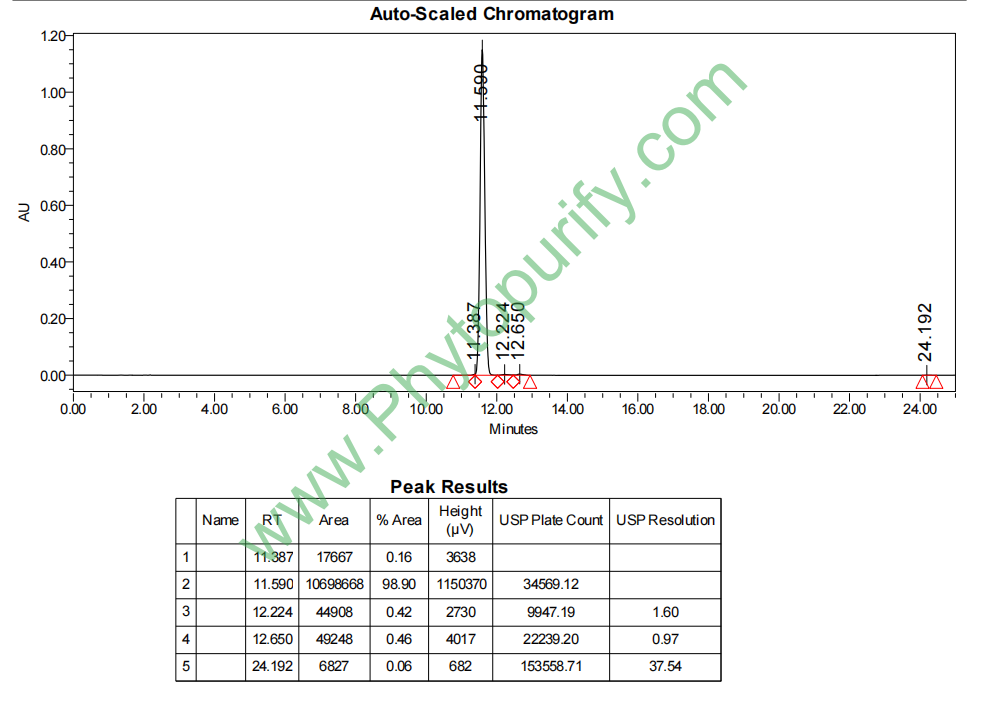
HPLC of 3'-O-Methyltaxifolin 7-rhamnoside
Storage conditions:Short-term storage at 2~8℃, long-term storage at -20 ~ -80℃
186.4000
1.2000
.8000
No
.8500
No
Negative
3 '- O-methyldihydrotianjihuang glycoside (English name: 3' - O-Methyltaxifolic 7-rhamnoside, product number: BP2401) is a traditional medicinal plant derived from tianjihuang(Hypericum japonicum)Flavonoid glycosides isolated from the middle. As a derivative of dihydroflavonols, it combines the classic structure of flavonoid parent nucleus with rhamnoside modification. Its unique 3 '- O-methylation and 7-position rhamnosylation characteristics may endow it with biological activity and physicochemical properties that distinguish it from other flavonoid compounds. Although the complete molecular formula, molecular weight, and CAS number of its basic data still need further analysis and disclosure, based on its known chemical skeleton and plant origin, it can be inferred that it belongs to the flavonoid natural product family with a wide range of biological activities.
In recent years, with the in-depth research on the role of natural products in the prevention and treatment of chronic diseases, compounds with multi-target and multi pathway effects have received increasing attention. The preliminary target screening results of 3 '- O-methyldihydrotianjihuang glycoside showed potential interactions with seven key biological targets, including NFE2L2, TNF, NOS2, PPARG, PTGS2, NFKB1, and IL6. These targets are widely involved in core physiological and pathological processes such as oxidative stress, inflammatory response, metabolic regulation and cell survival, suggesting that this compound may play an important regulatory role in diabetes, cardiovascular disease, inflammatory disease, neurodegenerative disease and oxidative stress related diseases. This article aims to systematically review the existing data of this compound, and provide professional popularization from its chemical basis, plant sources, pharmacological mechanisms, medicinal potential, and research prospects, in order to provide a clear cognitive framework for researchers in related fields.
The complete molecular formula and molecular weight of 3 '- O-methyldihydrotianjihuang glycoside have not been clearly disclosed, but its name clearly reveals its core chemical structural characteristics. The compound is based on the basic skeleton of "Taxifolin 7-rhamnoside". Dihydroquercetin 7-O-rhamnoside, also known as dihydroquercetin, has a parent nucleus of dihydroflavonol (also known as flavanol) and a basic flavonoid structure of C6-C3-C6. It has a hydroxyl (non carbonyl) group at the C3 position and a single bond at the C2-C3 position (known as the "dihydro" feature). On this basis, this compound undergoes methylation (3 '- O-methylation) on the 3' - hydroxyl group of the parent nucleus, and a rhamnoside (7-rhamnoside) is attached to the 7-hydroxyl group. Rhamnose is a 6-deoxyhexose sugar, and its hydrophilicity affects the solubility and distribution of the entire molecule.
Based on this structure, its physical and chemical properties can be reasonably inferred:
- Lipophilia (LogP)The flavonoid core itself has a certain degree of planar hydrophobicity. 3 '- O-methylation introduces a hydrophobic methoxy group, which may slightly increase the overall lipid solubility of the molecule. However, the hydrophilic rhamnoside connected at position 7 significantly enhances the water solubility of the molecule. Therefore, its final LogP value (oil-water partition coefficient) will be the result of balancing these two opposing effects, and is expected to be in a moderate range, which is crucial for its biofilm penetration ability.
- Polarized surface area (TPSA)The molecule contains multiple hydroxyl groups (derived from the unsubstituted flavonoid nucleus and sugar group), ether bonds (methoxy group), and oxygen atoms in the sugar ring, resulting in a relatively high topological polar surface area. High TPSA is usually not conducive to passive transmembrane diffusion, but may be absorbed through specific transporters.
- solubility Due to the presence of rhamnoside, this compound should have good solubility in polar solvents such as water, methanol, and ethanol, which is beneficial for its development as an aqueous formulation.
- Stability Flavonoid glycosides may undergo glycosidic bond hydrolysis under acidic or enzymatic conditions (such as glycosidase), producing aglycones (3 '- O-methyldihydroquercetin) and rhamnose. Its metabolism and stability in vivo require experimental verification.
Future research requires precise analysis of its molecular formula and molecular weight through techniques such as nuclear magnetic resonance (NMR) and mass spectrometry (MS), and precise determination of key pharmacological parameters such as LogP, pKa, and TPSA through computational chemistry or experimental methods.
The only known plant source of 3 '- O-methyldihydrotianjihuang is tianjihuang(Hypericum japonicum Thunb.), Belonging to the Hypericaceae family and the Primulaceae genus. This genus of plants is known for being rich in various bioactive components such as hypericin, flavonoids, and phloroglucinol, among which Forsythia suspensa(H. perforatum)The antidepressant effect has been widely studied.
Tianjihuang has a long history of application in traditional medicine in East Asian regions such as China, Japan, and South Korea. Its whole herb is used as medicine and is often used in traditional Chinese medicine theory for clearing heat and dampness, detoxifying and reducing swelling, dispersing blood stasis and relieving pain. It is commonly used in clinical practice to treat diseases such as hepatitis, jaundice, dysentery, enteritis, carbuncles, toxins, and traumatic injuries. In the folk, Tian Jihuang is also often used to treat various inflammatory and infectious diseases. Modern plant chemistry research has isolated various flavonoids, ketones, phenolic acids, and terpenes from Tianjihuang, which together form the material basis for its diverse pharmacological activities.
3 '- O-methyldihydrotianjihuang glycoside, as one of the specific flavonoid glycosides, is likely to contribute to some aspects of the traditional therapeutic effects of tianjihuang, especially its anti-inflammatory, antioxidant, and hepatoprotective effects. The transition from traditional applications to modern pharmacological research provides important clues and rational support for the exploration of the activity of this compound.
Based on the provided target information, 3 '- O-methyldihydrotianjihuang glycoside exhibits remarkable multi-target regulatory properties. Its pharmacological activities mainly revolve around antioxidant, anti-inflammatory, metabolic regulation, and cell protection, and are closely related to various major chronic diseases.
Core target network and mechanism analysis:
Antioxidant and Cellular Defense Core: NFE2L2 (Nrf2)
The transcription factor Nrf2 encoded by NFE2L2 is a central regulator of cellular antioxidant response. Under oxidative stress, Nrf2 is activated and translocated into the nucleus, binding to antioxidant response elements (ARE) and initiating gene expression of a series of phase II detoxifying enzymes (such as HO-1, NQO1) and antioxidant proteins. If 3 '- O-methyldihydrotianjihuang nucleoside can activate the Nrf2 pathway, it will directly enhance the cell's ability to clear reactive oxygen species (ROS) and combat it from the root Oxidative stress-related diseases Such as ischemia-reperfusion injury, chemical liver injury, and indirectly delaying Neurodegenerative diseases Neuronal death caused by oxidative damage in diseases such as Alzheimer's and Parkinson's.
Key hubs of inflammatory response: NFKB1, TNF, IL6, PTGS2, NOS2
These five targets form a closely related pro-inflammatory network.
Metabolic regulation and insulin sensitization: PPARG
PPARG encodes the peroxisome proliferator activated receptor gamma, which is a member of the nuclear receptor superfamily and plays a central role in adipocyte differentiation, lipid metabolism, and glucose homeostasis. It is the target of insulin sensitizer thiazolidinedione drugs (such as Rosiglitazone). Activation of PPARG can improve insulin resistance and promote glucose uptake and utilization. Therefore, by acting on the PPARG target, this compound suggests its potential to regulate glucose and lipid metabolism, which may have implications for Type 2 diabetes The prevention and treatment of its complications have positive significance.
Integration of mechanisms of action and association with diseases:
In summary, 3 '- O-methyldihydrotianjihuang glycoside may exert its effects through a multi-target synergistic network:
-In diabetes Middle: Improve insulin sensitivity by activating PPARG, and reduce oxidative stress and chronic low-grade inflammation associated with diabetes through Nrf2 antioxidant and inhibiting NF - κ B/inflammatory factor pathway, thus protecting pancreatic islet β cells and target organs.
-In cardiovascular disease Middle: Inhibition of NF - κ B pathway can reduce vascular endothelial inflammation and atherosclerotic plaque formation; Its antioxidant activity (via Nrf2) helps prevent low-density lipoprotein oxidation and stabilize plaques.
-In Neurodegenerative diseases Activation of the Nrf2 pathway enhances the antioxidant defense ability of neurons, while inhibiting NF - κ B-mediated neuroinflammation and toxic factors (such as TNF - α, IL-6, NO) produced by overactivation of microglia in the brain, providing dual protection for neurons.
-In a wide range Inflammatory diseases and Oxidative stress-related diseases Its multi-target nature enables it to intervene in the disease process from multiple stages.
The characteristic of "one stone, multiple birds" is precisely the advantage of natural products in the treatment of complex diseases, but it also puts forward higher research requirements for their selectivity and potential side effects.
Drug efficacy assessment aims to predict the likelihood of a compound developing into a safe and effective drug. Although the complete pharmacological parameters of 3 '- O-methyldihydrotianjihuang glycoside, such as precise LogP, TPSA, solubility, permeability, metabolic stability, and toxicity, have not been fully obtained through experiments, we can conduct preliminary analysis and outlook based on its chemical structure using classical evaluation rules.
Preliminary analysis based on Lipinski's Rule of Five:
This rule is typically used to evaluate the drug properties of small molecule oral medications.
1. Molecular weight (MW)The molecular weight of flavonoid glycosides is usually around 300, plus one rhamnose group (MW 146) and one methyl group (+14), estimated to be between 460-500 Da. This slightly exceeds the recommended upper limit of 500 Da by Lipinski's rules, but it is not an absolute contraindication as many successful oral drugs have a molecular weight exceeding 500.
2. Lipid water partition coefficient (LogP)As mentioned earlier, its LogP is expected to be moderate. Experimental testing is required to confirm whether it is within the ideal range (usually recommended around 2-3, but can be relaxed to -2 to 5).
3. Hydrogen bond donor (HBD)The molecule contains multiple hydroxyl groups (flavonoid nucleus and glycosyl group), and the number of HBDs may exceed 5, which may affect its transmembrane passive diffusion.
4. Hydrogen bond acceptor (HBA)The molecule contains a large number of ether bonds and hydroxyl oxygen, and the number of HBA may also be high.
Preliminary assessment suggests that the compound may not fully comply with Lipinski's five rules (possibly violating 2-3 of them), which suggests that Oral bioavailability may face challenges The main limiting factors are high polarity (high TPSA) and more hydrogen bond donors and acceptors, which may lead to poor gastrointestinal absorption.
Outlook for other key pharmacological parameters:
- Blood-brain barrier (BBB) penetrability It is crucial for treating neurodegenerative diseases. High TPSA and possible polarity are not conducive to passive penetration of the BBB. However, whether it has an active transport mechanism or can improve penetration under inflammatory conditions needs to be validated through experimental models such as PAMPA-BBB and in vitro blood-brain barrier models.
- Metabolic stability As a glycoside compound, it is easily hydrolyzed by β - glucosidase or gut microbiota in the intestine and liver to generate aglycones. The properties of aglycones, such as increased lipid solubility, may differ from the prototype drug, and their pharmacokinetics and activity need to be studied separately. This may also be a prodrug strategy.
- toxicity Flavonoids are generally considered safe, but the potential toxicity of high-dose or long-term use (such as estrogen like activity, interactions with certain enzymes) still requires systematic preclinical safety evaluation (such as Ames test, micronucleus test, liver and kidney toxicity test).
Conclusion and Strategy:
Preliminary assessment shows that 3 '- O-methyldihydrotianjihuang glycoside, as a direct oral small molecule drug phenological selector, may have bottlenecks in terms of bioavailability. However, this does not negate its development value. Future research could consider the following directions:
1. structural optimization Modification is carried out through medicinal chemical methods, such as esterification of some hydroxyl groups or preparation of prodrugs, to improve their lipid solubility and membrane penetration, while exploring the minimum pharmacophore group that retains activity.
2. Exploration of administration routes Develop non oral routes of administration, such as injections (utilizing their good water solubility), transdermal administration, or inhalation formulations, to bypass first pass effects and absorption barriers.
3. As a lead compound Its unique core skeleton and multi-target activity spectrum make it an excellent lead compound template, which can be used for designing and screening more drug effective derivatives.
4. In depth study of pharmacokinetics Clarify the entire process of absorption, distribution, metabolism, and excretion (ADME) in the body, especially the relative contribution of the prototype drug and its metabolites.
Research Status:
At present, there is very limited publicly available research data on 3 '- O-methyldihydrotianjihuang glycoside, which is still in the early stages of discovery. The existing information mainly focuses on its plant origin and preliminary target prediction. In depth phytochemical research has confirmed its presence in Tianjihuang, while results based on computational biology or preliminary activity screening suggest potential associations with multiple important disease targets. However, further interactions between these targets are needed In vitro biochemical experiments(such as enzyme activity inhibition, receptor binding experiments) and Cell level validation(Report gene experiments, Western blot, qPCR, etc.) to confirm. Its role in animal models Pharmacodynamic evaluation in vivo、Mechanism verification and Preliminary pharmacokinetic study Almost blank. Therefore, it is a natural product with potential but urgently needs systematic exploration.
Application prospects:
1. As a lead compound for multi-target therapeutic drugs In the treatment of complex diseases such as complications of diabetes, atherosclerosis, Alzheimer's disease, multi target drugs may have more advantages than single target drugs. The multi-target properties of this compound provide a theoretical basis for its application in this field.
2. Develop effective ingredients for plant medicine or traditional Chinese medicine preparations Combining the traditional use of Tianjihuang, it can be developed into a modern Chinese medicine preparation with controllable quality for the treatment of diseases such as hepatitis and inflammation. By clarifying its characteristic ingredients and mechanism of action, the scientific connotation and international recognition of the product can be enhanced.
3. Functional food or health supplement additives Given the widespread antioxidant and anti-inflammatory properties of flavonoids, while ensuring safety, this compound or its rich plant extracts have the potential to be used in the development of health products with the function of preventing chronic diseases.
4. Tool molecules for studying the mechanism of action As a natural small molecule that simultaneously affects key pathways such as Nrf2 and NF - κ B, it can serve as a probe for studying the role of cross-talk between these pathways in physiological and pathological processes.
Future research directions:
- Basic research level The primary task is to complete the comprehensive structural identification and activity verification of the compound. Including: ① Separation, purification, and structural confirmation; ② Validation of in vitro and cellular activity targeting predicted targets; ③ Evaluate its overall efficacy in animal models of related diseases.
- Translation research level Conduct preclinical research systematically, including: ① comprehensive ADME studies; ② Systematic determination and optimization of pharmacological parameters; ③ Preclinical safety evaluation.
- Development strategy level Reasonably choose the development path based on its physical and chemical properties and activity characteristics (whether to optimize it as a drug lead compound or as a standard ingredient in plant medicine), and explore suitable dosage forms.
In summary, 3 '- O-methyldihydrotianjihuang glycoside is a natural compound with multi-target potential discovered from traditional medicinal plants. Although the road ahead is long and the transition from compounds to drugs requires crossing numerous scientific and technological barriers, its unique biological activity spectrum has brought promising research value and application prospects in addressing various major chronic diseases. With the in-depth research of the system, this "chemical pearl" hidden in the Tianjihuang is expected to bring new contributions to human health in the future.
