


Synonym name: Vincetoxicoside B; -Rhamnosylquercetin
Catalogue No.: BP1189
Cas No.: 22007-72-3
Formula: C21H20O11
Mol Weight: 448.38
Botanical Source: Vincetoxicum officinale, Sedum caucasicum and other plant spp.
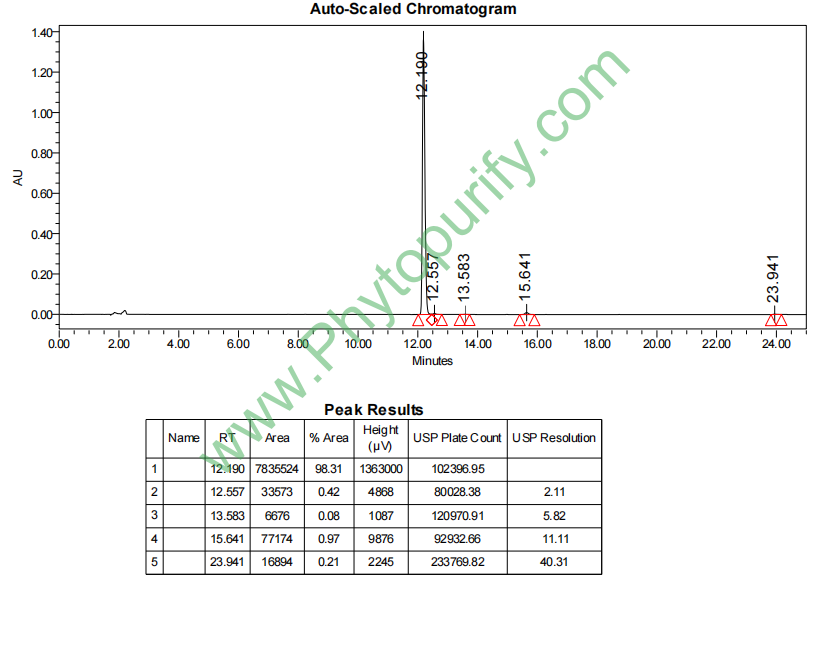
Purity: 95%~99%
Analysis Method: HPLC-DAD or/and HPLC-ELSD
Identification Method: Mass, NMR
Packing: Brown vial or HDPE plastic bottle
Can be supplied from milligrams to grams.
For Reference Standard and R&D, Not for Human Use Directly.
Inquire for bulk scale.
Description:
Vincetoxicoside B , quercetin, kaempferol , and (-)-epicatechin show synergistic antifungal activities with the FICI values <0.5.
References:
J Asian Nat Prod Res. 2017 Jan;19(1):47-52.
Chemical constituents from the rhizome of Polygonum paleaceum and their antifungal activity.
METHODS AND RESULTS:
A new compounds neopaleaceolactoside (1), along with nine known compounds phyllocoumarin (2), quercetin (3), quercitrin (4), quercetin-3-methyl ether (5), Vincetoxicoside B (6), isoquercitrin (7), kaempferol (8), (-)-epicatechin (9), and chlorogenic acid (10), was isolated from Polygonum paleaceum Wall. Their chemical structures were established based on one-dimensional and two-dimensional nuclear magnetic resonance techniques, mass spectrometry and by comparison with spectroscopic data reported. Some selected compounds were screened for their antifungal activity. Quercetin (3), Vincetoxicoside B (6), kaempferol (8), and (-)-epicatechin (9) showed synergistic antifungal activities with the FICI values <0.5.
CONCLUSIONS:
A preliminary structure-activity relationship could be observed that free 3-OH in the structure of flavonoids was important for synergistic antifungal activity.
HPLC of Quercetin 7-rhamnoside
Storage conditions:Short-term storage at 2~8℃, long-term storage at -20 ~ -80℃
190.2800
.8892
.6643
.7915
.6634
.2237
Low
80.7679
4.0184
Yes
No
Yes
No
Yes
No
0.6
Yes
No
Yes
No
Flavonoids, as one of the most widely distributed plant secondary metabolites in nature, have always been an important source of drug development and functional food development due to their diverse chemical structures and extensive biological activities. Quercetin 7-rhamnoside (CAS: 22007-72-3) is an important glycosylated derivative of quercetin, characterized by a rhamnose group attached to the hydroxyl group at position 7 of the quercetin nucleus. This structural modification not only changes its physicochemical properties, but also endows it with a unique and diverse spectrum of biological activities. In recent years, with the deepening of research on natural products, tianjihuang glycoside has attracted much attention due to its regulatory effects in multiple key signaling pathways, especially in the fields of liver protection, anti-inflammatory, antioxidant, and potential anti-tumor. Its core pharmacological feature lies in its ability to act as a multi-target regulator, such as activating the longevity protein SIRT1, while effectively inhibiting multiple subtypes of phosphatidylinositol 3-kinase (PI3K). The purpose of this article is to systematically review the chemical properties, plant sources, pharmacological activities, molecular mechanisms of action, pharmacological evaluation, and clinical application prospects of tianjihuang glycoside, in order to provide comprehensive scientific references for the in-depth research and development of this compound.
The chemical name of Tianji Huangglycoside is Quercetin-7-O - α - L-rhamnoside, with a molecular formula of C21H20O11 and a molecular weight of 448.38 g/mol. Its basic skeleton is flavonol (2-phenylchromenone-3-ol), with the A and C rings forming the chromone structure, and the B ring connected to the 2nd position of the C ring. Compared with quercetin, the hydroxyl group at position 7 is replaced by α - L-rhamnose (6-deoxy-Lmannose). This glycosylation significantly affects its physicochemical properties.
From the analysis of the parameters related to drug properties, the lipid water partition coefficient (LogP) of tianjihuang glycoside is about 0.89, indicating its relatively balanced lipophilic and hydrophilic properties, which are beneficial for its absorption and distribution in organisms. Its topological polar surface area (TPSA) is as high as 190.28 Å ², mainly attributed to the numerous hydrogen bond acceptors (oxygen atoms) in the molecule, which typically affect its transmembrane permeability. Its water solubility value is 0.7915 mg/mL, belonging to the range of slightly soluble to soluble, which is superior to many non glycosylated flavonoids (such as quercetin), thanks to the increased hydrophilicity introduced by sugar groups. These physicochemical parameters collectively determine the basis of its pharmacokinetic behavior. In addition, preliminary screening data for drug efficacy showed that its Ames test result was 0.6 (usually considered to be potentially mutagenic positive if>1.0), indicating a low risk of genetic toxicity; There is no significant inhibitory effect on hERG potassium channels, indicating a low risk of causing QT interval prolongation in the heart; But its blood-brain barrier permeability is predicted to be "low", indicating that it may not easily enter the central nervous system.
Tianji Huangglycoside is widely present in various plants, especially in traditional medicinal plants where it is abundant in content. Its main plant sources include the Primulaceae family's ground ear grass(Hypericum japonicum Thunb., Also known as Tianji Huang, this is the origin of its Chinese name. In addition, it has also been found in various plants such as Rosaceae, Leguminosae, and Asteraceae, such as certain types of hawthorn and locust.
Solvent extraction method is commonly used to extract daidzein from plant materials. Ethanol and methanol have become the most commonly used solvents due to their good solubility in flavonoid glycosides. In order to improve extraction efficiency and selectivity, modern extraction techniques have been widely applied:
1. Ultrasound assisted extraction (UAE)Utilizing the cavitation effect of ultrasound to destroy plant cell walls, accelerate solvent penetration and target component dissolution, has the advantages of short time, high efficiency, and low temperature.
2. Microwave assisted extraction (MAE)Microwave heating can instantly heat up and rupture the internal cells of plants, promoting the rapid release of target components, and also has the characteristics of high efficiency and energy saving.
3. Supercritical fluid extraction (SFE)Supercritical CO ₂ is usually used to change its solubility by adjusting temperature and pressure. This method has high purity and no solvent residue in the extract, but the equipment cost is high and often requires the addition of entrainers (such as ethanol) to improve the extraction rate of polar flavonoid glycosides.
After obtaining the crude extract, further separation and purification steps are required to obtain high-purity tianjihuang glycoside. The conventional methods include:
- Macroporous resin adsorption method Enrichment and preliminary separation of flavonoids using resin adsorption and ethanol elution at different concentrations.
- Polyamide column chromatography Polyamide is a special material for separating flavonoids, which achieves the separation of different flavonoid glycosides through hydrogen bonding.
- Silica gel column chromatography Commonly used gradient elution systems such as chloroform methanol or petroleum ether ethyl acetate are used for separation.
- High performance liquid chromatography (HPLC)Especially for preparative HPLC, it is the most effective and commonly used method to obtain high-purity tianjihuang glycoside (for standard or in-depth research). C18 reverse phase chromatography column is often used, with methanol water or acetonitrile water (containing a small amount of formic acid or acetic acid) as the mobile phase.
Tianji Huangglycoside exhibits various pharmacological activities, with research hotspots mainly focused on liver protection, antioxidant, anti-inflammatory, and potential anti-tumor effects based on PI3K inhibition.
1. Liver protective activity
This is one of the most prominent and extensively studied activities of tianjihuang glycoside. A large number of in vitro and in vivo experiments have shown that tianjihuang glycoside has significant protective effects on various liver injury models, including chemical liver injury induced by acetaminophen (APAP), carbon tetrachloride (CCl ₄), alcohol, D-galactosamine, and immune liver injury induced by lipopolysaccharides (LPS). Its hepatoprotective effect is reflected in significantly reducing the levels of alanine aminotransferase (ALT) and aspartate aminotransferase (AST) in serum; Improve pathological changes in liver tissue, such as reducing hepatocyte necrosis, steatosis, and inflammatory cell infiltration; Promote liver cell regeneration.
2. Antioxidant and anti-inflammatory activities
Tianji Huanggan is a potent antioxidant. The phenolic hydroxyl group in its molecular structure can directly scavenge free radicals (such as DPPH, ABTS ⁺ free radicals) and has reducing ability. More importantly, it can exert indirect antioxidant effects by upregulating the endogenous antioxidant system in cells. Its anti-inflammatory effect is closely related to antioxidant activity. In LPS induced inflammatory models such as macrophages, it can effectively inhibit the excessive production of pro-inflammatory factors such as nitric oxide (NO), prostaglandin E2 (PGE2), tumor necrosis factor - α (TNF - α), interleukin-6 (IL-6), etc.
3. Potential activity based on PI3K inhibition
Tianji Huangglycoside exhibits strong inhibitory ability against PI3K subtypes, especially PI3K γ and PI3K δ (IC50 at the micromolar level). The PI3K/Akt/mTOR signaling pathway is a core pathway that regulates cell growth, proliferation, metabolism, and survival. Its abnormal activation is closely related to cancer, autoimmune diseases, inflammation, and other diseases. Therefore, the PI3K inhibitory activity of tianjihuang glycoside provides important evidence for its research in anti-tumor (especially hematological and immune related tumors), anti autoimmune diseases, and other fields. In vitro studies have shown that it has inhibitory effects on the proliferation of certain cancer cells.
4. Other activities
The study also suggests that tianjihuang glycosides may have neuroprotective, cardiovascular protective, and anti fibrotic activities, but research in these areas is still in its early stages and requires more evidence to support it.
The multiple pharmacological activities of tianjihuang glycoside stem from its regulation of multiple key molecular targets and signaling pathways, and its mechanism of action is complex and synergistic.
1. Activate SIRT1 and regulate energy metabolism and oxidative stress
Silencing information regulatory factor 1 (SIRT1) is a NAD ⁺ - dependent class III histone deacetylase that plays a central regulatory role in energy metabolism, stress resistance, aging, and inflammation. Tianji Huangzhi has been confirmed to be an activator of SIRT1. After SIRT1 activation, it can promote mitochondrial biosynthesis and function, and enhance cellular energy metabolism by deacetylating and activating peroxisome proliferator activated receptor gamma co activator 1 alpha (PGC-1 alpha). Meanwhile, SIRT1 can also deacetylate and activate the transcription factor FOXO, promoting the expression of antioxidant enzymes such as superoxide dismutase (SOD) and catalase (CAT). This is one of the key mechanisms for enhancing cellular antioxidant defense, achieving liver protection and anti-aging effects.
2. Inhibit the PI3K/Akt/mTOR pathway
The inhibition of PI3K subtypes (γ, δ, β) by tianjihuang glycoside is another core mechanism of action. Inhibiting PI3K reduces the phosphorylation activation of its downstream signaling molecule Akt (protein kinase B), thereby affecting downstream effectors such as mTOR. Inhibition of this pathway can: a) inhibit abnormal cell proliferation, induce cell cycle arrest or apoptosis (anti-tumor potential); b) Regulating immune cell function, such as inhibiting excessive activation of neutrophils and macrophages (anti-inflammatory, anti autoimmune); c) Affects glucose metabolism and insulin signaling.
3. Regulating the Nrf2/ARE antioxidant defense pathway
Nuclear factor E2 related factor 2 (Nrf2) is the central regulator of cellular antioxidant stress response. Under oxidative stress, Nrf2 dissociates from the cytoplasmic chaperone protein Keap1, translocates to the nucleus, binds to antioxidant response elements (ARE), and initiates transcription of a series of phase II detoxifying enzymes and antioxidant proteins. Research has shown that tianjihuang glycoside can promote nuclear translocation of Nrf2 and upregulate the expression of downstream target genes, including:
- antioxidant enzyme Superoxide dismutase 1 (SOD1), catalase (CAT), glutathione peroxidase 1 (GPX1).
- Phase II detoxifying enzyme Glutathione S-transferase A1/P1 (GSTA1, GSTP1).
The co upregulation of these proteins greatly enhances the ability of cells to clear reactive oxygen species (ROS) and detoxify exogenous toxins, which is the core molecular basis for their resistance to liver toxin damage such as CCl ₄ and APAP.
4. Regulating drug metabolizing enzymes and transporters
Tianji Huangzhi can also affect the expression of drug metabolizing enzymes and transporters in the liver, thereby regulating the metabolism and excretion of endogenous and exogenous substances. For example:
- Inhibition of CYP450 enzyme Inhibiting CYP2E1 and CYP3A4. CYP2E1 is a key enzyme that metabolically activates many liver toxins, such as CCl ₄ and the toxic metabolite NAPQI of acetaminophen. Inhibiting its activity can directly reduce the production of toxic intermediates.
- Regulating transporters If it affects the signal of bile acid nuclear receptor (FXR), thereby regulating the expression of cholesterol transporters such as ABCG5, this may be related to its regulation of lipid metabolism and bile stasis.
5. Directly eliminate free radicals and chelate with metals
In addition to the indirect gene regulatory mechanisms mentioned above, the catechol (B ring) and other phenolic hydroxyl groups in the molecular structure of tianjihuang glycoside can also directly act as electron donors, neutralize free radicals, and may chelate transition metal ions such as iron and copper, preventing them from participating in the Fenton reaction to produce hydroxyl radicals.
Despite its significant in vitro activity, the road to becoming an ideal drug still faces challenges in terms of drug development.
Pharmacokinetic characteristics(Based on similar flavonoid glycosides and limited research inference):
- absorb As a highly polar glycoside, its absorption site is mainly in the small intestine. The absorption mechanism may include passive diffusion and active transport (such as sodium dependent glucose co transporter SGLT1). The glycosyl portion may be hydrolyzed by gut microbiota or intestinal mucosal enzymes, and some may be absorbed in the form of aglycones (quercetin).
- distribution The high molecular weight and TPSA limit its transmembrane diffusion. It is predicted that the blood-brain barrier permeability is low, mainly distributed in tissues with abundant blood flow such as blood, liver, and kidneys. The binding rate of flavonoids to plasma proteins is not yet clear, but flavonoids usually have moderate protein binding.
- Metabolism This is the main pathway for the disposal of tianjihuang glycosides in the body. The metabolic processes are extensive, including: 1) hydrolysis Under the action of β - glucosidase in the gut microbiota, rhamnose is removed to produce quercetin. 2) Combination reaction Glycosides or glycosides themselves undergo extensive II binding reactions in the liver and intestines, such as glucuronidation, sulfation, and methylation, to generate more polar metabolites. These metabolites are their main forms in the bloodstream.
- excretion Metabolites are mainly excreted through the kidneys with urine, and some conjugates can also enter the intestine through bile, undergoing enterohepatic circulation.
Challenges and optimization strategies for drug development:
1. Low oral bioavailability This is a common bottleneck for flavonoid glycosides. The reasons include incomplete intestinal absorption, significant first pass metabolism (extensive binding metabolism between the intestine and liver), and limited solubility.
2. Poor metabolic stability Easy to be hydrolyzed and metabolized, resulting in low blood concentration and short half-life of the prototype drug.
3. Optimization Strategy:
- Structural modification Chemical modification of glycans or glycosides, such as preparation of prodrugs (e.g. esterification, preparation of phospholipid complexes), synthesis of more stable carbohydrate analogs or C-glycosides, to enhance metabolic stability and lipid solubility.
- New drug delivery system Using nanotechnology, such as preparing liposomes, solid lipid nanoparticles, polymer nanoparticles, nanoemulsions, etc. These carriers can protect drugs from enzymatic hydrolysis, enhance their gastrointestinal stability, promote lymphatic absorption to avoid first pass effects, and achieve targeted delivery (such as liver targeting).
- Phospholipid complex or cyclodextrin inclusion complex Improve its solubility and membrane permeability.
The multi-target properties of Tianji Huangzhi provide broad application prospects for its prevention and treatment of various diseases, but its translational application still needs to overcome many obstacles.
Potential application areas:
1. Liver disease adjuvant therapy drugs Based on its excellent hepatoprotective mechanism (activation of Nrf2/SIRT1, inhibition of CYP2E1), tianjihuang glycoside and its derivatives or preparations are most promising for development as adjuvant therapy drugs or hepatoprotective health products for chemical liver injury, alcoholic liver disease, and non-alcoholic fatty liver disease (NAFLD). Compared with existing hepatoprotective drugs such as silibinin, its mechanism of action is more diverse.
2. Anti inflammatory and immunomodulatory agents Its inhibitory activity on PI3K δ/γ suggests its potential in the treatment of Th2 or neutrophil driven inflammatory diseases such as rheumatoid arthritis, asthma, chronic obstructive pulmonary disease (COPD), as well as certain B-cell lymphomas. PI3K δ/γ inhibitors have become a popular target in the field of immune inflammation.
3. Metabolic diseases By activating SIRT1 and regulating related pathways, it may be beneficial for improving metabolic syndrome components such as insulin resistance, obesity, and non-alcoholic fatty liver disease.
4. Functional food and cosmetic additives Its strong antioxidant and anti-inflammatory properties make it an active ingredient in advanced functional foods, health supplements, or cosmetics (anti-aging, anti photodamage).
Future research directions and challenges:
1. In depth mechanism research More precise elucidation is needed to elucidate its role in complex biological networks, particularly the primary secondary relationship and synergistic/antagonistic effects of different targets (such as SIRT1 activation and PI3K inhibition) under specific pathological conditions. It is crucial to validate using techniques such as gene knockout/knockdown.
2. Optimization of drug properties in the system More resources must be invested in systematic pharmacokinetic studies (ADME) and active application of medicinal chemistry and pharmacology methods to improve their bioavailability. Exploring liver targeted delivery systems is a highly promising direction.
3. Preclinical and clinical research On the basis of optimizing the formulation, carry out standardized preclinical safety evaluations (long-term toxicity, reproductive toxicity, etc.), and gradually advance to clinical trials to obtain its effectiveness and safety data on the human body.
4. Structure Activity Relationship (SAR) Study A systematic study was conducted to investigate the effects of structural modifications (such as glycosylation type, position, and aglycone modifications) of tianjihuang glycosides on their activity, selectivity, and pharmacokinetic properties, with the aim of discovering derivatives with stronger activity, higher selectivity, and better drug properties.
As a naturally occurring flavonoid glycoside compound, Tianji Huangzhi has shown significant research value and application potential in the fields of liver protection, antioxidant, anti-inflammatory, and potential anti-tumor effects due to its unique chemical structure and multi-target pharmacological mechanism. Its core advantage lies in its ability to synergistically regulate multiple key signaling pathways closely related to cell homeostasis, stress defense, and proliferation and death, such as Nrf2/ARE, SIRT1, and PI3K/Akt, thereby exerting a multifunctional therapeutic effect. However, its inherent pharmacological defects, such as low oral bioavailability and metabolic instability, are the main bottlenecks restricting its conversion into clinical drugs. Future research should focus on optimizing molecular entities or delivery systems through modern medicinal chemistry, pharmacology, and nanotechnology, while conducting in-depth pharmacological, pharmacokinetic, and toxicological evaluations of the system. With the advancement of these studies, tianjihuang glycoside is expected to develop from a promising lead compound into a new therapeutic drug or functional ingredient for liver diseases, inflammatory diseases, and other fields, contributing its natural wisdom to human health.
