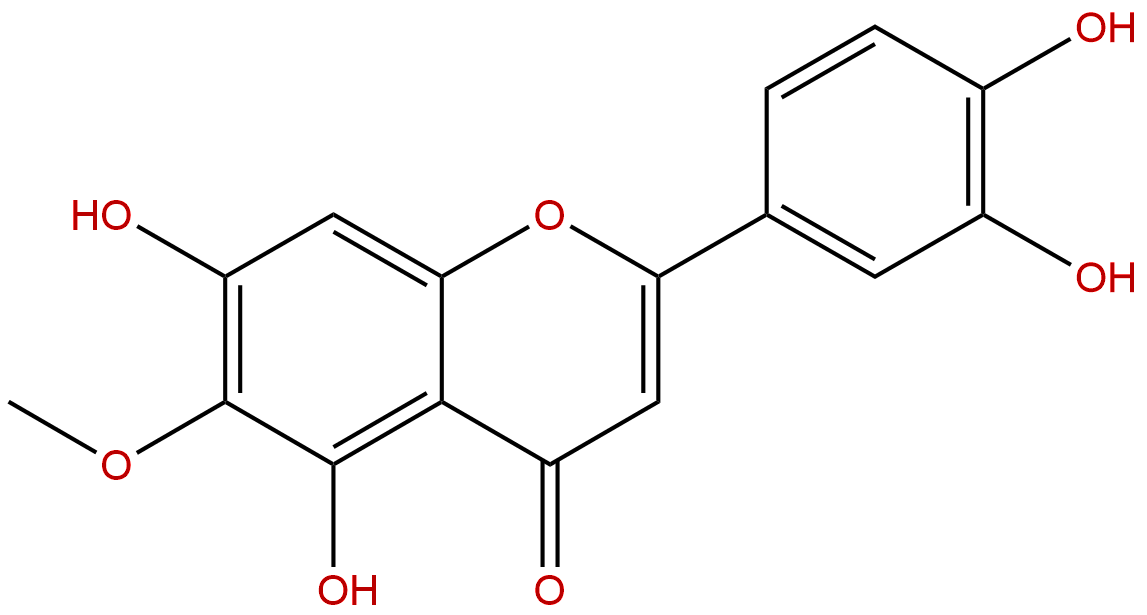


Product name: Eupafolin
Synonym name: Nepetin; 6-Methoxyluteolin; 3',4',5,7-Tetrahydroxy-6-methoxyflavone
Catalogue No.: BP1615
Cas No.: 520-11-6
Formula: C16H12O7
Mol Weight: 316.265
Botanical Source: " Isol. from Eupatorium cuneifolium, Artemisia tridentata, Digitalis spp., Lippia nodiflora and many other plants"
Physical Description: Powder
Type of Compound: Flavonoids
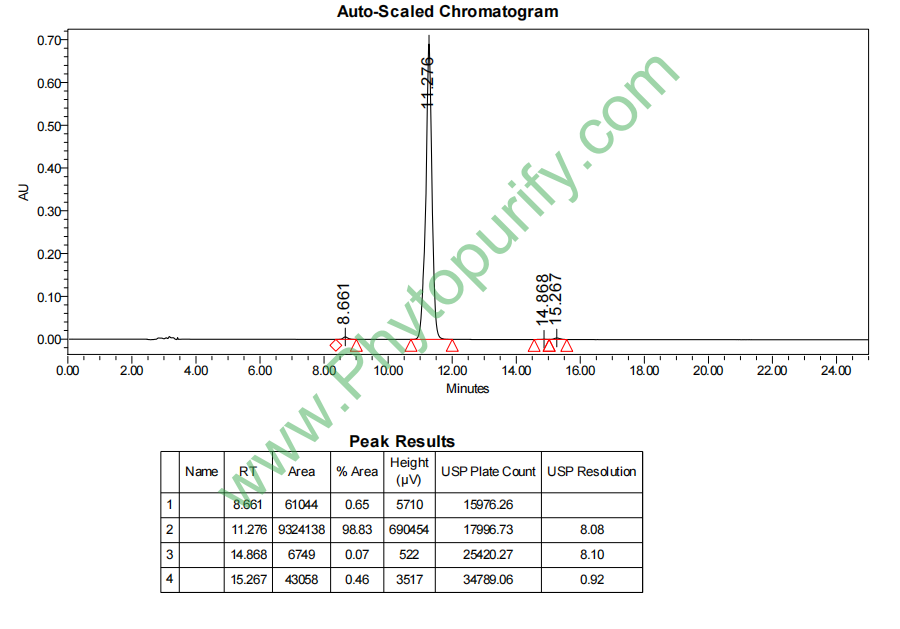
Purity: 95%~99%
Analysis Method: HPLC-DAD or/and HPLC-ELSD
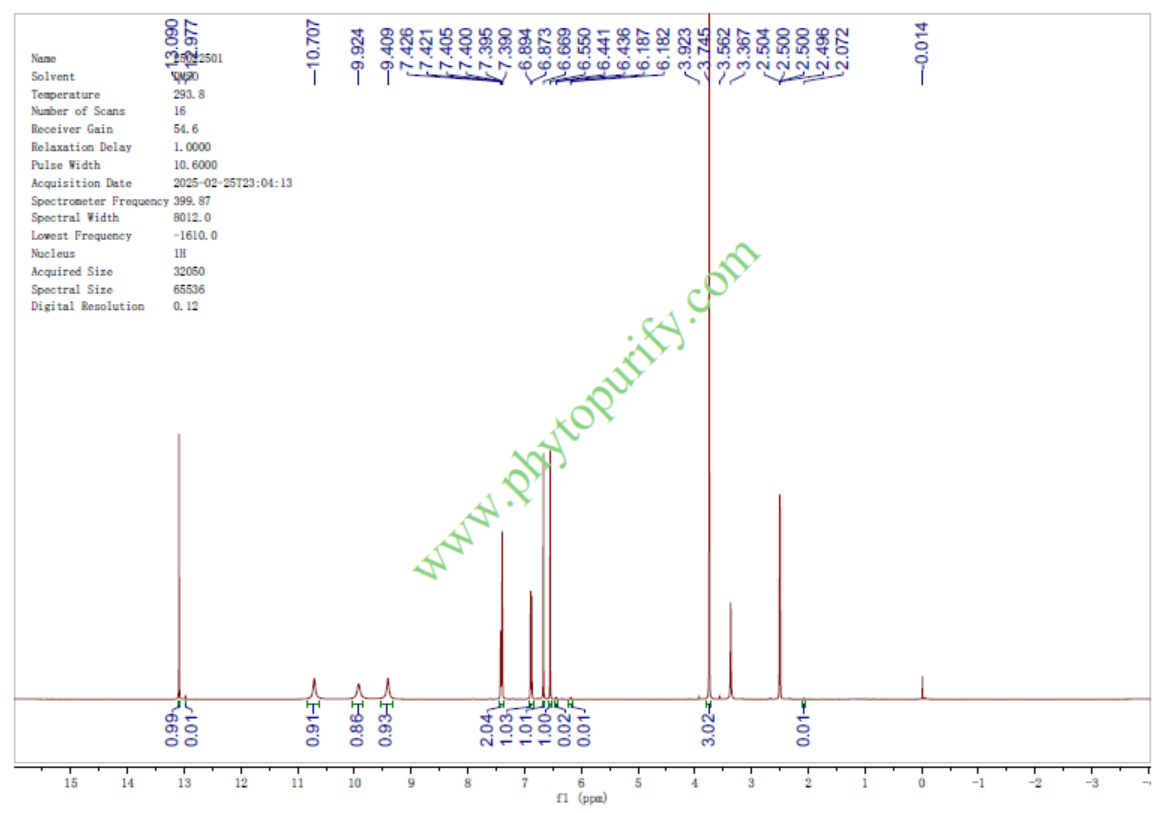
Identification Method: Mass, NMR
Packing: Brown vial or HDPE plastic bottle
The product could be supplied from milligrams to grams. Inquire for bulk scale.
We provide solution to improve the water-solubility of compounds, thereby facilitating the variety of activity tests and clinic uses.
For Reference Standard and R&D, Not for Human Use Directly.
HPLC of Eupafolin
HNMR of Eupafolin
Storage conditions:Short-term storage at 2~8℃, long-term storage at -20 ~ -80℃
120.3600
2.0926
1.7209
.0129
3.2069
15.6884
Low
89.5849
2.5440
Yes
No
Yes
No
Yes
No
0.6
Yes
No
Yes
No
Atherosclerosis (AS) is the main pathological basis of cardiovascular and cerebrovascular diseases. Its occurrence and development are closely related to lipid metabolism disorder, chronic inflammation, oxidative stress and vascular endothelial cell dysfunction. Although lipid-lowering therapies such as statins have achieved significant results, their limitations (such as intolerance in some patients, residual cardiovascular risk, etc.) have prompted researchers to continuously explore new candidate molecules with multi-target and multi pathway regulatory potential from natural products. Eupafolin, a naturally occurring flavonoid, has attracted much attention due to its extensive pharmacological activities in anti inflammation, anti-oxidation, lipid regulation and anti atherosclerosis. This article aims to systematically review the chemical properties, plant sources, pharmacological effects, molecular mechanisms, and medicinal properties of Zelan flavonoids, in order to provide comprehensive scientific references for the in-depth research and development of this compound in the field of cardiovascular disease prevention and treatment.
Eupafolin, chemical name 5,7,3 ', 4' - tetrahydroxy-6-methoxyflavone, CAS number 520-11-6. Its molecular formula is C ₁₆ H ₁₂ O ₇, and its molecular weight is 316.2650. Its core structure is the flavonoid nucleus, with hydroxyl groups at positions 5 and 7 and methoxy groups at position 6 of the A ring; The 3 'and 4' positions of the B ring are adjacent dihydroxy groups (catechol structure). This structural feature endows Zelan flavonoids with significant antioxidant and metal ion chelating abilities.
According to the analysis of the parameters related to drug properties, its lipid water partition coefficient (LogP) is 2.0926, indicating that it has moderate lipophilicity. The topological polar surface area (TPSA) is 120.3600 Å ², which is a relatively high value mainly due to its multiple hydroxyl groups. The predicted value of its water solubility is 0.0129 mg/mL, which belongs to the category of slightly soluble to poorly soluble. These physicochemical properties suggest that Zelan flavonoids may face challenges in oral absorption and bioavailability, and need to be improved through formulation methods such as nanomaterialization and phospholipid complexes. In addition, its blood-brain barrier permeability is predicted to be "low", indicating that its main target of action may be located in the peripheral system. On early safety indicators, hERG inhibition was predicted as' no ', indicating a lower potential risk of cardiac toxicity; The Ames test predicted a value of 0.6, indicating a low risk of mutagenicity and a good genetic toxicity safety window.
Zelan flavonoids are widely present in various Asteraceae plants and are one of their important active ingredients. Its main plant sources include but are not limited to:
1. Eupatorium fortunei Turcz Traditional Chinese medicine is used to dispel dampness and invigorate the spleen.
2. Eupatorium perfoliatum L Traditional North American herbs.
3. Artemisia argyi Levl. et Vant And some Artemisia plants.
4. Salvia miltiorrhiza Bunge There are also small amounts found in plants of the Lamiaceae family.
The extraction method mainly depends on its polarity and solubility. Conventional extraction techniques include:
* Solvent extraction method The most commonly used method is to use methanol, ethanol, or acetone water mixed solvents for hot reflux or ultrasound assisted extraction. Ethanol is often preferred due to its safety and environmental friendliness.
* Column chromatography separation and purification: The crude extract is preliminarily enriched by macroporous adsorption resins (such as AB-8 and D101), and then further separated and purified by silica gel, polyamide or Sephadex LH-20 column chromatography. High purity eupatorium flavonoids can be obtained by combining with high performance liquid chromatography (HPLC).
* Modern extraction techniques Technologies such as microwave-assisted extraction and supercritical CO ₂ extraction have also been explored to improve extraction efficiency and selectivity, but process parameters need to be optimized to control costs.
A large number of in vitro and in vivo studies have confirmed that the flavonoids of Eupatorium adenophorum have various pharmacological activities, focusing on anti atherosclerosis and related pathological processes.
The anti AS effect of Zelan flavonoids involves a complex multi-target regulatory network, and its key molecular targets and pathways are as follows:
To sum up, the flavone of Eupatorium adenophorum exerts a comprehensive effect of anti inflammation, anti-oxidation, lipid regulation, anti apoptosis and promoting the reverse transport of cholesterol by simultaneously acting on multiple targets such as LOX-1, AMPK, EHMT2, anti apoptotic protein and ABCA1, thereby inhibiting the occurrence and development of atherosclerosis.
Although the pharmacological activity of Zelan flavonoids is clear, their drug like and pharmacokinetic properties are obstacles that must be overcome for their conversion into drugs.
Zelan flavonoids, as a multi-target natural lead compound against AS, have broad clinical application prospects but also face challenges.
Potential application directions:
1. Cardiovascular disease prevention and adjuvant therapy As a dietary supplement or prescription drug, it is used for early intervention of AS and hyperlipidemia, especially for patients who are intolerant to traditional statins or have residual risks.
2. combination therapy Given its unique mechanism of action (such as epigenetic regulation of ABCA1 through EHMT2), combination with statins may result in synergistic effects or reduce statin dosage to lower the risk of side effects.
3. Inflammatory related diseases Its strong anti-inflammatory activity may be extended to other chronic inflammatory diseases, such as non-alcoholic steatohepatitis (NASH), arthritis, etc.
Future research focus and challenges:
1. Pharmacokinetic optimization This is currently the biggest bottleneck in conversion. It is necessary to significantly improve its oral bioavailability and in vivo stability through formulation or structural modification strategies, and clarify its human PK parameters.
2. Deep analysis of target mechanism Further use of gene knockout/knockdown, chemical proteomics and other technologies is needed to verify its direct target and elucidate the interaction dialogue between its multi-target network (Crosstalk).
3. Preclinical and clinical research Complete pharmacodynamic, pharmacokinetic, and toxicological (GLP) studies that meet regulatory standards, providing solid data for its clinical trial application (IND). Explore suitable clinical endpoints (such as plaque imaging changes, inflammatory biomarkers).
4. Intellectual Property and Industrialization Optimize the extraction and purification process, reduce costs, and develop patent layouts around its new uses, formulations, or derivatives.
The flavonoid of Eupatorium adenophorum is a flavonoid with significant anti atherosclerotic potential excavated from traditional medicinal plants. It exerts a multi-channel integrated regulatory effect on inflammation, oxidative stress, lipid metabolism, and cell apoptosis by targeting multiple key molecules such as LOX-1, AMPK, EHMT2, ABCA1, etc., reflecting the unique advantages of natural product multi-target intervention in complex diseases. Although there are challenges in drug formulation, especially in terms of oral bioavailability, with the rapid development of modern medicinal chemistry, pharmacy, and pharmacology technologies, it is expected to overcome these obstacles through rational structural optimization and advanced delivery system design. In the future, in-depth systematic research and standardized clinical translation exploration will make Zelan flavonoids a highly valuable candidate molecule in the development of cardiovascular disease prevention and treatment drugs, providing patients with new treatment options.
