


Product name: Hispidulin
Synonym name: Hispidulin; Methoxyapigenin
Catalogue No.: BP0730
Cas No.: 1447-88-7
Formula: C16H12O6
Mol Weight: 300.266
Botanical Source: Salvia plebeia R. Br.
Physical Description:
Type of Compound: Flavonoids
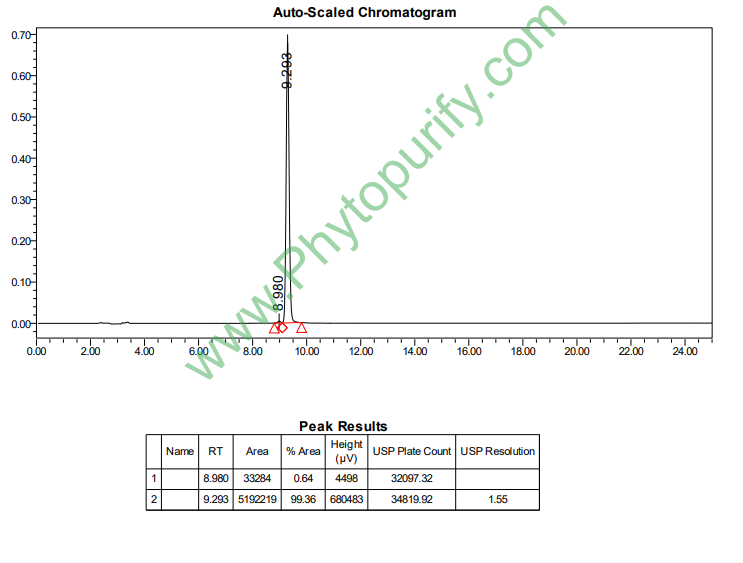
Purity: 95%~99%
Analysis Method: HPLC-DAD or/and HPLC-ELSD
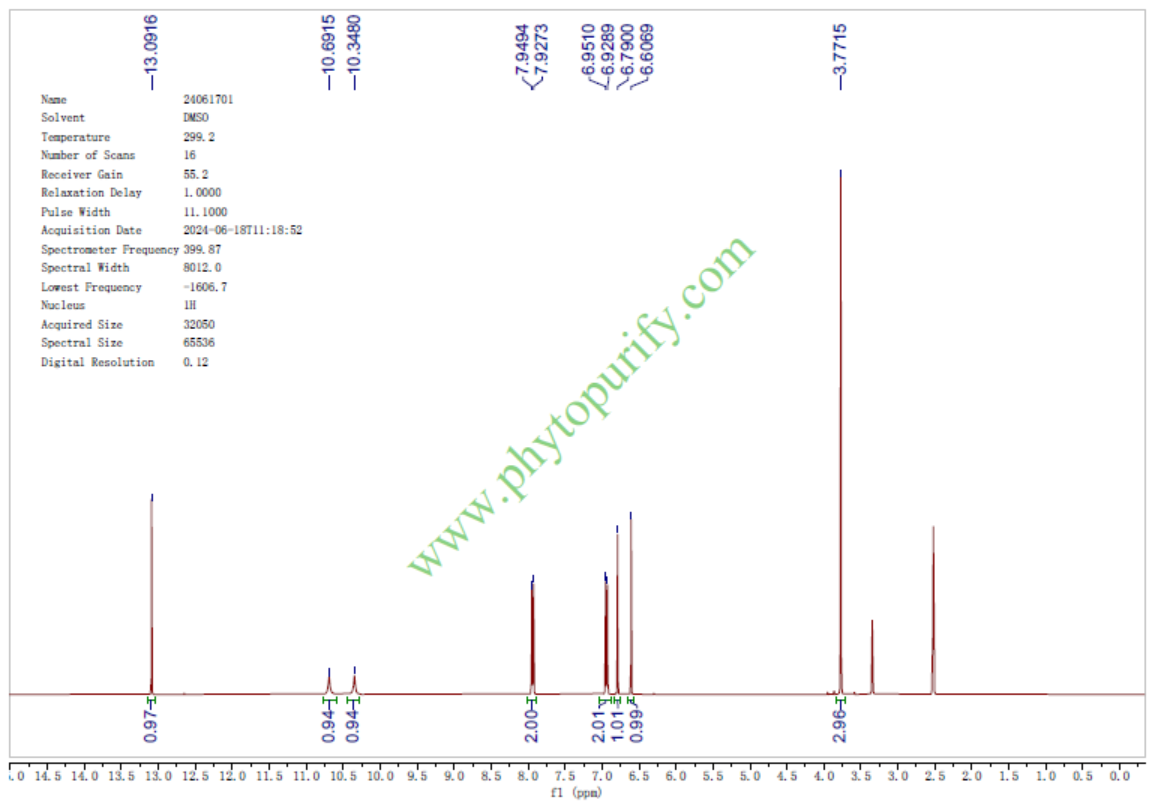
Identification Method: Mass, NMR
Packing: Brown vial or HDPE plastic bottle
Storage: Store in a well closed container, protected from air and light. Put into refrigerate or freeze for long term storage.
Whenever possible, you should prepare and use solutions on the same day. However, if you need to make up stock solutions in advance, we recommend that you store the solution as aliquots in tightly sealed vials at -20℃. Generally, these will be useable for up to two weeks.
The product could be supplied from milligrams to grams
Inquire for bulk scale.
Description:
Hispidulin has anti-oxidative, anti-inflammatory, anti-cancer, antiepileptic, neuroprotective, anti-osteoporotic and bone resorption attenuating effects, it targets the VEGF receptor 2-mediated PI3K/Akt/mTOR signaling pathway in endothelial cells, leading to the suppression of pancreatic tumor growth and angiogenesis. Hispidulin can ameliorate high glucose-mediated endothelial dysfunction via inhibiting PKCβII-associated NLRP3 inflammasome activation and NF-κB signaling, it has potential application in the prevention and treatment of diabetic vascular complications. Hispidulin can inhibit platelet aggregation by elevating cAMP levels by a mechanism different from that of theophylline or PGE1.
References:
J. Funct. Foods, 2016, 27:392-405.
Ameliorative effects of hispidulin on high glucose-mediated endothelial dysfunction via inhibition of PKCβII-associated NLRP3 inflammasome activation and NF-κB signaling in endothelial cells
Endothelial dysfunction is closely relevant to atherosclerosis complications in diabetic patients. Hispidulin, a flavone derived from the herb Salvia plebeia R. Br., has numerous biological properties including anti-inflammatory and antioxidative effects, but the underlying mechanism of its anti-inflammatory action remains unclear. This study was designed to investigate the effects of Hispidulinon endothelial homeostasis and its mechanism.
METHODS AND RESULTS:
Hispidulin effectively inhibited high glucose-induced oxidative stress by attenuating PKCβII phosphorylation and downstream reactive oxygen species (ROS) production, furthermore reversing the loss of mitochondria membrane potential. Moreover, Hispidulin significantly suppressed the expression of NLRP3 inflammasome and IKKβ/NF-κB, and restored high glucose-impaired vasodilation in rat aorta.
CONCLUSIONS:
This study demonstrated that Hispidulin ameliorated high glucose-mediated endothelial dysfunction via inhibiting PKCβII-associated NLRP3 inflammasome activation and NF-κB signaling. Besides, these findings indicate the beneficial effects of Hispidulin on the improvement of endothelial dysfunction and explain its potential application in the prevention and treatment of diabetic vascular complications.
Eur J Pharmacol. 1988 Feb 16;147(1):1-6.
Hispidulin, a natural flavone, inhibits human platelet aggregation by increasing cAMP levels.
Hispidulin, a natural flavone, and theophylline inhibited platelet aggregation triggered by adenosine-5'-monophosphate, arachidonic acid, paf-acether and collagen.
METHODS AND RESULTS:
Hispidulin was 100-fold more potent than theophylline. A threshold concentration of PGE1 did not modify the anti-aggregatory effect of Hispidulin but potentiated the effect of theophylline. A threshold concentration of Hispidulin had no effect on the inhibitory action of theophylline. Hispidulin (100 microM) and theophylline (10 mM) increased the control cAMP level in platelets 4-fold. A threshold concentration of PGE1 had a small effect on Hispidulin-induced cAMP levels but increased the theophylline-induced cAMP levels 3-fold. Theophylline (10 mM)-induced cAMP levels were not modified by Hispidulin. We demonstrate a correlation between the inhibition of platelet aggregation and the increase in cAMP levels induced by Hispidulin.
CONCLUSIONS:
These data suggest that Hispidulin could inhibit platelet aggregation by elevating cAMP levels by a mechanism different from that of theophylline or PGE1.
Eur J Pharmacol. 2015 May 15;755:6-15.
Protective effect of hispidulin on kainic acid-induced seizures and neurotoxicity in rats.
Hispidulin is a flavonoid compound which is an active ingredient in a number of traditional Chinese medicinal herbs, and it has been reported to inhibit glutamate release. The purpose of this study was to investigate whether Hispidulin protects against seizures induced by kainic acid, a glutamate analog with excitotoxic properties.
METHODS AND RESULTS:
The results indicated that intraperitoneally administering Hispidulin (10 or 50mg/kg) to rats 30min before intraperitoneally injecting kainic acid (15mg/kg) increased seizure latency and decreased seizure score. In addition, Hispidulin substantially attenuated kainic acid-induced hippocampal neuronal cell death, and this protective effect was accompanied by the suppression of microglial activation and the production of proinflammatory cytokines such as interleukin-1β, interleukin-6, and tumor necrosis factor-α in the hippocampus. Moreover, Hispidulin reduced kainic acid-induced c-Fos expression and the activation of mitogen-activated protein kinases in the hippocampus.
CONCLUSIONS:
These data suggest that Hispidulin has considerable antiepileptic, neuroprotective, and antiinflammatory effects on kainic acid-induced seizures in rats.
Cell Biochem Biophys. 2014 Jun;69(2):311-7.
Hispidulin exerts anti-osteoporotic activity in ovariectomized mice via activating AMPK signaling pathway.
To investigate the effect of Hispidulin on ovariectomy (OVX)-induced bone loss in mice.
METHODS AND RESULTS:
Female mice subjected to OVX were treated with Hispidulin for 8 weeks. The total body bone mineral density was measured at the beginning and after the OVX at a time interval of 4 weeks. Micro-computed tomography of the tibia, bone histomorphometric analysis of the femur, and biomechanical analysis of tibia, vertebra, and femoral head were performed to fully evaluate the anti-osteoporotic effect of Hispidulin. Western blot analysis was performed to determine the level of activated AMPK. Hispidulin treatment effectively prevented OVX-induced body weight loss and attenuated OVX-induced bone loss. Hispidulin treatment also decreased trabecular spacing in OVX mice. The suppressing effect of Hispidulin on osteoclast surface and number was also found via histomorphometric analysis. Western blot analysis revealed that Hispidulin significantly elevated the activated AMPK levels.
CONCLUSIONS:
Our findings suggest that Hispidulin exerts anti-osteoporotic and bone resorption attenuating effects via activating the AMPK signaling pathway.
HPLC of Hispidulin
HNMR of Hispidulin
Storage conditions:Short-term storage at 2~8℃, long-term storage at -20 ~ -80℃
100.1300
2.1096
1.8219
.0297
3.2069
13.0036
Low
91.5976
2.3893
Yes
No
Yes
No
Yes
No
0.6
No
No
Yes
No
Hispidulin (CAS number: 1447-88-7) is a naturally occurring monomethoxyflavonoid compound that has received widespread attention in pharmacology and natural product chemistry due to its broad biological activity. As a derivative of Luteolin methylated at position 6, high plantain not only retains the typical biological activity of flavonoids, but also exhibits unique pharmacological properties. In recent years, with the in-depth study of its multiple mechanisms of action such as anti-inflammatory, anti-tumor, antioxidant, and neuroprotective effects, berberine has gradually become one of the hotspots in natural product pharmacology research. Of particular note is that high plantain, as an effective inhibitor of Pim-1 kinase (IC50=2.71 μ M), provides a new molecular basis for drug development targeting related signaling pathways.
This article aims to systematically review the chemical structure and physicochemical properties, plant sources and extraction methods, pharmacological activity and mechanism of action, pharmacological evaluation and pharmacokinetic characteristics of high plantain, and explore its clinical application prospects and future research directions, in order to provide theoretical support and reference for scientific research and drug development in related fields.
Plantago asiatica belongs to the group of monomethoxyflavones in the flavonoid class, with a chemical formula of C16H12O6 and a molecular weight of 300.2660. Its structural feature is the methylation of the 6th hydroxyl group of breviscapine, forming a 6-methoxy substituent. The molecule contains three hydroxyl groups and one methoxy group, giving it strong polarity and active functional groups. Its chemical name is 5,7-dihydroxy-6-methoxy-2- (4-hydroxyphenyl) -4H-1 benzopyran-4-one.
In terms of physical and chemical properties, the LogP value of high plantain is 2.1096, indicating its moderate lipophilicity, which is beneficial for membrane penetration. The polar surface area (TPSA) is 100.13 Å ², indicating a certain balance between molecular polarity and water solubility. Low water solubility (0.0297 mg/mL) may limit its oral bioavailability. The low permeability of the blood-brain barrier suggests that its role in the central nervous system may be limited. The hERG channel inhibition test was negative, indicating a low risk of cardiac toxicity. The Ames mutagenicity test result is 0.6, indicating low mutagenicity and good safety.
The single methoxy modification of molecular structure not only affects its physicochemical properties, but may also enhance its binding affinity with specific targets, thereby enhancing its biological activity.
Plantago asiatica is widely present in various traditional medicinal plants, especially in the Caryophyllaceae and Lamiaceae plants, where it is abundant in content. Typical sources include Plantago asiatica and Salvia plexeia. It mainly exists in the plant body in a free or bound state, participating in plant defense mechanisms and metabolic regulation.
The commonly used methods for extracting high plantain include solvent extraction, ultrasound assisted extraction, and microwave-assisted extraction. Generally, ethanol or methanol is used as the extraction solvent, combined with water phase to improve the dissolution rate of polar components. Ultrasound assisted extraction is widely used due to its simple operation and high extraction efficiency. The extraction solution is purified through concentration, separation, column chromatography and other steps, and finally analyzed qualitatively and quantitatively by high performance liquid chromatography (HPLC). In recent years, supercritical CO2 extraction technology has also been attempted for the extraction of high plantain, aiming to improve purity and yield while reducing the use of organic solvents, in line with the concept of green chemistry.
The optimization of extraction process is not only related to the yield and purity of high plantain, but also affects the quality control of its subsequent pharmacological activity research and formulation development.
Plantago asiatica has various significant pharmacological activities, including anti-inflammatory, anti-tumor, antioxidant, anticonvulsant, and neuroprotective effects.
Plantago asiatica exhibits potent anti-inflammatory effects by regulating various inflammation related signaling pathways and cytokines. Its targets include IL-6, STAT3, TNF, NFKB1, PTGS1/2 (COX-1/2), NOS2 (iNOS), CASP1 (inflammasome associated protein), etc. Research has shown that high levels of plantain can inhibit the activation of the NF - κ B signaling pathway, reduce the expression of pro-inflammatory factors such as TNF - α and IL-6, and alleviate inflammatory responses. In addition, the regulation of TRPV1 and TRPA1 plasma channels by high plantain can help alleviate inflammatory pain.
High plantain exhibits significant cell proliferation inhibition and apoptosis induction effects in various tumor cell lines. The mechanism involves the inhibition of Pim-1 kinase, which plays a crucial role in the proliferation and survival of tumor cells as a proto oncogene kinase. Plantago asiatica inhibits Pim-1 activity, blocks downstream signaling pathways, and induces tumor cell cycle arrest and apoptosis. In addition, high plantain can regulate the expression of Bcl-2 family proteins, activate the caspase cascade reaction, and promote cell apoptosis.
As a natural flavonoid product, plantain has significant free radical scavenging ability. Its hydroxyl structure can effectively capture reactive oxygen species (ROS) and alleviate oxidative stress damage to cells. In vitro experiments have shown that berberine can enhance the activity of intracellular antioxidant enzymes such as superoxide dismutase and glutathione peroxidase, protecting cells from oxidative damage.
Plantago asiatica has shown anticonvulsant and neuroprotective effects in neurological disease models. The mechanism may be related to regulating neurotransmitter release, inhibiting neuroinflammation, and oxidative stress. Animal experiments have shown that high levels of plantain can prolong the latency period of epileptic seizures, reduce neuronal damage, indicating its potential application value in epilepsy and other neurodegenerative diseases.
The multi-target mechanism of action of high plantain is the basis of its multiple pharmacological activities. Its main targets and mechanisms include:
Pim-1 kinase inhibition Pim-1 is a serine/threonine kinase involved in regulating cell proliferation, survival, and apoptosis. Plantago asiatica competitively inhibits Pim-1 kinase activity (IC50=2.71 μ M), blocks downstream signals, and induces tumor cell cycle arrest and apoptosis.
Regulation of inflammatory signaling pathway High plantain inhibits the NF - κ B (NFKB1) and STAT3 signaling pathways, reduces the expression of pro-inflammatory cytokines (IL-6, TNF - α) and inflammatory mediators (PTGS2, NOS2), and alleviates inflammatory responses.
Ion channel regulation The regulatory effect of high plantain on TRPV1 and TRPA1 channels can help alleviate inflammation related pain and neural excitability.
Regulation of cell apoptosis By regulating Bcl-2 family proteins and activating the cascade of caspase 1 (CASP1), high plantain promotes cell apoptosis, especially in tumor cells.
Antioxidant mechanism Plantago asiatica can alleviate oxidative stress damage by directly clearing free radicals and enhancing intracellular antioxidant enzyme activity.
The synergistic effects of these multi-target and multi mechanism mechanisms have demonstrated the broad therapeutic potential of resveratrol in various disease models.
The pharmacological evaluation of high plantain shows that it has good potential for drug development, but there are also certain challenges.
Molecular weight and lipid solubility The molecular weight is 300.2660, which conforms to the ideal range of Lipinski rule. The LogP value is 2.1096, indicating moderate lipid solubility, which is beneficial for cell membrane penetration.
Polarity and water solubility The TPSA is 100.13 Å ², indicating moderate molecular polarity and low water solubility (0.0297 mg/mL), which may limit oral absorption and bioavailability.
Blood-brain barrier infiltration Predicting low blood-brain barrier permeability limits its direct application in central nervous system diseases, but it still has potential for peripheral nervous system diseases.
safety HERG channel inhibition is negative, reducing the risk of cardiac toxicity. The Ames test results show low mutagenicity and good safety.
pharmacokinetics At present, research on the in vivo absorption, distribution, metabolism, and excretion (ADME) of high plantain is relatively limited. Preliminary animal experiments have shown that its oral absorption is slow and its bioavailability is limited. It is mainly metabolized through the liver, and the metabolites need further identification.
The application of nanocarriers, liposomes, and solid dispersions has become an important direction to enhance the clinical application potential of high plantain due to its low water solubility and oral bioavailability.
Plantago asiatica, as a multifunctional natural flavonoid, has a wide range of pharmacological activities and good safety, and has great clinical application potential.
Anti inflammatory diseases Its regulation of multiple inflammation related targets makes it potentially therapeutic in autoimmune diseases and chronic inflammatory diseases such as rheumatoid arthritis and inflammatory bowel disease.
tumor therapy Through Pim-1 kinase inhibition and induction of cell apoptosis, resveratrol is expected to serve as a candidate molecule for anti-tumor drugs, especially in the adjuvant therapy of hematological and solid tumors.
Neurological disorders Although the blood-brain barrier has low permeability, its antioxidant and anti-inflammatory properties may provide protective effects against peripheral neuropathy and neuroinflammatory related diseases such as epilepsy and neuropathic pain.
Formulation development Combining modern drug delivery technology to optimize the bioavailability and targeting of high plantain will be the key to promoting its clinical translation.
Future research should focus on the in vivo pharmacokinetics, toxicological evaluation, and preclinical model validation of high plantain, promoting its transition from laboratory studies to clinical applications. Meanwhile, based on its multi-target mechanism of action, research on combination therapy and structural modification will be conducted to explore more efficient and safer derivatives and combination therapies.
As a natural flavonoid with multiple biological activities, high plantain has shown great potential in anti-inflammatory, anti-tumor, antioxidant, and neuroprotective fields due to its unique chemical structure and extensive pharmacological effects. The discovery of it as a Pim-1 kinase inhibitor provides a new approach for targeted tumor therapy. Although there are certain limitations in its water solubility and bioavailability at present, it is expected to overcome these obstacles and achieve clinical application through modern pharmaceutical formulation technology and structural optimization.
In the future, in-depth mechanism research, pharmacokinetic improvement, and preclinical validation of high plantain will lay a solid foundation for it to become a new natural drug or drug lead. As an important research object in the field of natural product pharmacology, the development and application prospects of high plantain are broad and worthy of continuous attention and investment.
