


Product name: Nepetin-7-glucoside
Synonym name: Nepitrin
Catalogue No.: BP0995
Cas No.: 569-90-4
Formula: C22H22O12
Mol Weight: 478.406
Botanical Source: Salvia plebeia R. Br.
Physical Description:
Type of Compound: Flavonoids
Purity: 95%~99%
Analysis Method: HPLC-DAD or/and HPLC-ELSD
Identification Method: Mass, NMR
Packing: Brown vial or HDPE plastic bottle
Storage: Store in a well closed container, protected from air and light. Put into refrigerate or freeze for long term storage.
Whenever possible, you should prepare and use solutions on the same day. However, if you need to make up stock solutions in advance, we recommend that you store the solution as aliquots in tightly sealed vials at -20℃. Generally, these will be useable for up to two weeks.
The product could be supplied from milligrams to grams
Inquire for bulk scale.
Chengdu Biopurify Phytochemicals Ltd. is a leading company in the research, development, manufacture and marketing of High Quality Phytochemicals and Extracts(especially Active Ingredients from Traditional Chinese Medicine,TCM), Natural Active Pharmaceutical Ingredients worldwide.
The main services:
A. Supply active ingredients and reference standards of TCM, from mgs to kgs scale
B. Custom extraction and purification, target Herb Active Ingredients
C. Custom synthesis and semi-synthesis for Natural Active Ingredients
D. CR(contract research), CM(contract manufacture) and PD(process development) services from lab scale, pilot scale to commercial scale(GMP is also available)
E. TCM compounds library for drug screen,more than 3000 compounds available, many of them are rare and unique.
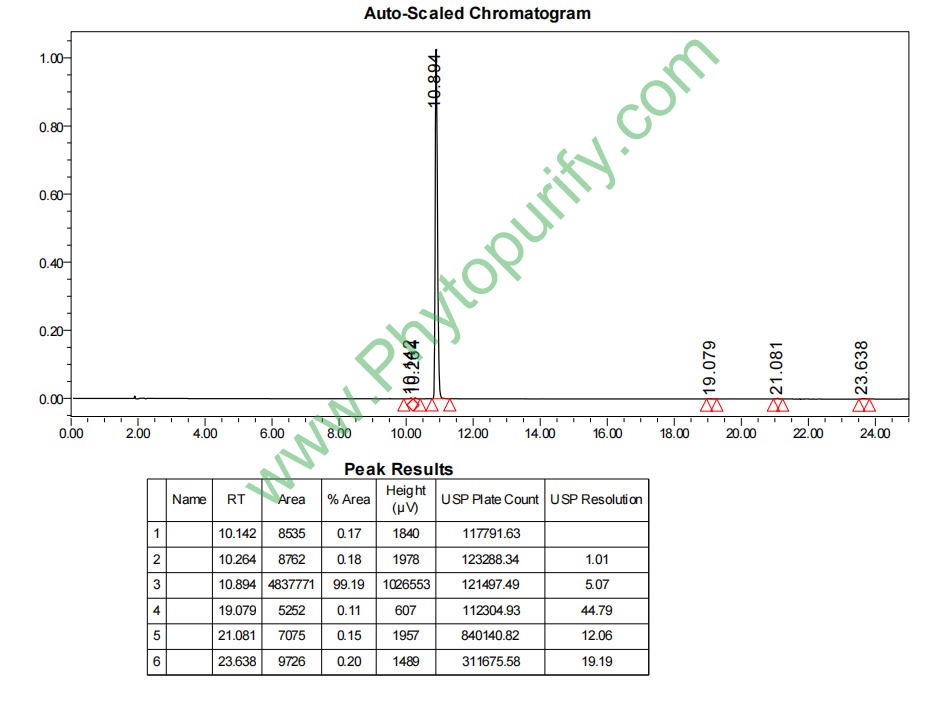
HPLC of Nepetin-7-glucoside
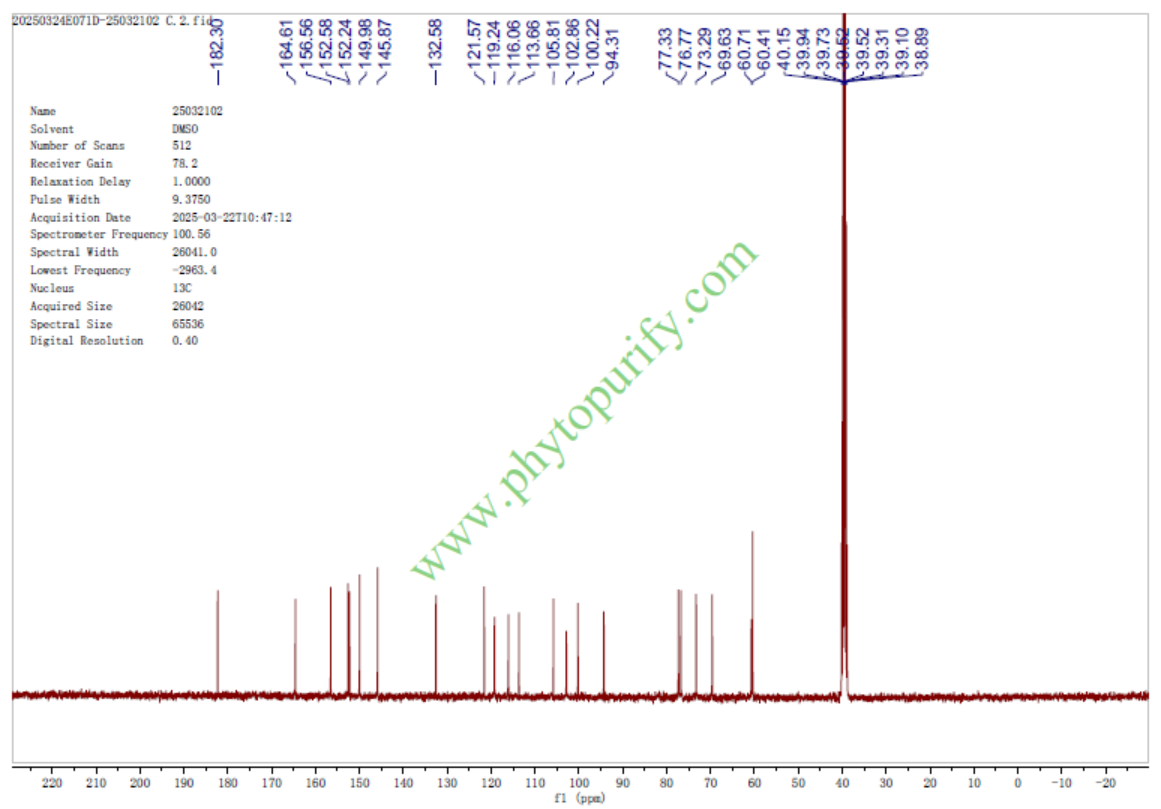
NMR of Nepetin-7-glucoside
Storage conditions:Short-term storage at 2~8℃, long-term storage at -20 ~ -80℃
Nepetin-7-glucoside (CAS number: 569-90-4) is a naturally occurring flavonoid glycoside widely distributed in plants of the Lamiaceae family. As an important member of the flavonoid family, the glycosides of the genus Cymbidium have attracted widespread attention in the field of natural product pharmacology in recent years due to their unique chemical structure and diverse biological activities. Especially in the treatment research of central nervous system diseases, the glycoside of Pseudostellaria has shown significant sedative and hypnotic effects, involving the regulation of multiple neurotransmitter pathways and receptor targets, demonstrating good pharmacological potential.
The purpose of this review is to systematically summarize the chemical structure and physicochemical properties, plant sources and extraction methods, pharmacological activity and mechanism of action, pharmacological evaluation and pharmacokinetic characteristics of the glycosides in the genus Cymbidium, and to explore their clinical application prospects and development directions, providing theoretical basis and reference for subsequent basic research and drug development.
The glycoside of the genus Pseudostellaria belongs to the flavonoid glycoside class, and its parent nucleus is a flavonoid structure. The 7th hydroxyl group on the typical flavonoid skeleton is replaced by a glucose group, forming 7-glucoside. Its molecular formula is C21H22O12 and its molecular weight is 478.4060. The structure contains multiple hydroxyl and sugar groups, giving it strong hydrophilicity.
In terms of physical and chemical properties, the LogP value of the glycoside of the genus Pseudostellaria is -0.0724, indicating its strong hydrophilicity and water solubility of 1.1484, indicating its good solubility in water. The polar surface area (TPSA) is relatively large, reaching 199.51 Å ², reflecting the presence of a large number of polar groups in its molecule, which is consistent with its lower blood-brain barrier permeability. The hERG channel inhibition experiment showed a negative result, indicating a low risk of cardiac toxicity. The Ames test score is 0.6, indicating a low risk of genotoxicity and a good safety foundation.
The glycosides of Nepeta genus mainly exist in Nepeta spp., especially in medicinal plants such as Nepeta cataria and Nepeta tenuifolia. Plants of the genus Pseudostellaria are commonly used in traditional Chinese medicine to treat symptoms such as colds, headaches, and insomnia. Their pharmacological activity is closely related to flavonoids such as pseudostellaria glycosides.
The common methods for extracting glycosides from the genus Cymbidium include:
Solvent extraction method Using ethanol or methanol as extraction solvents and assisted by reflux or ultrasound extraction, it is possible to effectively extract glycosides of the genus Cymbidium from plants. The extraction solution can be concentrated, separated, and purified to obtain the target compound with high purity.
Column chromatography separation Separate and purify the crude extract using silica gel column chromatography or reverse phase C18 column chromatography, and perform qualitative and quantitative analysis using high-performance liquid chromatography (HPLC) technology.
Supercritical fluid extraction In recent years, supercritical CO ₂ extraction technology has also been attempted for the extraction of pseudo catnip glycosides due to its environmentally friendly and efficient characteristics, with good selectivity and yield.
The optimization of extraction technology mainly focuses on improving yield, purity, and reducing costs, laying the foundation for subsequent pharmacological research and industrial production.
The pharmacological activity research of fake catnip glycosides mainly focuses on their sedative and hypnotic effects on the central nervous system. Multiple in vitro and in vivo experiments have shown that the glycoside of the genus Pseudostellaria can significantly improve the sleep quality of animal models, prolong sleep time, and alleviate anxiety and tension.
In the sleep experiment induced by pentobarbital sodium in mice, pseudoephedrine glycosides showed a significant hypnotic promoting effect, which could shorten the latency period and prolong the duration of sleep. Its sedative effect is closely related to the regulation of the GABAergic system, exhibiting enhanced GABA receptor-mediated neuroprotective effects.
The pseudo catalpol glycosides showed anti anxiety and anti depression activities in open field and forced swimming tests, suggesting that they may exert their effects by regulating the 5-hydroxytryptamine (5-HT) system. Related studies have shown that the glycosides of the genus Crassulaceae can affect the expression and function of 5-HT1A and 5-HT2A receptors, and regulate neurotransmitter balance.
In addition to its central nervous system activity, the glycosides of the genus Pseudostellaria also have antioxidant, anti-inflammatory, and neuroprotective effects. Its multi hydroxyl structure endows it with the ability to scavenge free radicals, which helps alleviate oxidative damage to nerve cells and further supports its potential application in neurological diseases.
The sedative and hypnotic effects of fake catnip glycosides involve multiple neurotransmitter pathways and receptor targets, mainly including:
GABA receptor family (GABRA1, GABRB2, GABRG2)
Pseudostellaria glycosides enhance the activity of GABA_A receptors, promote chloride ion influx, enhance neuronal inhibitory conduction, and achieve sedative and hypnotic effects. The GABA_A receptor subunits α 1 (GABRA1), β 2 (GABRB2), and γ 2 (GABRG2) are its main targets of action.
5-hydroxytryptamine receptors (HTR1A, HTR2A)
Pseudostellaria glycosides regulate the expression and function of 5-HT1A and 5-HT2A receptors, affect the release and reuptake of neurotransmitters, regulate emotions and sleep rhythms.
Serotonin transporter protein (SLC6A4)
By inhibiting serotonin transporters, pseudoephedrine glycosides prolong the action time of 5-HT in synaptic cleft, enhance neural transmission, and improve mood and sleep quality.
The synergistic effect of these mechanisms of action results in a comprehensive effect of multi-target and multi pathway regulation of central nervous system function by the glycosides of the genus Pseudostellaria.
The pharmacological evaluation of the glycoside of the genus Pseudostellaria shows that it has certain advantages and challenges:
At present, there is limited pharmacokinetic research on the glycosides of the genus Pseudostellaria. Preliminary data indicate that their oral absorption is relatively fast, but their bioavailability is limited by their polarity and metabolic stability. Future research needs to further clarify its metabolic pathways, half-life, and tissue distribution characteristics in vivo.
Due to its significant sedative, hypnotic, and anti anxiety activities, the glycoside of the genus Pseudostellaria has the potential to become a novel central nervous system drug. Its multi-target mechanism of action provides a theoretical basis for the development of drugs that regulate neurotransmitters, especially for the treatment of insomnia, anxiety, and related mental disorders.
However, the low blood-brain barrier permeability of the glycoside of the genus Pseudostellaria limits its direct central role. In the future, its clinical application value can be enhanced through the following strategies:
In addition, the safety of the glycoside of the genus Pseudostellaria is good, and there is no significant cardiac toxicity or genotoxicity, providing a good basis for its clinical translation. In the future, systematic preclinical pharmacokinetics, safety evaluation, and clinical trials need to be conducted to verify its therapeutic efficacy and safety.
As a natural flavonoid glycoside, the pseudo catalpol glycoside has shown broad research and application prospects in the fields of sedation, hypnosis, and anti anxiety due to its unique chemical structure and multi-target neural regulatory effects. Although its low blood-brain barrier permeability limits its direct central nervous system effects, structural optimization and advanced drug delivery technologies have the potential to overcome this bottleneck and promote its translation into clinical drugs.
Future research should focus on in-depth analysis of the pharmacokinetic properties, mechanism of action, and safety system evaluation of pseudostellarides glycosides, combined with modern drug design and delivery technologies, to promote them as effective natural drugs for the treatment of insomnia and related neurological and psychiatric disorders. In summary, the glycoside of the genus Pseudostellaria is a natural product with significant development value and deserves continuous exploration in the fields of pharmacology and drug development.
