Introduction/Overview
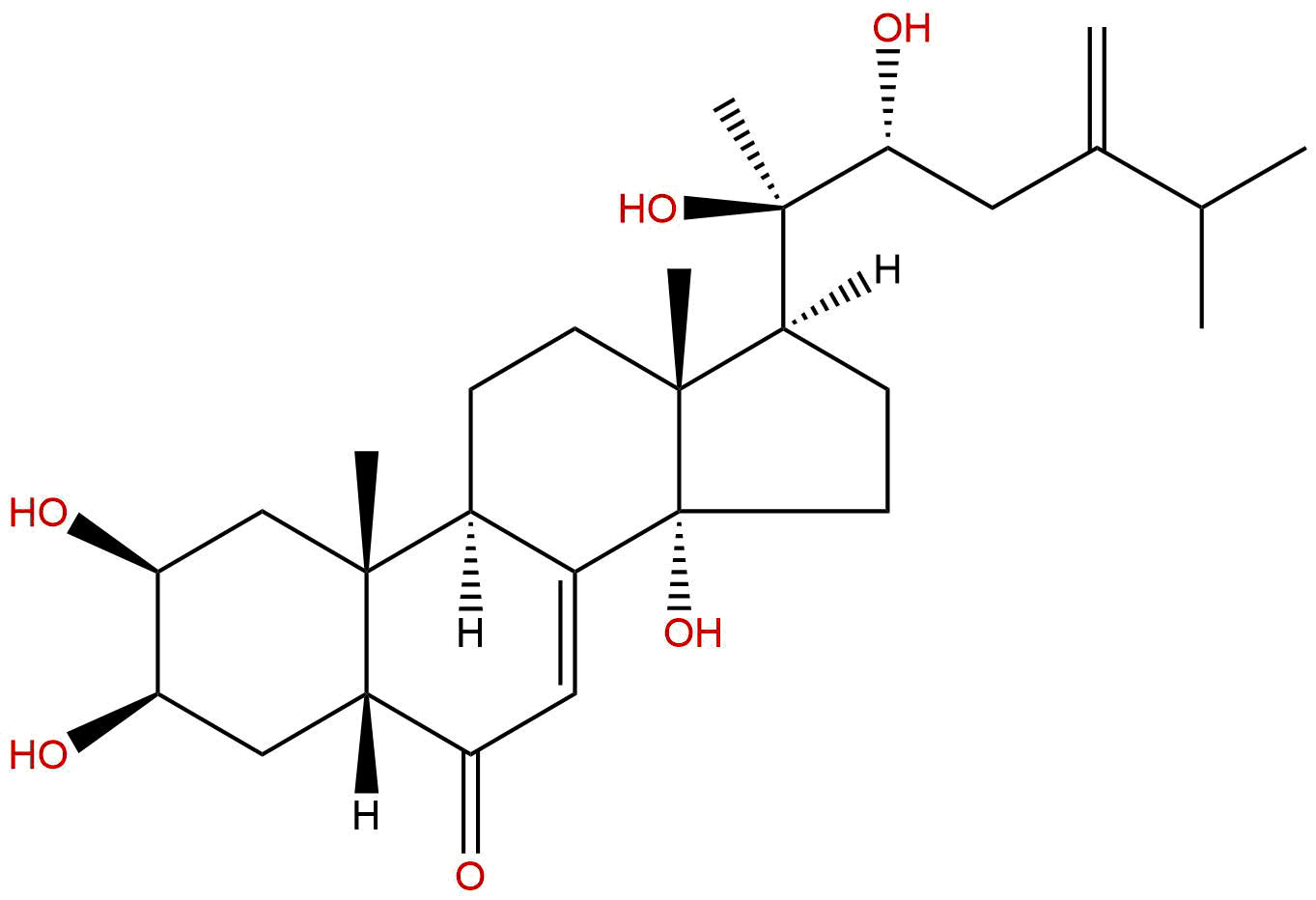
Polyporusterone B is a natural triterpenoid carboxylic acid isolated from the Polyporus umbellatus Fries fungus in the family Polyporus. As one of the active ingredients in Poria cocos, Poridone B has attracted widespread attention in the field of natural product pharmacology in recent years due to its unique chemical structure and significant biological activity. Poria cocos is widely used in traditional Chinese medicine for promoting diuresis, reducing swelling and pain, and regulating immunity. As one of its main active ingredients, Poridone B exhibits inhibitory effects on free radical induced red blood cell lysis (hemolysis), suggesting its potential antioxidant and cell protective functions. In addition, the mechanism of action and molecular targets of Poridone B in immune suppression related diseases have gradually deepened, revealing its potential to exert pharmacological effects by regulating multiple immune signaling pathways.
This article will provide a systematic review of the chemical structure and physicochemical properties, plant sources and extraction methods, pharmacological activity and mechanism of action, pharmacological evaluation and pharmacokinetic characteristics of Poridone B. It will also explore its clinical application prospects and future development directions based on current research progress, aiming to provide theoretical basis and research references for its development as a new natural medicine.
Chemical structure and physicochemical properties
The chemical formula of Poridone B is C30H44O5, with a molecular weight of 476.6540. Its structure belongs to triterpenoid carboxylic acid compounds, with typical polycyclic skeleton and carboxyl functional groups. The LogP value of Poridone B is 2.4173, indicating its moderate lipid solubility, which is beneficial for membrane penetration and bioavailability. Its polar surface area (TPSA) is 118.2200, indicating that its molecule has a certain polarity, which may affect its binding affinity and pharmacokinetic behavior with the target. Low water solubility (0.0635) indicates limited solubility in aqueous phase, which poses certain challenges for its formulation development.
From the perspective of drug safety, Poridone B did not exhibit hERG channel inhibitory activity, reducing the risk of cardiac toxicity; The Ames mutagenicity test result is 0.0, indicating that its genetic toxicity risk is low and has a good safety basis. In addition, the blood-brain barrier permeability of Poridone B is relatively low, indicating its limited distribution in the central nervous system, which is of great significance for its target localization and potential side effects.
Plant sources and extraction methods
Polyporus umbellatus Fries, a traditional Chinese medicinal herb, is mainly derived from Polyporus umbellatus B, a fungus belonging to the family Polyporus. Poria cocos is widely distributed in East Asia, including China, Japan, and the Korean Peninsula, and often grows on decaying wood under broad-leaved forests. Both its fruiting body and sclerotium contain abundant triterpenoids, which are the main natural sources of Poridone B.
The process of extracting Poridone B usually includes the following steps:
- Raw material pretreatment Grind the dried Poria cocos into suitable particle size to increase extraction efficiency.
- Solvent extraction Organic solvents such as ethanol, methanol, or ethyl acetate are used for extraction, and reflux or ultrasound assisted extraction techniques are commonly used to improve the extraction rate.
- Crude extract concentration By reducing pressure and concentrating to remove most of the solvent, a concentrated extract is obtained.
- Separation and purification Using techniques such as silica gel column chromatography and reverse phase high performance liquid chromatography (RP-HPLC) for separation and purification, high-purity Poridone B was obtained.
- Structural Identification Confirm the structure of the compound through methods such as nuclear magnetic resonance (NMR), mass spectrometry (MS), and infrared spectroscopy (IR).
In recent years, the application of green extraction methods such as supercritical CO2 extraction and membrane separation technology has significantly improved the extraction efficiency and purity of Poridone B, reduced the use of organic solvents, and met the environmental requirements of modern natural product extraction.
Pharmacological activity research
The pharmacological activity research of Poridone B mainly focuses on its antioxidant, immune regulatory, and anti-inflammatory effects. Early in vitro experiments have found that Poridone B can effectively inhibit free radical induced hemolysis of red blood cells, indicating its significant antioxidant and cell protective abilities. The mechanism of action may be related to the synergistic scavenging of free radicals by carboxyl and hydroxyl functional groups in its triterpenoid skeleton structure.
In terms of immune regulation, Poridone B exhibits the potential to regulate immune cell function. Multiple in vitro and in vivo studies have shown that Poridone B can affect T cell activation, cytokine secretion, and expression of immune signaling pathways, thereby exerting immunosuppressive effects. This is of great significance for the treatment of autoimmune diseases, transplant rejection reactions, and inflammatory diseases.
In addition, research on the anti-inflammatory and anti-tumor effects of Poridone B is gradually underway. It exhibits certain anti-inflammatory and anticancer activities by inhibiting the generation of inflammatory mediators and regulating tumor related signaling pathways, but the relevant mechanisms still need further clarification.
Mechanism of action and molecular targets
The immunosuppressive effect of Poridone B involves multiple key signaling pathways and molecular targets. Based on gene expression and proteomic analysis, Poridone B mainly regulates the following targets:
-
STAT3 (Signal Transduction and Transcription Activation Factor 3)STAT3 plays a central role in the proliferation, differentiation, and inflammatory response of immune cells. Zhulingketone B reduces the expression of pro-inflammatory cytokines and weakens immune activation by inhibiting the phosphorylation and nuclear translocation of STAT3.
-
IL2 (interleukin-2)IL2 is a key cytokine for T cell proliferation and activation. Zhuling ketone B regulates IL2 expression, affects T cell proliferation and immune response, and exerts immunosuppressive effects.
-
NFKB1 (nuclear factor kappa B subunit 1)The NF - κ B signaling pathway is an important regulatory node for inflammation and immune response. Zhuling ketone B can inhibit the activation of NF - κ B, reduce the release of inflammatory mediators, and alleviate immune overreaction.
-
TGFB1 (Transforming Growth Factor β 1)TGFB1 plays a crucial role in immune tolerance and regulatory T cell function. Zhulingketone B promotes the maintenance of immune homeostasis by regulating TGFB1 levels.
-
IL10 (interleukin 10)IL10 is an anti-inflammatory cytokine, and Poridone B can increase the expression of IL10 and enhance the immunosuppressive environment.
-
FOXP3 (forkhead box protein P3)FOXP3 is a regulatory T cell (Treg) - specific transcription factor, and Poridone B promotes FOXP3 expression, enhancing the immune regulatory function of Treg cells.
-
CALN1 (calcium binding protein 1), PPP3CA (protein phosphatase 3 catalytic subunit alpha), NFATC1 (nuclear factor activated T cell 1)These molecules are involved in calcium signaling and T cell activation processes, and Poridone B inhibits T cell activation and immune response by regulating its expression.
-
IFNG (interferon gamma)IFNG is a pro-inflammatory cytokine, and its expression is reduced by Poridone B, which alleviates the inflammatory response.
Overall, Poridone B exhibits good immunosuppressive activity by synergistically regulating the immune system through multiple targets and pathways. This multi-target mode of action provides a theoretical basis for its treatment of complex immune related diseases.
Evaluation of drug properties and pharmacokinetics
The pharmacological evaluation of Poridone B shows that it has good potential for drug development. Its molecular weight (476.6540) meets the basic requirements of Lipinski's rule, and its LogP value (2.4173) indicates moderate lipophilicity, which facilitates cell membrane permeation and in vivo distribution. Although TPSA (118.2200) is slightly higher, it is still within an acceptable range, supporting its effective binding to the target.
The low water solubility (0.0635) is a major limitation in the development of its formulation, and its bioavailability needs to be improved through formulation improvements such as nanocarriers and solid dispersions. Zhulingketone B does not inhibit hERG channels, reducing the potential risk of cardiac toxicity, and the Ames test is negative, indicating a low risk of genetic toxicity and good safety.
Regarding pharmacokinetics, existing research is relatively limited. Preliminary in vivo experiments have shown that the oral absorption of Poridone B is slow, the peak plasma concentration occurs for a long time, and the tissue distribution is mainly concentrated in the liver and spleen, which is consistent with its immune regulatory target organs. The low permeability of the blood-brain barrier suggests a lower risk of central nervous system side effects. The metabolic pathway may involve the liver cytochrome P450 enzyme system, and further research is needed on the metabolites and their activities.
Clinical application prospects and prospects
As a natural triterpenoid compound with significant immunosuppressive and antioxidant activities, Poridone B has broad clinical application prospects. Its potential therapeutic value in autoimmune diseases such as systemic lupus erythematosus, rheumatoid arthritis, organ transplant rejection, and chronic inflammatory diseases has attracted high attention in the field of drug development.
Future research should focus on the following aspects:
-
In depth analysis of pharmacological mechanisms Using multi omics techniques to systematically elucidate the key molecular network and signaling pathways of Poridone B in immune regulation, and reveal its multi-target synergistic mechanism.
-
Pharmacokinetic and safety evaluation Conduct systematic pharmacokinetic studies in vivo, clarify their absorption, distribution, metabolism, and excretion characteristics, and evaluate the safety and toxicological risks of long-term medication.
-
Optimization of formulation process Develop new drug delivery systems and formulations to address its poor water solubility and improve bioavailability and clinical efficacy.
-
Preclinical and clinical trials Based on sufficient pharmacological and safety data, promote the preclinical research and early clinical trials of Poridone B to verify its efficacy and safety in immune related diseases.
-
Combination therapy strategy Explore the combined use of Poridone B with existing immunosuppressants or anti-inflammatory drugs, evaluate its synergistic effect and potential for reducing toxicity and enhancing efficacy.
In summary, as a multifunctional triterpenoid compound from natural sources, Poridone B has the potential to become a novel immunomodulatory drug, and future systematic research will lay a solid foundation for its clinical translation.
Conclusion
As an important active ingredient in Poria cocos, Poridone B exhibits excellent pharmacological activity and medicinal properties due to its unique triterpenoid carboxylic acid structure and multi-target immunomodulatory effects. Its research achievements in antioxidant, immunosuppressive, and anti-inflammatory aspects provide important clues for the development of new natural immune modulators. Although the pharmacokinetics and clinical application research of Poridone B is still in its infancy, its good safety and clear mechanism of action indicate its broad application prospects in the treatment of immune related diseases. In the future, through interdisciplinary collaboration, optimization of extraction and purification processes, in-depth analysis of the mechanism of action, and systematic preclinical research, Poridone B is expected to become a shining pearl in the development of natural product drugs.