Introduction/Overview
Polyporusterone A, as a triterpenoid carboxylic acid natural product isolated from the Polyporus umbellatus Fries fungus in the family Polyporus, has attracted widespread attention in the field of natural product pharmacology in recent years. As a traditional Chinese medicinal herb, Poria cocos has always been used for promoting diuresis, reducing swelling, dispelling dampness, and treating kidney diseases. The systematic study of its active ingredients provides important clues for modern drug development. As one of the active ingredients in Poria cocos, Poridone A exhibits excellent antioxidant and cell protective activities, especially in the inhibition of red blood cell hemolysis induced by free radicals. In addition, the potential intervention role of Poridone A in the pathological mechanisms related to renal fibrosis has made it a research hotspot in the field of kidney disease treatment.
Renal fibrosis, as a common pathological basis for the progression of various chronic kidney diseases, involves complex processes such as excessive deposition of extracellular matrix (ECM), inflammatory response, and activation of fibroblasts. Zhuling ketone A exhibits potential anti fibrotic effects by regulating renal fibrosis related targets such as matrix metalloproteinase 2 (MMP2), transforming growth factor beta 1 (TGFB1), platelet-derived growth factor receptor alpha (PDGFRA), type I collagen protein (COL1A1), and matrix metalloproteinase inhibitor 1 (TIMP1). This article will provide a systematic review of the chemical structure and physicochemical properties, plant sources and extraction methods, pharmacological activity, mechanism of action and molecular targets, pharmacological evaluation and pharmacokinetic characteristics of Poridone A. Combined with its clinical application prospects, it aims to provide theoretical basis and research direction for further drug development of Poridone A.
Chemical structure and physicochemical properties
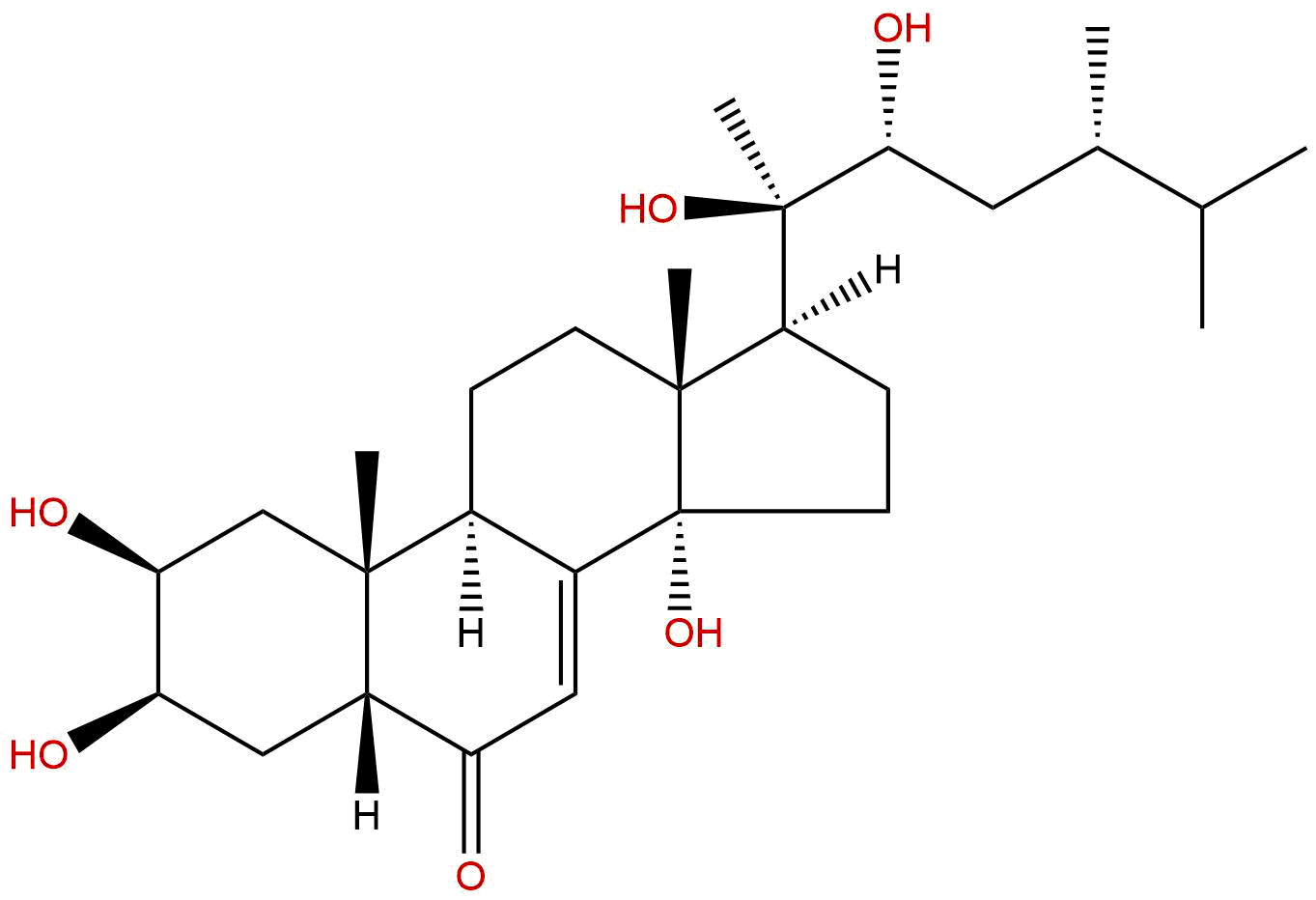
The chemical name of Poridone A is triterpenoid carboxylic acid compound, with a molecular formula of C30H46O5 and a molecular weight of 478.6700. Its molecular structure contains a typical triterpenoid skeleton with multiple hydroxyl and carboxylic acid functional groups, endowing it with strong polarity and biological activity. The LogP value of Poridone A is approximately 2.7584, indicating its moderate lipid solubility, which is beneficial for penetrating cell membranes and exerting pharmacological effects. The total polar surface area (TPSA) is 118.2200 Å ², indicating that the molecule has a high number of polar groups, which may affect its absorption and distribution characteristics.
Low water solubility (about 0.0469 mg/mL) suggests limited solubility in aqueous phase, and may require formulation optimization to improve bioavailability. The low permeability of the blood-brain barrier suggests that Poridone A mainly acts on peripheral targets, reducing the risk of central nervous system side effects. The negative result of hERG channel inhibition experiment indicates a low risk of cardiac toxicity. The Ames mutagenicity test was negative, indicating a low risk of genotoxicity and meeting drug safety requirements.
Overall, the physicochemical properties of Poridone A are suitable as a candidate molecule for oral or injectable drugs, but its water solubility and bioavailability still need to be optimized through pharmaceutical methods.
Plant sources and extraction methods
Zhulingketone A is mainly isolated from the fruiting body of Polyporus umbellatus Fries, a fungus in the family Polyporus. Poria cocos is widely distributed in East Asia, especially in China, Japan, and South Korea, and has a history of hundreds of years as a traditional Chinese medicinal herb. The fruiting body of Poria cocos contains abundant triterpenoids, polysaccharides, and other secondary metabolites, which are important resources for studying the active ingredients of natural medicines.
The extraction of Poridone A is usually carried out using organic solvent extraction combined with chromatographic separation technology. The specific process generally includes:
- Raw material processing Select dry Poria cocos fruiting bodies and grind them to the appropriate particle size.
- Solvent extraction Multiple reflux extractions were performed using ethanol or methanol to fully dissolve the triterpenoid components.
- Crude extract concentration Concentrate the extract under reduced pressure to obtain a concentrated crude extract.
- Separation and purification Using techniques such as silica gel column chromatography and reverse phase high performance liquid chromatography (RP-HPLC), combined with gradient elution, to separate and purify Poridone A.
- Identification confirmation Confirm the structure of the compound through methods such as mass spectrometry (MS), nuclear magnetic resonance (NMR), and infrared spectroscopy (IR).
In recent years, the application of ultrasound assisted extraction and supercritical fluid extraction technology has improved the extraction efficiency and purity of Poridone A, reduced the use of organic solvents, and is in line with the concept of green extraction. In the future, combined with research on biosynthetic pathways, it is expected to achieve large-scale production of Poridone A through microbial fermentation or genetic engineering methods.
Pharmacological activity research
The pharmacological activity research of Poridone A mainly focuses on its antioxidant, cell protective, and anti fibrotic effects.
Antioxidant and Cellular Protective Effects
Zhuling ketone A can effectively inhibit free radical induced red blood cell lysis (hemolysis), demonstrating its excellent antioxidant activity. The excessive production of free radicals is a key factor in the pathological processes of various diseases. Zhulingketone A reduces oxidative stress damage and protects red blood cells from hemolytic damage by clearing reactive oxygen species (ROS) and stabilizing cell membranes. In addition, Poridone A can also regulate the intracellular antioxidant enzyme system, such as superoxide dismutase (SOD), glutathione peroxidase (GPx), etc., enhancing the antioxidant defense ability of cells.
Anti renal fibrosis effect
Renal fibrosis is the final stage of chronic kidney disease development, characterized by interstitial fibrosis of renal tubules and loss of function. Zhulingketone A exerts anti fibrotic effects through multi-target regulation:
- Inhibition of TGFB1 signaling pathway TGFB1 is the core regulatory factor of renal fibrosis, promoting fibroblast transformation and collagen deposition. Zhuling ketone A can downregulate the expression of TGFB1, block its downstream signaling, and alleviate fibrosis process.
- Regulating the balance between MMP2 and TIMP1 MMP2 is involved in ECM degradation, while TIMP1 is its inhibitory factor. Zhuling ketone A regulates the expression of both, restores ECM dynamic balance, and prevents excessive deposition.
- Inhibition of PDGFRA and COL1A1 expression PDGFRA promotes the proliferation of fibroblasts, with COL1A1 as the main collagen component. Poridone A inhibits its expression, slowing down the formation of fibrous tissue.
In addition, Poridone A showed significant anti fibrotic effects in both in vitro cell models and animal renal fibrosis models, indicating its potential renal protective effect.
Other potential pharmacological activities
Although there is currently limited research, some literature reports suggest that Poridone A may have anti-inflammatory, immunomodulatory, and anti-tumor activities, which are closely related to its antioxidant and signaling pathway regulation, and deserve further in-depth exploration.
Mechanism of action and molecular targets
The pharmacological mechanism of action of Poridone A mainly revolves around its regulation of renal fibrosis related signaling pathways and molecular targets.
TGFB1 signaling pathway regulation
TGFB1, as a key factor in fibrosis, promotes the activation of fibroblasts and ECM synthesis by activating Smad dependent and non dependent pathways. Zhuling ketone A can significantly inhibit the expression of TGFB1 and the phosphorylation of downstream Smad2/3, block fibrosis signaling, and alleviate excessive proliferation and collagen deposition of fibroblasts.
MMP2/TIMP1 dynamic balance
The metabolism of ECM depends on the balance between MMPs and their inhibitory factors TIMPs. Zhuling ketone A regulates the expression of MMP2 and TIMP1, promotes the degradation of ECM in fibrotic tissues, prevents its abnormal accumulation, and restores the dynamic homeostasis of renal structure.
PDGFRA signal inhibition
PDGFRA, as a platelet-derived growth factor receptor, participates in the proliferation and migration of fibroblasts. Zhuling ketone A can inhibit the expression of PDGFRA, reduce the activation and expansion of fibroblasts, and block the fibrosis process.
COL1A1 expression inhibition
Type I collagen protein (COL1A1) is the main structural protein in fibrotic tissues. Polyphenylenone A inhibits the gene expression of COL1A1, reduces excessive deposition of collagen, and protects the structure of kidney tissue.
Antioxidant mechanism
Zhuling ketone A indirectly regulates fibrosis related signaling pathways, reduces inflammation and cell apoptosis, and promotes tissue repair by clearing ROS and inhibiting cell damage caused by oxidative stress.
In summary, Poridone A achieves comprehensive intervention on renal fibrosis through multi-target and multi pathway synergistic effects, reflecting the advantages of natural products with multiple components and targets.
Evaluation of drug properties and pharmacokinetics
The pharmacological evaluation of Poridone A is based on its physicochemical properties, safety, and pharmacokinetic characteristics.
Physical and chemical properties and drug compatibility
Zhulingketone A has a moderate molecular weight, moderate lipid solubility, high polarity, and limited water solubility. Its low water solubility may limit oral absorption, and it is necessary to improve solubility and bioavailability through formulation techniques such as nanoparticles and solid dispersions. The LogP value is moderate, which is beneficial for cell membrane penetration, but the blood-brain barrier permeability is low, reducing the risk of central toxicity.
safety evaluation
Zhulingketone A showed negative results in hERG channel inhibition experiments, indicating a low risk of cardiac toxicity. The Ames mutagenicity test is negative, indicating that its genotoxicity risk is low and meets drug safety requirements. No significant toxic side effects were observed in animal experiments, indicating a good safety foundation.
Pharmacokinetic characteristics
At present, there are relatively few studies on the systematic pharmacokinetics of Poridone A. Preliminary data indicate that its oral absorption is limited, and its distribution in the body is mainly concentrated in the kidneys and liver, which is in line with its targeted treatment needs for kidney diseases. The metabolic pathway may involve hydroxylation of liver enzymes and glucuronic acid binding, with excretion mainly through bile and urine. Moderate half-life, suitable for daily administration.
In the future, systematic pharmacokinetic and toxicological studies need to be conducted to clarify its in vivo pharmacokinetics, dose-response relationship, and long-term safety, laying the foundation for clinical application.
Clinical application prospects and prospects
As an active triterpenoid carboxylic acid in Poria cocos, Poridone A has shown great potential for clinical development, especially in the treatment of kidney diseases, due to its antioxidant, anti fibrotic, and cell protective effects.
Potential for the treatment of renal fibrosis
Renal fibrosis is a key pathological process in the progression of chronic kidney disease to end-stage renal disease, and there is currently a lack of effective anti fibrotic drugs in clinical practice. Zhuling ketone A regulates fibrosis related signaling pathways through multiple targets, inhibits fibroblast activation and ECM deposition, and has significant renal protective effects. It can be used as a new candidate drug for the treatment of renal fibrosis in the future.
Combination therapy and multi-target therapy strategies
Given the complex pathological mechanism of renal fibrosis, Poridone A can be used in combination with existing anti fibrotic drugs such as angiotensin-converting enzyme inhibitors (ACEIs) and angiotensin receptor blockers (ARBs) to exert synergistic effects and improve treatment efficacy.
Formulation development and optimization of administration routes
In response to the poor water solubility of Poridone A, new drug formulations such as liposomes, nanoparticles, solid dispersions, etc. need to be developed in the future to improve its bioavailability and targeting. In addition, the exploration of injectable and local administration methods is expected to achieve more precise drug delivery.
Clinical trials and safety assessment
The clinical translation of Poridone A is still in its early stages and there is an urgent need for systematic preclinical and clinical studies to evaluate its efficacy, safety, and tolerability. Multi center, randomized, double-blind clinical trials will be the key to validating their clinical value.
Exploring other potential indications
In addition to renal fibrosis, the potential of Poridone A in antioxidant, anti-inflammatory, and immune regulation suggests its potential application in the treatment of liver fibrosis, pulmonary fibrosis, and certain autoimmune diseases, which deserves further research.
Conclusion
As an important triterpenoid carboxylic acid active ingredient in Poria cocos, Poridone A has shown broad application prospects in the fields of antioxidant and anti renal fibrosis due to its unique chemical structure and multi-target pharmacological effects. It systematically intervenes in the pathological process of renal fibrosis by regulating key targets such as TGFB1, MMP2, PDGFRA, COL1A1, and TIMP1, and has good safety and pharmacological basis.
However, the clinical development of Poridone A still faces challenges such as poor water solubility, unclear pharmacokinetic characteristics, and insufficient clinical validation. In the future, it is necessary to strengthen its pharmacokinetic research, formulation process optimization, and preclinical safety evaluation to promote its translation into clinical applications. At the same time, by combining modern molecular biology and medicinal chemistry methods, in-depth analysis of its mechanism of action and expanding the scope of indications will provide a solid scientific basis for the drug development of Poridone A.
Overall, as a natural product with multi-target regulatory functions, Poridone A has significant potential as a new type of anti fibrotic drug and is expected to bring new treatment options and hope to patients with chronic kidney disease.