Introduction/Overview
Natural products have always been an important source of drug discovery and development, especially in the field of polyphenolic compounds. Resveratrol (3,5,4 '- trihydroxy trans stilbene) has attracted much attention due to its wide range of biological activities. However, resveratrol itself has limitations such as poor water solubility, rapid metabolism, and low bioavailability, which seriously restrict its clinical translational potential. In this context, the glycosylated derivative of resveratrol, Resveratrol 4 '- O-glucoside, also known as trans Resveratrol 4' - O-glucoside or SRT501, has gradually become a research hotspot.
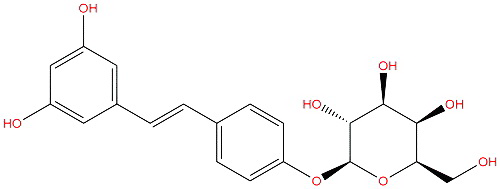
Resveratrol -4 '- O-glucoside is a naturally occurring polyphenolic glycoside characterized by a β - glycosidic bond between the 4' hydroxyl group of the resveratrol core and a molecule of glucose. This structural modification not only changes the physicochemical properties of the molecule, but also endows it with unique biological characteristics. Compared with the parent resveratrol, this glycoside has higher water solubility, stronger metabolic stability, and can penetrate the blood-brain barrier, which provides the possibility for its application in the treatment of central nervous system diseases. It is worth noting that SRT501 has been developed as a prodrug or modified form of resveratrol to increase in vivo exposure, but its direct pharmacological activity cannot be ignored.
From a pharmacological perspective, resveratrol -4 '- O-glucoside exhibits multi-target and multi pathway regulatory characteristics. It is both a specific activator of silencing information regulatory factor 1 (SIRT1) and an effective inhibitor of pregnane X receptor (PXR), while also activating the nuclear factor E2 related factor 2 (Nrf2) signaling pathway. In addition, its effects on various targets such as mTOR, JAK, β - amyloid protein, adenylate cyclase, IKK β, and DNA polymerase form the molecular basis for its antioxidant, anti-inflammatory, cardioprotective, and anticancer activities. Especially in animal models of age-related kidney injury, endothelial dysfunction, and neurodegenerative diseases, this compound has shown promising therapeutic potential.
This article aims to provide a systematic professional review of resveratrol -4 '- O-glucoside, covering its chemical structure, natural sources, pharmacological activity, molecular mechanisms, pharmacological evaluation, and clinical application prospects, in order to provide comprehensive references for the in-depth research and development of this natural product.
Chemical structure and physicochemical properties
The chemical structure of resveratrol -4 '- O-glucoside is based on the trans stilbene skeleton, and its systematic name is 3,5-dihydroxy-4' - O - β - D-glucopyranosyl-trans stilbene. The molecular formula is C ₂₀ H ₂₂ O ₉, and the molecular weight is 390.3880 g/mol. The key feature of this structure is that the glucose unit is connected to the 4 'hydroxyl group of the B ring through a β - glycosidic bond, while the 3, 5 positions of the A ring retain free hydroxyl groups. This glycosylation modification is the core structural difference that distinguishes it from resveratrol and other isomers (such as resveratrol 3-O-glucoside, also known as puerarin).
From the perspective of physical and chemical properties, the lipophilicity (LogP) of this compound is 0.6893, indicating a moderate hydrophilic lipophilic balance, which is attributed to the hydrophilicity brought by the sugar moiety and the hydrophobicity of the styrene core. Its polar surface area (TPSA) is 139.8400 Å ², and a higher TPSA value typically indicates good water solubility and poor passive transmembrane diffusion ability. In fact, its water solubility prediction value is 1.9848 mg/mL, significantly better than the parent resveratrol, mainly due to the ability of multiple hydroxyl groups on the glucose group to form hydrogen bonds with water molecules.
In terms of stability, the trans configuration is the main naturally occurring active form, but it may undergo cis trans isomerization when exposed to ultraviolet light or specific conditions. The presence of glycosidic bonds increases the chemical stability of the molecule, making it relatively stable in acidic environments such as gastric juice. However, it can be hydrolyzed by β - glucosidase produced by the gut microbiota, releasing resveratrol glycosides. This characteristic gives it prodrug properties, but increasing evidence suggests that glycosides themselves also have direct biological activity, not solely dependent on the release of glycosides after hydrolysis.
It is worth noting that the pharmacological parameters show that the compound has no inhibitory risk on hERG potassium channels (hERG inhibition: No), and the Ames test result is 0.0, indicating a low risk of genetic toxicity. However, its blood-brain barrier penetration was evaluated as' low ', although experimental evidence suggests that it can penetrate the blood-brain barrier, which may suggest that its transmission mechanism is not simply passive diffusion, but may involve active transport mediated by glucose transporters (such as GLUT1), which is consistent with its glycosylation structure.
Plant sources and extraction methods
The distribution of resveratrol -4 '- O-glucoside in nature is relatively limited, mainly found in certain specific plant families and genera, especially in Polygonaceae and Fabaceae plants. Unlike the widely present resveratrol 3-O-glucoside (puerarin), the natural content of 4 '- O-glucoside is usually low, making it a scarce component in research.
The known main sources include:
1. Tiger Staff(Reynoutria japonica, also known as Polygonum cuspidatum)As the main commercial source of resveratrol compounds, the rhizome of Polygonum cuspidatum contains various stilbene glycosides. Although 3-O-glucoside is the main component, 4 '- O-glucoside has also been isolated and identified as a minor component.
2. Peanuts(Arachis hypogaea)Peanut sprouts or germinated peanuts are rich in resveratrol and its glycoside derivatives, among which resveratrol -4 '- O-glucoside is one of the important components, and its content significantly increases during germination.
3. Grapes(Vitis vinifera)And wine Grape skins and wine not only contain resveratrol, but also its various glycoside forms, including 4 '- O-glucoside, although its concentration is much lower than 3-O-glucoside.
4. Other sources Some leguminous plants such as cassia(Cassia There have also been sporadic reports of spp and some medicinal plants.
The extraction method usually follows the general process of natural polyphenolic glycosides. Firstly, the dried plant material is crushed and extracted using polar solvents. Common solvent systems include methanol water, ethanol water, or acetone water mixed solvents, among which the ethanol water system is widely used due to its high safety and environmental friendliness. The extraction process can be assisted by ultrasound, microwave, or heating reflux to improve efficiency. Due to the sensitivity of the target compound to heat and light, the extraction process needs to be carried out under light avoidance and low temperature conditions.
Separation and purification are key steps in obtaining high-purity resveratrol -4 '- O-glucoside. The crude extract is usually first subjected to liquid-liquid extraction (such as ethyl acetate extraction) to remove lipophilic impurities. Subsequently, various chromatographic techniques were used for refining:
- Column chromatography Use silica gel, polyamide, or macroporous adsorption resin (such as D101, AB-8) for preliminary separation, and enrich the target components through gradient elution.
- Efficient counter current chromatography Utilizing the distribution differences of solutes in two-phase solvent systems to achieve efficient separation, particularly suitable for the purification of glycoside compounds.
- Preparation type high-performance liquid chromatography As the final purification method, compounds with a purity of over 98% can be obtained by using a C18 reverse phase column and acetonitrile water or methanol water as the mobile phase.
Structural identification mainly relies on nuclear magnetic resonance spectroscopy (¹ H-NMR, ¹ ³ C-NMR, HMBC, HSQC) and high-resolution mass spectrometry (HR-MS). Among them, the correlation signal between the glucose end proton and the 4 'carbon of the stilbene parent nucleus in the HMBC spectrum is the key evidence to confirm the glycosidic bond connection position.
Pharmacological activity research
The pharmacological activity of resveratrol -4 '- O-glucoside has been studied from multiple dimensions, covering areas such as antioxidant, anti-inflammatory, cardiovascular protection, anti-tumor, and neuroprotection, demonstrating multiple pharmacological characteristics.
Antioxidant and anti-aging activity
Oxidative stress is a core driving factor for aging and various chronic diseases. Resveratrol -4 '- O-glucoside has been proven to be an effective activator of Nrf2. In a mouse model of age-related kidney injury, this compound activates the Nrf2/ARE signaling pathway, upregulates the expression of downstream antioxidant enzymes such as heme oxygenase-1 (HO-1) and quinone oxidoreductase 1 (NQO1), significantly reduces reactive oxygen species (ROS) levels in kidney tissue, mitigates oxidative damage, and improves age-related progressive renal fibrosis and functional impairment. This discovery suggests its potential application value in anti-aging and organ protection.
anti-inflammatory activity
Inflammatory response involves cascade activation of multiple signaling pathways. Research has shown that resveratrol -4 '- O-glucoside can inhibit the activity of IKK β, thereby blocking the activation of the NF - κ B signaling pathway. NF - κ B is a key transcription factor that regulates the expression of various pro-inflammatory cytokines (such as TNF - α, IL-6, IL-1 β) and adhesion molecules. By inhibiting this pathway, the compound significantly reduced the release of inflammatory mediators in a lipopolysaccharide (LPS) - induced macrophage inflammation model. In addition, its regulation of the JAK/STAT signaling pathway is also involved in the anti-inflammatory effect.
Cardiovascular protective effect
The cardiovascular system is one of the important target organs of this compound. Resveratrol -4 '- O-glucoside can act on endothelial cells and promote the production of nitric oxide (NO). NO is a key signaling molecule that maintains vasodilation, inhibits platelet aggregation, and prevents leukocyte adhesion. By activating endothelial nitric oxide synthase (eNOS), this compound improves endothelial function and has the potential of anti atherosclerosis. Meanwhile, its antioxidant properties help protect myocardial cells from ischemia-reperfusion injury and reduce the size of myocardial infarction.
Antitumor activity
In the field of oncology, resveratrol -4 '- O-glucoside exhibits multi-target anti-cancer properties. Its mechanism of action includes:
- Inhibition of mTOR signaling pathway MTOR is a core regulatory factor for cell growth and proliferation. This compound induces tumor cell autophagy and apoptosis by inhibiting mTOR activity.
- Inhibition of DNA polymerase Inhibiting tumor cell proliferation by interfering with the DNA replication process.
- Regulating the cell cycle Inducing cell cycle arrest in G1/S phase or G2/M phase.
- Angiogenesis inhibition By inhibiting the expression of angiogenic factors such as VEGF, the nutritional supply to tumors can be blocked.
It is worth noting that its effective inhibitory effect on PXR has special significance. PXR is a key nuclear receptor that regulates the expression of drug metabolizing enzymes and transporters, and its overactivation often leads to chemotherapy resistance. Therefore, resveratrol -4 '- O-glucoside, as a PXR inhibitor, has the potential to serve as a chemotherapy sensitizer and reverse multidrug resistance in tumor cells.
Neuroprotective activity
Due to its ability to penetrate the blood-brain barrier, this compound has attracted much attention in the field of neurodegenerative diseases. Its targeting effect on β - amyloid suggests that it may alleviate neurotoxicity in Alzheimer's disease models by inhibiting the aggregation of A β or promoting its clearance. In addition, its antioxidant and anti-inflammatory activities help protect neurons from oxidative stress and neuroinflammation, improving cognitive function.
Mechanism of action and molecular targets
The pharmacological complexity of resveratrol -4 '- O-glucoside arises from its direct or indirect interactions with multiple molecular targets. Understanding these targets and their regulatory networks is the core of elucidating their mechanisms of action.
SIRT1 activation
This compound has been identified as a specific activator of SIRT1. SIRT1 is an NAD ⁺ - dependent deacetylase that plays a critical role in energy metabolism, stress resistance, and aging regulation. Similar to resveratrol, SRT501 enhances the affinity of SIRT1 for acetylated substrates such as p53, PGC-1 α, FOXO through allosteric regulation. The activation of SIRT1 can promote mitochondrial biosynthesis, enhance antioxidant defense, inhibit inflammatory response, and mediate the heat restriction simulation effect. This mechanism is the core of its anti-aging and metabolic regulatory effects.
Nrf2/ARE pathway activation
Nrf2 is the main defense mechanism of cells against oxidative stress. Under normal circumstances, Nrf2 binds to Keap1 and is degraded by ubiquitination. Resveratrol -4 '- O-glucoside modifies key cysteine residues on Keap1, disrupting the stability of the Nrf2 Keap1 complex, promoting Nrf2 nuclear translocation and binding to antioxidant response elements (ARE), initiating transcription of downstream detoxifying and antioxidant enzyme genes. This mechanism is an important basis for its renal and neuroprotective effects.
PXR inhibition
Pregnane X receptor (PXR) is a "main regulator" that regulates drug metabolizing enzymes and transporters such as CYP3A4, CYP2B6, MDR1. Resveratrol -4 '- O-glucoside has been proven to be an effective antagonist of PXR. It can competitively inhibit the ligand binding domain of PXR, block its heterodimerization with retinol X receptor (RXR), and thus inhibit the transcription of downstream target genes. This effect not only helps maintain the normal metabolism of endogenous hormones and drugs, but more importantly, it can reverse chemotherapy resistance caused by excessive activation of PXR in tumor treatment.
Other key targets
- mTOR By inhibiting the activity of mTORC1 complex and reducing the phosphorylation of S6K1 and 4E-BP1, protein synthesis and cell proliferation are inhibited, inducing autophagy.
- JAK/STAT Inhibiting JAK kinase activity, reducing STAT3 phosphorylation and nuclear translocation, thereby downregulating the expression of pro-inflammatory and pro proliferative genes.
- IKKβ/NF-κB Directly inhibiting the kinase activity of IKK β, preventing the phosphorylation and degradation of I κ B α, causing NF - κ B to remain in the cytoplasm and unable to exert transcriptional activity.
- β - amyloid protein Perhaps by directly binding to A β monomers or oligomers, it can inhibit their misfolding and fibrotic aggregation, or promote the phagocytic clearance of A β by microglia.
- Adenylate cyclase By regulating cAMP levels, it affects the downstream PKA/CREB signaling pathway and participates in the regulation of neurotransmitter release and synaptic plasticity.
- DNA polymerase By binding to DNA polymerase, it interferes with the extension of DNA replication forks and exerts anti proliferative effects.
These targets do not exist in isolation, but form a complex signal network. For example, activation of SIRT1 can deacetylate and activate FOXO transcription factors, which in turn can promote the expression of Nrf2 and SOD2, forming an antioxidant synergistic effect. Meanwhile, the inhibition of NF - κ B and the activation of Nrf2 together constitute an anti-inflammatory antioxidant coupling mechanism.
Evaluation of drug properties and pharmacokinetics
To promote the clinical application of resveratrol -4 '- O-glucoside from the laboratory, a comprehensive evaluation of its pharmacological properties, including pharmacokinetic characteristics, safety, and formulation feasibility, is required.
Pharmacokinetic characteristics
Pharmacodynamics is a key factor determining the efficacy of drugs in vivo. Compared with the parent resveratrol, glycosylation modification significantly altered its in vivo fate:
- absorb After oral administration, the absorption of this compound in the small intestine may involve two pathways: one is active transport mediated by glucose transporters (such as SGLT1); The second is that it is hydrolyzed into resveratrol by the action of β - glucosidase in the gut microbiota and absorbed. Therefore, its oral bioavailability is greatly influenced by the composition of the gut microbiota. SRT501, as an improved dosage form, aims to increase the systemic exposure of resveratrol, but research has shown that some glycosides can enter the circulation in their intact form.
- distribution Its moderate lipophilicity and high polarity make its distribution volume moderate. The key advantage lies in its ability to penetrate the blood-brain barrier, although its passive diffusion ability is weak, it may be delivered through GLUT1 transporters in the brain, which provides the possibility for the treatment of central nervous system diseases.
- Metabolism The main metabolic pathways include: in the intestine and liver, glycosidic bonds are hydrolyzed into resveratrol; Subsequently, resveratrol undergoes extensive phase II metabolism (glucuronidation and sulfation). In addition, glycosides themselves may also undergo II binding reactions directly. Fast metabolic rate is one of its main challenges.
- excretion Metabolites are mainly excreted through urine and bile.
safety evaluation
The preliminary safety data is relatively optimistic. A negative Ames test indicates no direct mutagenicity. HERG inhibition negative excluded the risk of cardiac toxicity. In animal models, no significant organ toxicity was observed during short-term use. However, research on long-term toxicity, reproductive toxicity, and carcinogenicity is still insufficient. It is worth noting that due to its PXR inhibitory effect, potential drug drug interaction risks should be considered, which may inhibit the clearance of other drugs metabolized by CYP3A4.
Formulation strategy
To overcome its metabolic instability and low bioavailability, various formulation strategies are being explored:
- nanocarrier Liposomes, polymer nanoparticles, and solid lipid nanoparticles can encapsulate the compound, improve its stability, prolong circulation time, and achieve targeted delivery.
- Prodrug design Further modify the hydroxyl group on the sugar group, such as acetylation or phosphorylation, to improve membrane permeability and be interpreted by enzymes to release active molecules in vivo.
- Eutectic technology Forming drug co crystals with suitable co crystal forming materials can improve their solubility and dissolution rate.
- Phospholipid complex Form complexes with phospholipids, enhance lipid solubility, and promote transmembrane absorption.
Summary of Medicinal Properties
Overall, resveratrol -4 '- O-glucoside has a good pharmacological basis: a clear chemical structure, pleiotropic pharmacological activity, and low hERG and Ames risks. Its main shortcomings lie in its pharmacokinetic properties (fast metabolism, low bioavailability) and potential drug interactions. Through rational formulation design and structural modification, these issues are expected to be improved.
Clinical application prospects and prospects
Based on existing pharmacological and pharmacokinetic evidence, resveratrol -4 '- O-glucoside has shown potential clinical application prospects in multiple disease fields.
Metabolic diseases and aging
As an activator of SIRT1 and Nrf2, this compound has the potential to improve insulin sensitivity and delay age-related organ dysfunction. Positive results have been achieved in animal models of nonalcoholic fatty liver disease (NAFLD), type 2 diabetes and age-related nephropathy. Future clinical trials can focus on these indications, especially as adjunctive treatments, in combination with existing drugs.
Neurodegenerative diseases
Its ability to cross the blood-brain barrier and its multiple regulation of β - amyloid protein, oxidative stress, and neuroinflammation make it a candidate molecule for the treatment of Alzheimer's disease and Parkinson's disease. However, more research is needed to clarify its effective concentration and duration of action in the brain. The development of nano formulations capable of efficiently delivering the compound into the brain will be a key breakthrough point.
tumor therapy
In the field of oncology, its unique advantage lies in its ability as a PXR inhibitor to reverse chemotherapy resistance. For drug-resistant tumors with high PXR expression (such as colorectal cancer, liver cancer, breast cancer), the combination of resveratrol 4 '- O-glucoside and conventional chemotherapy drugs (such as paclitaxel, docetaxel, irinotecan) may significantly improve the efficacy. In addition, its inhibitory effect on mTOR also suggests that it can be used for tumor types with excessive activation of mTOR signaling.
cardiovascular disease
The compound can be used to prevent hypertension, atherosclerosis and myocardial ischemia-reperfusion injury by promoting NO production and antioxidant effect. Its oral formulation is expected to serve as a primary or secondary preventive supplement for cardiovascular disease.
Future research directions
Despite its broad prospects, the field still faces many challenges and unsolved mysteries:
1. Target selectivity How to achieve precise regulation of specific disease targets without affecting normal physiological functions? For example, excessive activation of SIRT1 may be associated with tumorigenesis in certain situations.
2. In vivo active form Who exerts the main pharmacological effect in the body, the glycoside itself or the hydrolyzed aglycone? The contribution ratio of the two may vary under different organizations and disease states.
3. structure-activity relationship The mechanism by which the position of the sugar group (3-O vs 4 '- O) affects activity still needs to be further analyzed. The difference in target selectivity between 4 '- O-glucoside and 3-O-glucoside deserves a systematic comparison.
4. clinical translation Rigorous clinical trials need to be designed to verify its safety and efficacy in the human body. Especially for drug interaction clinical trials targeting its PXR inhibitory effect, it is essential.
5. Biological synthesis and green manufacturing Given the low natural content, developing biosynthetic methods based on microbial engineering (such as yeast and Escherichia coli) to achieve sustainable and low-cost production of this compound is key to promoting its industrialization.
Conclusion
Resveratrol -4 '- O-glucoside, as an important member of the natural stilbene glycoside family, occupies a special position in the field of natural product pharmacology due to its unique chemical structure and multi-target pharmacological activity. Compared with the parent resveratrol, glycosylation modification not only improves its water solubility and metabolic stability, but also endows it with the ability to cross the blood-brain barrier and regulate specific targets such as PXR.
From SIRT1 activation to Nrf2 induction, from PXR inhibition to mTOR blockade, this compound exhibits therapeutic potential in multiple dimensions such as antioxidant, anti-inflammatory, cardioprotective, anti-tumor, and neuroprotective effects through a sophisticated molecular mechanism network. The preliminary evaluation of drug properties confirms that it has a good safety profile, but pharmacokinetic defects remain the main bottleneck for clinical translation.
Looking ahead to the future, with the deepening understanding of structure-activity relationships, the application of new formulation technologies, and the advancement of clinical research, resveratrol -4 '- O-glucoside is expected to move from the laboratory to clinical practice, especially in the fields of anti-aging, neurodegenerative diseases, and tumor drug resistance reversal, playing a unique value. In depth research on this natural product not only helps to reveal the chemical defense wisdom bestowed upon plants by nature, but also provides new molecular tools and ideas for humans to cope with complex chronic diseases.