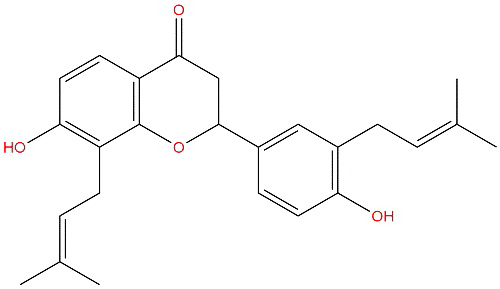


Product name: Glabrol
Synonym name:
Catalogue No.: BP3963
Cas No.: 59870-65-4
Formula: C25H28O4
Mol Weight: 392.495
Botanical Source:
Physical Description:
Type of Compound:
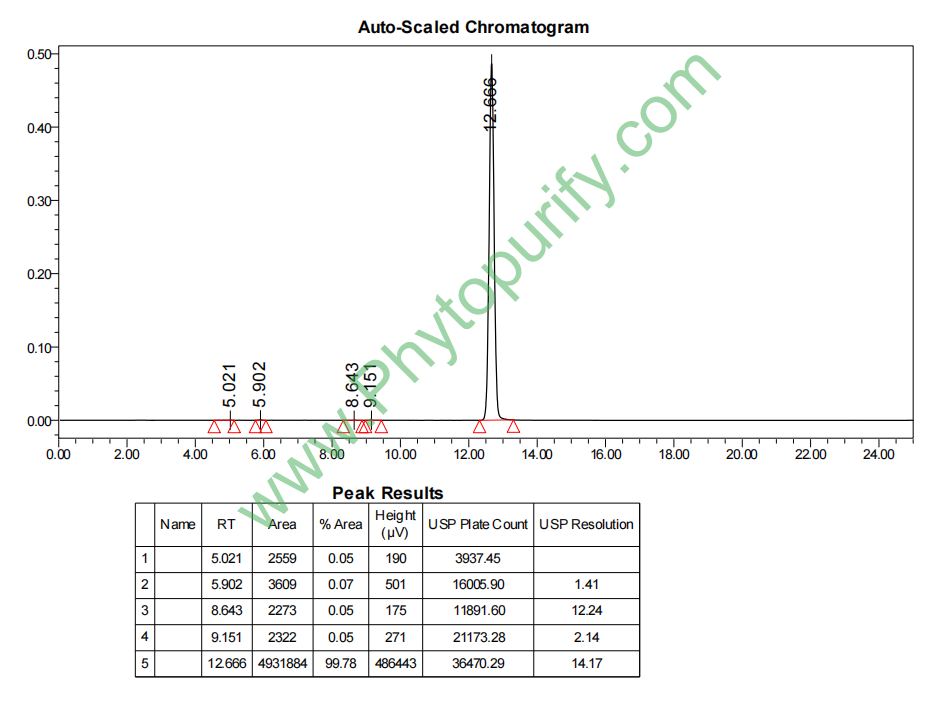
Purity: 95%~99%
Analysis Method: HPLC-DAD or/and HPLC-ELSD
Identification Method: Mass, NMR
Packing: Brown vial or HDPE plastic bottle
Storage: Store in a well closed container, protected from air and light. Put into refrigerate or freeze for long term storage.
Whenever possible, you should prepare and use solutions on the same day. However, if you need to make up stock solutions in advance, we recommend that you store the solution as aliquots in tightly sealed vials at -20℃. Generally, these will be useable for up to two weeks.
The product could be supplied from milligrams to grams
Inquire for bulk scale.
For Reference Standard and R&D, Not for Human Use Directly.
HPLC of Glabrol
Storage conditions:Short-term storage at 2~8℃, long-term storage at -20 ~ -80℃
66.7600
5.3540
5.3443
.0310
3.6361
19.0768
Low
91.9175
3.4056
No
No
Yes
No
No
No
0.0
Yes
Yes
Yes
No
Natural products, as an important source of drug discovery, play an irreplaceable role in the long history of human struggle against diseases. Flavonoids, as the most widely distributed class of secondary metabolites in nature, have attracted much attention due to their structural diversity and extensive biological activity. Among them, prenylated flavonoids are a unique and important subclass of the flavonoid family, characterized by the presence of lipophilic isoprene side chains attached to the flavonoid nucleus. This structural modification not only enhances the lipophilicity of the compound, thereby affecting its interaction with biofilms and target proteins, but also often endows it with unique pharmacological activity, making it show great potential for applications in multiple fields such as anti-inflammatory, antioxidant, anti-tumor, antibacterial, and metabolic regulation.
Licorice(Glycyrrhiza species), As a traditional medicinal plant with a long history, it is known as the "old man of the country" and is widely used in clinical practice of traditional Chinese medicine. It is commonly used to harmonize various medicines, clear heat and detoxify, and relieve cough and phlegm. Modern pharmacological research has confirmed that licorice contains various active ingredients, including triterpenoid saponins (such as glycyrrhizic acid), flavonoids (such as glycyrrhizin and isoliquiritigenin), and isoprenoid flavonoids. Glabrol, a representative isoprenoid flavonoid isolated from licorice roots. Its chemical name is 4 ', 7-dihydroxy-8,3' - diisoprenylflavanone, which has attracted widespread attention from medicinal chemists and pharmacologists due to its unique molecular structure and significant biological activity, especially as an effective inhibitor of acyl CoA: cholesterol acyltransferase (ACAT).
ACAT is a key intracellular enzyme responsible for catalyzing the esterification of free cholesterol with long-chain fatty acids to form cholesterol esters. This process plays a central role in maintaining intracellular cholesterol homeostasis, lipoprotein assembly and the formation of atherosclerotic plaque. Therefore, ACAT inhibitors are considered as potential drug targets for the treatment of cardiovascular diseases such as hypercholesterolemia and atherosclerosis. Guanglicoriol was found to non competitively inhibit ACAT activity in rat liver microsomes, with a half maximal inhibitory concentration (IC50) of 24.6 μ M. This discovery provides an important lead compound for the development of novel lipid-lowering drugs.
In addition to its prominent role in regulating cholesterol metabolism, glycyrrhetinic acid also exhibits various pharmacological activities, especially in the field of antioxidant activity. Oxidative stress is a common pathological basis for many diseases, including cardiovascular disease, neurodegenerative diseases, inflammation, and aging. Glycyrrhizin can exert its antioxidant and cell protective effects by regulating multiple molecular targets related to antioxidant defense, such as nuclear factor E2 associated factor 2 (NFE2L2/NRF2), superoxide dismutase (SOD1/SOD2), catalase (CAT), glutathione peroxidase 1 (GPX1), and heme oxygenase 1 (HMOX1). In addition, its potential regulatory effects on matrix metalloproteinases (MMP1 and MMP3) and tyrosinase (TYR) also suggest its potential applications in skin protection, anti-aging, and whitening.
This article aims to provide a comprehensive professional review of glycyrrhetinic acid, a natural product. We will systematically elucidate its chemical structure and physicochemical properties, trace its origin and extraction methods in plants, delve into its discovered pharmacological activities, underlying mechanisms of action and molecular targets, and objectively evaluate its pharmacological properties and pharmacokinetic characteristics. Finally, we will look forward to the application prospects of glycyrrhetinic acid in clinical translation, and point out the shortcomings of current research and future research directions, in order to provide valuable references for the in-depth development and utilization of this compound.
The chemical name of Glabrol is 4 ', 7-dihydroxy-8,3' - diisoprenylflavanone, and its CAS registration number is 59870-65-4. From the perspective of chemical structure classification, it belongs to the class of flavanones and is an important branch of the flavonoid family. The basic skeleton of flavanones is composed of two benzene rings (A and B) connected by an oxygen-containing pyran ring (C ring), with the C ring being a saturated 4-oxo-dihydropyran ring and the C2-C3 position being a single bond.
The uniqueness of the structure of glycyrrhetinic acid mainly lies in the substitution mode on its mother nucleus. Firstly, there is a phenolic hydroxyl group (- OH) at the C-7 position of the A ring and the C-4 'position of the B ring, which endows the molecule with a certain polarity and the ability to form hydrogen bonds. These two hydroxyl groups are crucial for its interaction with biological targets and its antioxidant activity. Secondly, the most significant structural feature is the presence of an isoprene (3,3-dimethylallyl) side chain connected to the C-8 position of the A ring and the C-3 'position of the B ring. These two hydrophobic isoprene chains greatly alter the overall properties of the molecule, transforming it from a typical polar flavonoid compound to a molecule with amphiphilic characteristics. This structural modification is considered to be the fundamental reason for its potent ACAT inhibitory activity and high lipid solubility.
In terms of physicochemical properties, the molecular formula of glycyrrhetinic acid is C25H28O4, with a molecular weight of 392.4950 g/mol. The LogP of this compound is 5.3540, which is a relatively high value indicating its strong lipophilicity. A high LogP value indicates that glycyrrhetinic acid is easily able to penetrate biofilms, but it may also lead to poor solubility in aqueous environments such as blood. Its topological polar surface area (TPSA) is 66.7600 Å ², which is at a moderate level. Molecules with TPSA less than 140 Å ² are generally considered to have good oral absorption potential, but the high LogP value of glycyrrhetinic acid may have complex effects on its absorption. Its water solubility data is 0.0310 mg/mL, confirming its extremely low solubility in water, which will be one of the main challenges for its formulation development and in vivo delivery.
The molecular structure of glycyrrhetinic acid contains two phenolic hydroxyl groups, therefore it has a certain degree of weak acidity. Under alkaline conditions, these two hydroxyl groups may undergo ionization, thereby increasing their water solubility. In addition, the presence of two isoprene based double bonds makes it more sensitive to oxidation and photolysis. During storage and experimentation, it is necessary to avoid light, maintain low temperatures, and isolate air to prevent degradation. Its UV absorption spectral characteristics mainly come from the benzoyl system of ring A and the cinnamoyl system of ring B, with maximum absorption wavelengths usually around 280-290 nm and 320-330 nm, which provides convenience for its qualitative and quantitative analysis.
Glycyrrhizin was initially isolated from the roots of plants in the licorice genus. Licorice genus(Glycyrrhiza)Belonging to Fabaceae, there are approximately 30 species worldwide, mainly distributed in temperate and subtropical regions of Eurasia, America, and Australia. The most commonly used types in traditional medicine and modern industry include Ural licorice(Glycyrrhiza uralensis Fisch.)、 Swelling fruit licorice(Glycyrrhiza inflata Bat. and licorice with light fruit(Glycyrrhiza glabra L.)。 Among them, glycyrrhetinic acid is present in the fruit of licorice(G. glabra)The content of Glabrol is relatively high, which is also the origin of its English name "Glabrol". In addition, it has also been found in Ural licorice and swollen fruit licorice, but the content may vary depending on the place of origin, variety, harvesting time, and growth conditions.
Glycyrrhizin mainly exists in free form in licorice roots, usually coexisting with other flavonoids and triterpenoids such as glycyrrhetinic acid and glycyrrhizin. The extraction process usually follows the classic process of natural product chemistry, with the core goal of efficiently separating target compounds from complex plant matrices by utilizing their polarity characteristics.
Extraction method:
1. Ingredient Preparation Dry licorice roots are crushed to an appropriate particle size to increase the solvent contact area.
2. Solvent extraction Due to the strong lipophilicity (high LogP value) of glycyrrhetinic acid, organic solvents with moderate to non-polar polarity are usually selected for extraction. The most commonly used solvent is ethanol (especially 95% ethanol or anhydrous ethanol), because ethanol has good solubility for flavonoids, low toxicity, and is easy to recover. Sometimes methanol, ethyl acetate, or their mixed solvents are also used. Classic extraction methods include cold soaking, percolation, and reflux extraction. In order to improve extraction efficiency and shorten time, modern technologies such as ultrasound assisted extraction (UAE) and microwave-assisted extraction (MAE) are also widely used. For example, using ethanol as a solvent combined with ultrasound treatment can rapidly destroy cell walls at lower temperatures and promote the dissolution of glycyrrhetinic acid.
3. Preparation of crude extract After filtration and vacuum concentration of the extract, a paste or crude extract containing multiple components is obtained.
Separation and purification methods:
The separation and purification of glycyrrhetinic acid from crude extract requires the use of various chromatographic techniques to gradually separate compounds based on their polarity differences.
1. Preliminary separation Crude extracts are often separated using liquid-liquid extraction method. For example, the ethanol extract is suspended in water and extracted sequentially with solvents such as petroleum ether, ethyl acetate, and n-butanol. Due to its strong lipophilicity, glycyrrhetinic acid is usually enriched in petroleum ether or ethyl acetate extraction layers.
2. Column chromatography separation This is the most crucial purification step.
- Positive phase silica gel column chromatography This is a classic method for separating flavonoids. Use different ratios of petroleum ether ethyl acetate or chloroform methanol mixed solvents for gradient elution. Due to its isoprene side chain and relatively low polarity, glycyrrhetinic acid is usually eluted in solvents with moderate or slightly lower polarity.
- Reverse phase column chromatography For example, a C18 reverse phase silica gel column is used for elution using a methanol water or acetonitrile water system. Reverse phase chromatography often has better resolution for separating similar substances with similar polarities.
- Gel column chromatography For example, Sephadex LH-20 can be separated based on molecular size and is commonly used for removing pigments and further purification, using methanol or chloroform methanol systems for elution.
3. High performance liquid chromatography (HPLC)For the preparation of high-purity samples (such as for activity testing or structural identification), preparative HPLC is commonly used. By using a reverse phase C18 column with acetonitrile water or methanol water (often with a small amount of formic acid or acetic acid added) as the mobile phase and optimizing the gradient program, baseline separation of glycyrrhetinic alcohol from other trace components can be achieved.
4. Structural Identification The purified compound was structurally confirmed by nuclear magnetic resonance spectroscopy (NMR, including 1H-NMR, 13C-NMR, HMBC, HSQC, etc.) and high-resolution mass spectrometry (HR-MS). In its NMR spectrum, the characteristic signals of the isoprene group (such as alkene hydrogen and dimethyl) and the characteristic signals of the flavanone parent nucleus are key for identification.
As a multifunctional natural isoprene flavonoid, the pharmacological activity of glycyrrhetinic acid has been studied in multiple fields, among which its regulation of cholesterol metabolism and antioxidant effects are the most prominent.
1. ACAT inhibitory activity and lipid-lowering effect
The most notable pharmacological activity of glycyrrhetinic acid is its inhibitory effect on acyl CoA: cholesterol acyltransferase (ACAT). ACAT is the only enzyme in cells that catalyzes cholesterol esterification, and plays a key role in maintaining intracellular cholesterol balance, intestinal cholesterol absorption, liver very low density lipoprotein (VLDL) assembly, and macrophage foam cell formation. Research has shown that glycyrrhetinic acid is an effective and non competitive ACAT inhibitor. In vitro enzyme activity testing showed an IC50 value of 24.6 μ M for ACAT in rat liver microsomes. The non competitive inhibition mode means that it may bind to the inactive site of ACAT enzyme, thereby changing the enzyme conformation or interfering with its binding to substrates, rather than directly competing with cholesterol or acyl CoA for the active center. This mechanism distinguishes it from some competitive inhibitors and may bring different pharmacological effects. By inhibiting ACAT, photoglycyrrhizin can theoretically reduce the secretion of VLDL in the liver, reduce the level of plasma cholesterol, and inhibit the foam of macrophages, thus exerting the potential of anti atherosclerosis.
2. Antioxidant activity
Oxidative stress is a common pathological mechanism in various diseases. Guanglicoriol exhibits significant antioxidant capacity, and its mechanism of action is multifaceted.
- Directly eliminate free radicals The two phenolic hydroxyl groups (7-OH and 4 '- OH) in its molecular structure can serve as hydrogen atom donors, directly neutralizing and scavenging reactive oxygen species (ROS) and reactive nitrogen species (RNS) such as hydroxyl radicals, superoxide anions, and peroxynitrite, thereby blocking free radical chain reactions.
- Activate endogenous antioxidant defense system Glycyrrhizin can activate the nuclear factor E2 related factor 2 (NRF2/NFE2L2) signaling pathway. NRF2 is a key transcription factor for cells to cope with oxidative stress. After activation, it can be translocated into the nucleus and bind to antioxidant response elements (ARE), initiating the expression of a series of downstream protective genes. These genes include:
- antioxidant enzyme Such as superoxide dismutase (SOD1, SOD2), catalase (CAT), glutathione peroxidase 1 (GPX1). SOD catalyzes the dismutation of superoxide anions into hydrogen peroxide, while CAT and GPX further decompose hydrogen peroxide into water, thereby synergistically clearing ROS.
- Phase II detoxifying enzyme For example, heme oxygenase 1 (HMOX1). HMOX1 catalyzes the degradation of heme into biliverdin, carbon monoxide, and ferrous ions, which have antioxidant, anti-inflammatory, and cell protective effects.
By upregulating the expression of these key enzymes, glycyrrhetinic acid can enhance the overall antioxidant capacity of cells, providing more lasting and extensive protection.
3. Regulatory effect on skin related targets
Based on its antioxidant activity, glycyrrhetinic acid has also shown potential in skin protection.
- Inhibition of Tyrosinase (TYR)Tyrosinase is a key rate limiting enzyme in the synthesis of melanin. Inhibiting its activity can reduce the production of melanin, thereby achieving whitening and improving pigmentation. Glycyrrhizin may exert inhibitory effects by chelating copper ions in the tyrosinase active center or competing with substrates.
- Regulating matrix metalloproteinases (MMPs)MMP1 (interstitial collagenase) and MMP3 (matrix metalloproteinase) are the main enzymes that degrade extracellular matrix, such as collagen and elastin. Ultraviolet radiation and oxidative stress can induce overexpression of MMPs, leading to skin photoaging and wrinkle formation. The antioxidant activity of glycyrrhetinic acid can inhibit ROS mediated activation of MMPs, and may directly downregulate the expression of MMP1 and MMP3 by affecting signaling pathways such as MAPK or AP-1, thereby protecting skin collagen and maintaining skin elasticity and firmness.
4. Other potential activities
In addition to the main activities mentioned above, preliminary studies also suggest that glycyrrhetinic acid may have other pharmacological effects, such as anti-inflammatory (by inhibiting the NF - κ B pathway), antibacterial (by inhibiting certain Gram positive bacteria), and hepatoprotective effects, but these activities still need further in-depth and systematic research to confirm.
The pharmacological activity of glycyrrhetinic acid is the result of its interaction with specific biomolecules. Despite its complex functional network, previous studies have revealed several key molecular targets and signaling pathways.
1. Non competitive inhibition mechanism of ACAT
As mentioned earlier, glycyrrhetinic acid is a non competitive inhibitor of ACAT. ACAT is an integrated membrane protein located on the endoplasmic reticulum membrane. The high lipophilicity of glycyrrhetinic acid (LogP 5.35) allows it to easily embed into the lipid bilayer, thereby approaching and acting on ACAT. The dynamic characteristics of non competitive inhibition indicate that glycyrrhetinic acid may bind to the allosteric sites of ACAT, rather than competing with substrates (cholesterol and acyl CoA) for active centers. This binding may induce conformational changes in enzyme proteins, reducing their catalytic efficiency. The specific binding sites and intermolecular interactions (such as hydrogen bonding and hydrophobic interactions) still need to be further elucidated through experimental methods such as molecular docking, molecular dynamics simulations, and site directed mutagenesis. Understanding this mechanism is of great guiding significance for designing more efficient and selective ACAT inhibitors.
2. Activation of NRF2/ARE signaling pathway
This is the core mechanism by which glycyrrhetinic acid exerts antioxidant and cell protective effects. Under normal physiological conditions, NRF2 binds to its inhibitory protein Keap1 and is degraded by ubiquitination, maintaining a low level. When cells are exposed to oxidative stress or electrophilic agents (including certain natural products), specific cysteine residues of Keap1 are modified, leading to conformational changes and the release of NRF2. Glycyrrhizin may modify Keap1 through oxidation of its phenolic hydroxyl group or Michael addition reaction with the thiol group of Keap1, thereby activating NRF2. The released NRF2 accumulates in the cytoplasm and translocates into the nucleus, forming heterodimers with small Maf proteins. It recognizes and binds to the ARE sequence in the promoter region of the target gene, initiating the transcription of a series of downstream protective genes, including SOD1, SOD2, CAT, GPX1, HMOX1, as well as some phase II detoxifying enzymes and anti apoptotic proteins. Through this "main switch" mechanism, glycyrrhetinic acid coordinates the overall defense response of cells against oxidative stress.
3. Regulation of skin related targets
4. Summary of molecular targets
Overall, the molecular target network of glycyrrhetinic acid includes:
- Direct target ACAT (inhibition), TYR (inhibition), and may also include Keap1 (modification) and certain protein kinases.
- Indirectly regulated targets Regulating SOD1, SOD2, CAT, GPX1, HMOX1, etc. through the NRF2/ARE pathway; Regulating MMP1 and MMP3 through the MAPK/AP-1 pathway.
This multi-target and multi pathway mode of action is a typical feature that distinguishes natural products from single target synthetic drugs, making them potentially advantageous in treating complex diseases, but also increasing the complexity of mechanism of action research.
To push glycyrrhetinic acid from laboratory research to clinical application, it is necessary to rigorously evaluate its drug like and pharmacokinetic (ADME) properties. Based on existing data and computational predictions, a preliminary evaluation of its pharmacological properties can be conducted.
1. Analysis of pharmacological parameters
2. Pharmacokinetic characteristics (prediction and challenges)
3. Summary of Drug Evaluation
Guanglicoriol conforms to some medicinal rules, but its extremely poor water solubility and high lipophilicity are key defects that limit its medicinal properties. Although its predicted toxicity risks for hERG and Ames are low, low oral bioavailability is the main bottleneck in its clinical development. Therefore, glycyrrhetinic acid itself may not be an ideal direct oral drug candidate. Future research directions should focus on:
- Structural modification By means of medicinal chemistry, polar groups (such as hydroxyl, carboxyl, sugar, etc.) are introduced while retaining key pharmacophore groups (such as phenolic hydroxyl and isoprene groups) to reduce LogP, improve water solubility, and maintain or enhance ACAT inhibitory activity.
- New formulation technology The use of modern formulation technologies such as liposomes, nanoparticles, solid dispersions, and phospholipid complexes can significantly improve the solubility and oral bioavailability of glycyrrhetinic acid.
- Prodrug design Preparing phenolic hydroxyl groups into prodrug forms such as phosphate esters, amino acid esters, or glycosides, and using in vivo enzymes to interpret the active ingredients, can improve their water solubility and absorption.
The unique pharmacological activity spectrum of glycyrrhetinic acid, especially its dual role as an ACAT inhibitor and NRF2 activator, provides promising prospects for its application in multiple disease fields.
1. Cardiovascular diseases
This is the most promising application direction of glycyrrhetinic acid. As an ACAT inhibitor, it is expected to treat atherosclerosis by reducing VLDL secretion in the liver and inhibiting macrophage foam. However, the clinical trial results of ACAT inhibitors (such as avasimibe) in history have not been ideal, partly because complete inhibition of ACAT1 may lead to the accumulation of free cholesterol in macrophages, which in turn triggers cytotoxicity and inflammatory reactions. Therefore, future research needs to clarify the selectivity of glycyrrhetinic acid for ACAT1 (mainly in macrophages) and ACAT2 (mainly in the liver and intestine). If it can selectively inhibit ACAT2, and its strong antioxidant and NRF2 activation can offset the possible negative effects caused by ACAT1 inhibition, then it may become a safer and more effective anti atherosclerosis candidate. In addition, its antioxidant activity itself is of great significance in protecting vascular endothelium and inhibiting low-density lipoprotein (LDL) oxidation.
2. Metabolic disorders
In addition to hypercholesterolemia, oxidative stress and chronic inflammation are also the core pathological links of obesity, type 2 diabetes and non-alcoholic fatty liver disease (NAFLD). The possibility of using glycyrrhetinic acid to activate the NRF2 pathway, improve insulin sensitivity, alleviate liver steatosis and inflammatory response is worth exploring. Its ACAT inhibitory activity may also be beneficial for improving liver lipid metabolism.
3. Skin protection and anti-aging
Glycyrrhizin inhibits the activity of TYR and MMPs, combined with its antioxidant capacity, making it an ideal candidate ingredient for developing new cosmetics and skin care products. It can be used for:
- Whitening and Spot Removal Inhibit melanin production.
- Anti photoaging Prevent collagen degradation, skin sagging, and wrinkles caused by ultraviolet radiation.
- Anti inflammatory and Soothing Reduce skin inflammation response.
4. Neurodegenerative diseases
Although glycyrrhetinic acid predicts low BBB penetration, oxidative stress and neuroinflammation are key pathological features of Alzheimer's disease and Parkinson's disease. If its BBB penetration can be improved through formulation or structural modification, its strong NRF2 activation ability may have therapeutic value in protecting neurons and delaying disease progression.
Outlook and Future Research Directions
Despite its broad prospects, research on glycyrrhetinic acid is still in its early stages and there is still a long way to go before it can be clinically applied. Future research priorities should include:
Guanglicoriol, a isoprenoid flavonoid derived from traditional Chinese medicine licorice, occupies a place in the field of natural product pharmacology due to its unique chemical structure and multiple pharmacological activities, especially its dual role as a non competitive ACAT inhibitor and NRF2 signaling pathway activator. It is not only a valuable molecular probe to study the regulation mechanism of cholesterol metabolism and oxidative stress, but also a potential lead compound for the treatment of atherosclerosis, metabolic diseases, skin aging and other complex diseases.
However, the study of glycyrrhetinic acid also clearly reveals the common challenge faced by natural product drug development: the contradiction between activity and drug properties. Its excellent lipid solubility is not only its advantage of embedding in biofilms and acting on membrane protein targets (such as ACAT), but also its fatal weakness of poor water solubility and low oral bioavailability. Therefore, the future of glycyrrhetinic acid does not lie in its direct use as a drug, but in its role as an excellent lead compound optimized through modern medicinal chemistry and formulation methods. The in-depth study of glycyrrhetinic acid not only helps us understand the modern scientific connotation of this ancient herb, licorice, but also provides valuable ideas and examples for the development of a new generation of innovative drugs based on natural products. We have reason to believe that with the continuous deepening of research and the advancement of technological means, glycyrrhetinic acid and its derivatives will eventually play their due value in the field of human health.
