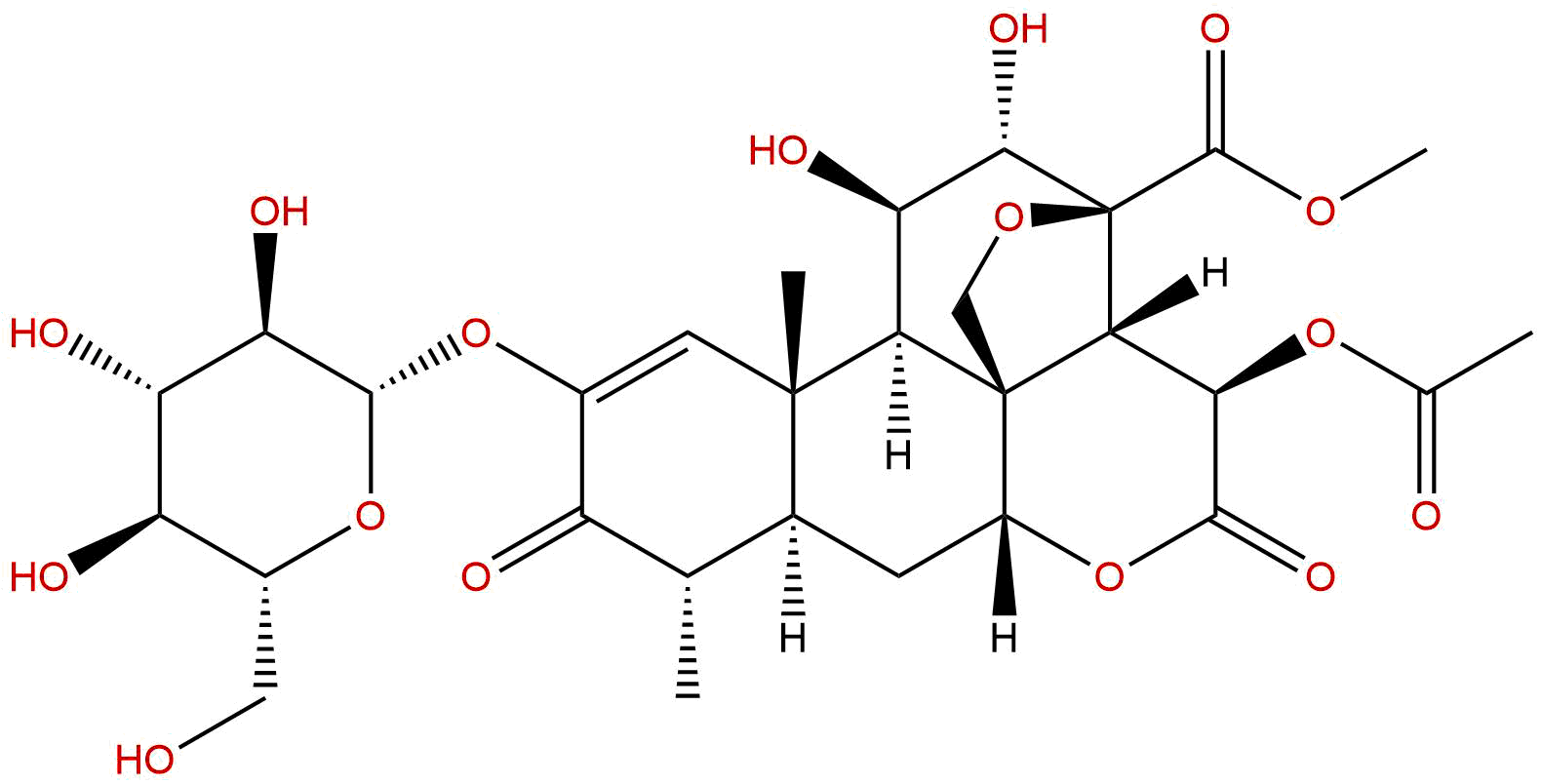


Product name: Yadanzioside F
Synonym name:
Catalogue No.: BP5338
Cas No.: 95258-11-0
Formula: C29H38O16
Mol Weight: 642.607
Botanical Source:
Type of Compound: Diterpenoids
Purity: 95%~99%
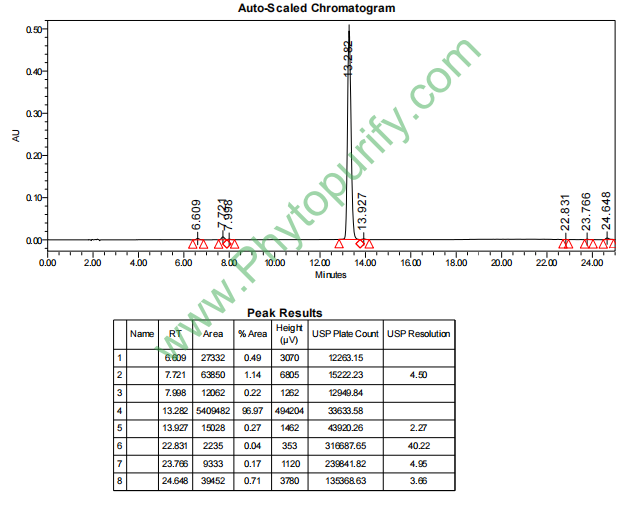
Analysis Method: HPLC-DAD or/and HPLC-ELSD
Identification Method: Mass, NMR
Packing: Brown vial or HDPE plastic bottle
Storage: Store in a well closed container, protected from air and light. Put into refrigerate or freeze for long term storage.
Whenever possible, you should prepare and use solutions on the same day. However, if you need to make up stock solutions in advance, we recommend that you store the solution as aliquots in tightly sealed vials at -20℃. Generally, these will be useable for up to two weeks.
The product could be supplied from milligrams to grams
Inquire for bulk scale.
For Reference Standard and R&D, Not for Human Use Directly.
HPLC of Yadanzioside F
Storage conditions:Short-term storage at 2~8℃, long-term storage at -20 ~ -80℃
245.0400
-.9292
-.9297
4.3623
.5720
.8526
Low
49.7183
6.8872
Yes
No
No
No
Yes
No
0.0
Yes
No
Yes
Yes
Natural products, as an important source of drug discovery, have played an indispensable role in the long history of human fight against diseases. From ancient plant therapies to the development of modern targeted drugs, the rich chemical diversity contained in nature provides a continuous source of inspiration and lead compounds for overcoming difficult and complex diseases. Among the many plants with medicinal value, Brucea Javanese(Brucea javanica (L.) Merr. has attracted much attention due to its significant anti-tumor, antimalarial, and anti-inflammatory activities. Brucea is a plant belonging to the Simaroubacheae family, mainly distributed in tropical and subtropical regions such as southern China, Southeast Asia, and Australia. Its dried and ripe fruit, brucea, has been used in traditional Chinese medicine to treat dysentery, malaria, warts, and certain cancers for hundreds of years.
Modern pharmacological studies have shown that the various biological activities of Brucea asiatica are mainly attributed to a class of structurally unique compounds it contains - quassinoids. These compounds are highly oxidized tetracyclic or pentacyclic lactone structures formed by modification such as oxidation and rearrangement based on the triterpenoid skeleton. Yadanzioside F (CAS number: 95258-11-0) is a representative bitter lignin glycoside compound isolated from Yadanzioside. As a toxic component in Brucea Javanese, Brucea Javanese Glycoside F not only exhibits significant pharmacological activity, but also becomes a hot and difficult research topic due to its potential toxicity.
In recent years, with the continuous deepening of research on Brucea Javanese Glycoside F, its potential in the field of anti-tumor is particularly prominent. Research has shown that Brucea Javanese Glycoside F can exert strong inhibitory effects on various tumor cell lines by regulating multiple signaling pathways related to cell proliferation, apoptosis, invasion, and angiogenesis. Its target network involves key proteins such as MCL1, BCL2, STAT3, MMP2, TOP1, HIF1A, TOP2A, MAPK1, ESR1, and CYP19A1, exhibiting multi-target and multi pathway characteristics. However, the complex chemical structure, low lipid solubility (LogP of -0.9292), and potential toxicity of Brucea Javanese Glycoside F pose significant challenges for its drug development. This article aims to systematically review the chemical structure, plant origin, pharmacological activity, mechanism of action, pharmacological evaluation, and clinical application prospects of Brucea Javanese Glycoside F, in order to provide comprehensive scientific basis for the in-depth research and development of this natural product.
Brucea Javanese Glycoside F belongs to the class of bitter lignin glycosides, and its chemical structure is highly complex and unique. From a chemical classification perspective, it belongs to the glycoside derivatives of C20 type lignin lactone. Its glycoside moiety is a highly oxidized lignin skeleton, typically consisting of a four or five ring system, with multiple hydroxyl, carbonyl, and a characteristic delta lactone ring. This complex polycyclic structure is the core pharmacophore for lignin compounds to exert biological activity. The sugar moiety of Brucea Javanese Glycoside F is usually linked to a specific hydroxyl group of the glycoside, and common sugar moieties include monosaccharides such as glucose. The presence of sugar groups not only increases the water solubility of molecules, but may also affect their absorption, distribution, and interaction with targets in vivo.
From the perspective of physical and chemical properties, the molecular weight of Brucea Javanese Glycoside F is 642.6070 Da, which is a medium-sized natural product molecule. Its lipid water partition coefficient (LogP) is -0.9292, which is a negative value, indicating that the compound has high hydrophilicity but poor lipid solubility. This characteristic is consistent with the presence of multiple hydroxyl and sugar groups in its molecule. High hydrophilicity usually means that the solubility of Brucea Javanese Glycoside F in water is good, and its calculated water solubility parameter is 4.3623, further confirming this. However, poor lipid solubility also indicates that the compound is difficult to penetrate the lipid bilayer of the cell membrane through passive diffusion, which poses the primary obstacle to its oral absorption and entry into intracellular targets.
Topological Polarity Surface Area (TPSA) is an important parameter for measuring the total surface area of a compound and polar groups (such as oxygen atoms, nitrogen atoms, and hydrogen atoms attached to them) exposed to solvents. It is closely related to the intestinal absorption and blood-brain barrier penetration ability of drugs. The TPSA of Brucea Javanese Glycoside F is as high as 245.0400 Å ², far exceeding the recommended upper limit of 140 Å ² for oral medications. The high polarity surface area strongly suggests that the compound is not easily absorbed by the intestine and can hardly penetrate the blood-brain barrier. In fact, its blood-brain barrier penetration ability was evaluated as' low ', which is completely consistent with high TPSA values. In addition, in early toxicology predictions, the inhibitory risk of Brucea Javanese Glycoside F on hERG potassium ion channels (related to cardiac toxicity) was evaluated as "no", and the result in Ames test (used to detect gene mutations) was 0.0, indicating that it did not show significant mutagenicity in the prediction model. These physicochemical properties and early toxicological data provide key information for subsequent drug efficacy evaluation and formulation design, and also reveal the enormous challenges in developing them into oral drugs.
The only known natural source of Brucea Javanese Glycoside F is the bitter wood plant Brucea Javanese(Brucea javanica). This plant is a shrub or small tree, and its fruit, seeds, stem bark, and root bark all contain abundant lignin compounds, but the content is most concentrated in the fruit and seeds. The content of Brucea Javanese Glycoside F in plants is usually low and belongs to trace active ingredients. Its accumulation may be influenced by various factors such as plant growth environment, harvest season, and variety differences. Therefore, obtaining a sufficient amount of high-purity Brucea Javanese Glycoside F is the basis for further research.
Traditional extraction methods are mostly based on solvent extraction. Due to the high polarity of Brucea Javanese Glycoside F, solvents with high polarity are usually used for extraction. Common extraction solvents include methanol, ethanol, water, or their mixed solvents. For example, soaking or percolating dried brucea seed powder in methanol or ethanol at room temperature or under heating conditions, collecting the extract, and concentrating it under reduced pressure to obtain the total extract. Subsequently, the total extract was dispersed in water using liquid-liquid extraction method, and extracted sequentially with solvents of different polarities such as petroleum ether, chloroform, ethyl acetate, n-butanol, etc. Due to the high polarity of Brucea Javanese Glycoside F, it is usually enriched in the n-butanol extraction layer.
In order to isolate and purify a single bruce acid glycoside F from complex plant extracts, a combination of multiple chromatographic techniques is required. The classic separation process includes:
1. Coarse separation Extract n-butanol through a macroporous adsorption resin column (such as D101, HP-20, etc.) and perform gradient elution using ethanol water or methanol water systems of different concentrations. Collect the fraction rich in Brucea Javanese Glycoside F by monitoring with Thin Layer Chromatography (TLC) or High Performance Liquid Chromatography (HPLC).
2. Fine separation: The streams rich in target compounds are further separated by silica gel column chromatography, ODS (octadecylsilane bonded silica gel) reverse phase column chromatography, Sephadex LH-20 gel column chromatography, etc. Use appropriate mobile phases (such as chloroform methanol water, acetonitrile water, etc.) for isocratic or gradient elution.
3. Purification preparation For samples with high final purity requirements, preparative high-performance liquid chromatography (Prep HPLC) is usually used for final purification. By optimizing the chromatographic conditions, it is possible to efficiently separate bruce acid glycoside F from other structurally similar analogues (such as bruce acid glycoside A, B, C, etc.) and obtain a single compound with a purity greater than 95%.
In recent years, with the development of modern separation technology, some new techniques have also been applied to the extraction and separation of Brucea Javanese Glycoside F, such as high-speed countercurrent chromatography (HSCCC) and supercritical fluid extraction (SFE). HSCCC utilizes the liquid-liquid distribution principle, eliminating the need for solid support and avoiding irreversible adsorption of samples on column chromatography. It has the advantages of high separation efficiency and high sample recovery rate. SFE, with its green, environmentally friendly, and selectively adjustable characteristics, has shown potential in extracting thermosensitive components. However, due to the high polarity of Brucea Javanese Glycoside F and its low solubility in supercritical CO ₂, it is usually necessary to add entrainers (such as ethanol) to improve extraction efficiency. Overall, establishing an efficient, economical, and environmentally friendly extraction and purification process for Brucea Javanese Glycoside F remains a key issue that needs to be addressed in future industrial production.
As one of the main active ingredients in Brucea Javanese, the pharmacological activity research of Brucea Javanese Glycoside F mainly focuses on the field of anti-tumor, and also involves exploration of anti-inflammatory, antiviral and other aspects.
1. Antitumor activity
A large number of in vitro and in vivo studies have shown that Brucea Javanese Glycoside F has significant inhibitory effects on proliferation and induces apoptosis in various types of tumor cells.
* In vitro activity Brucea javanica F can inhibit the growth of many tumor cell lines, such as human liver cancer cells (such as HepG2, Huh7), lung cancer cells (such as A549, H460), breast cancer cells (such as MCF-7, MDA MB-231), colorectal cancer cells (such as HCT-116, SW480), prostate cancer cells (such as PC-3, LNCaP), and leukemia cells (such as K562, HL-60). Its half maximal inhibitory concentration (IC ₅₀) is usually at the micromolar level, exhibiting strong cytotoxicity. It is worth noting that the toxicity of Brucea Javanese Glycoside F to certain normal cells (such as human normal liver cell L02) is relatively low, indicating that it may have certain selectivity.
* In vivo activity In various tumor bearing mouse models, Brucea Javanese Glycoside F has also shown good anti-tumor effects. For example, in xenograft tumor models of liver cancer, lung cancer and breast cancer, Brucea javanica F can significantly inhibit the growth of tumors, and even lead to tumor size reduction. Its anti-tumor activity in vivo is usually positively correlated with dosage, but it is also accompanied by certain toxic reactions, such as weight loss and abnormal liver and kidney function indicators.
2. Anti inflammatory activity
Inflammation is an important microenvironmental factor in the occurrence and development of tumors. Brucea Javanese Glycoside F has also been found to have anti-inflammatory activity. Research has shown that it can inhibit macrophages (such as RAW264.7 cells) stimulated by lipopolysaccharide (LPS) from producing nitric oxide (NO), prostaglandin E ₂ (PGE ₂), and various pro-inflammatory cytokines, such as tumor necrosis factor - α (TNF - α), interleukin-6 (IL-6), and interleukin-1 β (IL-1 β). Its anti-inflammatory mechanism may be related to the inhibition of the activation of nuclear factor kappa B (NF - κ B) and mitogen activated protein kinase (MAPK) signaling pathways.
3. Antiviral and antimalarial activity
Given that brucea has traditionally been used to treat malaria, the anti malarial effects of its active ingredients have also received attention. Although the anti malarial activity of Brucea Javanese Glycoside F is not as well studied as its anti-tumor activity, there have been reports indicating that it has an effect on malaria parasites (such as malaria parasites)Plasmodium falciparum)It has a certain inhibitory effect on growth. In addition, some studies have also preliminarily explored the antiviral potential of Brucea Javanese Glycoside F, such as its inhibitory effect on hepatitis B virus (HBV) or certain RNA viruses, but these results still need further validation.
The anti-tumor mechanism of Brucea Javanese Glycoside F is multi-layered and multi-target, mainly achieved through interfering with the cell cycle, inducing cell apoptosis, inhibiting tumor invasion and metastasis, and anti angiogenesis pathways. The molecular target network involved is highly consistent with the target information provided.
1. Inducing cell apoptosis
This is one of the core mechanisms of the anti-tumor effect of Brucea Javanese Glycoside F. It mainly induces tumor cell apoptosis through two pathways: endogenous (mitochondria) and exogenous (death receptors).
* Regulating BCL-2 family proteins Brucea Javanese Glycoside F can downregulate the expression of anti apoptotic proteins (such as MCL1, BCL2, BCL xL), while upregulating the expression of pro apoptotic proteins (such as BAX, BAK, BIM). This balance change leads to an increase in mitochondrial outer membrane permeability, releasing cytochrome c, which in turn activates Caspase-9 and downstream Caspase-3/7, ultimately triggering cell apoptosis. MCL1 and BCL2 in the target information are the key regulatory nodes of this pathway.
* Inhibition of STAT3 signaling pathway Signal transducer and activator of transcription factor 3 (STAT3) is an important oncogenic transcription factor that is continuously activated in various tumors. Brucea Javanese Glycoside F can inhibit the phosphorylation of STAT3 (Tyr705 site), thereby blocking its nuclear translocation and transcriptional activity. The downregulation of STAT3 further reduces the expression of its target genes (such as MCL1, BCL2, Survivor, VEGF, etc.), thereby synergistically promoting apoptosis and inhibiting angiogenesis.
2. Inhibit cell proliferation and cycle arrest
Brucea Javanese Glycoside F can block the tumor cell cycle in the G ₂/M phase or S phase, thereby inhibiting cell proliferation. The mechanism may be related to the inhibition of topoisomerase (TOP) activity.
* Inhibition of Topoisomerase TOP1 and TOP2A in the target information are key enzymes essential for DNA replication and transcription. Brucea Javanese Glycoside F may cause DNA damage by stabilizing the TOP-DNA cleavable complex, thereby activating cell cycle checkpoints and leading to cell cycle arrest. This is similar to the mechanism of action of many classic topoisomerase inhibitors, such as camptothecin and etoposide.
* Affects the MAPK pathway The mitogen activated protein kinase (MAPK) pathway (including ERK, JNK, p38) plays a central role in regulating cell proliferation, differentiation, and survival. Brucea Javanese Glycoside F can regulate the phosphorylation levels of key proteins in the MAPK pathway, such as MAPK1/ERK2, typically by inhibiting the activation of ERK, while activating JNK and p38, thereby promoting apoptosis and inhibiting proliferation.
3. Inhibit tumor invasion and metastasis
The invasion and metastasis of tumors are the main causes of treatment failure and patient death. Brucea Javanese Glycoside F has also shown potential in this regard.
* Inhibition of matrix metalloproteinases Matrix metalloproteinases (MMPs), especially MMP2 and MMP9, can degrade extracellular matrix and are key enzymes for tumor cell invasion and metastasis. Brucea Javanese Glycoside F can significantly inhibit the expression and activity of MMP2, thereby reducing the migration and invasion ability of tumor cells.
* Regulating HIF-1 α and angiogenesis Hypoxia inducible factor-1 alpha (HIF1A) is a core transcription factor for tumors to adapt to the hypoxic microenvironment. It can activate the expression of genes such as vascular endothelial growth factor (VEGF) and promote neovascularization. Brucea Javanese Glycoside F can inhibit the protein accumulation and transcriptional activity of HIF1A, thereby reducing the secretion of VEGF, inhibiting tumor angiogenesis, and cutting off the nutritional supply to the tumor.
4. Intervention for hormone related tumors
For hormone dependent tumors such as breast cancer, the targets of Brucea javanica F also include ESR1 (estrogen receptor α) and CYP19A1 (aromatase). Research shows that Brucea javanica F may interfere with estrogen signal transduction and synthesis by down regulating the expression of ESR1 or inhibiting the activity of CYP19A1, thus inhibiting the growth of hormone receptor positive breast cancer cells.
In summary, Brucea Javanese Glycoside F forms a complex regulatory network by acting on multiple key targets such as MCL1, BCL2, STAT3, MMP2, TOP1, HIF1A, TOP2A, MAPK1, ESR1, and CYP19A1, synergistically exerting its anti-tumor effects. This multi-target characteristic is not only its advantage, but also increases the difficulty of accurately analyzing its pharmacological mechanism.
The push of brucea Javanese Glycoside F from the laboratory to clinical application faces severe challenges in terms of its pharmacological properties. Its physicochemical properties and preliminary pharmacokinetic characteristics are the main bottlenecks in its development.
1. Evaluation of drug properties
Based on classic pharmacological evaluation criteria such as the Lipinski Five Rules, multiple parameters of Brucea Javanese Glycoside F are not ideal. Its molecular weight (642.6 Da) exceeds 500 Da, LogP (-0.93) is less than -0.4, TPSA (245 Å ²) is much greater than 140 Å ², and the number of hydrogen bond donors and acceptors in the molecule also far exceeds the standard. These characteristics strongly indicate that the oral bioavailability of Brucea Javanese Glycoside F is extremely low. High hydrophilicity and polarity make it difficult for it to penetrate the intestinal epithelial cell membrane, and even if absorbed, it is easily metabolized by the liver's first pass effect or excreted through bile. In addition, although its water solubility is good, it may not be sufficient to support high-dose oral administration. Therefore, Brucea Javanese Glycoside F is classified as a "non class drug" molecule and is not suitable for development as a traditional oral tablet or capsule.
2. Pharmacokinetic characteristics
At present, there are relatively limited detailed research reports on the pharmacokinetics of Brucea Javanese Glycoside F in vivo, but existing data reveals the challenges it faces.
* absorb As mentioned earlier, oral absorption is the biggest obstacle. Intravenous injection may be the only feasible systemic route of administration. However, intravenous injection formulations need to address their solubility and stability issues.
* distribution Due to its high hydrophilicity, bruce acid glycoside F may mainly be distributed in plasma and extracellular fluid in vivo, making it difficult to enter cells. Its apparent distribution volume (Vd) is expected to be relatively small. The low penetration ability of the blood-brain barrier means that it is difficult to use for treating brain tumors.
* Metabolism Brucea Javanese Glycoside F, as a glycoside, may be hydrolyzed by intestinal microbiota or hepatic glycosidases in the body to produce aglycones. The activity of aglycones may differ from that of the original drug. In addition, multiple hydroxyl groups on its aglycone may also undergo phase II metabolic reactions (such as glucuronidation and sulfation), leading to rapid clearance.
* excretion Due to its high polarity and potential for rapid metabolism, bruce acid glycoside F and its metabolites may be primarily excreted through bile and urine.
3. Toxicological considerations
Although the Ames test result was negative, indicating no direct mutagenicity, bruce acid glycoside F was clearly described as a "toxic ingredient". Its toxicity is mainly reflected in:
* Gastrointestinal toxicity The most common side effects of traditional application of brucea are gastrointestinal irritation, such as nausea, vomiting, abdominal pain, and diarrhea. Brucea Javanese Glycoside F may be related to this.
* Liver and kidney toxicity In animal experiments, high doses of Brucea Javanese Glycoside F may lead to elevated liver and kidney function indicators (such as ALT, AST, BUN, Cr), indicating potential liver and kidney damage.
* Other toxicities This may also include suppression of the immune system or potential effects on the nervous system.
4. Strategies for improving drug properties
Given the aforementioned challenges, the development of Brucea Javanese Glycoside F must adopt innovative drug delivery strategies. The current research directions include:
* Nano drug delivery system Encapsulation of Brucea Javanese Glycoside F in liposomes, polymer nanoparticles, micelles, or nanoemulsions can significantly increase its apparent solubility, protect it from rapid metabolism, and enrich the drug in tumor tissue through passive targeting (EPR effect) or active targeting (surface modified ligand), thereby reducing systemic toxicity.
* Prodrug design By chemical modification, groups that can be activated by in vivo enzymes (such as esterases and phosphatases) or specific microenvironments (such as low pH and hypoxia) are introduced onto the hydroxyl group of Brucea Javanese Glycoside F to produce prodrugs. The prodrug can improve its lipid solubility, promote absorption, and release the original drug at the target site.
* Structural modification Structural modification of the mother nucleus of Brucea Javanese Glycoside F to search for analogs with simpler structure, higher activity, and lower toxicity. For example, retaining the core pharmacophore, removing or replacing sugar groups, or modifying specific functional groups.
Despite facing significant challenges in terms of its pharmacological properties, the unique and multi-target anti-tumor mechanism of Brucea Javanese Glycoside F still holds promising clinical application prospects in specific therapeutic fields.
1. Potential as an anti-tumor drug
The most direct clinical application prospect of Brucea Javanese Glycoside F is as an anti-tumor drug. Given its strong in vitro and in vivo activity, particularly in inducing apoptosis and inhibiting metastasis, it is expected to be developed into:
* Therapeutic drugs for refractory tumors For tumors that have developed resistance to traditional chemotherapy drugs, Brucella Javanese Glycoside F may exert therapeutic effects through its unique mechanism, such as inhibiting STAT3 and MCL1.
* Combination therapy plan Brucea Javanese Glycoside F can be used in combination with existing chemotherapy drugs (such as cisplatin, paclitaxel, 5-fluorouracil) or targeted drugs (such as sorafenib, gefitinib). By acting on different signaling pathways, it may produce synergistic effects and potentially reduce the dosage and toxicity of a single drug.
* Local administration formulation Due to its poor oral absorption and systemic toxicity, Brucea Javanese Glycoside F is highly suitable for development as a local administration form. For example, hepatic artery chemoembolization (TACE) preparations for liver cancer, rectal suppositories for colorectal cancer, topical ointment for skin cancer, or bladder infusion fluid for bladder cancer, etc. This local administration method can maximize the drug concentration at the lesion site while reducing systemic exposure and toxicity.
2. As a lead compound
The complex chemical structure of Brucea Javanese Glycoside F provides valuable lead compounds for medicinal chemists. By conducting a systematic structure-activity relationship (SAR) study on its structure, it is possible to:
* simplified structure Search for analogues with higher activity, simpler structure, and easier synthesis to avoid the difficulties and high costs of extracting natural products.
* Optimize pharmacokinetic properties By structural modification, while maintaining or enhancing activity, it improves lipid solubility, reduces polarity, and enhances oral bioavailability.
* Reduce toxicity By modifying toxicity related functional groups, the therapeutic index can be improved.
3. Challenges faced and future research directions
To promote the clinical application of Brucea Javanese Glycoside F or its derivatives, future research needs to focus on the following aspects:
* In depth mechanism research More advanced molecular biology techniques such as CRISPR screening, proteomics, and metabolomics need to be utilized to comprehensively analyze its targets and signaling networks, especially to clarify the protein targets it directly acts on.
* Optimize delivery system Developing efficient and low toxicity nano delivery systems is the key to solving the problem of drug resistance. A systematic study is needed to investigate the effects of different carrier materials, particle sizes, surface charges, and targeting ligands on pharmacokinetics, tissue distribution, and therapeutic efficacy.
* Systematic Toxicological Evaluation Conduct comprehensive acute and chronic toxicity studies to clarify their toxic target organs, mechanisms, and safe dosage ranges. Especially to evaluate its long-term effects on the heart, liver, kidneys, and immune system.
* Clinical translational research After completing sufficient preclinical efficacy, pharmacokinetics, and toxicology evaluations, caution should be exercised in designing the first human clinical trial. It is recommended to start with low doses of local or intravenous administration, closely monitor safety, and explore potential biomarkers to evaluate efficacy.
As a typical bitter lignin glycoside derived from the traditional Chinese medicine Brucea Javanica, Yaguzi Glycoside F occupies an important position in the field of natural product drug research due to its unique chemical structure and significant multi-target anti-tumor activity. It exhibits strong potential in inducing apoptosis, inhibiting proliferation, anti metastasis, and anti angiogenesis by regulating a series of key targets such as MCL1, BCL2, STAT3, MMP2, TOP1, and HIF1A. However, its highly polar physicochemical properties (LogP -0.93, TPSA 245 Å ²) and inherent toxicity pose a severe challenge to its pharmacological development, with extremely low oral bioavailability and high systemic administration risk.
However, this does not mean that the development prospects of bruce acid glycoside F are bleak. On the contrary, it represents a typical case of "challenges and opportunities coexisting" in the development of natural product drugs. The future research focus should not be limited to directly developing it as a traditional oral medication, but should shift towards utilizing modern medicinal chemistry and nanotechnology, through structural modification, prodrug design, and innovative delivery systems (such as nanoparticles, liposomes, and local formulations), to fully leverage its pharmacological activity advantages. Especially its potential in local treatment and combination therapy is worth exploring in depth.
In summary, the research process of Brucea Javanese Glycoside F deeply reveals the complexity and difficulty of extracting active ingredients from traditional herbs and transforming them into modern drugs. It is not only a valuable lead compound for the development of anti-tumor drugs, but also a model for interdisciplinary research in natural product chemistry, pharmacology, pharmacy, and toxicology. With a deeper understanding of the mechanism of action and continuous advancements in drug delivery technology, we have reason to believe that bruce acid glycoside F and its derivatives have the potential to provide new treatment options for cancer patients, especially those who do not respond to existing therapies, in the future. The continuous exploration of these "non pharmaceutical" natural products will also constantly expand the boundaries of medicinal chemistry and promote the discovery of innovative drugs.
