Introduction/Overview
In the field of natural product chemistry and pharmacology research, active ingredients derived from traditional medicinal plants have become an important treasure trove for modern innovative drug development due to their structural diversity and multi-target action characteristics. Cimicifuga racemosa, also known as black cohosh, is a herb widely used in traditional medicine in North America and Asia to treat gynecological diseases, rheumatic pain, and inflammation related conditions. Its chemical composition is complex and its pharmacological effects are extensive. In recent years, with the advancement of separation and identification technology, a series of phenylpropanoids and triterpenoid saponins with significant biological activity have been discovered one after another. Among them, Cimifugin-4 '- glucoside (also known as Cimitin, CAS number: 1632110-81-6), as a key phenylpropanoid glycoside compound in sesame, has gradually become a research hotspot.
This compound is not only one of the quality indicators of the Chinese medicinal herb, but also shows great potential in pharmacological activities such as anti-inflammatory and anti allergic effects. Preliminary studies have shown that coumarin-4 '- glucoside can exert its effects on immune related diseases such as allergic inflammation by regulating epithelial barrier function, inhibiting inflammatory cell migration and activation, and intervening in key inflammatory signaling pathways through multiple mechanisms. Its mechanism of action involves the regulation of classical signaling pathways such as mitogen activated protein kinase (MAPK) and nuclear factor kappa B (NF - κ B), indicating its multi-target and multi segmental intervention in the inflammatory process. The purpose of this article is to systematically review the chemical properties, plant sources, pharmacological activities, mechanisms of action, and medicinal properties of coumarin-4 '- glucoside, in order to provide comprehensive scientific references for the in-depth research and potential drug development of this natural product.
Chemical structure and physicochemical properties
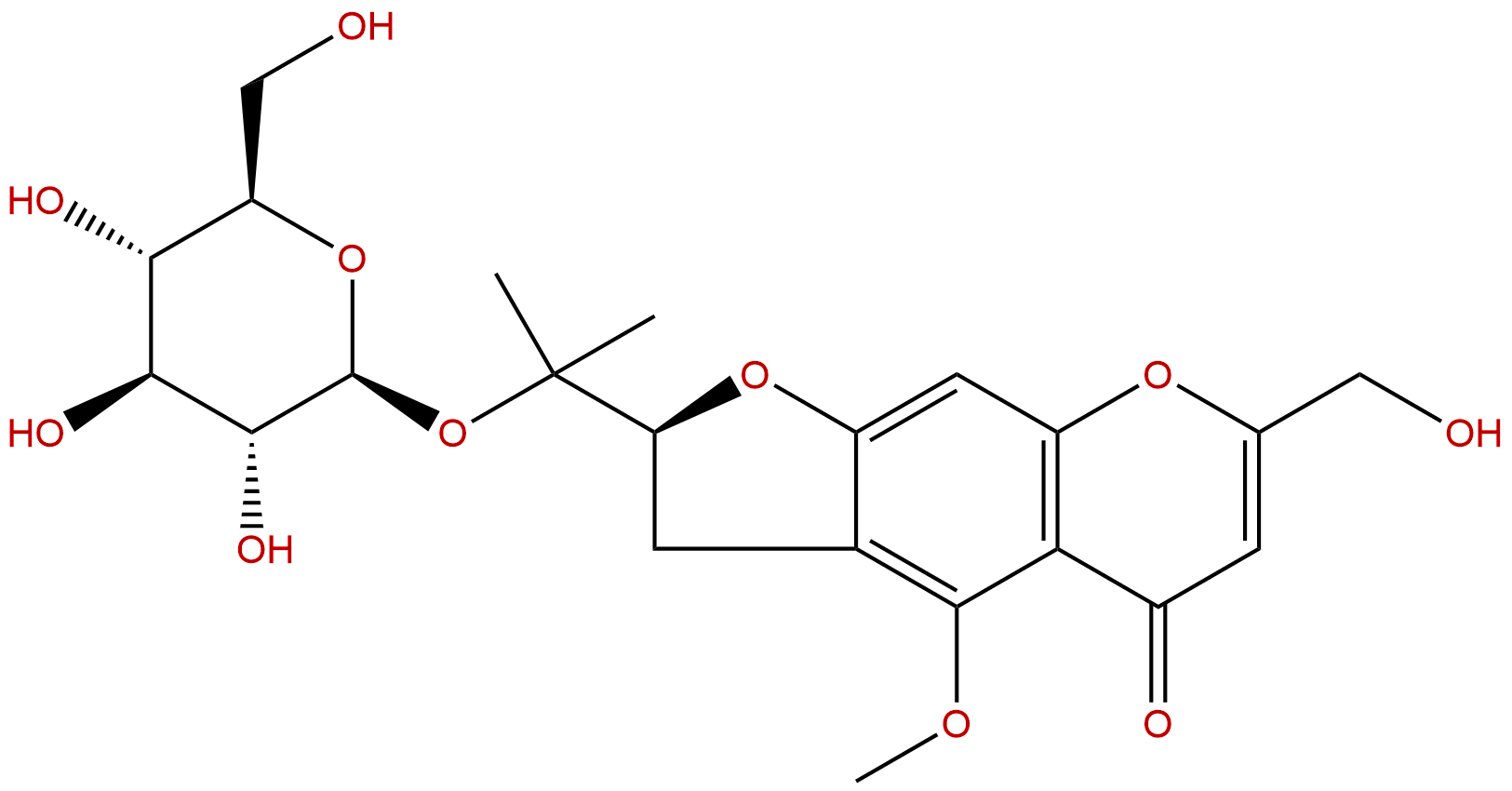
Cimicin-4 '- glucoside is a phenylpropanoid glycoside compound, whose chemical structure is based on the parent nucleus of Cimifugin. Cimicifugin itself is a derivative of furan chromones, while coumarin-4 '- glucoside is a glycoside compound formed by attaching a glucose group to the 4' - hydroxyl group of its benzene ring. This glycosylation modification significantly altered its physicochemical properties and biological activity.
Its molecular formula is C22H28O11 and its molecular weight is 468.4550. From the analysis of parameters related to drug properties, this compound exhibits typical polar molecular characteristics: the calculated lipid water partition coefficient (LogP) value is -0.0546, indicating its hydrophilicity; The topologically polar surface area (TPSA) is as high as 168.2800 Å ², mainly attributed to the numerous oxygen atoms in the molecule (from sugar groups and multiple ether bonds, carbonyl groups); The predicted water solubility value is 2.1452, which belongs to the solubility range. These physical and chemical parameters collectively determine its distribution characteristics in organisms: higher polarity and hydrophilicity result in lower ability to penetrate the blood-brain barrier, which to some extent limits its direct effects on central nervous system diseases, but may also reduce the risk of related central side effects. In addition, preliminary in vitro safety evaluation showed that the risk of hERG channel inhibition was "no", and the Ames test result was 0.9 (usually considered less than 1.5 indicating no mutagenicity), providing preliminary evidence for its relatively good safety.
Plant sources and extraction methods
Cimicifuga -4 '- glucoside is mainly derived from plants in the Ranunculaceae family, including Cimicifuga racemosa in North America and commonly used varieties such as C. dahurica and C. heraclifolia in Asia. This compound belongs to secondary metabolites in plants and usually coexists with other structurally similar phenylpropanoids and triterpenoid saponins. Its content is influenced by factors such as plant origin, harvesting season, medicinal parts (mainly rhizomes), and processing methods.
The efficient and high-purity extraction of coumarin-4 '- glucoside from plant materials is the basis for its pharmacological and medicinal chemistry research. The commonly used extraction and separation methods currently follow the conventional process of natural product chemistry:
1. Extract Solvent extraction method is usually used. Due to the high polarity of the compound, methanol, ethanol, or their aqueous solutions (such as 70% ethanol) are commonly used for reflux extraction or ultrasound assisted extraction to fully dissolve the target component and similar polar components.
2. Enrichment and Separation After vacuum concentration, the crude extract is preliminarily enriched using macroporous adsorption resins (such as D101, AB-8 type). Water ethanol gradient elution is commonly used, and the target components are mostly concentrated in the elution sites of low to medium concentration ethanol (such as 30% -50%). Further purification mainly depends on chromatographic techniques, including normal or reverse phase silica gel column chromatography, Sephadex LH-20 column chromatography and high performance liquid chromatography (HPLC) preparation chromatography. The combination of reverse phase C18 chromatography column with methanol water or acetonitrile water system is the key means to obtain high-purity monomers.
3. appraisal The isolated monomer compounds were structurally confirmed using modern spectroscopic techniques, including mass spectrometry (MS) to provide molecular weight information, nuclear magnetic resonance hydrogen (¹ H NMR) and carbon (¹ ³ C NMR) to analyze the carbon hydrogen skeleton and sugar linkage positions, and ultraviolet (UV) and infrared (IR) spectroscopy to assist in functional group identification.
Optimizing the extraction process, improving yield, and establishing stable and controllable quality standards are the prerequisites for future development of related formulations.
Pharmacological activity research
A large number of in vitro and in vivo pharmacological experiments have confirmed that coumarin-4 '- glucoside has multiple biological activities, especially in anti-inflammatory and anti allergic effects.
-
anti-inflammatory effect In the mouse monocyte/macrophage RAW264.7 inflammation model induced by lipopolysaccharide (LPS), coumarin-4 '- glucoside showed significant anti-inflammatory effects. It can dose dependently inhibit the excessive production of nitric oxide (NO) and prostaglandin E2 (PGE2) in RAW264.7 cells stimulated by LPS, while downregulating the gene expression and protein secretion of key inflammatory mediators such as tumor necrosis factor - α (TNF - α), interleukin-6 (IL-6), and interleukin-1 β (IL-1 β). In animal models, the compound also has a certain inhibitory effect on acute inflammation models such as xylene induced ear swelling in mice and carrageenan induced paw swelling in rats.
-
Antiallergic and immunomodulatory effects This is the most distinctive pharmacological activity of coumarin-4 '- glucoside. Research has shown that in allergic airway inflammation or dermatitis models, this compound can effectively alleviate allergic reaction characteristics such as tissue edema and infiltration of inflammatory cells (especially eosinophils). Its function is not limited to the inhibitory stage, but may also involve regulating the function of immune cells. For example, it can inhibit the migration and chemotaxis of RAW264.7 macrophages, which may be one of its mechanisms for limiting the recruitment of immune cells at the site of inflammation and controlling the spread of inflammation.
-
Protective effect of epithelial barrier Recent studies have found that coumarin-4 '- glucoside has a positive effect on maintaining epithelial barrier integrity. In respiratory or intestinal epithelial cell models, it can enhance epithelial barrier function, reduce allergen or pathogen penetration, and inhibit the release of "epithelial derived active key factors" from the source by regulating the expression and distribution of tight junction related proteins (such as ZO-1, Occludin), providing a new perspective for explaining its anti allergic effects.
-
Other potential activities Based on the traditional use of Cimicifuga and the activity speculation of its parent nucleus structure, it is speculated that Cimicifugin-4 '- glucoside may also have potential activities such as analgesic, antipyretic, and endocrine regulation (especially estrogen like effects, but further verification of its specificity is needed), but the relevant direct evidence is still insufficient.
Mechanism of action and molecular targets
The pharmacological effects of coumarin-4 '- glucoside are not achieved through a single target, but by intervening in the complex signal transduction network within cells, with a core mechanism focused on inhibiting overactivated inflammatory signaling pathways.
-
Inhibition of MAPK signaling pathway The mitogen activated protein kinase (MAPK) pathway is the core signal transducer of cellular stress and inflammatory responses, including subtypes such as p38 MAPK, extracellular signal regulated kinase (ERK), and c-Jun N-terminal kinase (JNK). Research has shown that coumarin-4 '- glucoside can significantly inhibit LPS induced phosphorylation (i.e. activated state) of p38, ERK, and JNK in RAW264.7 cells. After the activation of these kinases is blocked, the activity of downstream transcription factors and the production of inflammatory mediators are subsequently inhibited.
-
Inhibition of NF - κ B signaling pathway Nuclear factor kappa B (NF - κ B) is a key transcription factor that regulates inflammation, immunity, and cell survival. In the resting state, NF - κ B binds to its inhibitory protein I κ B and exists in the cytoplasm. LPS and other stimuli activate I κ B kinase (IKK), leading to phosphorylation and degradation of I κ B, thereby releasing NF - κ B (mainly p65/p50 dimer) into the nucleus and initiating target gene transcription. Cimicin-4 '- glucoside has been shown to prevent the degradation of I κ B α, inhibit the nuclear translocation of p65 subunit and its binding activity with DNA, thereby comprehensively downregulating the expression of inflammatory genes such as TNF - α, IL-6, IL-1 β, inducible nitric oxide synthase (iNOS), and cyclooxygenase-2 (COX-2) at the transcriptional level.
-
Regulating tight junctions and epithelial barrier The mechanism by which it enhances epithelial barrier function involves the regulation of tight junction proteins. It may stabilize the assembly of tight junction proteins by affecting upstream signals such as MAPK or PI3K/Akt pathways, preventing inflammatory factors or allergens from disrupting barrier integrity, thereby reducing the release of "epithelial derived active key factors" such as TSLP, IL-25, IL-33 by epithelial cells themselves, and suppressing the cascade amplification of Th2 immune response and allergic inflammation from the early stage.
-
Inhibition of cell migration The mechanism by which this compound inhibits macrophage migration and chemotaxis may be related to its interference with chemokine receptor signaling or its impact on cytoskeleton rearrangement. The specific target remains to be elucidated.
In summary, through multi-target action, coumarin-4 '- glucoside forms a synergistic network that protects physical barriers, inhibits the recruitment of inflammatory cells, and blocks key inflammatory signaling pathways within cells. This provides a solid molecular basis for its treatment of complex inflammation and allergic diseases.
Evaluation of drug properties and pharmacokinetics
Although coumarin-4 '- glucoside has shown good pharmacological activity in vitro and some in vivo models, its ultimate development into a drug depends on the systematic pharmacological evaluation and pharmacokinetic properties.
-
Physicochemical and Preliminary ADMET Properties As mentioned earlier, it has strong hydrophilicity (low LogP, high TPSA) and decent water solubility, which is beneficial for its dissolution and distribution in body fluids. However, high polarity may also lead to poor cell membrane permeability, and oral bioavailability may face challenges. The prediction results of low blood-brain barrier penetration limit its indications mainly to peripheral system diseases. The preliminary negative results of hERG and Ames suggest good cardiac safety and genetic toxicity risks, but a complete preclinical safety evaluation (such as acute toxicity, chronic toxicity, reproductive toxicity, etc.) has not been systematically reported.
-
Pharmacodynamics (Prediction and Challenge)As a glycoside compound, the fate of coumarin-4 '- glucoside in vivo deserves attention. After oral administration, it may face two main processes: one is the hydrolysis of glycosidases in the gut microbiota or intestinal mucosal epithelial cells, which removes the glucose group and converts it into aglycone gastrodin. The latter has increased lipid solubility, but its activity may change; The second is to be absorbed based on the prototype. At present, there is a lack of systematic pharmacokinetic research data. Based on its structural characteristics, it can be inferred that the oral absorption of its prototype drug may be moderate to low, with a small distribution volume, mainly distributed in the blood and extracellular fluid. The metabolic pathway may involve II binding reactions such as the detachment of glucose groups, hydroxylation or methylation of benzene rings (such as glucuronidation, sulfation), and ultimately excretion through the kidneys or bile. Conducting in vivo pharmacokinetic studies of the system, clarifying the pharmacokinetic characteristics, absolute bioavailability, tissue distribution, and excretion pathways of its prototype and main metabolites, is a key step in advancing its research and development.
-
Formulation strategy In order to improve its bioavailability, advanced formulation technologies such as phospholipid complexes, cyclodextrin inclusion complexes, nanoemulsions, or solid dispersions may be needed to increase its lipid solubility and membrane permeability, or to protect it from intestinal enzymatic hydrolysis.
Clinical application prospects and prospects
Based on the current research foundation, coumarin-4 '- glucoside has broad development prospects in the following fields:
-
Treatment of Allergic Diseases This is its most direct application direction. For diseases dominated by Th2 immune response such as allergic rhinitis, allergic asthma, and atopic dermatitis, its unique dual mechanism of "barrier protection+immune anti-inflammatory" demonstrates advantages. It can be considered to develop into nasal spray, inhalation powder spray or skin topical preparation for local treatment to avoid the problem of oral absorption and directly act on target organs.
-
Inflammatory bowel disease (IBD)Its ability to enhance the intestinal epithelial barrier function and inhibit the activation of intestinal macrophages suggests its potential application value in the treatment of IBD such as ulcerative colitis and Crohn's disease.
-
As a lead compound for structural optimization Using it as the parent nucleus for medicinal chemical modification, such as modifying the sugar moiety to improve stability, or modifying the glycoside moiety to regulate lipid solubility and target affinity, is expected to obtain derivatives with stronger activity and better pharmacokinetic properties.
-
combination therapy As a natural anti-inflammatory ingredient with multiple targets and mild effects, it can be considered to be used in combination with existing anti-inflammatory drugs or antihistamines (such as glucocorticoids and antihistamines) to reduce their dosage and side effects, and achieve synergistic effects.
However, there are still many challenges to overcome in order to move towards clinical application: firstly, a systematic preclinical pharmacological evaluation needs to be completed to validate its efficacy in animal models that are closer to human diseases, such as OVA induced asthma models and DSS induced colitis models. Secondly, comprehensive preclinical safety evaluation (GLP certification) and standardized pharmacokinetic studies must be conducted. Finally, it is necessary to address the process issues of large-scale preparation to ensure stable and controllable quality of the raw materials.
Conclusion
Cimicin-4 '- glucoside, as an important phenylpropanoid glycoside isolated from traditional Chinese medicine, has become a highlight compound in the pharmacological research of natural products due to its clear anti-inflammatory and anti allergic activities and unique epithelial barrier protection. It demonstrates the potential for treating allergic and chronic inflammatory diseases by inhibiting key signaling pathways such as MAPK and NF - κ B, and intervening in inflammation and immune responses with multiple targets. Although there may be challenges in drug development, especially in terms of oral bioavailability, its good preliminary safety and clear mechanism of action have laid a solid foundation for its further development. Future research should focus on further elucidating its in vivo processes, optimizing formulation strategies, expanding disease model validation, and exploring its structural optimization space as a lead compound. With the continuous deepening of research, coumarin-4 '- glucoside is expected to develop from a traditional phytochemical component into a candidate drug or health supplement material with modern medical value, providing new choices for the prevention and treatment of inflammatory and immune diseases.