Introduction/Overview
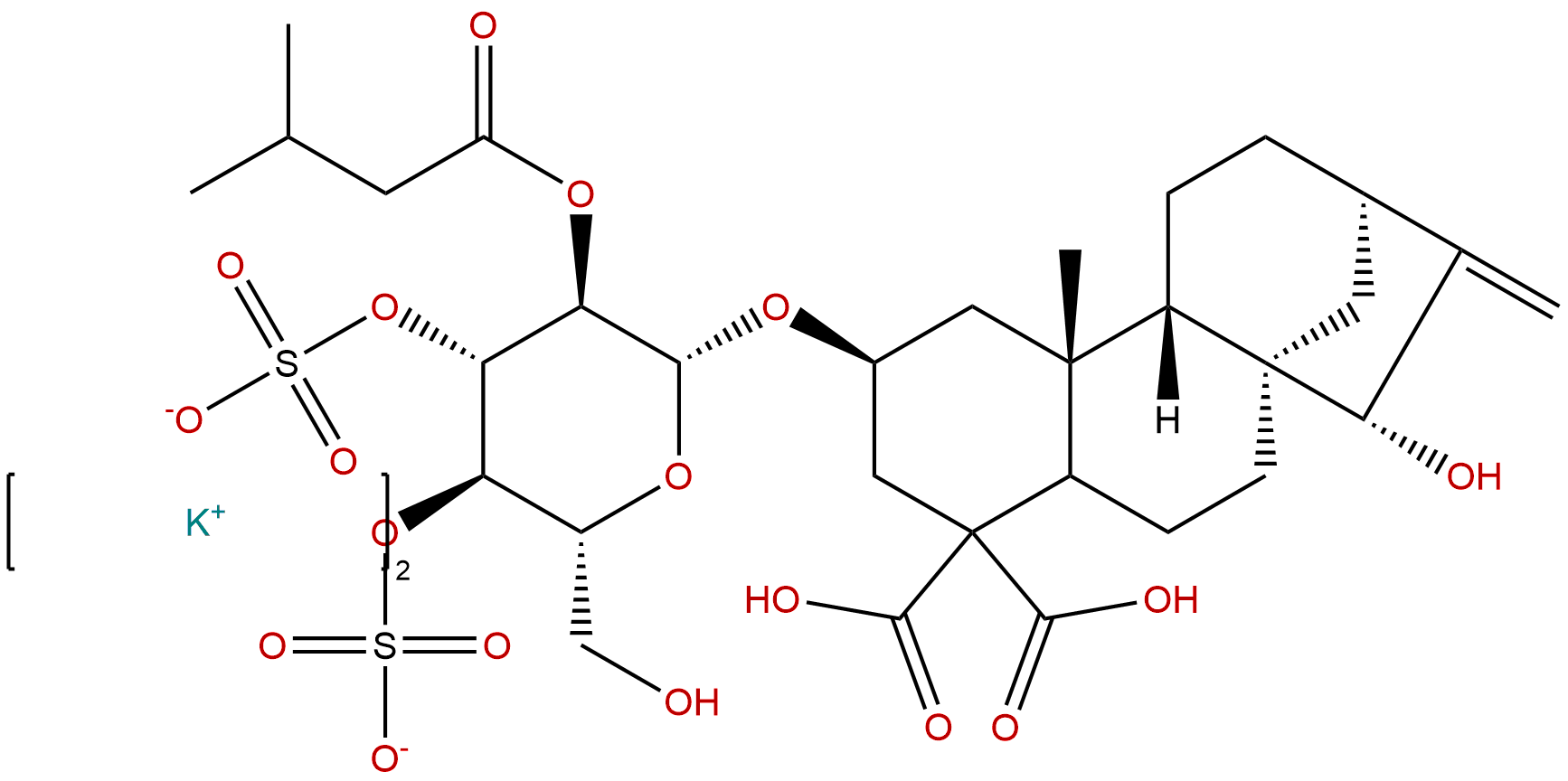
Carboxyyatractyloside Potassium Salt (CAS number: 77228-71-8) is a natural diterpenoid glycoside isolated from plants in the Asteraceae family. The parent compound Atractyloside and its derivatives hold an important position in the history of biochemistry and pharmacology due to their unique biological activities, particularly their potent inhibitory effect on mitochondrial adenine nucleotide transferase (ANT). However, traditional research has mostly focused on its potential toxic effects, especially the liver and kidney toxicity caused by interference with energy metabolism. In recent years, with the deepening of understanding of the molecular mechanisms of inflammatory diseases and the re examination of the multi-target regulatory properties of natural products, the potassium salt of carboxychalcogenide has shown new research value in the field of anti-inflammatory, especially for chronic inflammatory diseases such as enteritis. Enteritis, including ulcerative colitis and Crohn's disease, involves abnormal activation of key pro-inflammatory factors and signaling pathways such as tumor necrosis factor (TNF), interleukins (such as IL-6, IL-1 β), nuclear factor kappa B (NF - κ B), and cyclooxygenase-2 (PTGS2/COX-2). This article aims to systematically review the chemical properties, plant sources, and pharmacological activities of potassium salt of carboxylic acid Atractylodes macrocephala, and focus on exploring its potential molecular mechanisms for exerting anti enteritis effects by regulating targets such as TNF, PTGS2, NFKB1, IL6, and IL1B. At the same time, objective evaluation of its pharmacological properties is conducted to explore its clinical application prospects.
Chemical structure and physicochemical properties
Carboxylated potassium salt of Atractylodes macrocephala glycoside is a carboxylated derivative of Atractylodes macrocephala glycoside, and its potassium salt form enhances the water solubility and stability of the compound. Its molecular formula is C ∝₁ H ₄₈ O ₁₈ S ₂ · 2K, and its molecular weight is 770.8250. Structurally, it is connected to a complex disaccharide chain by a tetracyclic diterpene (ent kaurane type) glycoside through glycosidic bonds. The disaccharide chain ends with sulfate ester groups and carboxyl groups, which are the basis for the formation of potassium salts.
The key physicochemical property parameters are as follows: the calculated lipid water partition coefficient (LogP) is 0.7034, indicating that the compound has moderate lipophilicity but overall leans towards hydrophilicity. The topologically polar surface area (TPSA) is as high as 287.0200 Å ², mainly attributed to the presence of multiple polar groups such as hydroxyl, carboxyl, sulfate ester, and ether bonds in the molecule, indicating its high polarity. The experimental or computational model predicts its water solubility to be 2.2717 mg/mL, which belongs to the category of moderate to high solubility, thanks to its potassium salt form and abundant polar functional groups. These properties collectively determine its poor membrane permeability, predicting its ability to pass through the blood-brain barrier as' low ', which to some extent limits its effects on the central nervous system, but may also reduce the associated risk of neurotoxicity. In early drug screening, the compound did not show significant hERG potassium channel inhibitory activity ("no"), indicating a low risk of inducing cardiac QT interval prolongation. The Ames test result is 0.9 (usually expressed as the ratio of the number of revertant mutant colonies to the control, close to 1 indicating no significant mutagenicity), suggesting a low risk of genetic toxicity.
Plant sources and extraction methods
Carboxyl Atractylodes glycosides mainly come from the Atractylodes genus in the Asteraceae family(Atractylodes)Plants, especially Atractylodes macrocephala(Atractylodes lancea)And white magic(Atractylodes macrocephala)The roots and stems. These plants are commonly used in traditional Chinese medicine to invigorate the spleen, dry dampness, and treat gastrointestinal disorders. Modern pharmacological studies have revealed the anti-inflammatory and immune regulating activities of various diterpenoid components.
The extraction of carboxylated Atractylodes glycosides and their potassium salts usually involves a solvent extraction combined with chromatographic separation process. The general steps are as follows:
1. Raw material pretreatment Crush the dried roots and stems of Atractylodes macrocephala or Atractylodes macrocephala.
2. Solvent extraction Methanol, ethanol, or ethanol water mixed solvents are commonly used for heating reflux or ultrasound assisted extraction to maximize the extraction of polar and moderately polar diterpenoid glycosides.
3. Preliminary enrichment After the extraction solution is concentrated under reduced pressure, it is suspended in water and then subjected to liquid-liquid distribution using petroleum ether and ethyl acetate in sequence. Carboxylated Atractylodes glycosides are mainly retained in the aqueous phase due to their strong polarity.
4. chromatographic separation The aqueous phase is further subjected to macroporous adsorption resin (such as D101) column chromatography, with water and different concentrations of ethanol gradient elution, to collect the fraction rich in this component. Subsequently, fine purification was performed using reverse phase silica gel column chromatography (such as C18), normal phase silica gel column chromatography, or high performance liquid chromatography (HPLC). Due to its acidic groups, trace amounts of formic acid or acetic acid are often added in reverse phase chromatography to improve peak shape.
5. salt formation The separated carboxylic acid form of Atractylodes macrocephala can be converted into a more stable potassium salt by reacting with potassium hydroxide or potassium carbonate solution, and high-purity products can be obtained by recrystallization or preparative HPLC.
The entire extraction and separation process needs to be closely monitored, as plants in the Atractylodes genus often contain structurally similar Atractyloside and Carboxy Atractyloside, which have different activities and toxicities and need to be accurately identified by mass spectrometry (MS) and nuclear magnetic resonance (NMR).
Pharmacological activity research
The pharmacological activity research of potassium salt of carboxylated Atractylodes macrocephala has shown a shift from the perspective of "toxic molecules" to "potential therapeutic agents".
-
Classic toxic effects As a potent inhibitor of mitochondrial ANT, carboxyquercetin can block the transport of ADP/ATP through the mitochondrial inner membrane, severely disrupting cellular energy metabolism, leading to ATP depletion and cell death. This is the main mechanism by which it causes acute liver and kidney toxicity. Therefore, early research mainly focused on its use as a tool medicine for studying energy metabolism, as well as the poisoning caused by its ingestion (such as mixing with herbs).
-
Anti inflammatory and immune regulatory activity Recent studies have revealed its significant anti-inflammatory potential at lower, non cytotoxic concentrations. In various experimental enteritis models, such as dextran sulfate sodium (DSS) - induced colitis in mice or 2,4,6-trinitrobenzenesulfonic acid (TNBS) - induced colitis, pretreatment or treatment with potassium carboxyloside can significantly reduce colon tissue damage, decrease disease activity index, inhibit colon shortening and mucosal edema. Its anti-inflammatory effect is mainly reflected in:
- Inhibit the production of pro-inflammatory cytokines Significantly reduce the mRNA and protein levels of TNF - α, IL-6, and IL-1 β in colon tissue.
- Regulating inflammatory mediators Inhibit the expression of inducible nitric oxide synthase (iNOS) and cyclooxygenase-2 (PTGS2/COX-2), and reduce the production of inflammatory mediators such as nitric oxide (NO) and prostaglandin E2 (PGE2).
- anti-oxidative stress Enhance the activity of superoxide dismutase (SOD) and glutathione peroxidase (GSH Px) in colon tissue, reduce the content of malondialdehyde (MDA), and alleviate oxidative damage.
- Regulating immune cell infiltration Reduce the infiltration of neutrophils and macrophages in the colonic mucosa.
-
Other potential activities There are sporadic studies suggesting that based on its intervention in energy metabolism, it may have selective inhibitory effects on certain tumor cells that rely on high metabolism. However, research in this area is still in its early stages, and the treatment window needs to be defined with extreme caution.
Mechanism of action and molecular targets
The mechanism of action of carboxylated Atractylodes macrocephala potassium salt against enteritis is complex, involving synergistic regulation of multiple targets and pathways. Its core may lie in the "moderate regulation" of mitochondrial function rather than complete inhibition, as well as its extensive impact on downstream inflammatory signaling networks.
-
Core target: Mitochondrial adenine nucleotide transferase (ANT) and energy metabolism regulation ANT is a key protein on the inner membrane of mitochondria, responsible for transporting cytoplasmic ADP into the matrix and transporting ATP synthesized in the matrix out. Carboxyl Atractylodes glycoside is its specific ligand. Under pathological conditions, moderate inhibition of ANT may produce mitochondrial hormone effects, where mild mitochondrial stress can activate adaptive protective responses in cells. This includes activating the AMP activated protein kinase (AMPK) pathway. AMPK, as a cellular energy receptor, is activated when ATP levels decrease (ADP/AMP increases). Activated AMPK has strong anti-inflammatory effects: it can directly phosphorylate and inhibit the activation of NF - κ B, as well as inhibit the mTOR pathway, thereby reducing the synthesis of pro-inflammatory cytokines. Therefore, carboxylated Atractylodes glycosides may initiate endogenous anti-inflammatory and cell protective programs through the axis of "moderate inhibition of ANT → mild energy stress → activation of AMPK".
-
Regulation of key inflammatory signaling pathways and targets:
- NF - κ B signaling pathway (targeting NFKB1)NF - κ B is the core transcription factor of inflammatory response. Carboxylated Atractylodes macrocephala potassium salt can significantly inhibit the degradation of I κ B α, prevent the transfer of NF - κ B p65 subunit into the nucleus, and thus downregulate its transcriptional activity. This directly leads to a decrease in the expression of downstream genes such as TNF, IL6, and IL1B. The activation of AMPK is one of the important mechanisms for inhibiting NF - κ B.
- Pro-inflammatory cytokine network (targeting TNF, IL6, IL1B)This compound can comprehensively inhibit the production of TNF - α, IL-6, and IL-1 β at the transcription and translation levels. This not only reduces the direct inflammatory damage caused by these cytokines, but also cuts off their positive feedback amplification of the inflammatory cycle. For example, TNF - α itself can strongly activate NF - κ B, and inhibiting TNF - α helps break this vicious cycle.
- Prostaglandin synthesis pathway (targeting PTGS2/COX-2)Under inflammatory stimulation, COX-2 expression is sharply upregulated, catalyzing the production of a large amount of PGE2. Carboxylated Atractylodes macrocephala potassium salt effectively reduces the expression of COX-2 by inhibiting upstream signals such as NF - κ B, rather than directly inhibiting its enzymatic activity. This provides the possibility for selective regulation of prostaglandin synthesis in inflammatory sites.
- MAPK signaling pathway The study also found that it can inhibit the phosphorylation activation of p38 MAPK and JNK, which are also involved in regulating transcription factors such as AP-1, jointly affecting the expression of inflammatory mediators.
In summary, the potassium salt of carboxyl Atractylodes macrocephala may act on mitochondrial ANT as the initial point of action, triggering beneficial metabolic stress, activating main control switches such as AMPK, and multidimensional inhibition of key pro-inflammatory signaling pathways such as NF - κ B and MAPK. Ultimately, it synergistically downregulates the expression of key effector molecules such as TNF, IL-6, IL-1 β, COX-2 at the transcriptional and translational levels, exerting a therapeutic effect on enteritis.
Evaluation of drug properties and pharmacokinetics
Based on its physical and chemical properties and preliminary biological data, a comprehensive evaluation of the pharmacological properties of potassium salt of carboxyl Atractylodes glycosides is conducted
Advantage:
1. Clear molecular mechanisms and multi-target characteristics The starting target (ANT) of the action is clear, and it exerts multi-target anti-inflammatory effects through downstream networks, which may have comprehensive therapeutic effects on complex diseases such as enteritis.
2. Good water solubility The potassium salt form ensures sufficient solubility in physiological environments, which is beneficial for formulation development (such as injections, oral liquids) and in vivo absorption.
3. The preliminary safety signal is still acceptable No hERG inhibition warning, Ames test negative, cleared some early obstacles for its further development.
Challenges and limitations:
1. Pharmacokinetic properties may be poor The extremely high TPSA and polarity indicate that its oral bioavailability may be extremely low, making it difficult to passively diffuse through intestinal mucosal cells. As a glycoside compound, it may also be hydrolyzed by microbial communities or enzymes in the gastrointestinal tract. It is predicted that its blood-brain barrier permeability is low, but for the treatment of enteritis (local effects), this may not necessarily be a disadvantage. Systemic administration (such as injection) may be a necessary route of administration.
2. Narrow treatment window This is the biggest challenge facing its development. As an ANT inhibitor, the effective anti-inflammatory dose may be very close to the toxic dose that causes energy metabolism disorders. How to precisely control the dosage and achieve "moderate inhibition" rather than "toxicity inhibition" is the key to research and development.
3. Potential off target effects and long-term toxicity Although the Ames test is negative, the effects of long-term use on systemic energy metabolism, liver and kidney function need to be comprehensively evaluated. It is unclear whether it has an impact on other nucleotide transporters or cellular processes.
4. Lack of systematic ADME research Currently, there is very limited detailed research data available on its absorption, distribution, metabolism, and excretion. The metabolic pathways, major metabolites, half-life, and tissue distribution characteristics of it in the body are all unknown and need to be filled in.
Therefore, it is difficult to develop it as a conventional drug for systemic administration. A more realistic strategy may be to develop as Local administration formulation(such as colon targeted delivery systems, enemas), used to treat localized intestinal diseases such as ulcerative colitis, to maximize local drug concentration while minimizing systemic exposure and toxicity risks.
Clinical application prospects and prospects
The clinical application prospects of carboxylated Atractylodes glycoside potassium salt depend on whether its safety challenges can be successfully addressed and innovative drug delivery strategies can be developed.
-
As a new choice for local treatment of enteritis The most promising direction is to develop colon targeted delivery systems. For example, using pH sensitive (high pH in the colon), time-dependent, or enzymatic (rich in azo reductase and polysaccharide enzymes in the colon) coating materials to prepare oral pellets or tablets for specific release of drugs in the colon. Or directly developed as enema or suppository for the treatment of distal colitis. This local administration method can avoid the problems of poor oral absorption and high systemic toxicity.
-
Components of combination therapy Given its unique mechanism of action (mitochondrial metabolism regulation), it may be considered to use it in combination with existing anti-inflammatory drugs (such as 5-ASA, glucocorticoids) or biologics (anti TNF - α monoclonal antibodies), which may produce synergistic effects, reduce their respective dosages, and decrease drug resistance and side effects.
-
Structural optimization and development of new derivatives By using medicinal chemical methods to modify its structure, the aim is to decouple its anti-inflammatory activity and toxicity. For example, modifying its aglycone or glycosyl portion in an attempt to reduce its affinity for ANT or alter its mode of action, making it more inclined to activate protective pathways such as AMPK rather than causing acute ATP depletion. Developing analogues with better selectivity is a fundamental breakthrough direction.
-
Explore other indications for expansion Based on AMPK activation and anti-inflammatory properties, it may also have value in other diseases related to metabolic inflammation, such as non-alcoholic steatohepatitis (NASH), arthritis, etc., but its organ specific risk also needs to be rigorously evaluated.
-
As a tool drug and mechanism research probe In the field of basic research, it will continue to serve as a valuable tool for studying the relationship between mitochondrial function, cellular energy metabolism and inflammation, and cell death (such as mitochondrial permeability transition pore opening).
Conclusion
Carboxylated Atractylodes glycoside potassium salt is a natural compound derived from traditional medicinal plants and possessing a unique diterpenoid glycoside structure. It is gradually transforming from a well-known "toxic molecule" in history to a promising "potential multi-target regulator" in the field of inflammatory diseases, especially in the treatment of enteritis. The core of its anti enteritis effect lies in the moderate intervention of mitochondrial energy metabolism, activation of endogenous protective pathways such as AMPK, and multi-level inhibition of the NF - κ B signaling axis and the expression of key pro-inflammatory mediators such as TNF, IL-6, IL-1 β, COX-2, etc. Although its clear multi-target mechanism of action gives it theoretical advantages in treating complex diseases, the narrow treatment window and potentially poor pharmacokinetic properties are the main obstacles to its drug conversion. Future research should focus on clarifying the precise molecular boundaries between "beneficial stress" and "toxicity inhibition", actively developing local delivery technologies such as colon targeting to maximize efficacy and minimize systemic toxicity, and exploring new derivatives with better activity and safety through reasonable structural modifications. The research process of potassium salt of carboxy Atractylodes glycosides inspires us to re-examine and deeply explore natural products, combined with modern pharmacology and pharmaceutical technology, and has the potential to transform molecules that were once overlooked or considered "toxins" into new weapons to address clinical challenges.