


Product name: Xanthatin
Synonym name:
Catalogue No.: BP1455
Cas No.: 26791-73-1
Formula: C15H18O3
Mol Weight: 246.306
Botanical Source: Prod. by Xanthium pennsylvanicum, Xanthium itakicum, Xanthium spinosum, Xanthium strumarium and Xanthium sibiricum
Physical Description: Powder
Type of Compound: Sesquiterpenoids
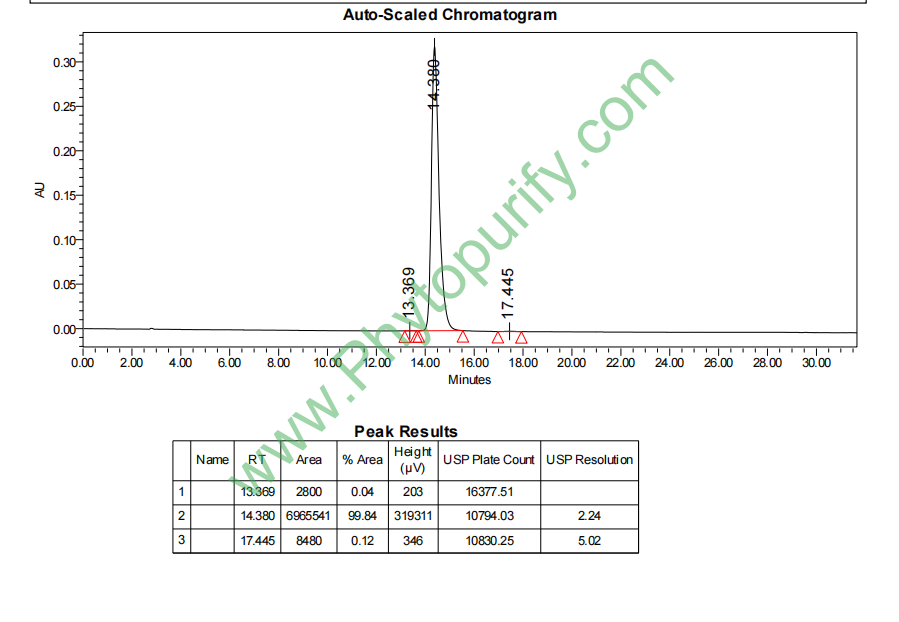
Purity: 95%~99%
Analysis Method: HPLC-DAD or/and HPLC-ELSD
Identification Method: Mass, NMR
Packing: Brown vial or HDPE plastic bottle
Storage: Store in a well closed container, protected from air and light. Put into refrigerate or freeze for long term storage.
Whenever possible, you should prepare and use solutions on the same day. However, if you need to make up stock solutions in advance, we recommend that you store the solution as aliquots in tightly sealed vials at -20℃. Generally, these will be useable for up to two weeks.
The product could be supplied from milligrams to grams, up to kilograms
Inquire for bulk scale.
Descriptions:
Xanthatin, a natural sesquiterpene lactone, has significant antitumor activity against a variety of cancer cells; it displays significant antitumor effects through cell cycle arrest and apoptosis induction in A549 cells, these effects are associated with intrinsic apoptosis pathway and disrupted NF-κB signaling, suggests that it may have therapeutic potential against human non-small-cell lung cancer.[1]
Xanthatin has bactericidal and fungicidal activity, including against Colletotrichum gloesporoides, Trichothecium roseum, Bacillus cereus and Staphylococcus aureus.[2]
Xanthatin and the crude extracts of Xanthium strumarium have cytotoxic activity.[3]
(?)-Xanthatin is a highly effective inhibitor of MDA-MB-231 cell growth, inducing caspase-independent cell death, and that these effects were independent of FTase inhibition; GADD45γ was selectively induced by (?)-xanthatin and that GADD45γ-primed JNK and p38 signaling pathways are, at least in part, involved in mediating the growth inhibition and potential anticancer activities of this agent; GADD45γ is becoming increasingly recognized for its tumor suppressor function, suggests that the novel possibility that (?)-xanthatin may have therapeutic value as a selective inducer of GADD45γ in human cancer cells, in particular in FTI-resistant aggressive breast cancers.[4]
Xanthatin induces G2/M cell cycle arrest and apoptosis in human gastric carcinoma MKN-45 cells, it may have therapeutic potential against human gastric carcinoma.[5]
Xanthatin is a novel potent inhibitor of VEGFR2 signaling, can inhibit angiogenesis and tumor growth in breast cancer cells.[6]
References:
[1] Zhang L, Ruan J, Yan L, et al. Molecules, 2012, 17(4):3736-50.
[2] Ginesta-Peris E, Garcia-Breijo F J, Primo-Yúfera E. Lett Appl Microbiol, 1994, 18(4):206-8.
[3] Roussakis C, Chinou I, Vayas C, et al. Planta Med, 1994, 60(5):473-4.
[4] Takeda S, Matsuo K, Yaji K, et al. Chem Res Toxicol, 2011, 24(6):855-65.
[5] Zhang L, Tao L, Ruan J, et al. Planta Med, 2012, 78(9):890-5.
[6] Yu Y, Yu J, Pei C G, et al. Int J Clin Exp Pathol, 2015, 8(9):10355-64.
[7] Yan C, Li H, Yu W, et al. J Chromatogr B , 2014, s 947–948(2):57-61.
HPLC of Xanthatin
Storage conditions:Short-term storage at 2~8℃, long-term storage at -20 ~ -80℃
43.3700
2.1158
2.1160
.1513
5.9953
14.0087
High
71.2915
4.2578
No
Yes
No
No
Yes
No
0.0
No
Yes
Yes
Yes
Allergic diseases, such as allergic rhinitis, asthma and atopic dermatitis, have become a global public health problem. Their incidence rate is increasing year by year, which seriously affects the quality of life of patients. At present, first-line clinical treatment drugs (such as antihistamines, glucocorticoids, leukotriene receptor antagonists, etc.) can effectively control symptoms, but long-term use may bring side effects or limited efficacy. Therefore, searching for efficient and low toxicity new anti allergic lead compounds from natural products has always been an important direction for drug development. Sesquiterpene lactones have attracted much attention in this field due to their structural diversity and significant biological activity. Xanthan, as a sesquiterpene lactone isolated from plants such as the Asteraceae family Xanthium, has become a research hotspot in recent years due to its regulatory potential in multiple allergy related targets and pathways. This article aims to systematically review the chemical characteristics, plant sources, pharmacological activities, especially the multi-target mechanism of its anti allergic effect, drug evaluation, and future clinical application prospects of Cang Er Ting, in order to provide comprehensive scientific references for the in-depth research and development of this natural product.
Xanthan, also known as (3aS, 6aR) -3a, 4,5,6a-tetrahydro-6a-methyl-3-methyl-2H-cyclopentadieno [b] furan-2-one, has a CAS number of 26791-73-1. Its molecular formula is C15H18O2 and its molecular weight is 246.3060. Structurally, Cang Er Ting belongs to the guaiaceae type sesquiterpene lactone, with a core skeleton consisting of a pentagonal lactone ring (α, β - unsaturated γ - lactone) and a fused bicyclic system, and containing characteristic functional groups such as methylene (=CH2) and methyl. This α, β - unsaturated lactone structure is the key pharmacophore involved in Michael addition reactions with biomolecules such as thiol groups in proteins, and is often associated with anti-inflammatory, anti-tumor, and other activities.
In terms of physical and chemical properties, the lipid water partition coefficient (LogP) of Cang Er Ting is 2.1158, indicating its moderate lipophilicity, which facilitates its penetration into cell membranes. Its topological polar surface area (TPSA) is 43.3700 Å ², which is relatively small, further indicating its good membrane permeability. The water solubility data shows that its solubility is about 0.1513 mg/mL, belonging to the category of slightly soluble to poorly soluble, which is a factor that needs to be considered in its formulation development. Preliminary pharmacological prediction parameters show that Cang Er Ting has a high potential for blood-brain barrier penetration, which provides the possibility for its potential central nervous system related applications (such as neuroinflammation). Importantly, the hERG inhibition risk and Ames mutagenicity prediction were both negative ("no" and "0.0", respectively), providing preliminary favorable information for its safety assessment, but further experimental validation is required.
The Cang'er Pavilion is mainly derived from plants in the Asteraceae family, particularly the dry and mature fruit with a bracts (i.e. Cang'er Zi) of Xanthium strumarium L. Cang Er Zi, as a traditional Chinese medicine, has the effects of dispersing wind and cold, promoting nasal opening, and dispelling wind and dampness. It is commonly used to treat symptoms such as nasal sinusitis, wind and cold headaches, and rheumatism and rheumatism. The Cang Er Ting contained in it is considered one of the important material bases for its anti-inflammatory and anti allergic activities. In addition, it has also been found in other genera of plants in the same family, such as Ambrosia.
The extraction of Cang'er Pavilion from plant materials usually uses organic solvent extraction method. The common process is as follows: after crushing the dried Atractylodes macrocephala, it is extracted by cold soaking or heating reflux with a medium polarity solvent (such as methanol, ethanol, or ethyl acetate). The crude extract was obtained by vacuum concentration of the extraction solution. Subsequently, preliminary separation was performed using silica gel column chromatography with gradient elution systems such as petroleum ether ethyl acetate or chloroform methanol. Collect the fraction containing Cang Er Ting through thin-layer chromatography (TLC) monitoring. To further purify, methods such as preparative high-performance liquid chromatography (Prep HPLC) or recrystallization are often used to obtain high-purity Cang Er Ting monomers. Modern technologies such as high-speed countercurrent chromatography (HSCCC) have also been applied to the separation of such natural products due to their high efficiency and avoidance of losses caused by solid adsorbents. The optimization of extraction process, such as solvent selection, temperature, and time, is crucial for improving the yield and purity of Cang'er Pavilion.
The pharmacological activities of Cang'er Pavilion have been extensively studied, and it has been confirmed that it has various biological activities such as anti-inflammatory, anti-tumor, antibacterial, and anti malaria. However, what is most striking is its significant Antiallergic activity This is also the focus of this article.
A large number of in vitro and in vivo experiments have shown that Cang Er Ting can effectively inhibit the key link of type I hypersensitivity reaction. In cell models, Cang Er Ting can dose dependently inhibit degranulation of rat basophil leukemia cells (RBL-2H3) or mouse bone marrow-derived mast cells, reducing the release of histamine and β - aminoglucosidase. In animal models, oral or intraperitoneal administration of Cang Er Ting can significantly inhibit the increase in vascular permeability and Evans blue exudation in passive cutaneous hypersensitivity (PCA) mice, and the effect is comparable to that of positive drugs. In addition, in the mouse allergic asthma model induced by ovalbumin (OVA), treatment with Cang Er Ting can significantly reduce airway hyperresponsiveness, decrease the infiltration of inflammatory cells (especially eosinophils) in bronchoalveolar lavage fluid (BALF), and lower lung tissue inflammation scores.
In addition to the classic rapid type hypersensitivity reaction, Cang Er Ting also has a regulatory effect on the subsequent chronic process of allergic inflammation. It can inhibit the production of pro-inflammatory cytokines (such as TNF - α, IL-1 β, IL-6) at the site of inflammation. Its anti-tumor activity is mainly related to inducing cell cycle arrest, apoptosis, and inhibiting migration and invasion, involving the regulation of multiple signaling pathways such as MAPK, PI3K/Akt, STAT3, etc. These broad pharmacological effects collectively lay the foundation for Cang Er Ting as a multi-target active molecule.
The anti allergic effect of Cang'er Pavilion is not achieved through a single pathway, but presents the characteristics of multi-target and multi pathway collaborative intervention, which coincides with the modern "multi-target treatment" strategy for complex allergic diseases. Its mechanism of action network mainly revolves around the following key targets:
Regulating the lipid inflammatory mediator pathway 5-Lipoxygenase 5 (ALOX5) is the rate limiting enzyme in the synthesis of leukotrienes (LTs), which are potent mediators of inflammation and bronchoconstriction. Research has shown that Atractylodes macrocephala can directly inhibit the activity of ALOX5 and reduce the production of leukotrienes such as LTC4 and LTD4. At the same time, it can also antagonize the thromboxane A2 receptor (TBXA2R), block the signal transduction of another important lipid mediator thromboxane A2, and thus double inhibit lipid mediated allergic reactions.
Inhibition of immunoglobulin E (IgE) mediated activation Allergens crosslink with high affinity IgE receptors (FCER1A) bound to the surface of mast cells and eosinophils, serving as the initiating signal for triggering degranulation. Cang'er Ting has been proven to downregulate the expression of FCER1A or interfere with its signaling, thereby reducing the activation of mast cells from the source.
Antagonistic histamine receptor Histamine is one of the core mediators released in allergic reactions, acting through the histamine H1 receptor (HRH1). Cang'er Pavilion exhibits an antagonistic effect on HRH1, which can competitively inhibit histamine induced smooth muscle contraction and vasodilation, directly alleviating allergic symptoms.
Regulating Th2 type immune response The pathological core of allergic diseases is the excessive polarization of Th2 type immune response. Cang'er Ting can significantly inhibit the production of Th2 characteristic cytokines interleukin-4 (IL4), IL5, and IL13. The mechanism involves inhibition of transcription factor signaling and transcription activator 6 (STAT6). IL-4/IL-13 activates STAT6, driving B cells to produce IgE and airway mucus hypersecretion. Cang'er Pavilion intervenes in this pathway, fundamentally correcting immune imbalance.
Intervention of epithelial derived alarm factors Thymic stromal lymphopoietin (TSLP) is a key alarm factor produced by airway epithelial cells under injury or allergen stimulation, which can strongly activate dendritic cells and initiate Th2 immunity. The latest research suggests that Cang Er Ting may intervene in the early stages of allergic cascade reactions by inhibiting upstream pathways such as NF - κ B, reducing the expression of TSLP.
In summary, Cang Er Ting simultaneously acts on the effector cells of allergic reactions (inhibiting degranulation of mast cells), mediators (inhibiting the action and production of histamine and leukotrienes), and immune regulation (inhibiting Th2 polarization), forming a three-dimensional anti allergic network.
Although Cang Er Ting has shown excellent pharmacological activity, whether it can become a drug still needs to undergo systematic pharmacological evaluation.
In vitro pharmacological parameters As mentioned earlier, overall optimism: suitable LogP and smaller TPSA indicate good membrane permeability and oral absorption potential; The high blood-brain barrier permeability provides the possibility for its application expansion; The absence of hERG and Ames risk warnings reduces early safety risks. However, its poor water solubility may affect oral bioavailability, and future formulation development may require the use of solid dispersions, nanocrystals, cyclodextrin inclusion and other technologies to improve solubility.
Pharmacokinetic study At present, it is relatively limited and a key bottleneck for future conversion. Some preliminary animal pharmacokinetic studies have shown that Cang Er Ting can be absorbed into the bloodstream after oral administration, but key parameters such as its absolute bioavailability, major metabolic organs, metabolite structure and activity, and half-life in vivo are still unclear. There are studies suggesting that it may be metabolized through the liver cytochrome P450 enzyme system. Due to its presence of alpha, beta unsaturated lactones, close attention should be paid to its binding reaction with glutathione (GSH), which is both a possible detoxification pathway and may lead to GSH depletion and toxicity. Therefore, the in vivo pharmacokinetics (PK) and toxicokinetics (TK) studies of the system, as well as the identification and activity evaluation of its main metabolites, are essential for advancing its preclinical research.
safety evaluation In addition to the preliminary screening of genetic toxicity and cardiac toxicity mentioned above, comprehensive preclinical safety pharmacology studies on acute toxicity, subchronic toxicity, reproductive toxicity, etc. are also needed to determine their safe dose window. Traditionally, Atractylodes macrocephala has certain toxicity (mainly related to other components such as carboxy Atractylodes glycosides), but the toxicity profile of Atractylodes macrocephala monomer needs to be independently evaluated.
As a multi-target anti allergic natural compound, Cang Er Ting has broad clinical application prospects, but the road ahead is long.
Potential application directions:
1. Development of new anti allergic drugs Oral or topical preparations can be developed for diseases such as allergic rhinitis, allergic asthma, atopic dermatitis, etc. Its multi-target characteristics may provide new options for patients with poor efficacy of existing single target drugs, or have a synergistic and attenuated effect when used in combination with existing drugs.
2. Anti inflammatory adjuvant therapy Its anti-inflammatory mechanism can be used as an adjuvant therapy for chronic inflammatory diseases, such as chronic obstructive pulmonary disease (COPD), arthritis, etc.
3. lead optimization Using it as the parent nucleus for structural modification to improve its water solubility, metabolic stability, or enhance selectivity towards a specific target, thereby obtaining derivatives with better drug properties.
Challenges faced and future research directions:
1. In depth mechanism research It is necessary to use techniques such as gene knockout, molecular docking, and surface plasmon resonance to accurately elucidate its direct interaction mode and binding sites with key targets such as ALOX5 and STAT6.
2. Systematic pharmacokinetics and toxicology research This is the core step in pushing Cang'er Pavilion from an "active compound" to a "candidate drug". A complete set of preclinical pharmacokinetic and safety evaluations that meet the requirements for new drug registration must be completed.
3. Formulation technology research and development Develop a new drug delivery system to address its poor solubility and improve its bioavailability.
4. Clinical translational research After completing sufficient preclinical research, gradually advance human clinical trials to verify its safety and effectiveness.
Cang Er Ting is a sesquiterpene lactone with significant anti allergic activity discovered from the traditional Chinese medicine Cang Er Zi. Its unique chemical structure endows it with the characteristic of multi-target pharmacological effects, which can intervene in the process of allergic diseases from multiple levels such as inhibiting the degranulation of effector cells, antagonizing inflammatory mediators, and regulating Th2 immune balance. Although its pharmacological parameters are generally positive, poor water solubility and lack of systematic pharmacokinetic data are currently the main shortcomings. Future research needs to continue to deepen in precise mechanisms of action, systematic drug evaluation, and formulation innovation. The research on Cang Er Ting not only provides valuable lead compounds for the development of new multi-target anti allergic drugs, but also provides modern scientific basis for explaining the traditional efficacy of Cang Er Zi's "nasal opening" function. It is a typical case of modernization research in traditional Chinese medicine. With the continuous advancement of research, Cang Er Ting is expected to achieve a leap from natural products to clinical drugs in the field of anti allergic drugs.
