


Product name: Bergapten
Synonym name: Heraclin; Majudin; 5-Methoxypsoralen (obsol;)
Catalogue No.: BP0256
Cas No.: 484-20-8
Formula: C12H8O4
Mol Weight: 216.192
Botanical Source: Cnidium monnieri(L.)Cuss.
Physical Description:
Type of Compound: Coumarins
Purity: 95%~99%
Analysis Method: HPLC-DAD or/and HPLC-ELSD
Identification Method: Mass, NMR
Packing: Brown vial or HDPE plastic bottle
Storage: Store in a well closed container, protected from air and light. Put into refrigerate or freeze for long term storage.
Whenever possible, you should prepare and use solutions on the same day. However, if you need to make up stock solutions in advance, we recommend that you store the solution as aliquots in tightly sealed vials at -20℃. Generally, these will be useable for up to two weeks.
The product could be supplied from milligrams to grams
Inquire for bulk scale.
Chengdu Biopurify Phytochemicals Ltd. is a leading company in the research, development, manufacture and marketing of High Quality Phytochemicals and Extracts(especially Active Ingredients from Traditional Chinese Medicine,TCM), Natural Active Pharmaceutical Ingredients worldwide.
The main services:
A. Supply active ingredients and reference standards of TCM, from mgs to kgs scale
B. Custom extraction and purification, target Herb Active Ingredients
C. Custom synthesis and semi-synthesis for Natural Active Ingredients
D. CR(contract research), CM(contract manufacture) and PD(process development) services from lab scale, pilot scale to commercial scale(GMP is also available)
E. TCM compounds library for drug screen,more than 3000 compounds available, many of them are rare and unique.
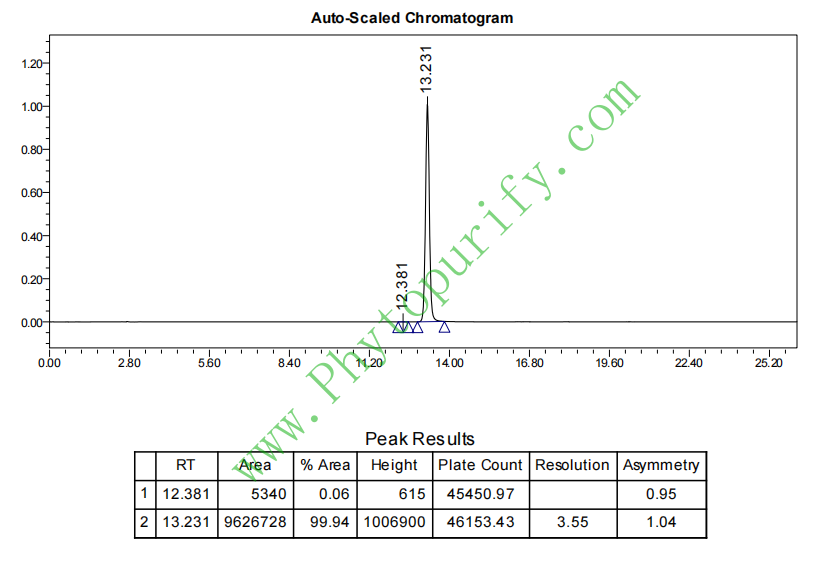
HPLC of Bergapten
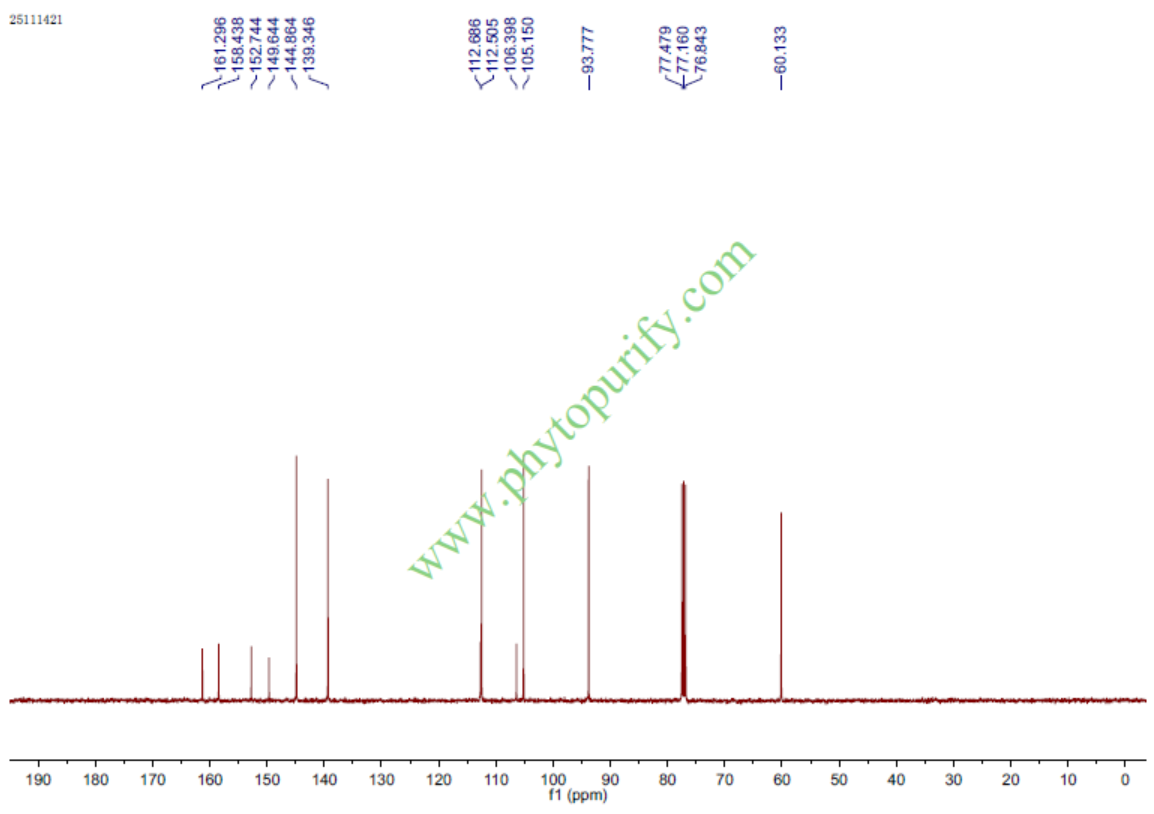
HNMR of Bergapten
Storage conditions:Short-term storage at 2~8℃, long-term storage at -20 ~ -80℃
Bergapten, also known as 5-methoxypsoralen, is a natural furan coumarin compound widely found in bergamot and other Rutaceae plants. As a methoxy derivative of psoralen, bergamot lactone has attracted widespread attention in the field of natural product pharmacology in recent years due to its unique chemical structure and biological activity. Numerous studies have shown that bergamot lactone has significant hepatoprotective and anti-inflammatory activities, and plays an important role in regulating various inflammation related signaling pathways. This article will systematically review the chemical structure and physicochemical properties, plant sources and extraction methods, pharmacological activity, mechanism of action and molecular targets, pharmacological evaluation and pharmacokinetic characteristics of bergamot lactone, and explore its clinical application prospects and future research directions.
The chemical name of bergamot lactone is 5-methoxyfuran coumarin, with a molecular formula of C12H8O4 and a molecular weight of 216.19. Its structure is based on the furan coumarin skeleton of psoralen, with a methoxy substituent introduced at position 5 to form a unique 5-methoxy psoralen structural unit. This structure endows bergamot lactone with strong photosensitivity and biological activity.
In terms of physical and chemical properties, the LogP value of bergamot lactone is 1.8, indicating moderate lipid solubility, which is beneficial for its cell membrane penetration ability. Its topological polar surface area (TPSA) is 55.76 Å ², and the number of hydrogen bond acceptors is 4, indicating that its molecule has certain polarity and hydrogen bond formation ability, which is helpful for binding to biomolecule targets. Bergamot lactone can penetrate the blood-brain barrier, indicating its potential application value in central nervous system diseases. Toxicological evaluation shows that it has no hepatotoxicity or hERG channel inhibition effect, but the Ames test is positive, indicating that it may have a certain genotoxicity risk and requires further safety evaluation before clinical application.
Bergamot lactone is mainly found in plants of the Rutaceae family, especially in the peel and essential oil of bergamot (Citrus bergamia Risso et Poiteau), where its content is relatively high. In addition, plants such as Psoralea corylifolia also contain this compound. Due to its widespread distribution, bergamot lactone has become an important active ingredient in various traditional Chinese medicinal herbs and aromatic plants.
The extraction methods mainly include solvent extraction and chromatographic separation techniques. The traditional extraction process uses ethanol or methanol as solvents to obtain crude extracts through reflux or ultrasound assisted extraction, followed by purification using techniques such as silica gel column chromatography and high-performance liquid chromatography (HPLC). In recent years, supercritical CO2 extraction technology has also been applied to the extraction and separation of bergamot lactone due to its advantages of green environmental protection and strong selectivity, significantly improving the extraction efficiency and purity.
The pharmacological activity research of bergamot lactone mainly focuses on its anti-inflammatory, hepatoprotective, antioxidant, and phototherapy aspects.
anti-inflammatory activity
Bergamot lactone exhibits significant anti-inflammatory effects by regulating various inflammation related signaling pathways and inhibiting the release of pro-inflammatory cytokines. Both in vitro and in vivo experiments have confirmed that it can reduce the expression of inflammatory mediators such as TNF - α, IL-6, and IL-1 β, and alleviate inflammatory responses.
Hepatoprotective effect
Multiple studies have shown that bergamot lactone has a protective effect against drug-induced or toxin induced liver injury. Its mechanism involves antioxidant stress, inhibition of liver cell apoptosis, and regulation of liver metabolic enzyme activity, thereby reducing liver tissue inflammation and fibrosis process.
Antioxidant and Cellular Protection
Bergamot lactone can activate the NFE2L2 (Nrf2) signaling pathway, enhance the expression of intracellular antioxidant enzymes, clear reactive oxygen species (ROS), and protect cells from oxidative damage.
Potential of Phototherapy
As a furan coumarin compound, bergamot lactone has certain photosensitivity and has been studied for use in photodynamic therapy (PDT), especially in the treatment of skin diseases such as psoriasis and vitiligo.
The biological effects of bergamot lactone are mainly achieved through interactions with various key molecular targets, involving the regulation of multiple signaling pathways.
TLR4 (Toll like receptor 4)
Bergamot lactone can inhibit TLR4 mediated inflammatory signaling, reduce downstream NF - κ B activation, decrease pro-inflammatory cytokine expression, and thus alleviate inflammatory response.
PTPN1 (protein tyrosine phosphatase 1B)
By regulating PTPN1 activity, bergamot lactone participates in the regulation of cellular signal transduction, affecting metabolism and inflammatory processes.
STAT3 (Signal Transduction and Transcription Activation Factor 3)
Bergamot lactone inhibits the phosphorylation of STAT3, blocks its nuclear translocation, suppresses the expression of pro-inflammatory genes, and exerts anti-inflammatory and anti-tumor effects.
ALOX15 and ALOX5 (lipoxygenase 15 and 5)
These two types of lipoxygenases participate in the synthesis of inflammatory mediators, and bergamot lactone reduces the production of inflammatory mediators by inhibiting their activity.
PRKCA (protein kinase C alpha)
Bergamot lactone regulates the PRKCA signaling pathway, affecting cell proliferation and apoptosis.
NFE2L2(Nrf2)
Bergamot lactone activates the Nrf2 signaling pathway, enhances antioxidant defense, and reduces oxidative stress damage.
PIK3CG (Phosphatidylinositol 3-kinase gamma)
By regulating the PI3K/AKT pathway, bergamot lactone affects cell survival and inflammatory response.
PLA2G2A (phospholipase A2) and MAPK1 (mitogen activated protein kinase 1)
Participating in cell membrane lipid metabolism and signal transduction, bergamot lactone regulates inflammation and cellular stress response by modulating these targets.
In summary, bergamot lactone exerts a wide range of biological functions through multi-target and multi pathway synergistic effects, especially in the prevention and treatment of inflammatory diseases, which has important potential.
The pharmacological parameters of bergamot lactone show that it has good potential for drug development. The molecular weight is moderate (216.19) and the LogP value is 1.8, indicating that it has suitable lipid solubility, which is conducive to oral absorption and cell membrane penetration. The TPSA value of 55.76 Å ² and the number of hydrogen bond receptors of 4 are favorable for its binding affinity with the target protein.
The high permeability of the blood-brain barrier suggests that it can be used for the treatment of central nervous system related diseases. In terms of toxicology, there is no hepatotoxicity and hERG inhibition, which reduces the risk of cardiac toxicity. However, a positive Ames test suggests potential genotoxicity and further toxicology and safety research is needed.
Pharmacokinetic studies have shown that bergamot lactone is well absorbed after oral administration and widely distributed in the body. Metabolism is mainly carried out through the liver enzyme system, and excretion is mainly through the kidneys. Its half-life is moderate and it has a certain degree of in vivo stability, but photosensitivity may affect its in vivo stability and duration of drug efficacy, which needs to be addressed through dosage form improvement and optimization of administration plan.
Due to its significant anti-inflammatory and hepatoprotective activities, bergamot lactone has broad application prospects in inflammatory diseases such as hepatitis, rheumatoid arthritis, and metabolic syndrome. The multi-target mechanism of action provides a theoretical basis for the development of novel multi-target anti-inflammatory drugs.
In addition, the photosensitive properties of bergamot lactone make it potential for photodynamic therapy, especially in the adjuvant treatment of skin diseases and certain tumors. Future research can further explore its synergistic effects with other drugs and innovative dosage forms to improve efficacy and safety.
However, the genotoxicity risk and photosensitive side effects of bergamot lactone still need to be closely monitored. The toxicological assessment and preclinical safety research of the system are key steps in its clinical translation. Meanwhile, in-depth analysis of its pharmacokinetic characteristics and metabolic pathways can help optimize the dosing regimen and formulation design.
In the future, modern medicinal chemistry and molecular biology techniques can be utilized to design derivatives of bergamot lactone, improve its pharmacokinetic properties and safety, and expand its clinical application scope. In addition, based on its multi-target regulatory characteristics and the concept of precision medicine, developing personalized treatment strategies targeting specific inflammatory pathways will be a research hotspot.
As a natural furan coumarin with unique structure and multiple biological activities, bergamot lactone exhibits significant anti-inflammatory, hepatoprotective, and antioxidant effects. It exerts a multi-target synergistic therapeutic effect by regulating multiple key molecular targets such as TLR4, STAT3, Nrf2, etc., and has good potential for drug development and broad clinical application prospects. Despite the challenges posed by its genotoxicity and photosensitivity, with the continuous advancement of extraction and purification technology, pharmacokinetic optimization, and safety evaluation, bergamot lactone is expected to become an important candidate molecule in the development of natural product drugs. Future research should focus on in-depth mechanism analysis, structural optimization, and clinical translation to promote its application and development in inflammatory diseases and related fields.
