Introduction/Overview
Natural products, as an important source of drug discovery, play an irreplaceable role in the long history of human struggle against diseases. Coumarin compounds, as a class of benzopyranone derivatives widely present in plants, have always been a hot topic in medicinal chemistry and pharmacology research due to their structural diversity and significant biological activity. From the classic anticoagulant warfarin to the anti-inflammatory, antioxidant, and anti-tumor active molecules that have received much attention in recent years, coumarin compounds continue to demonstrate enormous therapeutic potential. In this vast family, Cnidicin, as a structurally unique linear furan coumarin, is gradually gaining widespread interest among researchers.
Serpentine, named after its origin from the Umbelliferae plant Serpentine(Cnidium monnieri)Separation and identification in the middle. As a naturally occurring coumarin, serpentin has a long history of application in traditional medical systems, especially in East Asia, where plants rich in serpentin are often used to treat rheumatic pain, skin itching, and inflammatory diseases. Modern pharmacological research has preliminarily revealed various biological activities such as anti-inflammatory, anti allergic, neuroprotective, and anti-tumor effects. Especially its ability to inhibit degranulation of mast cells and suppress the production of nitric oxide (NO) by RAW 264.7 macrophages provides a solid molecular basis for its application in inflammation and immune related diseases.
With the continuous deepening of research on serpentin, its mechanism of action has gradually become clear, involving multiple key signaling pathways such as STAT3, NF - κ B, etc., and acting on multiple targets closely related to inflammation, such as IL-6, TNF, NOS2, etc. These findings not only deepen our understanding of the pharmacological effects of serpentin, but also provide a theoretical basis for its structural optimization and drug development as a lead compound. However, despite the multifaceted pharmacological activities exhibited by snake bed extract, its complex physicochemical properties, potential toxicity, and yet to be fully elucidated pharmacokinetic characteristics still pose challenges for its clinical application. This article aims to comprehensively review the research progress of snake bed extract in chemistry, botany, pharmacology, toxicology, and drug properties, and explore its potential and prospects as a candidate molecule for new natural medicines.
Chemical structure and physicochemical properties
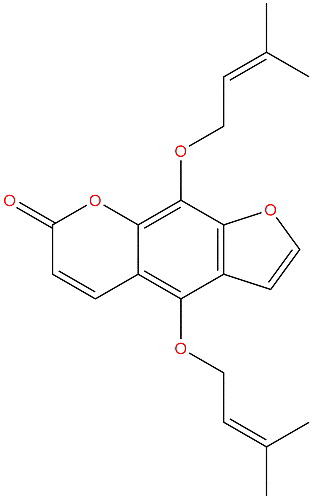
The chemical structure of Cnidicin belongs to linear furocoumarin, and its core skeleton is composed of a coumarin mother nucleus (benzo α - pyranone) and a furan ring linearly fused at positions 6 and 7. The system is named 9- (3-methyl-2-butenoxy) -7H-furano [3,2-g] benzopyran-7-one. The molecular formula is C ₂₁ H ₂₂ O ₅, and the molecular weight is 354.4020 g/mol. The structural feature of snake bed extract is the presence of an isoprenyloxy (3-methyl-2-butenoxy) side chain at the C-9 position, which has a significant impact on its biological activity and physicochemical properties.
From the perspective of physicochemical properties, serpentin exhibits typical lipophilic small molecule characteristics. The calculated lipid water partition coefficient (LogP) is 4.7668, indicating that it has strong lipid solubility and is easy to penetrate biofilms. This characteristic is consistent with its high blood-brain barrier (BBB) penetration ability, suggesting that serpentin may play a role in central nervous system diseases. Its topological polar surface area (TPSA) is 61.81 Å ², which is within the acceptable range for oral medication (usually<140 Å ²), indicating its potential for oral absorption. However, the water solubility of snake bed extract is extremely poor, with a calculated water solubility value of only 0.0017 mg/mL, which constitutes the main obstacle to its formulation development and in vivo bioavailability improvement. In terms of chemical stability, as a furan coumarin, serpentin may undergo photochemical reactions under ultraviolet light to form cyclobutane adducts. This property has been utilized in photochemical therapy, but its potential phototoxicity should also be noted.
The molecular structure of serpentin contains multiple hydrogen bond acceptors (carbonyl, ether oxygen atoms), but lacks hydrogen bond donors, which explains its lower TPSA and good membrane permeability. Its molecular weight is moderate (<500 Da), meeting the basic requirements of Lipinski's Rule of Five, and possessing the basic chemical framework to become an oral drug. However, its extremely low water solubility and high lipophilicity also suggest that it may be easily bound to plasma proteins in vivo and tend to be distributed in adipose tissue, thereby affecting its pharmacological and toxic characteristics.
Plant sources and extraction methods
Serpentine was originally derived from the Apiaceae plant Serpentine(Cnidium monnieri (L.) Cusson was isolated from the dried and mature fruit of the snake bed. Snake bed, as a traditional Chinese medicine, has the effects of warming the kidneys and strengthening yang, drying dampness and dispelling wind, killing insects and relieving itching. It is commonly used to treat erectile dysfunction, uterine coldness, cold dampness, lower back pain caused by dampness obstruction, as well as external treatment of external genital eczema, female itching, trichomonas vaginitis, etc. Modern research has shown that Ophiopogon japonicus is rich in various coumarin compounds, among which Ophiopogon japonicus is one of the main active ingredients. In addition, it also includes Osthole, Imperatorin, Isomperatorin, and others.
In addition to snake beds, snake bed hormones are also present in other umbrella shaped plants, such as the genus Angelica(Heracleum)When Belonging(Angelica)And some plants in the Rutaceae family. For example, Bai Zhi(Angelica dahurica)Hang Bai Zhi(Angelica taiwaniana)Heavy toothed hairy Angelica sinensis(Angelica pubescens)Traditional Chinese medicinal herbs also contain snake bed extract. There are significant differences in the content of serpentin among different plant sources, production areas, harvest periods, and different parts (fruits, roots, stems, and leaves). Usually, the content of snake bed extract is relatively high in snake bed seeds, which is the main raw material for extracting this compound.
The extraction method of serpentin is mainly based on its lipophilic characteristics. The traditional extraction methods include organic solvent extraction, and commonly used solvents include methanol, ethanol, ethyl acetate, or their mixed solvents. In order to improve extraction efficiency and purity, modern extraction techniques are widely used. For example, ultrasound assisted extraction (UAE) utilizes the cavitation effect of ultrasound to destroy plant cell walls, accelerate solvent penetration and component dissolution, significantly shorten extraction time, and improve yield. Microwave assisted extraction (MAE) utilizes microwave energy to selectively heat polar molecules and efficiently extract target compounds. In addition, supercritical fluid extraction (SFE), especially using carbon dioxide as the extractant, has shown unique advantages in extracting thermosensitive coumarin components due to its green, solvent-free residue, and adjustable selectivity.
The crude extract after extraction needs to undergo a series of separation and purification steps to obtain high-purity snake bed extract. Classic separation methods include silica gel column chromatography, alumina column chromatography, preparative thin layer chromatography (PTLC), etc. In recent years, modern separation techniques such as high-performance liquid chromatography (HPLC) and high-speed countercurrent chromatography (HSCCC) have been widely used for the purification of serpentinite due to their high resolution and high recovery rate. Usually, by combining normal and reverse phase chromatography techniques, it is possible to effectively separate snake bed extract from structurally similar homologs such as snake bed extract and resveratrol. Finally, the structure of the obtained compound was confirmed by spectroscopic methods such as nuclear magnetic resonance (NMR) and mass spectrometry (MS).
Pharmacological activity research
The pharmacological activity research of snake bed extract mainly focuses on its anti-inflammatory, anti allergic, neuroprotective, and anti-tumor aspects, among which anti-inflammatory activity is its most core and in-depth research area.
anti-inflammatory activity Serpentine exhibits significant anti-inflammatory effects, which have been fully confirmed in its study on RAW 264.7 macrophages. This compound can inhibit lipopolysaccharide (LPS) - induced nitric oxide (NO) production in RAW 264.7 cells in a dose-dependent manner. NO, as an important inflammatory mediator, is catalyzed by inducible nitric oxide synthase (NOS2, iNOS) and its overexpression is associated with various inflammatory diseases. Serpentine inhibits the expression or activity of NOS2, thereby reducing the production of NO, which is one of the key mechanisms of its anti-inflammatory effect. In addition, snake bed extract can also inhibit the production of other pro-inflammatory cytokines such as tumor necrosis factor - α (TNF) and interleukin-6 (IL-6), and downregulate the expression of cyclooxygenase-2 (PTGS2, COX-2), further demonstrating its broad-spectrum anti-inflammatory properties. In in vivo animal models, snake bed extract has shown significant inhibitory effects on various acute and chronic inflammation models, such as carrageenan induced toe swelling, xylene induced ear swelling, and adjuvant arthritis.
Antiallergic activity Serpentine can inhibit degranulation of mast cells, which is direct evidence of its anti allergic activity. Mast cells are key effector cells in allergic reactions. When activated by allergens, they release various allergens such as histamine, leukotrienes, prostaglandins, etc., causing a series of allergic symptoms. Serpentine stabilizes the mast cell membrane, inhibits calcium ion influx, thereby blocking the degranulation process and reducing the release of allergic mediators. This mechanism of action makes it potentially valuable in the treatment of type I hypersensitivity diseases such as allergic rhinitis, asthma, and urticaria.
Neuroprotective activity Given that serpentin can penetrate the blood-brain barrier, its effects on the central nervous system have attracted much attention. Research has shown that snake bed extract has a protective effect on various neurotoxic injuries. For example, in the Alzheimer's disease cell model induced by β - amyloid protein (A β), serpentin can reduce the production of reactive oxygen species (ROS), inhibit neuronal apoptosis, and improve mitochondrial function. In addition, in the model of cerebral ischemia-reperfusion injury, serpentin can reduce cerebral infarction volume and improve neurological function scores through anti-inflammatory, antioxidant, and anti apoptotic mechanisms. These findings suggest that serpentin may become a candidate molecule for treating neurodegenerative and cerebrovascular diseases.
Other activities In addition to the main activities mentioned above, snake bed extract has also been reported to have anti-tumor activity. In vitro experiments have shown that serpentine can inhibit the proliferation of many cancer cell lines (such as liver cancer, lung cancer, breast cancer cells), and its mechanism may be related to the induction of cell cycle arrest and apoptosis. In addition, snake bed extract also exhibits certain antibacterial, antiviral, and vasodilatory activities, but its specific mechanism and in vivo efficacy still need further research.
Mechanism of action and molecular targets
The pharmacological activity of snake bed extract is the result of multi-target and multi pathway synergistic effects. Based on existing research, its mechanism of action can be summarized as follows, involving multiple key signaling molecules and transcription factors.
Regulation of STAT3 signaling pathway Signal transducer and activator of transcription factor 3 (STAT3) plays a central role in inflammation, immune response, and tumorigenesis. Serpentine has been found to significantly inhibit the phosphorylation activation of STAT3. In LPS stimulated macrophages, serpentin treatment can reduce the tyrosine phosphorylation level of STAT3, thereby blocking its translocation to the nucleus and transcription of downstream target genes such as IL-6 and NOS2. By inhibiting the STAT3 pathway, serpentin effectively weakened the inflammatory cascade. In addition, inhibiting STAT3 activity in tumor cells can induce apoptosis and inhibit proliferation.
Intervention on NF - κ B signaling pathway Nuclear factor kappa B (NF - κ B) is a central regulatory factor in inflammatory response. Serpentine can inhibit the activity of I κ B kinase (IKBKB, i.e. IKK β), prevent the phosphorylation and degradation of I κ B α, and thus retain NF - κ B (usually p50/p65 heterodimer, where p65 is RELA) in the cytoplasm, preventing it from entering the nucleus to initiate the transcription of pro-inflammatory genes (such as TNF, IL-6, PTGS1/2, NOS2). By blocking the NF - κ B pathway, serpentin inhibits the generation of various inflammatory mediators from the source.
The impact on NLRP3 inflammasome NLRP3 inflammasome is an important component of the innate immune system, and its abnormal activation is associated with various inflammatory diseases. Cysteine aspartate protease 1 (CASP1) is a key effector protein of NLRP3 inflammasome. Serpentine has been found to inhibit the assembly and activation of NLRP3 inflammasomes, thereby reducing the activation of CASP1 and inhibiting the maturation and secretion of pro-inflammatory cytokines such as IL-1 β and IL-18. This mechanism provides a basis for its application in metabolic inflammatory diseases such as gout and type 2 diabetes.
Regulation of ion channels The transient receptor potential (TRP) channel family plays an important role in sensory conduction and inflammation. Serpentine has been reported to regulate the activity of TRPV1 and TRPA1 channels. TRPV1 and TRPA1 are key mediators of pain and itching sensation. Serpentine may exert analgesic and anti itch effects by antagonizing these channels. This is consistent with its use in traditional medicine for treating skin itching and rheumatic pain.
Direct action on key enzymes Serpentine can directly act on key enzymes involved in the inflammatory process. For example, it can inhibit the activity of inducible nitric oxide synthase (NOS2), directly reducing the production of NO. Meanwhile, the inhibitory effect on cyclooxygenase (PTGS1/2) directly reduces the synthesis of prostaglandins. In addition, inhibition of IKBKB indirectly affects the entire NF - κ B pathway.
In summary, serpentin forms a multi-level anti-inflammatory network by simultaneously acting on multiple signaling nodes such as STAT3, NF - κ B, NLRP3/CASP1, TRPV1/TRPA1, and directly inhibiting key enzymes such as NOS2 and PTGS. This multi-target mode of action is the molecular basis for its broad-spectrum anti-inflammatory, anti allergic, and neuroprotective activities, and also reflects the unique advantages of natural products in the treatment of complex diseases.
Evaluation of drug properties and pharmacokinetics
To push snake bed extract from laboratory research to clinical application, a systematic evaluation of its pharmacological properties must be conducted, including its physicochemical properties, pharmacokinetic characteristics, safety, and formulation feasibility.
Physical and chemical properties and drug like properties As mentioned earlier, the molecular weight (354.4 Da), LogP (4.77), and TPSA (61.8 Å ²) of serpentin basically comply with the "five rules of drug class", indicating that it has the basic skeleton to become an oral drug. However, its extremely low water solubility (0.0017 mg/mL) is the biggest weakness. Low water solubility not only leads to low oral bioavailability, but also poses significant challenges to formulation development. Generally, compounds with LogP greater than 5 are considered to have excessively high lipophilicity, which may lead to problems such as poor solubility, rapid metabolism, and increased toxicity. The LogP of serpentin is close to the critical value and requires special attention.
Pharmacokinetic characteristics At present, there is insufficient systematic research on the pharmacokinetics of snake bed extract in vivo. Based on its physical and chemical properties, it can be inferred that: 1)absorb Due to its extremely poor water solubility, its oral absorption may be very limited and greatly influenced by food and gastrointestinal environment. 2)distribution High LogP and high BBB penetration indicate that its distribution volume may be larger, making it easier to accumulate in fat rich tissues and the brain. This is both an advantage of its neuroprotective effect and a potential risk of neurotoxicity. 3)Metabolism Serpentine is likely to undergo extensive phase I and phase II metabolic reactions in the liver. The isopentenyl side chain is a potential metabolic site that may undergo oxidation, hydrolysis, and other reactions. The coumarin mother nucleus may also undergo metabolism such as hydroxylation and glucuronic acid binding. The activity and toxicity of metabolites still need to be studied. 4)excretion Metabolites may be mainly excreted through bile and urine.
safety evaluation The preliminary safety evaluation results are mixed. The hERG inhibition test result was negative, indicating that serpentin has a lower risk of causing QT interval prolongation and arrhythmia in the heart, which is an important safety advantage. However, an Ames test result of 0.9 (usually considered positive if>0.5) suggests that serpentin may have potential genotoxicity or mutagenicity. This is a very dangerous signal that requires high vigilance. In addition, as a furan coumarin, serpentin may produce phototoxicity under light exposure, leading to reactions such as skin erythema and blisters. Therefore, comprehensive genetic toxicity, reproductive toxicity, phototoxicity, and long-term toxicity studies must be conducted before clinical application.
Formulation strategy Given its extremely low water solubility and potential toxicity, developing suitable formulations is crucial for the development of snake bed extract as a drug. Traditional solubilization techniques such as using surfactants (such as Tween and polyoxyethylene castor oil), cyclodextrin inclusion, and preparing solid dispersions can be attempted. Modern formulation technologies, such as liposomes, nanoparticles, and self microemulsifying drug delivery systems (SMEDS), are expected to significantly improve their oral bioavailability. In addition, considering its high BBB penetration, targeted delivery systems for central nervous system diseases, such as brain targeted nanoparticles, are also worth exploring. However, formulation development must simultaneously consider how to reduce its potential toxicity and phototoxicity.
Overall, snake bed extract faces a dual challenge of "high activity and high risk" in developing medicinal properties. Its strong anti-inflammatory activity and good BBB penetration are advantages, but its extremely low water solubility, potential genetic toxicity, and phototoxicity are the main obstacles. The future research focus should be on: 1) improving water solubility and reducing toxicity through structural modifications (prodrug design, skeleton modification); 2) Develop efficient formulation technology to improve bioavailability; 3) Conduct rigorous toxicological evaluation and clarify its safety window.
Clinical application prospects and prospects
Although the path of snake bed extract as a medicine is full of challenges, its unique pharmacological activity spectrum and clear molecular mechanism make it an attractive clinical application prospect in multiple disease fields.
Inflammatory diseases Based on its strong anti-inflammatory activity, the most direct application prospect of snake bed extract is in the treatment of various acute and chronic inflammatory diseases. For example, in autoimmune inflammatory diseases such as rheumatoid arthritis, inflammatory bowel disease, psoriasis, etc., serpentin is expected to become a new type of anti-inflammatory drug by inhibiting multiple pathways such as STAT3, NF - κ B, and NLRP3 inflammasome. Especially for patients who are resistant or intolerant to existing treatments such as glucocorticoids and biologics, serpentin may provide a new treatment option.
allergic diseases The inhibitory effect of serpentin on degranulation of mast cells makes it uniquely valuable in the treatment of allergic diseases. For common allergic diseases such as allergic rhinitis, bronchial asthma, and atopic dermatitis, snake bed extract can be taken orally or topically to stabilize mast cells and prevent or alleviate allergic symptoms. Its multi-target mode of action may have advantages over single target antihistamines.
Neurodegenerative diseases and stroke Serpentine can efficiently penetrate the blood-brain barrier and has neuroprotective effects of anti-inflammatory, antioxidant, and anti apoptotic, making it a potential candidate drug for the treatment of Alzheimer's disease, Parkinson's disease, and ischemic stroke. Among these diseases, neuroinflammation is one of the key pathological processes. Serpentine is expected to delay disease progression and protect neurons by inhibiting the excessive activation of microglia and the release of inflammatory factors in the brain. However, its potential neurotoxic risks need to be ruled out through long-term animal experiments and clinical studies.
Pain and Itching Management By regulating TRPV1 and TRPA1 channels, serpentin may be developed as a novel analgesic and anti itch drug. For chronic pain (such as neuropathic pain) and refractory itching (such as itching related to chronic kidney disease), existing treatment methods are limited and have many side effects. Serpentine, as a natural TRP channel regulator, may provide a safer and more effective alternative.
Future research directions In order to promote the clinical translation of serpentin, future research should focus on the following directions:
1. structural optimization Using serpentin as the lead compound, structural modification is carried out through medicinal chemical methods. For example, introducing hydrophilic groups (such as hydroxyl, carboxyl, amino sugars) to improve water solubility while maintaining or enhancing its anti-inflammatory activity; Alternatively, through prodrug design, poorly water-soluble parent drugs can be converted into well soluble prodrugs, which release active ingredients after enzymatic hydrolysis in the body.
2. In depth toxicological research It is necessary to conduct in-depth verification and mechanism research on the positive results of Ames test, clarify the specific mechanism and dose-response relationship of its genetic toxicity. At the same time, conduct systematic studies on phototoxicity, reproductive toxicity, and long-term toxicity to determine their safe dosage range.
3. Advanced formulation development By utilizing modern formulation techniques such as nanotechnology, liposome technology, and phospholipid complex technology, a new dosage form has been developed that can significantly improve the oral bioavailability of snake bed extract while reducing its toxicity and photosensitivity.
4. Target validation and precision medicine Using gene knockout or knock in animal models, further validate the role of key targets such as STAT3 and NF - κ B in the in vivo pharmacological effects of serpentinite. Exploring the precise application of serpentin in specific patient subgroups (such as specific genotypes or inflammatory phenotypes) by combining biomarkers.
Conclusion
Cnidicin, as a linear furan coumarin derived from traditional Chinese medicine, has shown significant pharmacological potential in anti-inflammatory, anti allergic, neuroprotective and other fields due to its unique activity of inhibiting degranulation of mast cells and inhibiting NO production in macrophages. Its mechanism of action involves the regulation of multiple key signaling nodes and targets such as STAT3, NF - κ B, NLRP3/CASP1, TRPV1/TRPA1, reflecting the advantages of multi-target synergistic effects of natural products. However, its extremely low water solubility, potential genetic toxicity, and phototoxicity constitute the main bottlenecks for its medicinal development. Future research needs to be based on a deep understanding of its mechanism of action and toxicological characteristics, and through drug chemical structure optimization and advanced formulation technology, to leverage its strengths and avoid its weaknesses, striving to transform this unique active natural molecule into safe and effective clinical drugs. The research process of snake bed extract once again confirms the value of natural products as a treasure trove of drug discovery, and reveals the arduous and challenging road from natural active molecules to clinical drugs. With the continuous advancement of modern medicinal chemistry, pharmacology, and pharmaceutical technology, serpentin and its derivatives are expected to bring new hope for the treatment of inflammation, allergies, and neurodegenerative diseases in the future.