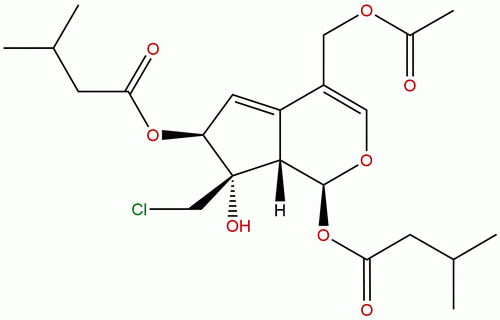
| Catalog No | Package | Original Price | Price | Inventory | Quantity | Operating |
|---|---|---|---|---|---|---|
| BPF0622-20mg | 20mg | $290.00 | Sign in |
|


Product name: Valechlorine Chloride
Synonym name: Valechlorine
Catalogue No.: BPF0622
Cas No.: 51771-49-4
Formula: C22H31ClO8
Mol Weight: 458.932
Botanical Source:
Physical Description:
Type of Compound: Iridoids
Purity: 95%~99%
Analysis Method: HPLC-DAD or/and HPLC-ELSD
Identification Method: Mass, NMR
Packing: Brown vial or HDPE plastic bottle
The product could be supplied from milligrams to grams
Inquire for bulk scale.
For Reference Standard and R&D, Not for Human Use Directly.
Storage conditions:Short-term storage at 2~8℃, long-term storage at -20 ~ -80℃
108.3600
2.9593
2.9593
.0484
1.4154
2.2537
High
80.4880
4.7289
Yes
Yes
No
No
Yes
No
0.9
Yes
Yes
Yes
Yes
Non alcoholic fatty liver disease (NAFLD) has become one of the most common chronic liver diseases worldwide, affecting approximately 25% of the adult population. This disease spectrum covers progressive pathological processes from simple hepatic steatosis to non-alcoholic steatohepatitis (NASH), liver fibrosis, cirrhosis, and even hepatocellular carcinoma. Although the pathogenesis of NAFLD has not been fully elucidated, the "second strike" theory and subsequent "multiple parallel strikes" hypothesis emphasize the role of key factors such as lipid metabolism disorders, insulin resistance, oxidative stress, and endoplasmic reticulum stress in disease progression. In recent years, autophagy, a conservative mechanism in which cells degrade damaged organelles and macromolecules through lysosomes to maintain homeostasis, has become increasingly prominent in the pathogenesis and treatment of NAFLD. Research has confirmed that impaired autophagy function in liver cells is closely related to lipid droplet accumulation and hepatic steatosis, and enhancing autophagy can effectively promote lipid droplet breakdown (i.e. lipophagy), thereby alleviating NAFLD.
In the process of exploring new NAFLD treatment drugs, natural products have attracted much attention due to their structural diversity and multi-target properties. Valeriana officinalis, as a medicinal plant with a long history, its rhizome extract has been used as a mild sedative and anti anxiety drug for a long time. However, the abundant cyclohexene ether terpenoid compound in Valerian, Valechelorine Chloride, has been revealed in recent years to have novel pharmacological activities beyond traditional sedative effects. Chlorovaline (CAS number: 51771-49-4) is a cyclic terpenoid alkaloid with a unique chemical structure. Its most notable discovery is as an autophagy enhancer, which exhibits significant therapeutic effects in NAFLD models by promoting lysosomal degradation of lipid droplets. This discovery not only provides new candidate molecules for drug development of NAFLD, but also redefines the medicinal value of plants in the genus Valeriana, expanding it from traditional neuropsychiatric regulators to the treatment of metabolic diseases.
This review aims to systematically summarize the chemical characteristics, plant sources, pharmacological activities, mechanisms of action, and pharmacological evaluation of chlorinated valine, with a focus on its cutting-edge research progress in autophagy regulation and NAFLD treatment, and explore its clinical application prospects as a multifunctional natural product.
Chlorovaline belongs to the class of iridoid compounds, and its chemical structure has typical iridoid skeleton characteristics. Cycloterpenes are a class of monoterpenes derived from isoprene units, typically with cyclopentane [c] pyran ring as the core structure. In the structure of chlorinated valine, the cyclohexene ether terpene nucleus is connected to a nitrogen-containing pyridine ring or alkaloid like structural unit. This unique hybrid structure gives it the chemical properties of both terpenes and alkaloids. Its molecular formula is C ₂₁ H ₂₄ ClNO ₇, with a molecular weight of 458.9350 g/mol and an exact mass number of 458.1240 Da. The chlorine atom (Cl) contained in its structure is a significant feature that distinguishes it from other valerian compounds and is also the source of its name "chlorination".
From the perspective of physical and chemical properties, chlorinated valine exhibits moderate lipophilicity, with an oil-water partition coefficient (LogP) of 2.9593, indicating that the compound has good partitioning ability in a lipid environment. This characteristic is closely related to its ability to penetrate biological membranes and enter the interior of cells to exert autophagy regulation. Its topological polar surface area (TPSA) is 108.3600 Å ², which is at a moderate level, indicating that the molecule has a certain polarity region and may bind to the target protein through interactions such as hydrogen bonding. The water solubility parameter is 0.0484 mg/mL, which belongs to poorly soluble compounds. This may affect their oral bioavailability to some extent, but it also suggests that they are more suitable for the development of lipid matrix formulations or for improving solubility through structural modification.
It is worth noting that the blood-brain barrier (BBB) penetration ability of valsartan chloride was evaluated as "high". This characteristic is highly consistent with its traditional application as a sedative, indicating that the molecule can effectively enter the central nervous system and act on neurotransmitter systems such as GABA receptors. However, for its application in the treatment of NAFLD, high BBB penetration may bring risks of central nervous system related side effects, which need to be balanced in the drug development process. In addition, the hERG inhibition assessment result was negative, indicating that the compound has a low risk of causing QT interval prolongation and arrhythmia in the heart, which is a positive signal for its safety. The Ames test result is 0.9, indicating a low risk of mutagenicity and low genetic toxicity, which meets the basic safety requirements for further development as a lead compound.
Chlorinated Valerian is mainly derived from plants of the Valeriana genus, with Valeriana officinalis L. being the most common. Valerian is a perennial herbaceous plant in the Caprifoliaceae family (formerly classified as Valerianaceae), native to parts of Europe and Asia, and widely cultivated around the world. Its dried rhizomes and roots are traditional medicinal parts, known as "Valerian roots" in European and American herbal medicine, commonly used to relieve anxiety, improve sleep, and reduce nerve tension. In addition to Valeriana officinalis, other species of the genus Valeriana, such as Indian Valeriana wallichii (also known as V. jatamansi) and Mexican Valeriana edulis, may also contain chlorinated valeronin or its structural analogues.
The content of chlorinated Valerian in Valerian roots is relatively low, and it usually coexists with other cyclohexene ether terpenoids such as Valerian, Valerian acid, Valerian ketone, etc. Its biosynthetic pathway belongs to the terpenoid secondary metabolism pathway, which generates isopentenyl pyrophosphate (IPP) and dimethylallyl pyrophosphate (DMAPP) through the mevalonic acid pathway (MVA) or the 2-C-methyl-D-erythritol 4-phosphate pathway (MEP), and then undergoes modification steps such as cyclization, oxidation, glycosylation, and chlorination to finally form. The chlorination step is the key to generating chlorinated valine, which may be catalyzed by specific haloperoxides.
Organic solvent extraction is commonly used for the extraction of chlorinated valine. Due to the lipophilicity of the compound, methanol, ethanol, or their aqueous mixtures are commonly used extraction solvents. The typical extraction process includes crushing dried valerian roots, soaking or percolating them in 70% -95% ethanol at room temperature or heating conditions, and concentrating the extract under reduced pressure to obtain the crude extract. Subsequently, preliminary purification was carried out through liquid-liquid extraction (such as degreasing with petroleum ether, extraction with ethyl acetate or n-butanol). Further separation and purification depend on modern chromatographic technologies, such as silica gel column chromatography, reverse phase C18 column chromatography, Sephadex LH-20 gel column chromatography and preparative HPLC. Due to the low content of chlorinated valine in the extract of valerian and its similarity in structure with other iridoid compounds, its purification process requires precise gradient elution conditions. In recent years, green extraction techniques such as high-speed countercurrent chromatography (HSCCC) and supercritical fluid extraction (SFE) have also been attempted for the separation of active ingredients in Valerian, which is expected to improve the extraction efficiency and purity of chlorinated Valerian.
The pharmacological research of chlorinated Valerian can be traced back to the traditional application of Valerian root. The use of Valerian extract as a sedative and anti anxiety medication in folk medicine has a history of over a thousand years. Modern pharmacological research has confirmed that the cyclic ether terpenoids in Valeriana officinalis, including chlorinated valines, are important contributors to its sedative activity. Animal experiments have shown that Valerian chloride can significantly reduce spontaneous activity in mice, prolong pentobarbital induced sleep time, and exhibit dose-dependent anti anxiety effects. Its mechanism of action is closely related to regulating the GABAergic system. Specifically, Valerian chloride may exert central inhibitory effects by enhancing the function of GABA_A receptors, increasing GABA release, or inhibiting GABA reuptake. In addition, it has potential effects on multiple targets related to emotion regulation and neuroplasticity, such as monoamine oxidase A (MAOA), serotonin transporter (SLC6A4), serotonin receptor 2A (HTR2A), dopamine receptor D2 (DRD2), serotonin receptor 1A (HTR1A), and brain-derived neurotrophic factor (BDNF), suggesting that its anti anxiety effect is the result of multi-target synergy.
In recent years, the most remarkable pharmacological discovery of Valerian chloride is its activity as an autophagy enhancer, especially its potential in alleviating non-alcoholic fatty liver disease. Autophagy is a highly conserved cellular degradation process that regulates intracellular lipid metabolism in the liver by selectively degrading lipid droplets (i.e. lipophagy). Autophagic flux in liver cells of NAFLD patients is usually impaired, leading to abnormal accumulation of lipid droplets. Research has shown that berberine chloride can significantly enhance autophagy activity in liver cells (such as HepG2 cells and primary liver cells) in a dose-dependent and time-dependent manner. By detecting autophagy markers such as an increase in LC3-II/I ratio, a decrease in p62 protein levels, and an increase in autophagosome formation, it was confirmed that berberine chloride indeed promotes the initiation and completion of autophagy.
In cell models, treatment with chlorinated valine can effectively reduce intracellular lipid accumulation induced by free fatty acids such as palmitic acid and oleic acid. Oil red O staining and quantitative analysis of triglycerides both showed that chlorinated valine significantly reduced the size and quantity of lipid droplets. More importantly, in various NAFLD animal models, including high-fat diet induced obese mouse models and methionine choline deficiency diet (MCD diet) induced NASH models, oral or intraperitoneal injection of valsartan chloride can significantly reduce the degree of liver steatosis, lower serum transaminase (ALT, AST) levels, and improve liver inflammation and fibrosis indicators. These in vitro and in vivo research results strongly support the potential of valsartan chloride as a candidate drug for NAFLD treatment.
In addition to the main activities mentioned above, preliminary studies also suggest that Valerian chloride may have anti-inflammatory and antioxidant activities. Given that the pathogenesis of NAFLD involves oxidative stress and inflammatory response, these additional activities may synergistically enhance autophagy and jointly improve the pathological state of the liver. In addition, based on the traditional use of Valerian plants, chlorinated Valerian may also have certain antispasmodic and muscle relaxing effects, but these activities still need more systematic research to confirm.
The mechanism of action of chlorinated valine is complex and has multi-target characteristics. Its core mechanism is to enhance autophagy, which involves the regulation of multiple signaling pathways.
The initiation and regulation of autophagy are mainly controlled by two major energy receptors, mammalian rapamycin target protein complex 1 (mTORC1) and AMP activated protein kinase (AMPK). Research has shown that Valerian chloride may activate autophagy by inhibiting the activity of mTORC1. MTORC1 is a negative regulator of autophagy, and its activity is regulated by upstream signals such as the PI3K/Akt pathway and amino acid signaling. Chlorovaline treatment can lead to a decrease in the phosphorylation levels of mTOR and its downstream effector molecules p70S6K and 4E-BP1, thereby relieving the inhibition of autophagy initiation complex ULK1/2. Meanwhile, Valerian chloride may also activate AMPK, which acts as an energy stress sensor and can directly phosphorylate and activate ULK1, thereby initiating autophagy. The activation of AMPK may also indirectly promote autophagy by inhibiting mTORC1 activity (through phosphorylation of TSC2 and Raptor).
During the formation of autophagosomes, the activity of Beclin-1/VPS34 complex may be affected by the presence of chlorinated valine. Beclin-1 is a key protein involved in autophagosome nucleation, and its binding to class III PI3K VPS34 is crucial for autophagosome formation. There is evidence to suggest that berberine chloride can upregulate the expression level of Beclin-1 and promote its interaction with VPS34, thereby accelerating the nucleation process of autophagosomes. In addition, chlorinated valine may also affect the selective recognition and degradation of autophagic substrates by regulating the expression and modification of autophagy receptors and adaptor proteins such as p62/SQSTM1 and LC3.
The promoting effect of Valerian chloride on lipid droplet degradation, namely lipid phagocytosis, is the key mechanism for its alleviation of NAFLD. Lipophagy is a selective form of autophagy, in which autophagosomes can specifically encapsulate lipid droplets and deliver them to lysosomes for degradation. Chlorovaline may enhance lipophagy through the following pathways: firstly, by activating AMPK, AMPK can phosphorylate members of the Perilipin family of lipid droplet coated proteins, promoting recognition and binding of lipid droplets to autophagosomes. Secondly, Valerian chloride may upregulate the expression of lipophilic receptors and adaptor proteins, such as p62 and LC3, which can directly interact with proteins on the surface of lipid droplets and mediate their autophagic degradation. In addition, chlorinated valine may indirectly alleviate lipid peroxidation and cellular stress by improving mitochondrial function and reducing mitochondrial damage, thereby maintaining the normal operation of autophagy flow.
Unlike the mechanism of autophagy enhancement, the anti anxiety effect of Valerian chloride mainly involves the neurotransmitter system. Its targets include:
- GABA_A receptor Chlorovaline may act as a positive allosteric regulator of GABA_A receptors, enhancing the binding between GABA and receptors, increasing the frequency of chloride channel opening, and thus producing central inhibitory effects. Its regulatory effect on GABA_A receptor subunits such as GABRA1, GABRB2, and GABRG2 has been preliminarily confirmed.
- 5-HT system By inhibiting SLC6A4 (5-hydroxytryptamine transporter), the reuptake of 5-HT is reduced, and the concentration of 5-HT in synaptic cleft is increased; Simultaneously, it may act as a partial agonist or antagonist of HTR1A and HTR2A receptors, regulating the 5-HT signaling pathway.
- Dopamine system The regulatory effect on DRD2 receptors may be involved in their anti anxiety and emotional stabilization effects.
- Monoamine oxidase A (MAOA)Inhibit MAOA activity, reduce the degradation of monoamine neurotransmitters (such as 5-HT and norepinephrine), thereby increasing the level of monoamine in synaptic cleft.
- BDNF/CREB pathway Upregulation of BDNF expression, activation of CREB signaling, promotion of neural plasticity and neuronal survival may be the molecular basis for its long-term anti anxiety effect.
It is worth noting that the activity of Valerian Chloride in the seemingly unrelated fields of NAFLD and anti anxiety may be linked through a common molecular mechanism. For example, chronic stress and anxiety states can affect liver metabolism and exacerbate NAFLD through the hypothalamic pituitary adrenal (HPA) axis and sympathetic nervous system. Chlorovaline may indirectly improve liver lipid metabolism by improving mood and reducing stress. On the contrary, NAFLD patients often have cognitive decline and emotional disorders, and the dual effects of valsartan chloride on the liver and central system may have a synergistic therapeutic effect. In addition, autophagy also plays an important role in the nervous system, participating in synaptic plasticity and neuroprotection. The mechanism of enhanced autophagy by valsartan chloride in the liver may partially explain its protective effect on the nervous system.
Based on the given pharmacological parameters, chlorinated valine exhibits certain potential for drug development, but also faces several challenges.
- Molecular weight (458.9350 Da)Slightly higher than the limit of molecular weight less than 500 Da in Lipinski's "Five Rules", but still within an acceptable range. Many marketed drugs have a molecular weight exceeding 500 Da, especially in the field of natural products.
- LogP(2.9593)Being within the ideal range (between 2-3) indicates a good balance between lipophilicity and hydrophilicity, which is beneficial for oral absorption and membrane permeability.
- TPSA(108.3600 Ų)Below 140 Å ² indicates good oral absorption and cell penetration ability. Generally, molecules with TPSA less than 140 Å ² have good oral bioavailability.
- Water solubility (0.0484 mg/mL)Low, belonging to poorly soluble drugs (BCS class II or IV). This may be the main limiting factor for its oral bioavailability. It is necessary to improve solubility and dissolution rate through formulation technology (such as solid dispersions, nanocrystals, liposomes, etc.) or prodrug design.
- Penetration of blood-brain barrier (high)Targeted therapy for the central nervous system is advantageous, but for NAFLD treatment, it may bring unnecessary CNS side effects. It is necessary to evaluate its therapeutic window or reduce BBB penetration through structural modifications.
- HERG inhibition (No)Safety advantage reduces the risk of cardiac toxicity.
- Ames test (0.9)Negative, low risk of genetic toxicity.
At present, there is insufficient research on the pharmacokinetics of the chlorinated valine system, but reasonable speculation can be made based on its physicochemical properties and studies of similar compounds.
- absorb After oral administration, Valerian chloride may be passively diffused and absorbed in the small intestine. Its low water solubility may lead to incomplete absorption, and food may affect its absorption. It is speculated that its absolute oral bioavailability may be low (<20%) and needs to be improved through formulation methods.
- distribution Due to its high BBB penetration, Valerian chloride should have a higher distribution in brain tissue. In addition, its LogP value suggests that it may be widely distributed in tissues such as liver, kidney, and fat. The plasma protein binding rate is not yet clear, but based on its structure, it may bind to a moderate degree.
- Metabolism Cycloiridoid compounds typically undergo extensive phase I and phase II metabolism. Chlorovaline may be metabolized through cytochrome P450 enzymes (such as CYP3A4, CYP2D6) for oxidation, dechlorination, and subsequent excretion by binding with glucuronic acid or sulfuric acid. Its metabolites may retain or lose some biological activity.
- excretion Mainly excreted through bile and urine. Due to its high molecular weight, bile excretion may dominate and there is a possibility of enterohepatic circulation.
- half-life It is speculated that its half-life may be between 2-6 hours, depending on metabolism and clearance rate.
Chlorovaline, as a GABA_A receptor modulator, may have a synergistic sedative effect when used in combination with central inhibitors such as alcohol, benzodiazepines, and barbiturates, and should be cautious. Its impact on CYP enzymes is not yet clear, but as a natural product, it may have CYP inhibition or induction effects, affecting the metabolism of other drugs. Long term toxicity studies are still lacking, but based on its traditional usage history and Ames test results, short-term safety seems acceptable. However, a comprehensive toxicological evaluation, including chronic toxicity, reproductive toxicity, and carcinogenicity tests, is needed for the long-term dosing regimen required for NAFLD treatment.
Chlorovaline, as an autophagy enhancer, provides a novel chemical entity and molecular mechanism for the treatment of NAFLD. Compared with existing NAFLD treatment drugs such as vitamin E, pioglitazone, obeticolic acid, etc., its unique advantage lies in directly targeting the core pathological process of lipophagy. If its pharmacokinetic defects can be overcome, chlorovaline or its structural analogues have the potential to be developed into orally effective NAFLD treatment drugs. Its application prospects include:
1. Monotherapy Used for early NAFLD (simple steatosis) patients to reverse liver steatosis by enhancing autophagy.
2. combination therapy Combined with anti-inflammatory and anti fibrotic drugs (such as FXR agonists, PPAR agonists), synergistically treat NASH and liver fibrosis.
3. adjuvant therapy Used to improve emotional disorders such as anxiety and depression that are often associated with NAFLD patients, achieving physical and mental treatment.
Although there are various anti anxiety drugs available, such as SSRIs and benzodiazepines, as a natural product, Valerian chloride may have fewer side effects and lower dependence. Its multi-target mechanism of action (GABA, 5-HT, DA system) may give it an advantage in the treatment of mixed anxiety and depression disorders. In the future, it can be developed as a dietary supplement or prescription drug for the treatment of mild to moderate anxiety disorders.
The main challenges faced by the transition of Valerian chloride from laboratory to clinical application include:
1. Low bioavailability Advanced drug delivery systems such as lipid nanoparticles, phospholipid complexes, and self microemulsifying drug delivery systems (SMEDS) need to be developed to improve their oral absorption.
2. CNS side effects For NAFLD indications, it is necessary to reduce its BBB penetration. Liver targeting can be achieved through structural modifications (such as introducing polar groups, reducing LogP) or designing prodrugs (specifically activated in the liver).
3. Limited sources The natural extraction content is low, and chemical synthesis or semi synthesis routes need to be developed to meet the needs of large-scale production.
4. In depth mechanism of action Further clarification is needed on its direct molecular targets (such as whether it directly binds to mTOR or AMPK), as well as its differential effects in different cell types (liver cells, astrocytes, Kupffer cells).
5. clinical translation Standardized Phase I-III clinical trials are needed to validate its effectiveness and safety in NAFLD patients.
Chlorinated Valerian, a cyclic terpenoid derived from the traditional medicinal plant Valerian, is undergoing a transformation from a "mild sedative" to a "metabolic regulator". The discovery that it alleviates non-alcoholic fatty liver disease by enhancing autophagy and promoting lipophagy not only opens up new avenues for drug development of NAFLD, but also vividly interprets the unique value of natural products in drug discovery - a molecule can simultaneously carry the dual connotations of traditional wisdom and modern science. Although it still faces challenges in terms of low bioavailability and high CNS penetration in drug development, its unique chemical structure, clear pharmacological mechanism, and good preliminary safety make it a highly promising lead compound for development. In the future, with the synergistic advancement of chemical biology, medicinal chemistry, and pharmacy, chlorinated valine and its derivatives are expected to play an important role in the treatment of diseases such as NAFLD and anxiety disorders, achieving a magnificent transformation from ancient herbs to modern drugs. In depth research on chlorinated valine will further reveal the core role of autophagy regulation in metabolic diseases, providing important insights for the development of more innovative drugs based on autophagy mechanisms.
Batch can search by a CAS number,one per line
