


Synonym name: Acevaltratum ; Acetoxyvaltrate
Catalogue No.: BP0119
Cas No.: 25161-41-5
Formula: C24H32O10
Mol Weight: 480.51
Botanical Source: Prod. by Valeriana spp. and by Centranthus ruber
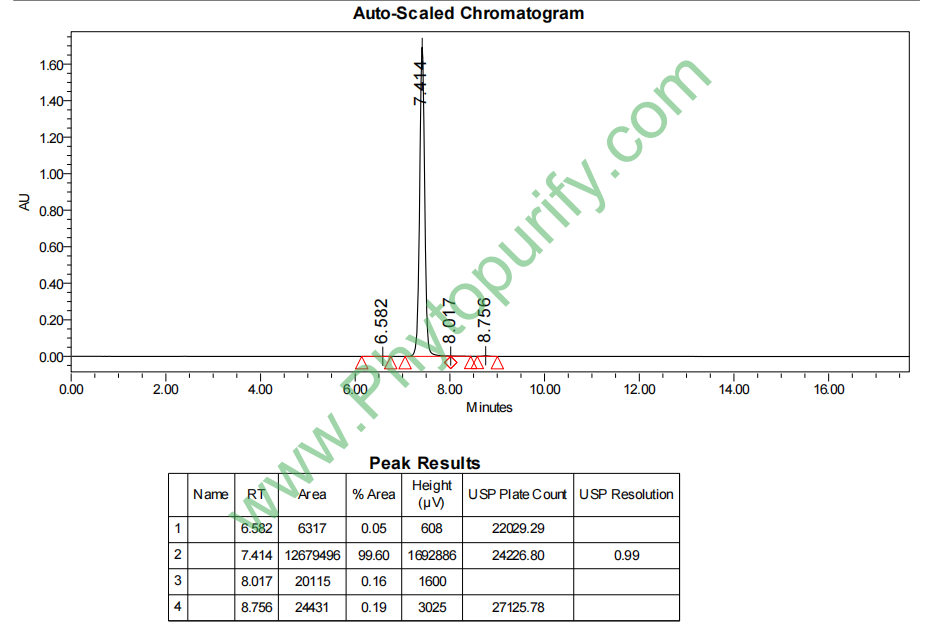
Purity: 95%~99%
Analysis Method: HPLC-DAD or/and HPLC-ELSD
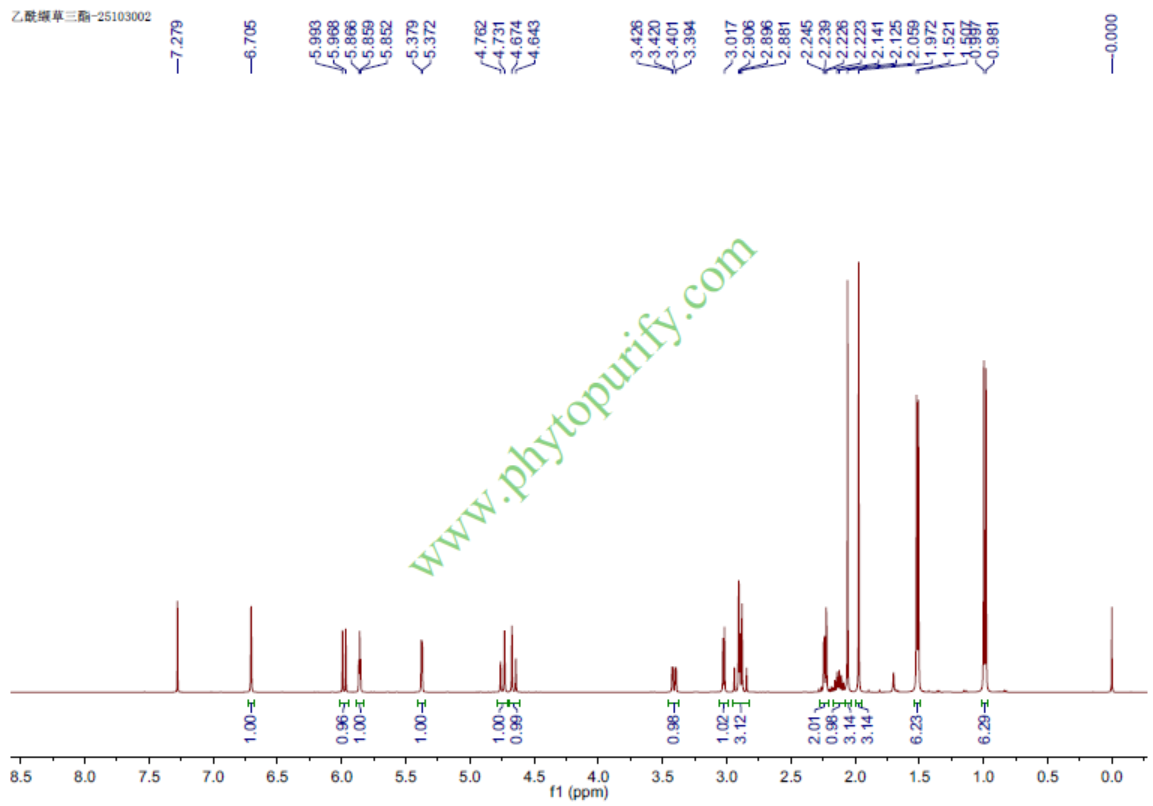
Identification Method: Mass, NMR
Packing: Brown vial or HDPE plastic bottle
Can be supplied from milligrams to grams.
For Reference Standard and R&D, Not for Human Use Directly.
Inquire for bulk scale.
HPLC of Acevaltrate
HNMR of Acevaltrate
Storage conditions:Short-term storage at 2~8℃, long-term storage at -20 ~ -80℃
135.6600
1.3200
Low
Unknown
Unknown
Unknown
Unknown
Unknown
Unknown
Acevalite (CAS number: 25161-41-5) is an important class of natural fatty acid ester compounds, first isolated from plants of the genus Valeriana. As a natural product with multiple biological activities, acetyl valerian triester has shown significant pharmacological potential in anti-tumor, neuroprotective, and enzyme activity regulation fields. In recent years, with the deepening of research on cancer and neurological diseases, acetylvaleric acid esters have gradually become a hot topic in natural product pharmacology research due to their unique cytotoxicity and enzyme inhibitory activity.
The purpose of this review is to systematically summarize the chemical structure and physicochemical properties, plant sources, and extraction methods of acetylvaleric acid triester, with a focus on its pharmacological activity and mechanism of action. By analyzing its pharmacokinetic characteristics based on drug parameters, the potential clinical application value of acetylvaleric acid triester in related diseases such as acute lymphoblastic leukemia is explored, and future research directions are discussed.
Acetyl valerian triester is a fatty acid ester compound with a molecular formula of C27H40O9 and a molecular weight of 480.5. Its structure contains multiple hydroxyl and ester groups, with high polarity and a large number of hydrogen bond receptors (10), which have a significant impact on its biological activity and pharmacokinetic properties. The LogP value is 1.32, indicating that it has moderate lipid solubility, which is beneficial for cell membrane permeability, but its blood-brain barrier penetration ability is low (Low BBB permeability), suggesting limited distribution in the central nervous system.
Its topological polar surface area (TPSA) is 135.66 Å ², and higher TPSA is usually associated with poorer membrane permeability, but is beneficial for forming stable hydrogen bonding interactions with target proteins. The physicochemical properties of this compound give it certain advantages in terms of distribution and targeting specificity in vivo, but at the same time, it may also limit its oral bioavailability and central nervous system efficacy.
Acetyl valeric acid esters are mainly found in plants of the Valeriana genus, especially in the roots of the plant. As a traditional herb, Valerian is widely used in traditional Chinese medicine and folk therapy, with sedative, anti anxiety, and anti-inflammatory effects. Acetyl valerian triacetate, as one of its active ingredients, has received widespread attention in recent years.
The extraction method usually uses organic solvent extraction combined with column chromatography separation technology. Common extraction solvents include ethanol, methanol, and ethyl acetate. The extraction process generally includes the following steps:
In recent years, ultrasound assisted extraction and microwave-assisted extraction techniques have also been applied to improve the extraction efficiency and purity of acetyl valerian triester.
Acetyl valerolac triacetate exhibits significant cytotoxicity in various tumor cell lines. Especially in the human small cell lung cancer cell line GLC (4) and the human colon cancer cell line COLO 320, the IC50 value ranges from 1-6 μ M, indicating high anti-cancer activity. This compound can induce tumor cell apoptosis, inhibit cell proliferation, and may exert its effects by regulating cell cycle related proteins.
Acetyl valerolac triacetate has inhibitory effects on Na ^+/K ^+- ATPase activity in the kidneys and cerebral hemispheres of rats, with IC50 values of 22.8 ± 1.1 μ M and 42.3 ± 1.0 μ M, respectively. Na ^+/K ^+- ATPase is a key enzyme that maintains cell membrane potential and ion homeostasis, and its activity regulation is closely related to various diseases. Acetyl valerolac triacetate may affect intracellular sodium and potassium ion balance by inhibiting enzyme activity, thereby regulating cellular signaling and metabolic processes.
Although there are relatively few reports on the neuroprotective, anti-inflammatory, and antioxidant effects of acetylvaleric acid triester, its structural characteristics and enzyme inhibitory activity suggest its potential research value in these fields. In addition, there is no clear data on safety indicators such as cardiotoxicity, hepatotoxicity, and genotoxicity (Ames test) of acetylvaleric acid triester, and further systematic evaluation is needed.
The anti-tumor mechanism of acetylvaleric acid triester has not been fully elucidated, but previous studies suggest that it may exert its effects through multiple targets and pathways. The relevant targets mainly involve key proteins such as cell apoptosis regulation, DNA repair, and signal transduction pathways.
Through the synergistic effect of multiple targets, acetyl valerolac acid ester exhibits complex pharmacological effects, providing a theoretical basis for its anti-tumor and other disease treatments.
The pharmacological parameters of acetylvaleric acid triester show that it has certain potential for drug development:
The low penetration of the blood-brain barrier suggests limited application in the central nervous system, but this may also reduce central nervous system related side effects. The safety indicators such as hepatotoxicity, cardiotoxicity, and hERG channel inhibition are not yet clear and need to be validated through in vivo and in vitro toxicological evaluations. The genetic toxicity test results of Ames are unknown, and further confirmation of its genetic safety is needed.
In terms of pharmacokinetics, there is currently a lack of systematic in vivo absorption, distribution, metabolism, and excretion (ADME) data. Given its structural characteristics, acetyl valerolac triester may undergo hepatic metabolic enzyme action, and the activity and safety of metabolites also need to be considered.
As a natural fatty acid ester, acetyl valerian triester has shown great potential for clinical development due to its significant anti-tumor activity and enzyme inhibition. Especially in hematological malignancies such as acute lymphoblastic leukemia (ALL), relevant targets such as MCL1, BCL2, NOTCH1, etc. are important therapeutic targets. Acetyl valerolac acid esters are expected to provide new therapeutic strategies through multi-target regulation.
Future research should focus on the following aspects:
In addition, combining modern drug delivery technologies such as nanocarriers to enhance the in vivo stability and targeted delivery ability of acetylvaleric acid esters is also an important direction for future research.
Acetyl valeric acid ester, as a natural fatty acid ester with multiple biological activities, has become a hot topic in natural product pharmacology research due to its significant anti-tumor activity and enzyme inhibition function. Its unique chemical structure endows it with excellent targeting specificity and pharmacological effects, especially showing broad application prospects in the treatment of malignant tumors such as acute lymphoblastic leukemia.
Although there is still limited pharmacokinetic and safety data on it, with the advancement of modern drug development technology, acetylvaleric acid triester is expected to overcome existing limitations through structural optimization and rational drug delivery strategies, becoming an important candidate molecule for new anti-cancer drugs. Future interdisciplinary collaborative research will further reveal its mechanism of action, promote its clinical translation, and provide valuable examples for the development of natural product drugs.
