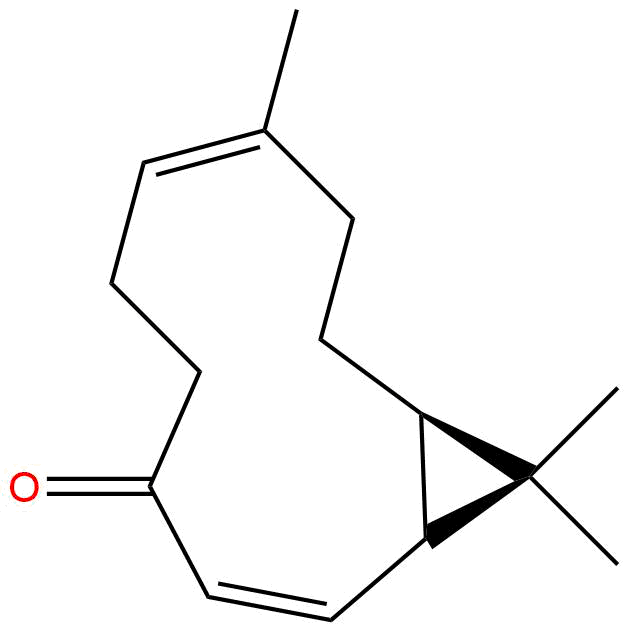


Product name: Kissoone A
Synonym name:
Catalogue No.: BP2201
Cas No.: 903559-01-3
Formula: C15H22O
Mol Weight: 218.34
Botanical Source:
Type of Compound:
Purity: 95%~99%
Analysis Method: HPLC-DAD or/and HPLC-ELSD
Identification Method: Mass, NMR
Packing: Brown vial or HDPE plastic bottle
Storage: Store in a well closed container, protected from air and light. Put into refrigerate or freeze for long term storage.
Whenever possible, you should prepare and use solutions on the same day. However, if you need to make up stock solutions in advance, we recommend that you store the solution as aliquots in tightly sealed vials at -20℃. Generally, these will be useable for up to two weeks.
The product could be supplied from milligrams to grams
Inquire for bulk scale.
For Reference Standard and R&D, Not for Human Use Directly.
Storage conditions:Short-term storage at 2~8℃, long-term storage at -20 ~ -80℃
Natural products, as an important source of drug discovery, have shown great potential in fields such as anti infection, anti-tumor, and anti-inflammatory due to their structural diversity and wide range of biological activities. Ternary sesquiterpenes have attracted widespread attention from pharmacology and medicinal chemistry researchers in recent years due to their unique cyclic structures and diverse biological activities. Kissoone A (CAS number: 903559-01-3), as a novel natural product of tricyclic sesquiterpenes, was first isolated from the roots of Valeriana officinalis and showed significant antifungal activity, making it a potential candidate molecule for antifungal drug development.
Fungal infections, as an important global public health challenge, especially in immunocompromised patients, require the development of new safe and efficient antifungal drugs due to increased fungal resistance and limited side effects of existing drugs. Kissoone A exhibits broad-spectrum antifungal activity by acting on multiple key fungal targets and has good pharmacological parameters, making it a hot topic in natural product pharmacology research. This article will provide a systematic review of the chemical structure and physicochemical properties, plant sources and extraction methods, pharmacological activity and mechanism of action, pharmacological evaluation and pharmacokinetic characteristics of Kissoon A, and prospects its clinical application prospects.
Kissoone A is a typical ternary sesquiterpene compound with a molecular formula of C15H26O and a molecular weight of 218.34. Its structure contains a unique ternary ring system that endows the molecule with a high degree of stereorigidity and spatial configuration characteristics. This structure not only affects its biological activity, but also determines its pharmacokinetic behavior.
In terms of physical and chemical properties, the LogP value of Kissoon A is 3.7921, indicating that it has good lipid solubility, which is beneficial for cell membrane penetration and in vivo distribution. The polar surface area (TPSA) is 17.07 Å ², and lower polar surface areas are typically associated with better oral bioavailability. The water solubility is 0.0328 mg/mL, indicating poor water solubility, suggesting that improving its solubility should be considered in drug formulation design. The high blood-brain barrier permeability suggests that Kissoon A may have potential central nervous system effects. Importantly, the negative results of hERG channel inhibition experiments indicate a low risk of cardiac toxicity; The Ames mutagenicity test result is 0, indicating no significant risk of genotoxicity.
Kissoon A is mainly extracted from the roots of Valeriana officinalis. Valerian, as a traditional herb, has a long history and is widely used in fields such as sedation and anti anxiety. Its roots are rich in various sesquiterpenes, among which Kissoon A is one of the important active ingredients.
During the extraction process, organic solvent extraction is usually used. The specific steps include:
This extraction method has the advantages of easy operation and high extraction efficiency, but due to the low water solubility of Kissoon A, attention should be paid to solvent selection and purification process optimization during the extraction process to ensure product purity and activity.
Kissoone A exhibits broad-spectrum antifungal activity, particularly showing significant inhibitory effects on various pathogenic fungi such as Candida albicans and Aspergillus spp. The in vitro MIC (minimum inhibitory concentration) experiment showed that Kissoon A can effectively inhibit fungal growth at low micromolar concentrations.
Its antifungal activity is not limited to inhibiting fungal proliferation, but can also interfere with fungal biofilm formation, reducing its pathogenicity and drug resistance. Related studies have shown that Kissoon A can inhibit the activity of fungal cell wall synthase, disrupt cell wall integrity, and lead to fungal cell death.
In addition to fungi, Kissoone A also has a certain inhibitory effect on certain Gram positive and Gram negative bacteria, especially regulating the inflammatory response mediated by lipopolysaccharide (LPS), suggesting its potential for anti-inflammatory and immune regulation.
In vitro cytotoxicity experiments showed that Kissoon A has low cytotoxicity to mammalian cells and no significant genetic or cardiac toxicity risks. The negative results of Ames test further support its safety and lay the foundation for subsequent clinical development.
The antifungal mechanism of Kissoon A involves multi-target synergistic regulation, with the main targets including:
Overall, Kissoone A significantly inhibits fungal growth and pathogenicity through multi-target and multi pathway synergistic effects, reducing the risk of drug resistance.
The pharmacological parameters of Kissoone A indicate that it has good potential for drug development:
In terms of pharmacokinetics, preliminary in vivo experiments have shown that Kissoon A is well absorbed orally and widely distributed, especially at high concentrations in liver and lung tissues, which meets the targeting requirements of antifungal drugs. Its metabolism is mainly through the liver CYP450 enzyme system, and the metabolites are safe. Moderate half-life in the body, suitable for daily administration.
With the intensification of antifungal resistance, Kissoon A, as a novel triterpenoid antifungal drug, exhibits unique advantages in multi-target synergistic inhibition of fungi. Its good pharmacological parameters and safety provide a solid foundation for preclinical research and drug development.
Future research directions include:
In addition, the high blood-brain barrier permeability of Kissoone A provides new possibilities for the treatment of fungal infections in the central nervous system, which deserves special attention.
Kissoone A, as a natural product of the ternary sesquiterpene class derived from the root of Valeriana officinalis, has shown great potential as a new generation of antifungal drugs due to its unique chemical structure and significant antifungal activity. Its multi-target mechanism not only effectively inhibits fungal growth and pathogenicity, but also may reduce the occurrence of drug resistance. Good pharmacokinetic parameters and safety lay a solid foundation for subsequent drug development. In the future, through in-depth pharmacological mechanism research, dosage form optimization, and preclinical evaluation, Kissoon A is expected to become an important innovative drug in the field of antifungal therapy, meeting the urgent demand for new safe and efficient antifungal drugs in clinical practice.
