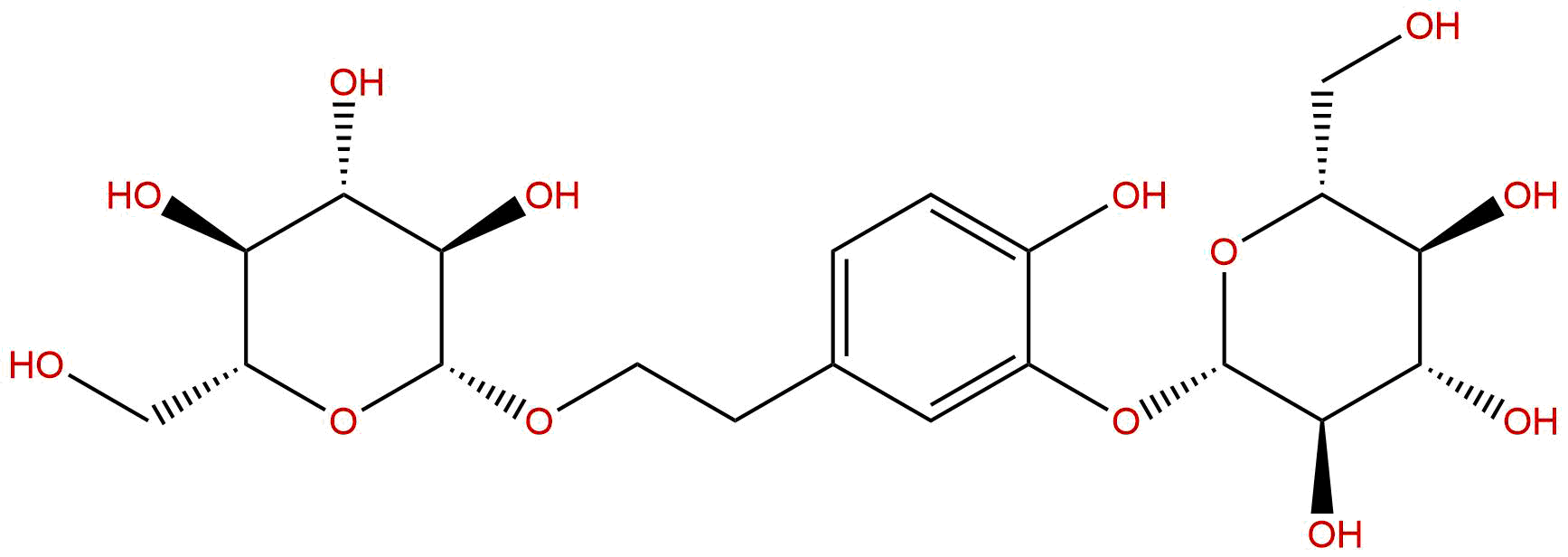


Product name: Salidroside-3-O-glucopyranoside
Synonym name: 5-[2-(β-D-Glucopyranosyloxy)ethyl]-2-hydroxyphenyl β-D-glucopyranoside
Catalogue No.: BP2387
Cas No.: 1642575-96-9
Formula: C20H30O13
Mol Weight: 478.447
Botanical Source:
Type of Compound: Phenols
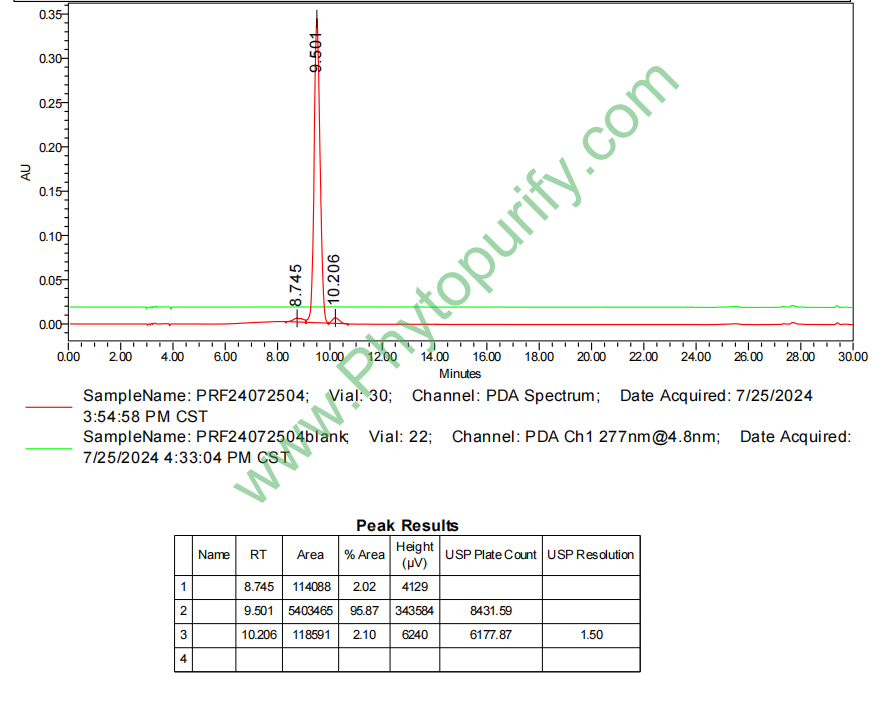
Purity: 95%~99%
Analysis Method: HPLC-DAD or/and HPLC-ELSD
Identification Method: Mass, NMR
Packing: Brown vial or HDPE plastic bottle
Storage: Store in a well closed container, protected from air and light. Put into refrigerate or freeze for long term storage.
Whenever possible, you should prepare and use solutions on the same day. However, if you need to make up stock solutions in advance, we recommend that you store the solution as aliquots in tightly sealed vials at -20℃. Generally, these will be useable for up to two weeks.
The product could be supplied from milligrams to grams
Inquire for bulk scale.
For Reference Standard and R&D, Not for Human Use Directly.
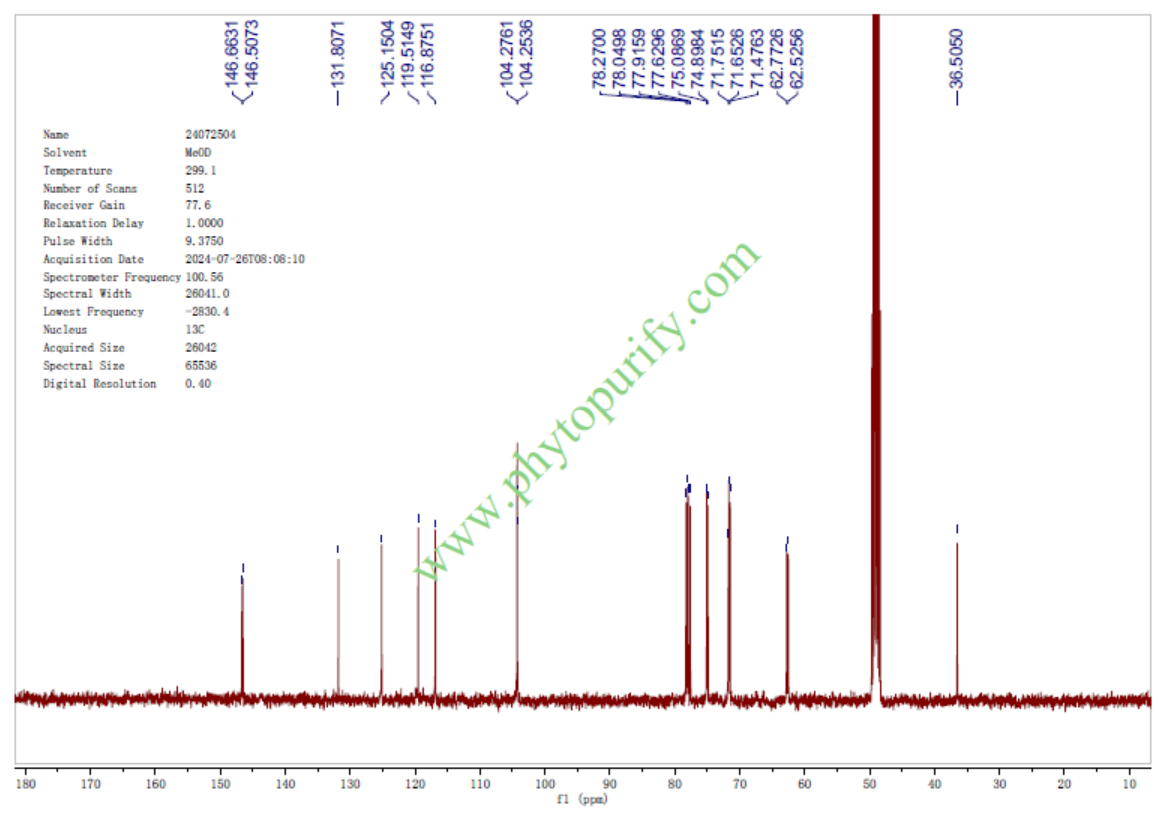
NMR of Salidroside-3-O-glucopyranoside
HPLC of Salidroside-3-O-glucopyranoside
Storage conditions:Short-term storage at 2~8℃, long-term storage at -20 ~ -80℃
218.9900
-1.6056
-1.6064
37.0570
.5801
.0587
Low
36.8160
4.3526
Yes
No
No
No
No
No
0.0
Yes
No
Yes
Yes
Natural products, as an important source of drug discovery, play an irreplaceable role in the long history of human struggle against diseases. Rhodiola rosea(Rhodiola rosea L. As a famous adaptogen herb, it is widely used in traditional medical systems, especially in China, Russia, and Northern Europe, to enhance the body's stress resistance, relieve fatigue, improve cognitive function, and enhance exercise performance. One of its main bioactive components, salidroside (p-hydroxyphenylethanol - β - D-glucoside), has been extensively proven by modern pharmacological studies to have various pharmacological effects such as anti fatigue, anti hypoxia, anti depression, neuroprotection, and cardioprotection. However, the complexity of natural product chemistry determines that a single active ingredient is not the entirety of its pharmacological effects. With the advancement of separation and purification technology and the deepening application of activity oriented separation strategies, more and more secondary metabolites of Rhodiola rosea have been identified, including Salidroside-3-O-glucopyranoside.
Rhodioline-3-O-glucoside, as a glycosylated derivative of salidroside, is characterized by the addition of a molecule of glucose at position 3 to the glucose group of the aglycone (p-hydroxyphenylethanol) of salidroside. This structural modification not only changes the physicochemical properties of the molecule, but may also endow it with unique biological activity and pharmacokinetic characteristics. Although research on this compound is still in its early stages compared to its parent compound salidroside, preliminary studies suggest that it has potential value in anti fatigue, regulating energy metabolism, and affecting nervous system function. Especially, through computer-aided drug design (CADD) and network pharmacology analysis, the compound was predicted to interact with multiple targets closely related to fatigue, emotion, and metabolic regulation, such as AMP activated protein kinase (AMPK), monoamine oxidase A (MAOA), silencing information regulatory factor 1 (SIRT1), peroxisome proliferator activated receptor gamma (PPARG), serotonin transporter (SLC6A4), β 2 adrenergic receptor (ADRB2), serotonin 1A receptor (HTR1A), uncoupling protein 1 (UCP1), cAMP response element binding protein 1 (CREB1), and brain-derived neurotrophic factor (BDNF).
This review aims to systematically review the current research progress of salidroside 3-O-glucoside, covering its chemical structure, physicochemical properties, plant origin, extraction methods, pharmacological activity, mechanism of action, drug evaluation, and clinical application prospects. By integrating this information, we hope to provide reference for a deeper understanding of the pharmacological value of this novel natural product and lay a theoretical foundation for its subsequent drug development and clinical translation.
The chemical naming of Rhodiola rose-3-O-glucoside accurately describes its structural characteristics. Its core skeleton is salidroside, which is connected to glucose molecules (Glc) through a β - D-glucoside bond with p-hydroxyphenylethanol. On this basis, the second glucose molecule is connected to the hydroxyl group at position 3 of the first glucose group through a β -1,3-glycosidic bond. Therefore, its complete structure can be expressed as: p-hydroxyphenylethanol - β - D-glucosyl - (1 → 3) - β - D-glucoside.
From a chemical classification perspective, it belongs to the phenylethanoid glycosides class, which is a widely distributed natural product in the plant kingdom with various biological activities. This molecule consists of a phenylethanolic glycoside (C6-C2 unit) and a disaccharide chain (gentiobiose, where two glucose molecules are connected by a β -1,6 bond). Its molecular formula is C20H30O13 and its molecular weight is 478.4470 g/mol.
Physical and chemical properties are key factors determining the bioavailability and drug efficacy of compounds. According to computational chemistry predictions and preliminary experimental data, salidrosin-3-O-glucoside exhibits the following characteristics:
hydrophilicity This compound has extremely high hydrophilicity, with a calculated LogP value of -1.6056. LogP is the logarithm of the lipid water partition coefficient, with negative values indicating that compounds tend to be distributed in the aqueous phase rather than the lipid phase. This characteristic stems from the presence of a large number of hydroxyl groups (- OH) and ether bonds (C-O-C) in its molecular structure, which can form strong hydrogen bonds with water molecules. Its extremely high Polar Surface Area (TPSA) of 218.9900 Å ² further confirms its strong polarity. High water solubility (predicted to be 37.0570 mg/mL) is its significant advantage, which facilitates dissolution and transport in aqueous physiological environments.
Blood-brain barrier penetrability The prediction results show that the blood-brain barrier (BBB) penetration of salidroside 3-O-glucoside is "low". This is a direct result of its high polarity and large molecular weight. Central nervous system (CNS) targeted drugs typically require a certain degree of lipophilicity to cross the BBB, which is composed of tight junctions. The low BBB penetration of this compound means that it may be difficult to directly act on brain targets. Its central related pharmacological effects such as anti fatigue and anti depression may mainly be mediated through peripheral mechanisms, or require specific transporters (such as glucose transporters GLUTs) for transmembrane transport, or its metabolites may have better BBB penetration.
Stability and safety The preliminary toxicity prediction (Ames test result of 0.0) indicates that the compound does not have significant mutagenicity, which is a positive signal. The predicted inhibition of hERG (human Ether - à - go Related Gene) potassium ion channels is' no ', indicating a low risk of causing QT interval prolongation and arrhythmia in the heart. These early security assessments provided favorable conditions for its subsequent development.
Rhodioline-3-O-glucoside is mainly found in the Crassulaceae family of the Rhodiola genus(Rhodiola)In plants. Although salidroside is a characteristic component of plants in the Sedum genus, its glycosylated derivatives, including salidrosin-3-O-glucoside, typically coexist at lower levels. The main plant sources reported to contain this compound include:
It is worth noting that the content of this compound in plants is usually much lower than that of salidroside, and it belongs to trace or trace components, which poses challenges for its separation and purification.
Given the polarity and low content of salidroside 3-O-glucoside, specialized technical strategies are required for its extraction and purification.
Extract:
Separation and Purification:
At present, there are relatively limited reports on the direct pharmacological activity of salidroside 3-O-glucoside. However, based on its structural similarity, network pharmacology prediction, and preliminary in vitro and in vivo experiments, its potential activities in anti fatigue, neuroprotection, and metabolic regulation have been revealed.
Fatigue is a complex physiological process involving multiple aspects such as energy metabolism disorders, oxidative stress, neurotransmitter imbalances, and inflammatory responses. The anti fatigue potential of salidroside 3-O-glucoside mainly stems from the following points:
Despite its low BBB penetration, the compound may still exert neuroprotective effects through the following mechanisms:
Based on network pharmacology and preliminary experiments, the mechanism of action of salidroside 3-O-glucoside can be summarized as a synergistic regulatory network with multiple targets and pathways. The core mechanism may revolve around three major axes: energy metabolism, neurotransmitters, and oxidative stress.
AMPK-SIRT1-PGC-1 α energy metabolism axis This compound may activate AMPK, which in turn phosphorylates and activates SIRT1. Activated SIRT1 can deacetylate and activate peroxisome proliferator activated receptor gamma co activator 1 alpha (PGC-1 alpha), which is the main regulator of mitochondrial biosynthesis and oxidative metabolism. The activation of this signaling pathway can promote mitochondrial production, enhance the efficiency of fatty acid oxidation and oxidative phosphorylation, increase ATP production, and thus combat energy depleted fatigue. Meanwhile, the regulation of PPARG may synergistically improve lipid metabolism.
Monoaminergic neurotransmitter system This compound may act as an inhibitor of MAOA, reducing the degradation of norepinephrine, serotonin, and dopamine. Meanwhile, it may inhibit the reuptake of serotonin by interacting with SLC6A4. These two effects synergistically increase the concentration of monoamine neurotransmitters in the synaptic cleft, thereby producing antidepressant and anti fatigue effects. In addition, regulation of ADRB2 and HTR1A receptors may directly affect neuronal excitability and signal transduction.
BDNF CREB signaling pathway By activating upstream signals such as cAMP/PKA or CaMK pathways, this compound may promote phosphorylation of CREB and enhance its transcriptional activity. Phosphorylated CREB binds to the promoter region of the BDNF gene, upregulating the expression of BDNF. The elevation of BDNF helps to enhance synaptic plasticity, protect neurons, improve learning and memory abilities, and may participate in antidepressant effects.
UCP1 and energy consumption In brown and beige adipocytes, this compound may upregulate UCP1 expression by activating β 3-AR or other pathways. The activation of UCP1 decouples the mitochondrial respiratory chain from ATP synthesis, converting the proton electrochemical gradient into thermal energy, thereby increasing energy consumption. Although this may seem contradictory to "anti fatigue", moderate increase in energy expenditure can help improve metabolic health, reduce obesity related fatigue, and may enhance body vitality through thermogenic effects.
Based on classic pharmacological evaluation criteria such as Lipinski's "Rule of Five" and Veber's rule, analysis was conducted on salidrosin-3-O-glucoside
Overall, the physicochemical properties of salidroside 3-O-glucoside deviate significantly from the "drug like" space of traditional small molecule oral drugs. Its high polarity and large polar surface area are the main obstacles to its medicinal properties, leading to its Poor oral absorption and low membrane permeability However, this does not mean that it has no development value at all. Its high water solubility is its advantage, suitable for development into injection or Topical preparations In addition, the sugar moiety in its structure may make it certain Intestinal transporter The substrates of SGLT1 and GLUT2 are actively absorbed in the intestine. More importantly, the preliminary assessment of its safety (no Ames toxicity, no hERG inhibition) is an important bonus point.
At present, there is no publicly available experimental data on the pharmacokinetics of salidroside 3-O-glucoside in vivo. The following analysis is based on its physicochemical properties and structural analogy (mainly referring to salidroside):
Although the research on salidroside 3-O-glucoside is still in its infancy, its unique chemical structure and predicted pharmacological activity present promising prospects for its application in the following fields:
Anti fatigue and improved athletic performance This is the most direct application direction. By developing injectable or highly bioavailable oral delivery systems (such as liposomes, nanoemulsions), this compound has the potential to be used for treating chronic fatigue syndrome, improving postoperative or disease recovery fatigue status, and as a legitimate anti fatigue supplement for athletes. Its multi-target effects (regulating energy metabolism, neurotransmitters, and oxidative stress) may make it more advantageous than single target drugs.
Assistive treatment for neurological and psychiatric disorders Although BBB has low penetration, its potential to affect central function through peripheral mechanisms such as regulating immunity, metabolism, and gut microbiota cannot be ignored. It may be used as an adjuvant medication for antidepressants or anti anxiety drugs, enhancing the efficacy of the main drug or reducing side effects by improving peripheral energy metabolism and inflammatory status. In addition, its metabolites (salidroside, tyrosol) have clear neuroprotective effects, making this compound a "prodrug".
Metabolic diseases Its regulatory effects on AMPK, SIRT1, PPARG and UCP1 suggest that it has potential in the treatment of type 2 diabetes, obesity and non-alcoholic fatty liver disease (NAFLD). By improving insulin sensitivity, promoting energy expenditure, and regulating lipid metabolism, it may become a novel metabolic regulator.
Drug development strategy:
Rhodiola rose-3-O-glucoside, as a novel phenylethanoid glycoside component in Rhodiola rosea, represents a trend in natural product chemistry research from the main active ingredients to trace and structurally diverse derivatives. Despite its short research history, based on structure-activity relationship analysis and modern pharmacological predictions, it has demonstrated enormous potential as a multi-target anti fatigue, neuroprotective, and metabolic regulator. Its unique physicochemical properties - extremely high hydrophilicity and low BBB penetration - not only pose challenges for its development as an oral drug, but also provide unique opportunities for its application in injection, topical, and prodrug design fields.
The future research focus should be on: firstly, establishing efficient and scalable extraction and purification processes to obtain sufficient pure products to support in-depth research; Secondly, the system conducts in vitro and in vivo pharmacological evaluations, especially using animal models to verify its anti fatigue and antidepressant effects; Thirdly, further elucidate its mechanism of action, particularly its interaction patterns with key targets such as AMPK and MAOA; Fourth, innovate drug delivery systems to overcome oral absorption barriers and explore clinical translation pathways. In depth research on salidroside 3-O-glucoside will not only enrich our understanding of the pharmacological substance basis of salidroside, but may also provide a new approach for developing modern drugs with novel mechanisms of action derived from traditional herbs. In today's increasingly refined and precise research and development of natural product drugs, this compound undoubtedly deserves more attention from academia and industry.
