


Product name: Procyanidin B3
Synonym name: Proanthocyanidin B3
Catalogue No.: BP1148
Cas No.: 23567-23-9
Formula: C30H26O12
Mol Weight: 578.526
Botanical Source: Occurs in Salix caprea and Fragaria spp. Present in red wine. peanut skins
Physical Description: Powder
Type of Compound: Procyanidins
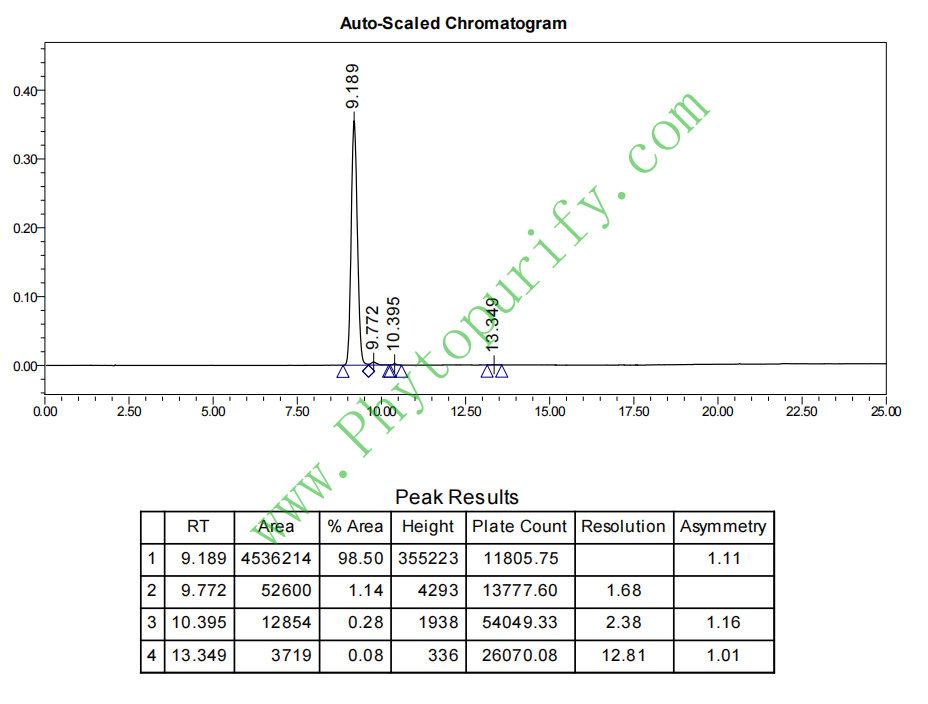
Purity: 95%~99%
Analysis Method: HPLC-DAD or/and HPLC-ELSD
Identification Method: Mass, NMR
Packing: Brown vial or HDPE plastic bottle
Storage: Store in a well closed container, protected from air and light. Put into refrigerate or freeze for long term storage.
Whenever possible, you should prepare and use solutions on the same day. However, if you need to make up stock solutions in advance, we recommend that you store the solution as aliquots in tightly sealed vials at -20℃. Generally, these will be useable for up to two weeks.
The product could be supplied from milligrams to grams, up to kilograms
Inquire for bulk scale.
Descriptions:
Procyanidin B3 (B3) prevents osteoarthritis (OA) progression and heterotopic cartilage formation, at least in a part through the suppression of iNOS, these results support the potential therapeutic benefits of B3 for treatment of human OA and heterotopic ossification.[1]
Procyanidin B3 is an inhibitor of histone acetyltransferase, B3 enhances the action of antagonist for prostate cancer cells via inhibition of p300-dependent acetylation of androgen receptor; B3 treatment inhibited acetylation-dependent prostate cell proliferation and expression of cell-cycle control genes, subsequently increasing cell death, indicating the functional importance of AR acetylation for prostate cancer cell growth.[2]
References:
[1] Aini H, Ochi H, Iwata M, et al. Plos One, 2012, 7(5):e37728.
[2] Choi K C, Park S, Lim B J, et al. Biochem J, 2011, 433(1):235-44.
[3] Ricardo-Da-Silva J M, Bourzeix M, Cheynier V, et al. Vitis -Geilweilerhof-, 1991, 30(3):245-52.
HPLC of Procyanidin B3
Storage conditions:Short-term storage at 2~8℃, long-term storage at -20 ~ -80℃
220.7600
1.7584
1.7161
.1294
1.0642
.5547
Low
87.3724
4.5185
No
No
No
No
Yes
No
0.0
Yes
No
Yes
No
Procyanidin B3, with Chemical Abstracts Registry Number (CAS) 23567-23-9, is an important member of the anthocyanin family, a natural polyphenolic compound widely found in various plants. Proanthocyanins are oligomers or oligomers formed by linking different amounts of catechins or epicatechin monomers through C4-C8 or C4-C6 bonds. Among them, anthocyanin B3 specifically refers to a dimer formed by linking two molecules of epicatechin through C4-C8 bonds. For a long time, foods rich in anthocyanins, such as grape seeds, cocoa, apples, blueberries, etc., have been highly regarded for their potential health benefits. With the deepening of modern pharmacological research, anthocyanin B3, as a monomer compound with clear activity, has surpassed the traditional antioxidant category in its biological functions, demonstrating unique potential for multi-target and multi pathway regulation of complex disease processes. Research has shown that it not only has excellent antioxidant activity and good oral bioavailability and blood-brain barrier penetration, but has also been identified as a selective histone acetyltransferase (HAT) inhibitor, which can play a key regulatory role in the pathological processes of various diseases such as prostate cancer, arthritis, and intervertebral disc degeneration by intervening in epigenetic modifications, regulating inflammatory signaling pathways, and other mechanisms. This article aims to systematically review the chemical properties, plant sources, pharmacological activities, molecular mechanisms of action, pharmacological characteristics, and clinical application prospects of anthocyanin B3, in order to provide comprehensive scientific references for the deep development and transformation research of this natural product.
The molecular formula of anthocyanin B3 is C30H26O12, with a molecular weight of 578.5260. Its core chemical structure is a dimer formed by two flavan-3-ol units (both epicatechin) connected by a single C4 (upper unit) - C8 (lower unit) covalent bond (B-type connection). This structure preserves multiple phenolic hydroxyl groups, which is the chemical basis for its strong antioxidant activity. The catechol and meta phenyltriphenyl structures in its structure can effectively quench free radicals, chelate metal ions, and participate in redox reactions.
In terms of physicochemical properties, the theoretical lipid water partition coefficient (LogP) of anthocyanin B3 is about 1.76, indicating that it has a certain lipophilicity, but not highly hydrophobic. Its topological polar surface area (TPSA) is as high as 220.76 Å ², mainly attributed to the abundant hydroxyl and ether oxygen atoms in the molecule, which are strong donors and acceptors of hydrogen bonds. Higher TPSA usually affects membrane permeability. Its water solubility parameter is 0.1294, belonging to the category of slightly soluble to poorly soluble, which is a factor that needs to be considered in actual formulation development. In the preliminary prediction of drug efficacy, anthocyanin B3 showed no significant inhibitory potential on hERG channels (hERG inhibition: no), and the Ames test predicted a value of 0.0, suggesting that it may not have direct genetic toxicity, providing a preliminary positive signal for safety evaluation. It is worth noting that although its TPSA is high, existing research suggests that it has "low" blood-brain barrier penetration, which means it can still enter the central nervous system at a certain concentration, providing the possibility for its application in neurological related diseases (such as protecting the nerves through antioxidant and anti-inflammatory effects).
Proanthocyanins B3 are widely distributed in various plants in nature and are important active ingredients in many common food and medicinal plants.
Main plant sources:
1. Grapes (Vitis vinifera)Grape seeds and grape skins are one of the most abundant sources of anthocyanins, containing a large amount of anthocyanin B3.
2. Cocoa beans (Theobroma cacao)Cocoa and dark chocolate contain high concentrations of anthocyanins, with B3 being one of their main dimeric forms, closely related to the antioxidant properties of cocoa.
3. Apple (Malus domestica)Apple peel and flesh, especially certain varieties, contain significant amounts of anthocyanin B3.
4. Cinnamomum verum Cinnamon bark is another important source of anthocyanin B3.
5. Other Hawthorn, blueberry, cranberry, sorghum seed coat, lotus root and other plants have also been detected.
Extraction and Separation Methods:
Obtaining anthocyanin B3 from plant materials typically involves the following steps:
1. Extract Common solvent extraction methods. Due to the high polarity of anthocyanins, a mixed solution of methanol, ethanol, acetone, and water (usually in a ratio of 7:3 or 6:4, v/v) is often used for extraction or ultrasound assisted extraction. Sometimes a small amount of acid (such as 0.1% hydrochloric acid) is added to improve extraction efficiency and stabilize the structure.
2. Enrichment and Purification The crude extract has complex components and requires further separation.
* Liquid liquid extraction and column chromatography Ethyl acetate is commonly used for extraction and enrichment of oligomeric anthocyanins. Subsequently, a variety of column chromatography techniques were used for preliminary separation, such as macroporous adsorption resin (such as AB-8, D101), polyamide column, and Sephadex gel (LH-20) column chromatography. Sephadex LH-20 is a key means of separating anthocyanin monomers (including B3) using molecular size and adsorption, often using methanol, ethanol, or acetone water as eluents.
* High performance liquid chromatography (HPLC)Prepa HPLC is the ultimate key technology for obtaining high-purity anthocyanin B3 monomers. Usually, a reverse phase C18 chromatography column is used, with water methanol or water acetonitrile (often containing a small amount of formic acid or acetic acid to adjust pH) as the mobile phase for gradient elution.
3. appraisal The purified compound needs to be identified by mass spectrometry (MS, such as ESI-MS to determine molecular weight), nuclear magnetic resonance (NMR, such as 1H NMR and 13C NMR to determine precise chemical structure), and final identification by comparing HPLC retention time and UV spectrum with standard samples.
The pharmacological activity research of anthocyanin B3 has expanded from basic antioxidant to multiple fields such as anti-tumor, anti-inflammatory, and bone and joint protection.
1. Core activity: Strong antioxidant effect
This is the most classic and fundamental activity of anthocyanin B3. The multiple phenolic hydroxyl groups in its molecule can directly scavenge reactive oxygen species (ROS) and reactive nitrogen species (RNS), such as superoxide anions, hydroxyl radicals, peroxynitrite, etc., and can interrupt the chain reaction of lipid peroxidation. Research has shown that its antioxidant efficacy is stronger than common antioxidants such as vitamin C and E. This direct antioxidant capacity is the basis for protecting cells from oxidative stress damage, delaying aging, and related diseases such as cardiovascular disease and neurodegenerative diseases.
2. Antitumor activity (especially in the field of prostate cancer)
Proanthocyanins B3 have inhibitory effects on various cancer cell lines, among which research on androgen receptor (AR) signaling pathway dependent prostate cancer is particularly in-depth. Research has found that anthocyanin B3 can significantly inhibit the proliferation of prostate cancer cells, induce cell cycle arrest and apoptosis. Its function is not limited to direct cytotoxicity, but more importantly, it intervenes in the transcriptional activity of AR through epigenetic regulation (see mechanism section below), thereby inhibiting tumor growth driven by the AR signaling pathway. This provides a new potential strategy for treating castration resistant prostate cancer.
3. Anti inflammatory and immune regulatory activity
Inflammation is the common pathological basis of many chronic diseases. Proanthocyanins B3 have shown strong anti-inflammatory effects in various inflammatory models. For example, in arthritis models, it can alleviate joint swelling, cartilage damage, and inflammatory cell infiltration. Its anti-inflammatory effect is closely related to the inhibition of the production of pro-inflammatory factors (such as TNF - α, IL-1 β, IL-6) and the inhibition of the activation of key inflammatory signaling pathways (such as NF - κ B).
4. Protective effect on intervertebral disc degeneration (IVDD)
Intervertebral disc degeneration is the main cause of lower back pain. The latest research reveals that anthocyanin B3 can effectively alleviate experimental intervertebral disc degeneration. The mechanism involves inhibiting the formation of Toll like receptor 4 (TLR4) and its co receptor myeloid differentiation protein 2 (MD-2) complex, thereby blocking the activation of downstream NF - κ B and MAPK inflammatory signaling pathways, reducing the inflammatory response of nucleus pulposus cells and the degradation of extracellular matrix, and protecting intervertebral disc function.
5. Other potential activities
Based on its antioxidant and anti-inflammatory properties, proanthocyanidin B3 also shows positive research prospects in cardiovascular protection (improving endothelial function, anti atherosclerosis), neuroprotection (fighting against nerve damage in Alzheimer's disease and Parkinson's disease models), and metabolic diseases (improving insulin resistance).
The mechanism of action of anthocyanin B3 is complex, exhibiting the characteristics of multi-target and multi pathway synergy.
1. Epigenetic regulation: as a selective histone acetyltransferase (HAT) inhibitor
This is one of the most notable mechanisms of anthocyanin B3. HAT catalyzes the acetylation of lysine residues at the tail of histones, relaxes chromatin structure, and promotes gene transcription. P300/CBP is an important member of the HAT family, closely associated with various diseases including cancer. Research has found that anthocyanin B3 can selectively inhibit the activity of p300 HAT, while having little effect on other HATs such as PCAF. In prostate cancer, p300 mediated AR acetylation is a key step in activating AR transcriptional activity. Proanthocyanins B3 specifically block the acetylation of AR by inhibiting p300, thereby inhibiting the binding and transcriptional activity of AR to target gene promoters, ultimately leading to inhibition and apoptosis of cancer cell growth driven by the AR signaling pathway. This marks the leap of anthocyanin B3 from a traditional antioxidant to a regulatory molecule with clear epigenetic targets.
2. Regulating the oxidative stress defense system
Proanthocyanins B3 not only directly scavenge free radicals, but also exert long-lasting protective effects by activating the cell's own antioxidant defense system. Its core target is nuclear factor E2 related factor 2 (NRF2, encoded by the NFE2L2 gene). Under oxidative stress, anthocyanin B3 may stabilize NRF2 and promote its nuclear translocation by modifying KEAP1 protein. NRF2 binds to antioxidant response elements (ARE) and initiates the transcriptional expression of a series of downstream phase II detoxifying enzymes and antioxidant proteins, including heme oxygenase-1 (HMOX1), superoxide dismutase (SOD1, SOD2), catalase (CAT), glutathione peroxidase (GPX1), etc. This systematic upregulation greatly enhances the cell's ability to resist subsequent oxidative damage.
3. Inhibit inflammatory signaling pathways
The anti-inflammatory effect of anthocyanin B3 is mainly achieved by intervening in key inflammatory signal transduction:
* Inhibition of TLR4/MD-2 complex In the IVDD model, anthocyanin B3 directly interferes with the binding of TLR4 and MD-2, blocking the classical inflammatory pathway triggered by damage associated molecular patterns (DAMPs) at the source.
* Inhibition of NF - κ B pathway Whether through TLR4 or other receptors such as TNF receptors, anthocyanin B3 can inhibit the activation of I κ B kinase (IKK), prevent the degradation of I κ B α and nuclear translocation of NF - κ B p65 subunit, thereby reducing the gene expression of pro-inflammatory cytokines and matrix degrading enzymes (such as MMPs).
* Regulating the MAPK pathway It can also inhibit the phosphorylation of activated p38, JNK, and ERK MAPK signaling molecules in inflammation.
4. Other molecular interactions
Proanthocyanins B3 may also participate in the regulation of cell survival, proliferation, and differentiation by modulating other signaling pathways such as PI3K/Akt, Wnt/β - catenin, etc. These effects have specific significance in different disease backgrounds.
Although anthocyanin B3 has significant pharmacological activity, its drug like and pharmacokinetic (PK) properties are key factors determining its successful development as a drug.
Analysis of drug properties parameters:
As mentioned earlier, its molecular weight (578.5) is slightly higher than the recommended value of the "Five Rules for Similar Drugs" (<500), but still within an acceptable range. A higher TPSA (>140) and moderate LogP values suggest that membrane permeability may face challenges, which is consistent with the characteristics of polyphenolic compounds. Poor water solubility is a bottleneck that needs to be overcome through formulation techniques such as making cyclodextrin inclusion complexes, nanocrystals, phospholipid complexes, or prodrugs. The positive hERG and Ames prediction results provide support for early safety assessment.
Current status of pharmacokinetic research:
The systematic PK research on anthocyanin B3 monomer is relatively limited, and more data comes from mixtures rich in anthocyanins. The current understanding is as follows:
* absorb After oral administration, it can be absorbed in the gastrointestinal tract, but the absorption rate may not be high. Multiple hydroxyl groups in its structure may bind to sugars and proteins in the gut, or be influenced by gut microbiota metabolism.
* distribution Animal studies have shown that anthocyanin B3 and its metabolites can be detected in multiple tissues (such as liver, kidney, prostate, brain) after oral administration, confirming its tissue distribution ability, including crossing the blood-brain barrier.
* Metabolism Proanthocyanins B3 undergo extensive metabolism in the body. Mainly includes: 1) Phase II Metabolism Methylation, glucuronidation, and sulfation binding reactions occur in the intestine and liver, which is the main reason why it mainly exists in the form of binding in plasma. 2) Metabolism of gut microbiota Colonic microbiota may break it down into smaller phenolic acids (such as benzoic acid, phenylpropanoid derivatives), and these metabolites may also contribute to its overall biological activity.
* excretion Mainly excreted through urine and bile.
Overall, the oral bioavailability of anthocyanin B3 may be moderate to low, but its active metabolites and accumulation in target tissues may contribute to its in vivo effects. More precise monomer PK studies are needed in the future to clarify its ADME (absorption, distribution, metabolism, excretion) characteristics.
The multiple pharmacological effects and relatively good safety of anthocyanin B3 have brought broad prospects for its application in multiple fields, but also face challenges.
Potential application directions:
1. Tumor adjuvant therapy and chemoprevention As a selective p300 HAT inhibitor, anthocyanin B3 provides a lead compound for the development of novel AR targeted prostate cancer therapeutic drugs. It may be used in combination with existing anti androgen drugs to overcome drug resistance. In addition, its antioxidant and anti-inflammatory properties also make it valuable in cancer chemoprevention, such as preventing prostate hyperplasia and carcinogenesis.
2. Therapeutic agents for bone and joint diseases In osteoarthritis and rheumatoid arthritis, its strong anti-inflammatory and cartilage protective effects demonstrate therapeutic potential. Especially with its clear protective mechanism against intervertebral disc degeneration, it has the potential to be developed as a novel injectable or oral medication for the treatment of chronic low back pain.
3. Neuroprotective agent Due to its antioxidant, anti-inflammatory, and blood-brain barrier penetrating abilities, anthocyanin B3 has exploratory value in the prevention and treatment of neurodegenerative diseases such as Alzheimer's disease and Parkinson's disease, as well as cerebral ischemia-reperfusion injury.
4. Functional foods and dietary supplements As a naturally occurring food ingredient, anthocyanins B3 can be safely used to develop high-end functional foods or supplements with clear health claims such as antioxidant, prostate health maintenance, and joint health.
Challenges and Future Prospects:
1. Improved bioavailability This is the biggest obstacle to its clinical progress. Future research needs to focus on novel drug delivery systems, such as nano formulations (liposomes, polymer nanoparticles), phospholipid complexes, and co delivery systems based on natural carriers, to improve their solubility, stability, and targeting.
2. Deep exploration of mechanisms Further clarification is needed on its precise structure-activity relationship as a HAT inhibitor, as well as its cross dialogue with other signaling pathways such as non coding RNA. Using chemical biology methods to search for protein target networks that directly interact with each other.
3. Preclinical and clinical research Currently, most research is still at the stage of cell and animal models. It is urgent to conduct systematic preclinical toxicology research and standardized clinical trials to verify its safety, efficacy, and optimal dosing regimen in humans.
4. Structural modification and development of analogues Using it as the parent nucleus and conducting reasonable chemical modifications may result in derivatives with stronger activity, higher selectivity, and better pharmacokinetic properties, which is an important direction in the field of medicinal chemistry.
Proanthocyanidin B3, as a naturally occurring dimeric flavanol, has evolved from a common antioxidant polyphenol to a star molecule with clear targeted activity in multiple cutting-edge fields such as epigenetics, inflammatory biology, and oncology. It reveals the unique advantages of natural products in intervening in complex disease networks through multiple sophisticated molecular mechanisms, such as inhibiting p300 HAT to regulate androgen receptor function and intervening in TLR4/MD-2 complex to alleviate intervertebral disc degeneration. Despite facing challenges in drug formulation, especially in terms of oral bioavailability, these obstacles are gradually being overcome with the rapid development of modern pharmaceutical, medicinal chemistry, and molecular biology technologies. In the future, through interdisciplinary and in-depth research, anthocyanin B3 is highly likely to not only serve as a tool molecule for elucidating life phenomena, but also have the potential to be developed into a new drug or high-performance health product for treating major diseases such as prostate cancer and arthritis, realizing the translational medical value from "dining table" to "laboratory" and then to "hospital bed", fully demonstrating the immortal charm of this treasure trove of natural products in modern medicine.
