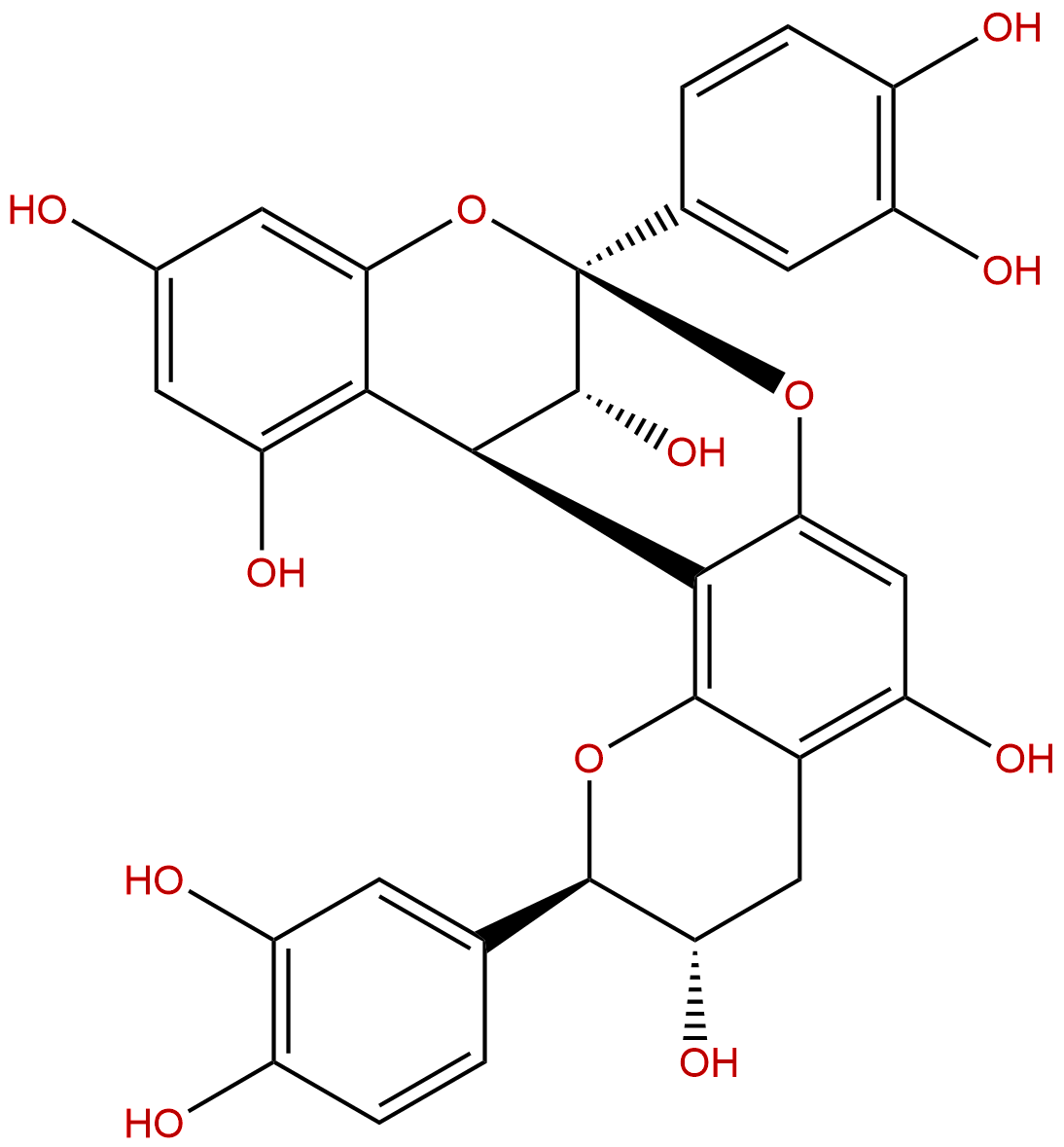


Product name: Procyanidin A1
Synonym name:
Catalogue No.: BP1832
Cas No.: 103883-03-0
Formula: C30H24O12
Mol Weight: 576.51
Botanical Source:
Physical Description:
Type of Compound: Flavonoids
Purity: 95%~99%
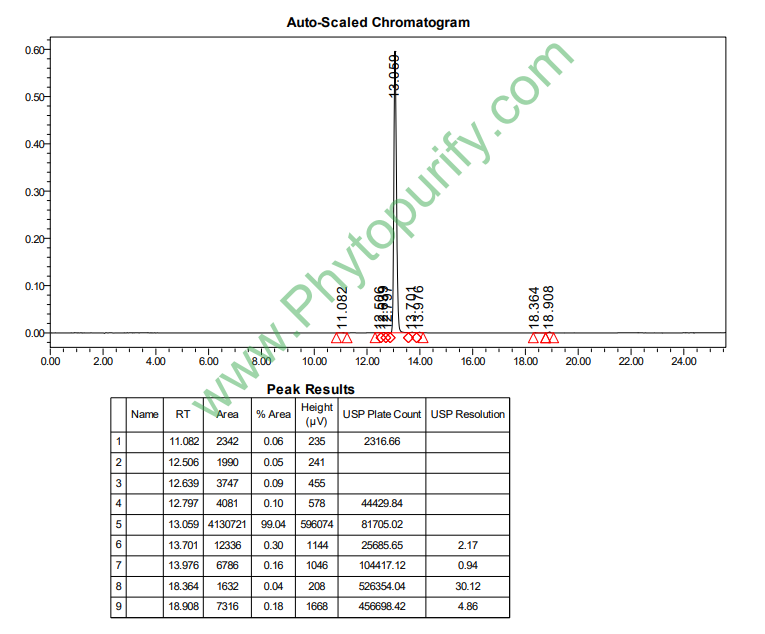
Analysis Method: HPLC-DAD or/and HPLC-ELSD
Identification Method: Mass, NMR
Packing: Brown vial or HDPE plastic bottle
For Reference Standard and R&D, Not for Human Use Directly.
Description:
Procyanidin A1 has antiallergic effects, it inhibits degranulation downstream of protein kinase C activation or Ca2⁺ influx from an internal store in RBL-2H3 cells. Procyanidin A1 shows a very high inhibition effect on LDL oxidation, with the IC50 value of 0.94 uM.
References:
Biosci Biotechnol Biochem. 2011;75(9):1644-8.
Effects of peanut-skin procyanidin A1 on degranulation of RBL-2H3 cells.
Peanut skin contains large amounts of polyphenols having antiallergic effects.
METHODS AND RESULTS:
We found that a peanut-skin extract (PSE) inhibits the degranulation induced by antigen stimulation of rat basophilic leukemia (RBL-2H3) cells. A low-molecular-weight fraction from PSE, PSEL, also had inhibitory activity against allergic degranulation. A main polyphenol in PSEL was purified by gel chromatography and fractionated by YMC-gel ODS-AQ 120S50 column. Electrospray ionization mass spectrometry (ESI-MS) analysis of the purified polyphenol gave m/z 599 [M+Na]⁺. Based on the results of ¹H-NMR, ¹³C-NMR spectra, and optical rotation analysis, the polyphenol was identified as Procyanidin A1. It inhibited the degranulation caused by antigen stimulation at the IC₅₀ of 20.3 µM. Phorbol-12-myristate-13-acetate (PMA) and 2,5,-di(tert-butyl)-1,4-hydroquinone (DTBHQ)-induced processes of degranulation were also inhibited by Procyanidin A1.
CONCLUSIONS:
These results indicate that peanut-skin Procyanidin A1 inhibits degranulation downstream of protein kinase C activation or Ca²⁺ influx from an internal store in RBL-2H3 cells.
Int J Mol Sci. 2017 Jun 26;18(7).
5-(3',4'-Dihydroxyphenyl-γ-valerolactone), a Major Microbial Metabolite of Proanthocyanidin, Attenuates THP-1 Monocyte-Endothelial Adhesion.
Several metabolomics of polymeric flavan-3-ols have reported that proanthocyanidins are extensively metabolized by gut microbiota. 5-(3',4'-dihydroxyphenyl)-γ-valerolactone (DHPV) has been reported to be the major microbial metabolite of proanthocyanidins.
METHODS AND RESULTS:
We demonstrated that DHPV has stronger prevention effect on tumor necrosis factor (TNF)-α-stimulated adhesion of THP-1 human monocytic cells to human umbilical vein endothelial cells compared to its potential precursors such as Procyanidin A1, A2, B1 and B2, (+)catechin, (-)epicatechin and its microbial metabolites such as 3-(3,4-dihydroxyphenyl)propionic acid and 2-(3,4-dihydroxyphenyl)acetic acid. Mechanism study showed that DHPV prevents THP-1 monocyte-endothelial cell adhesion by downregulating TNF-α-stimulated expressions of the two biomarkers of atherosclerosis such as vascular cell adhesion molecule-1 and monocyte chemotactic protein-1, activation of nuclear factor kappa B transcription and phosphorylation of I kappa-B kinase and IκBα.
CONCLUSIONS:
We suggested that DHPV has higher potentiality in prevention of atherosclerosis among the proanthocyanidin metabolites.
HPLC of Procyanidin A1
Storage conditions:Short-term storage at 2~8℃, long-term storage at -20 ~ -80℃
209.7600
2.2444
2.1916
.0468
.7587
.9741
Low
87.5056
5.3611
No
No
No
No
Yes
No
0.0
Yes
No
Yes
No
Proanthocyanins (PAs) are a class of oligomers and oligomers of flavan-3-ol that are widely present in the plant kingdom. They are the main pigment components that give many fruits, vegetables, seeds, and bark red, blue, or purple colors. As an important class of plant polyphenols, anthocyanins have attracted much attention due to their powerful biological activities such as antioxidant, anti-inflammatory, anti-tumor, and cardiovascular protection. Procyanidin A1 (PCA1), CAS number 103883-03-0, is a structurally unique dimer member of the anthocyanin family. Unlike the common B-type dimer of anthocyanins connected by C4 → C8 bonds, PCA1 belongs to type A anthocyanins, characterized by a dual ring structure formed not only by a C4 → C8 bond between two flavan-3-ol units, but also by an additional C2 → O → C7 ether bond. This unique structure may be closely related to its unique biological activity.
Early studies have found that PCA1 can effectively inhibit RBL-2H3 mast cell degranulation and intracellular calcium mobilization induced by protein kinase C (PKC) activation, indicating its significant anti allergic potential. In recent years, with the deepening of research, the multiple pharmacological effects of PCA1 in cardiovascular protection have been gradually revealed. Its effects involve regulating blood lipids, improving endothelial function, inhibiting inflammatory reaction, anti atherosclerosis and other aspects, showing great potential as a precursor compound or functional component in the prevention and treatment of cardiovascular diseases. This article aims to systematically review the chemical structure, plant origin, pharmacological activity, mechanism of action, pharmacological evaluation, and clinical application prospects of anthocyanin A1, in order to provide comprehensive scientific references for the in-depth research and development of this natural product.
The chemical name of anthocyanin A1 is (2R, 3S, 4S) -2- (3,4-dihydroxyphenyl) -3,4-dihydro-3,4-bis [(2R, 3R) -2- (3,4-dihydroxyphenyl) -3,4-dihydro-2H-1-benzopyran-3,5,7-triol-8-yl] -2H-1-benzopyran-3,5,7-triol, with a molecular formula of C30H24O12 and a molecular weight of 576.5100 Da.
Its core structure consists of two epicatechin units, but with a unique connection method. Specifically, the C4 position of one epicatechin unit (upper unit) forms a carbon carbon single bond (C4 → C8 connection) with the C8 position of another epicatechin unit (lower unit), which is a typical feature of B-type anthocyanins. However, the A-type feature of PCA1 is that an ether bond (C2 → O → C7 connection) is formed by dehydration between the C2 hydroxyl group of the upper unit and the C7 hydroxyl group of the lower unit. This double bond (carbon carbon bond and ether bond) forms an additional oxygen-containing heterocyclic ring (dihydrofuran ring), making the molecular structure of PCA1 more rigid and complex.
This unique A-type structure has a significant impact on its physicochemical properties. The calculated lipid water partition coefficient (LogP) is 2.2444, indicating that PCA1 has a certain degree of lipophilicity, but not high hydrophobicity. Its topological polar surface area (TPSA) is as high as 209.7600 Å ², mainly attributed to the presence of 12 oxygen atoms and multiple phenolic hydroxyl groups in the molecule, which are the main sources of hydrogen bond donors and acceptors. The high TPSA and multiple polar groups result in relatively low solubility in water, with a reported water solubility of approximately 0.0468 mg/mL. These properties collectively determine the absorption and distribution characteristics of PCA1 in living organisms. For example, higher TPSA and polarity are often unfavorable for passive transmembrane diffusion, indicating that its oral bioavailability may face challenges. In addition, its blood-brain barrier permeability is predicted to be "low", which is consistent with the characteristics of most polyphenolic compounds.
Proanthocyanins A1 are not widely present in all plants rich in anthocyanins, and their distribution is relatively specific. Early research and subsequent analysis indicate that PCA1 is an important A-type anthocyanin component in the following plants or foods:
Extraction and Separation Methods:
The extraction of PCA1 from plant materials usually follows the general extraction strategy for polyphenolic compounds.
1. Extract Common solvents include methanol, ethanol, acetone, and their mixed solutions with water. In order to improve extraction efficiency, ultrasound, microwave, or heating reflux techniques are often used as auxiliary methods. Due to PCA1's sensitivity to light, heat, and oxygen, the extraction process should be carried out at low temperatures, in the absence of light, and under inert gas protection.
2. Enrichment and Purification The crude extract was subjected to macroporous adsorption resin (such as AB-8, D101) column chromatography, and gradient elution was performed using ethanol water solutions of different concentrations to enrich the anthocyanin components. Further purification requires more sophisticated chromatographic techniques:
* liquid chromatography Prepa HPLC is the most commonly used method for obtaining high-purity PCA1 standards, often using a C18 reverse phase chromatography column with methanol water or acetonitrile water (usually containing a small amount of formic acid or acetic acid to adjust pH) as the mobile phase for elution.
* High Speed Counter Current Chromatography (HSCCC)As a solid-liquid distribution chromatography without a solid carrier, HSCCC is particularly suitable for the preparation and separation of thermally unstable and easily denatured polyphenolic compounds, and can effectively separate structurally similar isomers of anthocyanins, including PCA1.
* Sephadex gel chromatography (Sephadex LH-20)Based on molecular size and adsorption principles, it is commonly used for crude separation and decolorization of anthocyanins, which is an important step in the purification process.
A large number of in vitro and in vivo studies have revealed the extensive and diverse pharmacological activities of anthocyanin A1, among which its anti allergic and cardiovascular protective effects are the most prominent.
1. Anti allergic activity
The anti allergic effect of PCA1 is one of its earliest discovered biological activities. In RBL-2H3 rat basophilic leukemia cells (mast cell model), PCA1 can dose dependently inhibit the release of β - hexosaminidase (a marker of degranulation) caused by PKC activators (such as phorbol PMA) or antigen stimulation. Its mechanism of action is not through direct clearance of histamine, but through upstream intervention in key signaling pathways for mast cell activation. Subsequent studies have shown that PCA1 can also inhibit the production of inflammatory factors such as tumor necrosis factor - α (TNF - α) and interleukin-4 (IL-4) in mast cells, thereby alleviating allergic reactions through multiple pathways.
2. Cardiovascular protective activity
This is currently the most active field of PCA1 research, and its protective effect is reflected in multiple levels:
* Endothelial function protection and anti atherosclerosis PCA1 can significantly inhibit the apoptosis of human umbilical vein endothelial cells (HUVECs) induced by oxidized low density lipoprotein (ox LDL), down regulate the expression of vascular cell adhesion molecule-1 (VCAM-1) and intercellular adhesion molecule-1 (ICAM-1), and reduce the adhesion of monocytes to endothelial cells, which is the key link of early atherosclerosis events. Animal experiments have also confirmed that PCA1 can alleviate high-fat diet induced aortic plaque formation in ApoE -/- mice.
* Lowering blood lipids and anti-inflammatory effects PCA1 has shown the potential to inhibit the activity of 3-hydroxy-3-methylglutaryl-CoA reductase (HMGCR) in cell models, which is the rate limiting enzyme for cholesterol synthesis. At the same time, it can activate the peroxisome proliferator activated receptor gamma (PPAR gamma), which is a core nuclear receptor that regulates lipid metabolism and inflammatory response. Through PPAR γ activation, PCA1 can inhibit macrophage foam and reduce the release of proinflammatory factors such as TNF - α and IL-6.
* Blood pressure regulation PCA1 has been found to have a certain inhibitory effect on angiotensin-converting enzyme (ACE), which is a key enzyme in the renin-angiotensin system. Its inhibition can reduce the production of angiotensin II, thereby producing vasodilatory and hypotensive effects.
* Myocardial protection Research suggests that PCA1 may promote nitric oxide (NO) production, improve myocardial blood flow perfusion, and counteract myocardial ischemia/reperfusion injury by activating the protein kinase B (Akt) and endothelial nitric oxide synthase (eNOS) pathways.
3. Antioxidant and anti-inflammatory activities
As a polyphenolic compound, PCA1 has strong free radical scavenging ability and metal ion chelating ability, which can effectively alleviate oxidative stress. Its anti-inflammatory effect is not only reflected in allergy and cardiovascular models, but also in macrophage inflammation models induced by lipopolysaccharides (LPS). PCA1 can downregulate the expression of inducible nitric oxide synthase (iNOS) and cyclooxygenase-2 (COX-2) by inhibiting signaling pathways such as nuclear factor kappa B (NF - κ B), and reduce the production of inflammatory mediators such as NO and prostaglandin E2 (PGE2).
4. Other activities
In addition, research also reported that PCA1 has potential activities such as anti-tumor (such as inducing apoptosis of cancer cells), anti microbial (especially anti bacterial adhesion related to cranberry), anti diabetes (improving insulin resistance), and neuroprotection, but related research is still in the preliminary stage.
The multiple pharmacological effects of PCA1 stem from its interactions with multiple biomolecules, achieved by regulating complex cellular signaling networks. The core mechanism of action and key molecular targets can be summarized as follows:
1. Signal pathway regulation
* PKC/calcium signaling pathway In mast cells, PCA1 inhibits the mobilization of intracellular calcium stores and calcium ion influx by interfering with the activation of PKC or its downstream signals, which is the direct molecular basis of its anti allergic effect.
* PI3K/Akt/eNOS pathway In endothelial cells, PCA1 can promote phosphatidylinositol 3-kinase (PI3K) - dependent Akt phosphorylation (activation), which in turn phosphorylates and activates eNOS, increasing NO production with vasodilator and protective effects. This is an important mechanism for improving endothelial function and myocardial protection.
* NF - κ B pathway PCA1 can inhibit the activity of I κ B kinase (IKK) under inflammatory stimulation, prevent the degradation of I κ B protein and nuclear translocation of NF - κ B p65 subunit, thereby inhibiting the gene transcription of downstream pro-inflammatory factors (such as TNF - α, IL-6, IL-1 β) and adhesion molecules (VCAM-1, ICAM-1).
* MAPK pathway Studies have shown that PCA1 can regulate the phosphorylation levels of extracellular signal regulated kinase (ERK), c-Jun N-terminal kinase (JNK), and p38 mitogen activated protein kinase (MAPK), which are closely related to cell proliferation, apoptosis, and inflammatory response.
2. Key enzymes and receptor targets
* Enzyme inhibition:
* HMGCR Possible reduction of de novo synthesis of cholesterol through competitive or allosteric inhibition.
* ACE As a non peptide inhibitor of ACE, it reduces the production of angiotensin II.
* P-selectin (SELP)PCA1 may inhibit the initial rolling adhesion of platelets and white blood cells on activated endothelium by affecting its expression or function.
* Receptor regulation:
* PPARγPCA1 can act as a partial agonist or activator of PPAR γ, regulating gene expression related to lipid metabolism, glucose homeostasis, and inflammation.
* β 2-adrenergic receptor (ADRB2)It may affect its signal through indirect or conformational means and participate in smooth muscle relaxation and other processes.
* Ion channel influence The pharmacological data shows that it does not significantly inhibit hERG potassium channels, indicating a low risk of cardiac toxicity. However, research on whether it affects other ion channels, such as potassium channels encoded by KCNH2, is not yet sufficient.
3. Epigenetic regulation
Emerging research suggests that polyphenolic compounds may affect gene expression by regulating histone modifications, DNA methylation, and other processes. Whether PCA1 has similar epigenetic regulatory effects is an interesting direction for future mechanism research.
In summary, PCA1 exerts its effects through a "multi-target, multi pathway" approach, and its unique A-type structure may enhance its binding affinity or specificity to certain target proteins, forming the molecular basis for its diverse pharmacological activities.
Although anthocyanin A1 exhibits excellent biological activity in vitro, its main challenge in drug development comes from its poor pharmacokinetic properties.
1. Absorption, distribution, metabolism, and excretion (ADME) characteristics
* absorb PCA1 has a high molecular weight and polarity (high TPSA), which limits its passive transmembrane absorption ability. After oral administration, it may only be partially absorbed in the gastrointestinal tract. Its absorption may involve active transporters on intestinal epithelial cells (such as monocarboxylic acid transporters), but the efficiency is not high. The unabsorbed portion enters the colon and is widely metabolized by the gut microbiota.
* distribution Once absorbed into the bloodstream, PCA1 may have a higher binding rate with plasma proteins (such as albumin), which can affect its free concentration and tissue distribution. Its low blood-brain barrier permeability limits its direct therapeutic effect on central nervous system diseases.
* Metabolism PCA1 undergoes extensive metabolism in the body.Phase I metabolism Methylation reactions catalyzed by catechol-O-methyltransferase (COMT) may occur in the liver and intestine.Phase II Metabolism Mainly through glucuronidation and sulfation, corresponding complexes are generated, which are the main forms of its existence in plasma.Metabolism of gut microbiota This is the most important metabolic pathway of anthocyanins. Microorganisms in the colon can break down PCA1 into smaller phenolic acids, such as derivatives of benzoic acid, phenylpropanoic acid, and hippuric acid. These microbial metabolites may have biological activity and be partially absorbed into the systemic circulation, forming the material basis for the "prodrug" or "prebiotic" like effects of anthocyanins.
* excretion Metabolites are mainly excreted through urine and bile.
2. Analysis of drug properties parameters
* Lipinski's Rule of Five PCA1 molecular weight (576.5)>500, hydrogen bond donor (8 phenolic hydroxyl groups)>5, hydrogen bond acceptor (12)>10, and only LogP (2.24)<5 comply with the rules. It seriously violates multiple rules and is traditionally considered to have low oral bioavailability, which is consistent with its actual pharmacokinetic behavior.
* Solubility and permeability It is classified as a class IV drug in the Biopharmaceutical Classification System (BCS) due to its low water solubility and moderate permeability, indicating poor oral absorption and high variability.
* Preliminary evaluation of safety The Ames test result is negative (0.0), indicating no mutagenicity. The absence of hERG inhibition indicates a lower risk of cardiac toxicity, which is an important safety advantage.
3. Improvement strategy
In order to improve the pharmacological properties of PCA1, researchers are exploring various strategies:
* Structural modification By methylation, acetylation, or preparation of prodrugs (such as ester prodrugs), their lipid solubility and metabolic stability can be increased to improve oral absorption and bioavailability.
* New drug delivery system Using nanotechnology, such as liposomes, nanoemulsions, polymer nanoparticles, solid lipid nanoparticles, etc., to encapsulate PCA1 can protect it from degradation, enhance its solubility, promote intestinal lymphatic absorption or targeted delivery to specific tissues.
* Eutectic/co amorphous Prepare eutectic or co amorphous systems with suitable co morphs to improve their solubility and dissolution rate.
As a natural product with clear multi-target activity, the clinical application development of anthocyanins A1 can be carried out in the following directions:
1. As a functional food/dietary supplement ingredient
This is currently the most direct conversion pathway. Plant extracts rich in PCA1, such as cinnamon extract and cranberry extract, have been widely used in the health food market. Clarifying PCA1 as its key functional ingredient can help establish stricter quality standards (quantification of biomarker components) and make more accurate health claims (such as "helps maintain cardiovascular health" and "helps alleviate mild allergic symptoms"). In the future, standardized extracts with high content of PCA1 can be developed.
2. Develop innovative drugs as lead compounds
Despite its poor pharmacological properties, PCA1's unique A-type bicyclic structure is an excellent starting point for medicinal chemistry. Pharmaceutical chemists can use it as a template for systematic structural optimization:
* simplified structure Retain its pharmacophores (such as key phenolic hydroxyl groups and bicyclic linking frameworks), remove or replace some functional groups to reduce molecular weight, adjust LogP, and improve drug properties while maintaining activity.
* Prodrug design Design prodrugs that can be specifically enzymatically hydrolyzed in vivo to improve oral absorption of phenolic hydroxyl groups that are easily metabolized.
* Multi target ligand design Based on its characteristics of acting on multiple targets such as PPAR γ, ACE, and inflammatory pathways, consciously design novel multi-target molecules that can synergistically regulate multiple cardiovascular risk factors.
3. Application in specific disease fields
* Primary/Secondary Prevention of Cardiovascular Diseases: Develop compound preparations or new drugs with PCA1 or its derivatives as the core for atherosclerosis, hypertension, dyslipidemia, etc.
* Adjuvant treatment for allergic diseases: Develop local preparations (such as nasal spray, cream) or oral preparations for allergic rhinitis, urticaria, allergic asthma and other diseases, as a supplement or substitute for existing antihistamines and hormones.
* Metabolic syndrome: It is used to regulate PPAR γ, improve insulin resistance and anti-inflammatory effects, and develop adjuvant treatment products for type 2 diabetes and non-alcoholic fatty liver.
* Urinary system health Develop a specific product for preventing recurrent urinary tract infections based on the antibacterial adhesion effect of PCA1 in cranberries.
4. Challenges and Future Research Directions
* In depth mechanism research More research is needed to clarify the direct interaction mode (eutectic structure), precise binding site, and affinity between PCA1 and specific target proteins such as PPAR γ and ACE.
* Systematic pharmacokinetic study Lack of systematic ADME data on PCA1 and its major metabolites in the human body is a key bottleneck for preclinical translation.
* Clinical efficacy verification There is an urgent need for well-designed and appropriately scaled randomized controlled clinical trials to validate the safety and efficacy of standardized extracts or optimized derivatives rich in PCA1 in specific disease populations.
* Application of new delivery technology Actively exploring the application of new technologies such as nano delivery and transdermal drug delivery in PCA1 formulations to overcome their bioavailability limitations.
As a gem in the treasure trove of natural products, anthocyanins A1 have shown great potential for applications in fields such as anti allergy and cardiovascular protection due to their unique A-type bicyclic chemical structure and multi-target pharmacological activity derived from it. From inhibiting degranulation of mast cells to multidimensional protection of the cardiovascular system, the mechanism of action has been studied from the description of phenomena to the level of signaling pathways and molecular targets. Although its inherent physicochemical properties, such as high polarity and low bioavailability, pose challenges to traditional drug development, they also provide opportunities for drug chemical modification and new formulation technologies. In the future, through interdisciplinary collaboration and the integration of research strengths in natural product chemistry, pharmacology, pharmacokinetics, pharmacy, and clinical medicine, anthocyanin A1 is expected to successfully transform from a promising natural active ingredient into innovative drugs or highly functional products with clear clinical value, contributing to the cause of human health. Continued in-depth research on it will not only help reveal the complex connections between phytochemicals and human health, but also provide valuable experience and paradigms for the discovery of new drugs based on natural products.
