


Synonym name: Proanthocyanidin A2; Procyanidoepicatechin
Catalogue No.: BP1145
Cas No.: 41743-41-3
Formula: C30H24O12
Mol Weight: 576.51
Botanical Source: Aesculus hippocastanum, Cinnamomum spp. and other plant spp.
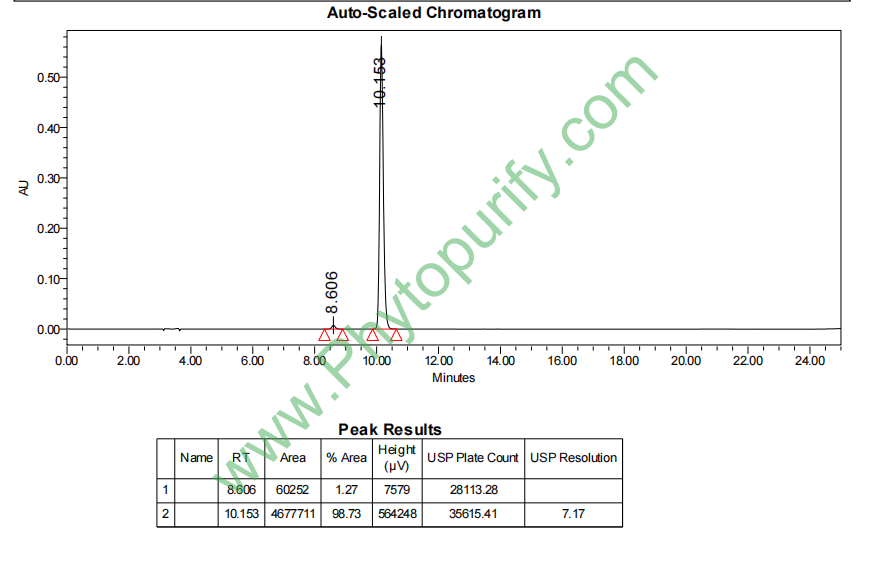
Purity: 95%~99%
Analysis Method: HPLC-DAD or/and HPLC-ELSD
Identification Method: Mass, NMR
Packing: Brown vial or HDPE plastic bottle
Can be supplied from milligrams to grams.
For Reference Standard and R&D, Not for Human Use Directly.
Inquire for bulk scale.
HPLC of Proanthocyanidin A2
Storage conditions:Short-term storage at 2~8℃, long-term storage at -20 ~ -80℃
209.7600
2.2443
2.1949
.0469
.7426
.9751
Low
87.5056
5.3611
No
No
No
No
Yes
No
0.0
Yes
No
Yes
No
Natural products, as an important treasure trove for drug discovery and development, play an irreplaceable role in the history of human disease prevention and treatment. Among them, flavonoids have attracted much attention due to their wide distribution and diverse biological activities. Procyanidins are an important subclass of flavonoids, which are condensed tannins formed by connecting flavan-3-ol units through carbon carbon bonds. According to the different connection methods and monomer units, anthocyanins can be divided into type A and type B. Procyanidin A2 (CAS number: 41743-41-3), as a typical A-type anthocyanin dimer, is composed of two (-) - epicatechin units connected by C4-C8 and C2-O7 double bonds. This unique chemical structure endows it with physicochemical properties and biological functions that distinguish it from common B-type anthocyanins.
Proanthocyanins A2 are widely present in various plant-based foods such as grapes (especially grape seeds and skins), cinnamon, apples, cocoa beans, etc., and are an important component of polyphenols in daily diet. Early research mainly focused on its strong antioxidant capacity, but with the deepening of research, its pharmacological activities in anti-cancer, anti-inflammatory, antibacterial, cardiovascular protection, and even antiviral (such as anti HIV) have gradually been revealed, making it one of the hot topics in natural product pharmacology research. Especially in the field of cardiovascular system protection, proanthocyanidin A2 shows the potential to play a role through multiple targets and pathways, involving endothelial function regulation, inflammation inhibition, atherosclerotic plaque stability and other aspects. This article aims to systematically review the chemical properties, plant sources, pharmacological activities, molecular mechanisms of action, pharmacological evaluation, and clinical application prospects of anthocyanin A2, in order to provide comprehensive scientific references for the in-depth research and development of this natural product.
The molecular formula of anthocyanin A2 is C30H24O12, with a molecular weight of 576.5100 Da. Its core structure is a dimer composed of two (-) - epicatechin monomers. Unlike common B-type anthocyanins such as anthocyanins B1 and B2, which are connected by a single C4-C8 or C4-C6 carbon carbon bond, the characteristic of anthocyanin A2 is that there is not only a C4-C8 bond between its two flavan-3-ol units, but also an additional C2-O7 ether bond, forming a double ring structure (a furan ring), which is defined as an A-type bond. This A-type connection makes its molecular conformation more rigid and complex, significantly affecting its physicochemical properties and biological activity.
From the perspective of physical and chemical properties, the calculated value of the lipid water partition coefficient (LogP) of anthocyanin A2 is about 2.24, indicating that it has a certain degree of lipophilicity, but not high lipid solubility. Its topological polar surface area (TPSA) is as high as 209.76 Å ², mainly attributed to the presence of multiple phenolic hydroxyl groups (- OH) in the molecule. The high TPSA and moderate LogP values together determine its relatively low water solubility, with a reported water solubility of approximately 0.0469 mg/mL. This solubility characteristic to some extent limits its bioavailability. In terms of distribution within living organisms, based on its physicochemical parameters, it is predicted that anthocyanin A2 has a low ability to penetrate the blood-brain barrier and mainly acts on the peripheral system. The preliminary safety evaluation shows that the hERG channel inhibition risk is negative, and the Ames mutagenicity test result is also negative (0.0), indicating that the risk of cardiac toxicity and genetic toxicity is low, and it has a good safety basis.
Proanthocyanins A2 are relatively widely distributed in nature, but the sources with high content mainly include:
1. Grapes (Vitis vinifera)Especially grape seeds and grape skins, they are the most abundant and common sources of anthocyanin A2. Red wine also contains a certain amount of anthocyanins A2, which is one of the contributing components to its health benefits.
2. Cinnamomum cassia Cinnamon bark contains a high proportion of anthocyanin A2, which is another important plant material for studying this compound.
3. Other sources Proanthocyanins A2 have also been detected in plant-based foods such as apples, cocoa beans, cranberries, and peanut peels, but their levels are usually lower than grapes and cinnamon.
The extraction of anthocyanin A2 from plant materials usually follows the general extraction process of polyphenolic compounds, supplemented by fine separation and purification techniques:
1. Extract Common solvents include methanol, ethanol, acetone, and their mixed solutions with water. In order to improve extraction efficiency, auxiliary techniques such as ultrasound assisted extraction, microwave-assisted extraction, or pressurized liquid extraction are often used. The extraction temperature and time need to be optimized to avoid the oxidative degradation of polyphenols while achieving high yields.
2. Coarse separation After vacuum concentration, the extract can be preliminarily enriched and decolorized using macroporous adsorption resins (such as AB-8, D101, HP-20). By gradient elution with ethanol water solutions of different concentrations, anthocyanins are usually enriched in the elution portion of medium to high concentration ethanol.
3. Refined and purified After obtaining crude anthocyanin, further separation is required to obtain high-purity anthocyanin A2 monomer. Common chromatographic techniques include:
* Preparation type high performance liquid chromatography (Prep HPLC): is the most direct and effective separation method, often using a C18 reverse phase chromatography column with methanol water or acetonitrile water (usually containing a small amount of formic acid or acetic acid to improve peak shape) as the mobile phase for gradient elution.
* High Speed Counter Current Chromatography (HSCCC)A liquid-liquid distribution chromatography that does not require a solid phase carrier and is suitable for preparing quantitative separations, with advantages in separating isomers of anthocyanins.
* Sephadex gel chromatography (Sephadex LH-20): It is separated by the interaction of molecular size and phenolic hydroxyl with gel, and is commonly used for desalination and preliminary classification of proanthocyanidins.
The purified proanthocyanidin A2 is usually confirmed structurally and analyzed for purity by comparing it with standard samples using nuclear magnetic resonance (NMR), mass spectrometry (MS), and high performance liquid chromatography (HPLC).
Numerous in vitro and in vivo studies have shown that anthocyanins A2 have broad and significant pharmacological activities.
antioxidant activity As a polyphenolic compound, the potent antioxidant capacity of anthocyanin A2 is the basis for many of its biological activities. The multiple phenolic hydroxyl groups in its molecule can directly scavenge free radicals (such as DPPH, ABTS ⁺ free radicals, superoxide anions, hydroxyl radicals), inhibit lipid peroxidation, and chelate transition metal ions (such as Fe ² ⁺, Cu ² ⁺), thereby protecting cells from oxidative stress damage. Its antioxidant capacity is superior to some common monomeric catechins.
Cardiovascular protective effect This is one of the most in-depth areas of research on anthocyanin A2. Research has shown that it can effectively improve endothelial function, promote the production and bioavailability of nitric oxide (NO); Inhibit abnormal proliferation and migration of vascular smooth muscle cells; Reduce the damage of inflammatory response to vascular wall; Regulating blood lipid metabolism (such as reducing low-density lipoprotein cholesterol oxidation); And it may have antiplatelet aggregation and mild antihypertensive effects. Animal models (such as atherosclerosis model induced by high-fat diet, spontaneous hypertension rat model) confirmed its efficacy in improving atherosclerotic lesions, stabilizing plaque, and reducing blood pressure.
anticancer activity Proanthocyanidin A2 has growth inhibition and apoptosis promoting effects on many cancer cell lines, including breast cancer, prostate cancer, lung cancer, colon cancer and liver cancer cells. Its function is not limited to direct cytotoxicity, but also involves inhibiting cancer cell invasion, metastasis, and angiogenesis. It is worth noting that its toxicity to normal cells is usually low, showing a certain degree of selectivity.
anti-inflammatory activity Proanthocyanins A2 can inhibit inflammatory responses induced by stimuli such as lipopolysaccharides (LPS). It downregulates key inflammatory signaling pathways such as nuclear factor kappa B (NF - κ B) and mitogen activated protein kinase (MAPK), reducing the production of pro-inflammatory cytokines such as tumor necrosis factor alpha (TNF - α), interleukin-6 (IL-6), and interleukin-1 β (IL-1 β), while inhibiting the expression of inducible nitric oxide synthase (iNOS) and cyclooxygenase-2 (COX-2).
Antibacterial and antiviral activity Research has shown that anthocyanin A2 has inhibitory effects on certain Gram positive bacteria (such as Staphylococcus aureus) and Gram negative bacteria, possibly by disrupting bacterial cell membrane integrity or inhibiting biofilm formation. In addition, reports of its anti HIV activity have also attracted attention, which may be achieved by interfering with the binding or fusion process between the virus and host cells.
Other activities This also includes potential activities such as neuroprotection (although BBB permeability is low, it may act indirectly through peripheral mechanisms or at the blood-brain barrier interface), improvement of insulin resistance, and skin photoprotection.
The pharmacological effects of anthocyanin A2 are not achieved through a single target, but rather through a complex molecular network, reflecting the multi-target nature of natural products. In terms of cardiovascular protection, its mechanism of action is closely related to multiple key targets:
In addition, in terms of anti-cancer effects, the mechanism of action of anthocyanin A2 involves inducing cell cycle arrest (such as G1 phase or G2/M phase), activating mitochondrial apoptosis pathways (regulating Bcl-2/Bax ratio, activating Caspase cascade reaction), inhibiting survival signaling pathways (such as PI3K/AKT, NF - κ B), and inhibiting the expression of matrix metalloproteinases (MMPs).
Despite the significant pharmacological activity of anthocyanin A2, its drug like properties face some challenges, mainly due to the inherent properties of its polyphenolic compounds.
In order to enhance its medicinal properties, researchers are exploring various strategies:
* Structural modification Esterification, glycosylation, or preparation of prodrugs of its phenolic hydroxyl group through chemical means to improve its lipid solubility and stability, and enhance membrane permeability.
* New drug delivery system Using nanotechnology, such as liposomes, nanoparticles, micelles, solid lipid nanoparticles, etc., to encapsulate anthocyanin A2 can significantly improve its solubility, protect it from degradation, prolong circulation time, and potentially achieve targeted delivery.
* Precursor drug strategy A precursor form designed to release active drugs through specific enzymatic hydrolysis at specific sites (such as tumor microenvironment, inflammatory sites).
At present, there is still a relatively limited amount of complete preclinical pharmacokinetic research data on the anthocyanin A2 system, which is a key gap that needs to be filled in the process of advancing towards drug development.
Proanthocyanins A2, as a natural compound with multi-target activity, have shown broad application prospects in the prevention and treatment of various chronic diseases.
However, to achieve its successful translation into clinical drugs, the following key challenges still need to be overcome and in-depth research needs to be conducted:
* Systematic pharmacokinetic study It is urgent to conduct comprehensive ADME (absorption, distribution, metabolism, excretion) research in various animal models to clarify their in vivo fate.
* Deep analysis of the mechanism of action Using omics techniques (proteomics, metabolomics) and network pharmacology methods to more systematically and accurately elucidate its multi-target action network and key pathways.
* Innovation in formulation technology Vigorously developing new drug delivery systems that can significantly improve their oral bioavailability or achieve targeted delivery.
* Comprehensive preclinical safety evaluation Conduct standardized GLP toxicology studies, including long-term toxicity, reproductive toxicity, etc., to ensure the safety of its clinical application.
* High quality clinical research Ultimately, rigorous randomized controlled clinical trials need to be designed to validate their effectiveness, safety, and optimal dosage in humans.
Anthocyanin A2, as a unique A-type dimer of anthocyanins, is a shining pearl in the treasure trove of natural products. It can be obtained from daily food sources such as grapes and cinnamon, demonstrating the value of the ancient wisdom of "medicine and food sharing the same origin" in modern health science. Its excellent antioxidant capacity forms the cornerstone of various biological activities, and its multi-target and multi pathway effects in cardiovascular protection, anti-cancer, anti-inflammatory and other fields make it an attractive candidate molecule for the prevention and treatment strategies of complex chronic diseases. Despite facing challenges such as low bioavailability in drug development, these obstacles are gradually being overcome with the advancement of modern pharmacy, nanotechnology, and molecular biology through strategies such as structural optimization and innovative delivery systems. In the future, through in-depth interdisciplinary cooperation and systematic pharmacokinetic, mechanism of action, and clinical translational research, anthocyanin A2 is expected to develop from a potential natural active ingredient into a new type of drug or highly effective functional product for the prevention and treatment of major diseases such as cardiovascular disease and cancer, contributing significantly to human health.
