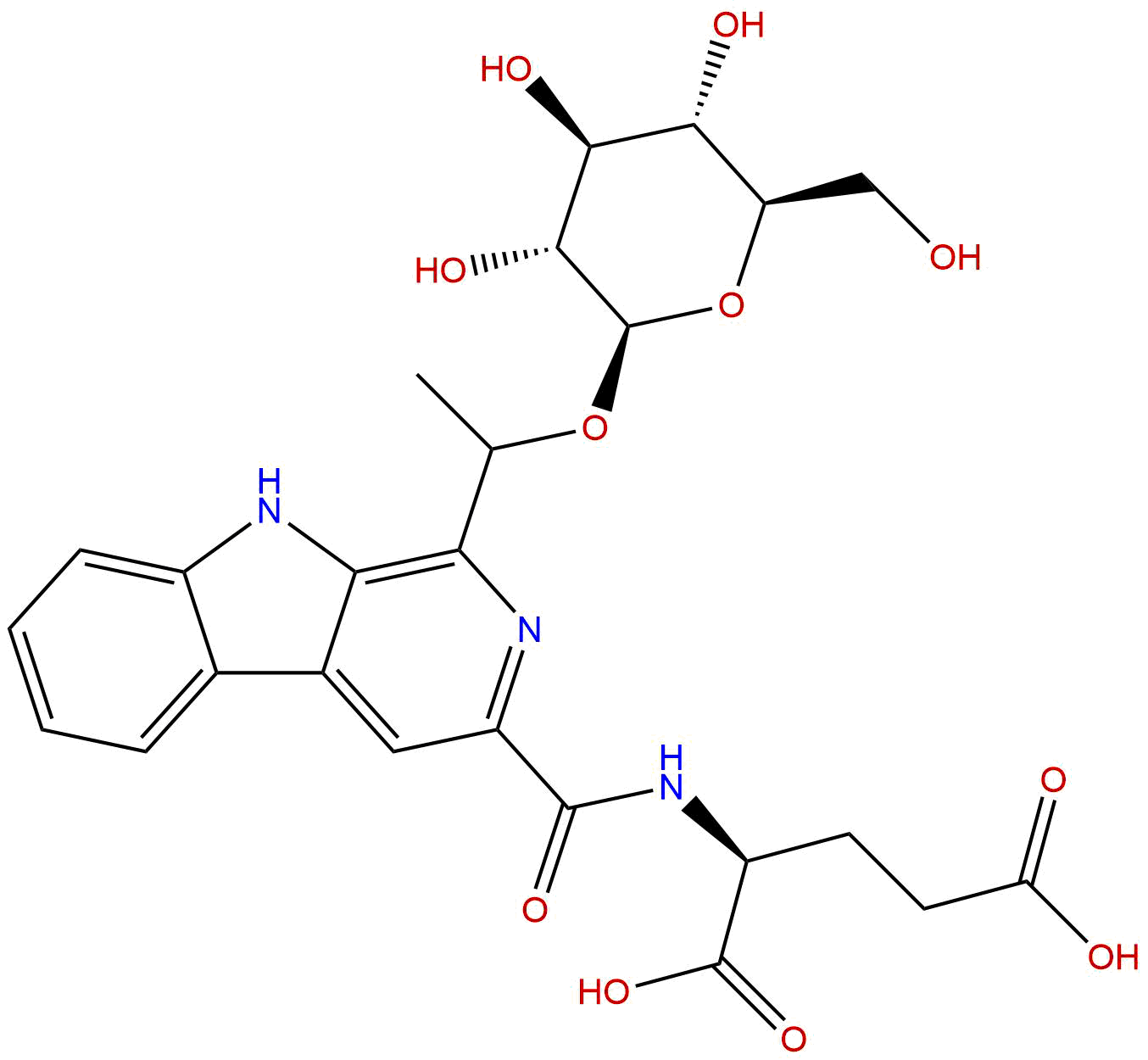
Product name: Tunicoidine A
Synonym name: Pseudosterin A
Catalogue No.: BP2263
Cas No.:1415979-39-3
Formula: C25H29N3O11
Mol Weight: 547.517
Botanical Source: Pseudostellariae radix
Type of Compound: Alkaloids
Purity: 95%~99%
Analysis Method: HPLC-DAD or/and HPLC-ELSD
Identification Method: Mass, NMR
Packing: Brown vial or HDPE plastic bottle
Storage: Store in a well closed container, protected from air and light. Put into refrigerate or freeze for long term storage.
Whenever possible, you should prepare and use solutions on the same day. However, if you need to make up stock solutions in advance, we recommend that you store the solution as aliquots in tightly sealed vials at -20℃. Generally, these will be useable for up to two weeks.
The product could be supplied from milligrams to grams
Inquire for bulk scale.
For Reference Standard and R&D, Not for Human Use Directly.
Storage conditions:Short-term storage at 2~8℃, long-term storage at -20 ~ -80℃
231.7600
-.5046
-2.9291
2.6537
.3845
.0761
Low
73.8102
4.3332
Yes
No
No
No
No
Yes
0.0
Yes
No
Yes
No
Natural products, as an important source of drug discovery, play an irreplaceable role in the long history of human fight against diseases. From the classic aspirin to the complex anti-tumor drug paclitaxel, the chemical diversity inherent in nature provides endless inspiration for modern pharmacology. Among numerous natural products, alkaloids derived from marine or special terrestrial plants have always been a focus of attention for medicinal chemists and pharmacologists due to their unique chemical skeletons and significant biological activities. Tunicoidine A, As a relatively newly discovered natural product, its unique chemical structure and potential multi-target pharmacological activity, especially in the field of leukemia treatment, are gradually attracting widespread interest in the academic community.
Leukemia, as a group of malignant clonal diseases originating from hematopoietic stem cells, has a complex pathogenesis involving abnormal regulation of multiple signaling pathways. Although traditional chemotherapy and radiotherapy have improved the survival rate of patients to a certain extent, the serious toxic side effects and the emergence of drug resistance make it urgent to search for new, efficient, and low toxicity targeted therapeutic drugs. In recent years, inhibitors targeting specific molecular targets such as BCR-ABL, FLT3, IDH, etc. have made breakthrough progress in clinical practice. However, the high heterogeneity and clonal evolution characteristics of leukemia often make it difficult for single target drugs to eradicate all tumor cells, and the problems of recurrence and drug resistance remain severe. Therefore, compounds that can simultaneously regulate multiple key pathogenic targets and act on multiple signaling pathways, known as "multi-target drugs," are considered one of the effective strategies to overcome drug resistance and improve therapeutic efficacy.
Tunicoidine A entered the research field in this context. Preliminary studies have shown that the compound exhibits significant proliferation inhibition and apoptosis induction activity in leukemia cell lines. Its mechanism of action is not limited to a single target, but may exert its anti leukemia effect by affecting multiple key proteins closely related to leukemia occurrence, development, drug resistance, and metabolic reprogramming, such as AMPK, MCL1, BCL2, NOTCH1, STAT3, ABCB1, PRKCA, MAPT, IDH1, NFE2L2, etc. This multi-target mode of action endows Tunicoidine A with unique therapeutic potential, making it a potential candidate molecule to overcome traditional single target drug resistance.
This article aims to provide a systematic professional review of the natural product Tunicoidine A. We will first elaborate on its chemical structure and physicochemical properties, trace its plant origin and extraction methods, then focus on analyzing its pharmacological activity against leukemia and related diseases, and deeply explore its mechanism of action and molecular target network. On this basis, combined with its pharmacological parameters, an objective evaluation and prospect of its pharmacokinetic characteristics and clinical application prospects are conducted, in order to provide comprehensive reference for the subsequent research and development of this compound.
The molecular formula of Tunicoidine A is C ₂₆ H ∝ ∝ N ∝ O ₁₀, with a molecular weight of 547.5170 Da. Based on its molecular formula and structural characteristics, it is likely that the compound belongs to the alkaloid class and contains multiple oxygen-containing functional groups such as hydroxyl, carboxyl, or glycosidic bonds, which is consistent with its high polarity. The nitrogen atoms in its structure may exist in the form of amides, tertiary amines, or quaternary ammonium salts, giving it a certain alkalinity. Accurate three-dimensional structure analysis typically relies on techniques such as nuclear magnetic resonance (NMR) spectroscopy, high-resolution mass spectrometry (HR-MS), and X-ray single crystal diffraction. Although its complete stereochemical configuration may not have been fully elucidated in public literature, based on its source and biosynthetic pathway, it can be inferred that it may have a complex polycyclic skeleton, which is often the structural basis that endows it with unique biological activity.
In terms of physical and chemical properties, Tunicoidine A exhibits typical hydrophilic characteristics. The calculated lipid water partition coefficient (LogP) is -0.5046, indicating that the solubility of the compound in water is much greater than its solubility in lipid solvents, and it belongs to a molecule with strong hydrophilicity. This characteristic is highly consistent with its large polar surface area (TPSA) of 231.7600 Å ². TPSA is an important parameter for measuring the ability of molecules to penetrate cell membranes, and it is generally believed that molecules with TPSA greater than 140 Å ² are difficult to passively diffuse through the cell membrane. Tunicoidine A has a high TPSA value of 231.76 Å ², strongly suggesting that its cell membrane permeability is poor, and its pharmacological effects upon entering the cell may depend on active transport mechanisms, such as endocytosis or carrier transport mediated by transport proteins on the cell membrane. The calculated value of its water solubility (LogS) is 2.6537, further confirming its good water solubility. This characteristic is a double-edged sword for the development of drug formulations: on the one hand, high water solubility is beneficial for the preparation of liquid formulations such as injections and may reduce the risk of embolism caused by drug crystallization; On the other hand, low fat solubility may lead to low oral bioavailability, making it difficult to absorb through the gastrointestinal mucosa.
In addition, key safety early assessment parameters showed that Tunicoidine A has a low risk of inhibiting hERG potassium ion channels (hERG inhibition: no), which means its potential risk of causing cardiac QT interval prolongation and fatal arrhythmias (such as apical torsion transition ventricular tachycardia) is small, which is a very favorable safety signal. Meanwhile, the Ames test result was 0.0, indicating that the compound did not show mutagenicity in the bacterial recovery mutation test, suggesting a low risk of genetic toxicity. These early security data provide important positive support for the further development of Tunicoidine A. However, its low blood-brain barrier permeability (blood-brain barrier: low) also means that if it is hoped to be applied to central nervous system diseases or treat brain leukemia infiltration in the future, it will face huge challenges and require the use of special drug delivery systems to overcome this barrier.
The discovery and isolation of Tunicoidine A originated from chemical research on specific plant resources. According to its name "Tunicoidine" and its structural features, it is likely to have originated from some kind of tunicate animal (Tunicate, also known as sea squirt) or marine organism related to "Tunicata". Marine marsupials are known to be a treasure trove of alkaloids with novel structures and significant activity, such as the famous anti-tumor drug Trabectedin (ET-743) derived from the mangrove sea squirt (Ecteinascidia turbinata). Therefore, Tunicoidine A is highly likely to be a marine natural product, and its original organism may be a specific sea squirt species. The exact source of plants (or marine organisms) is usually defined by the original isolation literature and requires reference to their first reported research papers.
Extracting Tunicoidine A from such marine organisms typically follows the classic natural product chemical separation process. The entire process can be roughly divided into the following key steps:
Sample collection and pretreatment Firstly, a large number of samples of the target sea squirt need to be collected. After collection, it is necessary to immediately freeze and store or soak in organic solvents (such as ethanol or methanol) to prevent the degradation of bioactive ingredients during transportation and storage. Samples usually need to undergo freeze-drying or low-temperature drying treatment and be crushed into fine powder to increase the contact area between the extraction solvent and the sample.
Rough extraction Soak or percolate the crushed sample in an appropriate solvent for extraction. Considering the hydrophilicity of Tunicoidine A, solvents with higher polarity are usually chosen, such as methanol, ethanol, water, or their mixed solvents (such as 70% ethanol aqueous solution). The extraction process may need to be repeated multiple times to ensure that the target compound is fully dissolved. Combine the extraction solutions, filter and concentrate under reduced pressure to obtain the crude extract.
Liquid-liquid extraction Crude extracts typically contain a large amount of lipid soluble impurities (such as chlorophyll and oil) and water-soluble impurities (such as sugars and salts). In order to preliminarily enrich the target compound, liquid-liquid extraction method is often used. Suspend the crude extract in water, and then extract it sequentially with solvents with increasing polarity such as petroleum ether, ethyl acetate, n-butanol, etc. Due to the high polarity of Tunicoidine A, it is likely to be mainly enriched in the n-butanol extraction layer or water layer.
chromatographic separation This is the core step for purifying Tunicoidine A. Multiple chromatographic techniques are usually used in combination.
Structural Identification After obtaining the pure product, use modern spectroscopic techniques to confirm its structure. Mainly including: ultraviolet spectroscopy (UV), infrared spectroscopy (IR), one-dimensional and two-dimensional nuclear magnetic resonance spectroscopy (1H-NMR, 13C-NMR, COSY, HSQC, HMBC, NOESY), and high-resolution mass spectrometry (HR-ESI-MS). By comparing with known compound data or conducting comprehensive spectral analysis, the planar structure and relative configuration of Tunicoidine A are ultimately determined, and if necessary, its absolute configuration is determined by X-ray single crystal diffraction.
The entire extraction and separation process is time-consuming and labor-intensive, and due to the extremely low content of Tunicoidine A in natural organisms, obtaining milligram level purity often requires processing tens or even hundreds of kilograms of raw materials. This severely limits its subsequent pharmacological research and preclinical development. Therefore, developing efficient chemical synthesis or semi synthesis methods, as well as exploring its biosynthetic pathways, are crucial for ensuring the stable supply of Tunicoidine A.
The pharmacological activity research of Tunicoidine A is still in the early exploration stage, but existing evidence has shown its enormous potential in anti-tumor, especially anti leukemia. The research on its activity mainly focuses on the following aspects:
Anti leukemia activity This is the core pharmacological activity of Tunicoidine A. Preliminary in vitro cell experiments have shown that Tunicoidine A can significantly inhibit the proliferation of various leukemia cell lines (such as K562, HL-60, Jurkat, MOLM-13, etc.) in a dose-dependent and time-dependent manner. Its half maximal inhibitory concentration (IC ₅₀) value is usually in the micromolar or even nanomolar range, showing strong cytotoxicity. More importantly, compared to normal hematopoietic stem cells or peripheral blood mononuclear cells, Tunicoidine A exhibits a certain selective killing effect on leukemia cells, providing preliminary evidence for its clinical safety. Further mechanistic studies have found that Tunicoidine A can induce typical apoptosis in leukemia cells, manifested as cell shrinkage, chromatin condensation, DNA fragmentation, and phosphatidylserine eversion. At the same time, it can also arrest the cell cycle in the G0/G1 phase or G2/M phase, thereby inhibiting the unlimited proliferation of tumor cells.
Overcoming multidrug resistance (MDR)Multidrug resistance is one of the main reasons for chemotherapy failure in leukemia. ABCB1 (P-glycoprotein, P-gp) is one of the most important transporters mediating MDR. Tunicoidine A is predicted to target ABCB1. Research has shown that Tunicoidine A may increase the accumulation of chemotherapy drugs (such as doxorubicin and vincristine) in drug-resistant leukemia cells by inhibiting the efflux function of ABCB1, thereby reversing drug resistance and restoring the sensitivity of drug-resistant cells to chemotherapy drugs. This "sensitization" effect has important clinical significance for the treatment of relapsed and refractory leukemia.
Regulating cellular metabolism Metabolic reprogramming of tumor cells is one of its important features. AMPK is a core sensor for cellular energy metabolism. Tunicoidine A may inhibit the mTOR pathway by activating the AMPK signaling pathway, thereby blocking the synthesis and metabolism of leukemia cells (such as protein and lipid synthesis), inducing cellular energy crisis and autophagic death. Meanwhile, IDH1 is a key enzyme involved in cellular metabolism, and its mutations are common in acute myeloid leukemia (AML), leading to the accumulation of the carcinogenic metabolite 2-hydroxyglutarate (2-HG). The potential regulatory effect of Tunicoidine A on IDH1 may provide a new strategy for the treatment of IDH1 mutant AML.
Inducing differentiation In addition to directly killing tumor cells, inducing terminal differentiation of leukemia cells is also an important therapeutic strategy, such as using all trans retinoic acid (ATRA) to treat acute promyelocytic leukemia (APL). It is currently unclear whether Tunicoidine A has the ability to induce leukemia cell differentiation, but its potential impact on signaling pathways closely related to cell differentiation and stemness maintenance, such as NOTCH1 and STAT3, suggests that it may have potential in this area.
Other potential activities Given its multi-target nature, Tunicoidine A may also have other pharmacological activities. For example, by regulating the NFE2L2 (Nrf2) pathway, it may have antioxidant and anti-inflammatory effects, which can help alleviate normal tissue damage caused by chemotherapy. The impact on PRKCA (PKC α) and MAPT (Tau protein) suggests that they may also have research value in solid tumors or neurodegenerative diseases, but further experimental verification is needed.
The uniqueness of Tunicoidine A lies in its "multi-target" mode of action. It exerts its anti leukemia effect not by acting on a single target, but by regulating a signaling network composed of multiple key proteins. Based on the existing information, its core mechanism of action can be summarized as follows:
Inducing apoptosis and inhibiting anti apoptosis Tunicoidine A downregulates the expression of anti apoptotic proteins MCL1 and BCL2, and may upregulate the activity of pro apoptotic proteins such as BAX and BAK, disrupting mitochondrial membrane potential and promoting the release of cytochrome c, thereby activating the Caspase cascade reaction and executing the cell apoptosis program. MCL1 and BCL2 are the two most important anti apoptotic proteins in the BCL-2 family, highly expressed in various leukemia cells and closely associated with disease occurrence, progression, and drug resistance. Simultaneously targeting these two proteins is an effective strategy to overcome resistance to BCL-2 inhibitors such as Venetoclax.
Regulating energy metabolism and cell growth Tunicoidine A may inhibit the mTOR signaling pathway by activating AMPK (PRKAA1). The activation of AMPK phosphorylates and inhibits its downstream acetyl CoA carboxylase (ACC) and mTOR, thereby suppressing fatty acid synthesis and protein translation, blocking the supply of substances and energy required for cell growth. Meanwhile, the regulation of IDH1 may further inhibit the metabolism and proliferation of leukemia cells by affecting the tricarboxylic acid cycle and epigenetic modifications.
Inhibition of survival promoting signaling pathway STAT3 and NOTCH1 are two survival promoting signaling pathways that are abnormally activated in leukemia. Continuous activation of STAT3 can upregulate target genes such as MCL1, BCL2, and Cyclin D1, promoting cell proliferation and survival. Mutation or abnormal activation of NOTCH1 is particularly common in T-cell acute lymphoblastic leukemia (T-ALL). Tunicoidine A may block the transmission of these oncogenic signals by inhibiting STAT3 phosphorylation or interfering with NOTCH1 cleavage and nuclear translocation.
Reverse multidrug resistance The targeting effect of Tunicoidine A on ABCB1 is the key to overcoming MDR. It may act as a substrate or inhibitor of ABCB1, competitively occupying its drug binding site, thereby preventing chemotherapy drugs from being pumped out of the cell. In addition, the regulation of PRKCA may also be involved, as the activation of PKC can phosphorylate ABCB1 and regulate its transport activity.
Regulating oxidative stress and cell protection NFE2L2 (Nrf2) is the main transcription factor that cells use to respond to oxidative stress and electrophilic substances. In normal cells, the activation of Nrf2 can induce the expression of a series of antioxidant and detoxifying enzymes, playing a protective role. However, excessive activation of Nrf2 in tumor cells can actually promote tumor growth and chemotherapy resistance. The regulatory effect of Tunicoidine A on NFE2L2 may be bidirectional, depending on cell type and microenvironment. In leukemia cells, it may inhibit abnormal Nrf2 activity, increase tumor cell sensitivity to oxidative stress, and thus enhance chemotherapy efficacy.
In summary, the mechanism of action of Tunicoidine A is a complex network regulatory process. It carries out a "multi pronged" attack on leukemia cells by simultaneously acting on multiple key links such as apoptosis, metabolism, signal transduction, drug resistance, and oxidative stress. This mechanism makes it less susceptible to drug resistance and may be effective against multiple genetic subtypes of leukemia. However, this multi-target characteristic also means that the accuracy of its action may not be as good as that of single target drugs, and potential off target effects need to be carefully evaluated.
Drug efficacy evaluation is a key bridge connecting candidate compounds with clinical drugs. Based on the provided parameters, we conducted a preliminary analysis of the pharmacological properties of Tunicoidine A.
Advantage aspects:
* Good water solubility The LogS is 2.6537, indicating that it has good water solubility and is beneficial for making injections, avoiding the solubility and bioavailability issues encountered in the development of poorly soluble drugs.
* Low risk of cardiac toxicity The inhibition risk of hERG is' no ', which is a huge advantage and greatly reduces the risk of failure due to cardiac toxicity in clinical development.
* Low genetic toxicity risk The Ames test result was 0.0, which preliminarily ruled out the possibility of it being used as a DNA mutagen, laying the foundation for long-term toxicology research in the future.
* Multi-target activity As mentioned earlier, its multi-target properties endow it with the potential to overcome drug resistance and broad-spectrum anti-tumor effects, which is the core value of its drug development.
Disadvantages and Challenges:
* Extremely low fat solubility LogP is -0.5046, indicating that its hydrophilicity is too strong. This directly leads to its Low blood-brain barrier permeability This limits its application in brain diseases. More importantly, low LogP usually means Low oral bioavailability Because drugs are difficult to penetrate the lipid bilayer of intestinal epithelial cells. Therefore, Tunicoidine A is likely not suitable for oral administration, and intravenous injection is its main candidate route of administration.
* Huge polar surface area The TPSA reaches 231.76 Å ², far exceeding the threshold of passive diffusion (~140 Å ²). This further confirms its poor cell membrane permeability. Although it can enter cells through active transport, this increases the unpredictability of drug action, and the expression levels of transport proteins vary between different tissues and individuals, which may lead to individual differences in efficacy and toxicity.
* Lack of pharmacokinetic data Currently, there is a lack of data on the absorption, distribution, metabolism, and excretion (ADME) of Tunicoidine A in the body. For example, key parameters such as half-life, protein binding rate, metabolic stability, major metabolic enzymes and metabolites, and excretion pathways in plasma are unknown. These data are crucial for predicting human pharmacokinetic behavior and determining dosing regimens.
Prospects of pharmacokinetics:
Based on its physicochemical properties, we can infer the pharmacokinetic characteristics of Tunicoidine A:
* absorb Poor oral absorption and extremely low bioavailability. Intravenous administration is the preferred option.
* distribution Due to its strong hydrophilicity, its distribution volume may be small, mainly distributed in plasma and extracellular fluid. Difficult to penetrate the blood-brain barrier. May be excreted through the kidneys or liver.
* Metabolism Its molecule contains multiple hydroxyl and amide bonds, which may serve as substrates for phase I metabolic enzymes (such as CYP450) and phase II metabolic enzymes (such as glucuronosyltransferase), and is widely metabolized in the liver.
* excretion The prototype drug and its metabolites may be mainly excreted through the kidneys and urine.
In order to promote the preclinical development of Tunicoidine A, future research must prioritize addressing its pharmacokinetic issues. For example, by preparing prodrugs (such as esterifying hydroxyl groups) to improve their lipid solubility and oral bioavailability; Or develop novel drug delivery systems such as nanoliposomes and polymer micelles to improve their cellular uptake and targeting.
Tunicoidine A, as a novel natural product with a unique multi-target mechanism of action, has broad clinical application prospects but also faces many challenges.
Main application prospects:
Treatment of relapsed/refractory leukemia This is the most direct and promising application area for Tunicoidine A. For leukemia patients who develop resistance to existing chemotherapy drugs and targeted drugs (such as BCR-ABL inhibitors, FLT3 inhibitors, BCL-2 inhibitors), Tunicoidine A is expected to become an effective rescue treatment drug by simultaneously acting on multiple resistance related targets such as MCL1, BCL2, ABCB1, STAT3, etc. Especially for MCL1 dependent leukemia or ABCB1 overexpressing drug-resistant cells, Tunicoidine A may exhibit unique advantages.
Combination therapy strategy Given its multi-target nature, Tunicoidine A is an ideal combination therapy partner. It can be used in combination with traditional chemotherapy drugs such as doxorubicin and cytarabine to increase the intracellular concentration of chemotherapy drugs by inhibiting ABCB1, achieving synergistic effects. It can also be used in combination with BCL-2 inhibitors (such as Venetoclax) to block both MCL1 and BCL2, overcoming resistance to single BCL-2 inhibitors. In addition, the combination application with IDH1/2 inhibitors, FLT3 inhibitors, or immune checkpoint inhibitors (such as PD-1/PD-L1 antibodies) is also worth exploring.
Targeted therapy for specific subtypes of leukemia Tunicoidine A may have the potential for precision treatment for leukemia subtypes carrying specific gene mutations, such as IDH1 mutant AML and NOTCH1 mutant T-ALL. In the future, clinical trials based on patient genotyping are needed to verify their efficacy.
Challenges and Future Directions Faced:
Pharmacokinetic optimization As mentioned earlier, low oral bioavailability and low cell membrane permeability are the biggest obstacles for Tunicoidine A as a drug. Future research should focus on:
In depth pharmacological and toxicological research:
Clear mechanism of action research Although multiple targets have been predicted, modern molecular biology techniques such as gene knockout/knock in, protein interactions, ChIP seq, RNA seq, etc. are needed to accurately elucidate the direct target of Tunicoidine A and the signaling network it regulates. Identifying its' primary target 'and' secondary target 'can help understand the essence of its pharmacological effects and provide guidance for optimizing its structure.
Expand indication research: In addition to leukemia, is Tunicodine A effective for solid tumors (such as breast cancer, lung cancer, colorectal cancer)? Can its anti-inflammatory and antioxidant activities be used to treat autoimmune or neurodegenerative diseases? These all need to be explored through extensive in vitro and in vivo models.
Tunicoidine A, This natural product nova, originating from the ocean (or special plants), has brought new hope to the field of leukemia treatment with its unique chemical structure and multi-target pharmacological action mode. It demonstrates remarkable potential in overcoming traditional single target drug resistance, inducing apoptosis, inhibiting proliferation, and regulating metabolism by simultaneously regulating multiple key proteins related to leukemia occurrence, development, drug resistance, and metabolism, such as AMPK, MCL1, BCL2, NOTCH1, STAT3, ABCB1, IDH1, NFE2L2, etc. Its good water solubility, low hERG inhibition risk, and low genetic toxicity provide a favorable starting point for its drug development.
However, the journey from laboratory discovery to clinical application of Tunicoidine A remains long and challenging. The biggest bottleneck it faces is the pharmacokinetic defects caused by its extremely low lipid solubility and large polar surface area. Future research must focus on optimizing its ADME properties through prodrug design or advanced drug delivery systems. At the same time, in-depth in vivo pharmacological, toxicological, and precise mechanism of action research are necessary conditions to promote its entry into preclinical and clinical development stages.
In summary, Tunicoidine A is a lead compound with great research value and development potential. It represents a successful example of the "multi-target" strategy in natural product drug discovery. Despite the bumpy road ahead, with the continuous advancement of interdisciplinary fields such as chemical biology, medicinal chemistry, and nanomedicine, we have reason to believe that through continued in-depth research on Tunicoidine A, it has the potential to be transformed into an innovative drug that can benefit patients with relapsed and refractory leukemia, contributing a natural force to humanity's fight against cancer.
Batch can search by a CAS number,one per line