


Synonym name:
Catalogue No.: BP0727
Cas No.: 145459-19-4
Formula: C40H58N8O8
Mol Weight: 778.952
Botanical Source: Root of Pseudostellaria heterophylla
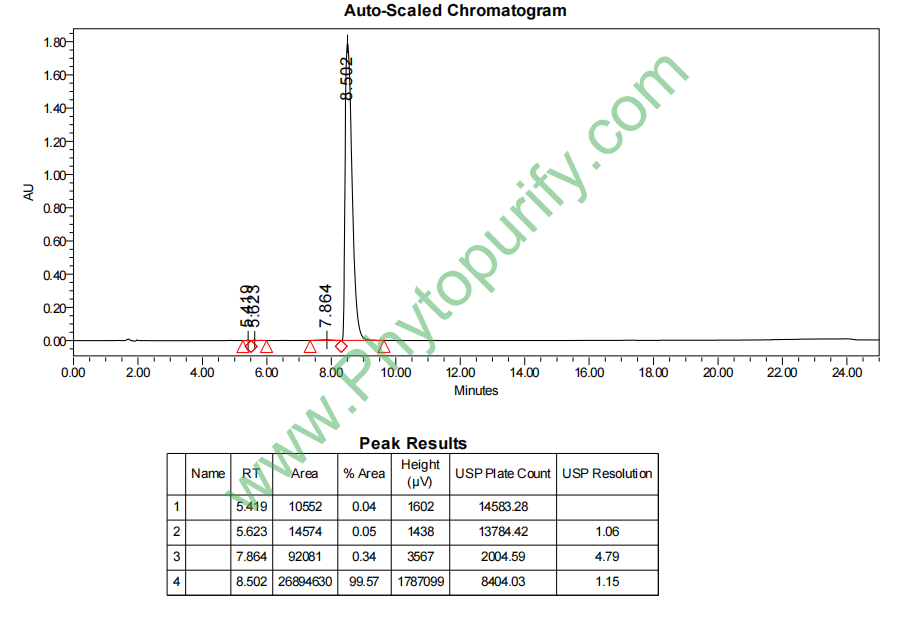
Purity: 95%~99%
Analysis Method: HPLC-DAD or/and HPLC-ELSD
Identification Method: Mass, NMR
Packing: Brown vial or HDPE plastic bottle
Can be supplied from milligrams to grams.
For Reference Standard and R&D, Not for Human Use Directly.
Inquire for bulk scale.
Description:
Heterophyllin B is used as the quality control index for evaluating P. heterophylla in the Chinese Pharmacopoeia.Heterophyllin B effectively suppresses the adhesion and invasion of the human esophageal carcinoma cells by mediating the PI3K/AKT/β-catenin pathways and regulating the expression levels of adhesion- and invasion-associated genes.
References:
Mol Med Rep. 2016 Feb;13(2):1097-104.
Heterophyllin B inhibits the adhesion and invasion of ECA-109 human esophageal carcinoma cells by targeting PI3K/AKT/β-catenin signaling.
The present study aimed to measure the effect of Heterophyllin B (HB) on the adhesion and invasion of ECA-109 human esophageal carcinoma cells, and examine the possible mechanism involved.
METHODS AND RESULTS:
A Cell Counting kit 8 assay was performed to determine the cell viability. Cell adhesion and invasion were determined following treatment of the ECA-109 cells with HB (0, 10, 25 and 50 μM) for 24 h. The levels of phosphorylated (p-)ATK and p-phosphoinositide 3-kinase (PI3K), and the protein levels of β-catenin were measured using western blot analysis. The mRNA and protein expression levels of E-cadherin, vimentin, snail, matrix metalloproteinase (MMP)2 and MMP9 were detected using reverse transcription-quantitative polymerase chain reaction and western blot analyses, respectively. HB (10, 25 and 50 μM) significantly suppressed the adhesion and invasion of the ECA-109 human esophageal carcinoma cells in a dose-dependant manner. The expression levels of p-ATK, p-PI3K and β-catenin were markedly decreased. The expression of E-cadherin was promoted, whereas the expression levels of snail, vimentin, MMP 2 and MMP 9 were decreased significantly in the ECA-109 cells treated with HB. In addition, HB inhibited the adhesion and invasion induced by PI3K activating peptide in the ECA-109 cells, and the protein expression levels were also adjusted.
CONCLUSIONS:
These results suggested that HB effectively suppressed the adhesion and invasion of the human esophageal carcinoma cells by mediating the PI3K/AKT/β-catenin pathways and regulating the expression levels of adhesion- and invasion-associated genes.
HPLC of Heterophyllin B
Storage conditions:Short-term storage at 2~8℃, long-term storage at -20 ~ -80℃
Heterophyllin B is an active cyclic peptide isolated from the traditional Chinese medicinal herb Pseudostellaria heterophylla. As a natural product, Panax ginseng cyclic peptide B has received widespread attention in pharmacological research in recent years due to its unique cyclic peptide structure and diverse biological activities. Especially in the field of tumor immune regulation, Taizi Shen cyclic peptide B has shown significant potential, especially in the treatment research of esophageal cancer, showing good application prospects. This article aims to provide a systematic review of the chemical structure, pharmacological activity, mechanism of action, and pharmacological evaluation of Taizishen cyclic peptide B, and explore its potential for future clinical applications.
The chemical structure of Taizishen cyclic peptide B belongs to the class of cyclic peptides, with a molecular weight of 778.9520 and a complex molecular formula, reflecting the closed-loop structural characteristics of its polypeptide chain. Its LogP value is 0.5005, indicating that the compound has moderate lipophilicity, which facilitates membrane penetration. The TPSA (topological polar surface area) is 206.4300, indicating a high molecular surface polarity, which may affect the permeability and in vivo distribution of its biofilm.
The water solubility of Panax ginseng cyclic peptide B is 2.0011, indicating that it has good water solubility, which is of positive significance for oral administration and in vivo absorption. The low permeability of the blood-brain barrier suggests its limited distribution in the central nervous system, which may reduce central nervous system side effects. The hERG channel inhibition experiment showed a negative result, indicating that the compound is not prone to causing cardiac toxicity such as arrhythmia. The Ames test result is 0.0, indicating that it does not have mutagenicity and has high safety.
The cyclic peptide B of Panax ginseng is mainly isolated from Pseudostellaria heterophylla. Tai Zi Shen is a plant of the Campanulaceae family, widely distributed in eastern China and East Asia. In traditional Chinese medicine, it is often used to nourish qi and yin, strengthen the spleen and lungs. The roots of Panax ginseng contain abundant peptide compounds, among which cyclic peptide components are particularly important.
The extraction method usually uses organic solvent extraction combined with column chromatography separation technology. Firstly, crush the dried root of Panax ginseng and extract the crude peptide mixture by leaching with ethanol or methanol. Subsequently, further purification was carried out using techniques such as silica gel column chromatography and high performance liquid chromatography (HPLC) to obtain high-purity Taizi ginseng cyclic peptide B. In recent years, the application of ultrasound assisted extraction and membrane separation technology has improved extraction efficiency and purity, providing technical support for large-scale production.
The pharmacological activity of Taizi Shen cyclic peptide B is mainly reflected in two aspects: anti-tumor and immune regulation. Multiple in vitro and in vivo experiments have shown that Taizi Shen cyclic peptide B has a significant inhibitory effect on esophageal cancer cells. It enhances the body's anti-tumor immune response by regulating the function of immune cells in the tumor microenvironment.
In terms of immune regulation, Panax ginseng cyclic peptide B can regulate various key immune factors and signaling pathways, including TLR4, STAT3, IL2, NFKB1, TGFB1, CTLA4, STAT4, IL10, FOXP3, and IFNG. These targets play a central role in regulating the activation, proliferation, and differentiation of immune cells. Codonopsis pilosula cyclic peptide B promotes the balance of the immune system, enhances anti-tumor immunity, and inhibits tumor related immune escape mechanisms by regulating these targets.
In addition, the cyclic peptide B of Panax ginseng also exhibits multiple biological activities such as anti-inflammatory and antioxidant effects, providing a theoretical basis for its application in various immune related diseases.
The mechanism of action of Taizi Shen cyclic peptide B involves multiple signaling pathways and molecular targets, mainly focusing on immune regulation and anti-tumor effects.
TLR4 signaling pathway
Taizi Shen cyclic peptide B affects innate immune response by regulating the TLR4 (Toll like receptor 4) signaling pathway. TLR4 is a key receptor for recognizing pathogen associated molecular patterns (PAMPs), and upon activation, it can induce the activation of transcription factors such as NFKB1, thereby regulating the expression of inflammatory and immune factors. Codonopsis pilosula cyclic peptide B can inhibit overactivated TLR4 signaling, alleviate inflammatory responses, and promote normal immune cell function.
Regulation of STAT3 and STAT4
STAT3 and STAT4 are intracellular signaling and transcriptional activators involved in regulating cell proliferation, differentiation, and immune response. Taizi Shen cyclic peptide B can inhibit the abnormal activation of STAT3, block the proliferation signal of tumor cells, and promote cellular immune function by regulating STAT4, enhancing the anti-tumor activity of immune cells.
Cytokine regulation
The cyclic peptide B of Panax ginseng significantly affects the expression of cytokines such as IL2, IL10, IFNG, TGFB1, etc. IL2 and IFNG are important factors that promote immune cell activation and cytotoxicity, and Taizi ginseng cyclic peptide B enhances immune killing ability by increasing its expression. IL10 and TGFB1 have immunosuppressive effects, and the balance of them is regulated by Taizi Shen cyclic peptide B, which helps maintain immune homeostasis and prevent immune overreaction.
Immune checkpoint molecule CTLA4 and regulatory T cell marker FOXP3
Taizi Shen cyclic peptide B can regulate the expression of CTLA4, affect immune checkpoint pathways, and relieve tumor immune suppression. Meanwhile, by regulating FOXP3 expression, it affects the function of regulatory T cells (Tregs) and promotes the immune system's recognition and clearance of tumors.
In summary, the cyclic peptide B of Panax ginseng achieves precise regulation of the immune system through multi-target and multi pathway synergistic effects, exerting its anti-tumor and immune regulatory functions.
Tai Zi Shen cyclic peptide B has good medicinal properties. Its molecular weight is close to 800, belonging to medium-sized cyclic peptide molecules, structurally stable, and not easily degraded by enzymes in the body. The LogP value is moderate, with good water solubility, which is conducive to absorption and distribution in the body. The blood-brain barrier has low permeability, reducing the potential toxicity risk to the central nervous system.
In terms of safety, the hERG channel inhibition test was negative, indicating a low risk of cardiac toxicity. The Ames test showed no mutagenicity, further supporting its safety. Preliminary pharmacokinetic studies have shown that Panax ginseng cyclic peptide B has a long half-life in vivo and high bioavailability, making it suitable for development as an oral or injectable form.
However, as a natural product of cyclic peptides, the in vivo metabolic pathway of Panax ginseng cyclic peptide B still needs further clarification. In the future, it is necessary to conduct in vitro and in vivo metabolic experiments, establish pharmacokinetic models, and other methods to deeply analyze its absorption, distribution, metabolism, and excretion characteristics, providing a basis for clinical applications.
The potential application value of Taizi Shen cyclic peptide B in esophageal cancer and other immune related diseases is increasingly prominent. It has the potential as an adjuvant therapy drug by regulating the immune microenvironment through multiple targets, enhancing the body's anti-tumor immune response. Combining existing tumor immunotherapy strategies, such as immune checkpoint inhibitors, Taizi Shen cyclic peptide B may exert a synergistic effect to enhance treatment efficacy.
In addition, the immunomodulatory function of Taizi Shen cyclic peptide B also provides possibilities for its application in autoimmune diseases and inflammatory diseases. In the future, its therapeutic effect in diseases such as rheumatoid arthritis and systemic lupus erythematosus can be explored.
However, the clinical research on Taizi Shen cyclic peptide B is still in its infancy and lacks systematic clinical trial data. In the future, it is necessary to strengthen pharmacological and toxicological research, optimize dosage form design, conduct preclinical safety evaluation and clinical trials, and verify its efficacy and safety.
At the same time, considering the difficulty and production cost of synthesizing cyclic peptide compounds, developing efficient synthesis and extraction processes, improving yield and purity, is the key to achieving their clinical translation.
As an active cyclic peptide derived from traditional Chinese medicine, Taizishen cyclic peptide B has demonstrated excellent pharmacological activity and medicinal properties. Its multi-target mechanism of action in immune regulation and anti-tumor fields provides new ideas for the treatment of esophageal cancer and related diseases. Although current research is still in the basic stage, its safety and biological activity have laid a solid foundation for subsequent clinical development. In the future, through systematic pharmacokinetic studies, mechanism analysis, and clinical validation, Taizishen cyclic peptide B is expected to become an important candidate molecule in the development of natural product drugs, promoting the modernization process of traditional Chinese medicine and benefiting patients.
