


Product name: Shikonin
Synonym name: (+)-Shikonin
Catalogue No.: BP1302
Cas No.: 517-89-5
Formula: C16H16O5
Mol Weight: 288.299
Botanical Source: Arnebiae radix
Physical Description:
Type of Compound: Quinones
Purity: 95%~99%
Analysis Method: HPLC-DAD or/and HPLC-ELSD
Identification Method: Mass, NMR
Packing: Brown vial or HDPE plastic bottle
Storage: Store in a well closed container, protected from air and light. Put into refrigerate or freeze for long term storage.
Whenever possible, you should prepare and use solutions on the same day. However, if you need to make up stock solutions in advance, we recommend that you store the solution as aliquots in tightly sealed vials at -20℃. Generally, these will be useable for up to two weeks.
The product could be supplied from milligrams to grams
Inquire for bulk scale.
Chengdu Biopurify Phytochemicals Ltd. is a leading company in the research, development, manufacture and marketing of High Quality Phytochemicals and Extracts(especially Active Ingredients from Traditional Chinese Medicine,TCM), Natural Active Pharmaceutical Ingredients worldwide.
The main services:
A. Supply active ingredients and reference standards of TCM, from mgs to kgs scale
B. Custom extraction and purification, target Herb Active Ingredients
C. Custom synthesis and semi-synthesis for Natural Active Ingredients
D. CR(contract research), CM(contract manufacture) and PD(process development) services from lab scale, pilot scale to commercial scale(GMP is also available)
E. TCM compounds library for drug screen,more than 3000 compounds available, many of them are rare and unique.
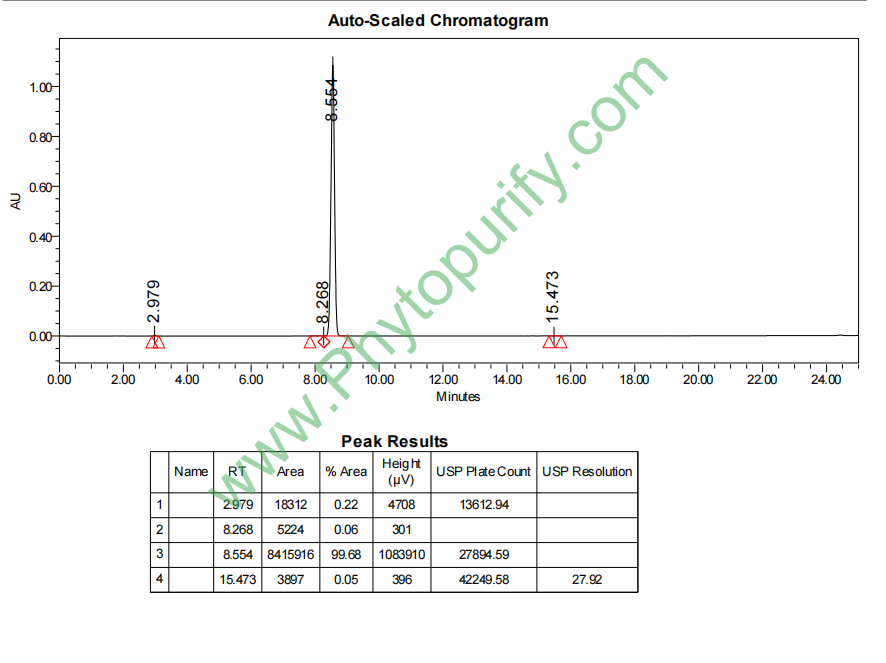
HPLC of Shikonin
Storage conditions:Short-term storage at 2~8℃, long-term storage at -20 ~ -80℃
94.8300
2.6280
2.3710
.6017
3.2319
9.6420
Low
84.8132
3.4095
Yes
No
No
No
Yes
Yes
1.2
Yes
Yes
Yes
Yes
Natural products, as an important source of drug discovery, play an irreplaceable role in the history of human disease prevention and treatment. Among them, active ingredients derived from traditional Chinese medicine are increasingly becoming a hot topic in modern pharmacological research due to their rich pharmacological activities and unique chemical structures. Shikonin, CAS number 517-89-5, is a naphthoquinone pigment compound isolated from the roots of traditional Chinese medicinal herb Lithospermum erythrorhizon Sieb. et Zucc. It is one of the main material bases for the pharmacological effects of purple grass. For a long time, purple grass has been mainly used in traditional Chinese medicine clinical practice for clearing heat and cooling blood, promoting blood circulation and detoxification, penetrating rashes and eliminating spots, treating diseases such as excessive blood heat and toxicity, purple black rashes, sores, eczema, etc. Modern pharmacological research has gradually revealed that right-handed purpurin has a wide range of biological activities, including anti-inflammatory, antibacterial, antiviral, and particularly prominent anti-tumor effects.
In recent years, with the rapid development of molecular biology and cell biology technologies, the multi-target and multi pathway characteristics of right-handed shikonin have been continuously elucidated. It has not only been identified as an effective inhibitor of TMEM16A chloride channel, but also as a specific inhibitor of pyruvate kinase M2 (PKM2), and can intervene in classic inflammatory signaling pathways such as TNF - α/NF - κ B. In addition, it exhibits novel mechanisms in regulating cellular metabolism (such as inhibiting glycolysis), affecting intercellular communication (such as reducing exosome secretion), and inhibiting innate immune responses (such as inhibiting AIM2 inflammasome activation). Especially in the research of malignant tumors such as breast cancer, dextral shikonin shows the potential to inhibit tumor cell proliferation, induce apoptosis, reverse drug resistance and inhibit metastasis by regulating multiple key targets such as AMPK, STAT3, BCL2, ABC transporter, etc. This article aims to systematically review the chemical properties, plant sources, pharmacological activities, molecular mechanisms of action, pharmacological evaluation, and clinical application prospects of right-handed shikonin, in order to provide comprehensive academic references for the in-depth development and transformation research of this natural product.
D-shikonin is a naphthoquinone derivative with the chemical name 5,8-dihydroxy-2- [(1R) -1-hydroxy-4-methyl-3-pentenyl] -1,4-naphthoquinone. The molecular formula is C16H16O5 and the molecular weight is 288.2990. Its basic structure consists of a 1,4-naphthoquinone core and a chiral side chain located at C-2 position, with hydroxyl and double bonds on the side chain being important active groups. The stereoconfiguration of this compound is right-handed, which is one of the key determinants of its biological activity.
In terms of physical and chemical properties, right-handed purpurin appears as purple red crystals or powder, which is the main reason for its deep purple color from plant sources. Its lipid water partition coefficient (LogP) is 2.6280, indicating that the compound has a certain lipophilicity, which is closely related to its ability to penetrate the cell membrane and act on intracellular targets. The topological polar surface area (TPSA) is 94.83 Å ², reflecting the proportion of polar functional groups (such as hydroxyl and quinone groups) in the molecule. Its water solubility is relatively poor, about 0.6017 mg/mL, which to some extent limits its formulation development and in vivo bioavailability. According to calculations, the ability of right-handed purpurin to penetrate the blood-brain barrier is relatively low, suggesting that its direct effects on central nervous system related diseases may be limited. In early safety screening, the compound did not show significant hERG potassium channel inhibitory activity (low risk of arrhythmia), and the Ames test result was 1.2 (usually considered negative if the ratio is less than 2), indicating a low risk of mutagenicity. These basic pharmacological parameters provide important basis for subsequent structural modifications and formulation optimization.
The main source of right-handed shikonin is the dried roots of the Boraginaceae plant, Lithospermum erythrorhizon Sieb. et Zucc. Zicao is mainly distributed in China, Japan, South Korea and other places, with a long history of medicinal use in China. In addition to purple grass, plants of the same genus or other similar genera such as Xinjiang purple grass (Arnebia euchroma (Royle) Johnston.) also contain purple grass extract and its derivatives, but right-handed purple grass extract is one of the most active and high content representative components.
The extraction and separation methods of right-handed purpurin have undergone development from traditional to modern. Traditional methods often use organic solvents (such as ethanol, ethyl acetate, petroleum ether, etc.) for reflux extraction or cold soaking, and then use methods such as silica gel column chromatography and preparative high-performance liquid chromatography for separation and purification. With the advancement of technology, some efficient and environmentally friendly extraction techniques have also been applied, such as ultrasound assisted extraction, microwave-assisted extraction, and supercritical fluid extraction. These methods can improve extraction efficiency, reduce solvent consumption, and minimize the damage of thermosensitive components. The extraction process usually requires light avoidance operations, as shikonin compounds are sensitive to light and prone to photolysis or isomerization. After obtaining the crude extract, high-purity right-handed shikonin monomer can be obtained through repeated column chromatography and recrystallization, which can be used for in-depth pharmacological and mechanistic studies. In addition, plant cell culture technology has also been explored for the production of shikonin to avoid overexploitation of wild resources and achieve stable and controllable production of components.
Dexmedetomidine has a wide and significant pharmacological activity, and its research has expanded from early antibacterial and anti-inflammatory studies to multiple cutting-edge fields such as anti-tumor and immune regulation.
Antitumor activity This is the most in-depth and highly studied area of right-handed purpurin research. A large number of in vivo and in vitro studies have shown that D-shikonin has a strong inhibitory effect on proliferation and induction of apoptosis in a variety of human tumor cell lines, including leukemia, liver cancer, lung cancer, stomach cancer, colon cancer, glioma, and breast cancer, which is the focus of this paper. Its anti-tumor effect is multifunctional, not only directly killing tumor cells, but also inhibiting tumor angiogenesis, invasion and metastasis, and reversing multidrug resistance.
Anti inflammatory and immune regulatory activity Dexmedetomidine can significantly inhibit macrophage inflammatory responses induced by lipopolysaccharides (LPS) and reduce the production of pro-inflammatory factors such as TNF - α, IL-1 β, IL-6, etc. Its anti-inflammatory mechanism is closely related to the inhibition of NF - κ B signaling pathway activation. Of particular note, recent studies have found that right-handed shikonin is an effective inhibitor of AIM2 inflammasome activation. AIM2 inflammatory body activates after sensing cytoplasmic DNA, drives caspase-1 mediated IL-1 β and IL-18 maturation, and plays a key role in autoimmune diseases and some infectious diseases. The action of right-handed purpurin provides a new mechanistic perspective for its treatment of inflammatory related diseases.
Antibacterial and antiviral activity Dextrobin has inhibitory effects on various Gram positive and Gram negative bacteria such as Staphylococcus aureus and Escherichia coli, and also exhibits certain activity against certain fungi and viruses (such as herpes simplex virus). Its antibacterial mechanism may be related to the destruction of microbial cell membrane structure and interference with energy metabolism.
Metabolic regulation and cellular communication effects As a specific inhibitor of PKM2, right-handed purpurin can interfere with the reprogramming of glycolysis metabolism in tumor cells (Warburg effect), cutting off the energy and biosynthetic sources of tumor cells. Based on its inhibition of glycolysis, right-handed purpurin has also been found to reduce the secretion of extracellular vesicles in tumor cells. Extracellular vesicles are important carriers of intercellular communication, involved in shaping the tumor microenvironment, immune escape, and distant metastasis. Therefore, inhibiting their secretion has significant therapeutic implications.
Ionic channel regulation activity Dexmedetomidine has been identified as an effective inhibitor of TMEM16A (ANO1) calcium activated chloride ion channels (IC50=6.5 μ M). TMEM16A is highly expressed in various epithelial cells and tumor cells, and is associated with mucus secretion, tumor proliferation, and metastasis. This makes right-handed shikonin potentially valuable in the treatment of cystic fibrosis, asthma, and TMEM16A dependent tumors.
Dexmedetomidine exerts its multifunctional pharmacological effects, especially anti-tumor effects, by intervening in complex intracellular signaling networks and acting on multiple key molecular targets. The following will be elaborated in combination with breast cancer related targets:
Energy metabolism targets: pyruvate kinase M2 (PKM2) and AMPK Dextrobin is a specific inhibitor of PKM2. PKM2 is a key rate limiting enzyme in the glycolysis process of tumor cells, and its active form promotes glycolysis flux. Dexmedetomidine inhibits PKM2, leading to the accumulation of glycolytic intermediates and feedback inhibition of glycolysis. At the same time, it directs metabolic flow towards the pentose phosphate pathway, affecting the biosynthesis and redox balance of tumor cells. In addition, right-handed purpurin can activate AMP activated protein kinase (AMPK, encoded by PRKAA1). AMPK is an energy receptor in cells, and its activation can inhibit the mammalian rapamycin target protein (mTOR) pathway, thereby suppressing protein synthesis and cell growth, inducing autophagy and apoptosis.
Apoptosis regulatory targets: BCL2 family and STAT3 Dexmedetomidine can downregulate the expression of anti apoptotic protein BCL-2 and upregulate the expression of pro apoptotic proteins such as BAX, inducing mitochondrial pathway cell apoptosis. Signal transducer and activator of transcription 3 (STAT3) is an important oncogenic transcription factor, which is continuously activated in a variety of breast cancer. Dexmedetomidine can inhibit the phosphorylation (activation) of STAT3 and the expression of downstream target genes (such as Cyclin D1 and Survivors), thereby suppressing cell proliferation and promoting apoptosis.
Estrogen signaling and drug resistance related targets: ESR2, ABCB1, ABCG2 D-shikonin may have a regulatory effect on estrogen receptor beta (ESR2), which provides a possibility for intervention in estrogen related breast cancer. Multidrug resistance is the main reason for chemotherapy failure, and its mechanism often involves the overexpression of ATP binding cassette (ABC) transporters such as P-glycoprotein (ABCB1) and breast cancer resistance protein (ABCG2). Research has shown that right-handed shikonin can downregulate the expression or function of these transporters, increase the accumulation of chemotherapy drugs in cells, and thus reverse drug resistance.
Invasion and metastasis related targets: PRKCA, MAPT, MMP2, LCK Dexmedetomidine can interfere with the migration and invasion ability of tumor cells by inhibiting signaling molecules such as protein kinase C alpha (PRKCA). It can also affect the expression or phosphorylation of microtubule associated protein tau (MAPT), which may interfere with the rearrangement of the cytoskeleton. Inhibition of matrix metalloproteinase-2 (MMP2) helps reduce extracellular matrix degradation, inhibit tumor infiltration and metastasis. Lymphocyte specific protein tyrosine kinase (LCK) plays a critical role in T cell signaling, and its inhibition by right-handed shikonin may affect the tumor immune microenvironment.
Inflammation and immune related pathways: TNF - α/NF - κ B and AIM2 inflammasome As mentioned earlier, right-handed shikonin inhibits the degradation of I κ B α, blocks NF - κ B nuclear translocation, and thereby suppresses the expression of inflammatory factors and pro survival genes regulated by it. The direct inhibition of AIM2 inflammasome assembly is a new mechanism for regulating innate immune response and alleviating excessive inflammation.
In summary, the synergistic effect of right-handed shikonin through multiple targets and pathways leads to tumor cell cycle arrest, metabolic disorders, apoptosis induction, decreased invasion ability, and drug resistance reversal, forming its powerful anti-tumor pharmacological basis.
Although right-handed purpurin has shown excellent activity in preclinical studies, its pharmacological properties still face challenges, and pharmacokinetic properties are important factors limiting its clinical translation.
Absorption, distribution, metabolism, excretion (ADME):
- absorb The oral bioavailability of right-handed purpurin is relatively low, mainly due to its poor water solubility and instability in the gastrointestinal tract. Studies have shown that its absorption in the intestine may involve passive diffusion.
- distribution Due to its lipophilicity (LogP~2.63), right-handed purpurin is widely distributed in the body, but its blood-brain barrier permeability is predicted to be low. In animal experiments, drug distribution can be detected in multiple tissues such as the heart, liver, spleen, lungs, and kidneys after administration.
- Metabolism The liver is the main metabolic organ for right-handed shikonin. Its metabolic pathways include reduction of quinone groups, oxidation of side chains, and binding reactions with glutathione (GSH). The quinone structure makes it possible for it to act as a prodrug and be converted into the form of hydroquinone in the body by reductases (such as NQO1), which may be more active or participate in the redox cycle to produce reactive oxygen species (ROS). The binding with GSH is an important detoxification pathway, but it may also lead to GSH depletion, which is one of its anti-tumor mechanisms and may also pose toxicity risks.
- excretion Metabolites are mainly excreted from the body through bile and urine.
Challenges and optimization strategies for drug development:
1. Water solubility and stability Low water solubility affects its formulation development and in vivo absorption. Researchers have attempted to improve its solubility and stability, enhance oral bioavailability, or achieve targeted delivery by preparing novel delivery systems such as liposomes, nanoparticles, cyclodextrin inclusion complexes, and solid dispersions.
2. Pharmacokinetic properties Current research shows that it is eliminated quickly in the body and has a short half-life. By structural modification (such as synthesizing ester prodrugs, glycosylated derivatives) or using sustained-release formulations, it is expected to improve its pharmacokinetic behavior.
3. Targeting and safety Active targeting agents (such as nanocarriers connected to tumor specific ligands) are a research hotspot for improving efficacy and reducing systemic toxicity. Although the preliminary screening results for genotoxicity (Ames) and cardiotoxicity (hERG) are satisfactory, their potential long-term toxicity as quinone compounds (such as through oxidative stress or irreversible binding with biomolecules) still needs to be evaluated in more comprehensive preclinical toxicology studies.
The transformation of right-handed shikonin from traditional Chinese medicine to modern clinical practice is full of opportunities and challenges.
Potential clinical application directions:
1. Antitumor therapy: Especially for breast cancer (including triple negative breast cancer and drug-resistant breast cancer), liver cancer, leukemia and other malignant tumors. It can be used as a single drug or in combination with existing chemotherapy drugs or targeted drugs to enhance efficacy and overcome drug resistance. Its multi-target characteristics may help to address the heterogeneity and adaptive evolution of tumors.
2. Inflammatory and autoimmune diseases Based on its strong inhibition of pathways such as NF - κ B and AIM2 inflammasome, right-handed shikonin or its derivatives obtained through structural optimization while ensuring safety are expected to be used for the treatment of chronic inflammatory diseases such as rheumatoid arthritis, inflammatory bowel disease, psoriasis, etc.
3. Other fields As a TMEM16A inhibitor, it has exploratory value in areas such as cystic fibrosis (regulating mucus secretion) and diarrhea. Its antibacterial activity also suggests its potential in treating drug-resistant bacterial infections.
Future research prospects:
1. In depth mechanism exploration Using systems biology methods such as proteomics, metabolomics, and CRISPR screening, comprehensively map the cellular action network of right-handed shikonin, discover new targets and biomarkers, and accurately predict its efficacy and applicable population.
2. Structural optimization and drug design Using right-handed purpurin as the parent nucleus, reasonable structural modifications were carried out to improve its pharmacokinetic properties, enhance targeting selectivity, and reduce potential toxicity. Computer assisted drug design will play an important role in this process.
3. Development of a new delivery system Continue to deepen the application of nanotechnology and biomaterials in the delivery of right-handed shikonin, develop intelligent responsive and tumor microenvironment targeted formulations, and achieve precise controlled release and enhanced efficacy and reduced toxicity of drugs.
4. Strengthen preclinical and clinical research Conduct GLP toxicology evaluations that comply with international standards and clarify their safety window. To promote high-quality clinical trials, first explore their safety and initial efficacy in patients with advanced or refractory tumors, and gradually expand to the early treatment stage.
As a natural naphthoquinone compound derived from the traditional Chinese medicine purple grass, right-handed purpurin has become a star molecule in natural product pharmacology research due to its rich and powerful pharmacological activities, especially multi-target anti-tumor effects. From inhibiting PKM2 reprogramming tumor metabolism, to regulating key signaling pathways such as STAT3 and BCL2 to induce apoptosis, and then reversing multidrug resistance mediated by ABC transporters, right-handed shikonin has demonstrated unique advantages in dealing with complex malignant tumors. At the same time, its role in anti-inflammatory and immune regulation, especially in inhibiting emerging targets such as AIM2 inflammasome, has broadened its disease treatment spectrum.
However, its inherent physicochemical properties (such as low water solubility) and pharmacokinetic characteristics that need to be optimized are the main bottlenecks currently restricting its clinical translation. Future research requires interdisciplinary collaboration, based on a deep understanding of its molecular mechanisms, and through innovation in various fields such as medicinal chemistry, pharmacy, pharmacology, etc., to overcome barriers to drug development. By deeply integrating the wisdom of traditional Chinese medicine with modern science and technology, right-handed purpurin is expected to develop from a promising lead compound into a new type of drug with independent intellectual property rights that can be used for clinical treatment, providing new choices for the prevention and treatment of major diseases such as cancer, and further confirming the eternal value of natural products in drug discovery.
