


Product name: Salvianolic acid B
Synonym name: Danshensuan B; Lithospermic acid B; Extra Cas No: 115939-25-8
Catalogue No.: BP1248
Cas No.: 121521-90-2
Formula: C36H30O16
Mol Weight: 718.62
Botanical Source: Salviae Miltiorrhizae Radix et Rhizoma
Physical Description:
Type of Compound: Phenylpropanoids
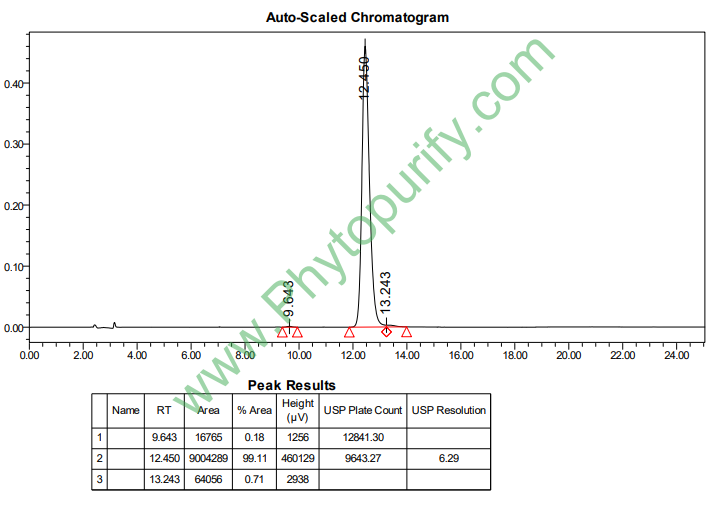
Purity: 95%~99%
Analysis Method: HPLC-DAD or/and HPLC-ELSD
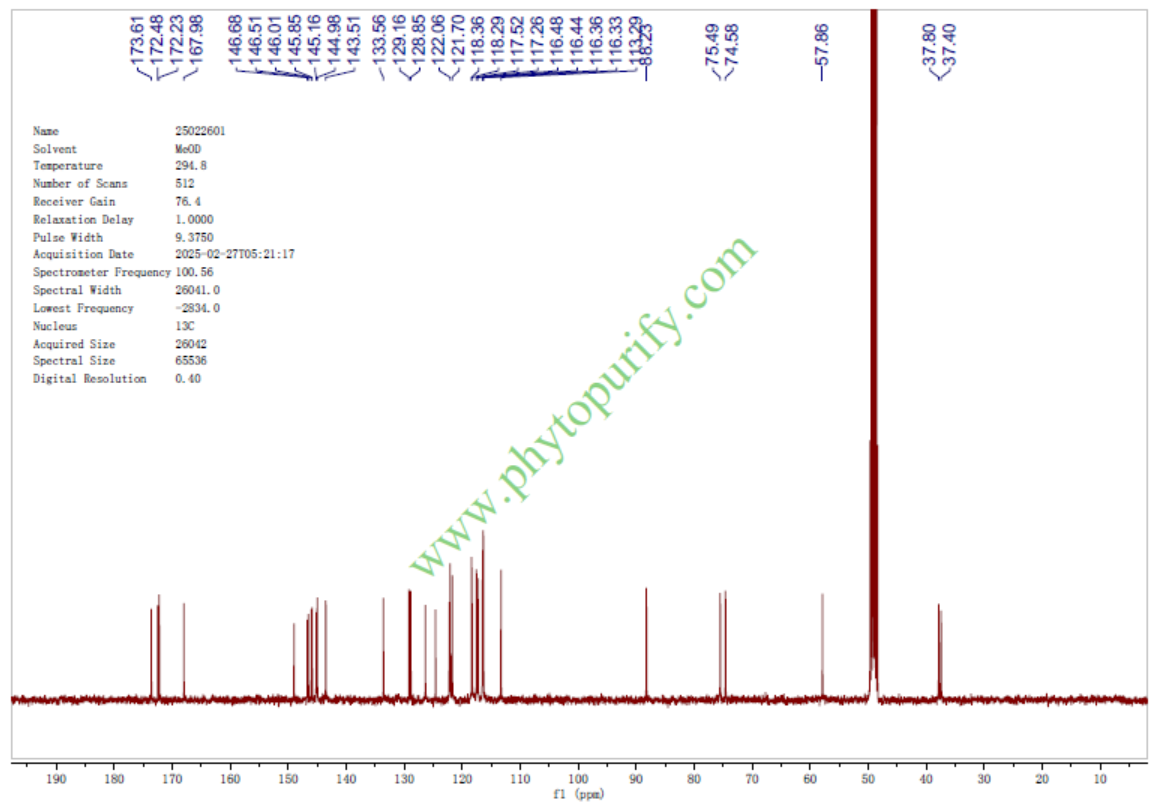
Identification Method: Mass, NMR
Packing: Brown vial or HDPE plastic bottle
Storage: Store in a well closed container, protected from air and light. Put into refrigerate or freeze for long term storage.
Whenever possible, you should prepare and use solutions on the same day. However, if you need to make up stock solutions in advance, we recommend that you store the solution as aliquots in tightly sealed vials at -20℃. Generally, these will be useable for up to two weeks.
The product could be supplied from milligrams to grams
Inquire for bulk scale.
Chengdu Biopurify Phytochemicals Ltd. is a leading company in the research, development, manufacture and marketing of High Quality Phytochemicals and Extracts(especially Active Ingredients from Traditional Chinese Medicine,TCM), Natural Active Pharmaceutical Ingredients worldwide.
The main services:
A. Supply active ingredients and reference standards of TCM, from mgs to kgs scale
B. Custom extraction and purification, target Herb Active Ingredients
C. Custom synthesis and semi-synthesis for Natural Active Ingredients
D. CR(contract research), CM(contract manufacture) and PD(process development) services from lab scale, pilot scale to commercial scale(GMP is also available)
E. TCM compounds library for drug screen,more than 3000 compounds available, many of them are rare and unique.
HPLC of Salvianolic acid B
NMR of Salvianolic acid B
Storage conditions:Short-term storage at 2~8℃, long-term storage at -20 ~ -80℃
Salvianolic acid B (CAS number: 121521-90-2) is an important water-soluble phenolic compound isolated from the traditional Chinese medicine Salvia miltiorrhiza, and belongs to the 1-benzofuran class of natural products. As a component with high content and significant activity in Danshen, salvianolic acid B has attracted much attention in the field of traditional Chinese medicine due to its diverse pharmacological effects. In recent years, with the development of modern pharmacology and molecular biology techniques, the biological activity and mechanism of action of salvianolic acid B have been widely studied, demonstrating its potential in antioxidant, anti-inflammatory, cardiovascular and cerebrovascular protection, anti-tumor, neuroprotection, and metabolic regulation, especially in the prevention and treatment of microcirculatory diseases.
This article aims to systematically review the chemical structure and physicochemical properties, plant sources, and extraction methods of salvianolic acid B, comprehensively evaluate its pharmacological activity and mechanism of action, analyze its clinical development potential based on pharmacological parameters, and prospect its application prospects in modern medicine, providing theoretical basis and research direction for natural product pharmacology and new drug development.
The molecular formula of salvianolic acid B is C36H30O16, with a molecular weight of 718.62, belonging to polyphenolic compounds. Its structural feature is a complex polyphenol system formed by two caffeic acid units connected by ester bonds and benzofuran rings, with abundant hydroxyl and phenolic carboxyl groups, endowing it with good antioxidant activity. The chemical skeleton of salvianolic acid B is stable and has strong free radical scavenging ability.
In terms of physical and chemical properties, the LogP value of salvianolic acid B is 2.4687, indicating its moderate lipophilicity, which is beneficial for cell membrane penetration but not excessively lipophilic. Its topological polar surface area (TPSA) is 278.04, and the higher polar surface area reflects its good water solubility (solubility of about 0.1268 mg/mL), which is also in line with its characteristics as a water-soluble phenolic compound. The low penetration ability of salvianolic acid B through the blood-brain barrier suggests that its direct action in the central nervous system may be limited. In terms of safety, salvianolic acid B has no hERG channel inhibitory effect and the Ames mutagenicity test result is negative, indicating that it has a good safety basis.
Salvia miltiorrhiza Bunge, a traditional Chinese medicinal herb widely distributed in China and East Asia, is the main source of salvianolic acid B. The roots of Danshen are rich in salvianolic acid compounds, among which salvianolic acid B is one of the most abundant and biologically active components.
The extraction method usually involves water extraction or alcohol extraction combined with liquid chromatography separation and purification. Traditional processes often use water or ethanol water mixed solvents for reflux extraction, followed by multi-stage solvent extraction, column chromatography (such as silica gel column, C18 reverse phase column), and high performance liquid chromatography (HPLC) purification to obtain high-purity salvianolic acid B. In recent years, the application of ultrasound assisted extraction, microwave-assisted extraction, and membrane separation technology has improved extraction efficiency and purity, reduced process costs, and promoted the large-scale production of salvianolic acid B.
The pharmacological activities of salvianolic acid B are rich and diverse, covering multiple aspects such as antioxidant, anti-inflammatory, antithrombotic, cardiovascular and cerebrovascular protection, neuroprotection, anti-tumor, hypoglycemic, and osteogenic regulation.
Danshensu acid B contains abundant phenolic hydroxyl structures, which can effectively eliminate free radicals, inhibit lipid peroxidation, and protect cells from oxidative stress damage. In vitro experiments have shown that salvianolic acid B can significantly increase the activity of antioxidant enzymes such as superoxide dismutase (SOD) and glutathione peroxidase (GPx), reduce the level of malondialdehyde (MDA), and alleviate oxidative damage.
Danshensu B exerts antithrombotic effects by regulating various blood clotting factors and platelet activation related targets, such as PTGS1, F2, F7, F9, F10, ITGA2B, ITGB3, P2RY12, TBXA2R, SERPINC1. It can inhibit platelet aggregation, reduce blood viscosity, improve microcirculation, prevent thrombosis, and has potential cardiovascular and cerebrovascular protective effects.
Danshensu acid B inhibits inflammatory response by downregulating the nuclear factor kappa B (NF - κ B) signaling pathway and the expression of related inflammatory mediators. It has shown the effect of reducing tissue inflammation and lowering the levels of inflammatory factors (such as TNF - α, IL-1 β, IL-6) in various inflammatory models.
Danshensu B can alleviate oxidative stress and inflammatory damage in nerve cells, inhibit cell apoptosis, and promote nerve regeneration. It exhibits significant neuroprotective and antidepressant activity in animal models of ischemic brain injury, Parkinson's disease, and depression.
Danshensu B exhibits multi-target anti-tumor activity by inducing tumor cell apoptosis, inhibiting proliferation and migration, and intervening in the tumor microenvironment. Its mechanism of action involves regulating the cell cycle, activating apoptosis related proteins, and inhibiting tumor related signaling pathways.
Salvianolic acid B can improve insulin resistance, promote glucose metabolism, reduce blood sugar level, and protect diabetes and its complications.
Danshensu B promotes osteoblast differentiation and inhibits osteoclast activity, which is beneficial for the treatment of bone metabolism diseases such as osteoporosis.
The multiple pharmacological effects of salvianolic acid B depend on its regulation of multiple molecular targets, mainly involving the following aspects:
Danshensu B alleviates oxidative stress by directly clearing reactive oxygen species (ROS), nitrogen free radicals (RNS), and activating the endogenous antioxidant enzyme system. Its phenolic hydroxyl structure provides electrons, stabilizes free radicals, and blocks oxidative chain reactions.
Danshensu B regulates blood clotting factors (F2, F7, F9, F10) and platelet surface receptors (ITGA2B, ITGB3, P2RY12, TBXA2R), inhibiting platelet aggregation and thrombosis. In addition, by regulating the balance of PTGS1 (cyclooxygenase-1) and SERPINC1 (antithrombin III), blood flow and anticoagulant status are maintained.
Danshensu B inhibits inflammatory signaling pathways such as NF - κ B and MAPK, reduces the expression of pro-inflammatory cytokines, and alleviates inflammatory responses. It can also upregulate anti-inflammatory factors and promote self repair of inflammation.
Danshensu B induces tumor cell apoptosis by regulating Bcl-2 family proteins, caspase enzyme system, and autophagy related proteins, while inhibiting excessive autophagy in neuroprotection and maintaining cellular homeostasis.
Danshensu B reduces oxidative damage to nerve cells, inhibits the release of inflammatory mediators, protects mitochondrial function, and promotes neuronal survival and functional recovery.
The pharmacological parameters of salvianolic acid B indicate its potential for development. The high molecular weight (718.62) and TPSA (278.04) suggest strong polarity, which may limit oral bioavailability. The LogP value is moderate (2.47), which is beneficial for cell membrane permeation, but its water solubility is low (0.1268 mg/mL), which may affect its in vivo absorption.
The low permeability of the blood-brain barrier limits its direct pharmacological effects in the central nervous system, but it also reduces the potential risk of central toxicity. Danshensu B does not inhibit hERG channels and reduces the risk of cardiac toxicity. The Ames test is negative, indicating a low risk of genotoxicity.
Pharmacokinetic studies have shown that salvianolic acid B is absorbed slowly after oral administration, with limited bioavailability and widespread distribution in the body. It is mainly metabolized through the liver and excreted through bile and urine. To enhance its clinical application value, the development of drug delivery systems such as nanocarriers, liposome encapsulation, and structural modification has become a research hotspot.
Salvianolic acid B, as an important active ingredient in Salvia miltiorrhiza, has shown significant therapeutic potential in many disease models, especially in cardiovascular and cerebrovascular diseases, diabetes and its complications, neurodegenerative diseases and tumors. Its antithrombotic, antioxidant and anti-inflammatory effects provide a theoretical basis for the prevention and treatment of atherosclerosis, ischemic stroke and microcirculation disorders.
At present, salvianolic acid B is still in the basic and preclinical research stage, lacking large-scale clinical trial data. In the future, systematic research on its pharmacokinetics, toxicology, and clinical efficacy should be strengthened, and the administration method should be optimized to improve bioavailability. Combining modern drug design with nanotechnology, salvianolic acid B is expected to become a natural drug candidate molecule with multiple targets and mechanisms, promoting the transformation of traditional Chinese medicine into modern drugs.
In addition, the multiple biological activities of salvianolic acid B make it potentially advantageous in combination therapy and comprehensive disease management. With the development of precision medicine, personalized treatment strategies based on salvianolic acid B are also worth exploring.
Danshensu acid B, as a key natural product in Danshen, has demonstrated extensive clinical application potential due to its unique chemical structure and rich pharmacological activity. Its multiple mechanisms of action, including antioxidant, antithrombotic, anti-inflammatory, and neuroprotective effects, provide new ideas for the prevention and treatment of cardiovascular and cerebrovascular diseases and related chronic diseases. Despite facing challenges such as bioavailability and pharmacokinetics, with the advancement of extraction and purification technologies and drug delivery systems, salvianolic acid B is expected to become an important direction for the development of natural product drugs. Future research should focus on in-depth analysis of its mechanism of action, clinical safety and efficacy evaluation, in order to promote its clinical translation and application, and benefit the vast number of patients.
