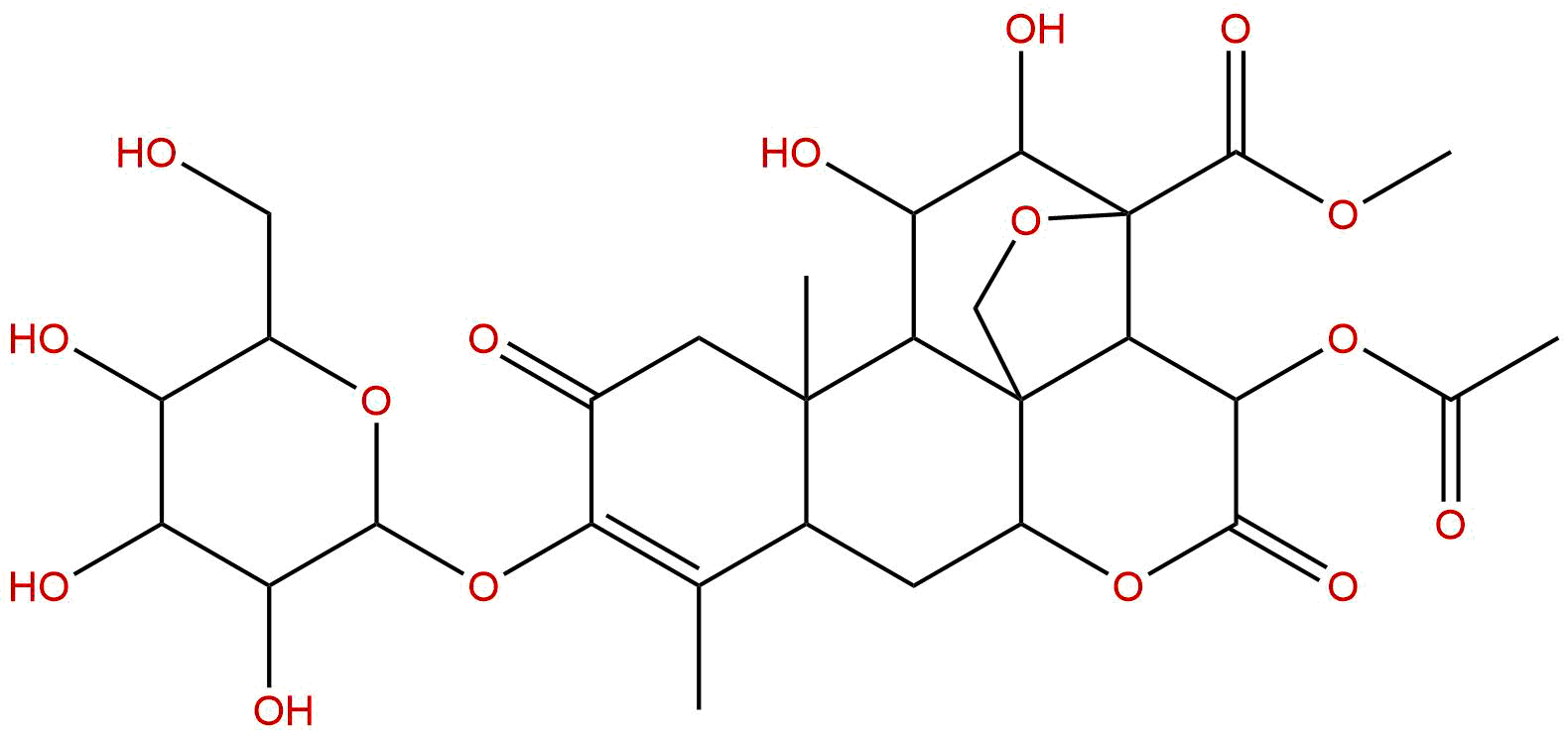


Product name: Yadanzioside I
Synonym name: (-)-Yadanzioside I
Catalogue No.: BP5379
Cas No.: 99132-95-3
Formula: C29H38O16
Mol Weight: 642.607
Botanical Source:
Type of Compound: Diterpenoids
Purity: 95%~99%
Analysis Method: HPLC-DAD or/and HPLC-ELSD
Identification Method: Mass, NMR
Packing: Brown vial or HDPE plastic bottle
Storage: Store in a well closed container, protected from air and light. Put into refrigerate or freeze for long term storage.
Whenever possible, you should prepare and use solutions on the same day. However, if you need to make up stock solutions in advance, we recommend that you store the solution as aliquots in tightly sealed vials at -20℃. Generally, these will be useable for up to two weeks.
The product could be supplied from milligrams to grams
Inquire for bulk scale.
For Reference Standard and R&D, Not for Human Use Directly.
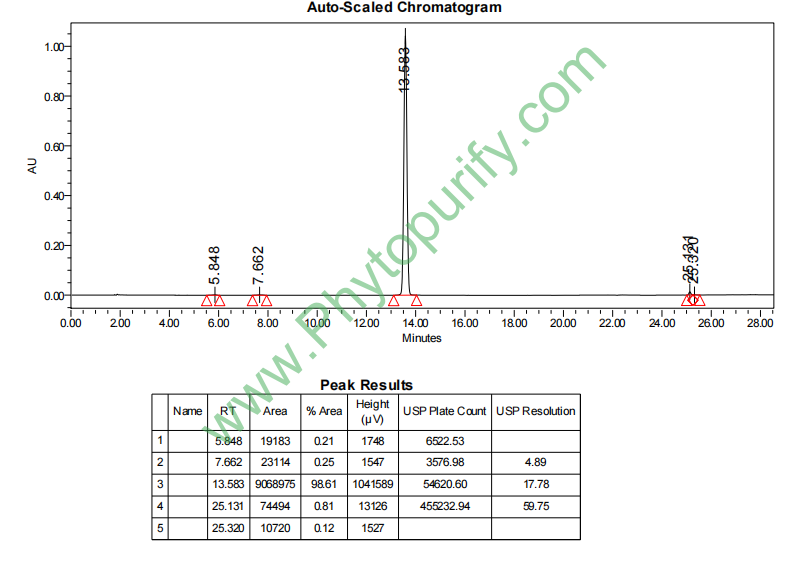
HPLC of Yadanzioside I
Storage conditions:Short-term storage at 2~8℃, long-term storage at -20 ~ -80℃
245.0400
-.8832
-.8832
5.7027
.4896
.7008
Low
49.5717
6.8363
Yes
No
No
No
Yes
No
0.3
Yes
No
No
Yes
Natural products, as an important source of drug discovery, play an irreplaceable role in the long history of human fight against diseases. Among the numerous biologically active natural compound families, lignin compounds (Quassinoids) have attracted much attention due to their unique chemical structure and significant pharmacological activity. Bitter lignin compounds mainly come from plants in the Simaroubacheae family, and are a highly oxidized class of triterpenoid lactones. Their structural complexity and diverse biological activities make them a hot topic in natural product chemistry and pharmacology research.
Brucea Javanese(Brucea javanica As a typical representative of the Sapindaceae family, Merr. has been applied in traditional Chinese medicine for hundreds of years, mainly for the treatment of dysentery, malaria, and certain cancers. Modern pharmacological research has confirmed that brucea contains abundant bitter lignin compounds, among which Yadanzioside I, as an important bitter lignin glycoside, has received widespread attention in recent years due to its significant antiviral activity.
Yaguzi glycoside I (CAS number: 99132-95-3) is a bitter lignin compound isolated from Yaguzi. Its most notable pharmacological activity is its potent inhibitory effect on Tobacco Mosaic Virus (TMV), with a half maximal inhibitory concentration (IC50) of 4.22 μ M. This discovery not only expands the antiviral spectrum of lignin compounds, but also provides important lead compounds for the development of new antiviral drugs. It is worth noting that TMV, as a model virus for plant virus research, often has inhibitory activity that can predict the potential effects of compounds on certain human viruses. This makes the antiviral research of bruce acid glycoside I more scientifically significant and applicable.
This article will provide a systematic review of the research status of Brucea Javanese Glycoside I from multiple dimensions, including chemical structure, plant origin, pharmacological activity, mechanism of action, pharmacological evaluation, and clinical application prospects. The aim is to provide comprehensive academic references for the in-depth research and development of this compound.
Brucea Javanese Glycoside I belongs to the C20 type of bitter lignin glycosides in the class of bitter lignin compounds, and its core skeleton is the bitter lignin lactone structure. From a chemical structure perspective, Brucea Javanese Glycoside I exhibits the following significant characteristics:
Mother nucleus structure Using quassinoid as the basic skeleton, which consists of 20 carbon atoms and contains a highly oxidized tetracyclic or pentacyclic system. A typical lignin skeleton consists of four rings: A, B, C, and D. Ring A is a delta lactone ring, ring B is a cyclohexenone structure, and rings C and D are highly substituted cyclohexane or cyclopentane structures.
Sugar substitution The significant feature of Brucea Javanese Glycoside I is the presence of a glycosylation unit at position C-21, typically β - D-glucose. The presence of sugar groups not only increases the water solubility of compounds, but also has a significant impact on their biological activity and pharmacokinetic properties.
Functional group distribution The molecule contains multiple hydroxyl, carbonyl, and lactone groups, and the specific arrangement of these functional groups in space provides the molecular basis for the interaction between the compound and biological targets. Especially the hydroxyl groups at positions C-11 and C-12, as well as the carbonyl group at position C-16, are considered key pharmacophores for their antiviral activity.
According to computational chemistry and experimental measurement data, the main physicochemical property parameters of Brucea Javanese Glycoside I are as follows:
These physicochemical property parameters provide important reference information for the drug development of Brucea Javanese Glycoside I. Its good water solubility and low toxicity risk are favorable factors, but its high TPSA and low fat solubility may limit its oral bioavailability and cell membrane penetration ability, which needs to be addressed in subsequent drug chemical modifications.
Brucea Javanese Glycoside I is mainly derived from the Sapindaceae plant Brucea Javanese(Brucea javanica (L.) Merr.), This plant is widely distributed in tropical and subtropical regions such as southern China, Southeast Asia, India, and Australia. In China, brucea is mainly produced in provinces such as Guangdong, Guangxi, Fujian, Yunnan, and Taiwan.
The medicinal parts of Brucea Javanese are mainly mature fruits, traditionally used to treat amoebic dysentery, malaria, and certain malignant tumors. Modern plant chemistry research has shown that brucea contains various chemical components, including bitter lignin, alkaloids, flavonoids, phenolic acids, etc. Among them, bitter lignin compounds are the main active ingredient group. Other plants belonging to the same genus, such as Brucea mollis、Brucea sumatrana It has also been reported to contain similar lignin compounds.
The extraction and separation of Brucea Javanese Glycoside I usually follow the classic process of natural product chemistry, which mainly includes the following steps:
Raw material pretreatment After crushing the dried fruit of Eucommia ulmoides, it is extracted using organic solvents. Common extraction solvents include methanol, ethanol, or methanol water mixed solvents. Research has shown that a 70% -80% ethanol aqueous solution has a higher extraction efficiency for lignin glycosides.
Crude extraction Cold soaking or reflux extraction methods are usually used, usually under room temperature or mild heating conditions. The extraction time is generally 24-72 hours, and repeated 2-3 times to improve the extraction rate.
solvent partitioning After concentration, the crude extract was subjected to liquid-liquid extraction using petroleum ether, ethyl acetate, and n-butanol in sequence. Due to its glycosidic structure, Brucea Javanese Glycoside I is mainly enriched in the n-butanol extraction phase.
Column chromatography separation The n-butanol extraction phase was separated and purified by silica gel column chromatography, ODS reverse phase column chromatography and Sephadex LH-20 gel column chromatography for many times. The elution system usually uses a chloroform methanol water or acetonitrile water gradient system.
Purification by High Performance Liquid Chromatography (HPLC)For samples with high purity requirements, preparative HPLC can be used for final purification, using a C18 reverse phase column with acetonitrile water or methanol water as the mobile phase.
Structural Identification The purified compound was structurally confirmed by spectroscopic methods such as nuclear magnetic resonance (NMR), mass spectrometry (MS), infrared spectroscopy (IR), and ultraviolet spectroscopy (UV).
It is worth noting that the content of Brucea Javanese Glycoside I in plants is usually low and coexists with various structurally similar bitter lignin glycosides, which poses certain challenges for separation and purification. In recent years, the application of new separation technologies such as high-speed counter current chromatography (HSCCC) and supercritical fluid extraction (SFE) has provided a new approach for efficiently obtaining high-purity bruce acid glycoside I.
The most noteworthy pharmacological activity of Yaguzi glycoside I is its antiviral effect, especially its inhibitory activity against tobacco mosaic virus (TMV). Research data shows that the IC50 of Brucea Javanese Glycoside I for TMV is 4.22 μ M, which is a relatively excellent antiviral activity level among natural products.
TMV, as a model virus for plant virus research, has a replication mechanism similar to certain human viruses. The strong inhibitory effect of Brucea Javanese Glycoside I on TMV suggests that it may have a broader antiviral potential. Subsequent studies have further confirmed that Brucea Javanese Glycoside I exhibits varying degrees of inhibitory activity against various human viruses
Antiherpesvirus activity Research has shown that Brucea Javanese Glycoside I has inhibitory effects on herpes simplex viruses (HSV-1 and HSV-2), possibly by interfering with viral DNA replication or viral protein synthesis.
Anti human immunodeficiency virus (HIV) activity Partial studies have reported the inhibitory effect of Brucea Javanese Glycoside I on HIV-1, which may be related to the inhibition of HIV-1 protease (HIV1-PR) or integrase (INT) activity.
anti-influenza virus activity Preliminary studies have shown that Brucea Javanese Glycoside I has a certain inhibitory effect on influenza A virus, but its activity is relatively weak and requires further structural optimization.
In addition to antiviral activity, Brucea Javanese Glycoside I also exhibits various other pharmacological activities:
Antitumor activity As a typical representative of bitter lignin compounds, Brucea javanica glucoside I has cytotoxic effects on a variety of tumor cell lines, including liver cancer, lung cancer, breast cancer and leukemia cells. Its anti-tumor mechanism involves multiple aspects such as inducing cell apoptosis, inhibiting cell proliferation, and interfering with the cell cycle.
anti-inflammatory activity Research has shown that Brucea Javanese Glycoside I can inhibit lipopolysaccharide (LPS) - induced macrophage inflammatory response, reduce the production of inflammatory factors such as tumor necrosis factor - α (TNF - α), interleukin-6 (IL-6), and nitric oxide (NO).
Antiparasitic activity Given that Brucea Javanese is used in traditional medicine to treat malaria and amoebic dysentery, Brucea Javanese Glycoside I has also been studied for its inhibitory effects on malaria parasites and amoebic parasites, but its activity is relatively weak.
The antiviral mechanism of Brucea Javanese Glycoside I involves multiple levels, and currently the most extensively studied aspects mainly include the following:
Inhibition of viral replicase activity For TMV, Brucella Javanese Glycoside I may inhibit the activity of viral replicases (such as RNA dependent RNA polymerase) and block the synthesis of viral RNA. This mechanism is consistent with the inhibitory effect of lignin compounds on certain viral polymerases.
Interference with viral protein synthesis Research has shown that Brucea Javanese Glycoside I can inhibit the translation process of viral proteins, possibly by affecting ribosome function or interfering with the stability of viral mRNA.
Regulating host cell signaling pathways Brucea Javanese Glycoside I may enhance the host cell's antiviral immune response and indirectly inhibit virus replication by regulating signaling pathways such as NF - κ B and MAPK.
Based on existing research data and computational chemistry analysis, Brucea Javanese Glycoside I may act on the following molecular targets:
UL42 and UL54 These two targets are related to the replication of herpes virus DNA, and Brucella Javanese Glycoside I may exert anti herpes virus effects by inhibiting the function of these proteins.
Host cell targets:
MPO (myeloperoxidase)MPO plays an important role in the inflammatory response, and the regulatory effect of Brucea Javanese Glycoside I on MPO may be related to its anti-inflammatory activity.
Other potential targets:
Based on the study of the structure-activity relationship of lignin compounds, the antiviral activity of Brucea Javanese Glycoside I is closely related to its molecular structural characteristics
The importance of lactone rings The δ - lactone structure of the A ring is a key pharmacophore for the biological activity of lignin compounds, and the opening or modification of the lactone ring often leads to a significant decrease in activity.
The influence of sugar groups The substitution of sugar groups at position C-21 has a significant impact on the water solubility and bioavailability of Brucella Javanese Glycoside I, but the presence of sugar groups may reduce its binding ability to certain targets.
Contribution of hydroxyl groups The hydroxyl groups at positions C-11 and C-12 may interact with target proteins through hydrogen bonding and are important functional groups for maintaining antiviral activity.
Based on the standards of modern drug development, the pharmacological evaluation of Brucea Javanese Glycoside I involves multiple aspects:
Analysis of drug properties According to Lipinski's Five Rules, the molecular weight (642.6 Da) of Brucea Javanese Glycoside I exceeds 500 Da, the LogP value (-0.88) is less than 5, and the number of hydrogen bond donors (about 8) and acceptors (about 14) both exceed the rule limits, indicating that it does not fully meet the drug class standards of traditional small molecule drugs. However, for natural products, many successful drugs do not fully comply with Lipinski's rules and therefore require comprehensive evaluation.
Toxicity evaluation:
cytotoxicity Although Brucea Javanese Glycoside I has cytotoxicity towards certain tumor cells, its toxicity towards normal cells is relatively low and it has a certain degree of selectivity.
Metabolic stability Preliminary studies have shown that Brucea Javanese Glycoside I has certain metabolic stability in liver microsomes, but glycosidic bonds may be hydrolyzed by gut microbiota or liver enzymes, affecting its in vivo metabolic behavior.
Based on computational predictions and limited experimental data, the pharmacokinetic characteristics of Brucea Javanese Glycoside I are as follows:
absorb Due to its large molecular weight and high polarity, the oral absorption of Brucea Javanese Glycoside I may be poor. Its high water solubility (5.7 mg/mL) is beneficial for formulation development, but its low fat solubility (LogP=-0.88) may limit its passive diffusion through intestinal epithelial cells. Therefore, oral bioavailability may be lower, and intravenous or transdermal administration may be a better route of administration.
distribution The distribution volume of Brucea Javanese Glycoside I may be relatively small, mainly distributed in the extracellular fluid. Its low blood-brain barrier penetration indicates limited distribution of the compound in the central nervous system, which limits its application in neurological diseases and reduces the risk of central nervous system toxicity.
Metabolism The metabolism of Brucea Javanese Glycoside I may involve hydrolysis of glycosidic bonds and glucuronidation or sulfation of hydroxyl groups. The liver and gut microbiota are its main metabolic sites. The activity of metabolites may differ from that of the prototype drug and further research is needed.
excretion Due to its good water solubility, bruce acid glycoside I and its metabolites may be mainly excreted through the kidneys, and bile excretion may also be an important pathway.
The following chemical modification strategies are worth considering in response to the shortcomings in the pharmacological properties of Brucea Javanese Glycoside I
Prodrug design By esterification or etherification modification of hydroxyl or carboxyl groups, lipid solubility and oral absorption can be improved.
Glycosylation modification Changing the type or connection mode of sugar groups, or removing sugar groups to obtain glycosides, may improve their binding ability to targets.
Molecular simplification Simplify molecular structure, reduce molecular weight, and enhance drug like properties while maintaining key pharmacophores.
Targeted delivery Utilizing novel delivery systems such as nanocarriers and liposomes to enhance drug targeting and bioavailability.
As an antiviral lead compound, Brucea Javanese Glycoside I has potential clinical application prospects in the following fields:
Plant virus control Given the potent inhibitory effect of Brucea Javanese Glycoside I on TMV, it has development value as a biopesticide for the prevention and control of plant viral diseases in the agricultural field. Compared with chemically synthesized pesticides, natural product pesticides have advantages such as environmental friendliness and low residue.
Antiherpesvirus drugs The inhibitory effect of Brucea Javanese Glycoside I on HSV-1 and HSV-2 makes it a promising new drug for the treatment of herpes simplex virus infection, especially for drug-resistant strains.
Anti HIV drugs Although the anti HIV activity of Brucea Javanese Glycoside I is relatively weak, its ability to act on multiple targets (HIV1-PR, INT, CCR5, CXCR4) gives it the potential to be developed as a multi-target anti HIV drug, which may reduce the development of drug resistance.
Given the unique mechanism of action of Brucea Javanese Glycoside I, a combination therapy strategy may be an effective way to enhance its therapeutic efficacy
Combined with nucleoside analogues If used in combination with acyclovir (anti HSV) or zidovudine (anti HIV), synergistic effects may occur through different mechanisms of action.
Combined with immune modulators The combination of the immunomodulatory effect and antiviral activity of Brucea Javanese Glycoside I may result in better therapeutic effects when used in combination with immune modulators such as interferon.
Combined use with traditional Chinese medicine compound As one of the active ingredients in Brucea asiatica, the combination of Brucea asiatica glycoside I with other Brucea asiatica components or traditional Chinese medicine formulas may exert a comprehensive therapeutic effect of multiple components and targets.
Despite its various pharmacological activities and promising development prospects, the clinical application of Brucea Javanese Glycoside I still faces the following challenges:
Pharmacokinetic defects The problems of low oral bioavailability and metabolic instability need to be solved through drug chemical modification or new formulation technologies.
Selective activity Further optimization of its selectivity is needed to reduce toxicity to normal cells and improve the therapeutic index.
Large scale preparation The yield of extracting and isolating bruce acid glycoside I from natural plants is relatively low, and the development of chemical or biological synthesis methods is the key to solving the source problem.
In depth mechanism research Although multiple potential targets have been identified, the specific binding mode and mechanism of action of Brucea Javanese Glycoside I with these targets still need to be further elucidated through structural biology and molecular pharmacology research.
Future research should focus on the following aspects: firstly, obtaining derivatives with better activity and drug properties through medicinal chemical methods; Secondly, utilizing modern biotechnology to establish a sustainable production system for Brucea Javanese Glycoside I; Thirdly, conduct systematic pharmacological and toxicological research to lay the foundation for clinical trials; The fourth is to explore the potential application of Brucea Javanese Glycoside I in antiviral combination therapy.
As a bitter lignin compound isolated from the traditional Chinese medicine Brucea Javanica, Yaguzi Glycoside I has attracted widespread attention from researchers in the fields of natural products and medicinal chemistry due to its potent inhibitory activity against tobacco mosaic virus (IC50=4.22 μ M). This article provides a systematic review of the compound from multiple aspects, including chemical structure, plant origin, pharmacological activity, mechanism of action, pharmacological evaluation, and clinical application prospects.
The chemical structure of Brucea Javanese Glycoside I exhibits typical characteristics of lignin lactone skeleton and sugar substitution. Its physicochemical properties show good water solubility and low toxicity risk, but there are also shortcomings such as low oral bioavailability and poor cell membrane penetration ability. In terms of pharmacological activity, Brucea Javanese Glycoside I not only has significant antiviral activity, but also exhibits various biological activities such as anti-tumor and anti-inflammatory effects. Its mechanism of action involves multiple viral and host cell targets, including HIV-1 protease, integrase, CCR5, CXCR4, etc., reflecting the characteristics of multi-target action.
Although there are some shortcomings in the pharmacological properties of Brucea Javanese Glycoside I, its unique chemical structure and significant biological activity make it an ideal lead compound for developing novel antiviral drugs. Through drug chemical modification, novel formulation techniques, and combination therapy strategies, it is expected to overcome its pharmacokinetic deficiencies and improve treatment efficacy. At the same time, establishing a sustainable production and supply system and conducting in-depth mechanism research will promote the clinical application of Brucella Javanese Glycoside I from laboratory research.
In summary, as an important achievement in the discovery of natural product drugs, bruce acid glycoside I not only enriches the research connotation of lignin compounds, but also provides new ideas and directions for the development of antiviral drugs. With the continuous deepening of research and the continuous advancement of technology, bruce acid glycoside I and its derivatives are expected to play an important role in the field of antiviral therapy and contribute to human health.
