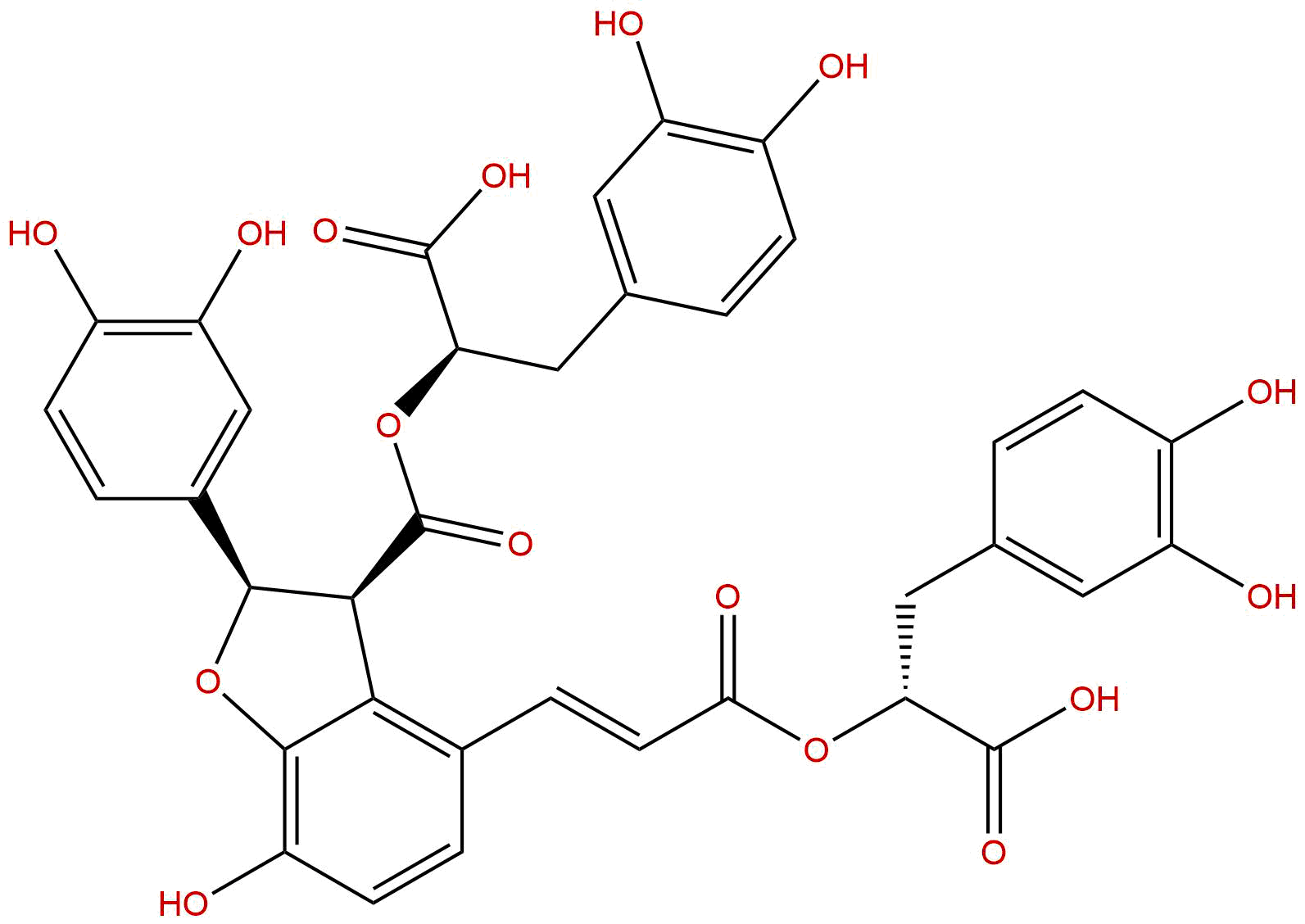


Product name: Salvianolic acid Y
Synonym name: 2-epi-Salvianolic acid B; Orthosiphoic acid B
Catalogue No.: BP4847
Cas No.: 1638738-76-7
Formula: C36H30O16
Mol Weight: 718.62
Botanical Source:
Type of Compound: Phenylpropanoids
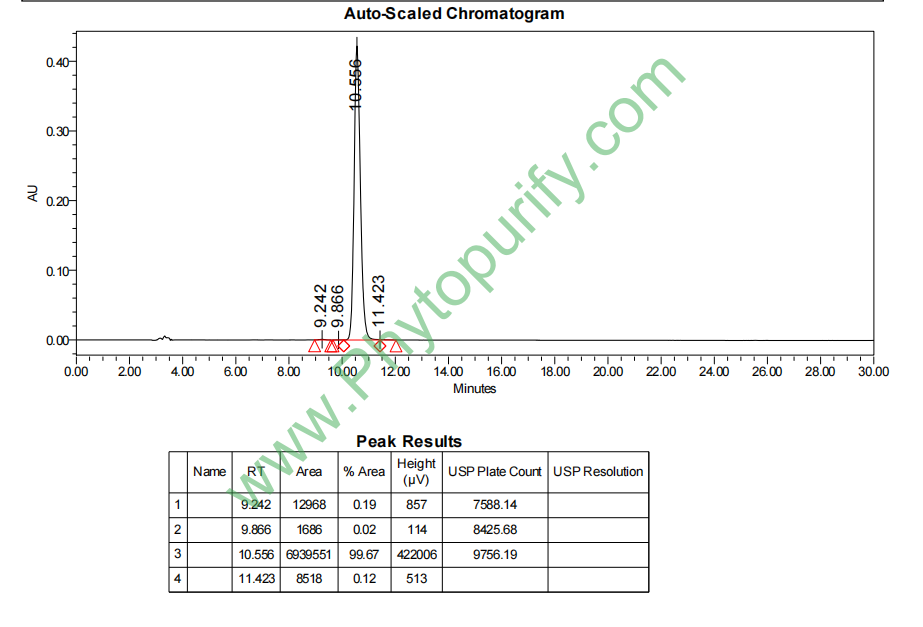
Purity: 95%~99%
Analysis Method: HPLC-DAD or/and HPLC-ELSD
Identification Method: Mass, NMR
Packing: Brown vial or HDPE plastic bottle
Storage: Store in a well closed container, protected from air and light. Put into refrigerate or freeze for long term storage.
Whenever possible, you should prepare and use solutions on the same day. However, if you need to make up stock solutions in advance, we recommend that you store the solution as aliquots in tightly sealed vials at -20℃. Generally, these will be useable for up to two weeks.
The product could be supplied from milligrams to grams
Inquire for bulk scale.
For Reference Standard and R&D, Not for Human Use Directly.
HPLC of Salvianolic acid Y
Storage conditions:Short-term storage at 2~8℃, long-term storage at -20 ~ -80℃
278.0400
2.4667
-.2204
.1280
1.0885
.1640
Low
92.5839
4.5409
Yes
No
No
No
Yes
No
0.0
Yes
Yes
Yes
No
Natural products, as an important source of drug discovery, play an irreplaceable role in the long history of human struggle against diseases. The active ingredients derived from traditional Chinese medicine have always been a hot topic in modern drug development due to their unique chemical diversity and biological activity. Danshen (Salvia miltiorrhiza)(Salvia miltiorrhiza Bunge), As a perennial herbaceous plant of the Salvia genus in the family Lamiaceae, its dry roots and rhizomes are one of the most widely used blood activating and stasis removing medicines in traditional Chinese medicine clinical practice, known as the "one herb Danshen, with the same function as the four substances". The pharmacological activity of Salvia miltiorrhiza is mainly attributed to two types of chemical components: lipophilic tanshinones (such as salvianolic IIA and cryptotanshinone) and water-soluble salvianolic acids. Among them, salvianolic acid compounds have attracted much attention for their significant antioxidant, anti-inflammatory, anti apoptotic, and cardiovascular protective effects.
Salvianolic acid Y (Sal Y) is a novel water-soluble phenolic acid compound isolated and identified from Danshen in recent years. Although its planar structure is the same as the famous Salvianolic acid B (Sal B), both of which are tetrameric caffeic acid derivatives, there are differences in their stereochemical configurations, which endows Salvianolic acid Y with a unique biological activity spectrum. Preliminary studies have shown that salvianolic acid Y can effectively rescue cell damage induced by hydrogen peroxide (H ₂ O ₂), indicating its strong cell protective potential, especially in oxidative stress-related diseases such as myocardial ischemia-reperfusion injury, which may play an important role.
Myocardial ischemia is a series of pathological and physiological processes caused by insufficient blood supply to the coronary arteries, leading to an imbalance between oxygen supply and demand in myocardial cells. Continuous ischemia can lead to energy metabolism disorders, acidosis, ion homeostasis imbalance, and ultimately trigger cell apoptosis or necrosis in myocardial cells. Although reperfusion therapy restores blood supply, the accompanying "reperfusion injury" such as oxidative stress, calcium overload, and inflammatory response often further exacerbates myocardial injury. Therefore, searching for natural active molecules that can intervene in myocardial ischemic injury through multiple targets and pathways has important clinical significance. Danshensu acid Y has become a highly valuable candidate molecule for research due to its unique chemical structure and preliminary biological activity. This article will provide a systematic review of the research progress of salvianolic acid Y from the aspects of chemical structure and physicochemical properties, plant sources and extraction methods, pharmacological activity, mechanism of action, drug evaluation, and clinical application prospects, in order to provide reference for the in-depth development and utilization of this compound.
Danshensu acid Y belongs to water-soluble phenolic acid compounds, and its chemical structure is the basis for understanding its biological activity. From a chemical classification perspective, salvianolic acid Y is a typical oligomeric phenolic acid in Danshen, which is polymerized from caffeic acid units through ester bonds or carbon carbon bonds. Specifically, Danshensu Y and Danshensu B share the same planar molecular formula (C ∝₆ H ∝₀ O ₁₆) and planar structure, which is a tetramer formed by the condensation of three molecules of Danshensu and one molecule of caffeic acid. However, there are key differences in stereochemistry between the two, which belong to a non enantiomeric relationship. The subtle differences in this configuration may lead to different interaction modes with biomolecules such as proteins and enzymes, resulting in differentiated pharmacological activities.
In terms of physicochemical properties, the molecular weight of salvianolic acid Y is 718.6200 g/mol, belonging to the category of small molecule compounds. Its lipophilic water partition coefficient (LogP) is 2.4667, indicating that the compound has a certain degree of lipophilicity, but overall tends towards moderate polarity. The topological polar surface area (TPSA) is as high as 278.0400 Å ², mainly attributed to the presence of a large number of phenolic hydroxyl and carboxyl groups in its molecular structure. A high TPSA value usually indicates that the compound has good water solubility, but it also suggests that its transmembrane passive diffusion ability may be limited. The water solubility test value of salvianolic acid Y is 0.1280 mg/mL, which belongs to the slightly soluble level. This characteristic is consistent with its high TPSA value, but the lower LogP value suggests that it is not completely hydrophilic. Overall, the solubility of salvianolic acid Y is between lipid soluble and water-soluble, and this amphiphilicity may contribute to its distribution in organisms and binding to targets.
In addition, the molecular structure of salvianolic acid Y contains multiple phenolic hydroxyl groups, which are key pharmacophores for its antioxidant activity. Phenolic hydroxyl groups can provide hydrogen atoms, effectively eliminate free radicals, and thus interrupt the chain reaction of lipid peroxidation. At the same time, multiple ester bonds in the molecule may be hydrolyzed by esterases in the body, releasing active monomers such as danshensu, and these metabolites may also synergistically exert pharmacological effects. From the perspective of chemical stability, salvianolic acid compounds are sensitive to light, heat, and alkaline environments, and are prone to oxidative degradation or isomerization, which poses special requirements for their extraction, separation, storage, and formulation development. The prediction of blood-brain barrier (BBB) penetration shows that the penetration ability of salvianolic acid Y is relatively low, indicating that it mainly acts on peripheral tissues, especially the cardiovascular system, and the central nervous system may not be its main site of action. The prediction result of hERG inhibition is negative, indicating a low risk of cardiac toxicity. The Ames test result is 0.0, indicating no significant mutagenicity and preliminary good safety.
Danshensu acid Y mainly comes from the plant Salvia miltiorrhiza in the family Lamiaceae(Salvia miltiorrhiza Bunge's dried roots and rhizomes. Danshen is widely distributed in China, mainly produced in Sichuan, Shandong, Henan, Shaanxi and other places. Among them, Danshen produced in Zhongjiang, Sichuan and Rizhao, Shandong has particularly good quality and high content of active ingredients. In addition to authentic Danshen, other plants of the same genus, such as Nan Danshen, are also included(Salvia bowleyana Dunn)、 Ganxi Sage(Salvia przewalskii Maxim. and others may also contain salvianolic acid Y, but the content is usually low. The content of salvianolic acid Y in Danshen is much lower than its main isomer salvianolic acid B, which is a trace active ingredient, posing certain challenges to its separation and purification.
The extraction method of salvianolic acid Y usually draws on the classic extraction process of salvianolic acid components and optimizes it based on this to improve its yield and purity. Due to the high polarity and heat sensitivity of salvianolic acid compounds, special attention should be paid to condition control during the extraction process. Common extraction methods include:
Solvent extraction method This is the most fundamental method. Usually, water or different concentrations of ethanol (such as 30% -70% ethanol) are used as extraction solvents. Considering the polarity of salvianolic acid Y, low concentration ethanol (such as 30% -50%) reflux extraction or cold soaking extraction yields better results. The extraction temperature should be controlled within a lower range (such as 40-60 ℃) to avoid component degradation caused by high temperatures. The extraction time is generally 1-2 hours, and the extraction is repeated 2-3 times. This method is simple to operate, but has poor selectivity and contains many impurities in the extract, making subsequent purification difficult.
Ultrasonic assisted extraction method The cavitation effect and mechanical vibration of ultrasound can accelerate the penetration of solvents into plant cells and promote the dissolution of target components. Compared with conventional reflux extraction, ultrasound assisted extraction can significantly shorten the extraction time (usually 30-60 minutes), lower the extraction temperature, and improve the extraction rate of salvianolic acid Y. This method is highly efficient and suitable for small-scale laboratory preparation.
Enzyme assisted extraction method In response to the possibility that salvianolic acid Y may exist in plant cell walls or be encapsulated by other macromolecules, cellulase, pectinase, etc. can be added before extraction to disrupt the cell wall structure and improve the release efficiency of the target component. The enzymatic hydrolysis conditions (such as pH, temperature, enzyme concentration) need to be optimized according to the specific enzyme species. This method has mild conditions and is environmentally friendly, but the cost is relatively high.
The crude extract obtained from extraction needs to undergo a series of purification steps to obtain high-purity salvianolic acid Y. The main purification methods include:
Danshensu acid Y, as a novel active ingredient in Danshen, is still in its early stages of pharmacological activity research. However, existing research results have shown its enormous potential in cardiovascular protection, especially in anti myocardial ischemia.
1. Antioxidant and cell protective effects
This is one of the core pharmacological activities of salvianolic acid Y. Oxidative stress is a key pathological link in myocardial ischemia-reperfusion injury. Research has shown that salvianolic acid Y can significantly rescue damage induced by H ₂ O ₂ in various cells, such as cardiomyocytes H9c2 and endothelial cells. Its mechanism of action is mainly related to its strong free radical scavenging ability. The multiple adjacent hydroxyl groups in the Y molecule of salvianolic acid can serve as hydrogen donors, effectively eliminating reactive oxygen species (ROS) and reactive nitrogen species (RNS) such as superoxide anions (O ₂⁻·), hydroxyl radicals (· OH), peroxynitrite anions (ONOO ⁻), etc. In addition, it can chelate transition metal ions (such as Fe ² ⁺, Cu ² ⁺), inhibit the Fenton reaction, and thus reduce the production of ROS from the source. By reducing intracellular ROS levels, salvianolic acid Y can inhibit the oxidative stress-induced decrease in mitochondrial membrane potential (Δ PSI m), reduce the release of cytochrome c, and thereby block mitochondrial pathway induced apoptosis.
2. Anti apoptotic effect
Apoptosis is the main form of myocardial cell loss after myocardial ischemia injury. Danshensu acid Y has been proven to have significant anti apoptotic activity. In H ₂ O ₂ or hypoxia/reoxygenation (H/R) injury models, treatment with salvianolic acid Y can upregulate the expression of anti apoptotic protein Bcl-2 and downregulate the expression of pro apoptotic protein Bax, thereby increasing the Bcl-2/Bax ratio. The increase in this ratio helps to stabilize the mitochondrial membrane, inhibit the opening of mitochondrial permeability transition pores (mPTP), and reduce the release of pro apoptotic factors such as cytochrome c and apoptosis inducing factor (AIF). In addition, salvianolic acid Y can inhibit the activation of caspase-3 and caspase-9, ultimately reducing DNA fragmentation and protecting cells from apoptosis. This regulation of the apoptotic signaling pathway is one of the important mechanisms for protecting myocardial cells from ischemia-reperfusion injury.
3. Anti inflammatory effect
Inflammatory response plays a dual role in the progression and repair process of myocardial ischemic injury. Excessive inflammatory response can exacerbate myocardial damage. Danshensu acid Y exhibits certain anti-inflammatory activity. In lipopolysaccharide (LPS) - stimulated macrophage or myocardial ischemia models, salvianolic acid Y can inhibit the expression of pro-inflammatory cytokines such as tumor necrosis factor - α (TNF - α), interleukin-6 (IL-6), and inducible nitric oxide synthase (iNOS, encoded by the NOS2 gene), reducing the excessive production of nitric oxide (NO). This anti-inflammatory effect may be related to its inhibition of the activation of the nuclear factor kappa B (NF - κ B) signaling pathway. By reducing the release of inflammatory mediators, salvianolic acid Y helps alleviate inflammatory infiltration and damage in myocardial tissue.
4. Vascular protective effect
In addition to its direct protective effect on myocardial cells, salvianolic acid Y may also exert cardiovascular protective effects by protecting the function of endothelial cells. Vascular endothelial dysfunction is the initial link of cardiovascular diseases such as atherosclerosis and hypertension. Danshensu acid Y can inhibit endothelial cell damage induced by oxidized low-density lipoprotein (ox LDL) or high glucose, protecting the integrity of the endothelial barrier. It can also regulate the balance of vasoactive substances, for example, by upregulating the phosphorylation of endothelial nitric oxide synthase (eNOS), promoting the production of NO, and thus exerting vasodilatory effects. In addition, the inhibitory effect of salvianolic acid Y on angiotensin-converting enzyme (ACE) is also worth noting, which may help lower blood pressure and improve myocardial remodeling.
The pharmacological activity of salvianolic acid Y cannot be explained by a single mechanism, but rather by the synergistic effect of multiple targets and signaling pathways. Based on existing research and known modes of action of salvianolic acid compounds, the molecular mechanism of salvianolic acid Y can be summarized as follows:
1. Regulating oxidative stress and antioxidant defense system
Danshensu acid Y not only directly scavenges free radicals, but more importantly, it can activate the endogenous antioxidant defense system. One of its key targets is nuclear factor E2 related factor 2 (NFE2L2, also known as Nrf2). Nrf2 is the core transcription factor that cells use to respond to oxidative stress. Under normal physiological conditions, Nrf2 binds to Kelch like ECH associated protein 1 (Keap1) and is in an inhibited state. When salvianolic acid Y enters the cell, its phenolic hydroxyl structure may directly modify the thiol group of Keap1, causing Nrf2 to dissociate from Keap1 and translocate into the nucleus. In the nucleus, Nrf2 binds to antioxidant response elements (ARE) and initiates the transcription of downstream antioxidant enzyme genes, such as heme oxygenase-1 (HO-1), quinone oxidoreductase 1 (NQO1), superoxide dismutase (SOD), glutathione peroxidase (GPx), etc. By upregulating the expression of these enzymes, salvianolic acid Y can enhance the overall antioxidant capacity of cells, thereby more persistently and effectively resisting oxidative stress damage.
2. Regulating cell apoptosis and survival signaling pathways
The regulation of apoptosis by salvianolic acid Y involves multiple signaling pathways. In addition to directly regulating Bcl-2 family proteins, it can also affect the mitogen activated protein kinase (MAPK) pathway and SIRT1 signaling pathway.
3. Inhibit inflammatory response
The anti-inflammatory effect of salvianolic acid Y is mainly related to the inhibition of the NF - κ B signaling pathway. NF - κ B is the core transcription factor of inflammatory response. In the resting state, NF - κ B binds to its inhibitory protein I κ B and exists in the cytoplasm. When stimulated by TNF - α, IL-1 β, or ROS, I κ B kinase (IKK) is activated, leading to phosphorylation and degradation of I κ B, releasing NF - κ B. The released NF - κ B translocates into the nucleus, initiating the transcription of various pro-inflammatory genes such as TNF, IL-6, and NOS2. Danshensu acid Y may inhibit the activity of IKK or directly interfere with the DNA binding ability of NF - κ B, thereby blocking the activation of the NF - κ B pathway and downregulating the expression of inflammatory factors. In addition, the potential regulatory effect of salvianolic acid Y on PPARG (peroxisome proliferator activated receptor gamma) is also worth paying attention to. The activation of PPARG usually has anti-inflammatory and insulin resistance improving effects, and salvianolic acid Y may synergistically inhibit inflammation by activating PPARG.
4. Improve energy metabolism and mitochondrial function
Mitochondrial dysfunction is the key factor leading to cell death during myocardial ischemia. Danshensu acid Y can promote mitochondrial biosynthesis and improve mitochondrial function by activating the SIRT1-PGC-1 α axis. In addition, it may also protect mitochondria by stabilizing mitochondrial membrane potential and inhibiting mPTP opening. HIF1A (hypoxia inducible factor 1 alpha) is a key transcription factor for cells to adapt to low oxygen environments. In the early stages of ischemia, the stability of HIF1A can induce the expression of a series of pro survival genes, such as vascular endothelial growth factor (VEGF), erythropoietin (EPO), and glycolytic enzymes. Danshensu acid Y may promote compensatory changes in angiogenesis and energy metabolism under ischemic conditions by regulating the stability of HIF1A, thereby helping myocardial cells adapt to low oxygen environments.
5. Regulate vascular function
The regulation of vascular function by salvianolic acid Y involves multiple targets. Its inhibitory effect on ACE is similar to classical ACE inhibitors, which can reduce the production of angiotensin II (Ang II), thereby exerting vasodilation and anti myocardial remodeling effects. Meanwhile, it can also directly dilate blood vessels by activating the eNOS/NO pathway. In addition, the activation of PPARG by salvianolic acid Y may also improve endothelial function and inhibit the proliferation of vascular smooth muscle cells.
In summary, salvianolic acid Y forms a complex and interwoven network regulatory mechanism by acting on multiple key targets such as BCL2, IL-6, NFE2L2, HIF1A, SIRT1, MAPK1, TNF, NOS2, PPARG, ACE, etc., thereby achieving multiple protective effects against myocardial ischemic injury.
To promote the clinical application of salvianolic acid Y from laboratory research, a systematic evaluation of its pharmacological properties is necessary. Drug likelihood assessment mainly focuses on the physical and chemical properties, pharmacokinetic properties (ADME), and safety of compounds.
1. Physical and chemical properties and drug like properties
As mentioned earlier, the molecular weight of salvianolic acid Y is 718.62 Da, exceeding the classical "Lipinski Five Rules" limit of molecular weight less than 500. Its LogP is 2.47, which meets the regulatory requirements. However, its numerous hydrogen bond donors (phenolic hydroxyl and carboxyl groups) and acceptors result in a TPSA of up to 278 Å ², far exceeding the usual upper limit of 140 Å ². High TPSA and molecular weight typically indicate lower oral bioavailability due to limited transmembrane passive diffusion ability. Therefore, salvianolic acid Y may not belong to typical "drug like" molecules and is closer to the characteristics of "natural products" or "biologics". This suggests that oral administration may face challenges, while injection administration may be a better clinical route of administration.
2. Pharmacokinetic properties (ADME)
3. Safety evaluation
The preliminary safety evaluation results are encouraging. HERG inhibition prediction is negative, indicating a lower risk of causing QT interval prolongation and apical torsion type ventricular tachycardia in the heart. The Ames test result is 0.0, indicating that it has no genetic toxicity. These are key safety indicators in drug development. However, a comprehensive safety evaluation is still needed, including tests for acute toxicity, long-term toxicity, reproductive and developmental toxicity, and local irritation. Given the presence of multiple phenolic hydroxyl groups in its structure, it is also necessary to pay attention to whether high doses will produce pro oxidative effects or interact with other drugs in subsequent studies.
Danshensu acid Y, as a new active ingredient derived from traditional Chinese medicine Danshen, has shown promising application prospects in the treatment of cardiovascular diseases, especially myocardial ischemia and related diseases, due to its unique chemical structure and multi-target mechanism of action.
1. Treatment of myocardial ischemia-reperfusion injury
This is the most direct and clear potential indication for salvianolic acid Y. Its powerful antioxidant, anti apoptotic, and anti-inflammatory activities enable it to intervene in the pathological process of myocardial ischemia-reperfusion injury from multiple aspects. In the future, salvianolic acid Y is expected to be developed as an adjuvant drug for thrombolytic or interventional therapy in patients with acute myocardial infarction, in order to reduce reperfusion injury, reduce myocardial infarction area, and improve heart function. The development of its injectable form will be the primary direction.
2. Prevention and treatment of chronic heart failure
Myocardial ischemia is one of the main causes of chronic heart failure. Danshensu acid Y may have a positive effect on delaying or reversing ventricular remodeling and improving cardiac function by inhibiting myocardial cell apoptosis, improving mitochondrial function, regulating energy metabolism, and inhibiting myocardial fibrosis (by inhibiting ACE and regulating PPARG, etc.). Long term use of salvianolic acid Y or its active metabolites may provide a new treatment option for patients with chronic heart failure.
3. Intervention of atherosclerosis
Salvianolic acid Y has the potential of anti atherosclerosis due to its antioxidant, anti-inflammatory and vascular protective effects. It can delay the progression of atherosclerosis by inhibiting ox LDL induced endothelial damage, reducing the formation of foam cells, stabilizing plaque and other mechanisms. In addition, its inhibitory effect on ACE also helps to control blood pressure and reduce the risk of cardiovascular events.
4. diabetes cardiomyopathy
Patients with diabetes are often accompanied by cardiomyopathy, whose pathogenesis is closely related to oxidative stress, inflammation and metabolic disorder. Salvianolic acid Y can improve insulin resistance and glycolipid metabolism disorder by activating SIRT1 and Nrf2 pathways, which is expected to play a protective role in diabetes cardiomyopathy.
5. Future research directions
Despite its broad prospects, the research on salvianolic acid Y still faces many challenges, and future research should focus on the following aspects:
Danshensu acid Y, as a new member of the water-soluble phenolic acid family in Danshen, exhibits unique biological activity with its planar structure identical to Danshensu acid B but different stereoisomers. Existing research has confirmed that salvianolic acid Y can effectively combat oxidative stress, inhibit cell apoptosis and inflammatory response through multi-target and multi pathway mechanisms, especially by activating Nrf2 and SIRT1 signaling pathways, regulating MAPK and NF - κ B pathways, and inhibiting ACE activity, thereby exerting a strong protective effect on myocardial ischemia injury. The preliminary drug efficacy evaluation shows good safety, but the low oral bioavailability is the main bottleneck facing its clinical translation.
Although research on salvianolic acid Y is still in its early stages, its unique chemical structure and clear pharmacological activity make it a highly promising lead compound for developing novel cardiovascular protective drugs. Future research needs to continue to focus on elucidating its molecular mechanisms, optimizing its pharmacokinetic properties, and systematically evaluating its safety. We have reason to believe that with the continuous deepening of research, salvianolic acid Y and its derivatives are expected to demonstrate important clinical application value in the treatment of cardiovascular diseases, especially in the prevention and treatment of myocardial ischemia-reperfusion injury, and contribute to human health. The discovery of active molecules such as salvianolic acid Y from traditional Chinese medicine Danshen once again confirms that natural products are an inexhaustible treasure trove for modern drug discovery.
