Xiangwuzhisu: a natural anti-inflammatory treasure derived from Schisandra chinensis
1. Overview
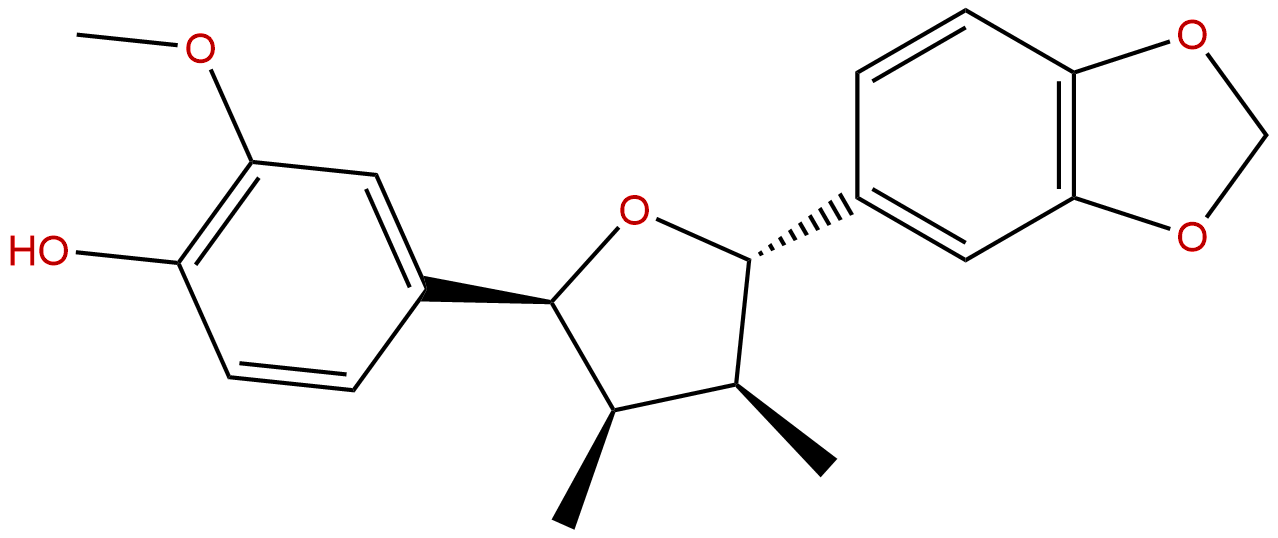
Chicanin, a traditional medicinal plant schisandra(Schisandra chinensis)Natural lignans obtained through separation. Its CAS number is 78919-28-5, molecular formula is C20H22O5, and molecular weight is 342.39 g/mol. As one of the many bioactive components in Schisandra chinensis, Xiangwu lipin has shown significant effects in recent years due to its remarkable properties anti-inflammatory activity And it has received widespread attention in the field of natural product pharmacy research. Modern pharmacological research has shown that Xiangwu lipin can act on multiple key targets closely related to inflammation, such as TNF, PTGS2, NF - κ B, etc., which provides a basis for its therapeutic efficacy arthritis This provides a solid scientific basis for representing chronic inflammatory diseases. This article will provide a systematic professional popularization of this potential natural product from the aspects of its chemical structure, plant origin, pharmacological mechanism, medicinal evaluation, and research prospects.
2. Chemical structure and physicochemical properties
Xiangwu lignan belongs to the lignan class of compounds, characterized by two phenylpropane units (C6-C3) connected by side chains. From the provided SMILES string (COc1cc ([C @ H] 2O)C@HC@@H[C @ H] 2C) ccc1O) can be analyzed for its specific structure: the molecule contains a methoxy(-OCH3)、 one phenolic hydroxyl(- OH) and one Methylenedioxy(- O-CH2-O -) fragments, these functional groups have a significant impact on their biological activity and physicochemical properties. There are multiple chiral centers in the molecule (indicated by the @ symbol in SMILES), indicating that it has a specific stereoconfiguration optical activity The biological activity of compounds is often closely related to their absolute configuration.
From the analysis of pharmacological parameters:
- Molecular weight (MW):342.39 g/mol, Less than 500, meeting the Lipinski five rule requirements for the molecular weight of oral drugs.
- Lipid water partition coefficient (LogP/LogD)The values of 3.39 and 3.39 respectively indicate that the compound has Moderate lipophilicity It is beneficial for penetrating the cell membrane, but excessive LogP may also affect its water solubility.
- Water solubility Only 0.0084 mg/mL, belonging to Insoluble Compounds, this may be one of the key issues that need to be addressed in their future formulation development.
- Polarized surface area (TPSA)57.15 Å ², less than 140 Å ², indicating that it has good Membrane permeability。
- Caco-2 permeability The value is 10.44, belonging to high permeability The category suggests that it may have good intestinal absorption characteristics.
These physical and chemical parameters collectively depict the profile of Xiangwu lipid as a natural small molecule with good potential for drug like properties.
3. Plant sources and traditional applications
Xiangwu lipid mainly comes from schisandra(Schisandra chinensis)This is a perennial woody vine belonging to the Schisandraceae family. Schisandra chinensis has a long history of medicinal use in China, first recorded in the "Shennong Bencao Jing" and classified as a top-grade herb. The fruit (Schisandra chinensis) is known as the "Five Flavors" due to its sour flesh, hard core, and salty taste throughout the entire fruit.
In traditional Chinese medicine theory, Schisandra chinensis has Converge astringency, nourish qi and produce fluids, nourish the kidneys and calm the heart The efficacy. Commonly used for treating symptoms such as chronic cough, shortness of breath, nocturnal emission, frequent enuresis, persistent diarrhea, spontaneous sweating, thirst due to fluid damage, internal heat quenching, palpitations and insomnia. Its "tonifying" and "calming" effects suggest that it has inherent properties of regulating body balance, anti stress, and anti-inflammatory. Modern plant chemistry research has isolated and identified hundreds of compounds from Schisandra chinensis, mainly including lignans, volatile oils, organic acids, polysaccharides, etc. Among them, lignans are considered the most important components Pharmacological substance basis As a member of it, Xiangwuzhisu carries some modern scientific connotations of the traditional efficacy of Schisandra chinensis, especially its anti-inflammatory and immune regulatory effects, providing new molecular level annotations for explaining the traditional use of Schisandra chinensis in "strengthening the body and consolidating the foundation".
4. Pharmacological activity and mechanism of action
The pharmacological activity research of Xiangwu lipid mainly focuses on its anti-inflammatory The mechanism of action involves the regulation of multiple key inflammatory targets. Based on the provided target information, its functional network can be summarized as follows:
-
Core target: NF - κ B signaling pathway
- NFKB1 Encoding NF - κ B p105/p50 protein, it is a core member of the NF - κ B transcription factor family. The NF - κ B pathway is the most important inflammatory response regulatory hub in cells, which can be activated by cytokines such as TNF - α and IL-1 β. The regulation of NFKB1 by Xiangwuzhisu suggests that it may Upstream source Inhibit the activation of NF - κ B, thereby blocking the entire inflammatory signaling cascade.
-
Key inflammatory mediators: pro-inflammatory cytokines
- TNF Tumor necrosis factor alpha is one of the earliest and most potent core pro-inflammatory factors in the inflammatory response, which can strongly activate the NF - κ B pathway and induce the production of other inflammatory factors such as IL-6 and IL-1 β.
- IL6 Interleukin-6 is involved in acute phase response, immune cell proliferation and differentiation, and remains highly expressed in chronic inflammation. It is closely related to synovial hyperplasia and bone destruction in arthritis.
- IL1B Interleukin-1 β is an important pro-inflammatory cytokine involved in the processes of fever, pain, and tissue destruction.
Xiangwuzhisu can simultaneously act on the three key nodes of TNF, IL6, and IL1B, indicating its ability to Multi target and synergistic inhibition The ability of pro-inflammatory cytokine storm, which may have advantages over single target inhibitors, can more comprehensively control the inflammatory network.
-
Inflammatory key enzyme: PTGS2
- PTGS2 Cyclooxygenase-2, also known as cyclooxygenase-2, is the rate limiting enzyme that catalyzes the synthesis of prostaglandins (PGs) from arachidonic acid, particularly induced to be highly expressed in inflammatory sites. Prostaglandins are responsible for causing inflammation in the affected area Red, swollen, hot, and painful One of the main media. The main mechanism of action of nonsteroidal anti-inflammatory drugs (such as ibuprofen and celecoxib) is to inhibit COX-2. The inhibitory effect of Xiangwuzhisu on PTGS2 is directly related to its potential to alleviate inflammatory symptoms such as pain and swelling.
Integration of mechanisms of action and association with diseases:
In arthritis In pathological environments such as rheumatoid arthritis and osteoarthritis, macrophages and fibroblast like synovial cells in joint synovial tissue are abnormally activated, releasing large amounts of TNF - α, IL-1 β, and IL-6. These cytokines form a self amplifying inflammatory cycle, maintaining their sustained expression by activating the NF - κ B pathway, while inducing high expression of PTGS2 and other factors, producing large amounts of prostaglandins, leading to pain, swelling, and further joint destruction.
The mode of action of Xiangwuzhisu is aimed at multiple links in this vicious cycle: it may downregulate the expression of TNF, IL-6, IL-1 β, and PTGS2 at the transcriptional level by inhibiting the activation of NF - κ B; Meanwhile, its direct inhibition of PTGS2 can reduce the production of pain inducing substance prostaglandins. This Combination of "pathway inhibition" and "mediator blockade"The multidimensional mechanism of action makes it theoretically promising for controlling the inflammatory process of arthritis and alleviating clinical symptoms. Existing research has mostly focused on cell and animal models, confirming the effectiveness of their extracts or monomers in reducing inflammation and joint damage in arthritis models, laying the foundation for subsequent translational studies.
5. Evaluation of drug properties
Based on the provided pharmacokinetic parameters and classic drug design principles (such as Lipinski's Five Rules and drug likeness analysis), a preliminary evaluation of the potential of Xiangwu liposomal as an oral medication can be conducted
Summary Xiangwu Lipids in Absorption, permeability, and basic drug properties Excellent performance in various aspects, with its core advantages being its good membrane permeability and multi-target anti-inflammatory mechanism. However, it Low solubility and potential safety risks It is the main obstacle on the road to drug development. Future research needs to focus on improving its solubility through pharmaceutical methods and clarifying its safety profile through systematic toxicological experiments.
6. Research Status and Application Prospects
At present, research on Xiangwu lipid is still in progress Preclinical stage Most of the data comes from in vitro cell experiments and animal model studies. These studies have preliminarily confirmed its effectiveness in exerting anti-inflammatory effects by regulating the NF - κ B pathway and downstream inflammatory factors, especially its potential application in arthritis models. However, as a specific natural product monomer, its systematic Pharmacokinetic study(absorption, distribution, metabolism, excretion)Detailed toxicological assessment and Direct binding verification of the target of action There is still limited publicly available data on factors such as whether it directly acts on NF - κ B protein complexes.
Future research directions and prospects:
- Deepening the mechanism of action Chemical biology methods such as molecular docking, surface plasmon resonance, target fishing, etc. need to be used to clarify whether Xiangwuxin directly interacts with target proteins such as NF - κ B and COX-2, or indirectly acts by regulating their upstream kinases or phosphatases. This helps to understand its precise mode of action.
- Structural optimization and derivative development: Take it as lead compound Perform structural modifications. For example, while retaining its pharmacophore, introducing hydrophilic groups to improve water solubility; Or by simplifying the structure and changing the stereoconfiguration to optimize activity and reduce potential toxicity, candidate molecules with better drug properties can be obtained.
- Formulation technology research and development Develop a new drug delivery system to address its core defect of low solubility. For example, preparing it into Self microemulsion drug delivery system, liposomes or polymer micelles Not only can it improve bioavailability, but it may also achieve targeted delivery to joint sites, enhancing therapeutic efficacy while reducing the side effects caused by systemic exposure.
- Indications expansion Given its multi-target properties in anti-inflammatory and immune regulation, its application prospects should not be limited to arthritis. Future research could explore its role in other chronic inflammatory diseases, such as Inflammatory bowel disease, neurodegenerative diseases related to neuroinflammation, and skin diseases (such as psoriasis) Wait.
- Research on the Integration of Traditional Chinese and Western Medicine Exploring the unique value of Xiangwuzhisu in regulating the immune nervous endocrine network in the context of the traditional efficacy of Schisandra chinensis in nourishing qi, generating fluids, tonifying the kidneys, and calming the heart may provide new ideas for the development of modern anti-inflammatory drugs with traditional Chinese medicine characteristics.
In summary, Xiangwuzhisu, as a gem in the treasure trove of Schisandra chinensis, has demonstrated unique advantages in multi-target anti-inflammatory effects and a good pharmacological basis. Despite facing challenges in terms of solubility and safety, with the continuous advancement of modern medicinal chemistry, pharmacy, and pharmacology technologies, it is expected to be developed as a new candidate drug for treating inflammatory diseases such as arthritis, or provide valuable natural templates for designing better synthetic derivatives. Its research process also vividly reflects the transformation path from traditional herbal experience to modern molecular medicine, and is a typical example of natural product pharmaceutical research.