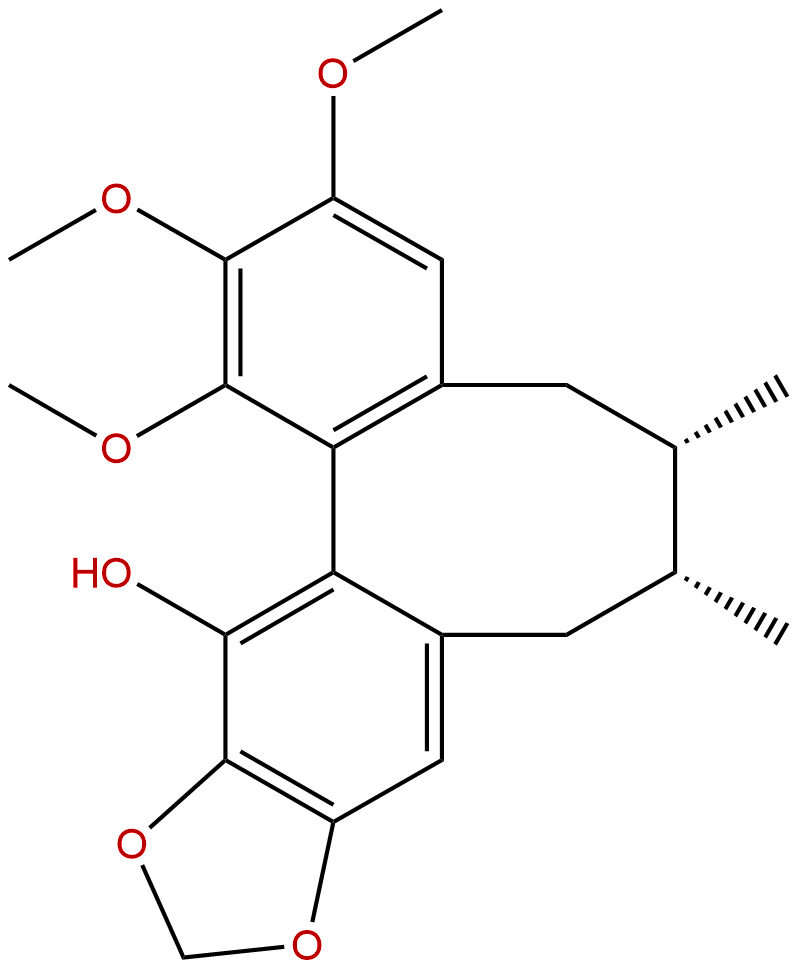
(+) - GOMIXIN M2: Multi targeted natural lignans derived from Schisandra chinensis and their potential for drug development
1. Overview
(+) - Gomisin M2 is a natural lignan product with significant biological activity. Its CAS number is 82425-45-4, molecular formula is C22H26O6, and molecular weight is 386.4440 g/mol. This compound was originally derived from Schisandra chinensis(Schisandra rubriflora)Separated from the fruit of Schisandra chinensis, and then processed in the traditional medicinal plant Schisandra chinensis(Schisandra chinensis)It is also widely present in China. As an important member of a series of structurally similar lignans in Schisandra chinensis, (+) - gomisin M2 has attracted much attention due to its unique chemical structure and extensive pharmacological activities.
Existing research reveals that (+) - Gomisin M2 not only exhibits Anti HIV activity(EC50 is 2.4 μ M), and also has Anti cancer and anti allergy And potential neuroprotection The function suggests that it has important value in research fields such as antiviral therapy, tumor treatment, inflammatory diseases, and Alzheimer's disease. The core of its pharmacological action lies in its ability to regulate multiple key signaling pathways and inflammatory factors, such as TNF, IL6, NF - κ B, etc., reflecting the typical characteristics of multi-target action of natural products. This article will provide a systematic professional popularization of this natural compound with potential for development from the aspects of its chemical essence, plant origin, pharmacological mechanism, medicinal evaluation, and research prospects.
2. Chemical structure and physicochemical properties
The chemical structure of (+) - gomisin M2 belongs to the class of lignans in the biphenyl ring, which is a characteristic chemical composition type of Schisandra plants. Its SMILES string (COc1cc2c (c (OC) c1OC) - c1c (cc3c (c1O) OCO3) C C@@HC@@H C2) Accurately describes its atomic connection sequence and stereochemistry. The structure contains multiple methoxy (- OCH3) substituents, a key oxygen heterocyclic ring (OCO3, i.e. 1,3-benzodioxolane), and two chiral centers (represented by [C @ @ H]), which determine its specific three-dimensional conformation and biological activity.
Analyze its physicochemical properties based on the provided pharmacological parameters:
- Molecular weight (MW):386.44 g/mol, Below 500, it falls within the common range of small molecule drugs.
- Lipid water partition coefficient (LogP/LogD)Approximately 4.07, indicating that the compound has Higher lipophilicity This is beneficial for its penetration through the cell membrane, but may affect its water solubility.
- Water solubility The value is extremely low (0.0029, usually measured in mg/mL or mol/L), which is consistent with high LogP values and is one of the challenges that need to be overcome in formulation development.
- Topological Polarity Surface Area (TPSA)66.38 Å ², relatively low, usually associated with good membrane permeability.
- Penetration data The permeability (20.47 × 10 ⁻⁶ cm/s) and effective permeability (Peff: 5.76) values of Caco-2 cells are relatively high, indicating that it is predicted to have Good intestinal absorption potential More importantly, it The blood-brain barrier (BBB) penetration is predicted to be 'high'This provides a key physicochemical basis for its application in the study of central nervous system diseases such as Alzheimer's disease.
These properties collectively depict a typical natural small molecule profile with medium molecular weight, strong lipophilicity, and good membrane permeability, laying the foundation for its subsequent biological activity.
3. Plant sources and traditional applications
(+) - Gomisin M2 mainly comes from Schisandraceae Plant The information clearly indicates that it comes from Schisandra chinensis(Schisandra chinensis)This is a vine plant with a long medicinal history in East Asia, especially in China, South Korea, and the Russian Far East. Its dried fruit is called "Schisandra chinensis", named after its combination of sour, sweet, bitter, spicy, and salty flavors.
In the traditional medical system, especially in traditional Chinese medicine, Schisandra chinensis is revered as an essential medicine, recorded in the "Shennong Bencao Jing" and classified as a top-grade product. Its traditional functions mainly include:
- Converge stiffness Used for treating chronic cough, shortness of breath, spontaneous sweating, and night sweats.
- Yiqi Shengjin Used for quenching thirst and internal heat.
- Tonifying the kidneys and calming the heart Used to improve restless symptoms such as palpitations, insomnia, and multiple dreams.
Modern pharmacological research has confirmed that the various pharmacological effects of Schisandra chinensis, such as liver protection, antioxidant, anti-inflammatory, sedative, and immune enhancement, are closely related to its rich active ingredients - lignans. (+) - Gomisin M2, as one of the active lignans, can be said to be one of the material basis interpretations of the traditional efficacy of Schisandra chinensis from a modern scientific perspective. From traditional "calming the mind and enhancing intelligence" to modern "neuroprotection" and "anti-inflammatory", it reflects the inheritance and development from empirical medicine to precision drug research.
4. Pharmacological activity and mechanism of action
The pharmacological activity of (+) - GOMIXIN M2 is extensive, and its core mechanism lies in regulating multiple key targets related to inflammation, immunity, and cell survival. According to database information, its main targets include TNF, PTGS2 (COX-2), NFKB1 (NF - κ B p50), IL6, and IL1B These targets are core nodes in the inflammation and immune response networks.
1. Anti inflammatory effect:
This is one of the most prominent pharmacological activities of (+) - gomisin M2. Its mechanism of action is multi-layered:
- Inhibit pro-inflammatory cytokines Directly or indirectly inhibit the production of tumor necrosis factor - α (TNF - α), interleukin-6 (IL-6), and interleukin-1 β (IL-1 β). These cytokines are key mediators driving acute and chronic inflammation, leading to tissue damage.
- Inhibition of nuclear transcription factor kappa B (NF - κ B) pathway NF - κ B is the "master switch" that regulates the expression of the aforementioned cytokine genes. (+) - Gomisin M2 inhibits the activation of NF - κ B and blocks the cascade amplification of inflammatory signals upstream, which is the core mechanism of its broad-spectrum anti-inflammatory effect.
- Inhibition of cyclooxygenase-2 (COX-2/PTGS2)COX-2 is a key enzyme that mediates prostaglandin synthesis in inflammatory sites and is directly associated with pain, fever, and swelling. Inhibition of COX-2 is the main mechanism of action of nonsteroidal anti-inflammatory drugs.
2. Anti HIV activity:
Its EC50 against HIV is 2.4 μ M, indicating moderate inhibitory activity. The mechanisms by which lignin compounds resist HIV are diverse, possibly involving inhibition of viral reverse transcriptase and protease activity, or interference with the fusion/entry process between the virus and host cells. Considering its anti-inflammatory properties, (+) - GOMIXIN M2 may also play an adjuvant therapeutic role by reducing chronic immune activation and inflammation caused by HIV infection.
3. Anti cancer effect:
Inflammation is closely related to the occurrence and development of tumors (known as "tumor associated inflammation"). (+) - GOMIXIN M2 can block the formation of a pro tumor inflammatory microenvironment by inhibiting NF - κ B and COX-2. The NF - κ B pathway can also regulate cell proliferation, apoptosis, and metastasis, so its inhibition may directly induce cancer cell apoptosis and inhibit its invasion and metastasis. Its high lipophilicity and good cell permeability facilitate its entry into tumor cells to exert its effects.
4. Potential for neuroprotection and Alzheimer's disease research:
Neuroinflammation is one of the core pathological mechanisms of neurodegenerative diseases such as Alzheimer's disease and Parkinson's disease. Overactivation of microglia (immune cells in the brain) releases a large amount of inflammatory factors such as TNF - α, IL-1 β, IL-6, leading to neuronal damage and death. (+) - GOMIXIN M2 can penetrate the blood-brain barrier and effectively inhibit these inflammatory factors and NF - κ B pathways, which is expected to alleviate neuroinflammation and protect neurons. This provides a solid theoretical basis for its application in diseases such as Alzheimer's disease, and also echoes the traditional efficacy of Schisandra chinensis in promoting intelligence and calming the mind.
5. Anti allergic effect:
Allergic reactions are essentially Th2 type immune responses and inflammatory reactions. (+) - GOMIXIN M2 may alleviate allergic symptoms by inhibiting key inflammatory mediators, which may alleviate mast cell degranulation, histamine release, and subsequent inflammatory responses caused by allergens.
In summary, (+) - Gomisin M2 has passed Multi target, multi pathway The approach mainly revolves around Inhibition of NF - κ B core inflammatory pathway By exerting a comprehensive effect of anti-inflammatory, antiviral, anticancer, neuroprotective, and anti allergic, it demonstrates the unique advantages of natural product systems in intervening in complex diseases.
5. Evaluation of drug properties
Based on the provided detailed pharmacological parameters, we can conduct a preliminary evaluation of the potential of (+) - gomisine M2 as a candidate drug. The evaluation will be combined with renowned Lipinski's Five Rules(Rule of Five, RO5) and other key pharmacokinetic/toxicity parameters.
Lipinski's Five Rules Compliance Analysis(Rules apply to oral medications):
1. Molecular weight<500 Da 386.44, compliant.
2. Lipid water partition coefficient LogP<5 4.07, compliant.
3. Number of hydrogen bond donors (HBD)<5 From its structural formula, there is only one phenolic hydroxyl group (- OH), HBD=1, much lower than 5, which is consistent.
4. Number of hydrogen bond acceptors (HBA)<10 There are 6 oxygen atoms in the molecule (derived from methoxy, ether bonds, hydroxyl groups, etc.), all of which can serve as HBAs, with HBA=6, consistent with.
(+) - Gomisin M2 fully complies with Lipinski's five rules It indicates that it has good oral absorption potential.
In depth interpretation of other key parameters:
- Absorption and distribution High Caco-2 permeability and high BBB permeability are its most prominent advantages, indicating that it may be well absorbed after oral administration and can effectively enter the central nervous system, supporting its research for brain diseases.
- solubility The main weakness is its extremely low water solubility (0.0029), which may require the use of solubilization techniques (such as making cyclodextrin inclusion complexes, nanocrystals, liposomes, etc.) during the formulation stage to improve bioavailability.
- Metabolism and protein binding The plasma protein binding rate (PPB) is as high as 91.77%, indicating a low concentration of free drugs in the blood, which may affect the efficacy of the drug, but may also prolong the half-life. Attention should be paid to its potential interactions with high protein binding drugs.
- Toxicity warning:
- Genotoxicity The Ames test value is 0.6 (usually>1.0 or a specific threshold is considered risky), and the chromosomal aberration test is "none", indicating no significant genetic toxicity risk.
- cardiotoxicity HERG inhibition is' no ', which reduces the risk of causing QT interval prolongation in the heart and has good safety.
- Other toxicities The data shows potential risks of respiratory sensitization (Resp_Sens: Yes) and elevated serum alkaline phosphatase (Ser_LK: Yes), which need to be closely monitored through animal experiments and clinical studies in future development.
- Maximum Recommended Starting Dose (MRTD)Marking it as' Yes' indicates that initiating clinical trials at a reasonable dose is feasible.
comprehensive evaluation(+) - Gomesin M2 in Excellent performance in oral absorption, brain permeability, and preliminary safety The core flaw lies in poor water solubility. It meets the basic requirements of "drug like" small molecules and has a good chemical basis for further development into oral anti-inflammatory, neuroprotective, or antiviral drugs. The next research focus should be on Formulation optimization to improve solubility And carry out systematic Preclinical pharmacokinetic and toxicological studies To validate its predictive parameters and assess potential risks.
6. Research Status and Application Prospects
At present, research on (+) - Gomisin M2 is still mainly in progress Preclinical stage A large amount of research has focused on its isolation and identification, in vitro pharmacological activity screening, and exploration of its mechanism of action. Its activity in anti HIV, anti-inflammatory, anti-cancer, and neuroprotective aspects has been preliminarily confirmed, especially its multi-target anti-inflammatory mechanism and excellent BBB penetration ability, which brings hope for the treatment of neuroinflammatory related diseases.
Future research and application prospects may focus on the following directions:
1. Deepening mechanism research Using techniques such as molecular docking and surface plasmon resonance, accurately elucidate its binding mode and site with key proteins in the NF - κ B pathway, such as IKK and p65. Meanwhile, by utilizing gene knockout/knockdown techniques, its specific targets are validated in cell and animal models.
2. Structural optimization and derivative development Using it as the mother nucleus, structural modification is carried out through medicinal chemical means, with the aim of Improve water solubility, enhance activity, and reduce potential toxicity For example, derivatization of its phenolic hydroxyl or methoxy groups to synthesize a series of analogues and study their structure-activity relationships.
3. Pharmaceutical research Develop new drug delivery systems, such as self microemulsions, solid dispersions, and nano formulations, to address its low water solubility issue and improve its oral bioavailability.
4. Disease model validation In animal models closer to human diseases, such as APP/PS1 Alzheimer's disease transgenic mice and collagen induced arthritis rat models, a comprehensive evaluation of its efficacy, pharmacokinetics, and long-term toxicity is conducted to provide solid data for its clinical translation.
5. Exploration of combination therapy Given its multi-target anti-inflammatory properties, exploring its combination with existing anti-inflammatory drugs, anticancer drugs, or antiviral drugs may result in synergistic effects, reducing the dosage and toxic side effects of a single drug.
As a natural active molecule derived from traditional Chinese medicine, (+) Gomixin M2 is a typical case of modern pharmacy discovering innovative drugs from the traditional treasure trove. It bridges the traditional efficacy of Schisandra chinensis in nourishing the kidneys and calming the heart with the modern scientific understanding of neuroprotection and anti-inflammatory effects. Although challenges such as solubility and toxicity warning still need to be overcome in the future, its clear molecular mechanism, good drug like properties, and clear central potential make it worthy of continuous attention and in-depth exploration in fields such as anti-inflammatory, neurodegenerative diseases, and even tumor immunotherapy. With the continuous advancement of research, (+) - GOMIXIN M2 is expected to gradually move from an interesting natural product to a candidate drug with clear clinical application prospects.