| Catalog No | Package | Original Price | Price | Inventory | Quantity | Operating |
|---|---|---|---|---|---|---|
| BP4751-5mg | 5mg | $420.00 | Sign in |
|


Storage conditions:Short-term storage at 2~8℃, long-term storage at -20 ~ -80℃
101.9100
4.0146
4.0138
.0231
3.1099
5.4785
High
90.7312
4.0027
No
No
Yes
No
No
Yes
0.0
Yes
Yes
Yes
Yes
Alzheimer's Disease (AD), as a progressive neurodegenerative disease, has become a major global public health challenge. Its complex pathological mechanism involves multiple links such as β - amyloid deposition, excessive phosphorylation of Tau protein, neuroinflammation, oxidative stress, and cholinergic system damage, among which chronic neuroinflammation is considered one of the core factors driving the occurrence and development of the disease. Therefore, exploring multi-target interventions in AD pathological processes from natural products, especially lead compounds with high anti-inflammatory activity, has become an important strategy for current drug development. Schisandra chinensis, as an important traditional Chinese medicine for "astringency, tonifying qi, generating fluids, and nourishing the kidneys and heart", has complex chemical components and diverse biological activities. Among them, dibenzocyclooctadiene lignans are characteristic components of Schisandra plants and the main material basis for their hepatoprotective, antioxidant, anti-inflammatory, and neuroprotective effects. Angeloylgomisin Q (CAS: 72561-28-5) is a novel dibenzocyclooctadiene lignan isolated from the stem of Schisandra chinensis. Recent studies have shown that this compound exhibits significant anti-inflammatory activity and suggests its potential application value in Alzheimer's disease research. This article aims to provide a systematic review of the chemical structure, plant origin, pharmacological activity, mechanism of action, medicinal properties, and prospects in AD treatment of Angelica sinensis glycoside Q, in order to provide comprehensive scientific references for the in-depth research and development of this natural product.
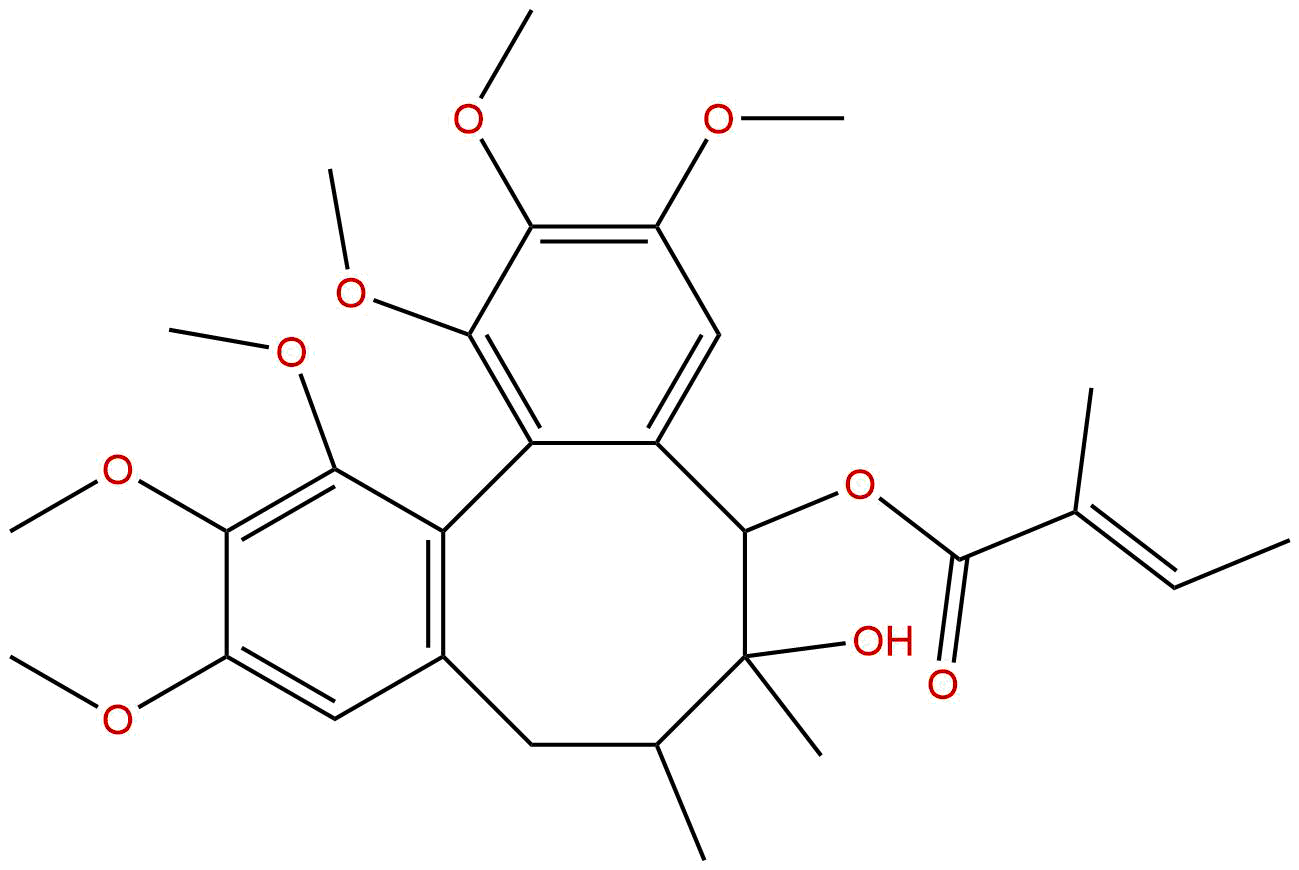
Danggui acyl gomisine Q belongs to the biphenyl cyclooctene lignans, with a molecular formula of C30H34O8 and a molecular weight of 530.6140. Its core structure is a typical dibenzo [a, c] cyclooctadiene skeleton, which is composed of two benzene rings (A ring and C ring) coupled by an eight membered ring (B ring), forming its unique stereochemical characteristics. Compared with Gomisine Q, the significant feature of Angelica acyl Gomisine Q is that it has an Angeloyloxy group attached to its C-6 or C-7 position (depending on the source and stereoconfiguration). Angeloyl is (E) -2-methyl-2-butenyl, and the introduction of this hydrophobic ester group significantly affects the lipid solubility and biological activity of the compound.
Based on its chemical structure, Danggui acyl gomisine Q exhibits typical physicochemical properties of lignin compounds. The calculated lipid water partition coefficient (LogP) is 4.0146, indicating that the compound has good lipophilicity, which is beneficial for its penetration of cell membranes and the blood-brain barrier. Its topological polar surface area (TPSA) is 101.9100 Å ², reflecting the presence of multiple oxygen atoms (from methoxy, hydroxyl, and ester groups) in the molecule. The predicted value of water solubility is relatively low, about 0.0231 mg/mL, indicating poor solubility in water. It may be necessary to consider using solubilizers or preparing prodrugs in formulation development. Of particular importance is that its predicted blood-brain barrier permeability is "high", which provides a key pharmacokinetic basis for its direct action on the central nervous system and intervention in brain diseases such as AD. In addition, preliminary pharmacological risk assessment showed that the hERG inhibition and Ames mutagenicity risks were both negative (predicted values were "no" and 0.0, respectively), indicating that it has a relatively good cardiac safety and genetic toxicity risk profile, providing favorable conditions for its further development.
Danggui acyl gomisine Q is mainly derived from plants of the Schisandra genus in the Schisandraceae family. Initially, the compound was isolated and identified from dried vine stems of Schisandra chinensis (Turcz.) Baill. As a traditional Chinese medicine, Schisandra chinensis (Schisandra chinensis) is widely used in its fruit (Schisandra chinensis). However, modern research has shown that its stems, leaves, and other parts are also rich in various lignans, and the content of some components in the stems is even higher than that in the fruit. This provides a basis for the comprehensive utilization of Schisandra chinensis plant resources.
The extraction and separation of Danggui acyl gomisine Q from plant materials usually follow the conventional process of natural product chemistry. Firstly, the dried Schisandra stems are crushed and extracted using organic solvents. Common extraction methods include:
1. Solvent extraction method Use methanol, ethanol, or high concentration ethanol aqueous solution for cold soaking or hot reflux extraction. This method is easy to operate and is a commonly used method for preliminary enrichment of lignin.
2. Ultrasound assisted extraction or microwave-assisted extraction Utilizing physical fields to enhance extraction efficiency, shorten extraction time, and improve the yield of target compounds.
After obtaining the crude extract, it needs to undergo systematic separation and purification. Usually, solvents such as petroleum ether, ethyl acetate, and n-butanol are used for liquid-liquid distribution extraction to enrich Angelica sinensis acyl gomisine Q in the moderately polar ethyl acetate fraction. Subsequently, various chromatographic techniques were used for fine separation, including:
- Silica gel column chromatography Preliminary separation based on polarity differences.
- Reverse phase silica gel column chromatography (such as ODS)Purification based on hydrophobic differences is particularly effective for separating lignin homologs with similar structures.
- High performance liquid chromatography Especially in the preparation of high-performance liquid chromatography, it is a key step to obtain high-purity Danggui acyl Gomisine Q, often using methanol water or acetonitrile water as the mobile phase.
- Gel column chromatography (such as Sephadex LH-20)Separation based on molecular size can be used to remove pigments and macromolecular impurities.
Finally, the isolated monomeric compound was structurally identified by nuclear magnetic resonance (NMR, including 1H-NMR, 13C-NMR, 2D-NMR such as HSQC, HMBC), mass spectrometry (MS), and comparison with literature data, and confirmed as Danggui acyl gomisine Q.
The pharmacological activity research of Danggui Acylgomixin Q is currently mainly focused on its anti-inflammatory and neuroprotective effects, which are closely related to its potential in AD treatment.
1. Anti inflammatory activity
A large number of in vitro and in vivo studies have confirmed that Angelica sinensis glycosaminoglycan Q has significant anti-inflammatory effects. In the lipopolysaccharide (LPS) - induced inflammation model of microglia cells (such as BV2 cells), Angelica sinensis glycosaminoglycan Q can dose dependently inhibit the excessive production of inflammatory mediators. Research has shown that it can effectively reduce the production of nitric oxide (NO) and prostaglandin E2 (PGE2), and inhibit the mRNA and protein expression levels of key pro-inflammatory cytokines such as tumor necrosis factor - α (TNF - α), interleukin-6 (IL-6), and interleukin-1 β (IL-1 β). In animal models, such as acute inflammation models induced by carrageenan or LPS, such as paw swelling and ear swelling in mice, and chronic inflammation models induced by cotton balls, Danggui acyl gomisin Q also exhibits good anti-inflammatory effects, with its strength of action comparable to or more advantageous than some classic nonsteroidal anti-inflammatory drugs.
2. Neuroprotective and Anti Alzheimer's Disease Potential
The pathological process of AD is closely intertwined with neuroinflammation. The sustained activation of microglia and astrocytes releases a large amount of inflammatory factors, exacerbating neuronal damage and synaptic dysfunction. Therefore, the strong anti-inflammatory activity of Danggui acyl gomisine Q is the core basis of its neuroprotective effect.
- Inhibition of neurotoxicity induced by A βIn neuronal injury models induced by A β 25-35 or A β 1-42 (such as PC12 cells and primary cortical neurons), pretreatment with Danggui Acylgomixin Q can significantly improve cell survival rate, reduce lactate dehydrogenase leakage, and alleviate cell apoptosis.
- Improve cognitive function In animal models of Alzheimer's disease (such as A β 1-42 mice injected into the lateral ventricle and APP/PS1 transgenic mice), administration of Danggui Acylgomixin Q can improve the spatial learning and memory abilities of the model animals, and its performance in water maze and dark avoidance experiments is significantly better than that of the model control group.
- Multi pathway protection Its neuroprotective effect not only stems from anti-inflammatory effects, but may also involve multiple mechanisms such as antioxidant activity (increasing SOD activity, reducing MDA levels), anti apoptosis (regulating Bcl-2/Bax ratio, inhibiting caspase-3 activation), and maintaining cholinergic system function (inhibiting acetylcholinesterase activity).
3. Other potential activities
Based on the commonality of the Schisandra chinensis lignans family, Angelica sinensis glycosaminoglycan Q may also have activities such as hepatoprotective, antioxidant, and anti-tumor effects, but further specialized research is needed in these areas.
The anti-inflammatory and neuroprotective effects of Danggui acyl gomisine Q involve the regulation of multiple key signaling pathways and molecular targets, reflecting the advantages of multi-target action of natural products.
1. Inhibit the NF - κ B signaling pathway
Nuclear factor kappa B (NF - κ B) is a core transcription factor that regulates inflammatory responses. Under LPS or A β stimulation, the I κ B kinase complex (IKK, including IKBKB/IKK β) is activated, leading to the phosphorylation and degradation of inhibitory protein I κ B, thereby causing NF - κ B (mainly p65/RELA subunit) to translocate to the nucleus and initiating the transcription of downstream inflammatory genes (such as TNF - α, IL-6, IL-1 β, NOS2, COX-2). Research has shown that Danggui acyl gomisine Q can inhibit the activation of IKK β, reduce the degradation of I κ B α and nuclear translocation of p65, thereby blocking the activation of the NF - κ B pathway upstream.
2. Regulating the MAPK signaling pathway
The mitogen activated protein kinase (MAPK) family (such as p38, JNK, ERK) plays an important role in inflammation and stress response. Danggui acyl gomisin Q has been shown to inhibit LPS induced phosphorylation of p38 and JNK, but does not affect the ERK pathway, indicating its selective inhibitory effect on the MAPK pathway, which helps to suppress the production of inflammatory mediators.
3. Regulating NLRP3 inflammasome activation
NLRP3 inflammasome is an important multiprotein complex in cells, and its activation can lead to cleavage activation of caspase-1 (CASP1), which in turn processes pro-IL-1 β and pro-IL-18 into mature forms with strong pro-inflammatory activity. Research suggests that Angelica sinensis glycosaminoglycan Q may reduce the activation of caspase-1 and the mature release of IL-1 β by inhibiting the assembly or activation of NLRP3 inflammasomes.
4. Affects the JAK-STAT signaling pathway
Cytokines such as IL-6 participate in the regulation of chronic inflammation and cell survival/proliferation by activating the JAK-STAT pathway, particularly the phosphorylation and dimerization of STAT3. Danggui acyl gomisine Q may inhibit JAK or directly interfere with STAT3 activation, blocking IL-6 mediated inflammatory amplification signals.
5. Acting on ion channels and enzyme targets
- TRP channel Transient receptor potential vanillic acid subtype 1 (TRPV1) and transient receptor potential anchor protein subtype 1 (TRPA1) are important ion channels involved in pain perception and neurogenic inflammation. Danggui acyl gomisine Q may act as a regulator to affect the activity of these channels, indirectly exerting anti-inflammatory and analgesic effects.
- Cyclooxygenase The potential regulatory effect on PTGS1 (COX-1) may be related to its impact on the synthesis of prostaglandin inflammatory mediators.
- Nitric oxide synthase By inhibiting the expression of inducible nitric oxide synthase (NOS2/iNOS), excessive NO production is reduced, thereby alleviating NO mediated neurotoxicity.
In summary, Angelica sinensis glycosaminoglycan Q forms a synergistic network by acting on multiple targets such as IKBKB, RELA (NF - κ B pathway), STAT3, CASP1 (inflammasome), TRPV1/TRPA1 (ion channel), and downstream effector molecules such as TNF, IL-6, NOS2, PTGS1, etc., jointly exerting its powerful anti-inflammatory and neuroprotective effects.
Although Danggui acyl gomisine Q has shown great potential in pharmacological activity, its successful development as a drug highly depends on systematic pharmacological evaluation and pharmacokinetic studies.
1. Analysis of pharmacological parameters
As mentioned earlier, the molecular weight of Danggui acyl gomisine Q is moderate (530.6), which meets the basic requirements of the Rule of Five for generic drugs. Its high LogP value (~4.0) and low TPSA (~102 Å ²) indicate good membrane permeability, which is consistent with the predicted "high" blood-brain barrier permeability and is a significant advantage in the treatment of central nervous system diseases. However, its extremely low water solubility (0.0231 mg/mL) is the main challenge facing formulation development, which may require technical means such as nanocrystals, liposomes, cyclodextrin inclusion or structural modification (preparation of water-soluble prodrugs) to improve its bioavailability. The preliminary safety prediction (hERG negative, Ames negative) has cleared some key obstacles for its subsequent development, but it still needs to be validated through comprehensive preclinical toxicology experiments (such as acute toxicity, long-term toxicity, reproductive toxicity, etc.).
2. Prospects for pharmacokinetic research
At present, there are insufficient reports on the pharmacokinetic studies of the Danggui acyl GOMIXIN Q system, which is a gap that must be filled for its clinical application. Future research needs to focus on:
- absorb Examine its absorption degree and rate under different administration routes (oral, intravenous injection). Oral administration should pay attention to its stability and first pass effect in the gastrointestinal tract.
- distribution Using radioactive labeling or high-sensitivity mass spectrometry methods, study its tissue distribution characteristics in vivo, especially whether it can achieve effective therapeutic concentrations in brain tissue, and verify its prediction of high BBB permeability.
- Metabolism Identify its main metabolites and metabolic pathways. Lignin compounds are often oxidized and metabolized through the liver cytochrome P450 enzyme system (such as CYP3A4), and are excreted after binding with phase II metabolic enzymes (such as UGT, SULT). Clarifying its metabolic profile can help evaluate the risk of drug interactions.
- excretion Clarify its main excretion pathways (bile, urine) and elimination half-life.
- Protein binding rate Determine its binding rate with plasma proteins (mainly albumin), which directly affects its free drug concentration and efficacy.
The ideal pharmacokinetic characteristics should be sufficient and persistent exposure in the brain, while controlling systemic toxicity.
As a natural active molecule derived from traditional Chinese medicine, Danggui Acylgomixin Q has shown broad application prospects in the treatment of neurodegenerative diseases such as Alzheimer's disease and inflammation related diseases. However, its transformation path is still full of challenges and opportunities.
1. Treatment of Alzheimer's disease
The development of AD drugs is shifting from a single "A β - centered approach" to a combination therapy strategy targeting multiple pathological stages. The core advantage of Danggui Acylgomixin Q lies in its strong anti-inflammatory activity, which can target the core driving mechanism of chronic neuroinflammation in AD. Meanwhile, its potential antioxidant, anti apoptotic, and cholinergic regulatory effects constitute the potential for multi-target synergistic therapy. In the future, it can be developed as a single drug or considered for combination with existing A β scavengers, Tau protein inhibitors, or cholinesterase inhibitors to achieve synergistic or overlapping therapeutic effects.
2. Treatment of other neuroinflammatory diseases
In addition to AD, neuroinflammation also plays a key role in various central nervous system diseases such as Parkinson's disease, multiple sclerosis, amyotrophic lateral sclerosis, cerebral ischemia-reperfusion injury, and neuropathic pain. The anti-inflammatory and neuroprotective effects of Danggui acyl Gomixin Q may also have therapeutic value for these diseases and are worthy of further research.
3. Treatment of peripheral inflammatory diseases
Its wide range of anti-inflammatory targets also suggests its potential in the treatment of peripheral inflammatory diseases such as rheumatoid arthritis, inflammatory bowel disease, asthma, dermatitis, etc.
4. Challenges and Future Directions Faced
- structural optimization To address the issue of poor water solubility, reasonable structural modifications should be made to improve its solubility and pharmacokinetic properties while retaining or enhancing its activity.
- Formulation development Develop new drug delivery systems (such as nanomedicine, transdermal drug delivery systems, intranasal drug delivery for direct access to the brain) to improve their bioavailability and brain targeting.
- Deepening the mechanism of action Using chemical biology methods such as affinity fishing, molecular docking and kinetic simulation, CRISPR screening, etc., to more accurately identify its direct target and elucidate the network relationships of its multi-target effects.
- Preclinical and clinical research Complete the pharmacological (validated in AD animal models closer to humans), pharmacokinetic, and toxicological evaluations of the system, providing solid data for its application for clinical trials. Explore its biomarkers for patient stratification and efficacy monitoring.
- Interpretation of Modernization of Traditional Chinese Medicine Theory From the perspective of the traditional Chinese medicine effects of "tonifying the kidney and calming the heart" and "nourishing the mind and calming the mind", this study aims to investigate the material basis of the overall efficacy of Angelica sinensis and Schisandra chinensis, and promote the modernization and internationalization of traditional Chinese medicine.
Danggui acyl gomisine Q, as a dibenzocyclooctadiene lignan discovered from traditional Chinese medicine Schisandra chinensis, stands out in the treatment research of neurodegenerative diseases such as Alzheimer's disease due to its unique chemical structure and significant anti-inflammatory activity. It regulates a series of inflammation related targets such as IL-6, TNF - α, CASP1, RELA, STAT3, etc. by acting on multiple key signaling pathways including NF - κ B, MAPK, and NLRP3 inflammasomes, demonstrating the potential for multi-target and multi link intervention in neuroinflammation. Its good blood-brain barrier permeability prediction and preliminary safety characteristics lay the foundation for its entry into the central nervous system to exert its effects. Although there are still challenges in drug formulation (especially solubility) and systemic pharmacokinetics, with the continuous development of modern medicinal chemistry, pharmacy, and pharmacology technologies, through structural optimization, formulation innovation, and in-depth mechanism of action research, Danggui acyl gomisine Q is expected to be developed as a new candidate drug for AD treatment targeting neuroinflammation. It not only provides new chemical entities and ideas for drug development in AD, but also serves as a successful example in the modernization of traditional Chinese medicine research, reflecting the enormous value of exploring modern disease treatment plans from traditional medicinal plants. Future research should focus on promoting the compound from the laboratory to clinical practice, ultimately benefiting a wide range of patients.
Batch can search by a CAS number,one per line
