Introduction/Overview
Lignin compounds are a class of natural products widely present in the plant kingdom, with significant biological activity. Schisandra plants, as an important source of traditional Chinese medicine, have long been used for their lignans to protect the liver, antioxidant, anti-inflammatory, and neuroprotective properties. In recent years, with the deepening understanding of the pathogenesis of metabolic and chronic inflammatory diseases, as well as the revival of natural product research, specific lignans isolated from Schisandra plants have attracted much attention due to their clear targets and good pharmacological activity. Danggui acyl gomisine H is one of the rising stars.
Danggui acyl gomisine H is a biphenyl cyclooctene type lignan isolated from Schisandra chinensis. Early research focused on the hepatoprotective effects of Schisandra chinensis lignans, but subsequent studies have found that Danggui acyl gomisine H exhibits a pharmacological spectrum beyond traditional understanding. Its most striking activity is to specifically activate peroxisome proliferator activated receptor γ, showing the potential to improve insulin resistance and promote glucose uptake, which lays a theoretical foundation for its use in the prevention and treatment of type 2 diabetes and its complications. At the same time, the compound has shown significant regulatory effects on key inflammatory mediators such as tumor necrosis factor, interleukin, and matrix metalloproteinases in vitro and in vivo models of various inflammatory diseases such as arthritis, indicating its multi-target anti-inflammatory properties.
This article aims to provide a systematic review of Danggui acyl gomisine H, exploring its chemical essence, plant origin, pharmacological activity, molecular mechanism of action, pharmacological characteristics, and clinical application potential from multiple dimensions, in order to provide comprehensive scientific references for the in-depth research and future development of this compound.
Chemical structure and physicochemical properties
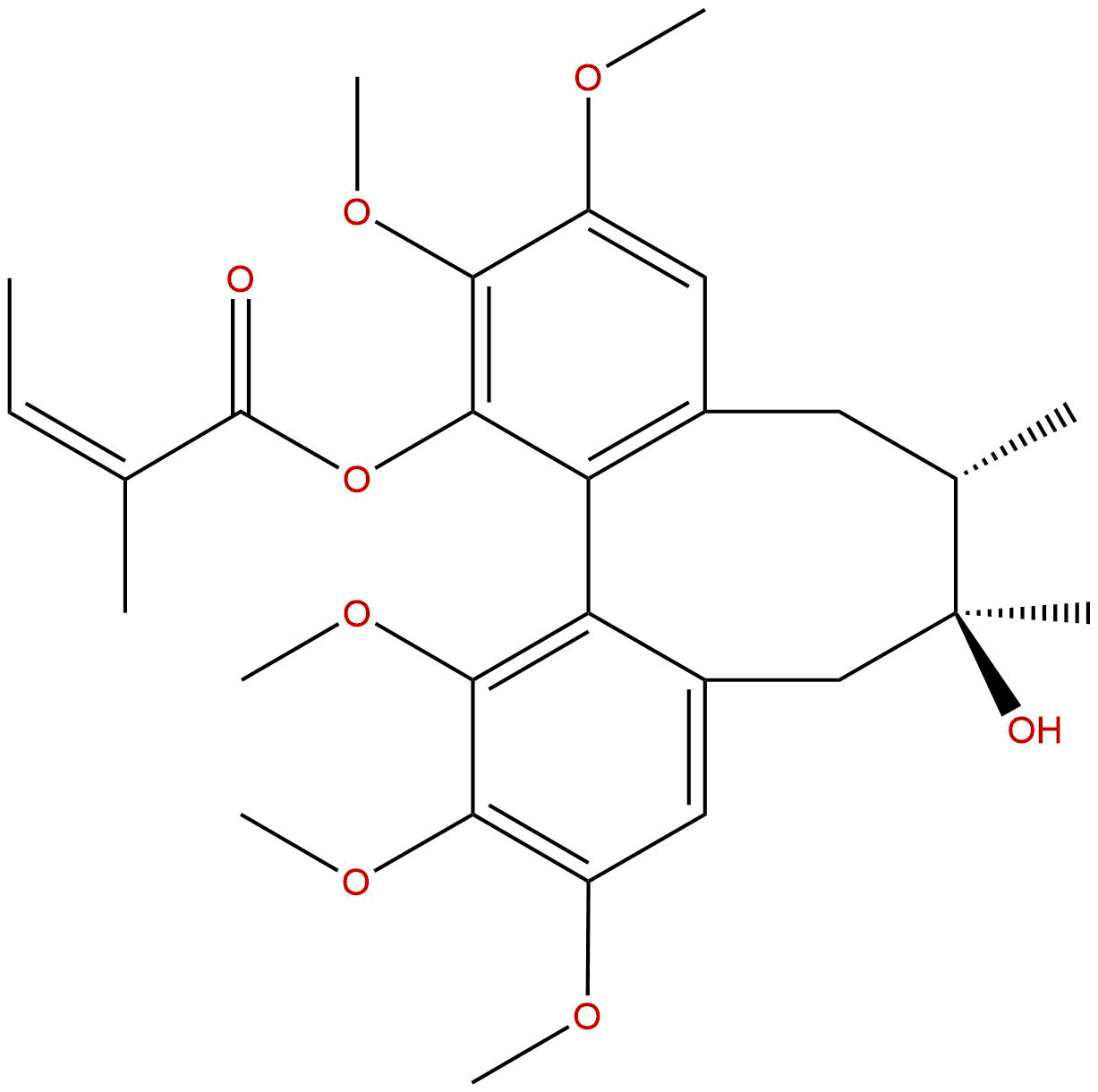
The chemical system name of Danggui acyl gomisine H is relatively complex, and its CAS registration number is 66056-22-2. Structurally, it belongs to the typical biphenylcyclooctene type lignans, which is the core skeletal feature of lignans in Schisandra plants. The skeleton is composed of a biphenyl structure and an eight membered oxygen-containing heterocyclic ring (cyclooctadiene) fused together, forming a highly rigid and chiral three-dimensional structure. The characteristic of Danggui acyl Gomisine H is that a Danggui acyl oxygen group is attached to a specific position of its parent nucleus Gomisine H. Angelica sinensis acyl group is a derivative of phenylacetic acid, and its introduction significantly changes the polarity, spatial conformation, and interaction mode with biomolecules of the molecule. It is one of the key pharmacophores that determine its unique biological activity.
Its molecular formula is C29H36O7, with a molecular weight of 500.5880 g/mol. Both theoretical calculations and experimental measurements indicate that the compound has high lipid solubility, with a LogP value of 4.4016 for its lipid water partition coefficient. This suggests that it is easy to penetrate cell membranes, but may also lead to poor water solubility. Its topological polarity surface area is relatively low, at 92.68 Å ², which is related to the fact that its molecule only contains a few hydrogen bond acceptors and donors, further confirming its lipophilic properties. The water solubility data (approximately 0.0075 mg/mL) confirms that it belongs to insoluble compounds, which is a key technical bottleneck that must be overcome in formulation development.
In terms of preliminary prediction of drug properties, this compound exhibits high blood-brain barrier permeability potential, which provides the possibility for its potential central nervous system related applications, such as neuroinflammation regulation. Importantly, the preliminary toxicity prediction showed a negative risk of hERG channel inhibition, and the Ames mutagenicity test predicted a value of 0.0, suggesting that it may have good cardiac safety and low genetic toxicity risk, laying a good safety foundation for subsequent development.
Plant sources and extraction methods
Danggui acyl gomisine H mainly comes from plants of the Schisandra genus in the Schisandraceae family. Existing literature clearly reports that it can be isolated from Schisandra chinensis. There are many species of Schisandra plants worldwide, and the composition and content of lignin vary among different species. Therefore, a clear and stable plant source is a prerequisite for obtaining this compound. Further systematic plant chemistry research is needed to determine whether other Schisandra plants, except for the red flowered Schisandra, contain this component and its content.
Extracting and isolating Angelica sinensis acyl gomisine H from plant materials, following the conventional process of natural product chemistry. Firstly, it is necessary to crush the dried plant fruits or stems to increase the solvent contact area. Due to the lipophilicity of the compound, the initial extraction is usually carried out using moderately polar organic solvents such as methanol, ethanol, or acetone, through methods such as impregnation, reflux, or ultrasound assisted extraction. The crude extract was concentrated under reduced pressure to obtain a total extract rich in various lignans.
The subsequent separation and purification are key steps. Due to the complex composition of the crude extract, liquid-liquid extraction (such as segmented extraction with petroleum ether, ethyl acetate, and n-butanol) is often used for preliminary grouping. Due to its LogP value, Angelica sinensis glycosaminoglycan H is mainly enriched in the ethyl acetate fraction. Further purification is highly dependent on various chromatographic techniques. Atmospheric or vacuum column chromatography is the mainstream method, often using silica gel as the stationary phase, with different ratios of petroleum ether ethyl acetate or chloroform methanol gradient elution. In order to obtain high-purity monomer compounds, multiple column chromatography separations are usually required, combined with modern efficient separation techniques such as preparative thin-layer chromatography, medium pressure liquid chromatography, and high-performance liquid chromatography. Structural identification was carried out through spectroscopic methods such as nuclear magnetic resonance and mass spectrometry, and the pure product was finally confirmed and obtained. Optimizing the extraction solvent, process parameters, and developing efficient separation and purification strategies are important steps in improving the yield of Angelica sinensis acyl gomisine H and promoting its in-depth research.
Pharmacological activity research
The pharmacological activity study of Danggui acyl gomisine H has revealed its significant potential in the fields of metabolism and inflammation.
1. Improve insulin sensitivity and anti diabetes potential
This is one of the most highly anticipated activities of Danggui acyl gomisine H. In cell models of insulin resistance, such as TNF - α - induced 3T3-L1 adipocytes or liver cells, this compound can dose dependently enhance glucose uptake under insulin stimulation. Its strength of action is comparable to or slightly weaker than the classic insulin sensitizer Rosiglitazone, but due to its natural source, it may have different safety characteristics. Animal experiments further support this finding. In the obese diabetes mouse model induced by high-fat diet, the administration of angeloylgomicin H can significantly reduce fasting blood glucose, improve oral glucose tolerance, and reduce hyperinsulinemia. These effects are closely related to their increased utilization of glucose by peripheral tissues such as fat and muscle.
2. Anti inflammatory and anti arthritis activity
Arthritis, especially rheumatoid arthritis and osteoarthritis, is characterized by chronic synovitis, cartilage destruction, and bone erosion, involving a complex inflammatory network. Danggui acyl gomisine H has shown clear protective effects in various arthritis models. In a rat arthritis model induced by carrageenan or Freund's complete adjuvant, the compound administered orally can significantly reduce paw swelling and lower arthritis scores. Its anti-inflammatory effect has been extensively elucidated at the cellular level: it can effectively inhibit the overexpression of a series of key pro-inflammatory factors in macrophages and synovial fibroblasts stimulated by lipopolysaccharide or interleukin-1 β, including TNF - α, IL-6, IL-1 β, and the key enzyme COX-2 in prostaglandin E2 synthesis. More importantly, it has an inhibitory effect on matrix metalloproteinases, the direct executors of joint destruction, particularly on MMP-3 and MMP-13, indicating that it not only has anti-inflammatory properties but may also directly protect joint cartilage and extracellular matrix, delaying the structural progression of the disease.
3. Other potential activities
Based on its core PPAR - γ activation and anti-inflammatory properties, Angelica sinensis glycosaminoglycan H has also shown exploratory value in other related disease fields. For example, in a non-alcoholic fatty liver disease model, it may play a role by improving insulin resistance and inhibiting liver inflammation. Its high blood-brain barrier permeability also suggests its potential application value in neurodegenerative diseases such as Alzheimer's disease (often accompanied by insulin resistance and neuroinflammation in the brain), but this requires more experimental evidence to support.
Mechanism of action and molecular targets
The multiple pharmacological activities of Danggui Acylgomixin H stem from its precise regulation of multiple key signaling pathways and molecular targets. Its mechanism of action network can be summarized as follows:
1. Core target: Activation of PPAR - γ
PPAR - γ is a member of the nuclear receptor superfamily and plays a central role in adipocyte differentiation, glucose homeostasis, and inflammation regulation. Danggui acyl gomisine H has been confirmed to be a partial agonist or modulator of PPAR - γ. It can bind to the ligand binding domain of PPAR - γ, induce receptor conformational changes, promote heterodimer formation with retinol X receptor, and then bind to PPAR response elements in specific gene promoter regions, recruit co activators, and initiate target gene transcription. By activating PPAR - γ, it upregulates the expression of genes such as glucose transporter GLUT4 and adiponectin, directly promoting glucose uptake and improving insulin sensitivity; On the other hand, the activation of PPAR - γ has a strong anti-inflammatory effect and can trans inhibit the activity of other pro-inflammatory transcription factors.
2. Inhibition of NF - κ B signaling pathway
NF - κ B is the "master switch" of the inflammatory response. Under the stimulation of TNF - α or IL-1 β, the I κ B kinase complex is activated, leading to the phosphorylation and degradation of inhibitory protein I κ B, thereby releasing NF - κ B (usually a p50/p65 dimer) into the nucleus, initiating the transcription of a large number of pro-inflammatory cytokines, chemokines, and enzymes (such as COX-2, iNOS). Research has shown that Danggui acyl gomisine H can effectively prevent the phosphorylation and degradation of I κ B α, inhibit the nuclear translocation of NF - κ B p65 subunit and its binding activity with DNA. This effect may be the main molecular basis for its downregulation of gene expression such as TNF - α, IL-6, IL-1 β, COX-2, etc. The mechanism of its inhibition of NF - κ B may be related to the cross dialogue after PPAR - γ activation, or there may be an independent regulatory pathway.
3. Effects on MAPK signaling pathway
The mitogen activated protein kinase pathways, particularly the p38 MAPK and JNK pathways, are crucial in inflammation and stress responses. There are studies suggesting that Danggui acyl gomisine H can inhibit LPS induced phosphorylation activation of p38 and JNK in macrophages. Inhibition of the MAPK pathway further affects the activity of transcription factors such as AP-1, thereby synergistically inhibiting the production of inflammatory mediators.
4. Regulation of matrix metalloproteinases
MMP-3 and MMP-13 are key enzymes that degrade type II collagen and proteoglycans in articular cartilage. Danggui acyl gomisine H can downregulate the expression of MMP-3 and MMP-13 in chondrocytes or synovial cells induced by IL-1 β. This regulation may be achieved through inhibition of the NF - κ B and MAPK pathways mentioned above, as the promoter region of MMP genes contains binding sites for these transcription factors.
In summary, Danggui acyl gomisine H synergistically inhibits two key pro-inflammatory signaling axes, NF - κ B and MAPK, by activating PPAR - γ as the core, constructing a multi-target and networked mechanism of action, thereby exerting therapeutic effects on improving insulin resistance and inhibiting inflammation/joint destruction.
Evaluation of drug properties and pharmacokinetics
Despite its excellent pharmacological activity, the success of its development as a drug highly depends on systematic pharmacological evaluation and pharmacokinetic studies.
1. Physical, chemical, and biopharmaceutical properties
As mentioned earlier, the compound has a moderate molecular weight (about 500), but its primary challenges are high LogP value (>4) and extremely low water solubility. This may lead to poor oral absorption, low bioavailability, and susceptibility to the influence of fat content in food. The formulation strategy will be the key to solving this problem, such as preparing it into nanocrystals, liposomes, solid dispersions, or cyclodextrin inclusion complexes to increase solubility and dissolution rate. Its high blood-brain barrier permeability prediction is a positive attribute, but it needs to be validated in in vivo experiments.
2. Pharmacokinetic characteristics
At present, there are insufficient reports on the pharmacokinetic studies of the Danggui acyl gomisine H system, which is a weak link in its development chain. Based on the study of similar lignans (such as schisandrin A and schisandrin ester A), it can be inferred that their possible PK characteristics may be: after oral administration, hydrolysis may occur in the gastrointestinal tract (such as the shedding of Angelica sinensis acyl group), generating gomisine H or other metabolites; After absorption, it may undergo extensive first pass effects in the liver, mainly metabolized by the cytochrome P450 enzyme system, and metabolic pathways may include demethylation, hydroxylation, and glucuronidation; Its lipophilicity may lead to certain distribution and accumulation in adipose tissue; The main pathways of excretion may be through bile and feces. In the future, it is necessary to establish sensitive and specific biological analysis methods (such as LC-MS/MS) to systematically study their absorption, distribution, metabolism, and excretion processes in animal models and even in humans, clarify their absolute bioavailability, half-life, tissue distribution characteristics, and main metabolites.
3. Preliminary safety assessment
Preliminary computer predictions indicate that there is no risk of hERG inhibition and Ames mutagenicity, which is a good start. However, a comprehensive non clinical safety evaluation is essential, including acute toxicity, repeated administration toxicity (28 days, 90 days), reproductive toxicity, genetic toxicity (requiring experimental validation of Ames prediction), and carcinogenicity assessment. Special attention needs to be paid to the potential risks that long-term activation of PPAR - γ may bring, such as weight gain, edema, and increased cardiac load, although there may be differences in the mode of action and safety spectrum between natural ligands and synthetic total agonists (such as Rosiglitazone).
Clinical application prospects and prospects
The unique dual mechanism of action (improving insulin sensitivity and potent anti-inflammatory) of Danggui acyl gomisine H depicts broad and precise prospects for its application in chronic complex diseases.
1. Positioning in the field of treatment
* Type 2 diabetes and its complications As a PPAR - γ modulator derived from natural products, it is expected to be developed into a novel insulin sensitizer. Its advantage lies in the possibility of having milder activation effects and a better safety profile than synthetic TZDs, avoiding or reducing side effects such as weight gain and edema. More importantly, its anti-inflammatory properties have additional benefits for the treatment of diabetes complicated with macroangiopathy (atherosclerosis) and microangiopathy (nephropathy, retinopathy), because chronic low-grade inflammation is the core driver of these complications.
* Inflammatory arthritis For rheumatoid arthritis and osteoarthritis, existing drugs may have significant side effects (such as nonsteroidal anti-inflammatory drugs, glucocorticoids) or be expensive (biologics). Danggui acyl gomisine H has the potential to become a candidate for oral small molecule anti rheumatic drugs by inhibiting inflammation and cartilage destruction through multiple targets. The combined effect of it with traditional anti rheumatic drugs such as methotrexate to improve the condition is worth exploring.
* Metabolic inflammatory syndrome related diseases Diseases such as non-alcoholic fatty liver disease and obesity related chronic inflammation also exhibit pathological features of insulin resistance and inflammation, which are potential indications for this compound.
2. Development Strategy and Challenges
* structural optimization The core task of pharmaceutical chemists is to use it as a lead compound for rational structural modification, aiming to improve water solubility, enhance metabolic stability, enhance target selectivity, or reduce potential toxicity.
* Formulation innovation Developing advanced delivery systems for its low solubility is the only way to push it into clinical practice.
* combination therapy Consider combining it with drugs with different mechanisms of action (such as metformin, SGLT2 inhibitors, conventional anti rheumatic drugs), which may produce synergistic effects and reduce their respective dosages and side effects.
* Bottleneck in transformation research The biggest bottleneck currently lies in the lack of systematic preclinical pharmacokinetic and safety data, as well as subsequent clinical trial evidence. Close cooperation between industry, academia and research is needed to fill these gaps.
Conclusion
As a biphenyl cyclooctene type lignan discovered from the traditional Chinese medicine Schisandra chinensis, Danggui acyl gomisine H has shown great potential in the treatment of metabolic and inflammatory diseases due to its unique mechanism of improving insulin sensitivity by activating PPAR - γ and exerting potent anti-inflammatory effects by inhibiting multiple pathways such as NF - κ B. It embodies the ingenious embodiment of the concept of "multi-component multi-target" action of natural products on a single compound. Although it has shown many advantages in chemistry, pharmacology, and preliminary calculation of drug properties, we must be aware that there is still a long and arduous road to go from active compounds to successful drugs. The key scientific challenges that must be overcome in future research include its inherent poor water solubility, lack of systematic pharmacokinetic and safety data. Deepening its ADMET research, conducting reasonable structural modifications and pharmaceutical innovations, and ultimately verifying its efficacy and safety through rigorous clinical trials, is an inevitable path to transform the natural gift of Danggui acyl Gomexin H into a new drug that benefits human health. Continuous and in-depth research on it will not only contribute to the development of novel therapeutic drugs, but also provide new chemical tools and theoretical perspectives for a deeper understanding of the role of PPAR - γ in the metabolic immune cross-talk.