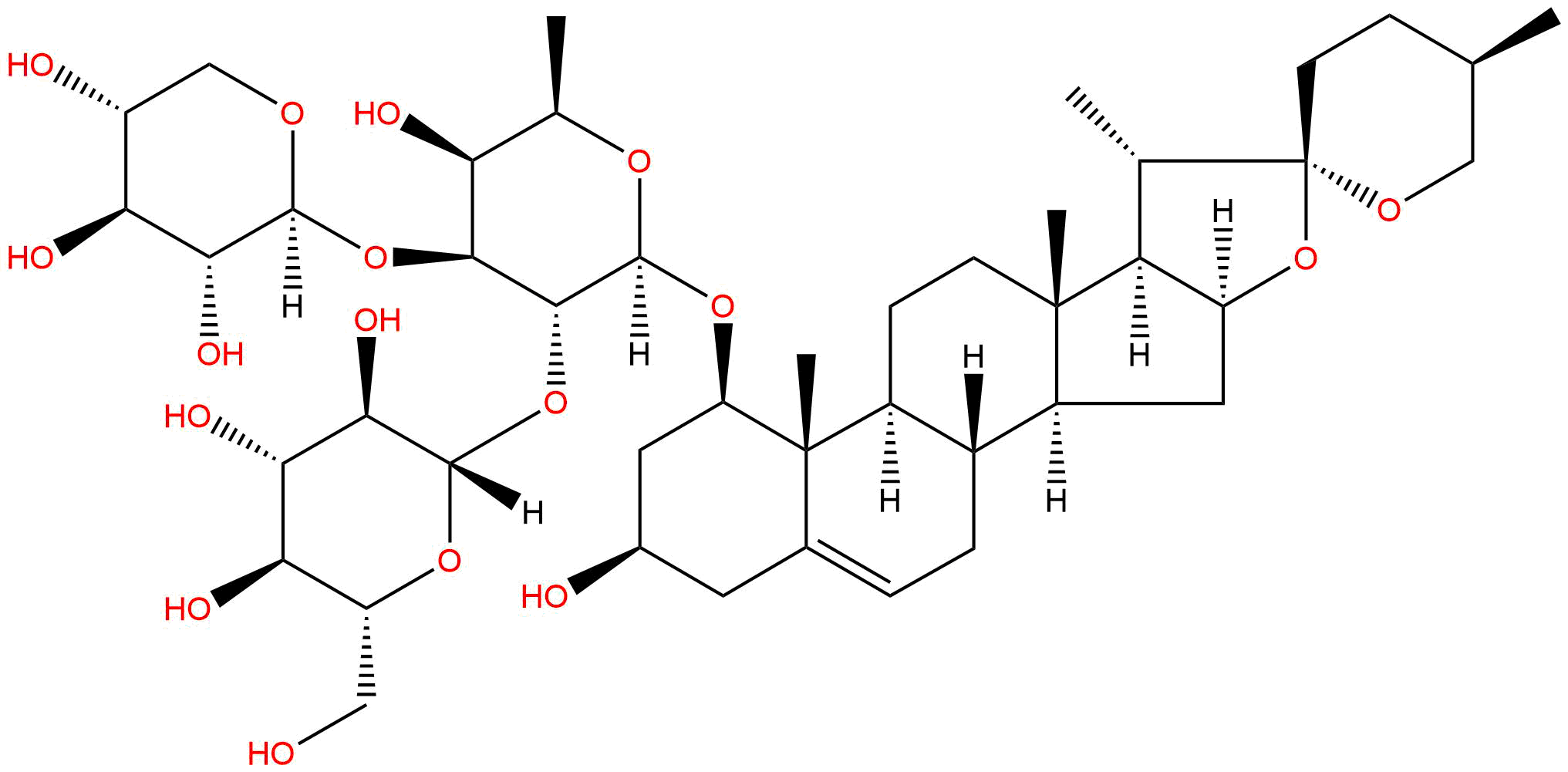


Product name: Liriope muscari baily saponins C
Synonym name: Saponin C, from Liriope muscari;Rusco; Ruscogenin-1-O-[β-D-glucopyranosyl(1-2)][β-D-xylopyrano-syl(1-3)]-β-D-fucopyranoside;
Catalogue No.: BPF0681
Cas No.: 130551-41-6
Formula: C44H70O17
Mol Weight: 871.027
Botanical Source:
Physical Description:
Type of Compound: Steroids
Purity: 95%~99%
Analysis Method: HPLC-DAD or/and HPLC-ELSD
Identification Method: Mass, NMR
Packing: Brown vial or HDPE plastic bottle
The product could be supplied from milligrams to grams
Inquire for bulk scale.
For Reference Standard and R&D, Not for Human Use Directly.
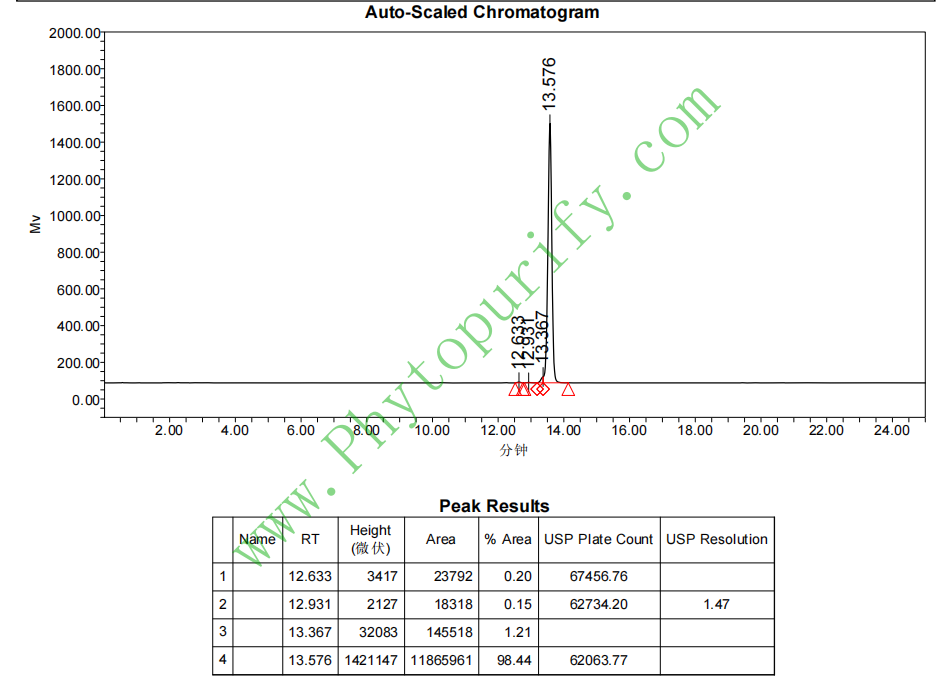
HPLC of Liriope muscari baily saponins C
Storage conditions:Short-term storage at 2~8℃, long-term storage at -20 ~ -80℃
255.9100
1.6947
1.6945
.0782
.5518
.4963
Low
62.4141
6.7848
No
No
No
No
No
No
0.0
Yes
No
Yes
Yes
Liriope muscari baily saponins C, CAS number 130551-41-6, is a steroid saponin compound isolated from the traditional medicinal plant Liriope muscari. Its molecular formula is C44H70O17, with a molecular weight of 871.0270 g/mol, belonging to a complex and highly polar natural product. In the fields of natural product chemistry and pharmacology research, this compound has attracted much attention due to its clear cardiovascular protective activity. Existing studies have shown that saponins C from Ophiopogon japonicus have significant antithrombotic activity, and their mechanism is closely related to the downregulation of mRNA expression levels of interleukin-6 (IL-6) and tissue factor (TF). This discovery provides important scientific basis for its application in the prevention and treatment of cardiovascular disease (CVD). With the development of modern pharmacology and molecular biology techniques, research on saponins C from Ophiopogon japonicus has progressed from initial extraction, isolation, and structural identification to systematic exploration of its multi-target mechanism of action, structure-activity relationship, and potential as a drug. This article will comprehensively interpret this potential natural active molecule from its chemical structure, plant origin, pharmacological activity, mechanism of action, and pharmacological evaluation.
The chemical structure of short stalked Ophiopogon japonicus saponin C is complex, and its SMILES string clearly depicts its stereochemical configuration: it is a steroid saponin with multiple chiral centers, composed of hydrophobic steroid glycosides (usually spirostane or furostane type) and hydrophilic oligosaccharide chains connected by glycosidic bonds. The molecular formula C44H70O17 indicates that it contains 44 carbon atoms, 70 hydrogen atoms, and 17 oxygen atoms, with a high oxygen atom content, which is consistent with its characteristic of containing multiple hydroxyl and sugar units in its structure.
Based on the analysis of the pharmacological parameters, its molecular weight (MW) is 871.0270 g/mol, significantly exceeding the upper limit of the Lipinski Five Rules, which are commonly followed by traditional small molecule drugs. This suggests that it may belong to the category of compounds that are "similar to natural products" or "exceed the Five Rules". These compounds are common in natural products and their absorption and distribution may depend on specific transport mechanisms. Its topological polar surface area (TPSA) is as high as 255.9100 Å ², reflecting the presence of a large number of hydrogen bond donors and acceptors (mainly from hydroxyl groups on sugar chains) on the molecular surface, which leads to its high hydrophilicity. The LogP value is 1.6947 and the LogD value is 1.6945, indicating that the molecule exhibits moderate lipophilicity overall. However, considering its large polar surface area, its actual dissolution behavior may be more complex.
The water solubility parameter is 0.0782 (usually measured in mg/mL or log mol/L, indicating limited solubility), which is consistent with the expected high TPSA and multi hydroxyl structure - although there are many polar groups, the large molecular structure and intramolecular hydrogen bonds may limit its free dissolution in water. The Caco-2 cell permeability (Caco2_permeability) is 0.4963 (usually measured in units of × 10 ⁻⁶ cm/s), which is a low value, indicating its poor ability to passively diffuse and absorb through the intestine. The blood-brain barrier (BBB) penetration is labeled as "low", which is consistent with its high polarity and high molecular weight characteristics, meaning it is unlikely to directly act on central nervous system targets. The plasma protein binding rate (PPB) is 62.4141%, which is at a moderate level and can affect its free drug concentration and distribution volume.
Short stalked Ophiopogon Saponin C is derived from Asparagaceae plants in the Asparagaceae family Shanmaidong(Dwarf lilyturf root), scientific name Liriope spicata (Thunb.) Lour.。 The dried root of Ophiopogon japonicus is one of the sources of the famous traditional Chinese medicinal herb "Ophiopogon japonicus" (the authentic Ophiopogon japonicus recorded in the Chinese Pharmacopoeia is the plant Ophiopogon japonicus in the Liliaceae family)Ophiopogon japonicus The root tubers of Shanmaidong are also used as "Hubei Maidong" and other medicinal products in some areas. Ophiopogon japonicus has a long history of medicinal use, first recorded in the "Shennong Bencao Jing" and listed as a top-grade herb. It has the effects of nourishing yin and generating fluids, moistening the lungs and clearing the heart. It is commonly used to treat symptoms such as lung dryness and dry cough, yin deficiency, tuberculosis and cough, throat obstruction and sore throat, fluid damage and thirst, internal heat and thirst, restlessness and insomnia, intestinal dryness and constipation.
In traditional Chinese medicine theory, Ophiopogon japonicus returns to the heart, lungs, and stomach meridians, and its "clearing the heart and eliminating annoyance" effect implies its regulatory effect on the "heart" system, which is interestingly related to the cardiovascular protective effects revealed by modern research. Shanmaidong, as a similar product of Ophiopogon japonicus, also plays a similar role in folk and medicinal use in some regions. Modern plant chemistry research has isolated and identified various steroidal saponins, polysaccharides, flavonoids, and other components from Ophiopogon japonicus, among which saponins are considered as its important active substance basis. Short stalked Ophiopogon japonicus saponin C is one of the many saponin compounds found in this plant. Its discovery and activity research provide specific material basis for explaining the modern scientific connotation of the traditional Chinese medicine Ophiopogon japonicus's "qi nourishing and yin nourishing" and "meridian promoting" effects, and is a typical case of modernization research in traditional Chinese medicine.
The core pharmacological activity of Short stalked Mountain Ophiopogon Saponin C is Cardiovascular protection Its anti thrombotic effect is a prominent manifestation among them. The existing English description clearly states that its antithrombotic activity originates from upregulation of IL-6 and TF mRNA expression levels Downregulation effect。
1. Core mechanism: anti-inflammatory and anti thrombotic
- IL-6 (interleukin-6)It is a key pro-inflammatory cytokine. In cardiovascular events such as atherosclerosis and thrombosis, vascular endothelial cells, smooth muscle cells and immune cells (such as macrophages) will produce a large amount of IL-6. IL-6 activates signaling pathways such as JAK/STAT, further inducing the production of acute phase proteins such as C-reactive protein (CRP), and promoting endothelial cell activation, leukocyte adhesion, and platelet aggregation, forming a pro-inflammatory and thrombotic microenvironment. Downregulation of IL-6 expression can help alleviate inflammation in the vascular wall, stabilize plaques, and is an important strategy for cardiovascular protection.
- TF (Organizational Factor)It is the process of coagulation in the body Main promoter Under normal circumstances, TF is not exposed to blood. Under the stimulation of vascular endothelial injury and inflammatory factors (such as IL-6), the expression of TF on the surface of endothelial cells, monocytes, and other cells significantly increases. TF binds to coagulation factor VIIa in the blood, initiating an exogenous coagulation pathway that ultimately leads to fibrin formation and thrombus formation. Therefore, downregulating TF expression is the key to inhibiting pathological coagulation from the source.
- Correlation Short stalked Ophiopogon japonicus saponin C can simultaneously downregulate IL-6 and TF, indicating its ability to anti-inflammatory and Direct anticoagulation Dual pathway exerts antithrombotic effects. Reducing inflammation (lowering IL-6) can indirectly decrease the induced expression of TF, while directly inhibiting TF expression can more quickly block the coagulation cascade. This multi link intervention strategy may have more advantages than single target drugs.
2. Multi target action network analysis
The target information provided by the database (ACE, AKT1, NOS3, VEGFA, EDN1) further reveals the complex network of its cardiovascular protective effects:
- ACE (angiotensin converting enzyme)The key enzyme of the renin-angiotensin system (RAS) catalyzes the conversion of angiotensin I into the potent vasoconstrictor angiotensin II (Ang II). Inhibiting ACE activity is a classic strategy for treating hypertension and heart failure in clinical practice (such as with Puli drugs). Short stalked Ophiopogon japonicus saponin C may act on ACE, thereby exerting its effects on lowering blood pressure and reducing cardiac load.
- AKT1 (protein kinase B)It is the core node of the PI3K/AKT signaling pathway, regulating cell survival, proliferation, metabolism, and angiogenesis. In the cardiovascular system, activation of AKT1 can promote endothelial cell survival, increase nitric oxide (NO) production (via phosphorylation to activate NOS3), and inhibit cell apoptosis. Regulating AKT1 may help protect endothelial function and resist ischemia/reperfusion injury.
- NOS3 (endothelial nitric oxide synthase)Catalytic production of NO, which is an important endothelial derived vasodilator with antiplatelet aggregation, anti smooth muscle cell proliferation, anti-inflammatory, and protective effects on endothelial function. Upregulation or activation of NOS3 is a common mechanism of many cardiovascular protective drugs.
- VEGFA (vascular endothelial growth factor A)Mainly promote the proliferation and migration of endothelial cells, and induce angiogenesis. In ischemic diseases, upregulation of VEGFA expression helps establish collateral circulation and improve blood supply. However, its overexpression may also promote pathological angiogenesis in atherosclerotic plaque and increase plaque instability. Moderate regulation of it is crucial.
- EDN1 (endothelin-1)It is currently known as the strongest endogenous vasoconstrictor peptide, produced by endothelial cells, which can strongly and persistently constrict blood vessels and promote smooth muscle cell proliferation. The increase of EDN1 level is closely related to hypertension, pulmonary hypertension, atherosclerosis, etc. Antagonising EDN1 or its receptors is an important therapeutic direction.
Integration of mechanism of action:
Short stalked Ophiopogon japonicus saponin C may exert cardiovascular protective effects through a synergistic network: it may affect ACE-EDN1 Axis to regulate vascular tension (blood pressure reduction); By regulating AKT1-NOS3 Pathways are used to enhance the bioavailability of NO, improve endothelial function, and inhibit platelet aggregation (anti thrombotic, vasodilatory); By adjusting VEGFA To promote beneficial angiogenesis in ischemic environments; And its core anti thrombotic effect is achieved through inhibition IL-6/TF This inflammation coagulation coupling axis is achieved. These targets are interrelated and together form a defense system against multiple cardiovascular pathological processes such as vascular inflammation, endothelial dysfunction, abnormal coagulation, and vascular remodeling.
Based on the provided pharmacological parameters, we can conduct a preliminary evaluation of the potential for the development of short stalked Ophiopogon japonicus saponin C as an oral drug, and analyze it in conjunction with the Lipinski Rule of Five (Ro5).
Lipinski's Five Rules Compliance Analysis:
1. Molecular weight (MW) ≤ 500:not conform to(871 > 500)。
2. Lipid water partition coefficient (LogP) ≤ 5:Comply with(1.69 < 5)。
3. Number of hydrogen bond donors (HBDs) ≤ 5:not conform to According to the structure, there are multiple - OH and HBD on the sugar chain, far more than 5.
4. Number of hydrogen bond acceptors (HBA) ≤ 10:not conform to The molecule contains 17 oxygen atoms, and the number of HBAs far exceeds 10.
Short stalked Ophiopogon japonicus saponin C seriously violates three items in Ro5 (MW, HBD, HBA), which strongly indicates its Oral bioavailability may be low Ro5 is an empirical rule based on a passive diffusion absorption model, and this compound belongs to a natural saponin with high polarity and molecular weight. Its absorption may depend on active transport or gut microbiota metabolism (such as sugar chain hydrolysis).
Interpretation and Evaluation of Specific Parameters:
- absorb The high TPSA (255.9) and low Caco-2 permeability (0.4963) confirm its extremely poor transmembrane passive diffusion ability. The effective permeability (Peff) of 0.5518 (estimated in units of × 10 ⁻⁴ cm/s) is also in the low range. This constitutes the main obstacle to its oral administration as a drug.
- distribution BBB penetration is low, ruling out the possibility of central involvement, but this may not necessarily be a disadvantage for the treatment of peripheral cardiovascular diseases. Moderate plasma protein binding (62.4%) means that a significant portion of the drug exists in free form, available for binding to the target.
- Metabolism and toxicity The key genetic toxicity and cardiac toxicity indicators such as Ames test (0.0), chromosomal aberration (none), hERG inhibition (no), etc. were all negative, which is a safety aspect of it Positive signal However, serum biochemical indicators suggest that it may have some impact on the liver (Ser_ST and Ser_LT are "yes"), indicating the need to pay attention to potential risks of elevated liver enzymes during high doses or long-term use, and carefully evaluate its hepatotoxicity in preclinical studies.
- Other Skin sensitization (Skid_Sens), respiratory sensitization (Resp_Sens), and phototoxicity (Photo_tox) are all negative, and the MRTD (maximum recommended therapeutic dose) information is "no". The SyneAccessibility score is 6.7848 (usually the lower the score, the easier it is to synthesize), indicating that its total synthesis route may be more complex, and it is currently more suitable to extract or semi synthesize from natural sources.
Comprehensive Assessment:
Short tengshan Ophiopogon Saponin C is a Clear activity, multi-target effects, and preliminary safety seem acceptable The candidate molecule, but it The properties of generic drugs, especially oral absorption, are the biggest challenge for their commercialization It is unlikely to be developed directly as an oral formulation based on the prototype molecule. Future formulation strategies may include:
1. Prodrug modification Chemical modification of its sugar chains or glycosides to enhance lipid solubility, improve absorption, and metabolize into active forms in vivo.
2. New drug delivery system Using delivery technologies such as liposomes, nanoparticles, and self microemulsions, drugs are encapsulated to enhance their gastrointestinal absorption or alter their distribution.
3. Injection administration To bypass absorption barriers and directly develop into intravenous injections for acute or severe conditions (such as antithrombotic adjuvant therapy for acute coronary syndrome).
4. Mechanism of action inspiration Using it as a lead compound, simplify the structure and search for derivatives that retain core activity (such as IL-6/TF inhibition) but have smaller molecular weight and better Ro5 compliance.
At present, research on the saponins C of Ophiopogon japonicus from the Short stalked Mountain is still mainly in progress Preclinical stage The research focuses on:
- Pharmacological activity expansion In addition to its clear antithrombotic effect, researchers are exploring its protective effect and mechanism in myocardial ischemia/reperfusion injury, atherosclerosis, heart failure, diabetes vascular complications and other models.
- Deepening the mechanism of action Using techniques such as molecular docking, surface plasmon resonance (SPR), and gene knockout/knockdown, verify its direct interaction with predicted targets such as ACE and AKT1, and elucidate its upstream signaling pathway regulating IL-6/TF expression (such as whether it is through inflammatory key pathways such as NF - κ B and MAPK).
- Study on Structure Activity Relationship Analyze the influence of steroid glycoside structure, sugar chain type, connection position and number on activity, and provide guidance for structural optimization.
- Pharmacokinetic study This is a weak link in current research, but it is crucial. It is urgent to clarify its absorption, distribution, metabolism (especially the hydrolysis of its sugar chain by gut microbiota), excretion process, and the pharmacological contribution of its prototype and metabolites in the body.
Application Prospects:
1. As a landmark component of modernization of traditional Chinese medicine Short tengshan Ophiopogon Saponin C is one of the modern scientific carriers for elucidating the traditional effects of Ophiopogon japonicus on promoting blood circulation and clearing the heart. It can be used as an important indicator component for quality control of Ophiopogon japonicus and its compound preparations (such as Shengmai San), improving the standardization and internationalization level of traditional Chinese medicine products.
2. Developed as a new multi target cardiovascular drug Its unique multi target synergistic mechanism, especially for the "inflammation coagulation vascular function" cross network, provides a new idea for the development of drugs for the prevention and treatment of atherothrombotic diseases (such as coronary heart disease, stroke). Combining with a single antiplatelet or anticoagulant drug may result in a synergistic effect.
3. Lead compounds for drug design Its complex structure contains rich medicinal chemical information. Through reasonable structural simplification, modification, and optimization, it is expected to obtain a series of new compounds with better drug properties, stronger activity, or higher selectivity.
4. Functional food or health supplement additives On the premise of fully verifying the safety of Ophiopogon japonicus extract, it can be considered to develop it into a health product with auxiliary functions of regulating blood pressure, blood lipids, and improving microcirculation.
Summary:
Ophiopogon breviscapus saponin C is a treasure excavated from the treasure house of traditional Chinese medicine. Its multi target cardiovascular protection mechanism reflects the systematic advantages of natural products in interfering with complex diseases. Despite the significant challenge of low oral bioavailability, its clear activity, multi link action characteristics, and good initial safety make it still have important research value and development potential in the field of cardiovascular drug development. Future research requires interdisciplinary collaboration, with a focus on breaking through delivery technology and pharmacokinetic bottlenecks while deepening mechanism research, in order to bring modern therapeutic brilliance to this ancient plant molecule.
