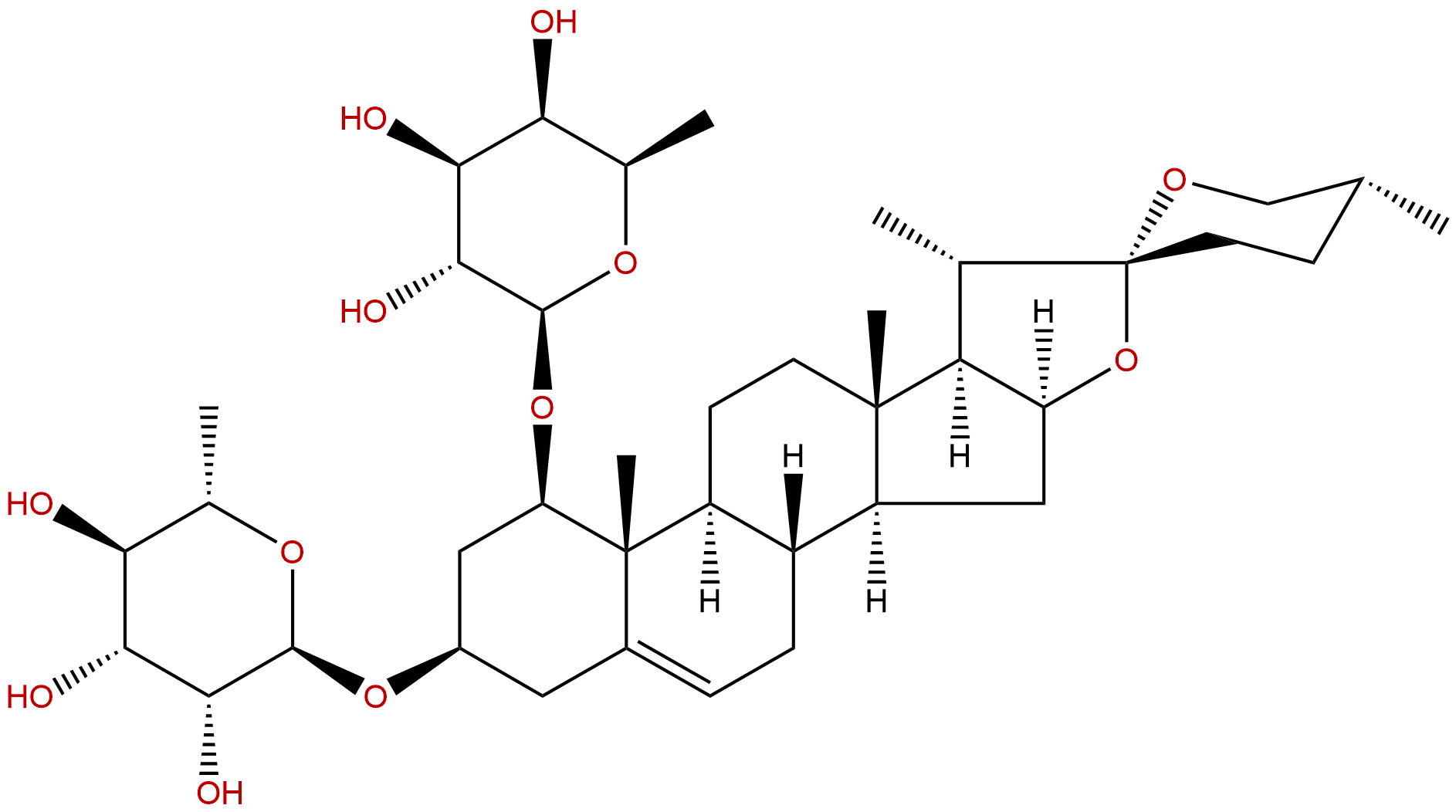


Product name: Liriopeside B
Synonym name:
Catalogue No.: BP3233
Cas No.: 87425-34-1
Formula: C39H62O12
Mol Weight: 722.913
Botanical Source:
Physical Description: Powder
Type of Compound: Steroids
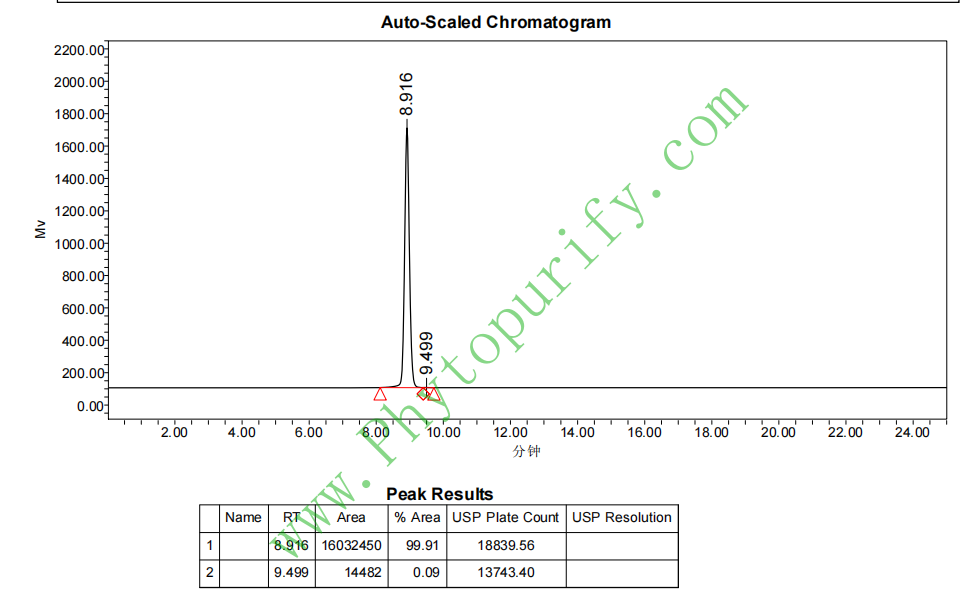
Purity: 95%~99%
Analysis Method: HPLC-DAD or/and HPLC-ELSD
Identification Method: Mass, NMR
Packing: Brown vial or HDPE plastic bottle
The product could be supplied from milligrams to grams. Inquire for bulk scale.
We provide solution to improve the water-solubility of compounds, thereby facilitating the variety of activity tests and clinic uses.
For Reference Standard and R&D, Not for Human Use Directly.
HPLC of Liriopeside B
Storage conditions:Short-term storage at 2~8℃, long-term storage at -20 ~ -80℃
176.7600
2.7780
2.7781
.0168
.6383
1.4863
Low
72.8872
6.3543
No
No
No
No
No
No
0.0
Yes
No
No
Yes
Liriopeside B, CAS number 87425-34-1, is a traditional medicinal plant derived from Liriopogon japonicus(Liriope spicata)Steroid saponin compounds isolated from the middle. Its molecular formula is C39H62O12, with a molecular weight of 722.9130 g/mol, and it belongs to a natural product with complex structure and significant biological activity. In the traditional Chinese medicine system, the dried root of Ophiopogon japonicus (Ophiopogon japonicus) is widely used to nourish yin and moisten the lungs, clear the heart and eliminate troubles, and promote stomach and body fluids. Modern pharmacological research has gradually revealed the potential of its active ingredients in cardiovascular protection. Shanmaidong saponin B, as one of the key active ingredients, has been used in recent years due to its Anti myocardial ischemia The significant activity in this area has attracted high attention from researchers in natural product pharmacology and cardiovascular pharmacology. Research has shown that it regulates cell apoptosis, oxidative stress, energy metabolism, and vascular function by acting on multiple key biological targets such as BCL2, HIF1A, SIRT1, NOS3, SOD2, thereby exerting a protective effect on ischemic myocardial injury. This article will provide a systematic professional popularization of this natural compound with potential for development from the aspects of its chemical structure, plant origin, pharmacological mechanism, medicinal evaluation, and research prospects.
The chemical structure of Shanmaidong saponin B belongs to the spirostane type steroid saponin, and its complex spatial conformation is the basis of its biological activity. From the provided SMILES string, it can be inferred that its core is the steroid parent nucleus (cyclopentane and phenanthrene structure), and two sugar groups (presumably xylose or glucose, etc.) are connected by glycosidic bonds. This structural feature combines lipophilic steroid nuclei and hydrophilic sugar chains, determining its unique physicochemical properties.
According to the provided pharmacokinetic parameters, its molecular weight (MW) is 722.9130 g/mol, exceeding the common upper limit of 500 Da for conventional small molecule drugs. The topologically polar surface area (TPSA) is as high as 176.7600 Å ², mainly attributed to the multiple hydroxyl groups and oxygen atoms on the sugar ring in the molecule, indicating its strong ability to form hydrogen bonds and hydrophilicity. The calculated lipid water partition coefficient (LogP/LogD) is approximately 2.78, indicating that the molecule has a certain lipophilicity but is not highly lipophilic. Based on the comprehensive MW and LogP values, it conforms to one of the "Lipinski's Rule of Five" principles (LogP<5), but exceeds the molecular weight limit, indicating that Ophiopogon japonicus saponin B belongs to the "Beyond Rule of 5" (bRo5) class of compounds, and its absorption and distribution may differ from typical small molecules.
Its water solubility parameter is 0.0168 (usually measured in mg/mL or mol/L, not specified here, but the value is relatively small), indicating low solubility in water, which is consistent with its larger molecular weight and partially lipophilic structure. The permeability of Caco-2 cells is 1.4863 (usually measured in units of × 10 ⁻⁶ cm/s), which is in the moderately low range, indicating that its oral absorption may face challenges. The blood-brain barrier (BBB) penetration is evaluated as' low ', which is consistent with the characteristics of high TPSA and larger molecular weight, meaning it is not easily able to enter the central nervous system. However, for drugs that mainly act on the peripheral cardiovascular system, this may actually reduce the risk of central side effects.
Shanmaidong saponin B mainly comes from Asparagaceae plants Shanmaidong(Liriope spicata Dry tubers of Thunb. Lour. This plant is distributed in China, Japan, South Korea and other places, and its root is often associated with Ophiopogon japonicus in traditional Chinese medicine clinical practice(Ophiopogon japonicus)Mixed or alternative use, collectively known as "Ophiopogon japonicus", is a famous nourishing yin medicine.
In traditional Chinese medicine theory, Ophiopogon japonicus has a sweet, slightly bitter, and slightly cold nature, and belongs to the heart, lungs, and stomach meridians. have Nourishing Yin and generating fluids, moistening the lungs and clearing the heart The efficacy. Commonly used for treating symptoms such as lung dryness and dry cough, yin deficiency and cough, throat obstruction and sore throat, fluid damage and thirst, internal heat and thirst, restlessness and insomnia, intestinal dryness and constipation. It has been applied in many classic prescriptions, such as the Bamboo Leaf Gypsum Soup (clearing heat, generating fluids, nourishing qi, and harmonizing the stomach) in the Treatise on Cold Damage, the Zengye Decoction (enhancing fluid and moistening dryness) in the Treatise on Warm Diseases, as well as Sha Shen Mai Dong Tang, Sheng Mai San, and so on. The efficacy of its "clearing the heart and eliminating annoyance" is potentially related to the protective effects of its active ingredients on the cardiovascular system in modern research, especially the discovery of anti myocardial ischemia and improvement of myocardial energy metabolism. Traditional applications provide valuable clues and validation basis for its modern pharmacological research.
The core pharmacological activity of Shanmaidong saponin B is concentrated in Anti myocardial ischemia aspect. Myocardial ischemia is a process of myocardial cell damage, apoptosis, and even necrosis caused by insufficient oxygen supply and accumulation of metabolic products due to reduced coronary artery blood flow. Shanmaidong saponin B antagonizes this pathological process at different levels by acting on multiple interrelated molecular targets.
Target 1: BCL2 (B-cell lymphoma 2)
BCL2 protein regulates cells Intrinsic apoptotic pathway The key anti apoptotic factor. In myocardial ischemia/reperfusion injury, the expression of pro apoptotic proteins (such as Bax) is upregulated, while the expression of anti apoptotic protein BCL2 is downregulated, leading to increased mitochondrial outer membrane permeability, release of cytochrome C, and initiation of the apoptotic program. Research has shown that saponins B from Ophiopogon japonicus can Upregulation of BCL2 expression or enhancement of its function Thus, inhibiting cardiomyocyte apoptosis and stabilizing mitochondrial function is one of the core mechanisms for protecting cardiomyocyte survival.
Target 2: HIF1A (Hypoxia inducible factor 1-alpha)
HIF1A is a cellular response Low oxygen environment The core transcription factors. During myocardial ischemia, HIF1A stabilizes and translocates into the nucleus, initiating the expression of a series of pro survival genes, including VEGF that promotes angiogenesis and genes that regulate energy metabolism. Shanmaidong saponin B may enhance the adaptability and survival ability of myocardial cells under hypoxic conditions by stabilizing or regulating the activity of HIF1A, and promote the establishment of collateral circulation.
Target 3: SIRT1 (Sirtuin 1)
SIRT1 is a NAD+- dependent class III histone deacetylase that is involved in cellular processes Energy metabolism, oxidative stress, and aging The core regulator. It can activate PGC-1 α through deacetylation, promote mitochondrial biosynthesis and fatty acid oxidation, and optimize myocardial energy supply; At the same time, it can also deacetylate and activate transcription factors such as FOXO, enhancing the antioxidant defense ability of cells. The activation effect of Shanmaidong saponin B on SIRT1 can help improve ischemic myocardium Imbalance of energy metabolism And alleviate oxidative stress damage.
Target 4: NOS3 (endothelial nitric oxide synthase 3)
The nitric oxide (NO) produced by NOS3 catalysis is important Vasodilatory factors and cardiovascular protective mediators It can dilate coronary arteries and improve myocardial blood flow perfusion; Inhibit platelet aggregation and leukocyte adhesion; It also has anti-inflammatory and anti apoptotic effects. Shanmaidong saponin B may directly improve myocardial function by upregulating or activating NOS3, increasing the bioavailability of NO blood supply And play a multifunctional protective role.
Target 5: SOD2 (Superoxide Dismutase 2, Manganese Superoxide Dismutase)
SOD2 is a key component located in the mitochondrial matrix antioxidant enzyme Responsible for converting superoxide anions (O ₂⁻ •) into hydrogen peroxide (H ₂ O ₂), it is the first line of defense against mitochondrial oxidative stress. When myocardial ischemia occurs, the mitochondrial electron transport chain is damaged, producing a large amount of reactive oxygen species (ROS). The decrease in SOD2 activity or expression can exacerbate oxidative damage. Shanmaidong saponin B may enhance the expression or activity of SOD2,Specific clearance of ROS within mitochondria Protect the structural and functional integrity of mitochondria.
Integration of mechanism of action:
In summary, the anti myocardial ischemia effect of Shanmaidong saponin B is a multi-target, multi pathway synergistic network effect. On the one hand, it activates the SIRT1-NOS3 axis and HIF1A macroscopically Improve myocardial energy metabolism and blood perfusion On the other hand, by upregulating BCL2 and SOD2, at the microscopic level Inhibit cardiomyocyte apoptosis and alleviate mitochondrial oxidative damage This systematic regulation of the "blood flow supply energy metabolism cell survival" chain demonstrates unique advantages in combating complex pathological and physiological processes of myocardial ischemia.
Based on the provided pharmacological parameters, we conducted a preliminary evaluation of the development potential of Shanmaidong saponin B as a candidate drug:
1. Analysis of drug properties (Lipinski's Five Rules):
-Molecular weight (MW): 722.9>500,Violation of Article 1。
-Lipid water partition coefficient (LogP): 2.78<5, in compliance.
-Hydrogen bond donors (HBD, estimated based on structure, multiple - OH on the sugar group):>5,Violation of Article 1(Usually HBD>5).
-Hydrogen bond acceptors (HBA, estimated based on structure):>10,Violation of Article 1(Usually HBA>10).
Shanmaidong saponin B violates three of the five rules (MW, HBD, HBA) and is clearly classified as a "bRo5" compound. These types of compounds (such as cyclosporine and macrolide antibiotics) typically have unique oral absorption pathways (such as through intestinal oligopeptide transporters), and their development cannot fully follow the rules of traditional small molecules.
2. Absorption, distribution, metabolism, and excretion (ADME) characteristics:
- absorb The moderate to low permeability (1.4863) and low water solubility of Caco-2 suggest that its oral bioavailability may not be high. It may be necessary to improve solubility and permeability through formulation techniques such as nanocrystals, liposomes, solid dispersions, or structural modifications (preparation of prodrugs).
- distribution The plasma protein binding rate (PPB) is 72.89%, which is at a moderate level, indicating that approximately 27% of the drugs exist in free form and can be distributed to tissues to exert their effects. Low BBB penetration is beneficial for cardiovascular targets.
- Metabolism and toxicity The key toxicity indicators such as Ames test (0.0, usually negative), chromosomal aberration (no), hERG inhibition (no), etc. are all negative or low-risk, indicating that Low risk of genetic toxicity and cardiac toxicity However, it should be noted that showing "yes" on the Ser_LK (serum alkaline phosphatase) and Ser_LT (serum alanine aminotransferase) indicators suggests that there may be some impact on the liver under experimental conditions, and close attention should be paid to their development in the future Hepatotoxicity。
3. Comprehensive evaluation:
Shanmaidong saponin B has clear and multi-target pharmacological activity against myocardial ischemia, and the preliminary toxicity risk is controllable, which is its core advantage as a candidate drug. However, its poor drug like properties (bRo5 characteristics) are the main challenge, which may lead to difficulties in oral absorption and low bioavailability. The future optimization of drug efficacy should focus on: ① using modern pharmaceutical strategies to improve its oral delivery efficiency; ② On the premise of retaining the core pharmacophore, reasonable measures should be taken Simplification or modification of structure To reduce molecular weight, optimize LogP and solubility, and develop towards a more "drug like" direction; ③ Conduct in-depth preclinical pharmacokinetic and toxicological studies, especially liver toxicity assessment.
At present, research on saponin B in Ophiopogon japonicus is mostly focused on Preclinical stage The main focus is on validating its efficacy in vitro cell models (such as myocardial cells with hypoxia/reoxygenation injury) and in vivo animal models (such as rat or mouse models of myocardial ischemia induced by coronary artery ligation), and preliminarily elucidating its multi-target mechanism of action. These studies provide a solid scientific basis for its use as a candidate drug for anti myocardial ischemia.
Future research directions and application prospects include:
In summary, Shanmaidong saponin B is a natural lead compound derived from traditional Chinese medicine treasure, with clear multi-target anti myocardial ischemia activity. Despite facing challenges in terms of drug efficacy, with the advancement of modern pharmaceutical chemistry, pharmacy, and pharmacology technologies, it is expected to be developed into a new type of drug for treating myocardial ischemia and related cardiovascular diseases, bringing new treatment options to patients and demonstrating the enormous potential of exploring the value of modern drugs from traditional medicine.
