


Product name: Safflomin A
Synonym name: Hydroxysafflor yellow A
Catalogue No.: BP1235
Cas No.: 78281-02-4
Formula: C27H32O16
Mol Weight: 612.537
Botanical Source: Main pigment from safflower (Carthamus tinctorius)
Physical Description: Yellow powder
Type of Compound: Chalcones
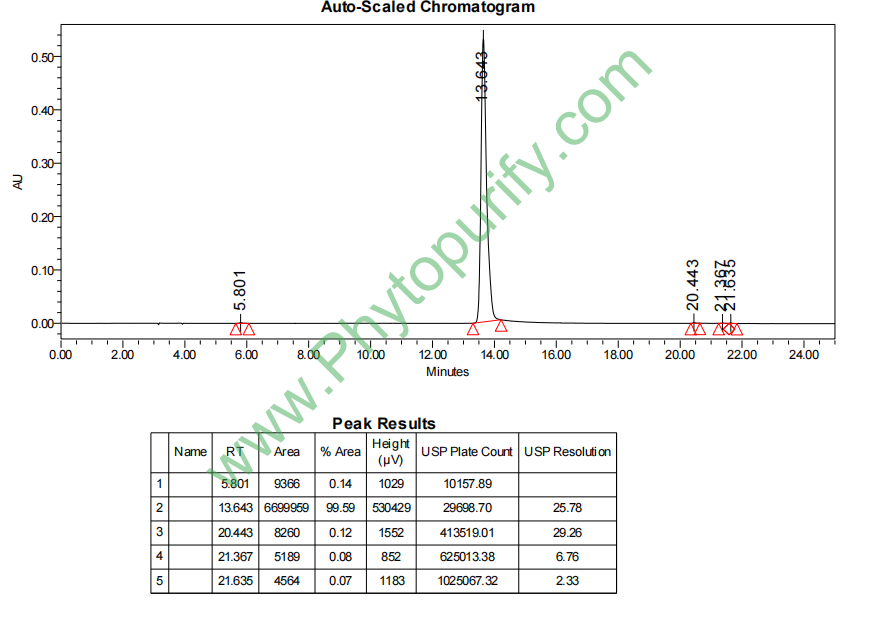
Purity: 95%~99%
Analysis Method: HPLC-DAD or/and HPLC-ELSD
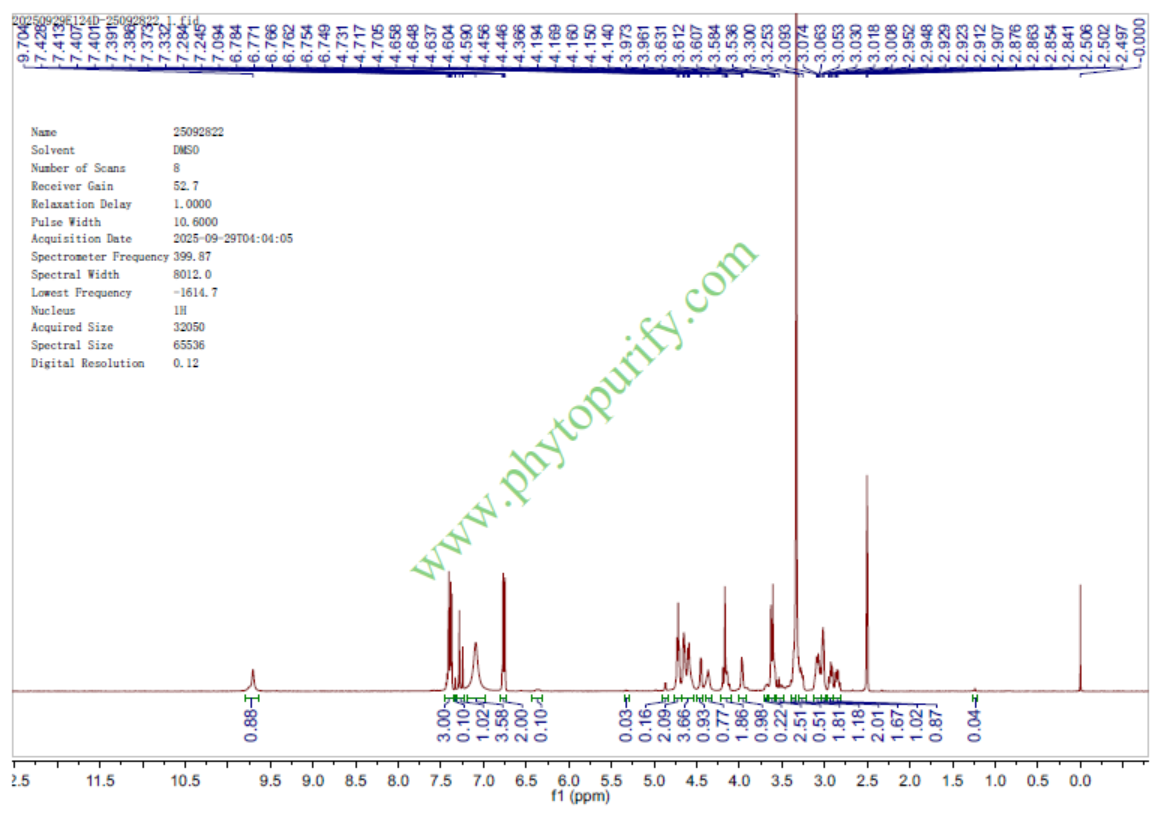
Identification Method: Mass, NMR
Packing: Brown vial or HDPE plastic bottle
Storage: Store in a well closed container, protected from air and light. Put into refrigerate or freeze for long term storage.
Whenever possible, you should prepare and use solutions on the same day. However, if you need to make up stock solutions in advance, we recommend that you store the solution as aliquots in tightly sealed vials at -20℃. Generally, these will be useable for up to two weeks.
The product could be supplied from milligrams to grams, up to kilograms
Inquire for bulk scale.
Descriptions:
Hydroxysafflor yellow A (HSYA), isolated from the dried flower of Carthamus tinctorius L. , which is extensively used in traditional Chinese medicine to treat cirrhosis, can protect against chronic carbon tetrachloride-induced liver fibrosis, might be a promising antifibrotic agent in chronic liver disease.[1]
Hydroxysafflor yellow A can provide protection to H9c2 cardiomyocytes against A/R-induced apoptosis, and this protective effect largely depends on the upregulation of HO-1 expression through the PI3K/Akt/Nrf2 signaling pathway.[2]
Hydroxysafflor yellow A may provide neuroprotection against cerebral ischemia/
reperfusion injury through its suppression of inflammatory responses following focal ischemia reperfusion, and its antioxidant action by inhibiting the opening of mtPTP by a free radical scavenging action in the brain.[3-5]
Hydroxysafflor yellow A could enhance the survival of ECs under hypoxia, which may be correlated with its effect of upregulating the bcl-2/bax ratio and promoting HIF-1 alpha protein accumulation, which increases VEGF, these findings provide evidence for the mechanisms by which HSYA maintains EC survival under hypoxia.[6]
Hydroxysafflor yellow A suppresses inflammatory responses of BV2 microglia after oxygen-glucose deprivation, which is probably associated with the inhibition of the NF-κB signaling pathway and phosphorylation of p38.[7]
References:
[1] Zhang Y, Guo J, Dong H, et al. Eur J Pharmacol, 2011, 660(2–3):438-44.
[2] Liu S X, Zhang Y, Wang Y F, et al. Int J Cardiol, 2012, 160(2):95-101.
[3] Wei X, Liu H, Sun X, et al. Neurosci Lett, 2005, 386(1):58-62.
[4] Tian J, Li G, Liu Z, et al. Pharmacology, 2008, 82(2):121-6.
[5] Ye S Y, Gao W Y. Arch Pharml Res, 2008, 31(8):1010-5.
[6] Ji D B, Zhu M C, Zhu B, et al. J Cardiovasc Pharm, 2008, 52(2):191-202.
[7] Li J. Neurosci Lett, 2013, 535(1):51-6.
[8]Tan S J, Chi J P, He Y Q, et al. Pharm J Chinese Peoples Liberation Army, 2013(05):464-5.
HPLC of Safflomin A
HNMR of Safflomin A
Storage conditions:Short-term storage at 2~8℃, long-term storage at -20 ~ -80℃
295.3600
-1.4857
-2.6849
7.9430
.3975
.4295
Low
71.2907
5.1564
Yes
No
No
No
No
Yes
0.0
Yes
No
Yes
Yes
Cardiovascular disease is the leading cause of death and disability worldwide, with myocardial ischemia and its severe consequence - myocardial infarction - posing a significant public health challenge. Although modern medicine has made significant progress in interventional therapy and drug therapy, finding efficient and low toxicity new therapeutic drugs remains the core task in this field. In this context, traditional Chinese medicine has become an important treasure trove for discovering new cardiovascular active molecules due to its long clinical application history and unique treatment concepts. Red flowers, as a classic traditional Chinese medicine for promoting blood circulation, removing blood stasis, and relieving pain, have been clinically used for thousands of years. Modern pharmacological research has confirmed that safflower extract has clear therapeutic effects in improving microcirculation, anti-inflammatory, antioxidant, and myocardial protection. Hydroxysaffron yellow pigment A, as a characteristic water-soluble chalcone glycoside compound isolated and identified from saffron, is considered to be the key pharmacological substance basis for saffron to exert cardiovascular protective effects. This article aims to systematically review the chemical properties, pharmacological activities, mechanisms of action, and pharmacological properties of hydroxysaffron yellow pigment A, providing a comprehensive scientific perspective for its in-depth research and clinical translation.
The chemical system name of hydroxysafflor yellow pigment A is: 6-hydroxy-5- [(E) -3- (4-hydroxyphenyl) acryloyloxy] -4-oxo-4H-pyran-2-yl - β - D-glucopyranoside, with a CAS number of 78281-02-4. Structurally, it is a unique C-glycosyl compound with a core skeleton of 3,4,5-trihydroxycyclohexane-2,5-dien-1-one (the reduced form of galloyl), which is substituted at positions 2 and 4 by β - D-glucosyl groups, while position 6 is linked to a p-hydroxycinnamoyl group via an ester bond. This structure combines the characteristics of polyphenols, glycosides, and cinnamic acid derivatives, determining its unique physicochemical properties and biological activity.
Its molecular weight is 612.5370 g/mol. The calculated logarithm of the lipid water partition coefficient (LogP) is -1.4857, indicating that the compound has a high degree of hydrophilicity. The topologically polar surface area (TPSA) is as high as 295.36 Å ², mainly attributed to the presence of multiple hydroxyl, carbonyl, and oxygen atoms on the sugar ring in the molecule, which are potential hydrogen bond donors and acceptors. Consistent with this, its theoretical water solubility value is 7.9430 mg/mL, which belongs to compounds that are easily soluble in water. These physicochemical parameters indicate the distribution characteristics of hydroxysaffron yellow pigment A in vivo: it is difficult to penetrate the lipid bilayer, and oral bioavailability may face challenges; Its high TPSA and hydrophilicity also result in a lower ability to cross the blood-brain barrier, which to some extent limits its potential application in central nervous system diseases, but may also reduce the risk of central nervous system side effects. Preliminary pharmacological screening showed no significant inhibitory effect on hERG potassium channels (hERG inhibition: No), indicating a low risk of causing QT interval prolongation and apical torsion type ventricular tachycardia in the heart. In addition, the Ames test result was 0.0, indicating that there is no mutagenicity in this testing system and it has a good genotoxicity safety profile.
Hydroxysaffron yellow pigment A mainly comes from the dried tubular flowers of the Asteraceae plant Carthamus tinctorius L. Red flowers are widely distributed in China, mainly produced in Xinjiang, Henan, Sichuan, Yunnan and other places. Its medicinal part is the flower crown harvested during the summer when the flowers turn from yellow to red. Traditionally, it is used to treat blood stasis syndromes such as dysmenorrhea, amenorrhea, postpartum blood stasis, abdominal pain, accumulation of pathological conditions, chest pain, and traumatic injuries.
The efficient and high-purity extraction of hydroxysafflower yellow pigment A from safflower is the basis for its pharmacological research and product development. Due to its water solubility, traditional extraction methods often use water extraction or alcohol water mixed extraction. The common process is to use a certain concentration of ethanol (such as 50% -70%) or water to heat reflux or ultrasound assisted extraction of safflower medicinal materials. The extract is filtered and concentrated to obtain a crude extract. Due to the complex composition of safflower extract, which contains hydroxyl safflower yellow pigments A and B, as well as various flavonoids, pigments, etc., further separation and purification steps are required.
Modern separation and purification techniques have greatly improved the yield and purity of hydroxysaffron yellow pigment A. The macroporous adsorption resin method is a commonly used enrichment method, which utilizes the adsorption desorption characteristics of resins for polar compounds to effectively remove impurities such as polysaccharides and proteins, and enrich target components. Subsequently, the final purification was carried out using preparative high-performance liquid chromatography. By optimizing the mobile phase (usually methanol water or acetonitrile water system, adding a small amount of acid such as formic acid or acetic acid to improve peak shape) and chromatographic column (such as C18 reverse phase column), hydroxysaffron yellow pigment A monomer with a purity of over 98% can be obtained. In addition, liquid-liquid distribution chromatography techniques such as high-speed countercurrent chromatography have also been applied to the separation and preparation of this compound due to their advantages of not requiring solid carriers, high sample recovery rates, and low deactivation. At present, the standardized extraction and quantitative control of hydroxysaffron yellow pigment A have been achieved, providing quality assurance for its research and application as an active pharmaceutical ingredient or standard.
Numerous preclinical studies have confirmed that hydroxysaffron yellow pigment A has multiple pharmacological activities, with its core function centered around cardiovascular and cerebrovascular protection, and extending to multiple levels such as anti-inflammatory, antioxidant, and anti apoptotic effects.
1. Myocardial protective effect: This is the core activity of hydroxysaffron yellow pigment A that has received the most attention. In various experimental animal models of myocardial ischemia/reperfusion injury (such as ligation of the left anterior descending coronary artery), pre-treatment or post-treatment with hydroxysaffron yellow A can significantly reduce myocardial infarction area, improve cardiac function indicators (such as left ventricular end diastolic pressure, left ventricular diastolic pressure, cardiac output), and reduce serum levels of myocardial injury markers (such as creatine kinase, lactate dehydrogenase, cardiac troponin). Its protective effect has also been validated in an ex vivo cardiac perfusion model.
2. Anti inflammatory and immune regulatory effects: Inflammatory reaction is a key link in cardiovascular pathological processes such as myocardial ischemia injury and atherosclerosis. Hydroxysafflower yellow pigment A can significantly inhibit the excessive production and release of pro-inflammatory cytokines (such as tumor necrosis factor - α, interleukin-1 β, interleukin-6) in macrophages induced by stimuli such as lipopolysaccharides. In animal models, it can also reduce the infiltration of inflammatory cells and the expression of inflammatory mediators in tissues.
3. Antioxidant and free radical scavenging effects: Oxidative stress is one of the core mechanisms of ischemia-reperfusion injury. The phenolic hydroxyl structure in the molecule of hydroxysafflower yellow pigment A gives it good electron supply ability, which can directly eliminate reactive oxygen species such as superoxide anions and hydroxyl radicals, and enhance the endogenous antioxidant defense system, such as increasing the activity of superoxide dismutase, catalase, and glutathione peroxidase, and reducing the content of lipid peroxidation product malondialdehyde.
4. Anti apoptotic effect: Apoptosis of myocardial cells is an important form of myocardial cell loss after ischemia. Research has shown that hydroxysafflower yellow pigment A can inhibit myocardial cell apoptosis induced by ischemia and hypoxia, reduce the activation of apoptosis related proteins and DNA fragmentation.
5. Improve blood rheology and anti thrombotic effects: The traditional efficacy of safflower in promoting blood circulation and removing blood stasis is reflected in hydroxysafflower yellow pigment A. It can inhibit platelet aggregation, reduce whole blood viscosity and plasma viscosity, improve microcirculation disorders, and demonstrate certain anti thrombotic potential.
6. Other activities: In addition, the study also suggests that hydroxysafflower yellow pigment A may have potential activities such as neuroprotection, anti fibrosis, and anti-tumor effects, but research in these areas is still in the preliminary stage and further exploration is needed.
The cardiovascular protective effect of hydroxysafflower yellow pigment A is not achieved through a single target, but through a network regulation of multi-target and multi pathway synergistic effects. Based on the provided target information, its mechanism of action can be summarized as follows:
1. Regulating the balance between cell apoptosis and survival: Hydroxysafflower yellow pigment A can upregulate the expression of anti apoptotic protein Bcl-2, while downregulating the expression of pro apoptotic protein Bax, and inhibiting the activation of caspase-3, thereby inhibiting mitochondrial pathway apoptosis. This is one of the direct mechanisms by which it protects myocardial cells from ischemic injury.
2. Inhibit inflammatory signaling pathways: Interleukin-6 is a key pro-inflammatory cytokine. Hydroxysafflower yellow pigment A can effectively inhibit the transcription and secretion of IL-6. Its anti-inflammatory effect is closely related to the inhibition of nuclear factor kappa B and mitogen activated protein kinase signaling pathways, the latter involving key kinases such as MAPK1 (ERK2). By inhibiting these pathways, it blocks the cascade amplification of inflammatory responses.
3. Regulating hypoxia adaptation and energy metabolism: Hypoxia inducible factor-1 α is a core transcription factor that cells use to respond to hypoxic environments. Hydroxysaffron yellow pigment A may promote adaptive response and angiogenesis in ischemic tissues by stabilizing HIF-1 α or regulating its downstream target genes, such as vascular endothelial growth factor. Meanwhile, it can upregulate the expression of the deacetylase SIRT1. SIRT1 regulates various transcription factors such as PGC-1 α and FOXOs through deacetylation, participating in mitochondrial biosynthesis, antioxidant defense, and energy metabolism regulation, improving the energy supply and survival ability of myocardial cells under stress.
4. Improve vascular function and redox homeostasis: Hydroxysafflower yellow pigment A has a regulatory effect on the nitric oxide synthase system. It can inhibit the overexpression of inducible nitric oxide synthase in pathological conditions (reducing the excessive and harmful nitric oxide produced by NOS2), while possibly protecting or activating endothelial nitric oxide synthase, promoting the release of physiological nitric oxide, thereby exerting vasodilation, antiplatelet aggregation, and anti-inflammatory effects. In addition, it may have a certain inhibitory effect on angiotensin-converting enzyme, which helps alleviate the vasoconstriction and remodeling effects caused by excessive activation of the renin-angiotensin system.
5. Cardiac electrophysiological safety: Research suggests that it does not significantly inhibit the hERG potassium channel (encoded by the KCNH2 gene), which is consistent with its absence of arrhythmogenic side effects observed in preclinical studies and is an important safety advantage as a cardiovascular drug.
In summary, hydroxysafflower yellow pigment A exerts a complex pharmacological network by acting on multiple targets such as BCL2, CASP3, IL-6, MAPK1, HIF1A, SIRT1, NOS2, NOS3, ACE, etc. It synergistically exerts a protective effect on myocardial ischemia from multiple dimensions, including inhibiting apoptosis, reducing inflammation, resisting oxidation, improving vascular function and energy metabolism.
Although the pharmacological activity of hydroxysafflor yellow pigment A is clear, its pharmacological properties, especially its pharmacokinetic characteristics in vivo, are an important factor in determining whether it can be successfully developed into a modern drug.
Absorption: Due to its high hydrophilicity and large molecular weight, the oral absorption of hydroxysafflor yellow pigment A may be poor and its bioavailability may be low. Animal pharmacokinetic studies typically use intravenous administration to accurately evaluate their in vivo behavior. After oral administration, it may be partially hydrolyzed by microbial enzymes or intestinal mucosal enzymes in the gastrointestinal tract. One of the current research directions is to study its prodrugs or novel delivery systems (such as nanoparticles, phospholipid complexes, microemulsions, etc.) to improve its oral absorption.
Distribution: After intravenous administration, hydroxysaffron yellow pigment A is distributed rapidly in the body, but mainly in the blood and blood rich tissues and organs, such as the heart, liver, kidneys, etc. Due to its high hydrophilicity and low fat solubility, its tissue penetration ability, especially its ability to enter the central nervous system through the blood-brain barrier, is weak, which is consistent with theoretical predictions. This distribution characteristic makes it more concentrated in the cardiovascular system.
Metabolism: Hydroxysaffron yellow pigment A mainly undergoes phase II metabolism in the body, which combines with glucuronic acid or sulfuric acid to form corresponding complexes. Its glycoside structure may also undergo partial hydrolysis in the intestine or liver. The liver may be the main site of its metabolism.
Excretion: The compound and its metabolites are mainly excreted through the kidneys and urine. After intravenous administration, the plasma elimination half-life is relatively short, indicating that frequent administration or the design of sustained-release formulations may be necessary to maintain effective blood drug concentrations.
Comprehensive evaluation of drug properties: From the perspective of the "Five Principles of Similar Drugs", the molecular weight of hydroxysaffron yellow pigment A is slightly over 500, with an extremely low LogP value and a large number of hydrogen bond donors and acceptors. These characteristics make it more in line with the characteristics of "natural products" rather than traditional small molecule chemical drugs. Its advantages lie in strong activity, multiple targets, and good preliminary safety evaluation (no hERG inhibition, Ames negative). The main challenge lies in low oral bioavailability and fast metabolism. Future pharmaceutical research, such as developing its injections (especially freeze-dried powder injections for intervention in acute myocardial ischemia), or improving its oral absorption and stability through structural modification and novel drug delivery systems, is an important pathway to promote its conversion into drugs.
The clinical application prospects of hydroxysaffron yellow pigment A are broad, but it also faces many challenges and directions that need to be further explored.
Potential clinical application directions:
1. Adjuvant therapy for acute coronary syndrome: As an injection, it can be used as an adjuvant medication before and after emergency intervention therapy for myocardial infarction (such as percutaneous coronary intervention therapy), aiming to reduce reperfusion injury, shrink the infarct area, and protect heart function.
2. Treatment of chronic stable angina: Develop oral formulations (addressing bioavailability issues) to improve myocardial blood supply, alleviate angina symptoms, and enhance patients' exercise tolerance and quality of life.
3. Prevention and treatment of ischemic cerebrovascular disease: Based on its anti-inflammatory, antioxidant, anti apoptotic, and microcirculation improving effects, it may have protective potential against cerebral ischemic injury and is suitable for the treatment of acute and recovery phases of cerebral infarction.
4. Other blood stasis related diseases: For example, the microvascular complications of diabetes (diabetes nephropathy, retinopathy), pulmonary hypertension, arteriosclerosis obliterans of lower limbs, etc., whose improvement of circulation and anti-inflammatory properties may bring benefits.
Challenges and Future Prospects:
1. Lack of high-level clinical evidence: At present, most research is still at the stage of cell and animal experiments. It is urgent to design rigorous, large-scale, randomized double-blind, placebo-controlled clinical trials to confirm their effectiveness and safety in humans, and to clarify the optimal dosing regimen (dosage, course of treatment, route of administration).
2. Formulation technology and pharmacokinetic optimization: How to overcome its shortcomings of poor oral absorption and short half-life through modern pharmaceutical methods is the key technological bottleneck to push it to the market. Nanotechnology, prodrug strategies, eutectic technology, etc. are worth exploring in depth.
3. Deep analysis of the mechanism of action: Although multiple targets have been identified, the precise initial action targets, interactive dialogue networks between various pathways, and specific regulatory patterns in the human pathological environment still need to be systematically elucidated using cutting-edge technologies such as chemical biology, multi omics, and gene editing.
4. Structural modification and new drug development: By using it as the parent nucleus and carrying out reasonable structural modifications, while retaining the core pharmacophore, it is possible to improve its physicochemical properties and pharmacokinetic parameters, and develop more potent derivatives or analogues.
5. Precision treatment combining traditional Chinese and Western medicine: Explore the combined application of hydroxysafflower yellow pigment A and traditional cardiovascular western medicine (such as antiplatelet drugs, statins, beta blockers), study their synergistic or attenuated effects, and provide new plans and scientific basis for the integrated treatment of cardiovascular and cerebrovascular diseases with traditional Chinese and Western medicine.
Hydroxysafflower yellow pigment A, as the core water-soluble active ingredient of traditional Chinese medicine safflower, is a successful example of modern research on the material basis of traditional Chinese medicine. Its clear multiple pharmacological activities such as anti myocardial ischemia, anti-inflammatory, antioxidant, and anti apoptosis, as well as its networked mechanism of action on multiple targets such as BCL2, SIRT1, MAPK, and NOS, scientifically interpret the traditional efficacy of safflower in promoting blood circulation, removing blood stasis, and relieving pain. Despite challenges in terms of oral bioavailability and drug formulation, its outstanding activity, multi-target synergistic advantages, and good preliminary safety characteristics make it a highly promising candidate molecule for developing novel cardiovascular protective drugs. With the breakthrough of formulation technology, the development of high-level clinical research, and the in-depth analysis of its mechanism of action, hydroxysaffron yellow pigment A is expected to transform from the active ingredient of traditional Chinese medicine into a modern innovative drug with international recognition, providing a natural and diverse treatment option for patients with cardiovascular and cerebrovascular diseases, and injecting new impetus into the modernization and internationalization of traditional Chinese medicine.
