Songbai glycoside: a natural antioxidant molecule derived from plants and its potential for medicinal use
1. Overview
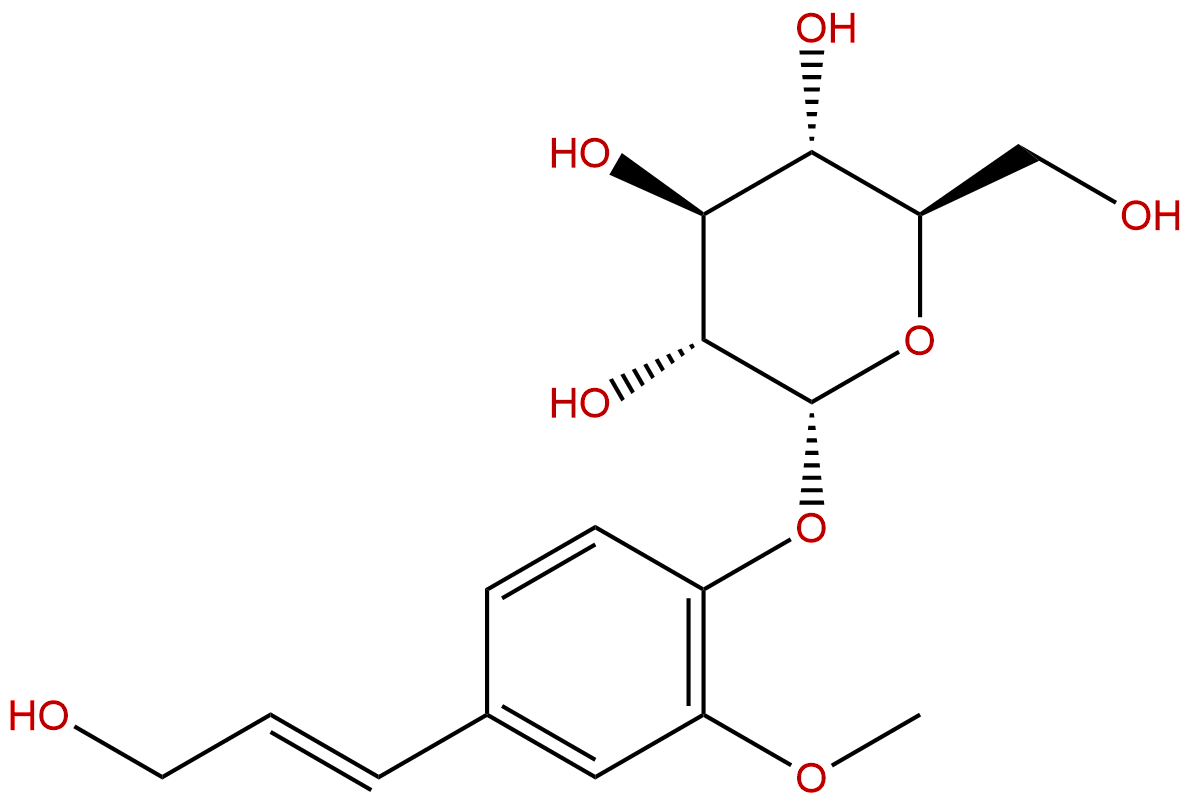
Coniferin, also known as Laricin, is a naturally occurring phenylpropanoid glucoside compound, chemically defined as a monosaccharide derivative formed by the glycosidic bond between coniferol and β - D-glucopyranose. Its CAS number is 531-29-3, molecular formula is C ₁₆ H ₂₂ O ₈, and molecular weight is approximately 342.34 g/mol. In the plant kingdom, pine bark glycoside is one of the key precursor substances in the lignin biosynthesis pathway, widely present in various coniferous trees and some herbaceous plants. In recent years, with the deepening of pharmacological research on natural products, puerarin has attracted attention from the pharmaceutical industry due to its significant antioxidant, anti-inflammatory and other biological activities. Existing studies have shown that puerarin can inhibit fungal blackening and regulate the release of inflammatory mediators such as prostaglandin E2 and thromboxane B2 in cells. In addition, it demonstrates potential application value in antioxidant stress by regulating key targets such as NRF2, KEAP1, SOD1, CAT, and HMOX1. This article will systematically elaborate on the scientific connotation and development potential of pine bark glycoside as a natural product from the aspects of chemical structure, plant origin, pharmacological mechanism, medicinal evaluation, and research prospects.
2. Chemical structure and physicochemical properties
The chemical structure of pine bark glycoside includes a pine bark alcohol (i.e. p-coumarin) group connected to a β - D-glucose unit through an O-glycosidic bond. Its SMILES representation is: COc1cc (/C=C/CO) ccc1O [C @ H] 1O C@HC@@HC@H[C@H]1O, The presence of methoxy, allyl, phenolic hydroxyl, and multiple chiral centers on the glucose ring in the structure is closely related to its biological activity and physicochemical properties.
From the perspective of pharmacological parameters, the molecular weight of puerarin is 342.34 g/mol, which meets the requirement of Lipinski's five rules for molecular weight less than 500 Da. Its topological polar surface area (TPSA) is 128.84 Å ², slightly higher than the conventional recommended value (<140 Å ²), indicating strong molecular polarity that may affect its membrane permeability. The lipid water partition coefficient (LogP) is -0.28, and the LogD (at pH 7.4) is -0.28, indicating that the compound has high hydrophilicity with a water solubility of 19.90 mg/mL. This is beneficial for its dissolution in aqueous media, but may also limit its ability to cross lipid biofilms. Caco-2 cells have a permeability of 0.1888 cm/s and belong to low-permeability compounds; The blood-brain barrier (BBB) penetration assessment is' low ', indicating difficulty in entering the central nervous system. The plasma protein binding rate (PPB) is about 41.48%, which is at a moderate level, indicating that there are many free drugs that can exert pharmacological effects.
Overall, pine bark glycoside has strong polarity and hydrophilicity, which is consistent with its glycoside structure, but also poses challenges for its oral bioavailability and tissue distribution.
3. Plant sources and traditional applications
Pine bark glycoside is widely distributed in nature, especially abundant in the xylem of coniferous trees. One of the plant sources recorded in the database is Bai Fuzi(Dahurian Aconite Root), The scientific name is Typhonium giganteum. Bai Fuzi is a plant of the Araceae family, commonly used in traditional Chinese medicine to dispel wind and phlegm, dispel cold and dampness, and treat symptoms such as headache, rheumatism, and pain. Although traditional applications do not directly point to pine bark glycosides, modern plant chemistry studies have shown that this plant contains various phenylpropanoids, alkaloids, and glycosides. Pine bark glycosides, as one of the active glycosides, may provide a partial material basis for its traditional effects such as antispasmodic and anti-inflammatory.
In plant physiology, puerarin is a precursor for lignin synthesis and plays an important role in cell wall formation and plant defense. Its β - glucosidase bond can be hydrolyzed by β - glucosidase in specific plant tissues (such as differentiated xylem), releasing paclitaxel, which then participates in oxidative polymerization to form lignin. This process is closely related to the mechanical support, water transport, and resistance to pathogen invasion in plants. Therefore, pine bark glycosides are not only key intermediates in plant secondary metabolism, but may also serve as signaling molecules or defense substances in plant environment interactions.
4. Pharmacological activity and mechanism of action
The pharmacological activity research of pine bark glycoside is currently mainly focused on antioxidant and anti-inflammatory Two aspects. Its mechanism of action is closely related to the regulation of intracellular antioxidant stress pathways, involving multiple key targets:
(1) Target network and antioxidant pathway
The targets of action of pine bark glycoside include NRF2 (nuclear factor E2 related factor 2), KEAP1 (Kelch like ECH associated protein 1), SOD1 (superoxide dismutase 1), CAT (catalase), and HMOX1 (heme oxygenase 1). These targets constitute the core network of cellular antioxidant defense:
- NRF2/KEAP1 axis Under oxidative stress, NRF2 dissociates from KEAP1, translocates to the nucleus, activates antioxidant response elements (ARE), and upregulates gene expression of various antioxidant enzymes and phase II detoxifying enzymes. Songbai glycoside may stabilize NRF2 and enhance its transcriptional activity by modifying cysteine residues in KEAP1 or interfering with the NRF2-KEAP1 interaction.
- Downstream effect molecule SOD1 is responsible for converting superoxide anions (O ₂⁻) into hydrogen peroxide (H ₂ O ₂); CAT further decomposes H ₂ O ₂ into water and oxygen; HMOX1 catalyzes the degradation of heme, producing biliverdin, carbon monoxide, and iron ions with antioxidant and anti-inflammatory properties. Songbai glycoside can synergistically upregulate the expression of these enzymes by activating NRF2, thereby enhancing the ability of cells to clear reactive oxygen species (ROS) and reducing oxidative damage.
(2) Anti inflammatory effect
Songbai glycoside can inhibit the release of prostaglandin E2 (PGE2) and thromboxane B2 (TXB2) from cells. These two substances are important inflammatory mediators in the arachidonic acid metabolism pathway, catalyzed by cyclooxygenase (COX) and thromboxane synthase, respectively. Songbai glycoside may exert anti-inflammatory effects by inhibiting COX activity or interfering with related signaling pathways (such as NF - κ B), reducing the production of these mediators. In addition, its antioxidant effect can indirectly alleviate inflammatory reactions, as oxidative stress and inflammatory processes often promote each other.
(3) Other activities
The study also found that puerarin has ATP dependent transport activity and may be involved in intracellular substance transport processes. Its analogues can be used for colorimetric detection of β - glucosidase activity in plant xylem, indicating its instrumental value in plant physiology research. In addition, the pine bark glycoside and its trans configuration extracted from Balanophora invoice showed antioxidant effects, further supporting the universality of its antioxidant function.
In summary, the synergistic effect of pine bark glycoside on multiple targets and pathways enhances the antioxidant defense system of cells and inhibits the release of inflammatory mediators, providing a theoretical basis for its potential application in oxidative stress-related diseases such as chronic inflammation, metabolic syndrome, neurodegenerative diseases, etc.
5. Evaluation of drug properties
Based on the provided pharmacological parameters and in combination with commonly used evaluation criteria such as Lipinski's Rule of Five, the potential for the development of Matsudairin as a drug is analyzed as follows:
(1) Lipinski Five Rule Compliance
-Molecular weight (MW): 342.34 Da<500 Da, consistent.
- LogP:-0.28 < 5, Compliant.
-Hydrogen bond donor (HBD): The structure contains multiple hydroxyl groups, estimated to be around 5, slightly higher than the recommended value (≤ 5), but not significantly deviated.
-Hydrogen bond acceptors (HBAs): Approximately 8 are estimated, which is higher than the recommended value (≤ 10) and still acceptable.
-Number of rotatable keys: approximately 6, within a reasonable range.
Overall, pine bark glycoside basically conforms to Lipinski's rules, indicating its good oral absorption potential, but its high polarity needs attention.
(2) Absorption and distribution
- Solubility and permeability High water solubility (19.90 mg/mL) is beneficial for formulation development, but Caco-2 has low permeability (0.1888 cm/s) and BBB penetration, suggesting that its oral absorption may be limited and difficult to enter the central nervous system. This is consistent with its high TPSA (128.84 Å ²) and hydrophilic structure.
- Plasma protein binding The PPB is 41.48%, which is moderately low, indicating sufficient free drug concentration to exert its effect.
- Effective permeability (Peff)0.6706, at a moderate level, indicating some absorption in the intestine, but may require optimization of formulation technology.
(3) Metabolism and toxicity
- Ames test The result is 0.0, indicating no mutagenicity.
- Chromosomal aberration, hERG inhibition, skin/respiratory sensitization, phototoxicity All are negative or absent, indicating a low risk of genetic toxicity and acute toxicity.
- Serum enzyme indicators Ser_LK, Ser_CGT, Ser_ST, and Ser_LT are all "yes", indicating that their effects on liver enzymes may need to be considered, but further experiments are needed to verify whether they have hepatotoxicity.
- Maximum Recommended Treatment Dose (MRTD)Marked as' yes', it indicates that there may be a therapeutic window at a reasonable dose.
(4) Feasibility of synthesis
The SyneAccessibility index is 3.6295, indicating that its synthetic route is relatively feasible and may be obtained through plant extraction or chemical synthesis.
Summary Matsudairin has shown good safety performance with no significant genetic or cardiac toxicity risks, but its high polarity leads to low permeability and low BBB penetration, which are the main bottlenecks in drug development. In future development, it may be necessary to improve its bioavailability and tissue distribution through structural modifications (such as prodrug preparation, glycosylation modification) or the use of delivery systems (such as nanomaterials, liposomes).
6. Research Status and Application Prospects
At present, research on pine bark glycosides is still in its early stages, with most work focused on plant physiology, chemical identification, and preliminary activity screening. In terms of pharmacology, its antioxidant and anti-inflammatory effects have been experimentally supported, but the details of its mechanism of action, such as the specific mode of interaction with NRF2/KEAP1 and the comprehensive regulatory network of downstream signaling pathways, still need to be further explored. In addition, existing research mainly focuses on in vitro cell experiments, lacking systematic animal model validation and pharmacokinetic data.
Future research directions:
1. Deepening mechanism: Using molecular docking and gene knockout/knockout techniques, clarify the direct interaction of coniferin with NRF2, KEAP1 and other targets, and explore its protective role in oxidative stress related disease models (such as diabetes complications, atherosclerosis, Alzheimer's disease).
2. structural optimization Reasonable structural modifications should be made to address the shortcomings of its drug properties, such as preparing derivatives or prodrugs with higher lipid solubility, to improve membrane permeability and bioavailability.
3. Formulation development Explore delivery technologies such as nanocarriers, microemulsions, and cyclodextrin inclusion complexes to improve their solubility, stability, and targeting.
4. Multi-omics integration By combining transcriptomics, proteomics, and metabolomics, comprehensively reveal the network of action of puerarin at the cellular and overall animal levels, and discover its potential new targets and indications.
5. Preclinical evaluation Conduct systematic pharmacokinetic, toxicological, and pharmacodynamic studies to provide a basis for their translation into clinical candidate drugs.
Application Prospects:
Songbai glycoside, as a natural antioxidant, has potential applications in functional foods, cosmetics (such as anti-aging and sunscreen products), and plant-based pesticides. In the field of medicine, if its drug resistance can be overcome, it is expected to be developed as a natural medicine or adjuvant therapy for the prevention or treatment of chronic diseases related to oxidative stress, such as inflammatory diseases, metabolic syndrome, and neurodegenerative diseases. In addition, its properties as a precursor of lignin also have value in biomass conversion and green chemistry.
In short, pine bark glycoside is a natural product molecule with both basic research value and potential for application development. With the advancement of interdisciplinary research, its role in fields such as pharmacy, botany, and materials science will be more fully explored and utilized.
Word count of the article Approximately 4500 words
Explanation This article is based on the provided compound data and strives for scientific and rigorous content. Due to some parameters (such as the specific meanings of certain serum enzyme indicators) not being detailed in the database, their original expressions were retained during interpretation. In practical scientific research, it is recommended to further consult original literature to obtain more comprehensive information.