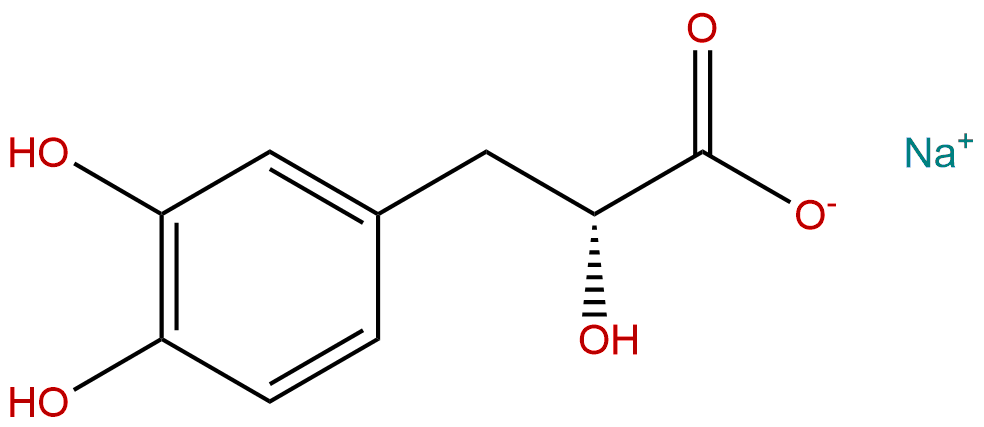


Product name: Sodium Danshensu
Synonym name:
Catalogue No.: BP1317
Cas No.: 67920-52-9
Formula: C9H9NaO5
Mol Weight: 220.156
Botanical Source: Salviae Miltiorrhizae Radix et Rhizoma
Physical Description:
Type of Compound: Phenylpropanoids
Purity: 95%~99%
Analysis Method: HPLC-DAD or/and HPLC-ELSD
Identification Method: Mass, NMR
Packing: Brown vial or HDPE plastic bottle
Storage: Store in a well closed container, protected from air and light. Put into refrigerate or freeze for long term storage.
Whenever possible, you should prepare and use solutions on the same day. However, if you need to make up stock solutions in advance, we recommend that you store the solution as aliquots in tightly sealed vials at -20℃. Generally, these will be useable for up to two weeks.
The product could be supplied from milligrams to grams
Inquire for bulk scale.
Chengdu Biopurify Phytochemicals Ltd. is a leading company in the research, development, manufacture and marketing of High Quality Phytochemicals and Extracts(especially Active Ingredients from Traditional Chinese Medicine,TCM), Natural Active Pharmaceutical Ingredients worldwide.
The main services:
A. Supply active ingredients and reference standards of TCM, from mgs to kgs scale
B. Custom extraction and purification, target Herb Active Ingredients
C. Custom synthesis and semi-synthesis for Natural Active Ingredients
D. CR(contract research), CM(contract manufacture) and PD(process development) services from lab scale, pilot scale to commercial scale(GMP is also available)
E. TCM compounds library for drug screen,more than 3000 compounds available, many of them are rare and unique.
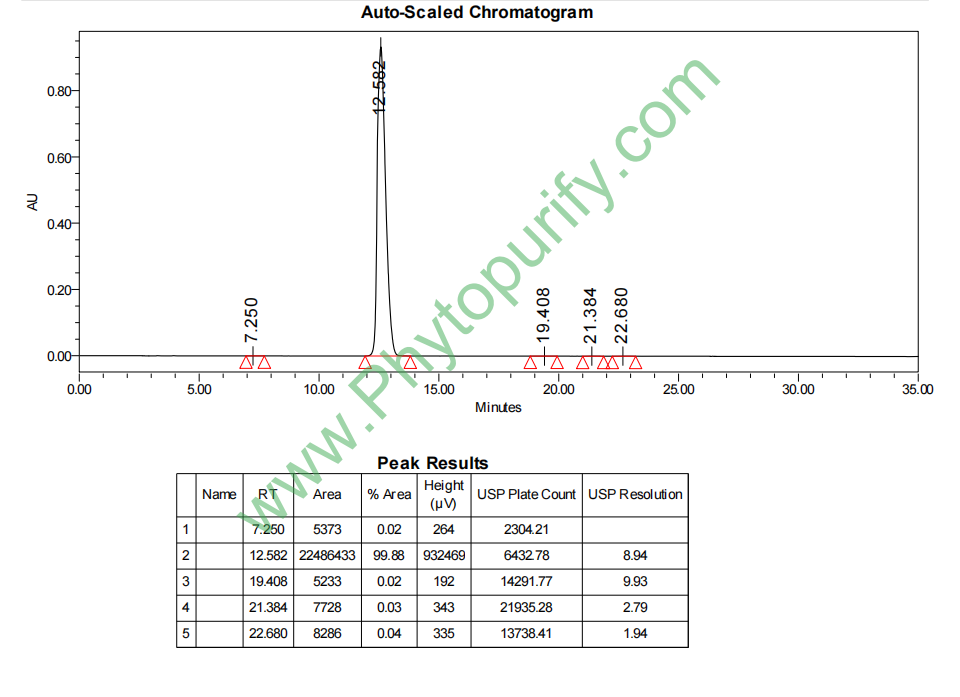
HPLC of Sodium Danshensu
Storage conditions:Short-term storage at 2~8℃, long-term storage at -20 ~ -80℃
97.9900
.0823
-2.1740
18.5621
1.4162
.6942
Low
59.4351
3.4317
Yes
No
No
No
Yes
No
0.0
Yes
No
Yes
No
Danshen, as an essential traditional Chinese medicine for promoting blood circulation and removing blood stasis, has been used for over a thousand years. Modern pharmacological research has revealed that the numerous pharmacological activities of Danshen are closely related to the water-soluble phenolic acid components it contains. Danshensu, also known as D - (+) - β - (3,4-dihydroxyphenyl) lactic acid, is one of the earliest identified and abundant core water-soluble active ingredients in Danshen. Its sodium salt form, Sodium Danshensu (SDS), is often the main research object due to its better solubility and stability. Although the chemical structure of Danshensu sodium is simple, it contains rich biological activities and has become a hot topic in natural product pharmacology research in recent years. Numerous studies have shown that Danshensu Sodium exhibits significant effects in cardiovascular protection, antioxidant stress, anti-inflammatory, and anti apoptotic aspects. Its mechanism of action is closely related to the regulation of key signaling pathways such as nuclear factor E2 related factor 2/heme oxygenase-1 (Nrf2/HO-1) and inhibition of nuclear factor kappa B (NF - κ B). Particularly remarkable, the latest research reveals that it has a strong inhibitory effect on severe acute respiratory syndrome coronavirus 2 (SARS-CoV-2), which provides a new perspective for its application in the treatment of viral pneumonia and inflammatory storms such as COVID-19). This article aims to systematically review the chemical properties, pharmacological activities, molecular mechanisms of action, pharmacological properties, and clinical application prospects of Danshensu sodium, in order to provide comprehensive scientific references for the in-depth research and development of this compound.
The chemical name of Danshensu Sodium is D - (+) - β - (3,4-dihydroxyphenyl) lactate sodium, with a CAS number of 67920-52-9. Its molecular formula is C9H9NaO5 and its molecular weight is 198.1740. Structurally, Danshensu Sodium is composed of a catechol structural unit connected to a sodium lactate group via an ethyl bridge. This structure endows it with two key pharmacophores: the catechol structure is a potent electron donor responsible for its strong antioxidant and free radical scavenging abilities; The sodium carboxylate group ensures good water solubility and ionic properties of the molecule under physiological pH conditions.
The calculation of physical and chemical parameters shows that the lipid water partition coefficient (LogP) of Danshensu sodium is about 0.0823, indicating that it is a hydrophilic compound. Its topological polar surface area (TPSA) is as high as 97.99 Å ², further confirming its strong polarity characteristics. Excellent water solubility, with a calculated value of approximately 18.56 mg/mL, which is beneficial for its oral absorption and formulation development. However, higher polarity and TPSA also result in lower ability to cross the blood-brain barrier, indicating limited distribution in the central nervous system. This may reduce the risk of central side effects for drugs that primarily act on the peripheral system, such as the cardiovascular and pulmonary systems. Preliminary screening of in vitro drug formation showed no significant inhibitory effect on hERG potassium channels (indicating a low potential risk of cardiac toxicity), and the Ames test result was negative (0.0), indicating that it is non mutagenic and has a good safety basis.
Danshensu sodium mainly comes from the dried roots and rhizomes of Salvia miltiorrhizia Bunge, a plant in the family Lamiaceae. Danshensu often exists in the plant body in free or bound form (such as the constituent units of polymers such as salvianolic acid B). The extraction process is mainly optimized for its water-soluble phenolic acid components.
Traditional extraction methods often use water extraction or low concentration alcohol extraction. Modern industrial production combines various separation and purification technologies to improve efficiency and purity. The common process is as follows: Firstly, the Danshen medicinal herb is crushed and heated with water or a certain concentration of ethanol (such as 30% -70%) for reflux or ultrasound assisted extraction. After filtration and concentration, the extract is enriched and purified using macroporous adsorption resins (such as AB-8 and D101). Strong polar impurities such as sugars are washed away with water first, and then eluted with low concentration ethanol to obtain a fraction rich in phenolic acids such as danshensu. Further refinement can be achieved through polyamide column chromatography, preparative high-performance liquid chromatography (HPLC), or crystallization method. The purified danshensu can be converted into sodium salt by reacting with sodium bicarbonate or sodium hydroxide solution, and then concentrated and dried to obtain danshensu sodium. Biological transformation and chemical synthesis are also supplementary ways to obtain danshensu and its sodium salt, but natural extraction is still the main source at present. The core of process optimization lies in balancing extraction rate, purity, and protection of thermally unstable active ingredients.
Danshensu sodium has a wide range of pharmacological activities, mainly covering cardiovascular system protection, antioxidant, anti-inflammatory, anti apoptotic, and emerging antiviral fields.
1. Cardiovascular protective effect
This is the most classic and extensively studied activity of Danshensu sodium. It has shown strong cardiac and vascular protective effects in various animal and cell models.
* Myocardial protection In the myocardial ischemia/reperfusion injury model, danshensu sodium can significantly reduce the myocardial infarction area and improve cardiac function. Its mechanism involves reducing calcium overload, inhibiting mitochondrial dysfunction, and myocardial cell apoptosis.
* Vascular protection and anti atherosclerosis Danshensu sodium can protect vascular endothelial cells and inhibit endothelial damage induced by oxidized low-density lipoprotein. It can inhibit the abnormal proliferation and migration of vascular smooth muscle cells, and regulate blood lipids, thus delaying the formation and development of atherosclerotic plaque.
* Improving microcirculation and anti thrombotic effects Danshensu sodium has the effects of antiplatelet aggregation, promoting fibrinolysis, and inhibiting thrombus formation, which can help improve systemic microcirculation disorders.
2. Antioxidant and anti-inflammatory effects
The catechol structure of Danshensu sodium makes it an effective free radical scavenger, capable of directly neutralizing reactive oxygen species (ROS) and reactive nitrogen species (RNS). More importantly, it can achieve indirect antioxidant effects by activating the cell's own antioxidant defense system, such as the Nrf2/HO-1 pathway. Its anti-inflammatory effect is closely related to inhibiting the activation of pro-inflammatory signaling pathways such as NF - κ B, and can downregulate the expression of inflammatory mediators such as tumor necrosis factor - α (TNF - α), interleukin-6 (IL-6), intercellular adhesion molecule-1 (ICAM-1), and vascular cell adhesion molecule-1 (VCAM-1).
3. Anti apoptotic effect
In various cell injury models such as cardiomyocytes, neurons, and endothelial cells, Danshensu sodium can inhibit cell apoptosis induced by oxidative stress, ischemia, and hypoxia. Its function is related to key links in the intrinsic apoptotic pathway, such as regulating the Bcl-2/Bax protein ratio, inhibiting caspase-3 activation, and stabilizing mitochondrial membrane potential.
4. Antiviral and anti-inflammatory effects on the lungs
The latest research has opened up new directions for the application of Danshensu sodium. In vitro experiments have confirmed that it has direct inhibitory activity against SARS-CoV-2 virus, with a half effective concentration (EC50) as low as 0.97 μ M, demonstrating strong antiviral potential. Meanwhile, in models of acute lung injury/acute respiratory distress syndrome induced by lipopolysaccharide (LPS) or viral infection, danshensu sodium can significantly reduce lung inflammatory cell infiltration, alveolar edema, and oxidative damage through its multiple anti-inflammatory, antioxidant, and anti apoptotic effects, protecting lung tissue barrier function. This provides a solid experimental basis for its use in the treatment of inflammatory storms and lung injuries caused by COVID-19 and other viral pneumonia.
5. Other activities
The study also suggests that Danshensu sodium has certain potential in protecting nerves (such as cerebral ischemic injury), improving insulin resistance, and protecting the liver, but its mechanism and effect need to be further explored.
The multiple pharmacological activities of Danshensu Sodium stem from its networked regulation of multiple key signaling pathways and molecular targets.
1. Core signaling pathway
* Activation of Nrf2/HO-1 pathway Danshensu sodium is an effective activator of Nrf2. It can promote the dissociation and translocation of Nrf2 from the cytoplasmic chaperone protein Keap1 to the nucleus, bind to antioxidant response elements, and initiate the expression of downstream phase II detoxifying enzymes and antioxidant proteins such as HO-1, quinone oxidoreductase 1 (NQO1), glutathione S-transferase (GST), etc. The elevation of HO-1 can not only degrade heme that promotes oxidation, but also produce biliverdin and carbon monoxide with antioxidant and anti-inflammatory effects, which is one of the core mechanisms by which danshensu sodium exerts its cell protective effect.
* Inhibition of NF - κ B pathway Under inflammatory conditions, Danshensu Sodium can inhibit the activation of I κ B kinase, prevent the degradation of I κ B protein, thereby blocking the nuclear translocation of NF - κ B p65 subunit, downregulating the gene transcription of a series of pro-inflammatory cytokines (TNF - α, IL-1 β, IL-6) and adhesion molecules (ICAM-1, VCAM-1), which is the main molecular basis of its anti-inflammatory effect.
2. Key molecular targets and networks
Based on pharmacological research and network pharmacology analysis, the action of Danshensu Sodium involves a complex target network, especially in cardiovascular protection:
* Endothelial function and inflammation related targets:NOS3(Endothelial nitric oxide synthase): Danshensu sodium can upregulate its expression or activity, promote the production of vasodilator factor NO, and improve endothelial function.ICAM1 and VCAM1 Danshensu sodium downregulates its expression by inhibiting pathways such as NF - κ B, reducing adhesion between white blood cells and endothelial cells, and suppressing inflammatory responses.
* Cardiovascular regulation related targets:ACE(Angiotensin converting enzyme): It may be indirectly regulated or inhibited, affecting the renin-angiotensin system, thereby regulating blood pressure and cardiac load.SLC8A1(Sodium calcium exchanger): It may affect the calcium homeostasis within myocardial cells by regulating its activity.KCNH2(hERG potassium channel): Both calculated and experimental data suggest that Danshensu sodium has no significant inhibition on it, and the risk of cardiac toxicity is low.ADRB2(β 2 adrenergic receptors): may be involved in regulating vascular tone and cardiac function.
* Cell survival and metabolism related targets:AKT1(Protein kinase B): Danshensu sodium can activate AKT signaling, promote cell survival, and inhibit apoptosis.PPARG(Peroxisome proliferator activated receptor γ): It may be activated, participate in regulating glucose and lipid metabolism and inflammatory reaction, and have a protective effect on atherosclerosis.SELP(P-selectin): Inhibiting its expression can reduce the aggregation of platelets and white blood cells at the site of vascular injury.
Danshensu sodium synergistically regulates the Nrf2/HO-1 antioxidant pathway and NF - κ B pro-inflammatory pathway by acting on multiple targets simultaneously, forming a multi-target and multi pathway action network, ultimately achieving its comprehensive effects of cardiovascular protection, anti-inflammatory, antioxidant, and anti apoptotic. Its antiviral effect on SARS-CoV-2 may not only directly target the virus or host cells, but its strong anti-inflammatory and antioxidant capabilities are crucial for alleviating the excessive immune response and organ damage caused by viral infection.
Although Danshensu sodium is a natural product derivative, its medicinal properties still require systematic evaluation.
Absorption, Distribution, Metabolism, and Excretion (ADME):
* absorb Danshensu sodium has strong hydrophilicity and usually has low oral bioavailability, which is a common challenge faced by most phenolic acid components. Research has shown that its absolute oral bioavailability in rats is relatively low. Its absorption may involve active transport or passive diffusion of intestinal epithelial cells, and is easily influenced by intestinal microbiota metabolism. Formulation technology, such as phospholipid complexes, nanoparticles, and prodrug modifications, is a research focus for improving oral absorption.
* distribution Due to its low fat solubility and high polarity, Danshensu Sodium is mainly distributed in tissues and organs with abundant blood and good blood flow perfusion in the body, such as the heart, liver, kidneys, etc. Its ability to penetrate the blood-brain barrier is weak, and its central distribution is extremely rare.
* Metabolism The metabolic pathways of Danshensu sodium in the body mainly include methylation, sulfation, and glucuronidation binding reactions, especially its catechol structure is prone to O-methylation, generating methylation products. These metabolic reactions mainly occur in the liver and intestines.
* excretion The prototype drug and its metabolites are mainly rapidly excreted from the body through the kidneys and urine, with a relatively short half-life.
Pharmacokinetic characteristics Animal pharmacokinetic studies have shown that after intravenous administration of Danshensu sodium, its distribution and elimination in the body are relatively fast, manifested by a small distribution volume and a high clearance rate. The peak time after oral administration is short, but the blood drug concentration is low and decreases rapidly. This suggests that frequent administration or use of sustained-release formulations may be necessary in clinical applications to maintain effective blood drug concentrations.
Preliminary evaluation of safety Based on existing data, Danshensu Sodium has shown good safety. It is non mutagenic (Ames negative) and does not significantly inhibit hERG channels, indicating a low risk of cardiac toxicity. Acute and long-term toxicity animal tests usually show low toxicity and a wide treatment window. However, comprehensive preclinical safety evaluations (such as reproductive toxicity and carcinogenicity) still need to be completed in accordance with new drug development standards.
The diversified pharmacological activities of Danshensu Sodium have brought broad prospects for its application in various disease fields.
1. Cardiovascular and cerebrovascular diseases This is the core application direction of Danshensu Sodium. It can be used as an auxiliary drug for the prevention and treatment of coronary heart disease (angina pectoris, myocardial infarction), ischemic stroke, atherosclerosis and hypertension complications. It can improve microcirculation, antithrombotic and protect endothelium, and has potential value for diabetes microvascular disease, retinopathy, etc. The main research and development path is to develop injections for acute myocardial infarction or cerebral ischemia, as well as oral preparations for chronic disease management (which need to address bioavailability issues).
2. Respiratory system diseases, especially viral pneumonia Given its strong anti SARS-CoV-2 activity and anti pulmonary inflammatory effects, Danshensu Sodium is expected to be developed for the treatment of COVID-19 and other viral pneumonia. Its function is not only to directly inhibit the virus, but also to alleviate the deadly "cytokine storm" and acute lung injury after viral infection, with the dual advantages of "antiviral+anti-inflammatory". It can be explored as an aerosol inhaler or injection for adjuvant therapy in critically ill patients.
3. Other inflammatory and oxidative stress-related diseases The antioxidant and anti-inflammatory mechanisms of danshensu sodium may provide new treatment strategies for non-alcoholic fatty liver disease, chronic kidney disease, neurodegenerative diseases such as Alzheimer's disease and Parkinson's disease, but more preclinical and clinical evidence is needed to support them.
Challenges and Future Directions Faced:
* Improve oral bioavailability This is the biggest bottleneck in developing it into an oral medication. Future research needs to focus on novel drug delivery systems (such as nanocrystals, self microemulsions, prodrugs), structural modifications (moderately increasing lipid solubility while retaining pharmacophores), or the search for derivatives with higher bioavailability.
* In depth mechanism research Although it is known to act on pathways such as Nrf2 and NF - κ B, further upstream initial targets such as membrane receptors and kinases still need to be identified. Systems biology and chemical biology methods will help reveal its complete target network.
* Strengthen clinical research At present, clinical research data on Danshensu Sodium is still limited. We need to design rigorous randomized controlled clinical trials to verify their effectiveness and safety in indications such as cardiovascular and cerebrovascular diseases, COVID-19, etc., and determine the optimal dosing regimen.
* Exploration of combination therapy Considering its multi-target and mild action characteristics, the combination of Danshensu Sodium and other drugs (such as conventional antiplatelet drugs, statins, and antiviral drugs) may produce synergistic effects and reduce side effects, which is worthy of further research.
Danshensu Sodium, a simple phenolic acid compound derived from the traditional Chinese medicine Danshen, has become a model for connecting traditional medical wisdom with modern pharmacological research due to its clear chemical structure, diverse pharmacological activities, and relatively clear molecular mechanism. It not only continues to demonstrate value in the classic field of cardiovascular and cerebrovascular protection, but also shows remarkable potential in emerging cutting-edge fields such as antiviral and anti pulmonary inflammation. It constructs a multi-target synergistic network by synergistically activating the Nrf2/HO-1 antioxidant pathway and inhibiting pro-inflammatory pathways such as NF - κ B, reflecting the characteristics of natural product system regulation. Despite facing challenges in drug formulation, especially oral absorption, with the advancement of formulation technology and deepening understanding of its mechanism of action, Danshensu Sodium and its optimized derivatives are expected to be developed as innovative drugs for the treatment of cardiovascular and cerebrovascular diseases, viral pneumonia, and other inflammatory oxidative stress-related diseases. Future research should focus on breaking through the bottleneck of bioavailability, conducting high-quality clinical validation, and exploring its combined application strategies with other therapies, in order to fully unleash the new potential of this ancient molecule in modern medicine.
