Introduction/Overview
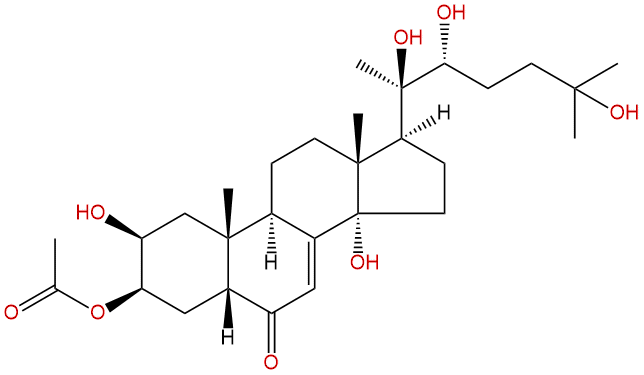
3-acetyl-20-hydroxyecdysone (CAS number 22961-68-8) is a steroid compound isolated from the roots of the plant Cyanotis arachnoidea C.B. Clark, and is a natural product of ecdysones. Due to their unique structure and diverse biological activities, ecdysterone compounds have received widespread attention in the field of natural product pharmacology in recent years. 3-acetyl - β - ecdysterone not only has a typical steroid skeleton, but also exhibits unique pharmacological properties due to its unique acetyl modification. In recent years, as the incidence rate of metabolic diseases, especially obesity, continues to rise, treatment strategies for obesity have become a hot spot in drug research and development. Previous studies have shown that 3-acetyl - β - ecdysterone has potential therapeutic value in regulating lipid metabolism, energy balance, and related signaling pathways, making it a potential candidate drug for obesity and related metabolic diseases.
This article aims to systematically review the chemical structure and physicochemical properties, plant sources and extraction methods, pharmacological activity and mechanism of action of 3-acetyl - β - ecdysterone, with a focus on exploring its molecular targets and pharmacological evaluation in obesity treatment. Combined with the latest pharmacokinetic data, we hope to explore its clinical application prospects and provide theoretical basis and research direction for subsequent drug development and mechanism research.
Chemical structure and physicochemical properties
3-acetyl - β - ecdysterone is a typical steroid steroid with a structure based on 20 hydroxyecdysterone, which is modified with an acetyl group through esterification at the 3rd hydroxyl group. Its molecular formula is C29H44O9 and its molecular weight is 522.6790. The structural characteristics of this compound include:
- Tetracyclic steroid skeleton: The typical steroid tetracyclic structure (A, B, C, D rings) provides the basic framework for its biological activity.
- Polyhydroxyl substitution: In addition to the acetyl group at position 3, there is a hydroxyl group at position 20, which enhances its polarity and binding ability to target proteins.
- Acetyl modification: The introduction of a 3-acetyl group not only affects its lipophilicity (LogP of 1.7854), but may also alter its cell membrane permeability and metabolic stability.
In terms of physicochemical properties, the polar surface area (TPSA) of 3-acetyl - β - ecdysterone is 144.52 Å ², indicating its high polarity and low water solubility (0.0845 mg/mL), which may affect its bioavailability. Its LogP value is moderate, indicating a good balance between lipophilicity and hydrophilicity, which is beneficial for membrane penetration. Low blood-brain barrier penetration ability reduces the risk of central nervous system side effects. The negative result of hERG channel inhibition experiment indicates a low risk of cardiac toxicity. The Ames mutagenicity test showed a value of 0.0, indicating a low risk of genetic toxicity and meeting safety requirements.
In summary, the chemical structure and physicochemical properties of 3-acetyl - β - ecdysterone provide a solid foundation for its potential as a drug candidate molecule, especially in targeting metabolic diseases.
Plant sources and extraction methods
3-acetyl - β - ecdysterone is mainly derived from the roots of Cyanotis arachnoidea C.B. Clark, a plant in the Scrophulariaceae family. This plant is widely distributed in some parts of Asia and has traditionally been used in traditional Chinese medicine and health products, with metabolic regulation and anti-inflammatory effects.
Plant-based
Cyanotis arachnoidea C.B. Clark is a perennial herbaceous plant whose roots are rich in various ecdysterone compounds. Research has shown that the content of ecdysterone in the roots of this plant is relatively high, and 3-acetyl - β - ecdysterone is one of the main active ingredients. The harvesting time, geographical environment, and growth conditions of plants have a significant impact on the content of their active ingredients.
extraction method
The extraction of 3-acetyl - β - ecdysterone usually involves the following steps:
- Drying and crushing Dry the harvested Cyanotis arachnoidea roots and grind them into fine powder to increase extraction efficiency.
- Organic solvent extraction Using methanol, ethanol, or their aqueous solutions for reflux or ultrasound assisted extraction of plant powders to extract ecdysterone compounds.
- Crude extract concentration The extract was concentrated under reduced pressure to obtain a crude extract.
- Separation and purification:
- The crude extract was separated using techniques such as silica gel column chromatography and reverse phase high performance liquid chromatography (RP-HPLC).
- Collect target components using a gradient elution system combined with UV detection.
- Structural Identification Confirm the structure of 3-acetyl - β - ecdysterone through modern analytical techniques such as mass spectrometry (MS) and nuclear magnetic resonance (NMR).
In recent years, supercritical CO2 extraction technology and membrane separation technology have also been introduced to improve extraction efficiency and purity, reduce the use of organic solvents, and conform to the concept of green extraction.
Pharmacological activity research
The pharmacological activity of 3-acetyl - β - ecdysterone mainly focuses on regulating metabolic function, especially in the prevention and treatment of obesity and related metabolic syndrome. Numerous in vitro and in vivo experiments have shown that this compound plays multiple roles in lipid metabolism, energy expenditure, and inflammatory response.
Anti obesity effect
The occurrence of obesity is closely related to the proliferation of adipocytes, excessive lipid synthesis, and energy metabolism imbalance. 3-acetyl - β - ecdysterone exhibits significant anti obesity effects by regulating adipocyte differentiation and lipid metabolism.
- Inhibition of adipocyte differentiation The in vitro 3T3-L1 adipocyte model showed that 3-acetyl - β - ecdysterone can inhibit the differentiation of adipocyte precursor cells into mature adipocytes and reduce fat accumulation.
- Regulation of lipid synthesis This compound downregulates the expression of fatty acid synthase (FASN) and fatty acid binding protein 4 (FABP4), reducing fatty acid synthesis and lipid storage.
- Energy metabolism promotion By upregulating the expression of UCP1, the thermogenic function of brown adipose tissue is promoted and energy consumption is increased.
- Inflammation suppression Obesity related chronic low-grade inflammation is an important factor in metabolic disorders, and 3-acetyl - β - ecdysterone has anti-inflammatory activity, reducing the inflammatory response of adipose tissue.
Other pharmacological activities
In addition to anti obesity, some studies have also found that 3-acetyl - β - ecdysterone has the following potential activities:
- Antioxidant effect Protecting cells from oxidative damage by eliminating free radicals.
- immunomodulation Regulating immune cell function and enhancing the body's defense capabilities.
- Bone metabolism regulation Promote bone formation, inhibit bone resorption, and have potential preventive and therapeutic effects on osteoporosis.
These multiple pharmacological activities provide theoretical support for the application of 3-acetyl - β - ecdysterone in metabolic diseases and related fields.
Mechanism of action and molecular targets
3-acetyl - β - ecdysterone exerts its anti obesity and metabolic regulatory effects through multiple signaling pathways and key molecular targets. Its mechanism of action mainly involves nuclear receptor regulation, lipid metabolism enzyme activity regulation, and energy metabolism regulation.
Regulation of nuclear receptor PPAR γ
Overexpressed peroxisome proliferator activated receptor gamma (PPAR gamma) is a key regulatory factor in adipocyte differentiation. 3-acetyl - β - ecdysterone can regulate the expression and activity of PPAR γ:
- Inhibit the expression of PPAR γ and its downstream target genes (such as FABP4 and FASN), and block the process of adipocyte differentiation.
- Regulating the expression of lipid metabolism related genes in adipose tissue, reducing fat synthesis and storage.
Inhibition of fatty acid synthase (FASN)
FASN is a key enzyme in fatty acid biosynthesis, and 3-acetyl - β - ecdysterone reduces fatty acid synthesis and inhibits fat accumulation by downregulating FASN expression.
Activation of β 3-adrenergic receptor (ADRB3)
ADRB3 mediates fat breakdown and thermogenesis in brown adipose tissue. 3-acetyl - β - ecdysterone promotes the expression and activity of ADRB3, enhances fatty acid oxidation and energy expenditure.
Upregulation of uncoupling protein 1 (UCP1)
UCP1 is a key protein that regulates heat production in brown adipose tissue. 3-acetyl - β - ecdysterone promotes the expression of UCP1, increases non shivering thermogenesis, promotes energy expenditure, and resists obesity.
Other targets
- Fatty acid binding protein 4 (FABP4) in adipocytes Regulating the transport and metabolism of fatty acids, 3-acetyl - β - ecdysterone reduces its expression and decreases fatty acid accumulation.
- Leptin (LEP) and Adiponectin (ADIPOQ)Regulating energy balance and insulin sensitivity, 3-acetyl - β - ecdysterone regulates its secretion and improves metabolic status.
- Steroid regulatory element binding protein 1 (SREBP1)Regulating fatty acid synthesis genes, 3-acetyl - β - ecdysterone inhibits their activity and reduces lipid synthesis.
In summary, 3-acetyl - β - ecdysterone works synergistically through multiple targets and pathways to regulate lipid metabolism and energy balance, exerting anti obesity and metabolic regulatory effects.
Evaluation of drug properties and pharmacokinetics
Analysis of drug properties parameters
The pharmacological indicators of 3-acetyl - β - ecdysterone show that it has good potential for drug development:
- Molecular weight (522.6790)Slightly higher than the ideal range of traditional oral small molecule drugs, but still within an acceptable range.
- LogP(1.7854)Moderate lipid solubility is beneficial for cell membrane penetration and in vivo distribution.
- Polar surface area (TPSA 144.52 Å ²)Higher polarity may limit oral bioavailability, but it helps target adipose tissue.
- Water solubility (0.0845 mg/mL)Low water solubility may affect formulation design and absorption, and needs to be optimized through pharmaceutical methods.
- Low blood-brain barrier penetration Reduce the risk of central nervous system side effects.
- HERG inhibition negative Low risk of cardiac toxicity.
- Ames test negative Low risk of genetic toxicity.
Pharmacokinetic characteristics
At present, there is limited systematic pharmacokinetic research on 3-acetyl - β - ecdysterone, but preliminary data suggests that:
- absorb Oral absorption is slow and bioavailability is limited, which may be related to its high polarity and poor water solubility.
- distribution Tends to accumulate in adipose tissue, in line with its target characteristics.
- Metabolism Mainly metabolized by the liver, acetyl groups may be hydrolyzed by esterases in the body, releasing active ecdysterone.
- excretion Discharged through bile and urine, with a moderate half-life, suitable for daily administration.
Further in vivo pharmacokinetic and toxicological studies are needed in the future to clarify their safety window and metabolic pathways, providing a basis for clinical development.
Clinical application prospects and prospects
With the global prevalence of obesity and related metabolic diseases, the development of safe and effective anti obesity drugs has become an urgent need in medicine and drug research and development. 3-acetyl - β - ecdysterone, as a naturally occurring steroid compound, has shown broad clinical application prospects due to its ability to regulate lipid metabolism and energy balance through multiple targets.
Clinical application potential
- Obesity and metabolic syndrome treatment By regulating key targets such as PPAR γ, FASN, ADRB3, 3-acetyl - β - ecdysterone is expected to become a novel anti obesity drug, improving complications such as insulin resistance and fatty liver.
- adjuvant therapy Combining dietary control and exercise to enhance weight management effectiveness.
- Security advantage Low risk of cardiac toxicity and genetic toxicity, beneficial for long-term medication.
Research and Development Challenges and Future Directions
- Optimization of bioavailability Oral absorption needs to be improved through nanomedicine, liposomes, or other pharmaceutical techniques.
- Systematic pharmacokinetic study Thoroughly analyze the relationship between metabolic pathways and pharmacokinetics in the body.
- Preclinical safety evaluation Systematic toxicology and long-term safety studies.
- Clinical trial design Conduct early clinical trials to verify efficacy and safety.
- Structural modification and derivative development Enhance activity and pharmacokinetic properties through chemical modification, and expand indications.
In the future, combining modern drug design with natural product research techniques, 3-acetyl - β - ecdysterone is expected to become an important candidate molecule for the treatment of obesity and metabolic diseases.
Conclusion
3-acetyl - β - ecdysterone, as a natural steroid compound derived from Cyanotis arachnoidea, exhibits significant anti obesity and metabolic regulatory potential due to its unique chemical structure and multi-target ability to regulate lipid metabolism. Its good safety indicators and pharmacological parameters have laid the foundation for subsequent drug development. In the future, through in-depth pharmacological mechanism research, pharmacokinetic optimization, and clinical validation, 3-acetyl - β - ecdysterone is expected to become a new natural drug for the treatment of obesity and related metabolic diseases, providing new strategies and choices for the prevention and treatment of metabolic diseases worldwide.