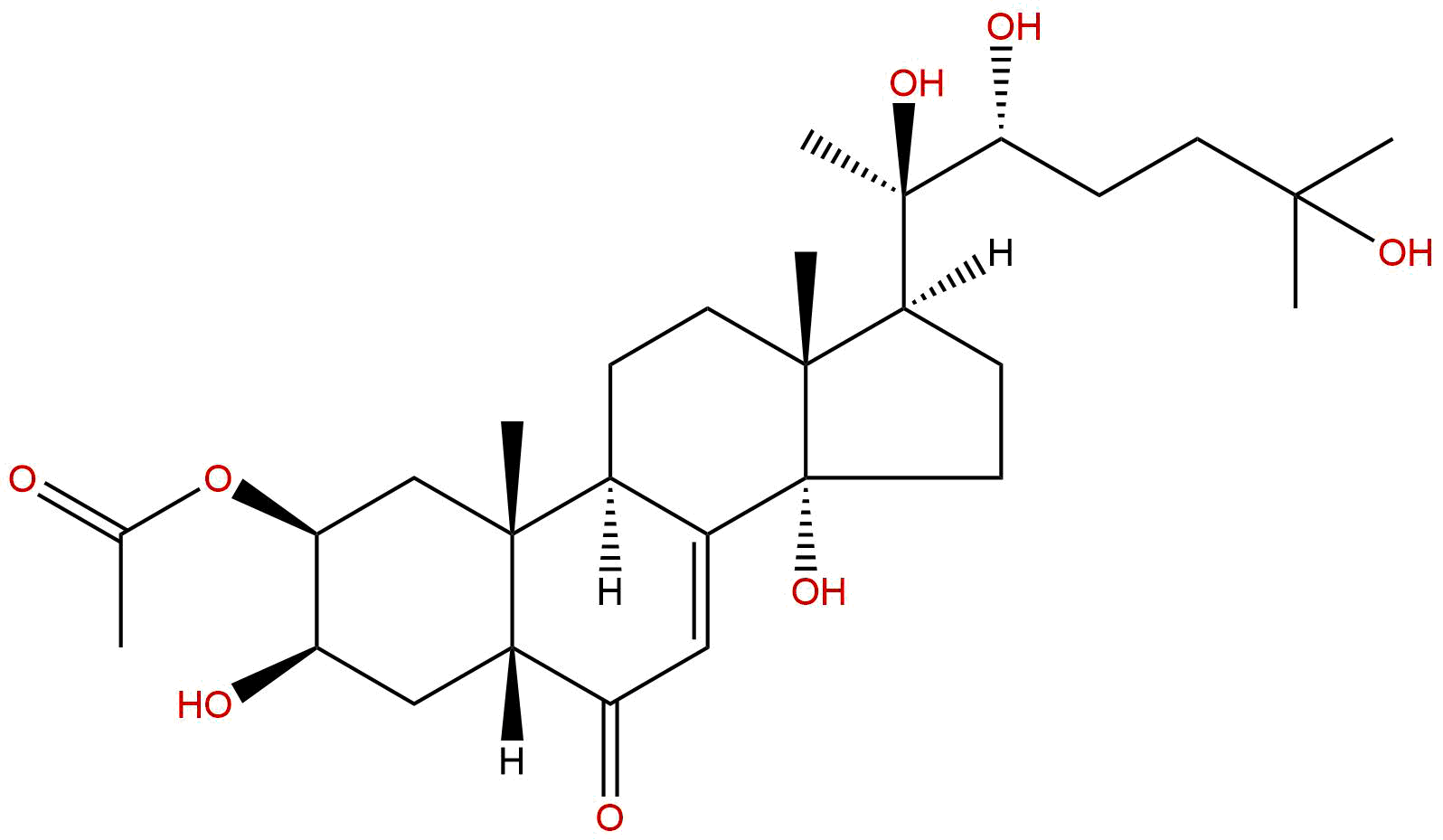


Product name: 2-O-Acetyl-20-hydroxyecdysone
Synonym name: 20-Hydroxyecdysone 2-acetate; β-Ecdysone 2-acetate
Catalogue No.: BP2033
Cas No.: 19536-25-5
Formula: C29H46O8
Mol Weight: 522.679
Botanical Source: Cyanotis arachnoides C.B.Clarke
Physical Description:
Type of Compound: Steroids
Purity: 95%~99%
Analysis Method: HPLC-DAD or/and HPLC-ELSD
Identification Method: Mass, NMR
Packing: Brown vial or HDPE plastic bottle
Storage: Store in a well closed container, protected from air and light. Put into refrigerate or freeze for long term storage.
Whenever possible, you should prepare and use solutions on the same day. However, if you need to make up stock solutions in advance, we recommend that you store the solution as aliquots in tightly sealed vials at -20℃. Generally, these will be useable for up to two weeks.
The product could be supplied from milligrams to grams
Inquire for bulk scale.
For Reference Standard and R&D, Not for Human Use Directly.
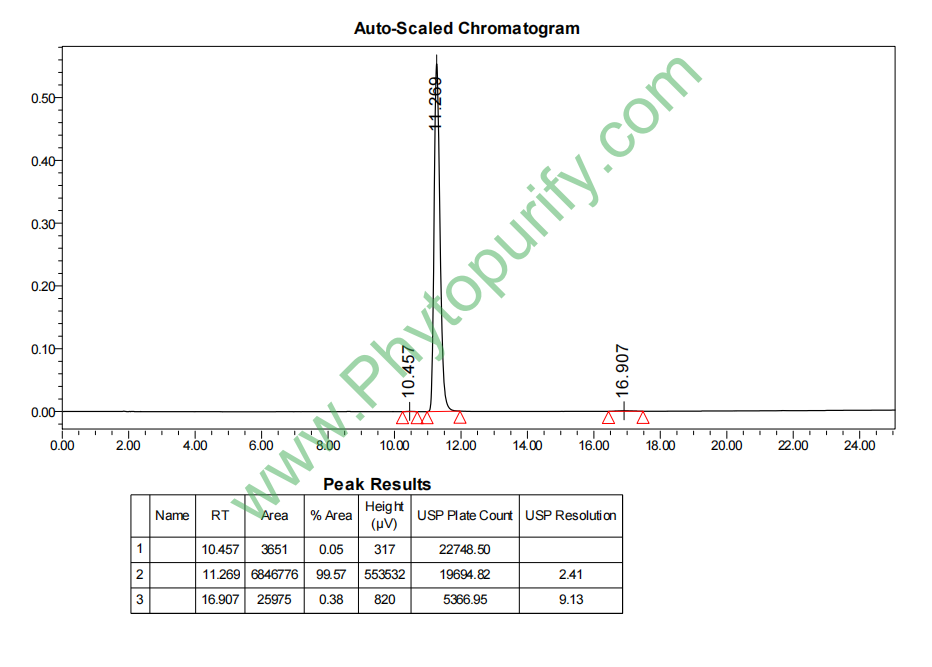
HPLC of 2-O-Acetyl-20-hydroxyecdysone
Storage conditions:Short-term storage at 2~8℃, long-term storage at -20 ~ -80℃
144.5200
1.7809
1.7809
.0827
1.1540
5.7885
Low
66.1361
5.1929
No
No
No
No
No
No
0.0
Yes
No
No
Yes
2-Acetyl-20-hydroxyecdysone (CAS number: 19536-25-5) is an important natural product of ecdysteroids, widely present in insects and terrestrial plants. As a derivative of the ecdysteroid family, 2-acetyl - β - ecdysterone not only plays a key role in insect developmental regulation, but its pharmacological activity in mammalian systems has also gradually received attention in recent years. Especially in the fields of neurodegenerative and metabolic diseases, this compound exhibits unique biological effects, particularly in inhibiting amyloid - β 42 (A β 42) - induced cytotoxicity associated with Alzheimer's disease (AD), demonstrating potential therapeutic value.
Alzheimer's disease, characterized by neurodegeneration and cognitive impairment, has a complex pathogenesis, with abnormal aggregation and toxicity of A β oligomers being the core factors in pathological progression. 2-acetyl - β - ecdysterone promotes fiber formation, induces the transformation of A β oligomers into low toxicity fibers, reduces the neurotoxicity of A β, and exhibits unique neuroprotective effects. In addition, the compound also involves multiple key target signal pathways in metabolic diseases such as diabetes, such as AMPK, SGLT2, GCK, etc., suggesting that it has multi-target regulatory potential.
This article will provide a systematic review of the chemical structure and physicochemical properties, plant sources and extraction methods, pharmacological activity and mechanism of action, pharmacological evaluation and pharmacokinetic characteristics of 2-acetyl - β - ecdysterone, and explore its prospects and challenges in clinical applications. The aim is to provide a theoretical basis and research direction for the drug development of this natural product.
2-acetyl - β - ecdysterone is a derivative of ecdysteroids with a steroid skeleton, with a molecular formula of C29H42O9 and a molecular weight of 522.6790. Its structure is based on a typical ecdysone skeleton, which undergoes acetylation modification on the 20th hydroxyl group to form a 2-acetyl substituent, endowing it with unique chemical properties and biological activity.
From the perspective of physical and chemical properties, the LogP value of this compound is 1.7809, indicating that it has moderate lipophilicity, which is beneficial for cell membrane penetration but not too hydrophobic. The topological polar surface area (TPSA) is 144.52 Å ², and the higher polar surface area indicates limited solubility in aqueous phase, with a water solubility of approximately 0.0827, making it a low solubility compound. Its blood-brain barrier penetration ability is low, indicating limited distribution in the central nervous system, but this may also reduce the risk of central nervous system side effects. The hERG channel inhibition experiment showed a negative result, indicating a low risk of cardiac toxicity; The Ames mutagenicity test result was 0.0, indicating no significant genetic toxicity.
Acetylation modification of chemical structure not only affects the lipophilicity and polarity of molecules, but may also enhance their biological activity and specificity by changing their binding mode with target proteins. This structural feature provides the basis for its pharmacological effects and pharmacokinetic behavior.
2-acetyl - β - ecdysterone is mainly found in various terrestrial plants, especially in some plant families and genera with traditional medicinal value, such as the Verbenaceae and Scrophulariaceae plants. In addition, the compound can also be detected in insects as a molting hormone involved in the molting and developmental processes of insects.
Common plant sources include but are not limited to:
The extraction method often uses organic solvent extraction combined with chromatographic separation technology. The specific steps usually include:
Crude extraction Using polar organic solvents such as methanol, ethanol, or ethyl acetate to extract or reflux dried and crushed plant materials to obtain an extract containing ecdysterone compounds.
Liquid liquid distribution By partitioning water with organic solvents such as n-hexane and chloroform, lipid soluble impurities are removed and polar components are enriched.
chromatographic separation Purification was performed using silica gel column chromatography, reverse phase high performance liquid chromatography (RP-HPLC), or preparative HPLC, and the purified product was identified using mass spectrometry and nuclear magnetic resonance (NMR) techniques.
Crystallization purification Some studies have used recrystallization methods to further improve purity.
In recent years, green extraction techniques such as supercritical fluid extraction (SFE) and ultrasound assisted extraction (UAE) have also been applied to improve extraction efficiency and environmental friendliness.
The pharmacological activity research of 2-acetyl - β - ecdysterone mainly focuses on two aspects: neuroprotection and metabolic regulation.
One of the pathological features of Alzheimer's disease is the abnormal aggregation of A β peptides, especially the formation of A β 42 oligomers, which is closely related to neurotoxicity. 2-acetyl - β - ecdysterone can significantly inhibit the cytotoxicity induced by A β 42. In vitro cell models showed that the compound reduced neuronal apoptosis and oxidative stress response by promoting the transformation of A β oligomers into a more stable and less toxic fibrous form.
In addition, 2-acetyl - β - ecdysterone also exhibits anti-inflammatory and antioxidant activities, which can regulate the neuroinflammatory microenvironment and alleviate neuronal damage. Animal model studies have shown that its administration can improve cognitive dysfunction and delay the progression of neurodegenerative diseases.
In the study of diabetes and metabolic syndrome, 2-acetyl - β - ecdysterone has shown the potential to regulate blood glucose and lipid metabolism. Its target areas involve:
Through multi-target regulation, 2-acetyl - β - ecdysterone is expected to alleviate diabetes related metabolic disorders and reduce the risk of complications.
The mechanism of action of 2-acetyl - β - ecdysterone involves multiple signaling pathways and molecular targets, reflecting its multifunctional regulatory properties.
This compound reduces the neurotoxicity of A β by promoting the conversion of A β oligomers into low toxicity fibers. The specific mechanism includes:
In addition, 2-acetyl - β - ecdysterone may affect neurotransmitter metabolism and hormone signaling by regulating targets such as MAOA (monoamine oxidase A) and ESR2 (estrogen receptor β), further exerting neuroprotective and metabolic regulatory effects.
The pharmacological evaluation of 2-acetyl - β - ecdysterone shows that it has good safety and pharmacokinetic characteristics.
In response to its insufficient water solubility, future formulation optimization (such as nanocarriers and liposome encapsulation) can be used to enhance bioavailability and targeting.
2-acetyl - β - ecdysterone has shown broad application prospects in the fields of neurodegenerative and metabolic diseases due to its multi-target and multi mechanism pharmacological activities.
Innovative drugs are urgently needed in the field of Alzheimer's disease treatment, and 2-acetyl - β - ecdysterone provides new ideas for pathological intervention of AD by regulating A β aggregation and reducing neurotoxicity. In the future, systematic animal model validation and preclinical safety evaluation should be conducted to explore its potential for improving cognitive function and neuroprotection.
By activating AMPK and regulating multiple metabolic targets, 2-acetyl - β - ecdysterone is expected to serve as an adjuvant therapy to improve glucose metabolism abnormalities and insulin resistance. Combining existing hypoglycemic drugs with combination therapy strategies may enhance treatment efficacy and reduce side effects.
In addition to neurological and metabolic diseases, the anti-inflammatory, antioxidant, and hormone regulating effects of 2-acetyl - β - ecdysterone suggest its potential for development in areas such as immune regulation and anti-tumor therapy.
2-acetyl - β - ecdysterone, as a natural product with unique structural modifications, has shown great potential for drug development due to its multiple pharmacological activities in neuroprotection and metabolic regulation. It provides a new strategy for the treatment of Alzheimer's disease by promoting the conversion of A β oligomers into low toxicity fibers, reducing neurotoxicity; At the same time, the multi target regulation in diabetes related metabolic pathways highlights its value as a candidate drug for metabolic diseases. In the future, by combining modern medicinal chemistry, pharmacology, and pharmaceutical technology, we will deeply explore its mechanism of action and optimize its pharmacokinetics, laying a solid foundation for the clinical translation of 2-acetyl - β - ecdysterone and promoting it as an important representative of natural product drug development.
