Introduction/Overview
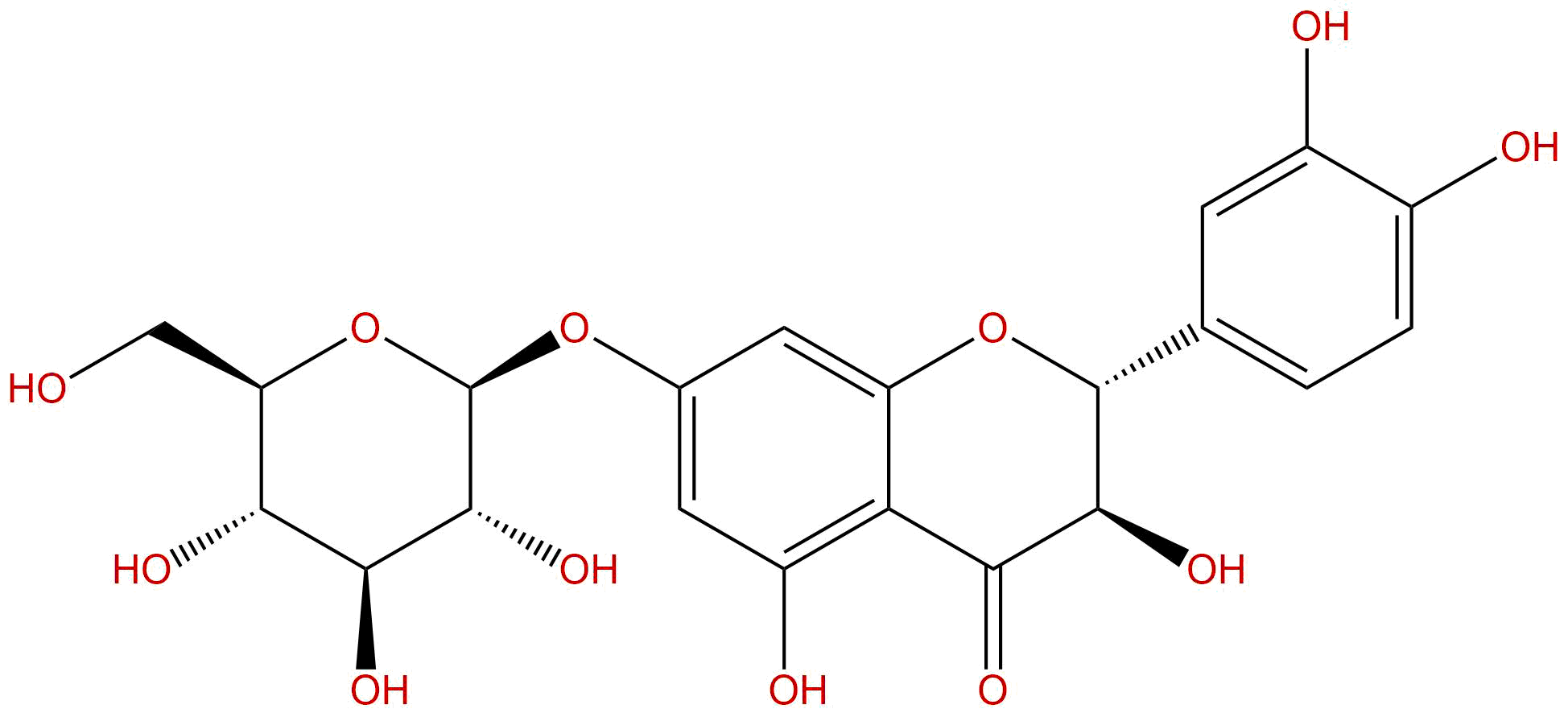
In the field of natural product chemistry and pharmacology research, flavonoids have attracted much attention due to their extensive biological activity and low toxicity. Taxifolin, also known as dihydroquercetin, as an important dihydroflavonol, has been extensively studied for its antioxidant, anti-inflammatory, and anti fibrotic activities. Taxiflorin 7-O-glucoside (CAS: 14292-40-1) is one of its key glycosylated derivatives, which often exists in the form of aglycones or glycosides in nature. The compound undergoes glycosylation modification, which not only alters its physicochemical properties but also potentially endows it with unique or enhanced pharmacological activity.
In recent years, with a deeper understanding of the molecular mechanisms underlying pathological processes such as skin aging and fibrosis diseases, the search for safe and effective natural active ingredients has become a research hotspot. Due to its significant anti tyrosinase activity, collagenase inhibition ability, antioxidant and anti fibrotic effects, kaempferol 7-O-glucoside has shown great potential in the prevention and treatment of diseases such as skin photoaging and organ fibrosis. Especially its regulatory effects on key targets such as tyrosinase (TYR), matrix metalloproteinases (MMPs), and nuclear factor kappa B (NF - κ B) make it an important bridge molecule connecting natural product chemistry with skin pharmacology and anti fibrotic therapy.
This article aims to systematically review the chemical properties, plant sources, pharmacological activities, molecular mechanisms of action, pharmacological characteristics, and clinical application prospects of 7-O-glucoside, a natural product of Pinus massoniana, in order to provide comprehensive scientific basis for its deep development and utilization.
Chemical structure and physicochemical properties
Pheromoquercetin 7-O-glucoside, also known as (+) - Dihydroquercetin 7-O - β - D-glucopyranoside, is a single glycoside compound formed by attaching a glucose group to the hydroxyl group at position C-7 of quercetin. Its parent nucleus structure is dihydroflavonol, with a basic skeleton of C6-C3-C6, containing two benzene rings (A and B) and an oxygen-containing heterocyclic ring (C). The C-2 and C-3 positions of the C ring are chiral carbon atoms, usually existing in the (+) - (2R, 3R) configuration, which is an important structural basis for its biological activity. The introduction of glucose groups, usually linked by β - glycosidic bonds, significantly increases the polarity and water solubility of the molecule.
According to the provided pharmacological parameters, the molecular weight of this compound is 466.3950, which belongs to the category of medium molecular weight natural products. The calculated lipid water partition coefficient (LogP) is -0.4705, indicating that the compound has hydrophilicity, which is mainly attributed to the introduction of glucose groups and the presence of multiple phenolic hydroxyl groups in the molecule. The topologically polar surface area (TPSA) is as high as 206.6000 Å ², further confirming its strong polarity characteristics, which affect its transmembrane absorption ability. Its water solubility value is 6.7441 (usually referring to LogS or related solubility indicators), indicating that it has good solubility in water, which is beneficial for formulation development. These physicochemical properties determine its pharmacokinetic behavior: low fat solubility leads to a lower ability to cross the blood-brain barrier, which to some extent limits its direct effects on central nervous system diseases, but may also reduce related side effects. In addition, preliminary pharmacological risk assessment showed no inhibitory activity on hERG potassium channels (hERG inhibition: No), and the Ames test result was 0.0, suggesting that it may not have mutagenicity and potential cardiac toxicity, and its safety profile is relatively good.
Plant sources and extraction methods
Anthocyanin 7-O-glucoside is relatively widely distributed in nature, mainly found in various Pinaceae, Cupressaceae plants, and some medicinal plants. Common plant sources include the heartwood or bark of Douglas fir (Pseudotsuga menziesii), larch (Larix spp.), and some species of the cypress genus. In addition, there have been reports of glycosides in some traditional medicinal plants such as Silybum marianum. Its existence form often coexists with anthocyanins and other flavonoid glycosides.
The extraction of kaempferol 7-O-glucoside from plant materials is often carried out using solvent extraction method. Due to its high polarity, medium polarity solvent systems such as methanol water and ethanol water mixed solvents are commonly used as extraction media. In order to improve extraction efficiency, modern extraction techniques such as ultrasound assisted extraction (UAE), microwave-assisted extraction (MAE), and pressurized liquid extraction (PLE) have been widely used. These technologies destroy plant cell walls through physical means, accelerate solvent penetration and target component dissolution, and can achieve higher extraction rates in a shorter time and with less solvent.
The crude extract after extraction usually contains a large amount of impurities and requires further separation and purification to obtain high-purity kaempferol 7-O-glucoside. The conventional purification steps include: using macroporous adsorption resins (such as AB-8, D101 type) for preliminary enrichment, and removing impurities such as sugars and proteins based on polarity differences; Subsequently, silica gel column chromatography, polyamide column chromatography or Sephadex LH-20 column chromatography were used for subdivision. High performance liquid chromatography (HPLC), especially preparative HPLC, is the final key step in obtaining chromatographically pure monomers. A reverse phase C18 column is commonly used, with methanol water or acetonitrile water (pH adjusted with a small amount of formic acid or acetic acid) as the mobile phase for gradient elution. Structural identification involves the comprehensive use of techniques such as ultraviolet spectroscopy (UV), mass spectrometry (MS), and nuclear magnetic resonance spectroscopy (NMR, including 1H-NMR and 13C-NMR). In particular, NMR can accurately determine the connection position and configuration of sugar groups.
Pharmacological activity research
The pharmacological activity research of kaempferol 7-O-glucoside mainly focuses on its antioxidant, anti enzyme activity, and anti fibrotic effects, which are closely related to its potential application in the prevention and treatment of skin photoaging and other diseases.
-
Antioxidant and free radical scavenging activity As a flavonoid glycoside compound, its core pharmacological basis is strong antioxidant capacity. The phenolic hydroxyl groups in the molecular structure, especially the catechol hydroxyl groups on the B ring (catechol structure), are active groups that provide electrons and can effectively neutralize reactive oxygen species (ROS) and reactive nitrogen species (RNS), such as superoxide anions (O2 •−), hydroxyl radicals (• OH), and peroxynitrite (ONOO −). Research has shown that its glycosylation form may regulate its free radical scavenging efficiency by affecting the spatial conformation and hydrogen bonding network of the molecule. Compared to nucleosides, its increased water solubility may be more conducive to exerting antioxidant effects in biological liquid environments.
-
Antityrosinase and collagenase inhibitory activity This is the most highly regarded activity of the compound in dermatopharmacology. Tyrosinase is the rate limiting enzyme in melanin biosynthesis, and its excessive activity is associated with pigmentation disorders. Flower flag pine 7-O-glucoside has been confirmed to have important anti tyrosinase activity, which may inhibit the conversion of L-dopa to dopaquinone by competitively binding to the active center of the enzyme, thereby reducing melanin production. More importantly, it has an inhibitory effect on matrix metalloproteinases, especially on collagenase (such as MMP-1, also known as interstitial collagenase), with an IC50 value of 193.3 μ M. MMP-1 is a key enzyme that degrades type I and III collagen proteins in the dermis of the skin, and is overactivated during ultraviolet (UV) - induced skin photoaging. Inhibiting MMP-1 activity helps protect collagen from degradation, maintain the integrity and elasticity of skin structure.
-
Anti fibrotic effect Fibrosis is a common pathological outcome of various chronic diseases, such as liver fibrosis, pulmonary fibrosis, and myocardial fibrosis, characterized by excessive deposition of extracellular matrix (ECM). It has been clearly reported that kaempferol 7-O-glucoside has anti fibrotic effects. The mechanism may involve multiple levels: reducing oxidative stress induced damage to tissues through antioxidation; Inhibit the signal transduction of pro fibrotic cytokines (such as TGF - β 1); Directly or indirectly inhibit the activity of MMPs (such as MMP-3, MMP-9) involved in ECM degradation and remodeling imbalance. This multi-target characteristic gives it unique advantages in anti fibrotic therapy.
-
anti-inflammatory activity Inflammation is the core driving factor behind skin photoaging and fibrosis processes. This compound can exert anti-inflammatory effects by regulating inflammatory signaling pathways such as NF - κ B and MAPK, inhibiting the excessive production of inflammatory mediators such as interleukin-6 (IL-6) and tumor necrosis factor alpha (TNF - α). Its antioxidant activity also helps alleviate the inflammatory response triggered by oxidative stress.
Mechanism of action and molecular targets
The pharmacological effects of kaempferol 7-O-glucoside are not achieved through a single target, but through a multi-target, multi pathway network regulatory system. Based on the provided target information, its mechanism of action can be summarized as follows:
-
Core target regulation for skin photoaging:
- Inhibit melanin synthesis: Direct inhibition Tyrosinase (TYR) The catalytic activity is its main whitening mechanism.
- Protecting extracellular matrix By inhibiting Matrix metalloproteinase-1 (MMP1)、MMP3 and MMP9 Reduce its activity and/or expression, and decrease its degradation of dermal support structures such as collagen and elastin. This may be its core mechanism in combating skin wrinkles and sagging.
- Regulating signal pathways related to photoaging Ultraviolet radiation can activate nuclear transcription factors. Phellinin 7-O-glucoside can be inhibited by Nuclear factor kappa B (NFKB1/RELA) Activate and subsequently downregulate downstream inflammatory factors (such as IL6)And the expression of MMPs. Meanwhile, it may be activated through Peroxisome proliferator activated receptor - γ (PPARG)It exerts anti-inflammatory and MMP inhibitory effects. In addition, its strong antioxidant capacity may be enhanced by upregulating antioxidant enzymes such as Catalase (CAT) The activity or expression of enhances the cell's own antioxidant defense system.
-
Key pathway interventions targeting fibrosis process:
- Regulating the TGF - β 1 signaling pathway:Transforming Growth Factor - β 1 (TGFB1) It is widely recognized as the strongest pro fibrotic factor. This compound may block TGF - β 1-induced fibroblast to myofibroblast transformation and ECM synthesis by interfering with the binding of TGF - β 1 to its receptor, inhibiting phosphorylation or nuclear translocation of Smad proteins.
- Inhibiting MMPs and Inflammatory Networks In fibrotic tissue, MMPs (such as MMP3, MMP9)Abnormal expression is involved in the pathological remodeling of ECM. Meanwhile, chronic inflammation driven by the NF - κ B pathway is an important environment for the sustained development of fibrosis. This compound breaks the vicious cycle of "damage inflammation fibrosis" by inhibiting these targets.
In summary, the mechanism of action of kaempferol 7-O-glucoside is an integrated one Antioxidant defense(CAT)、anti-inflammatory(NFKB1, RELA, IL6, PPARG)、Inhibit key enzymes(TYR, MMP1, MMP3, MMP9) and Regulating core cytokines The collaborative network of TGFB1. This multi-target characteristic enables it to intervene in complex disease processes from multiple links, but also puts higher demands on the precise analysis of its mechanism of action.
Evaluation of drug properties and pharmacokinetics
Although kaempferol 7-O-glucoside has shown good biological activity in vitro, its successful development as a drug depends on systematic pharmacological evaluation and pharmacokinetic studies.
-
Absorption, Distribution, Metabolism, and Excretion (ADME):
- absorb Its high TPSA and negative LogP values indicate that it is a highly polar and hydrophilic molecule, which may pose challenges to its oral bioavailability. Hydrophilic compounds are often difficult to penetrate the lipid bilayer of intestinal epithelial cells through passive diffusion. The glucose group present in its structure may serve as a substrate for β - glucosidase in the gut microbiota, which is hydrolyzed into kaempferol glycoside and glucose in the colon. The absorption characteristics of glycoside (usually superior to glycoside) may affect its final blood drug concentration and active form. Developing appropriate dosage forms (such as nanomaterials, phospholipid complexes) is an effective strategy to improve their oral absorption.
- distribution Moderate molecular weight but high polarity, predicted to have a wide tissue distribution, but low ability to cross the blood-brain barrier, consistent with its predicted physicochemical properties. This limits its direct application in central nervous system diseases, but may also avoid central side effects.
- Metabolism As a flavonoid glycoside, its metabolism in the body may be complex. In addition to hydrolysis by gut microbiota, it may undergo phase II metabolic reactions in the liver, such as glucuronidation, sulfation, etc., to form corresponding complexes. These metabolites may have different activities and excretion rates.
- excretion Polar prototype drugs and their metabolites are mainly excreted in urine through the kidneys.
-
Preliminary evaluation of safety The preliminary data provided (no hERG inhibition, Ames test negative) is a positive early safety signal. The lack of inhibition of hERG channels reduces the risk of causing QT interval prolongation and apical torsion type ventricular tachycardia in the heart. A negative Ames test indicates no mutagenicity in the testing system. However, comprehensive safety evaluation still requires in vivo experiments on acute toxicity, long-term toxicity, and reproductive toxicity.
-
Pharmaceutical considerations To improve its bioavailability and stability, the following formulation strategies can be considered: preparing phospholipid complexes or cyclodextrin inclusion complexes to increase lipid solubility and membrane permeability; Develop drug delivery systems using nanocrystals, liposomes, or polymer nanoparticles to enhance solubility and targeting; For local application of skin (such as anti-aging cream and essence), its good water solubility and skin affinity may be an advantage, but its transdermal absorption efficiency and metabolism in the skin should be considered.
At present, there are insufficient public reports on the pharmacokinetic studies of the 7-O-glucoside system of resveratrol, which is a key data gap that must be filled before it can be applied clinically.
Clinical application prospects and prospects
The multiple pharmacological activities of kaempferol 7-O-glucoside have brought broad application prospects in multiple therapeutic fields, but also face challenges.
-
Main application directions:
- Skin Health and Beauty Field This is the most promising application direction. Based on its dual effects of anti tyrosinase (whitening) and inhibition of MMPs (anti wrinkle), it can be developed as a functional cosmetic active ingredient or topical drug for improving skin photoaging, melasma and other problems. Its natural source and good initial safety are its advantages.
- Anti fibrotic therapy As a natural product with anti fibrotic activity, it has exploratory value in the adjuvant treatment of chronic diseases such as liver fibrosis and pulmonary fibrosis. It can be considered as a supplement or synergistic therapy to existing anti fibrotic drugs to intervene in the fibrotic process through multiple pathways.
- As an antioxidant/anti-inflammatory adjuvant Can be used to develop health foods or adjuvant therapy drugs for oxidative stress and chronic inflammation related diseases, such as cardiovascular protection, metabolic syndrome adjuvant regulation, etc.
-
Challenges and Prospects:
- In depth analysis of pharmacological mechanisms Molecular docking, gene knockout/knockdown, proteomics and other technologies are needed to more accurately elucidate its interaction patterns with key targets such as TYR and MMPs, as well as its core nodes in complex signal networks.
- Systematic pharmacokinetic study It is urgent to conduct a complete in vivo ADME study to clarify its bioavailability, major metabolites, tissue distribution characteristics, and elimination patterns under different administration routes, providing a basis for dosage form design and administration regimens.
- Preclinical and clinical research Rigorous animal model experiments need to be designed to verify their effectiveness and safety at the overall animal level. Ultimately, its efficacy and safety in the human body need to be confirmed through clinical trials.
- Structural optimization and derivative development Based on its active skeleton, carry out reasonable structural modifications (such as modifying the sugar moiety and phenolic hydroxyl group) in order to obtain derivatives with stronger activity, higher bioavailability, or better targeting.
- Green and sustainable production In addition to extracting from plants, exploring the use of synthetic biology techniques (such as microbial cell factories) to achieve efficient and environmentally friendly biosynthesis of this compound is a future direction to address plant resource limitations and ensure quality uniformity.
Conclusion
As a naturally occurring dihydroflavonol glycoside, kaempferol 7-O-glucoside has shown significant potential for application in the prevention and treatment of skin photoaging, anti fibrosis, and antioxidant/anti-inflammatory fields due to its unique chemical structure and multi-target pharmacological activity. Its mechanism of action involves the regulation of multiple key targets such as TYR, MMPs, NF - κ B, TGF - β 1, etc., forming a synergistic network. Although it may face challenges in drug development, especially in oral absorption, positive preliminary safety data lays the foundation for its further development. Future research should focus on in-depth analysis of its molecular mechanism, improvement of pharmacokinetic characteristics, promotion of preclinical and clinical evaluation, and active exploration of new formulation technologies and biomanufacturing methods. With the continuous deepening of research, kaempferol 7-O-glucoside is expected to develop from a potential natural active ingredient into a drug or functional product with practical application value in specific disease fields, contributing its natural wisdom to human health.