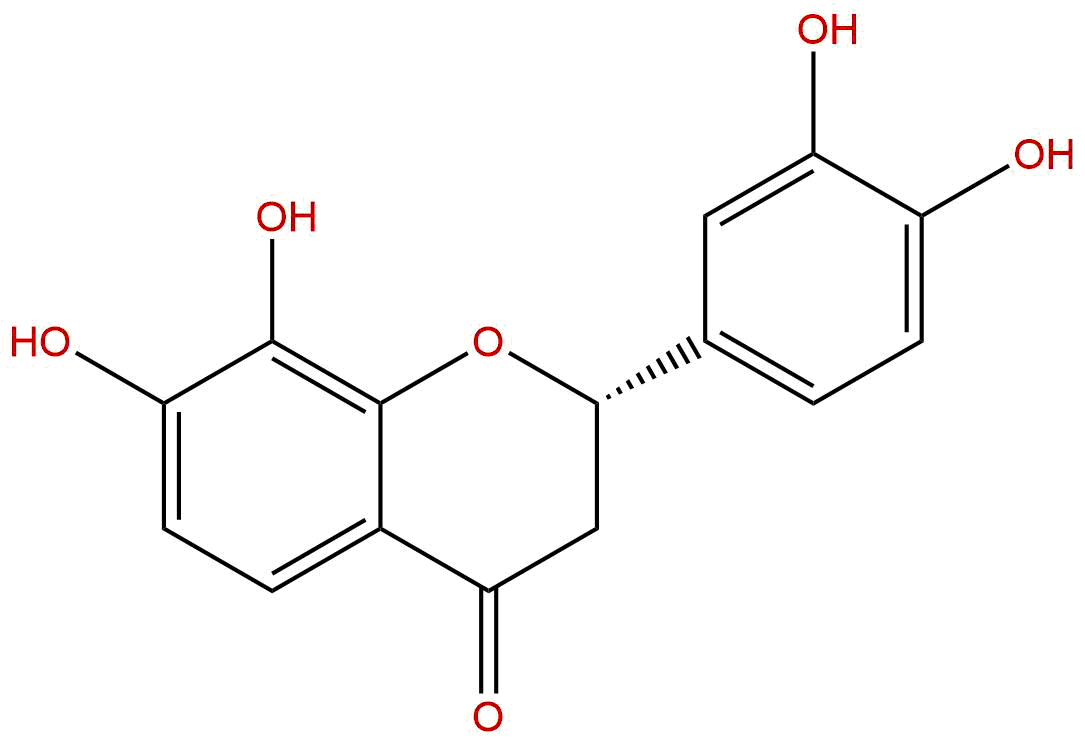


Product name: Isookanin
Synonym name: Flavanokanin; Flavanookanin;Flavanone, 3',4',7,8-tetrahydroxy
Catalogue No.: BP2140
Cas No.: 1036-49-3
Formula: C15H12O6
Mol Weight: 288.255
Botanical Source: Coreopsis tinctoria Nutt.
Type of Compound:
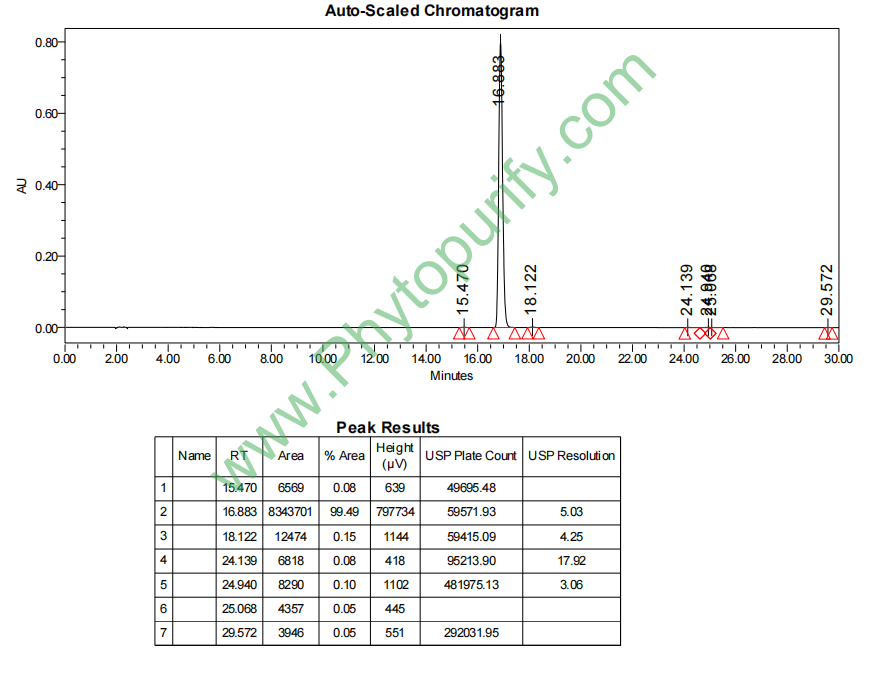
Purity: 95%~99%
Analysis Method: HPLC-DAD or/and HPLC-ELSD
Identification Method: Mass, NMR
Packing: Brown vial or HDPE plastic bottle
Storage: Store in a well closed container, protected from air and light. Put into refrigerate or freeze for long term storage.
Whenever possible, you should prepare and use solutions on the same day. However, if you need to make up stock solutions in advance, we recommend that you store the solution as aliquots in tightly sealed vials at -20℃. Generally, these will be useable for up to two weeks.
The product could be supplied from milligrams to grams
Inquire for bulk scale.
For Reference Standard and R&D, Not for Human Use Directly.
HPLC of Isookanin
Storage conditions:Short-term storage at 2~8℃, long-term storage at -20 ~ -80℃
107.2200
1.8429
1.6936
.1867
4.9527
2.9461
Low
83.5736
3.0531
No
No
Yes
No
Yes
No
0.6
Yes
No
Yes
No
Isokanin (CAS number: 1036-49-3) is a natural flavonoid compound that has received high attention in pharmacology and natural product research in recent years due to its extensive biological activity and potential medicinal value. As a multifunctional natural product, isokacin exhibits significant activities in anti-tumor, anti-inflammatory, antiviral, antioxidant, and metabolic disease regulation, especially in the field of antiviral activity, showing good inhibitory effects on herpes simplex virus (HSV) and varicella zoster virus (VZV). In addition, isokacin has potential inhibitory effects on the pathogenic bacterium Cutibacterium acnes, which causes skin diseases such as acne. Its related targets include DNA gyrase subunits (GYRA, GYRB), dihydrofolate reductase (DHFR), folate reductase (FOLA), and epidermal growth factor receptor 2 (ERBB2), providing a molecular basis for its application in the treatment of skin diseases.
This article provides a systematic review of the chemical structure and physicochemical properties, plant sources, and extraction methods of isokacin, with a focus on analyzing its pharmacological activity and mechanism of action. Combined with drug evaluation and pharmacokinetic characteristics, it explores its potential and future development direction in clinical applications, aiming to provide theoretical support and reference for the in-depth research and drug development of isokacin.
Isokacin belongs to the flavonoid class, with a molecular formula of C15H12O6 and a molecular weight of 288.2550. Its structural feature is a typical flavonoid skeleton containing multiple hydroxyl substituents, endowing it with excellent antioxidant activity. Its LogP value is 1.8429, indicating moderate lipid solubility, which is beneficial for membrane penetration and increased bioavailability. The polar surface area (TPSA) is 107.22 Å ², indicating that it has a certain polarity that facilitates binding to multiple biological targets.
The low water solubility of isokacin (0.1867 mg/mL) to some extent limits its application in aqueous systems, but also suggests that its pharmacokinetic properties can be optimized through formulation improvement or structural modification. The low permeability of the blood-brain barrier suggests its limited distribution in the central nervous system, which may reduce central nervous system related side effects. The hERG channel inhibition experiment result was negative, indicating that isokacin has a low risk of cardiac toxicity. The Ames test score is 0.6, indicating a low risk of genotoxicity and relatively good safety.
Isokacin is mainly found in various traditional medicinal plants, especially in certain flavonoid rich plants such as Asteraceae and leguminous plants. Common plant sources include chrysanthemums, Scutellaria baicalensis, etc. These plants are widely used in traditional Chinese medicine for clearing heat, detoxifying, anti-inflammatory, and antiviral purposes.
The method of extracting isokacin often combines traditional organic solvent extraction with modern technology. Common extraction solvents include ethanol, methanol, and their aqueous solutions. By combining techniques such as ultrasound assisted extraction (UAE) and microwave-assisted extraction (MAE), extraction efficiency and purity can be improved. The crude extract after extraction is usually separated and purified by liquid-liquid partitioning, column chromatography (such as silica gel column, reverse phase C18 column), and high performance liquid chromatography (HPLC) to obtain high-purity isokacin.
In recent years, green extraction techniques such as supercritical fluid extraction (SFE) and enzyme assisted extraction (EAE) have gradually been applied to the extraction of isokacin, aiming to improve extraction efficiency, reduce environmental pollution, and protect the stability of active ingredients.
The pharmacological activities of isokacin cover multiple disease fields, mainly including anti-tumor, anti-inflammatory, antiviral, antioxidant, and metabolic disease regulation.
Multiple in vitro cell experiments have shown that isokacin can exert anti-tumor effects by inducing tumor cell apoptosis, inhibiting cell proliferation and migration. Its mechanism involves regulating cell cycle related proteins, activating mitochondrial dependent apoptosis pathways, and inhibiting tumor related signaling pathways (such as the ERBB2 signaling pathway). In addition, isokacin has shown a certain reversal effect on the resistance of certain tumor cells, indicating its potential in adjuvant chemotherapy.
Isokacin has a significant inhibitory effect on skin inflammation, reducing the release of inflammatory mediators and infiltration of inflammatory cells, and alleviating rash and allergic reactions. Especially in the etiological treatment of acne, isokacin is expected to become a safe and effective new drug for acne treatment by inhibiting the growth of Propionibacterium acnes and its related target activities, reducing skin inflammation and lesions.
Isokacin exhibits inhibitory activity against various viruses, especially against herpes simplex virus (HSV) and varicella zoster virus (VZV), with significant antiviral effects. Its antiviral mechanism may include inhibiting virus DNA replication, interfering with virus protein synthesis, and blocking key steps of virus invasion into cells, providing important clues for the development of antiviral drugs.
Isokacin contains multiple phenolic hydroxyl groups and has good free radical scavenging ability, which can effectively reduce oxidative stress damage. Its antioxidant activity not only protects cells from oxidative damage, but also exerts a protective effect by regulating antioxidant enzyme systems such as superoxide dismutase and glutathione peroxidase, preventing the development of various chronic diseases.
Preliminary studies have shown that iokanin has certain therapeutic potential in metabolic related diseases such as diabetes and diarrhea. It assists in disease management by regulating inflammatory responses, improving insulin sensitivity, and protecting intestinal barrier function.
The multi-target mechanism of action of isokacin is the basis for its various pharmacological activities. For Propionibacterium acnes, isokacin can bind to and inhibit key enzyme targets:
In terms of antiviral activity, isokacin blocks the viral replication cycle by inhibiting the activity of viral DNA polymerase. Its antioxidant mechanism relies on directly clearing reactive oxygen species (ROS) and regulating intracellular antioxidant enzyme expression to alleviate cellular damage caused by oxidative stress.
In addition, isokacin may also exert anti-inflammatory and immune regulatory effects by regulating signaling pathways such as NF - κ B and MAPK, enhancing the body's ability to resist diseases.
The pharmacological parameters of isokacin indicate that it has good potential for drug development. The molecular weight of 288.2550 conforms to Lipinski's rule, and the LogP value of 1.8429 suggests moderate lipid solubility, which is beneficial for cell membrane permeation. A higher TPSA (107.22 Å ²) indicates that it has a certain polarity, which may affect oral absorption, but at the same time is beneficial for binding to polar targets.
The low water solubility (0.1867 mg/mL) is a challenge in the development of its drug formulation, which requires strategies such as nanocarriers, liposomes, or salt formation to improve bioavailability. The low permeability of the blood-brain barrier reduces the risk of central nervous system side effects, but limits its application in neurological diseases.
The negative inhibition of hERG channel and low mutagenicity in Ames test suggest that isokacin has higher safety and lower risks of cardiac toxicity and genotoxicity.
Pharmacokinetic studies are still in their early stages, and the metabolic pathways in vivo may involve the liver enzyme system. The activity and toxicity of metabolites need further evaluation. In the future, systematic in vivo pharmacokinetic and toxicological studies are needed to provide data support for clinical development.
Isokacin, as a multifunctional natural product, has shown broad clinical application prospects due to its extensive pharmacological activity and good safety. Its potential in the field of antiviral therapy is particularly prominent, especially for HSV and VZV infections, and it may become an important candidate for novel antiviral drugs. In addition, the application of isokacin in the treatment of skin diseases, especially its inhibitory effect on Propionibacterium acnes, provides new ideas for the treatment of inflammatory skin diseases such as acne.
Future research should focus on the following aspects:
In addition, the design and synthesis of derivatives based on isokacin structure will also be an important direction for future drug development, with the potential to obtain more efficient and safer candidate drugs.
Isokacin, as a natural flavonoid compound with multiple biological activities, has shown significant potential for drug development due to its antiviral, anti-inflammatory, antioxidant, and anti-tumor pharmacological effects. Its good safety and pharmacological parameters provide strong support for further drug development. In the future, through in-depth mechanism research, drug formulation optimization, and systematic clinical evaluation, isokacin is expected to become a new natural drug for treating various diseases, especially viral infections and skin diseases. With the continuous advancement of natural product pharmacology and modern medicinal chemistry technology, the research on isokacin and its derivatives will inject new vitality into the development of natural product drugs and promote the widespread application of natural products in modern medicine.
