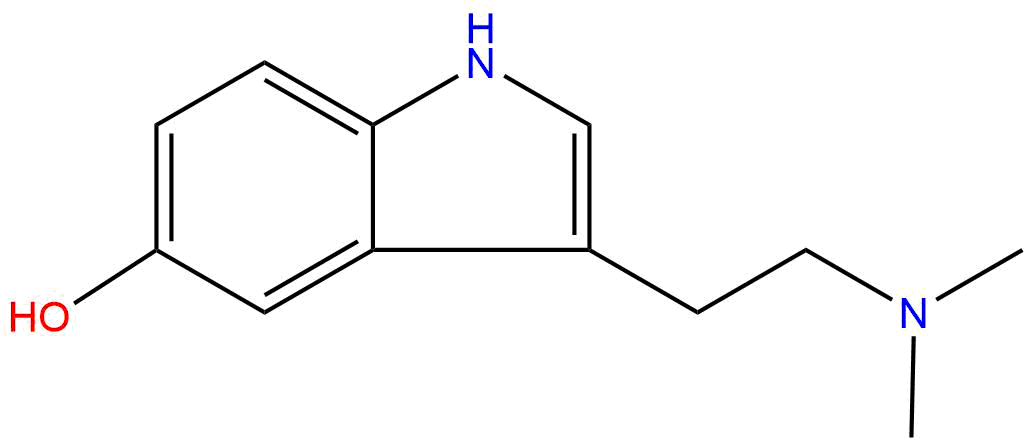


Product name: Bufotenin
Synonym name: Dimethylserotonin; Mappin; Mappine; N,N-Dimethyl-5-hydroxytryptamine; N,N-Dimethylserotonin
Catalogue No.: BP4265
Cas No.: 487-93-4
Formula: C12H16N2O
Mol Weight: 204.273
Botanical Source: Bufonis Venenum
Type of Compound: Alkaloids
Purity: 95%~99%
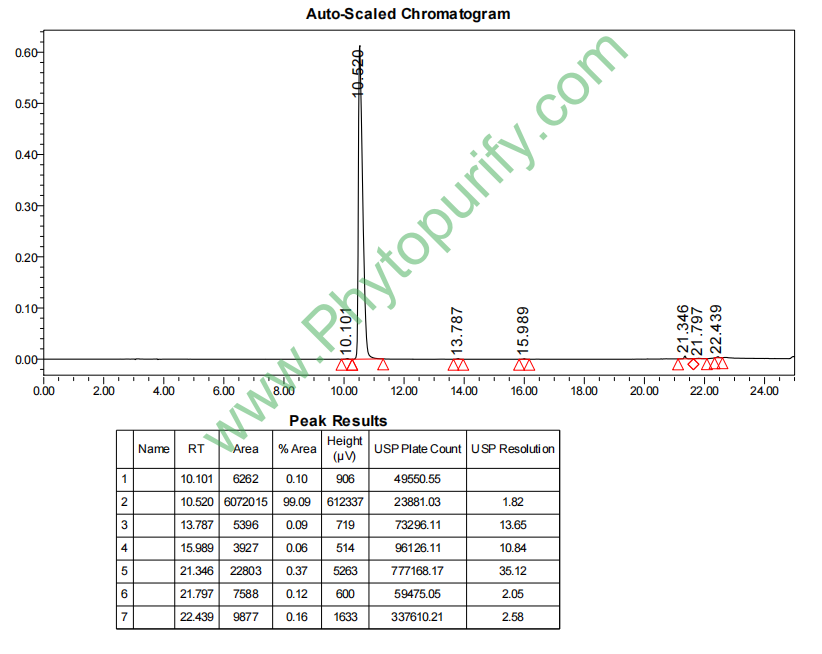
Analysis Method: HPLC-DAD or/and HPLC-ELSD
Identification Method: Mass, NMR
Packing: Brown vial or HDPE plastic bottle
Storage: Store in a well closed container, protected from air and light. Put into refrigerate or freeze for long term storage.
The product could be supplied from milligrams to grams
Inquire for bulk scale.
For Reference Standard and R&D, Not for Human Use Directly.
Description:
Bufotenine may have hallucinogenic potential, the presence and levels of bufotenine might be useful and important markers of some psychiatric disorders. Bufotenine is able to block rabies virus infection in BHK-21 cells.
References:
J Psychoactive Drugs. 2000 Jul-Sep;32(3):321-31.
Bufotenine: toward an understanding of possible psychoactive mechanisms.
METHODS AND RESULTS:
A review of the neuropharmacology of the alleged hallucinogen Bufotenine is presented, including recent experimental results showing activity similar to LSD and other known hallucinogens (psilocin and 5-MeO-DMT) at the purported hallucinogenic serotonin (5-HT) receptors, 5-HT2A and 5-HT2C. In addition, current reports of computer modeling of the receptors and ligand binding sites give evidence of Bufotenine's ability to bind and activate these receptors. While binding and activation of the purported hallucinogenic receptors are not the full extent of the hallucinogenic signature, this evidence shows support for the rationale that the reported lack of the drug's classic hallucinogenic response in human experiments is due to poor ability to cross the blood brain barrier (BBB), not lack of activation of the appropriate brain receptors. Further evidence is reviewed that in some physiological states, some drugs with characteristics similar to Bufotenine which do not normally cross the BBB, cross it and enter the brain.
CONCLUSIONS:
While direct human experimental evidence of Bufotenine's hallucinogenic activity seems lacking, the above combined factors are considered, and possible explanations of Bufotenine's reported psychoactivity are suggested. Additionally, updated experimental models testing the possible nature of Bufotenine's hallucinogenic potential are proposed.
J Venom Anim Toxins Incl Trop Dis. 2014 Oct 13;20(1):45.
Bufotenine is able to block rabies virus infection in BHK-21 cells.
Rabies is a fatal zoonotic neglected disease that occurs in more than 150 countries, and kills more than 55.000 people every year. It is caused by an enveloped single stranded RNA virus that affects the central nervous system, through an infection initiated by the muscular nicotinic acetylcholine receptor, according to many authors. Alkaloids, such as acetylcholine, are widespread molecules in nature. They are present in numerous biological fluids, including the skin secretion of many amphibians, in which they act (together with proteins, peptides and steroids) as protection agents against predators and/or microorganisms. Among those amphibians that are rich in alkaloids, there is the genus Rhinella.
METHODS AND RESULTS:
Bufotenine was isolated from Rhinela jimi skin secretion after a liquid-liquid partition (H2O:CH2Cl2) and reversed phase high-performance liquid chromatography analyses (RP-HPLC). Bufoteninewas also extracted from seeds of Anadenanthera colubrina in acetone solution and purified by RP-HPLC, as well. Structural characterization was performed by mass spectrometry and nuclear magnetic resonance analyses. Cytotoxic tests of Bufotenine were performed over baby hamster kidney (BHK-21) cells using MTT test. For the antiviral activity, Rabies virus strain Pasteur vaccine (PV) was used on fluorescence inhibition test and fluorescent foci inhibition test, with both simultaneous and time course treatment of the cells with the virus and Bufotenine. In the present work we describe the effects of Bufotenine, obtained either from toads or plants, that can inhibit the penetration of rabies virus in mammalian cells through an apparent competitive mechanism by the nicotinic acetylcholine receptor. Moreover, this inhibition was dose- and time-dependent, pointing out to a specific mechanism of action.
CONCLUSIONS:
This work do not present or propose Bufotenine as a drug for the treatment of rabies due to the hallucinogen and psychotropic effects of the molecule. However, continued studies in the elucidation of the antiviral mechanism of this molecule, may lead to the choice or development of a tryptamine analogue presenting potential clinical use.
Neuroreport. 1995 Nov 27;6(17):2378-80.
Bufotenine reconsidered as a diagnostic indicator of psychiatric disorders.
We have analyzed products of the serotonin-degradative pathway, in which both N-methylserotonin and Bufotenine are formed in urine specimens of products with psychiatric disorders by three-dimensional HPLC with electrochemical detection.
METHODS AND RESULTS:
Bufotenine was detected in urine from all autistic patients with mental retardation and epilepsy (n = 18) and many autistic patients (32/47) with mental retardation. Bufotenine was detected in the urine of 15 of 18 patients with depression. Thirteen of 15 schizophrenic patients were also positive for Bufotenine. N-methylserotonin was also detected in some cases of each disorder. Only two of 200 urine specimens from healthy controls were positive for Bufotenine.
CONCLUSIONS:
Thus, the presence and levels of Bufotenine might be useful and important markers of some psychiatric disorders.
HPLC of Bufotenin
Storage conditions:Short-term storage at 2~8℃, long-term storage at -20 ~ -80℃
39.2600
2.0899
.1152
.9891
1.0133
15.1866
High
30.6047
2.1247
No
Yes
No
No
Yes
Yes
0.6
No
No
Yes
No
Bufotenin (CAS number: 487-93-4) is a naturally occurring tryptamine alkaloid, structurally a 5-hydroxy derivative of N, N-dimethyltryptamine. As a natural product with significant hallucinogenic activity, toad serotonin is distributed in various amphibians, fungi, and certain plants. In recent years, with the deepening of research on mental and neurological disorders, especially the high incidence of emotional disorders such as depression, toad serotonin has gradually become a research hotspot in the fields of natural product pharmacology and neuropsychiatric drug development due to its unique pharmacological activity and high blood-brain barrier penetration ability. This article will provide a systematic review of the chemical structure and physicochemical properties, natural sources and extraction methods, pharmacological activity and mechanism of action, pharmacological evaluation and pharmacokinetic characteristics of toad serotonin, and explore its clinical application prospects in neurological and psychiatric disorders such as depression.
The molecular formula of toad serotonin is C12H16N2O, with a molecular weight of 204.2730. Its chemical structure is based on the tryptophan skeleton, and the introduction of the 5-hydroxy group endows it with unique chemical and biological properties. Structurally, toad serotonin is a tertiary amine, and its N, N-dimethyl substituent enhances the lipid solubility and brain penetration of the molecule. In terms of physical and chemical properties, the LogP value of toad serotonin is 2.0899, indicating its moderate lipid solubility, which is beneficial for the penetration of the blood-brain barrier. The polar surface area (TPSA) is 39.26 Å ², and the lower polar surface area further supports its good brain tissue distribution. The water solubility is 0.9891, indicating that it has a certain solubility under physiological conditions, making it easy to absorb and distribute in the body. The hERG channel inhibition experiment showed a negative result, indicating a low risk of cardiac toxicity. The Ames mutagenicity test score is 0.6, indicating a low risk of genotoxicity and meeting the safety requirements for drug development.
Toad serotonin was initially isolated and identified from the skin secretions of toads, especially in the skin secretions of toads such as Bufo, which are abundant in content. In addition, this compound has also been detected in the seeds of certain fungi and plants, such as some leguminous plants. Traditionally, the extraction of toad serotonin is often carried out using organic solvent extraction combined with liquid-liquid distribution. The specific operation includes: drying and crushing toad skin or related biological materials, leaching with methanol or ethanol, and then enriching tryptamine alkaline alkaloids through acid-base adjustment. Further liquid-liquid extraction (such as chloroform or ethyl acetate) is used to separate impurities, and finally purification and qualitative and quantitative analysis are performed using high-performance liquid chromatography (HPLC) or gas chromatography-mass spectrometry (GC-MS) techniques. Modern extraction techniques such as ultrasound assisted extraction and solid-phase extraction have gradually been applied to the efficient extraction of toad serotonin, improving the extraction rate and purity.
As a natural hallucinogen, the pharmacological effects of toad serotonin mainly focus on the central nervous system. In vitro and in vivo studies have shown that toad serotonin can regulate various neurotransmitter systems, particularly the activity of serotonin (5-HT) receptor subtypes, exhibiting neuroregulatory functions similar to classical hallucinogens. Its hallucinogenic effect is closely related to the activation of 5-HT2A receptors, and it also has a certain affinity for 5-HT1A and 5-HT2C receptors, affecting neuronal excitability and neural network function.
In the depression model, toad serotonin exhibits antidepressant like activity. In animal behavioral experiments such as forced swimming and tail suspension tests, toad serotonin can significantly reduce depressive like behavior, indicating its potential antidepressant effect. Its antidepressant mechanism may be closely related to regulating signaling pathways related to neuroinflammation, oxidative stress, and neuroplasticity. In addition, toad serotonin has an inhibitory effect on the expression of neuroinflammatory factor TNF - α, demonstrating a certain neuroprotective potential.
The molecular mechanism of action of toad serotonin involves multi-target and multi pathway regulation, mainly including the following aspects:
Serotonin receptor regulation
As a derivative of serotonin, toad serotonin can bind to various subtypes of 5-HT receptors, especially the 5-HT2A receptor (HTR2A), exerting excitatory effects, regulating neurotransmitter release and neuronal excitability, and affecting emotional and cognitive functions.
Immune regulation and inhibition of neuroinflammation
By inhibiting tumor necrosis factor (TNF) and related inflammatory pathways, toad serotonin reduces neuroinflammatory responses and improves the pathological state of depression related neuroinflammation.
Oxidative stress and cell protection
Toad serotonin can activate the nuclear factor erythroid 2-related factor 2 (NFE2L2) signaling pathway, enhance cellular antioxidant capacity, alleviate oxidative damage, and protect neuronal function.
Regulation of neurotransmitter metabolism enzymes
By regulating the activities of indoleamine 2,3-dioxygenase (IDO1), monoamine oxidase A (MAOA), and monoamine oxidase B (MAOB), toad serotonin affects the metabolic balance of serotonin neurotransmitters and promotes neurotransmitter homeostasis.
Neural signal transduction and plasticity
Toad serotonin can regulate the mitogen activated protein kinase 1 (MAPK1) signaling pathway, promote neuronal plasticity and survival, and help repair depression related neural network abnormalities.
Other targets
Including the nicotinic acetylcholine receptor alpha 7 subtype (CHRNA7), phosphodiesterase 4D (PDE4D), and estrogen receptor alpha (ESR1), these targets are involved in multiple mechanisms of neural regulation, cognitive function, and emotional stability.
In summary, toad serotonin regulates the neurotransmitter system, neuroinflammation, and oxidative stress through multi-target synergistic effects, exerting its antidepressant and neuroprotective effects.
The pharmacological parameters of toad serotonin indicate that it has good potential for drug development. The molecular weight of 204.2730 conforms to Lipinski's rule, and the LogP value of 2.0899 indicates moderate lipid solubility, which is beneficial for oral absorption and blood-brain barrier penetration. The TPSA value of 39.26 Å ² is lower than 90 Å ², further supporting its good brain tissue distribution ability. The water solubility is close to 1, ensuring its appropriate solubility in the body.
The high blood-brain barrier penetration is a key advantage of toad serotonin as a central nervous system drug, ensuring its effective concentration in the brain. The hERG channel inhibition experiment was negative, indicating that its potential toxicity to cardiac electrophysiology is low and its safety is good. The Ames test results show that its genotoxicity risk is low and meets drug safety requirements.
In terms of pharmacokinetics, existing studies have shown that toad serotonin is well absorbed orally and widely distributed in the body, especially enriched in brain tissue. Its metabolism is mainly through the hepatic serotonin metabolizing enzyme system, generating various metabolites, some of which may have biological activity. The main route of excretion is through urine excretion. Moderate half-life, suitable for drug dosage adjustment and dosing regimen design.
As a natural tryptophan alkaloid, toad serotonin has shown potential application value in the treatment of depression and related neurological and psychiatric disorders due to its unique neural regulatory mechanism and good drug properties. The current antidepressant drugs have problems such as slow onset, significant side effects, and drug resistance. Toad serotonin regulates neurotransmitter metabolism, neuroinflammation, and oxidative stress through multiple targets, which may provide a new treatment strategy.
Future clinical research needs to focus on the safety evaluation, dose optimization, and long-term efficacy monitoring of toad serotonin. Combining modern drug delivery systems such as nanocarriers and targeted drug delivery technology is expected to further enhance their bioavailability and targeting. In addition, the potential therapeutic effects of toad serotonin in cognitive disorders, anxiety disorders, and neurodegenerative diseases also deserve further exploration.
With the advancement of molecular biology and pharmacology techniques, the mechanism of action of toad serotonin will be more finely elucidated, providing a solid foundation for its clinical translation. At the same time, structural modification and derivative development may also bring better drug efficacy and safety, promoting it as an important candidate for the new generation of neuropsychiatric drugs.
In summary, toad serotonin, as a natural serotonin alkaloid with unique chemical structure and multi-target mechanism of action, has shown broad application prospects in the treatment of central nervous system diseases, especially depression. Its good pharmacokinetic parameters and safety evaluation have laid the foundation for drug development. In the future, through in-depth pharmacological mechanism research, optimization of extraction and synthesis processes, and improvement of preclinical and clinical research, it is expected to achieve the clinical translation of toad serotonin, enrich the treatment methods for neurological and psychiatric disorders, and benefit patients.
