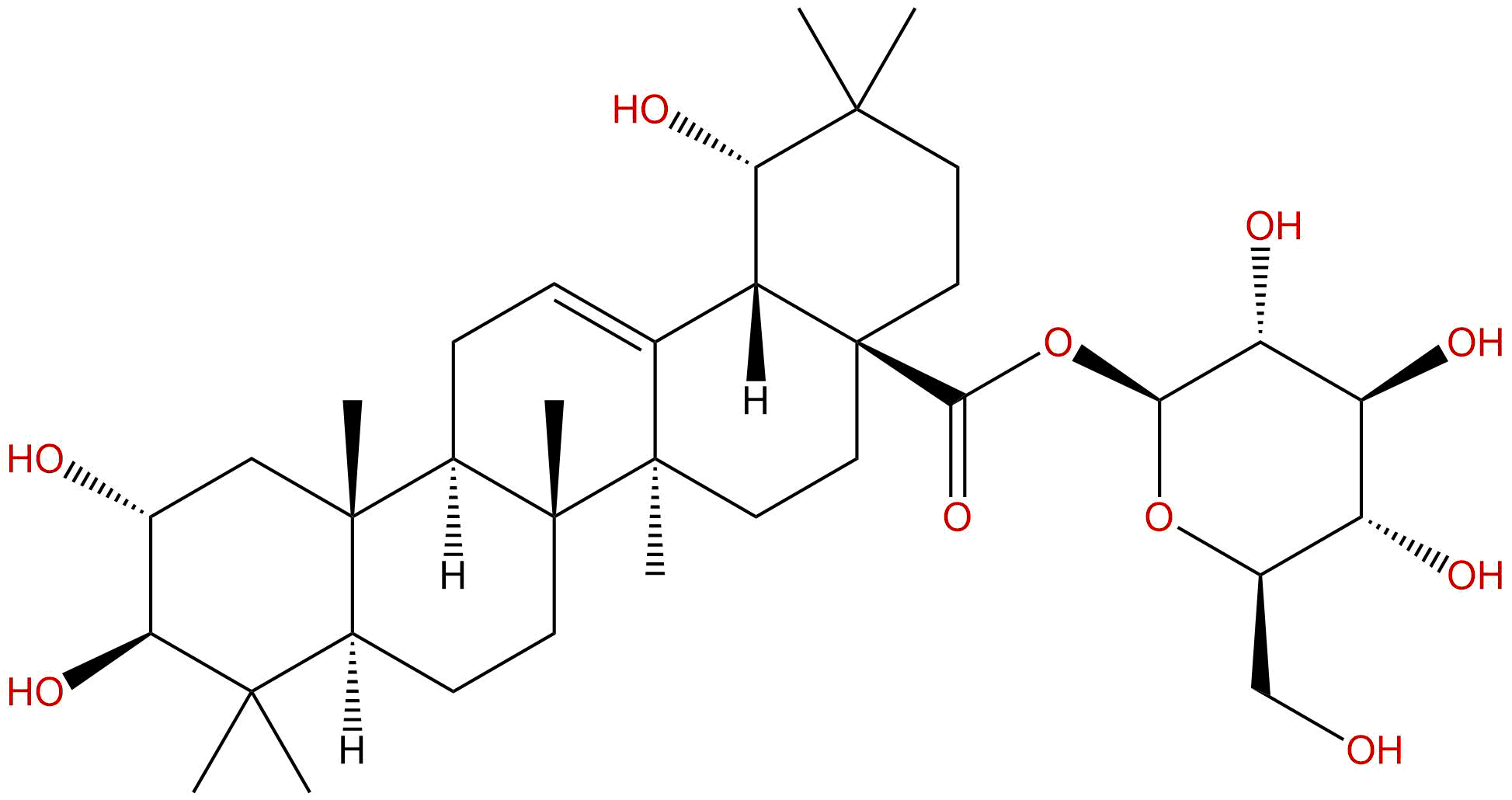


Product name: Arjunetin
Synonym name: 24-Deoxysericoside
Catalogue No.: BP4482
Cas No.: 31297-79-7
Formula: C36H58O10
Mol Weight: 650.85
Botanical Source: Terminalia arjuna Wight & Arn.
Type of Compound: Terpenoids
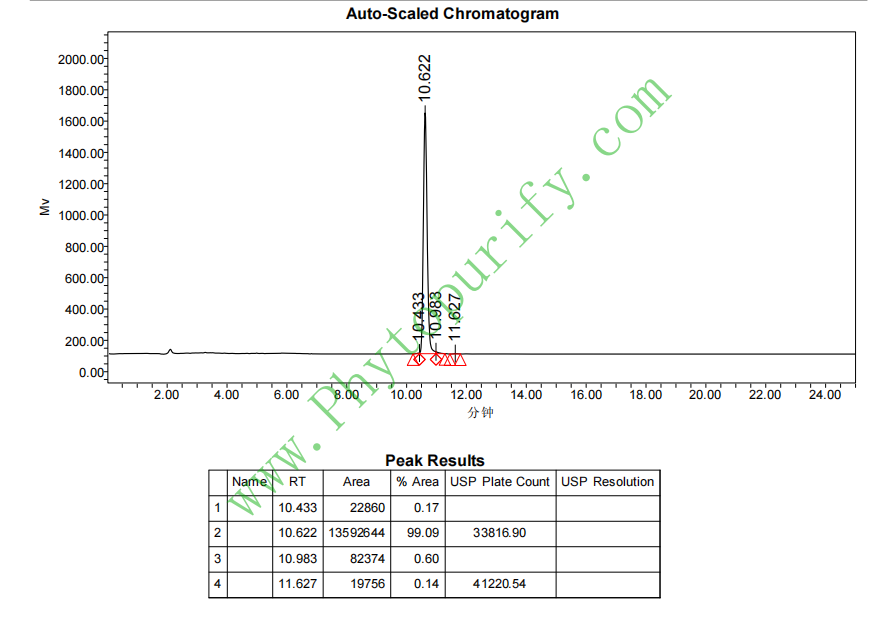
Purity: 95%~99%
Analysis Method: HPLC-DAD or/and HPLC-ELSD
Identification Method: Mass, NMR
Packing: Brown vial or HDPE plastic bottle
The product could be supplied from milligrams to grams
Inquire for bulk scale.
References:
Arjunetin as a promising drug candidate against SARS-CoV-2: molecular dynamics simulation studies
J Biomol Struct Dyn 2021 Sep 17;1-22. doi: 10.1080/07391102.2021.1970627. Online ahead of print
Abstract
Stem and bark of the tree Terminalia arjuna Wight & Arn. (Combretaceae) has been documented to exhibit therapeutic properties like cardiotonic, anticancer, antiviral, antibacterial, antifungal, hypercholesterolemia, hypolipidemic, and anti-coagulant. Our previous studies have shown that, ethanolic extract of T. arjuna bark exhibits radical scavenging anti-oxidant activity and also effectively inhibited catalase activity. In this study, oleanane triterpenoids type compounds viz., oleanolic acid, arjunolic acid, arjunolitin, arjunetin were isolated from ethanolic bark extract as bio-active compound and their structures were elucidated using 1H, 13C NMR, HR-ESIMS, IR. Of the various compounds, Arjunetin showed significant inhibition of catalase activity as compared to the other compounds. Based on the structural similarity between arjunetin and current antiviral drugs, we propose that arjunetin might exhibit antiviral activity. Molecular docking and molecular dynamics studies showed that arjunetin binds to the binds to key targets of SARS-CoV-2 namely, 3CLpro, PLpro, and RdRp) with a higher binding energy values (3CLpro, -8.4 kcal/mol; PLpro, -7.6 kcal/mol and RdRp, -8.1 kcal/mol) as compared with FDA approved protease inhibitor drugs to Lopinavir (3CLpro, -7.2 kcal/mole and PLpro -7.7 kcal/mole) and Remdesivir (RdRp -7.6 kcal/mole). To further investigate this, we performed 200-500 ns molecular dynamics simulation studies. The results transpired that the binding affinity of Arjunetin is higher than Remdesivir in the RNA binding cavity of RdRp. Based on structural similarity between arjunetin and Saikosaponin (a known antiviral agents) and based on our molecular docking and molecular dynamic simulation studies, we propose that arjunetin can be a promising drug candidate against Covid-19.Communicated by Ramaswamy H. Sarma.
Keywords: SARS-CoV-2 protease; Terminalia arjuna; arjunetin; catalase inhibition; molecular docking; molecular dynamic simulations.
HPLC of Arjunetin
Storage conditions:Short-term storage at 2~8℃, long-term storage at -20 ~ -80℃
177.1400
2.8679
2.8680
.0298
.6626
1.1070
Low
77.0358
5.4920
No
No
No
No
No
No
0.0
Yes
No
Yes
Yes
Natural products, as an important treasure trove for drug discovery and development, play an irreplaceable role in the long history of human fight against diseases. Among them, medicinal plants have always been an important source of lead compounds for new drugs due to their rich chemical diversity and significant biological activity. Ajiang Lanren Tree(Terminalia arjuna)As a well-known medicinal plant used in traditional medical systems such as Ayurveda for the treatment of cardiovascular diseases, wound healing, and various inflammatory diseases, its pharmacological value has received widespread attention. In recent years, with the advancement of separation and identification techniques, researchers have discovered a series of structurally novel and uniquely active secondary metabolites from this plant, and Arjunetin (CAS number: 31297-79-7) is one of them.
Ajiang Lanren Pavilion was initially discovered for its feeding and growth inhibitory activity on insects, suggesting its potential to interfere with basic physiological processes in organisms. Subsequent studies revealed that the compound exhibited remarkable multi-target activity in the field of anti-tumor, involving multiple key links such as regulating cell apoptosis, inhibiting tumor invasion and metastasis, and interfering with the tumor microenvironment. Its molecular targets include Bcl-2 family proteins (such as MCL1, BCL2), signal transduction and transcription activator 3 (STAT3), matrix metalloproteinase 2 (MMP2), topoisomerase (TOP1/TOP2A), hypoxia inducible factor 1 alpha (HIF1A), and estrogen signaling pathway related proteins (ESR1, CYP19A1), indicating its potential for multi pathway synergistic anti-tumor effects. The purpose of this article is to systematically review the chemical structure, plant origin, pharmacological activity, mechanism of action, and pharmacological characteristics of Ajiang Lanren Pavilion, and to provide prospects for its development as a candidate anti-tumor drug.
Ajiang Lanren Pavilion is a complex natural triterpenoid compound with a molecular formula of C~35~H~56~O~11~and a molecular weight of 650.8500. From a chemical structure perspective, it belongs to the derivatives of pentacyclic triterpenes of the Ussurine type, with multiple hydroxyl, acetoxy, and glycosidic glycosyl groups (usually glucose) attached to its parent nucleus. These modifying groups are crucial for its solubility, biological activity, and interaction with target proteins.
Based on computational chemistry and experimental measurements, the drug properties related parameters show that the lipid water partition coefficient (LogP) of Ajiang Lanren Pavilion is 2.8679, indicating that it has moderate lipophilicity and is conducive to transmembrane transport. Its topological polar surface area (TPSA) is as high as 177.1400 Å ², mainly attributed to the presence of a large number of hydroxyl and sugar groups in the molecule, which make it easy to form intramolecular and intermolecular hydrogen bonds. Correspondingly, its theoretical water solubility is relatively low, about 0.0298 mg/mL, indicating that it may be necessary to improve its water solubility and bioavailability through formulation methods such as prodrug preparation, use of solubilizers, or nano delivery systems during the development process. In the preliminary safety screening, the compound did not show significant hERG potassium channel inhibitory activity (hERG inhibition: No), reducing the potential risk of inducing QT interval prolongation and apical torsion type ventricular tachycardia. In addition, the Ames test result was 0.0, which preliminarily indicates that there is no mutagenicity in this testing system, providing preliminary safety basis for its further development. However, its blood-brain barrier permeability is predicted to be "low", which means it may not easily enter the central nervous system, which may be an advantage for treating peripheral tumors and reducing the risk of central neurotoxicity. However, special delivery strategies are required for the treatment of brain tumors.
The main source of Ajiang Lanren Pavilion comes from the genus Ajiang Lanren in the Combretaceae family(Terminalia arjuna The bark of (Roxb.) Wight&Arn. This tree species is widely distributed in the Indian subcontinent, and its bark is known as "Arjuna" in Ayurvedic medicine, traditionally used for heart strengthening, hemostasis, and wound healing.
The extraction and purification of Ajiang Lanren Pavilion from plant materials usually follow the standard process of natural product chemistry. Firstly, extract or reflux the dried and crushed bark of Ajiang Elenium using a medium polarity organic solvent (such as methanol, ethanol, or acetone) to fully extract the active ingredients such as triterpenoids and flavonoids. After the crude extract obtained is concentrated under reduced pressure, it is subjected to preliminary fractionation using liquid-liquid extraction method (such as extraction with petroleum ether, ethyl acetate, and n-butanol in sequence). Due to its structural characteristics, Ajiang Lanrenting is usually enriched in the ethyl acetate or n-butanol extraction sites.
Further purification relies on various chromatographic techniques. Silica gel column chromatography is commonly used for preliminary separation, with different ratios of chloroform methanol or petroleum ether ethyl acetate gradient elution. The stream rich in the target compound is refined by reversed-phase silica gel (such as C18) column chromatography, Sephadex LH-20 column chromatography or high performance liquid chromatography (HPLC), and finally the high-purity monomer compound of Ajianglanrenting is obtained. Structural identification involves the comprehensive use of techniques such as nuclear magnetic resonance (NMR, including 1H-NMR, 13C-NMR, 2D-NMR), mass spectrometry (MS), infrared spectroscopy (IR), and optical rotation measurement. Modern technology also explores the use of green technologies such as ultrasound assisted extraction and microwave-assisted extraction to improve extraction efficiency.
The pharmacological activity research of Ajiang Lanren Pavilion mainly focuses on its anti-tumor effect, which has been validated in various in vitro and in vivo models.
1. Antitumor activity:
Numerous studies have shown that Ajiang Lanren Ting has significant proliferative and cytotoxic effects on various human tumor cell lines. Its anti-tumor activity has a broad spectrum and has been observed in cell models of breast cancer, lung cancer, liver cancer, colon cancer, prostate cancer, ovarian cancer and leukemia. The characteristics of the action are dose-dependent and time-dependent. In animal models such as mouse xenograft tumor models, the administration of Ajiang Lanren Ting has also been shown to inhibit tumor growth, prolong the survival of model animals, and exhibit tolerable toxicity within a certain dose range.
2. Induction of cell apoptosis:
Inducing tumor cell apoptosis is one of the core mechanisms by which Ajiang Lanren Ting exerts its anti-tumor effects. Research has shown that this compound can significantly upregulate the expression of pro apoptotic proteins such as Bax and Bak, while downregulating the levels of anti apoptotic proteins such as Bcl-2, Bcl xL, and MCL1, thereby disrupting mitochondrial membrane potential, leading to the release of cytochrome c, activating the caspase cascade reaction, and ultimately triggering programmed cell death.
3. Cell cycle arrest:
Ajiang Lanren Ting can interfere with the normal cycle progression of tumor cells, usually blocking cells at specific checkpoints such as G0/G1 or G2/M phase, preventing them from entering the DNA synthesis or mitotic stage, thereby inhibiting cell proliferation. This blocking effect is closely related to the regulation of the expression of cyclins, cyclin dependent kinases (CDKs), and their inhibitors (CKIs).
4. Anti invasive and anti metastatic activity:
The invasion and metastasis of tumors are the main causes of treatment failure and patient death. Ajiang Lanren Pavilion has been proven to inhibit the migration and invasion ability of tumor cells. This effect is related to its downregulation of the expression and activity of matrix metalloproteinases, especially MMP2 and MMP9. MMPs are key enzymes that degrade extracellular matrix, and inhibition of their activity can effectively hinder tumor cells from breaking through the basement membrane barrier and infiltrating surrounding tissues and spreading far away.
5. Anti angiogenic effect:
The growth and metastasis of tumors depend on the formation of new blood vessels (angiogenesis). Ajiang Lanren Ting can inhibit the proliferation, migration, and lumen formation of endothelial cells by suppressing the expression of vascular endothelial growth factor (VEGF) and its downstream signaling pathways, or by targeting HIF-1 α (hypoxia inducible factor, a key transcription factor that regulates multiple pro angiogenic genes), thereby cutting off the nutritional supply and metastasis pathways of tumors.
6. Other potential activities:
In addition to its core anti-tumor activity, based on the traditional use of its source plant, Ajiang Lanren Tree, Ajiang Lanren Pavilion may also have potential value in cardiovascular protection, anti-inflammatory, antioxidant and other aspects. However, there is relatively little specialized research in these areas, which needs further exploration.
The anti-tumor effect of Ajiang Lanren Pavilion is not achieved through a single target, but presents the characteristics of multi-target and multi pathway synergistic intervention, which provides potential advantages for overcoming tumor drug resistance. Its main mechanism of action is closely related to the following key molecular targets:
1. Apoptosis pathway targets: MCL1 and BCL2
The Bcl-2 family proteins are the core switches that regulate mitochondrial pathway apoptosis. MCL1 and BCL2 are important anti apoptotic members, overexpressed in various tumors, and promote cell survival. Ajiang Lanren Ting can directly or indirectly inhibit the expression or function of MCL1 and BCL2, break the balance between pro apoptotic and anti apoptotic proteins, and promote cell apoptosis.
2. Signal transduction target: STAT3
STAT3 is an important transcription factor that is continuously activated in tumor cells, driving cell proliferation, survival, angiogenesis, and immune escape. Ajiang Lanren Ting can inhibit the phosphorylation of STAT3 (a key activation step), prevent its nuclear translocation and DNA binding activity, thereby downregulating the expression of downstream target genes (such as Cyclin D1, Bcl-2, VEGF, MMPs) and exerting various anti-tumor effects.
3. Extracellular matrix degradation and transfer target: MMP2
Matrix metalloproteinase-2 (MMP2) is a type IV collagenase that plays a crucial role in tumor invasion and metastasis. Ajiang Lanren Ting effectively reduces the ability of tumor cells to degrade the basement membrane and extracellular matrix by inhibiting the transcription of MMP2 (possibly by affecting transcription factors such as STAT3 and AP-1) or enzyme activity, thereby inhibiting their invasion and metastasis.
4. DNA metabolic targets: TOP1 and TOP2A
Topoisomerase I (TOP1) and II α (TOP2A) are key enzymes that regulate DNA topology, are essential in DNA replication and transcription, and are targets of many chemotherapy drugs such as irinotecan and etoposide. Research has shown that Ajiang Lanren Ting may cause DNA damage and replication fork arrest, leading to cell death by interfering with the function of these enzymes.
5. Tumor microenvironment and metabolic targets: HIF1A
In the hypoxic region of solid tumors, HIF-1 α is stably expressed and activates a series of genes adapted to hypoxia, promoting angiogenesis, glycolysis, and tumor progression. Ajiang Lanren Ting can inhibit the protein stability or transcriptional activity of HIF-1 α, disrupt the adaptation of tumor cells to the hypoxic microenvironment, and inhibit its mediated angiogenesis.
6. Hormone signaling pathway targets: ESR1 and CYP19A1
For hormone dependent tumors (such as breast cancer), estrogen receptor alpha (ESR1) and aromatase (CYP19A1, responsible for estrogen synthesis) are important therapeutic targets. Ajiang Lanren Ting may act as an estrogen receptor modulator or aromatase inhibitor, interfering with the estrogen signaling pathway and thereby inhibiting the growth of estrogen dependent tumor cells.
7. MAPK signaling pathway: MAPK1 (ERK2)
The MAPK/ERK pathway is a classic pathway that regulates cell growth, proliferation, and differentiation. Ajiang Lanren Ting may inhibit the activation of the key kinase MAPK1 (ERK2) in this pathway, blocking the transmission of pro proliferative signals from cell surface receptors to the nucleus.
In summary, Ajiang Lanren Pavilion forms a synergistic network by simultaneously acting on multiple key nodes such as apoptosis regulation, signal transduction, extracellular matrix remodeling, DNA metabolism, tumor microenvironment, and hormone signaling. This may be the molecular basis for its efficient anti-tumor effect and potential to overcome drug resistance.
Although Ajiang Lanren Ting has shown great potential in pharmacological activity, its successful development as a drug largely depends on its pharmacological properties, namely "drug like" and pharmacokinetic properties.
1. Physical and chemical properties, absorption, and distribution:
As mentioned earlier, the molecular weight of Ajiang Lanren Ting is moderate (650.85), but its high TPSA (177.14 Å ²) and low predicted water solubility (0.0298 mg/mL) are the main challenges for its oral absorption. A moderate LogP value (2.87) indicates that it has some membrane permeability, but strong polar groups may limit its passive diffusion across gastrointestinal epithelial cells. The blood-brain barrier has low permeability and is mainly distributed in peripheral tissues. To improve its bioavailability, it may be necessary to develop suitable drug delivery systems, such as nanocrystals, liposomes, polymer micelles, or cyclodextrin inclusion complexes, to enhance their solubility and stability and promote absorption.
2. Metabolism and excretion:
At present, there is insufficient research data on the pharmacokinetics of the Ajiang Lanren Ting system. As a triterpenoid glycoside compound, it may be hydrolyzed by gut microbiota or in vivo esterases and glycosidases to produce aglycones and glycosides. Glycosides have enhanced lipid solubility and may be more easily absorbed, but their activity may differ from the prototype drug. Liver metabolism may involve phase I reactions (such as oxidation, reduction, and hydrolysis of cytochrome P450 enzymes) and phase II binding reactions (such as glucuronidation and sulfation). The metabolic product spectrum, major metabolic enzymes, and excretion pathways (bile or kidney) need to be further studied through radioactive labeling or high-sensitivity mass spectrometry analysis.
3. Preliminary safety assessment:
The preliminary in vitro safety data available is relatively optimistic. The absence of hERG inhibition suggests a low risk of cardiac toxicity, while a negative Ames test preliminarily excludes the risk of genetic toxicity. However, this is only an early screening result, and a comprehensive safety evaluation requires systematic preclinical toxicology studies, including acute toxicity, subchronic toxicity, chronic toxicity, reproductive toxicity, and safety pharmacology studies in relevant animal species, to determine their therapeutic window (safety range).
4. Considerations for formulation development:
Due to its poor water solubility, the development of injections may face difficulties, and advanced solubilization technology is also required for oral solid preparations such as tablets and capsules. Preparing it as a prodrug (such as esterification prodrug to increase lipid solubility, or linking hydrophilic groups to increase water solubility) is another path worth exploring.
As a multi-target anti-tumor natural product, Ajiang Lanren Pavilion has broad clinical application prospects, but also faces many challenges.
Prospect:
1. Advantages of multi-target therapy: It simultaneously acts on multiple key pathways involved in tumor development and progression, potentially producing synergistic effects, improving therapeutic efficacy, and reducing the risk of acquired drug resistance due to single target inhibition. Especially suitable for malignant tumors with complex molecular backgrounds.
2. Potential for combination therapy: Ajiang Lanren Ting can be used in combination with existing chemotherapy drugs (such as topoisomerase inhibitors, microtubule inhibitors), targeted drugs, or immune checkpoint inhibitors, which may have a synergistic and attenuated effect, providing a choice for designing new combination therapy regimens.
3. Source innovative drugs: As a novel natural lead compound, optimizing and modifying its structure is expected to develop new chemical entities with stronger activity, higher selectivity, and better pharmacokinetic properties.
4. Expanded indications: In addition to anti-tumor, based on the traditional use of its source plants and preliminary pharmacological hints, it is also worth exploring in cardiovascular diseases (such as atherosclerosis, myocardial protection), chronic inflammatory diseases and other fields.
Challenges and Prospects:
1. Pharmacokinetic optimization: The most urgent challenge at present is to improve its water solubility and oral bioavailability. Future research should focus on innovative formulations and rational structural modifications to address the bottleneck problem of poor absorption.
2. Deep analysis of the mechanism of action: Although multiple potential targets have been identified, the direct interactions between Ajiang Lanren Pavilion and these targets (such as whether they bind directly, binding sites, and binding constants) still need to be confirmed through techniques such as surface plasmon resonance (SPR), isothermal titration calorimetry (ITC), and co crystallization X-ray diffraction. Systems biology methods such as proteomics and transcriptomics can help to more comprehensively reveal their functional networks.
3. Complete preclinical development chain: It is necessary to complete the preclinical pharmacodynamics (validation in more clinical tumor models), pharmacokinetics, and toxicology studies of the system as soon as possible, in order to provide solid data support for its application for clinical trials (IND).
4. Sustainable sources and synthesis: Relying on plant extraction may face resource, quality, and sustainability issues. Therefore, developing efficient and economical fully synthetic or semi synthetic routes, or heterologous expression in microorganisms through synthetic biology methods, is crucial for ensuring future large-scale supply.
5. Exploration of Precision Medicine: Studying the sensitivity differences of Ajiang Lanren Pavilion to different tumor molecular subtypes and searching for biomarkers to predict its efficacy will help achieve precision drug use in the future.
Ajiang Lanren Pavilion is a natural triterpenoid compound with significant multi-target anti-tumor activity isolated from the traditional medicinal plant Ajiang Lanren tree. It exerts powerful effects in inducing apoptosis, blocking cycles, inhibiting invasion and metastasis, and angiogenesis by synergistically regulating multiple key targets such as MCL1, BCL2, STAT3, MMP2, TOP1/2A, HIF1A, ESR1/CYP19A1, etc. Although its excellent pharmacological activity is encouraging, poor solubility and unclear pharmacokinetic properties are the main obstacles to its conversion to drugs. Future research should strive to comprehensively evaluate and optimize its drug properties through interdisciplinary strategies - combining medicinal chemistry (structural modification), pharmacy (novel delivery systems), pharmacology (mechanism exploration and efficacy verification), and toxicology. With the gradual overcoming of these challenges, Ajiang Lanren Pavilion is expected to develop from a promising natural lead compound into a novel multi-target therapeutic drug for combating malignant tumors, or provide valuable combination therapy options for existing therapies, demonstrating the sustained vitality of natural products in modern drug development.
