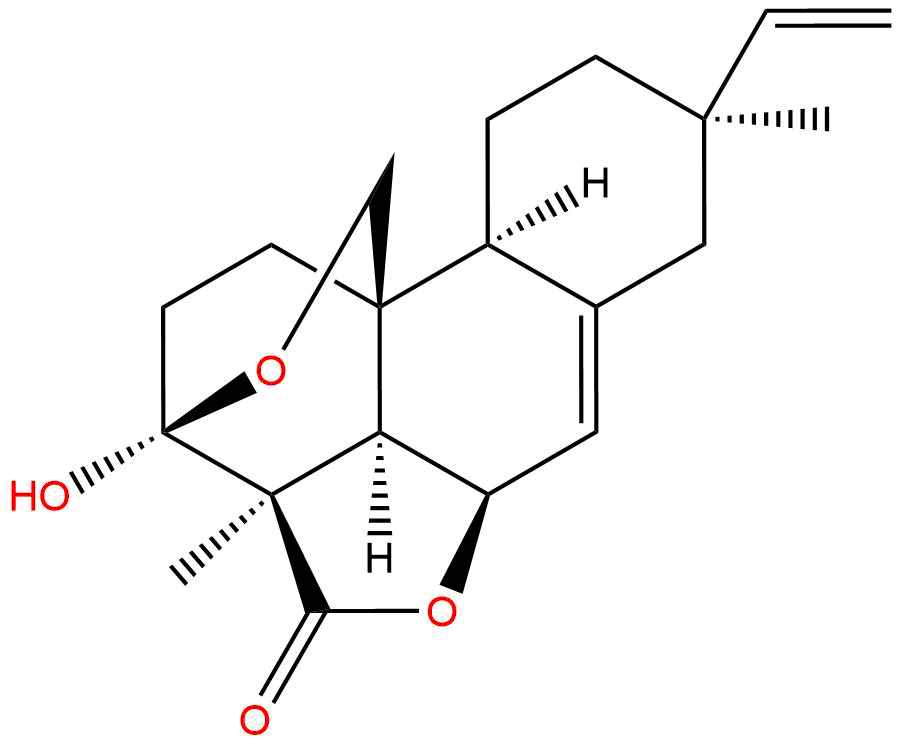


Product name: Momilacton B
Synonym name: Momilactone B
Catalogue No.: BP5235
Cas No.: 51415-08-8
Formula: C20H26O4
Mol Weight: 330.424
Botanical Source:
Type of Compound: Terpenoids
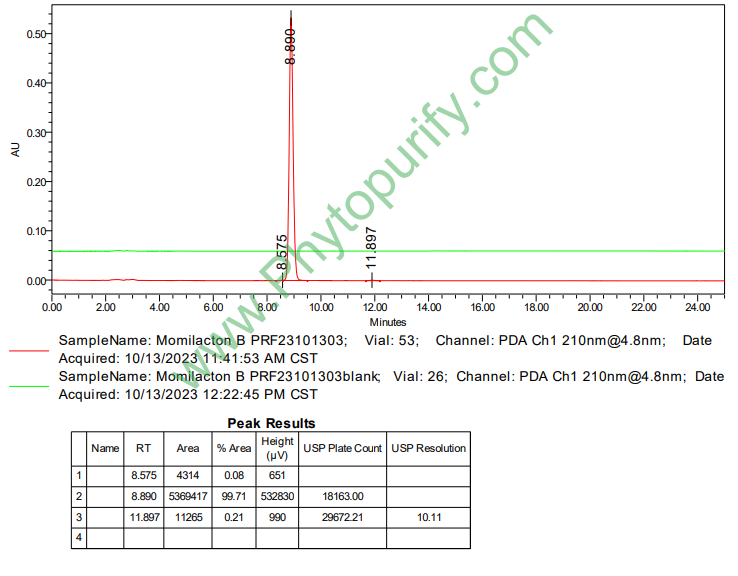
Purity: 95%~99%
Analysis Method: HPLC-DAD or/and HPLC-ELSD
Identification Method: Mass, NMR
Packing: Brown vial or HDPE plastic bottle
Storage: Store in a well closed container, protected from air and light. Put into refrigerate or freeze for long term storage.
Whenever possible, you should prepare and use solutions on the same day. However, if you need to make up stock solutions in advance, we recommend that you store the solution as aliquots in tightly sealed vials at -20℃. Generally, these will be useable for up to two weeks.
The product could be supplied from milligrams to grams
Inquire for bulk scale.
For Reference Standard and R&D, Not for Human Use Directly.
Momilacton A and B are the main chemosensitizers for weed suppression in rice, and among them, Momilacton B is one of the most efficient natural herbicides found so far, and has good potential for application. Momilacton B can be released from the rice root system into the soil to inhibit the seed germination and growth of the surrounding barnyard grass and other plants. The concentration of Momilacton B greater than 3 nmol-mL-1 can inhibit the growth of roots and embryonic axes of watercress and lettuce, andMomilacton A and B are important phytochemicals for rice, which can effectively inhibit rice pathogens such as Magnaporthe grisea. In addition, M. grisea infection induced rice to synthesize more Momilactons.
Labdane-related diterpenoids, momilactones A and B were isolated and identified in rice husks in 1973 and later found in rice leaves, straws, roots, root exudate, other several Poaceae species and the moss species Calohypnum plumiforme. The functions of momilactones in rice are well documented. Momilactones in rice plants suppressed the growth of fungal pathogens, indicating the defense function against pathogen attacks. Rice plants also inhibited the growth of adjacent competitive plants through the root secretion of momilactones into their rhizosphere due to the potent growth-inhibitory activity of momilactones, indicating a function in allelopathy. Momilactone-deficient mutants of rice lost their tolerance to pathogens and allelopathic activity, which verifies the involvement of momilactones in both functions. Momilactones also showed pharmacological functions such as anti-leukemia and anti-diabetic activities. Momilactones are synthesized from geranylgeranyl diphosphate through cyclization steps, and the biosynthetic gene cluster is located on chromosome 4 of the rice genome.
HPLC of Momilacton B
Storage conditions:Short-term storage at 2~8℃, long-term storage at -20 ~ -80℃
55.7600
2.9370
2.9369
.0219
3.3168
9.1352
High
71.0857
6.5591
No
No
No
No
Yes
No
0.6
Yes
No
Yes
Yes
Natural products, as an important source of drug discovery, play an irreplaceable role in the long history of human struggle against diseases. From ancient plant medicine to modern structure based drug design, secondary metabolites present in nature continue to provide valuable lead compounds for the development of innovative drugs due to their unique chemical diversity and biological activity. Among numerous biologically active natural products, rice is the source(Oryza sativa)The rice husk ketone compounds (Momillactones) of rice husks and their closely related plants have attracted much attention due to their unique chemical structures, complex biosynthetic pathways, and significant physiological and ecological functions. Rice husk ketone compounds are typical representatives of diterpenoid phytoalexins, which are induced to synthesize and accumulate when rice is infected by pathogens or under stress. They are an important component of the plant's innate immune system.
Momillacton B (CAS number: 51415-08-8) is one of the core members of the rice husk ketone family, and together with Momillacton A, it constitutes the resistance of rice to rice blast fungus(Magnaporthe oryzae)The first chemical line of defense against major diseases. Since its first isolation and identification from rice husks in the 1970s, the biological functions of rice husk ketone B have far exceeded its originally defined antifungal activity. In recent years, with the deepening of research, scientists have found that rice husk ketone B exhibits a wider spectrum of pharmacological activities, especially in the field of anti parasitic effects, showing remarkable potential. Its inhibitory effect on various parasites, including malaria parasites, provides new ideas for the development of novel anti infective drugs. In addition, rice husk ketone B exhibits various biological activities such as anti-inflammatory, antioxidant, anti-tumor, and plant allelopathy, making it a highly valuable and promising multifunctional natural product molecule for research and development.
This article aims to provide a comprehensive and systematic review of the research progress on rice husk ketone B. The article will first elaborate on its unique chemical structure and physicochemical properties, and then introduce its plant sources and extraction and purification methods in nature. On this basis, the pharmacological activity of rice husk ketone B, especially its anti parasitic effect, will be reviewed and analyzed in depth, and its potential mechanism of action and molecular targets will be explored. Finally, based on the pharmacological parameters and pharmacokinetic characteristics, an objective evaluation of its potential as a drug lead compound is conducted, and the future development direction of its clinical application and related fields is discussed. Through this review, it is expected to provide a comprehensive reference on rice husk ketone B for researchers engaged in natural product chemistry, pharmacology, medicinal chemistry, and plant protection, and to stimulate more in-depth research on this unique natural product.
The chemical structure of rice husk ketone B is the material basis for its biological activity. From a chemical classification perspective, rice husk ketone B belongs to the diterpenoid class. Specifically, it is a heterocyclic compound with a unique 9 β - H-pinane skeleton. Its core structure consists of three fused hexagonal rings (A, B, C), forming a rigid tricyclic diterpene skeleton. Compared with rice husk ketone A, the key structural difference of rice husk ketone B lies in the different substituents on its C ring. The C-19 position of rice husk ketone B is a carboxyl group (- COOH), while the corresponding position of rice husk ketone A is an aldehyde group (- CHO). In addition, the B molecule of rice husk ketone also contains a characteristic γ - lactone ring (pentagonal lactone ring), which is condensed on the A ring and carries an extra ring methylene group (=CH ₂). This unique structural combination, including a rigid tricyclic skeleton, gamma lactone ring, and carboxyl functional group, collectively determines the physicochemical properties and biological activity of rice husk ketone B.
In terms of physical and chemical properties, according to calculations and experimental data, rice husk ketone B exhibits the following characteristics:
- Molecular weight and formula Its precise molecular weight is 330.4240 g/mol, and its molecular formula is C ₂₀ H ₂₆ O ₄. This molecular weight falls within the typical range of small drug molecules (usually<500 Da), meeting the requirements for molecular weight in Lipinski's Rule of Five, providing favorable conditions for it as a candidate molecule for oral drugs.
- fat-soluble The oil-water partition coefficient (LogP) is 2.9370. A LogP value between 2-3 is considered one of the ideal molecular features for drug candidates, indicating that rice husk ketone B has moderate lipid solubility. This property enables it to penetrate biological membranes (such as cell membranes) well as maintain a certain solubility and transport capacity in aqueous environments, which is beneficial for its absorption, distribution, and binding to targets in vivo.
- Polar Surface Area The topological polar surface area (TPSA) is 55.7600 Å ². TPSA is an important parameter for measuring the ability of compounds to penetrate cell membranes, especially the blood-brain barrier (BBB). Generally, molecules with TPSA less than 60-70 Å ² are considered to have good cell membrane permeability. The TPSA value of rice husk ketone B is exactly below this threshold, which is consistent with its predicted high blood-brain barrier penetration ability (see drug efficacy evaluation below). A higher TPSA also suggests that it may interact with target proteins through hydrogen bonding.
- Water solubility Its water solubility (LogS) is 0.0219 mg/mL. This value indicates that rice husk ketone B has poor water solubility and belongs to insoluble compounds. Poor water solubility is a common challenge faced by many natural products in drug development, which may affect their oral bioavailability and in vivo pharmacokinetic behavior. Therefore, in the future optimization of medicinal chemistry, how to improve its water solubility through structural modification or formulation techniques (such as nano formulations, cyclodextrin inclusion, etc.) is one of the key directions to enhance its drug properties.
- Blood-brain barrier penetrability The prediction results show that rice husk ketone B has high blood-brain barrier penetration ability. This characteristic is of great significance for the treatment of central nervous system (CNS) diseases or brain parasitic infections (such as cerebral malaria). However, this may also bring potential central nervous system side effects that require attention in subsequent toxicology studies.
- HERG inhibition and Ames test HERG (human Ether - à - go Related Gene) potassium channel inhibition is the main risk factor for drug induced cardiac toxicity (QT interval prolongation). The predicted results show that rice husk ketone B has no hERG inhibitory activity, which is a positive pharmacological signal. The Ames test is used to evaluate the mutagenicity of compounds, with a result of 0.6, indicating a certain potential mutagenic risk, but the risk is not high and further experimental verification is needed.
In summary, the chemical structure of rice husk ketone B is novel and unique, and its physicochemical properties exhibit both advantages and challenges. Its moderate molecular weight and lipid solubility, good cell membrane penetration potential, and low risk of hERG inhibition are favorable factors for it as a lead compound; However, poor water solubility and potential mutagenicity are key obstacles that need to be overcome in the drug development process.
Rice husk ketone B was originally derived from rice(Oryza sativa)Separated and identified from rice husks. As a secondary metabolite of rice, rice husk ketone B has extremely low levels in healthy plants and usually exists in the form of inactive glycosides. When rice is subjected to biotic stress (such as infection by pathogenic fungi such as rice blast fungus and sheath blight fungus, or feeding by insects such as brown planthopper) or abiotic stress (such as ultraviolet radiation, heavy metal stress, and mechanical damage), the defense signaling pathways in the plant are activated, leading to upregulation of related gene expression and initiating de novo synthesis of rice husk ketone B, which accumulates in a large amount in free and active form. Therefore, in order to obtain sufficient amounts of rice husk ketone B for research, it is usually necessary to induce rice plants.
In addition to rice itself, rice husk ketone B has also been found to exist in other plants, especially in grasses closely related to rice, such as barnyard grass(Echinochloa crus-galli)Wait. These plants can also synthesize rice husk ketone compounds and may use their allelopathic effects to gain an advantage in survival competition with other plants. However, rice remains the most extensively researched and relatively abundant primary source at present.
The extraction and purification of rice husk ketone B is a typical natural product chemistry research process, which mainly includes the following key steps:
Preparation and induction of plant materials Select appropriate rice varieties (usually disease resistant varieties or specific cultivars) and collect rice husks or leaves at specific growth stages (such as heading stage). To enrich target compounds, plants can be induced before harvesting. The most commonly used methods include: spraying leaves with suspension of rice blast fungus spores or inducers (such as chitin, oligosaccharides); Or irradiate the plants with ultraviolet light. Induction treatment is usually carried out 24-72 hours before harvest.
Extract After drying and crushing the harvested plant materials (such as rice husks), extract them using organic solvents. Due to the moderate lipid solubility of rice husk ketone B, commonly used extraction solvents include methanol, ethanol, ethyl acetate, or their mixed solvents. Usually, cold soaking or Soxhlet extraction methods are used, repeatedly extracted several times to fully dissolve the target components. The crude extract was obtained by vacuum concentration of the extraction solution.
Preliminary separation and enrichment The crude extract contains a large amount of impurities such as pigments, lipids, and sugars. Firstly, preliminary separation is carried out through liquid-liquid extraction, for example, suspending the crude extract in water and sequentially extracting with solvents such as petroleum ether, ethyl acetate, n-butanol, etc. Rice husk ketone B is usually enriched in the ethyl acetate extraction layer. In addition, macroporous adsorption resin column chromatography (such as Diaion HP-20) can also be used for preliminary separation, with different ratios of methanol water gradient elution to achieve enrichment of the target compound.
purification The components that have been preliminarily enriched still need further purification. High performance liquid chromatography (HPLC) is the most effective method for separating and purifying rice husk ketone B. Usually, a reverse phase C18 chromatography column is used, with methanol water or acetonitrile water system as the mobile phase. Through isocratic or gradient elution, combined with UV detection (rice husk ketone B has strong absorption near 210-220 nm), rice husk ketone B can be efficiently separated from rice husk ketone A and other structurally similar compounds. Preparative HPLC can be used to obtain pure products in milligrams or even grams.
Structural Identification The purified product obtained requires structural confirmation through modern spectroscopic techniques. Nuclear magnetic resonance spectroscopy (NMR, including ¹ H-NMR, ¹ ³ C-NMR, DEPT, COSY, HSQC, HMBC, etc.) is a key tool for analyzing its planar structure and relative configuration. High resolution mass spectrometry (HR-MS) is used to determine its precise molecular weight and formula. By comparing with the spectral data reported in the literature, it was ultimately confirmed that the isolated compound is rice husk ketone B.
Although extracting rice husk ketone B from natural plants is a traditional method, this method is limited by plant growth cycle, induction efficiency, extraction and purification costs, and environmental factors. In recent years, with the development of synthetic biology, significant progress has been made in the heterologous synthesis of rice husk ketone B in microorganisms such as yeast and Escherichia coli using genetic engineering methods. The de novo synthesis of rice husk ketone B has been achieved in a microbial cell factory by cloning and reconstructing the biosynthetic gene cluster of rice husk ketone B. This breakthrough provides new possibilities for the large-scale and sustainable production of rice husk ketone B in the future, and is expected to reduce its acquisition cost, promoting its wider biological research and drug development applications.
The pharmacological activity research of rice husk ketone B has expanded from its initial discovery of antifungal effects to multiple fields, demonstrating multiple biological activities. Among them, the most notable discovery in recent years is its significant anti parasitic activity.
This is currently the most promising field for the conversion of rice husk ketone B. Multiple in vitro and in vivo studies have confirmed its inhibitory effects on various important human parasites.
Anti malaria activity Malaria is caused by malaria parasites(Plasmodium The serious parasitic diseases caused by spp. pose a huge threat to global public health. Research has shown that rice husk ketone B has an effect on Plasmodium falciparum(Plasmodium falciparum)Both chloroquine sensitive and resistant strains showed good inhibitory activity. Its half maximal inhibitory concentration (IC ₅₀) is at the micromolar level, demonstrating its potential as a novel antimalarial lead compound. More importantly, its mechanism of action may differ from existing antimalarial drugs, providing new strategies to overcome the increasingly serious problem of drug resistance.
Antiparasitic activity against other parasites In addition to malaria parasites, the antiparasitic spectrum of rice husk ketone B may also extend to other protozoa and worms. For example, preliminary studies suggest that it has an effect on Leishmania parasites that cause leishmaniasis(Leishmania Spp.) and Brucella, which causes African trypanosomiasis(Trypanosoma brucei)It may also have inhibitory effects. In addition, given its allelopathic role in rice defense, its activity against certain plant parasitic nematodes is also worth exploring.
As a plant protection agent, antifungal activity is the most classic and fundamental function of rice husk ketone B. It is effective against various plant pathogenic fungi, especially rice blast fungus(Magnaporthe oryzae)Has a strong inhibitory effect. Its mechanism of action may involve disrupting the integrity of fungal cell membranes, inhibiting hyphal growth, and spore germination. Although its antifungal activity was initially targeted at plant pathogens, this activity also suggests that it may be effective against certain human pathogenic fungi, such as Candida and Aspergillus, and is worth further exploration.
Chronic inflammation and oxidative stress are common pathological foundations of many diseases, such as cardiovascular disease, neurodegenerative diseases, and cancer. Research has shown that rice husk ketone B can inhibit the production of nitric oxide (NO) and prostaglandin E ₂ (PGE ₂) in macrophages induced by lipopolysaccharide (LPS), and downregulate the expression of pro-inflammatory cytokines such as TNF - α, IL-6, IL-1 β. Its anti-inflammatory mechanism may be related to the inhibition of nuclear factor kappa B (NF - κ B) and mitogen activated protein kinase (MAPK) signaling pathways. Meanwhile, rice husk ketone B also exhibits certain free radical scavenging ability, which can alleviate oxidative damage. These activities provide a theoretical basis for their application in the treatment of inflammation related diseases.
Some studies have reported the inhibitory effect of rice husk ketone B on the proliferation of certain cancer cell lines. For example, it may inhibit the growth of human liver cancer cells, colon cancer cells, etc. by inducing cell cycle arrest and apoptosis. However, current research on its anti-tumor activity is not yet in-depth, and its target and mechanism of action need further clarification. Its anti-tumor activity may be related to multiple mechanisms such as anti-inflammatory, antioxidant, and affecting cell signal transduction.
In the rice ecosystem, rice husk ketone B, as an allelopathic substance, can inhibit the seed germination and seedling growth of associated weeds such as barnyard grass. This characteristic makes it potentially valuable for the development of environmentally friendly herbicides. By utilizing the allelopathic potential of rice or directly applying rice husk ketone B or its analogues, it is expected to reduce the use of chemical herbicides and promote the development of sustainable agriculture.
A deep understanding of the mechanism of action of rice husk ketone B, especially the molecular basis of its anti parasitic activity, is the key to developing it into a drug. Current research has revealed that rice husk ketone B may exert its biological effects by acting on multiple targets, exhibiting the characteristic of multi-target action. Based on its anti parasitic activity, a series of potential molecular targets have been identified, which mainly involve multiple key physiological processes of parasites.
Targeting the digestive vesicles and heme detoxification pathways of malaria parasites After infecting red blood cells, malaria parasites will extensively degrade hemoglobin to obtain amino acids and release toxic hemoglobin. Malaria parasites detoxify by aggregating heme into non-toxic hemozoin.PFCRT(Plasmodium falciparum Chloroquine Resistance Transporter and PFATP6(Plasmodium falciparum ATPase 6 is a key protein located on the digestive vesicle membrane. PFCRT is closely related to chloroquine resistance, and PFATP6 is a potential target for artemisinin based drugs. Rice husk ketone B may kill malaria parasites by interfering with the function of these proteins, disrupting the homeostasis of digestive vesicles, or inhibiting the detoxification process of hemoglobin.
Interference with nucleic acid and protein synthesis:DHFR Dihydrofolate reductase is a key enzyme in the folate metabolism pathway, crucial for the synthesis of purines, pyrimidines, and amino acids, and is a target of the classic antimalarial drug ethambutol.EIF2A(Eukaryotic translation initiation factor 2A) and RPS14(Ribosomal protein S14)RPLP0 Ribosomal protein subunit P0 is an important component of protein synthesis machinery. Rice husk ketone B may inhibit the activity of DHFR, block folate metabolism, or interfere with the protein translation process of malaria parasites by acting on proteins such as EIF2A, RPS14, RPLP0, thereby inhibiting their growth and proliferation.
Affects energy metabolism:PFKFB3(6-phosphofructose-2-kinase/fructose-2,6-diphosphatase 3) is a key regulatory enzyme in the glycolysis pathway. Malaria parasites are highly dependent on glycolysis for energy supply within red blood cells. Inhibiting the activity of PFKFB3 can reduce the level of fructose-2,6-diphosphate, thereby inhibiting glycolysis and cutting off the energy supply of malaria parasites. Rice husk ketone B may exert antimalarial effects by targeting PFKFB3.
Interference with stress response and molecular chaperone function:HSPA8 Heat shock protein A8, also known as Hsc70, is an important molecular chaperone protein involved in protein folding, assembly, transport, and degradation, and is crucial for cell survival under stress conditions. Malaria parasites face various pressures such as temperature changes and oxidative stress within the host's body, and the function of HSPA8 is crucial for their survival. Rice husk ketone B may disrupt the stress defense mechanism of malaria parasites by inhibiting the activity of HSPA8.
Targeted membrane structure and signal transduction:CYP51 Sterol 14 α - demethylase is a key enzyme in the synthesis of ergosterol by fungi and certain protozoa, such as Trypanosoma and Leishmania parasites. Ergosterol is an important component that maintains the fluidity and integrity of cell membranes. Although the sterol metabolism of malaria parasites differs from that of fungi, CYP51 may still be a potential target.GABAAR Gamma aminobutyric acid type A receptor is the main inhibitory receptor in the nervous system. Although its function in parasites is not fully understood, certain antiparasitic drugs (such as avermectin) exert their effects by acting on the glutamate gated chloride ion channels unique to invertebrates (homologous to GABAAR). Rice husk ketone B may interfere with the neuromuscular function of parasites by acting on similar targets.
In summary, the antiparasitic effect of rice husk ketone B does not rely on a single target, but may act on multiple key cellular pathways simultaneously through a "multi pronged" approach, including nutrient metabolism, protein synthesis, energy supply, stress response, and membrane function. This multi-target mode of action is a potential reason for its strong activity and difficulty in developing drug resistance. However, currently most target information is still based on computational predictions or preliminary in vitro binding experiments. The exact molecular mechanisms and in vivo target validation still need to be elucidated through further research, such as drug affinity response target stability (DARTS) analysis, thermal shift analysis (TSA), gene knockout/knock in, and protein crystallography methods.
To advance rice husk ketone B from a natural product lead compound to a clinical candidate drug, a systematic evaluation of its drug like and pharmacokinetic properties (ADME) is necessary. As mentioned earlier, its physical and chemical properties exhibit some favorable characteristics, but there are also obvious shortcomings.
Pharmaceutical advantages:
- Complies with the drug classification rules The molecular weight (330.4 Da) and LogP (2.94) are both within the ideal range, and the TPSA (55.76 Å ²) is moderate, indicating its good cell membrane permeability and oral absorption potential.
- Low risk of cardiac toxicity Predicting no hERG inhibitory activity reduces the risk of cardiac toxicity caused by QT interval prolongation.
- High blood-brain barrier penetrability For the treatment of brain parasitic infections (such as cerebral malaria), it is a huge advantage.
Drug Challenge:
- Poor water solubility The water solubility is only 0.0219 mg/mL, which is the main bottleneck limiting its oral bioavailability. Low water solubility can lead to incomplete dissolution and poor absorption of drugs in the gastrointestinal tract, thereby affecting their efficacy.
- Potential mutagenicity The Ames test result is 0.6, indicating a possible genetic toxicity risk. This needs to be rigorously evaluated and confirmed through more comprehensive genetic toxicity tests, such as in vivo micronucleus tests and chromosome aberration tests.
- Metabolic stability Natural products typically contain multiple easily metabolized sites (such as lactone rings, double bonds, hydroxyl groups, etc.). The metabolic stability of rice husk ketone B in the body and whether it is easily metabolized and cleared by cytochrome P450 enzymes (CYP450) in the liver are key factors determining its half-life and duration of efficacy. Currently, there is a lack of relevant in vitro and in vivo metabolic data.
- selectivity Although its multi-target mechanism of action is its active advantage, it may also bring off target effects, leading to toxic side effects. For example, although high blood-brain barrier penetration is beneficial for treating brain diseases, it may also cause adverse reactions in the central nervous system. In addition, a systematic cytotoxicity evaluation is needed to assess its toxicity to mammalian cells such as normal liver cells and kidney cells.
Pharmacokinetic characteristics (prediction and outlook):
Based on its physicochemical properties, its pharmacokinetic characteristics can be preliminarily predicted:
- absorb Oral absorption may be poor, mainly limited by water solubility. Special formulations such as solid dispersions, liposomes, and nanoemulsions may need to be developed to improve their solubility and bioavailability.
- distribution Due to its moderate lipid solubility and low TPSA, its distribution volume may be large and can be widely distributed in various tissues, including brain tissue.
- Metabolism It is likely that oxidative metabolism is mainly carried out through the liver CYP450 enzyme system, and the lactone ring may also undergo hydrolysis. The activity and toxicity of metabolites need to be studied.
- excretion Metabolites may be mainly excreted through bile and urine.
Optimization Strategy:
To overcome the above challenges, future pharmaceutical chemistry optimization can revolve around the following points:
1. Improve water solubility On the premise of retaining the core pharmacophore, introducing polar groups (such as amino, hydroxyl, phosphate groups, etc.) or preparing prodrugs (such as esterifying carboxyl groups) to improve water solubility.
2. Reduce toxicity Eliminating or reducing potential mutagenicity through structural modification. For example, modifying sites that may produce toxic metabolites.
3. Improve metabolic stability By introducing fluorine atoms, methyl groups, and other functional groups to block easily metabolized sites (such as double bonds, benzyl carbon hydrogen bonds), the half-life can be extended.
4. Improve selectivity Based on the target structure information, reasonable structural modifications are made to enhance the affinity for parasitic targets while reducing the activity of mammalian homologous proteins.
Rice husk ketone B, with its unique chemical structure and multi effect pharmacological activity, has shown broad application prospects in multiple fields, especially in anti infective drugs and green agriculture.
1. Development of new anti parasitic drugs
This is the most direct and promising application direction of rice husk ketone B. Given the emergence and spread of resistance to antimalarial drugs (especially artemisinin) worldwide, it is urgent to develop drugs with novel mechanisms of action. The activity and multi-target mechanism of rice husk ketone B against drug-resistant malaria strains make it an attractive lead compound for anti malaria. Future research should focus on:
- Structure Activity Relationship (SAR) Study Systematically synthesize derivatives and analogues of rice husk ketone B, identify the key pharmacophores for its anti parasitic activity, and optimize its drug properties.
- In vivo efficacy verification Systematic evaluation of in vivo antimalarial activity, pharmacokinetic properties, and preliminary toxicity in animal models of malaria, such as mouse models.
- Deepening mechanism research By utilizing modern molecular biology and chemical biology methods, we can accurately identify the key target proteins in malaria parasites and analyze their interaction patterns with the targets, providing a basis for structure based drug design.
- Combination therapy research Explore the synergistic effect of rice husk ketone B with existing antimalarial drugs such as artemisinin and chloroquine, in order to develop more effective combination therapies.
2. Anti inflammatory and treatment of related diseases
Its anti-inflammatory and antioxidant activities suggest its potential value in the treatment of chronic inflammatory diseases such as rheumatoid arthritis, inflammatory bowel disease, and neuroinflammation. However, the strength of its anti-inflammatory activity relative to classical anti-inflammatory drugs such as NSAIDs and steroids, as well as the safety of long-term use, are key issues that need to be evaluated.
3. Applications in Green Agriculture
The allelopathic effect of rice husk ketone B provides a unique perspective for its application in agriculture. It can be explored as:
- Biological herbicide Directly develop into environmentally friendly herbicides, or use them as lead compounds to develop new herbicides with higher activity and better selectivity.
- Plant immune inducers By utilizing its characteristics as a plant protection agent, low-dose rice husk ketone B can be applied externally to stimulate the crop's own immune system and improve its overall resistance to diseases.
- Molecular breeding of disease resistant rice varieties By using genetic engineering methods to regulate the biosynthesis genes of rice husk ketone B in rice, a new variety of disease resistant and stress resistant rice with high content of rice husk ketone B has been cultivated.
prospect:
Despite its promising prospects, the research and development of rice husk ketone B is still in its early stages. There is still a long way to go from laboratory discovery to clinical application. Future research should focus on the following areas:
1. Large scale preparation Develop efficient chemical synthesis or biosynthetic routes to solve the problem of limited natural sources and provide sufficient material basis for subsequent research and development.
2. Comprehensive toxicological evaluation Conduct systematic evaluations of acute and chronic toxicity, reproductive toxicity, genetic toxicity, etc. in various animal models to clarify their safety windows.
3. Pharmaceutical research Develop new formulations that can effectively improve their water solubility and bioavailability, such as nanoliposomes, polymer micelles, phospholipid complexes, etc.
4. Interdisciplinary collaboration The close collaboration of multidisciplinary experts in natural product chemistry, medicinal chemistry, pharmacology, toxicology, pharmacy, molecular biology, etc. is the key to promoting the transformation of rice husk ketone B from a "natural product" to a "clinical drug".
Rice husk ketone B, a natural diterpenoid herbicide derived from rice, showcases the ingenuity and efficiency of natural molecular design to the world with its unique tricyclic lactone skeleton and rich biological activity. From its initial discovery as a chemical weapon for rice to resist diseases, to its enormous potential in multiple biomedical fields such as anti parasitic, anti-inflammatory, and anti-tumor effects, the research process of rice husk ketone B itself is a vivid epitome of the discovery of natural product drugs.
This article systematically reviews the chemical structure, sources, pharmacological activities, mechanisms of action, and pharmacological characteristics of rice husk ketone B. Its anti parasitic activity, especially its anti malarial effect, is particularly prominent due to its novel mechanism of action and potential to combat drug-resistant strains. Meanwhile, its application prospects as a allelopathic substance in green agriculture are also highly anticipated. However, we must also be aware that the development of rice husk ketone B is not a smooth road. Its poor water solubility, potential toxicity risks, and unclear pharmacokinetic behavior in vivo are the main obstacles on its path to commercialization.
Nevertheless, rice husk ketone B is undoubtedly a highly valuable natural product lead compound for research. It provides us with a unique molecular template that can be structurally optimized and modified through modern medicinal chemistry methods, with the potential to develop new drugs or agricultural chemicals with independent intellectual property rights. Future research needs to pay more attention to interdisciplinary integration, conducting systematic and in-depth research from multiple dimensions such as molecular mechanisms, structure-activity relationships, drug metabolism and toxicology, and formulation development. We have reason to believe that with the continuous deepening of research, rice husk ketone B and its derivatives will eventually play their due important role in human health and the development of sustainable agriculture, continuing the legendary story of this' rice guardian '.
