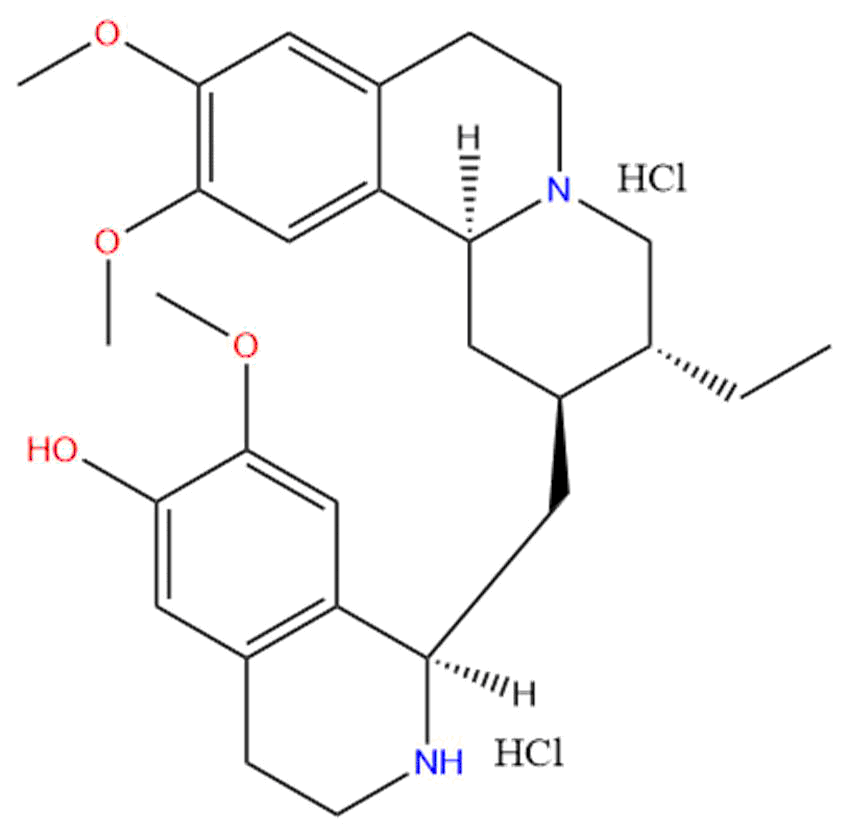


Synonym name: Cephaelin Dihydrochloride
Catalogue No.: BP0329
Cas No.: 5853-29-2
Formula: C28H38N2O4.2HCl
Mol Weight: 539.538
Botanical Source:
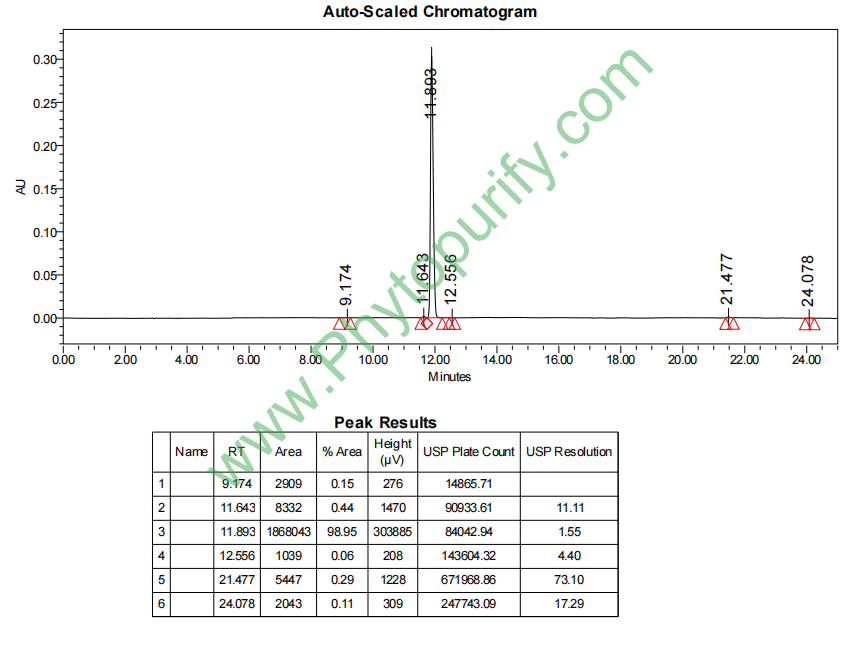
Purity: 95%~99%
Analysis Method: HPLC-DAD or/and HPLC-ELSD
Identification Method: Mass, NMR
Packing: Brown vial or HDPE plastic bottle
Can be supplied from milligrams to grams.
For Reference Standard and R&D, Not for Human Use Directly.
Inquire for bulk scale.
HPLC of Cephaelin Hydrochloride
Storage conditions:Short-term storage at 2~8℃, long-term storage at -20 ~ -80℃
Cephaelin Hydrochloride (CAS number: 5853-29-2), as a natural alkaline compound, has attracted widespread attention due to its significant anti amoebic activity. Amoebiasis, especially caused by pathogenic amoebic protozoa Entamoeba histolytica The intestinal infection caused by it is an important challenge in the global public health field, especially in developing countries where it is highly prevalent. Although traditional therapeutic drugs such as metronidazole are effective, they have issues with drug resistance and side effects, which has prompted researchers to actively explore new anti amoebic drugs. Turpentine hydrochloride has become a research hotspot in the field of natural product pharmacology due to its unique chemical structure and biological activity.
This article will provide a systematic review of the chemical structure and physicochemical properties, plant sources and extraction methods, pharmacological activity and mechanism of action, pharmacological evaluation and pharmacokinetic characteristics of turmeric alkaloids hydrochloride. Combined with its molecular targets, the potential of turmeric alkaloids as anti amoebic drugs will be explored in depth, and the future clinical application prospects will be discussed.
Turmeric alkaloid hydrochloride belongs to the isoquinoline alkaloid class, with a molecular formula of C27H33NO9 and a molecular weight of 535.53. Its structure contains multiple phenolic hydroxyl groups and ether bonds, giving it strong polarity and the ability to form multi-point hydrogen bonds. Its LogP value is about 1.89, indicating moderate lipid solubility, which is beneficial for cell membrane penetration but not prone to excessive lipid solubility, balancing bioavailability and water solubility. The total polar surface area (TPSA) is 71.69 Å ² and the number of hydrogen bond acceptors is 6, indicating its strong binding potential in intermolecular interactions.
Structurally, the hydrochloride salt of turmeric is in the form of a hydrochloride salt, which increases its water solubility and stability, making it easier to develop pharmaceutical formulations. The complexity of its molecular structure and multifunctional functional groups provide the basis for its binding with various biological targets.
The main source of turmeric alkaloids hydrochloride is the traditional Chinese medicine Cephaelis ipecacuanha and its related plant species. Turmeric is a plant of the Rubiaceae family, traditionally used to treat dysentery and digestive system diseases. The root of the plant contains abundant isoquinoline alkaloids, and one of the main active ingredients is quinine hydrochloride.
The extraction process usually uses acidic aqueous solution or organic solvents (such as methanol, ethanol) to extract dried plant roots, followed by alkaline precipitation and hydrochloric acid treatment through acid-base adjustment. The purification steps include liquid-liquid extraction, column chromatography (silica gel column, C18 reverse phase column), and high-performance liquid chromatography (HPLC) separation to ensure the purity and activity of the target compound. In recent years, the application of ultrasound assisted extraction and microwave-assisted extraction technologies has improved extraction efficiency and yield, while reducing solvent consumption.
The main pharmacological activity of turmeric alkaloids hydrochloride is focused on anti amoebic disease, showing its ability to Entamoeba histolytica Significant inhibitory effect. In vitro experiments have shown that the compound can effectively inhibit the proliferation and motility of amoebic protozoa, reducing their invasiveness.
In addition, turmeric alkaloids hydrochloride has a regulatory effect on the intracellular enzyme system of amoebic protozoa, which can interfere with their metabolism and signaling pathways. Partial studies have shown that this compound has inhibitory effects on the cell membrane permeability and phagocytosis of amoebas, reducing parasite damage to host cells.
In animal models, oxymatrine hydrochloride has shown good anti amoebic infection effects, reducing intestinal inflammation and tissue damage, and promoting lesion repair. Its anti-inflammatory and immune regulatory effects have also been partially confirmed by research, providing support for its comprehensive therapeutic potential.
The anti amoebic mechanism of turmeric alkaloids hydrochloride involves multiple molecular targets, mainly targeting Entamoeba histolytica Key proteins and receptors:
Through the synergistic effect of multiple targets, turmeric alkaloids hydrochloride effectively inhibits the growth, invasion, and pathogenicity of amoebas, demonstrating strong anti parasitic activity.
From the perspective of pharmacological parameters, turmeric alkaloids hydrochloride has ideal drug properties:
However, turmeric alkaloids hydrochloride is not easily able to pass through the blood-brain barrier (BBB), which limits its application in central nervous system related parasitic infections. The safety indicators such as hepatotoxicity, cardiotoxicity, and hERG channel inhibition are not yet clear and require further systematic evaluation. The results of Ames mutagenicity test are unknown, and genetic toxicology research needs to be supplemented.
In terms of pharmacokinetics, existing data is relatively limited. Preliminary in vivo studies have shown that the bioavailability of orally administered turmeric alkaloids hydrochloride is moderate, mainly metabolized through the liver, with a moderate half-life, making it suitable for daily use. The metabolic pathway may involve the liver CYP450 enzyme system, and further exploration of its metabolites and drug interactions is needed in the future.
As a natural product candidate for anti amoebic drugs, the hydrochloride of turmeric alkaloids has a multi-target mechanism of action and good pharmacological activity, demonstrating broad clinical application potential. Its advantages in the treatment of amoebiasis include:
Future clinical development should focus on the following directions:
In addition, the design and synthesis of derivatives based on the structure of turmeric alkaloids hydrochloride will provide important ideas for the development of a new generation of highly efficient and low toxicity anti amoebic drugs.
Turpentine hydrochloride, as a natural product with multi-target anti amoebic activity, has shown great potential as a new type of anti amoebic drug due to its unique chemical structure and excellent pharmacological properties. Although the current research on its safety and pharmacokinetics is not sufficient, its multi-target mechanism of action provides a new strategy for overcoming existing drug resistance. In the future, through systematic pharmacological and toxicological research, dosage form optimization, and clinical validation, turmeric alkaloids hydrochloride is expected to become an important breakthrough in the field of anti amoebic disease treatment and contribute to global public health.
