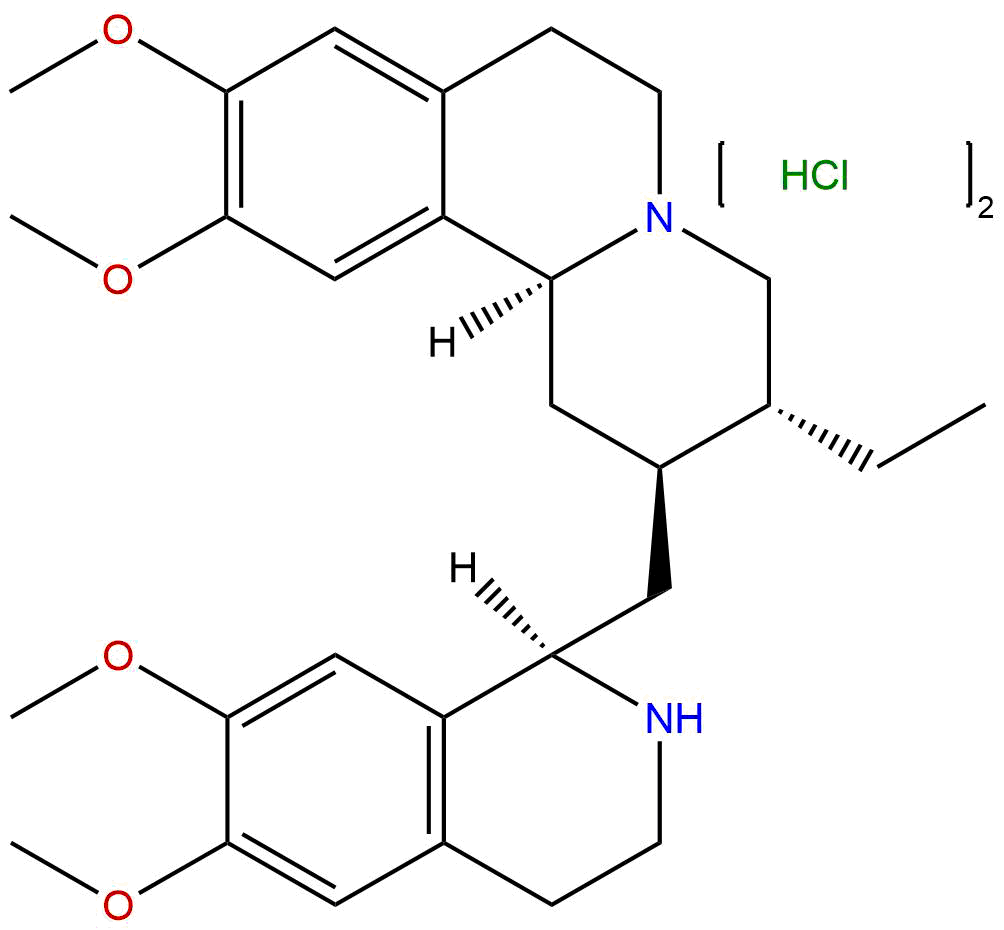


Product name: Emetine Dihydrochloride
Synonym name: Emetine hydrochloride hydrate(xH2O), 7083-71-8; Emetine dihydrochloride pentahydrate,79300-07-5; Emetine, 483-18-1
Catalogue No.: BP0531-1
Cas No.: 316-42-7
Formula: C29H42Cl2N2O4
Mol Weight: 553.565
Botanical Source: Ipecacuanha
Physical Description: Powder
Type of Compound: Alkaloids
Purity: 95%~99%
Analysis Method: HPLC-DAD or/and HPLC-ELSD
Identification Method: Mass, NMR
Packing: Brown vial or HDPE plastic bottle
Storage: Store in a well closed container, protected from air and light. Put into refrigerate or freeze for long term storage.
Whenever possible, you should prepare and use solutions on the same day. However, if you need to make up stock solutions in advance, we recommend that you store the solution as aliquots in tightly sealed vials at -20℃. Generally, these will be useable for up to two weeks.
The product could be supplied from milligrams to grams
Inquire for bulk scale.
For Reference Standard and R&D, Not for Human Use Directly.
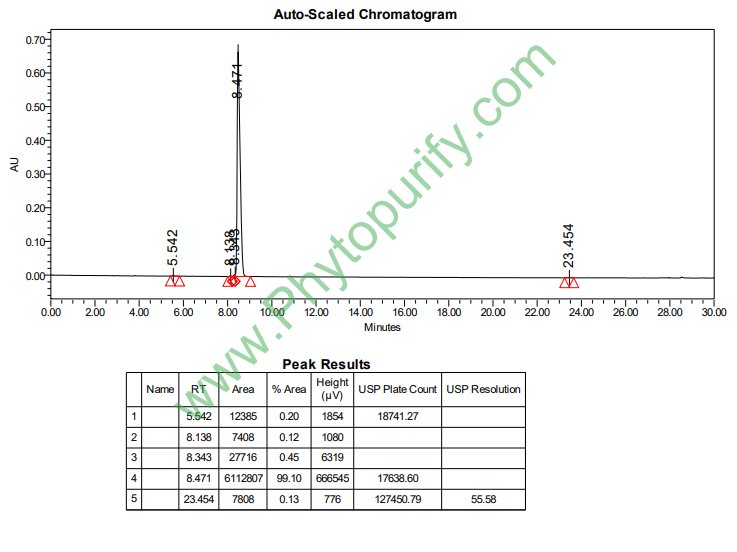
HPLC of Emetine Dihydrochloride
Storage conditions:Short-term storage at 2~8℃, long-term storage at -20 ~ -80℃
Emetine Dihydrochloride (CAS number: 316-42-7) is a natural alkaloid compound with a long history of application, mainly extracted from plants of the genus Emetine. As a classic anti amoebic dysentery drug, turmeric dihydrochloride has played an important role in the treatment of parasitic infections worldwide, especially in tropical and subtropical regions. In recent years, with the deepening of molecular biology and pharmacology research, the pharmacological mechanism, molecular targets, and pharmacological characteristics of turmeric dihydrochloride have been systematically elucidated, providing a theoretical basis for the optimization of its clinical application and the development of new indications.
This article will comprehensively review the chemical structure and physicochemical properties, plant sources and extraction methods, pharmacological activity research, mechanism of action and molecular targets, pharmacological evaluation and pharmacokinetics, as well as its clinical application prospects of turmeric dihydrochloride. The aim is to provide detailed reference materials for researchers in the field of natural product pharmacology.
Turmeric Dihydrochloride is an isoquinoline alkaloid with a molecular formula of C29H40N2O4 and a molecular weight of 480.6490. Its structural features include multiple cyclic structures and multiple hydrogen bond donors and acceptors, endowing it with high biological activity. The dihydrochloride form of turmeric alkaloids enhances their water solubility and bioavailability, facilitating the development of pharmaceutical formulations.
In terms of physical and chemical properties, the LogP value of turmeric dihydrochloride is 4.7671, indicating its strong lipophilicity, which is beneficial for penetrating cell membranes, especially the blood-brain barrier (BBB) with high permeability. Its topological polar surface area (TPSA) is 52.1900, and moderate polarity facilitates the distribution and targeting of drugs in vivo. The water solubility is 0.1942, which is a low water solubility compound, posing certain challenges to its formulation process.
Toxicological evaluation shows that turmeric dihydrochloride has hERG channel inhibitory activity, suggesting that it may pose a risk of cardiac toxicity and needs to be closely monitored in clinical applications. The Ames test result is 0.0, indicating that it does not have significant genotoxicity.
Turmeric dihydrochloride mainly comes from the genus Cephaelis ipecacuanha, which is a perennial herbaceous plant in the Rubiaceae family. It is native to South America, especially Brazil, Colombia, and Peru. The roots of Tugen contain abundant alkaloids, among which Tugen alkaloids have the highest content.
The traditional extraction process usually uses acidic aqueous solution extraction, combined with solvent separation and crystallization purification techniques. The specific steps include:
In recent years, the introduction of ultrasound assisted extraction, microwave-assisted extraction, and membrane separation technologies has improved extraction efficiency and purity, reduced the use of organic solvents, and is in line with the concept of green chemistry.
The most well-known pharmacological activity of turmeric dihydrochloride is its anti amoebic dysentery effect. Amoebic dysentery is caused by the protozoan Entamoeba histolytica, and turmeric alkaloids exert insecticidal effects by inhibiting the parasite's protein synthesis and energy metabolism.
The main pharmacological activities include:
The anti amoebic mechanism of turmeric dihydrochloride mainly involves the inhibition of parasite specific proteins and enzymes, interfering with their metabolism and physiological functions. The relevant targets include Escherichia coli specific proteins such as EHI1, EHI2, EHI3, EHI4, and EHI5. The specific mechanism of action is as follows:
In addition, turmeric alkaloids also have certain effects on host cells, especially the hERG potassium channel inhibition in myocardial cells, which may lead to the risk of arrhythmia and need to be monitored carefully in clinical use.
The pharmacological parameters of turmeric dihydrochloride show that it has good lipid solubility (LogP 4.7671) and moderate polarity (TPSA 52.1900), which is beneficial for cell membrane penetration and blood-brain barrier permeability, supporting its potential application in central nervous system related diseases.
The pharmacokinetic characteristics include:
In terms of toxicity, hERG channel inhibition suggests potential cardiac toxicity and requires careful dosage adjustment and electrocardiographic monitoring. A negative Ames test indicates a low risk of genotoxicity.
Turmeric dihydrochloride, as a traditional anti amoebic drug, is still widely used in some areas, especially in resource limited regions. The future clinical application prospects are mainly reflected in the following aspects:
Although turmeric dihydrochloride has a certain risk of cardiac toxicity, it is expected to develop safer and more effective derivatives through structural modification and dosage form optimization, expanding its clinical application fields.
Turmeric dihydrochloride, as a classic natural product drug, occupies an important position in the field of natural product pharmacology due to its unique chemical structure and significant anti amoebic activity. With the development of modern pharmacology and molecular biology techniques, its mechanism of action and molecular targets have been deeply analyzed, providing a solid foundation for its clinical application and new drug development.
In the future, combining modern drug design concepts and advanced formulation technologies, turmeric dihydrochloride and its derivatives are expected to play a greater role in the treatment of parasites, tumors, and other diseases. Continuous basic and clinical research will drive the improvement of its safety and efficacy, and promote the innovative development of natural product drugs.
